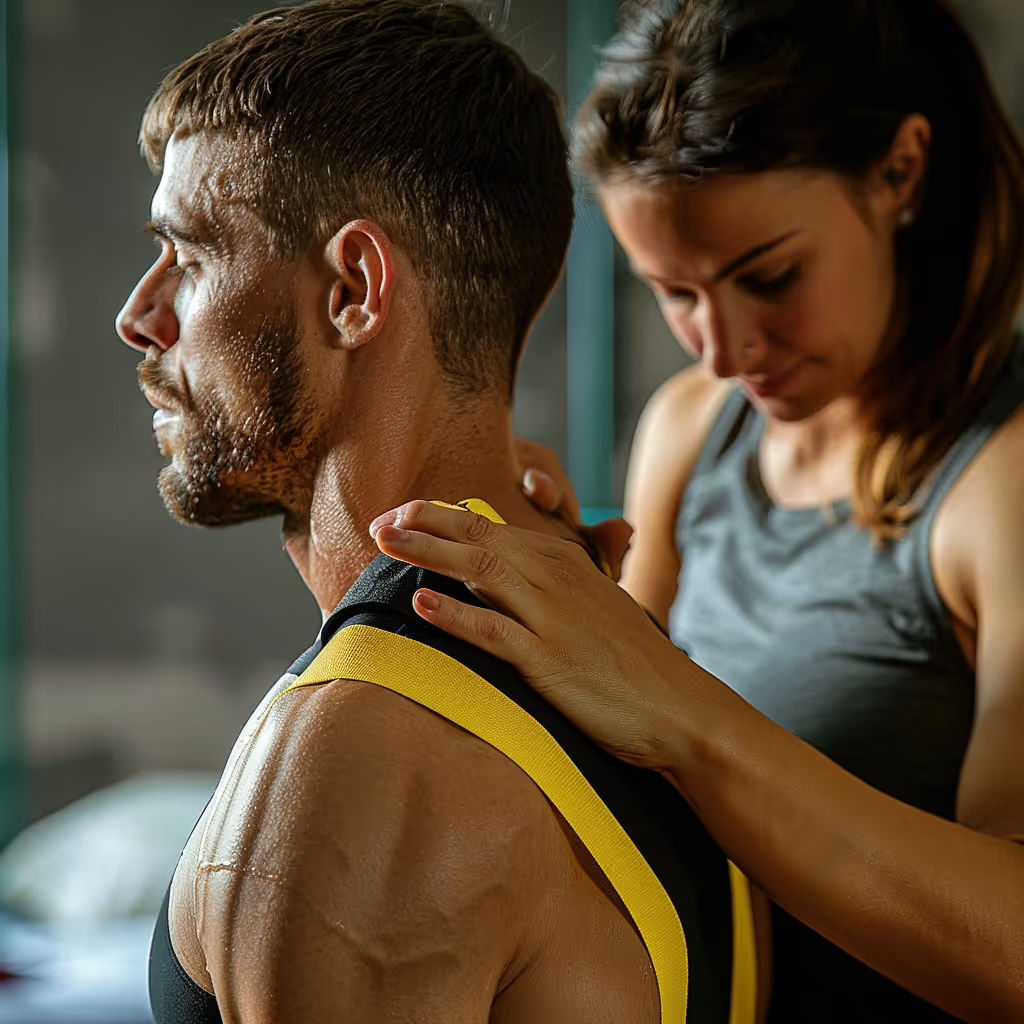


Cervicogenic headaches are headaches that originate in the structures of the neck, not in the head itself. Unlike classic migraines, this pain starts in the cervical region and radiates to the skull. The good news? This type of headache responds particularly well to physical therapy.
IMPORTANT: This article deals specifically with headaches of cervical origin. It does not cover primary migraines or tension headaches, which have different mechanisms. If you suffer from headaches, a professional evaluation can determine their exact origin.Approximately 15 to 20% of chronic headaches are believed to be of cervical origin. This is a significant proportion. However, this condition often remains unrecognized or misdiagnosed. Many people live with these headaches for years without knowing that the source is in their neck.
What causes cervicogenic headaches?
Cervicogenic headaches are caused by irritation of structures in the neck that are innervated by the C1, C2, and C3 nerves. These structures include the facet joints, muscles, ligaments, and discs of the upper cervical region. When these tissues are irritated, they can refer pain to the head.
To understand how this works, you need to know that the upper cervical nerves share connections with the trigeminal nerve in your brainstem. This is called the trigemino-cervical nucleus. This connection explains why irritation in the neck can cause pain that you feel in your head, around your eyes, or even in your forehead.
Which structures of the neck are involved?
Several structures can cause cervicogenic headaches:
| Structure | Location | Contribution |
|-----------|--------------|--------------|
| C2-C3 joint | Between the 2nd and 3rd vertebrae | Responsible for approximately 70% of cases |
| Atlantoaxial joint (C1-C2) | Between the atlas and axis | Frequently involved |
| Suboccipital muscles | Base of the skull | Common trigger points |
| Atlanto-occipital joints | Skull-neck junction | May contribute |
| Upper cervical discs | Between the C2-C4 vertebrae | Less frequently involved |
The C2-C3 joint is the most common source of cervicogenic headaches. This joint is particularly stressed during head rotation and extension movements. To better understand the anatomy of this region, see our guide to cervical anatomy.
How can neck irritation cause a headache?
The mechanism is called referred pain. Pain signals from the upper cervical structures are transmitted to the trigeminal cervical nucleus. This nucleus also receives signals from the trigeminal nerve, which innervates the face and head. The brain then interprets these signals as coming from the head, even though the source is in the neck.
It's a bit like when you have pain in your left arm during a heart attack. The problem isn't in your arm, but your brain perceives the pain there anyway. In the case of cervicogenic headaches, the problem is in your neck, but you feel it in your head.
What are the symptoms of cervicogenic headaches?
Cervicogenic headaches typically manifest as unilateral pain (on one side) that starts in the neck or base of the skull and radiates to the front of the head. The pain usually remains on the same side and does not change sides from one episode to the next.
Typical characteristics of pain
Here are the signs that suggest a cervical origin:
- Fixed unilateral pain: Always on the same side, unlike migraines, which can alternate sides.
- Start in the neck: The pain starts at the back and radiates forward.
- Triggered by neck movements: Certain positions or movements cause headaches.
- Triggered by pressure: Pressing certain points on the neck reproduces or aggravates the pain.
- Neck stiffness: Reduced range of motion, especially when rotating toward the affected side
- Moderate to severe intensity: Non-pulsating, more constant than a migraine
The pain may radiate to the forehead, temples, around the eyes, or even the jaw. Some people experience pain behind the eye or in the ear area. This distribution follows the territories of the cervical nerves and the trigeminal nerve.
How can you tell the difference between a cervicogenic headache and a migraine?
This distinction is important because the treatments are different. Here are the main differences:
| Characteristic | Cervicogenic headache | Migraine |
|-----------------|------------------------|----------|
| Side of pain | Always the same | May alternate |
| Origin of pain | Starts in the neck | Starts in the head |
| Triggers | Neck movements, positions | Light, stress, food |
| Nausea/vomiting | Rare | Frequent |
| Sensitivity to light | Mild or absent | Often intense |
| Visual aura | Absent | Sometimes present |
| Duration | Variable, often continuous | Typically 4-72 hours |
| Neck stiffness | Present | May also be present |
A subtle point: migraines can also be accompanied by neck pain. In fact, some people with migraines experience more neck pain than nausea. That's why a professional evaluation is important for making the right diagnosis.
Can we have both at the same time?
Yes, it is possible. Some people suffer from both migraines and cervicogenic headaches. These two conditions can coexist and even influence each other. Treatment must therefore address both problems.
How are cervicogenic headaches diagnosed?
The diagnosis of cervicogenic headaches is based primarily on clinical examination and patient history. Criteria include signs of cervical involvement, pain triggered by neck movements or pressure on certain points, and restricted cervical mobility.
Official diagnostic criteria
According to the International Classification of Headache Disorders (ICHD-3), the diagnosis of cervicogenic headache requires:
- Clinical evidence of a cervical source: physical signs or imaging showing cervical involvement
- Temporal relationship: the headache developed in connection with the onset of the cervical problem.
- At least two of the following:
- Improvement or resolution with improvement of the cervical problem
- Reduced range of motion and aggravation by provocative maneuvers
- Elimination of headache after diagnostic nerve block
Physical examination: the key to diagnosis
Your physical therapist or doctor will look for several signs during the examination:
The rotation-flexion test (RFT) is one of the most reliable tests. It specifically assesses the mobility of the C1-C2 joint. Significant asymmetry in rotation toward the affected side strongly suggests a cervicogenic origin. This test has a sensitivity of 91% and a specificity of 90%. Palpation of the cervical joints and muscles can reproduce or aggravate the headache. This is called a positive provocation test. Assessment of cervical mobility typically shows restriction, particularly in rotation toward the symptomatic side.Diagnostic blocks
In complex cases, an anesthetic injection can confirm the diagnosis. If a block of the C2 nerve or C2-C3 joint temporarily eliminates the headache, this confirms that this structure is the source. This approach is generally reserved for cases where the diagnosis remains uncertain after clinical evaluation.
10 mini-tips to understand your pain
Those who have had the greatest impact on my patients' lives. 1 per day, 2 min.
How are cervicogenic headaches treated?
Physical therapy is the first line of treatment for cervicogenic headaches. Studies show that manual therapy combined with therapeutic exercises can significantly reduce the frequency and intensity of headaches in the majority of patients.
The physical therapy approach
A comprehensive physical therapy program for cervicogenic headaches typically includes:
Manual therapy : Mobilization of the upper cervical joints aims to restore normal mobility. A recent meta-analysis showed that manual therapy significantly reduces the frequency of headaches by an average of about one episode per week. Strengthening exercises Exercises targeting the deep neck muscles (deep cervical flexors) are particularly effective. A 6-week exercise program, with 8 to 12 sessions, can produce lasting results. Motor control rehabilitation : Cranio-cervical flexion training aims to improve control of the neck's stabilizing muscles. This exercise involves holding a specific position for approximately 10 seconds, repeatedly.To learn more about physical therapy approaches for the neck, check out our guide to physical therapy for neck pain.
Need professional advice?
Our physical therapists can assess your condition and offer you a personalized treatment plan.
Book an appointmentHow effective is physical therapy?
The results are encouraging. A benchmark study showed that 72% of patients treated with manual therapy or exercises had a significant reduction in their headaches after 12 months. Among these patients, 42% reported relief of 80% or more.
| Intervention | 50%+ improvement | 100% improvement |
|--------------|----------------------|----------------------|
| Manual therapy + exercises | 81% | 42% |
| Manual therapy alone | 71% | 33% |
| Exercises only | 76% | 31% |
Other treatment options
If physical therapy alone is not sufficient, other interventions may be considered:
Injections : Anesthetic blocks with corticosteroids may provide temporary relief and aid in diagnosis. Radiofrequency ablation may provide longer-lasting relief in some cases. Medications : Medication is generally less effective for cervicogenic headaches than for migraines. Anti-inflammatory drugs may provide temporary relief.Surgery is rarely necessary and is only considered as a last resort when a specific structural cause is identified and all other treatments have failed.
What can you do yourself?
In addition to professional treatment, there are several strategies that can help you manage your cervicogenic headaches on a daily basis.
Exercises to do at home
Your physical therapist will teach you specific exercises. In general, they include:
- Gentle mobility exercises: Slow, controlled neck rotations within pain-free limits
- Strengthening deep muscles: Cranio-cervical flexion exercises (gently tucking in the chin)
- Stretching: For tense neck and shoulder muscles
- Postural exercises: To improve awareness of your head position
The important thing is consistency. A few minutes of exercise every day is better than one long session once a week.
Ergonomic adjustments
If you work at a computer or in a prolonged static position:
- Position your screen at eye level.
- Take regular breaks to move your neck.
- Avoid holding the phone between your ear and shoulder.
- Adjust your chair for proper lumbar and cervical support.
Management of aggravating factors
Identify what triggers or worsens your headaches:
- Certain prolonged positions
- Stress and muscle tension
- Lack of sleep
- Repetitive activities
What is the prognosis for cervicogenic headaches?
The prognosis is generally favorable with appropriate treatment. The majority of patients experience significant improvement with physical therapy. However, this condition may require long-term management rather than a complete cure.
Some people achieve complete resolution of their symptoms. Others learn to manage their headaches with regular exercise and periodic visits to physical therapy. In both cases, quality of life can improve significantly.
When should you consult?
Consult if:
- Your headaches are frequent or persistent
- They are accompanied by neck stiffness.
- They are triggered by neck movements.
- They do not respond to standard headache treatments.
If you think you may be suffering from cervicogenic headaches, an assessment by a physical therapist or doctor can help you get the right diagnosis and treatment. Visit our neck pain page to make an appointment.
Our clients' satisfaction is our priority.
At Physioactif, excellence defines our approach. But don't take our word for it, see what our patients are saying.











Discover our physiotherapy clinics
We have multiple locations to better serve you.
Blainville
190 Chem. du Bas-de-Sainte-Thérèse Bureau 110,
Blainville, Quebec
J7B 1A7
Laval
Montreal
St-Eustache
Vaudreuil
21 Cité-des-Jeunes Blvd. Suite 240,
Vaudreuil-Dorion, Quebec
J7V 0N3
Book an appointment now