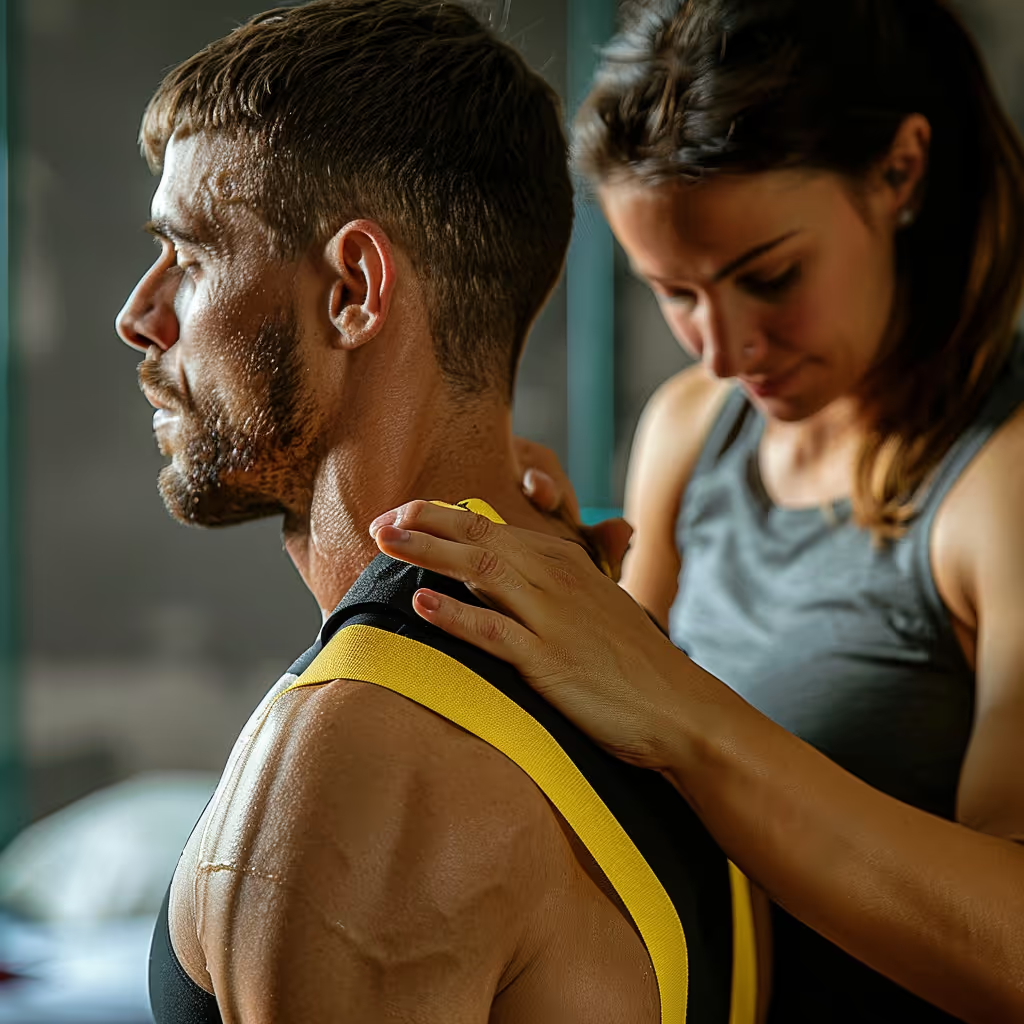


You want to start running, but you're afraid of getting injured in the first few weeks. Maybe you've already tried and given up because of knee or shin pain. This fear is legitimate; about 50% of beginner runners get injured in their first year.¹
Good news: The vast majority of these injuries can be prevented with a gradual approach.¹ The secret lies not in shoes or technique, but in moderation. What science teaches us about preventing injuries:- Progressing too quickly is the main cause of injuries among beginners.
- Alternating between walking and running allows the body to adapt without overexertion.
- Several short outings per week are safer than one long outing.
- The body needs time to strengthen tendons and bones.
This article gives you the keys to a successful start to running. To choose your shoes, check out our guide to running shoes.
How can I start running without injuring myself? Quantifying mechanical stress. In other words, DOSAGE.
The main factor
The main factor causing injuries when starting to run is progressing too quickly without allowing the body to fully adapt.
It is recommended to start running by going on several short runs each week. During each run, it is best to alternate between minutes of running and walking. Gradually, from one run to the next, you can increase the total duration of the run if all goes well. The most important thing is to listen to your body.
**
The other two factors to consider when starting to run without injury are:
- 1-Get appropriate shoes (see the blog article on shoes – Link to blog #13)
- 2-Adopt a running technique that reduces the speed of impact forces on the ground (see the blog article on running technique – Link to blog #12).
To properly manage the start of running, we recommend that you follow the protocols established by La Clinique du Coureur at the following link: https://lacliniqueducoureur.com/professionnels/outils-pour-les-professionnels/programmes-de-course/programmes-de-course/
To learn more...
To learn more For more information on running, check out the podcast. "Tell me about health" produced by one of our physical therapists, Alexis Gougeon. Episode #1 focuses on running.
Episode #1: Prevention and treatment of running injuries.
Find the episode on YouTube:
Click below to listen to episodes on podcast platforms:
Source:
- Van Gent RN. (2007). Incidence and determinants of lower extremity running injuries in long distance runners: a systematic review. British journal of sports medicine.
10 mini-tips to understand your pain
Those who have had the greatest impact on my patients' lives. 1 per day, 2 min.
(function(){
// GHL form_embed.js reads UTM from parent page URL
// Add UTM params to URL before loading iframe
var path = window.location.pathname;
var parts = path.split('/').filter(Boolean);
var slug = parts[parts.length - 1] || 'homepage';
var source = parts[0] || 'direct';
var url = new URL(window.location.href);
if (!url.searchParams.has('utm_term')) {
url.searchParams.set('utm_term', slug);
url.searchParams.set('utm_source', source);
url.searchParams.set('utm_medium', 'cta-inline-form');
window.history.replaceState({}, '', url.toString());
}
})();
10 mini-tips to understand your pain
Those who have had the greatest impact on my patients' lives. 1 per day, 2 min.
Our clients' satisfaction is our priority.
At Physioactif, excellence defines our approach. But don't take our word for it, see what our patients are saying.












Discover our physiotherapy clinics
We have multiple locations to better serve you.
Blainville
190 Chem. du Bas-de-Sainte-Thérèse Bureau 110,
Blainville, Quebec
J7B 1A7
Laval
Montreal
St-Eustache
Vaudreuil
21 Cité-des-Jeunes Blvd. Suite 240,
Vaudreuil-Dorion, Quebec
J7V 0N3
Book an appointment now