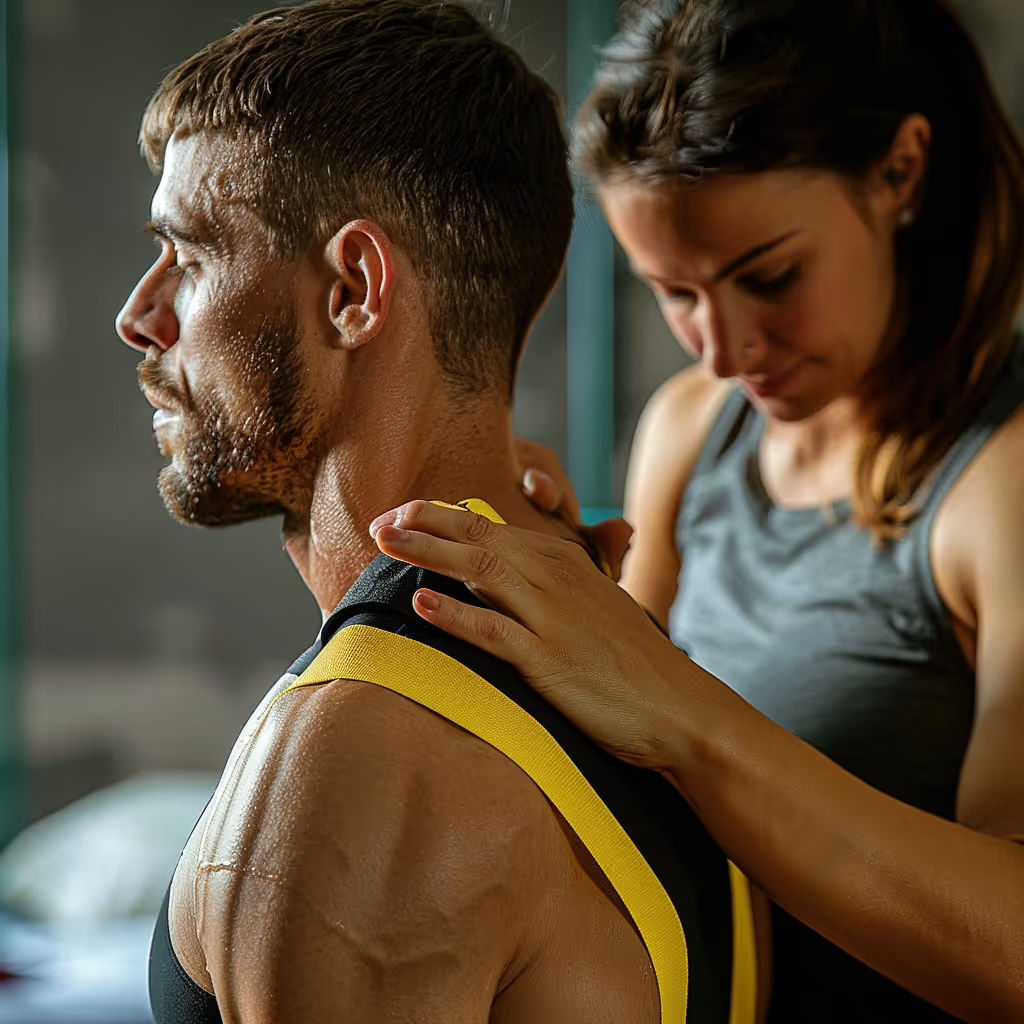
Shoulder bursitis
It is an inflammation of the subacromial bursa in the shoulder joint.
.png)
.png)
.png)


Do you feel a sharp pain on the side of your shoulder? Has lifting your arm overhead become difficult? Do you wake up at night when you turn onto that side? Do these symptoms sound familiar? You're not alone. Shoulder bursitis is one of the most common causes of shoulder pain.
Here's the good news: shoulder bursitis resolves naturally in the vast majority of cases with appropriate treatment.1 Your shoulder is more resilient than you think, and this condition is rarely serious.
What the science shows:
- Most cases of bursitis heal within 4 to 8 weeks with appropriate treatment.4
- Impingement syndrome is the most common cause of bursitis, and it can be corrected with physiotherapy.3
- Your bursitis has a specific cause, which means you can take action to promote healing.
This guide explains what shoulder bursitis really is, why it occurs, how to recognize it, and most importantly, how to speed up your recovery and regain full mobility.
What is shoulder bursitis?
Shoulder bursitis is an inflammation of a bursa, which is a small, very thin, fluid-filled sac that acts as a cushion between the structures of your joint. In the shoulder, the most commonly affected bursa is the subacromial bursa, located between the acromion (part of the shoulder blade) and the rotator cuff tendons.
This bursa reduces friction when you lift your arm, allowing tendons to glide freely under the bone. When it becomes inflamed, this gliding mechanism becomes painful and restricted.
The subacromial bursa is involved in approximately 80% of shoulder bursitis cases.2 This condition affects both men and women and occurs more frequently in adults aged 40 to 60 who engage in activities requiring repetitive shoulder movements.5
If you recognize these characteristics, you're probably wondering what distinguishes acute bursitis from chronic bursitis.
Is my bursitis acute or chronic?
Acute bursitis
Acute bursitis develops rapidly, often within hours or days, following a specific trigger event:
- Direct trauma to the shoulder (fall, blow)
- Intense, unusual exertion (moving furniture, painting a ceiling)
- Sudden repetitive movement
Symptoms appear suddenly: sharp pain, sometimes visible swelling, and significant difficulty lifting the arm. Acute bursitis generally responds very well to treatment and resolves within 2 to 6 weeks.
Chronic Bursitis
Chronic bursitis develops gradually over several weeks or months. It results from repeated microtraumas:
- A painter who works on ceilings daily
- A swimmer who trains intensively
- A factory worker who performs the same movements with their arms raised for years
The symptoms are more subtle: a dull pain that comes and goes, progressive stiffness, and recurring night pain. Chronic bursitis can last for several months and requires a more structured treatment approach.
Acute vs. Chronic Bursitis Comparison
What REALLY causes shoulder bursitis?
Many people think that bursitis appears "out of nowhere" or is simply due to aging. This is incorrect. Your bursitis has a specific cause, and understanding it is empowering because it means you can take action to promote healing.
Shoulder bursitis is not a mysterious condition. It's a normal inflammatory response from your body to excessive irritation of the bursa. Three main mechanisms cause this irritation:
1. Impingement Syndrome
This is the most common cause. When the space between your acromion and the rotator cuff tendons is reduced (due to poor posture, muscle imbalance, or the specific shape of your acromion), the bursa gets "pinched" every time you raise your arm. Repeated hundreds of times a day, this pinching creates inflammation. Our complete guide to shoulder impingement syndrome explains this mechanism in detail.
2. Repetitive overhead arm movements
Every time you raise your arm above 90 degrees, your bursa must slide under the acromion. If you perform this movement hundreds or thousands of times (painters, swimmers, volleyball or tennis players), excessive friction irritates the bursa, even if your anatomy is normal.
3. Direct trauma
A direct blow to the shoulder (fall, sports injury, collision) can cause immediate bleeding or inflammation in the bursa. This is less common, but when it happens, bursitis develops quickly.
More rarely, bursitis can be caused by a bacterial infection (septic bursitis), a systemic inflammatory disease like rheumatoid arthritis or gout, or calcium deposits in adjacent tendons.
The liberating truth: Your bursitis is not due to a weakness in your body. It's a normal reaction to excessive mechanical stress. Your body isn't broken; it's reacting logically to what you ask it to do.
What are the symptoms of shoulder bursitis?
The symptoms of shoulder bursitis generally follow a predictable pattern. Here are the signs to recognize:
Pain on the side or front of the shoulder
This is the main symptom. The pain is typically located on the outer side of the shoulder, sometimes slightly towards the front. You can often point to the exact spot that hurts. This pain is generally described as a burning or throbbing sensation.
10 Quick Tips for Understanding Your Pain
The ones that have made the biggest difference in my patients' lives. 1 a day, 2 minutes.
Painful arc when raising the arm
Slowly raise your arm to the side, as if you want to touch your ear. If you feel a sharp pain between 60 and 120 degrees of elevation (between waist height and the height of your opposite shoulder), and then this pain decreases as you continue to raise your arm, it is very characteristic of subacromial bursitis. This is called the "painful arc."
Night pain
Many people report that their bursitis wakes them up at night, especially when they lie on the affected shoulder. This night pain is due to direct pressure on the inflamed bursa. It is a sign of active inflammation.
Morning Stiffness
Upon waking, your shoulder may feel "stuck" or very stiff for the first 15 to 30 minutes. This stiffness generally decreases with gentle movement. It reflects the accumulation of inflammatory fluid in the bursa overnight.
Difficulty with daily activities
Simple actions become difficult: fastening your bra, reaching for an object on a high shelf, styling your hair, throwing a ball. Any activity requiring you to raise your arm above your head becomes problematic.
Apparent weakness
This is not true muscle weakness. Your muscles are intact. However, the pain inhibits muscle contraction. Your brain "cuts off" strength to protect the shoulder.
How is shoulder bursitis diagnosed?
The diagnosis of shoulder bursitis relies mainly on a clinical examination performed by a healthcare professional, your doctor or your physiotherapist.
Medical history
Your professional will ask you specific questions:
- When the Pain Began
- If there was a triggering event
- Which movements increase or decrease the pain
- If you experience night pain
- Your work or sports activities
This information strongly guides the diagnosis.
Clinical tests
Several maneuvers can reproduce the characteristic pain of bursitis:
- Painful Arc Test: passively raise your arm to the side. The presence of pain between 60 and 120 degrees strongly suggests subacromial bursitis.
- Neer and Hawkins-Kennedy Tests: confirm subacromial impingement likely involving the bursa.
Medical Imaging
- X-ray: rules out a fracture and detects bone spurs or calcium deposits.
- Ultrasound: the preferred examination to directly visualize the bursa and show thickening or fluid accumulation.
- MRI: reserved for complex cases.
Important: Imaging can sometimes show signs of bursitis in asymptomatic individuals. Up to 20% of people without symptoms have bursa abnormalities on ultrasound. Diagnosis primarily relies on your clinical history and symptoms.
What are the treatments for shoulder bursitis?
Treatment for shoulder bursitis follows a progressive approach, always starting with the most conservative interventions.
Phase 1: Managing acute inflammation (0-2 weeks)
Modify your activities smartly. It's not about complete rest. Temporarily avoid movements that trigger pain (like raising your arm above your head), while still moving within comfortable ranges. Complete immobilization can lead to stiffness.
- Apply ice for 15 minutes, 3 to 4 times a day.
- Non-steroidal anti-inflammatory drugs (NSAIDs) like ibuprofen can help during the acute phase.
- In very painful cases, a sling can be used for 24 to 48 hours.
Phase 2: Active physiotherapy (2-8 weeks)
This is the cornerstone of treatment. Your physiotherapist will create a personalized plan including:
- Manual therapy to restore joint mobility.
- Progressive mobility exercises: pendulum swings, wall slides.
- Targeted strengthening of the rotator cuff and shoulder blade.
- Postural correction: a forward-rounded posture reduces the subacromial space and perpetuates the problem.
Phase 3: Medical interventions (if necessary)
If pain persists despite 6 to 8 weeks of physiotherapy, a cortisone injection directly into the bursa may be suggested. The effect is usually rapid and can last several weeks to several months. A maximum of one to two injections is recommended.
Surgery is rarely necessary. It is only considered in chronic cases that do not respond to conservative treatment after 6 to 12 months. Full recovery generally takes 3 to 6 months.
Does Physiotherapy Work for Shoulder Bursitis?
Physiotherapy is recognized as an effective treatment for shoulder bursitis, with results supported by scientific research.
Studies show a 75-85% success rate for treating shoulder bursitis with physiotherapy. The combination of therapeutic exercises, manual therapy, and education is particularly effective in reducing pain and improving function.
Treatment effectiveness depends on several factors: early consultation (earlier = better results), consistency with home exercises, biomechanical correction, inflammation reduction, and rotator cuff strength. A comprehensive assessment allows for tailoring the treatment to your specific situation.
Most patients notice improvement within the first 2-4 weeks of sessions, with complete resolution in 6-10 weeks.
Are you suffering from shoulder bursitis? Book an appointment for a comprehensive assessment and a personalized treatment plan.
What can you do at home to relieve your bursitis?
If your bursitis is due to trauma
Follow the PEACE and LOVE principles:
- Protection: avoid movements that significantly increase pain for 2-3 days.
- Elevation: slightly elevate your arm on a pillow.
- Load: start moving gently as soon as possible with pendulum exercises.
- Vascularization: walk, use a stationary bike with your arm supported.
- Exercise: gradually progress towards mobility exercises.
If your bursitis is NOT due to trauma
Identify and modify repetitive activities that may have caused your bursitis. Temporarily reduce their frequency or intensity.
Need professional advice?
Our physical therapists can assess your condition and provide you with a personalized treatment plan.
Make an appointmentThe "2-hour / 24-hour" Rule: If an activity increases your pain and that pain lasts more than 2 hours after the activity or is worse the next morning, you've done too much.
Strategies for night pain
- Avoid sleeping on the painful shoulder
- If you sleep on your uninjured side, place a pillow in front of you and rest your injured arm on it.
- If you sleep on your back, place a small pillow under your arm.
- Ensure your neck is properly aligned.
- Keep your room cool (18-20°C).
Simple exercises
Pendulum Swings (Day 1-7):
Lean slightly forward, let your injured arm hang freely, and swing it gently. Do this for 2-3 minutes, 3 times a day.
Wall Slides (Week 2+):
Stand facing a wall, slowly slide your hands upwards as high as possible without excessive pain. Repeat 10 times, 2 times a day.
These basic exercises do not replace a personalized physiotherapy program, but they are an excellent starting point.
How long does shoulder bursitis last?
Most shoulder bursitis cases heal within 4 to 8 weeks with appropriate treatment, especially if started promptly.
Rapid healing (2-8 weeks).
This is particularly true for:
- Healthy young adults
- Acute bursitis caused by isolated overuse
- People who follow treatment recommendations
Some mild cases of bursitis can resolve in 2 to 4 weeks with rest, ice, and gentle exercises.
Longer recovery (3-6 months)
Chronic bursitis or cases associated with other shoulder problems may require 3 to 6 months of conservative treatment. If surgery is necessary, full recovery generally takes an additional 3 to 6 months.
Factors that influence your recovery time
- Your age and general health
- How quickly you receive a diagnosis and treatment
- Your adherence to the treatment plan
- The presence of associated conditions (rotator cuff tendinopathy, severe impingement syndrome, osteoarthritis)
- Your type of work or activities
If your pain persists for more than 6 weeks despite diligently following conservative treatment, consult a healthcare professional again to re-evaluate your condition.
When should you consult a physiotherapist for shoulder bursitis?
You should consult a physiotherapist if:
- You experience the symptoms described above (lateral shoulder pain, painful arc, nighttime pain)
- Your pain persists for more than a week despite rest
- Your mobility is significantly limited
- Nighttime pain regularly disrupts your sleep
Important: In Quebec, you do NOT need to see a doctor before consulting a physiotherapist. Physiotherapists are primary healthcare professionals trained to assess and treat musculoskeletal conditions. If your condition requires a medical consultation, your physiotherapist will let you know.
What happens during your first visit
Your physiotherapist will conduct a comprehensive assessment:
- Joint mobility
- Quality of your movements (scapulohumeral rhythm)
- Strength and stability
- Nerve Gliding
- Posture
Based on this, your physiotherapist will create a personalized treatment plan tailored to your goals, physical condition, and lifestyle constraints.
If you have shoulder pain from a different origin, consult our complete guide to shoulder pain which explores all possible causes. To learn more about treatment approaches, consult our article on physiotherapy for shoulder pain.
Ready to treat your shoulder bursitis?
Our physiotherapists at Physioactif can assess your condition and create a personalized treatment program. Shoulder bursitis responds very well to physiotherapy when treatment is started promptly.1
If your bursitis results from a work accident, please note that CNESST covers 100% of physiotherapy treatments. If it stems from a road accident, our services are fully covered by SAAQ.
Contact Physioactif today to schedule your assessment. The sooner you act, the faster you will regain full mobility.
References
-
Subacromial Bursitis. StatPearls [Internet]. NCBI Bookshelf, 2024.
-
Skedros JG, Hunt KJ, Pitts TC. Variations in coronal plane geometry of the glenoid influence stress distributions on the articular surface. J Shoulder Elbow Surg. 2007;16(5):S152-8.
-
Lewis J, McCreesh K, Roy JS, Ginn K. Rotator Cuff Tendinopathy: Navigating the Diagnosis-Management Conundrum. J Orthop Sports Phys Ther. 2015;45(11):923-37.
-
Michener LA, Walsworth MK, Burnet EN. Effectiveness of rehabilitation for patients with subacromial impingement syndrome: a systematic review. J Hand Ther. 2004;17(2):152-64.
-
Page MJ, Green S, McBain B, et al. Manual therapy and exercise for rotator cuff disease. Cochrane Database Syst Rev. 2016;(6):CD012224.
- Shoulder Bursitis Recovery Timeline. Kevin Kruse MD Orthopedic Surgery, 2025.
- Bigliani LU, Ticker JB, Flatow EL, et al. The relationship of acromial architecture to rotator cuff disease. Clin Sports Med. 1991;10(4):823-38.
- Girish G, Lobo LG, Jacobson JA, et al. Ultrasound of the shoulder: asymptomatic findings in men. AJR Am J Roentgenol. 2011;197(4):W713-9.
- Koester MC, Dunn WR, Kuhn JE, Spindler KP. The efficacy of subacromial corticosteroid injection in the treatment of rotator cuff disease. J Am Acad Orthop Surg. 2007;15(1):3-11.
- Abrams GD, Gupta AK, Hussey KE, et al. Arthroscopic repair of full-thickness rotator cuff tears with and without acromioplasty. Am J Sports Med. 2014;42(6):1296-303.
- Dubois B, Esculier JF. Soft-tissue injuries simply need PEACE and LOVE. Br J Sports Med. 2020;54(2):72-73.
- Shoulder Bursitis: Recovery Time (Explanation). Groupe Santépourtous, 2024.
- How Long Does Shoulder Bursitis Treatment Take? Chesapeake Hand Surgery, 2025.
.jpg)
.jpg)
%20(1).jpg)
Other conditions

Hip osteoarthritis is the normal wear and tear of the hip joint. It is often said that osteoarthritis is the wear and tear of the cartilage between our bones. That is true, but it involves more than just the cartilage. Cartilage is a tissue that acts as a cushion between the surfaces of our bones and allows our joints to glide smoothly and move fluidly.
This is normal wear and tear of the knee joint. It’s often said that osteoarthritis is the wearing down of the cartilage between our bones. That’s true, but it’s more than just the cartilage. Cartilage is a tissue that acts as a cushion between the surfaces of our bones and allows our joints to glide smoothly and move fluidly.
A bursa is a small, thin sac filled with fluid that is found in many of the body's joints. This small sac acts as a cushion within the joint and lubricates the structures that are subject to increased friction.
It is a tissue that surrounds the shoulder and helps keep the shoulder bone in place within the joint. The capsule helps keep the joint stable.
Neck pain is a general term used to describe pain in the neck that has no specific cause, such as an accident or a sudden awkward movement. Neck pain is therefore synonymous with “my neck hurts, and nothing in particular happened.”
In both types of injury, pain is felt in the neck and then radiates into the arm, or vice versa.
It is a severe strain or tear of the muscle fibers in the groin or inner thigh.
It is a severe strain or tear of the muscle fibers in the hamstrings, which are located at the back of the thigh.
This is a severe strain or tear of the muscle fibers in the calf muscles (the soleus and the gastrocnemius).
Make an appointment now
We offer a three-pronged quality assurance approach: optimized treatment time, a second opinion from a physical therapist, and ongoing expertise to ensure effective care tailored to your needs.

Customer satisfaction is our top priority
At Physioactif, excellence guides everything we do, but our patients are the best ones to tell you about it. Take a look at their verified reviews to get a real sense of their experience.












Discover our physical therapy clinics
We have locations in several areas to better serve you.
Blainville
190 Bas-de-Sainte-Thérèse Road, Suite 110,
Blainville, Quebec
J7B 1A7
Located in Blainville, near Rosemère, the Physioactif clinic is easily accessible to residents of the area and the surrounding communities
Laval
3224 Jean-Béraud Ave., Suite 220, Laval,
QC H7T 2S4
Located in Chomedey, in the heart of Laval, the Physioactif clinic is easily accessible to people in the area
Montreal
8801 Lajeunesse Street,
Montreal,
QC H2M 1R8
Located in Ahuntsic, near Villeray, the Physioactif clinic is easily accessible to residents of both neighborhoods
St. Eustace
180 25th Avenue, Suite
201 Saint-Eustache
QC J7P 2V2
Located in Saint-Eustache, the Physioactif clinic is easily accessible to residents of the area and the surrounding communities
Vaudreuil
21 Cité-des-Jeunes Boulevard, Suite 240,
Vaudreuil-Dorion, Quebec
J7V 0N3
Located in Vaudreuil-Dorion, the Physioactif clinic is easily accessible to people in the area
Make an appointment now