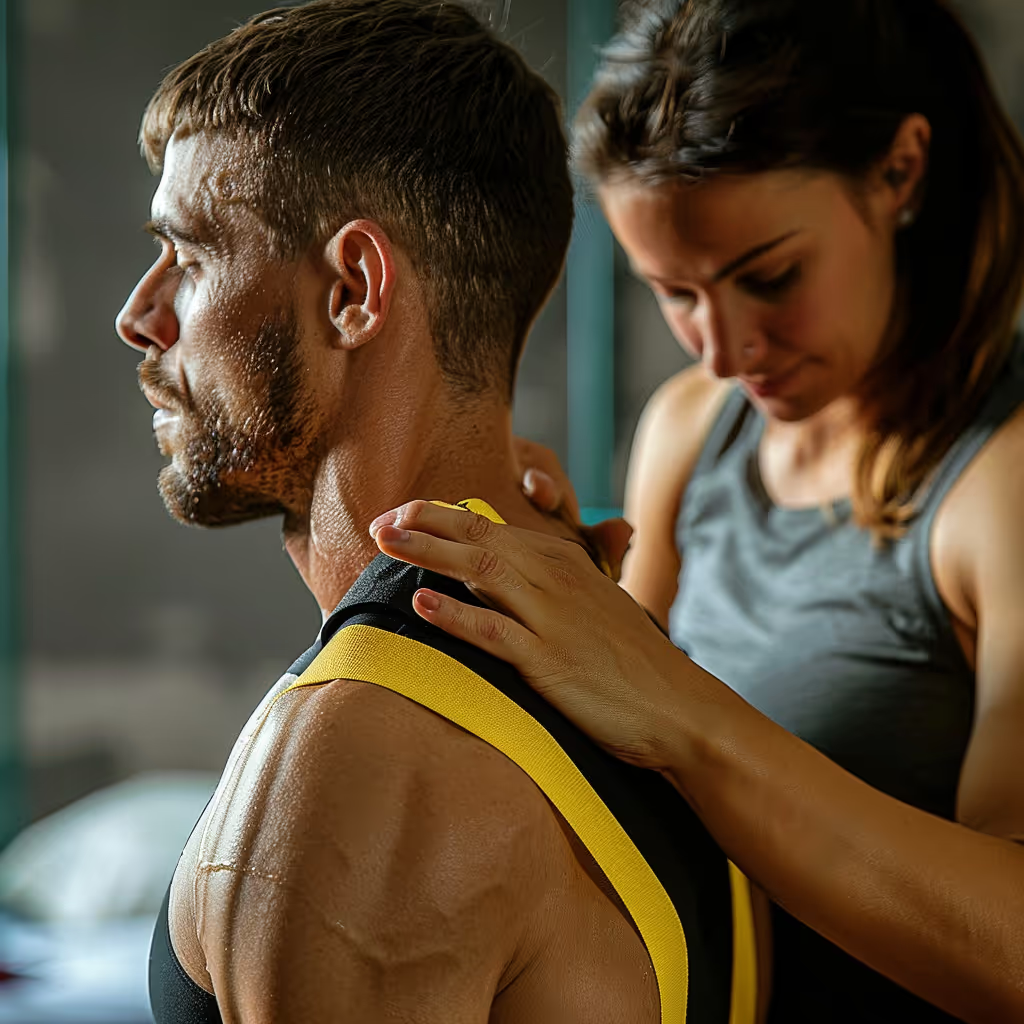
Acute pain affects millions of Quebecers every year. A sprained ankle, a strained back, a sports injury, post-operative pain. This sudden, intense pain can be alarming. However, it is often a sign that your body is functioning exactly as it should. Acute pain plays an essential protective role. It warns you that there is a problem and encourages you to take care of the injured area. This guide helps you understand what acute pain really is, why it exists, how it differs from chronic pain, and, most importantly, how to manage it effectively to promote optimal healing. Physical therapy is the recommended first-line intervention for treating most acute pain. To understand how this discipline can help you, see our [comprehensive guide to physical therapy and its therapeutic approaches](https://www.physioactif.com/ressources/la-physiotherapie-tout-ce-que-vous-devez-savoir).
## What is acute pain and how long does it normally last?
Acute pain is pain that has recently developed and is likely to be of limited duration. According to the International Association for the Study of Pain (IASP), it usually lasts from a few seconds to a maximum of three months. It usually has an identifiable temporal and causal relationship with an injury or illness.
1
Think of acute pain as a highly effective alarm system. When you place your hand on a hot plate, the pain causes you to pull your hand away immediately, before you even have time to think about it. This rapid reaction protects you from serious burns.
The term "acute" does not necessarily mean "severe." Pain can be acute (recent) and mild at the same time. Conversely, chronic pain can sometimes be very intense. The main distinction is based on duration, not intensity.
Healthcare professionals classify pain according to specific time frames.
2
| Type of pain |
Duration |
Features |
| Acute |
0 to 4 weeks |
Identifiable cause, clear protective role |
| Subacute |
4 to 12 weeks |
Recovery underway, vigilance required |
| Chronicle |
More than 3 months |
May persist after tissue healing |
Most acute pain improves naturally as your tissues heal. This is excellent news that deserves to be emphasized. Your body has a remarkable capacity for repair.
## Why does acute pain exist, and what is its biological role?
Acute pain serves a vital protective function. Without it, you would not survive for long. People born with congenital insensitivity to pain accumulate serious injuries throughout their lives because they never receive the warning signal.
3
Your pain system works thanks to specialized receptors called nociceptors (danger sensors). These receptors are found throughout your body. They detect potentially dangerous stimuli: extreme temperatures, excessive pressure, harmful chemicals, tissue inflammation.
When these receptors detect a threat, they send an electrical signal to your spinal cord and then to your brain. In a fraction of a second, your brain interprets this signal and decides to produce a sensation of pain to protect you.
4
Acute pain protects you in several ways. It causes you to quickly withdraw the part of the body that is threatened. It encourages you to protect an injured area by avoiding certain movements. It motivates you to seek care if necessary. It promotes healing by encouraging you to rest the affected area.
A crucial point to understand is that the intensity of pain does not always correspond to the severity of the injury. A small cut on your finger can be very painful because the skin on your fingers contains many sensory receptors. A more serious injury in a less innervated area may paradoxically cause less pain. This is known as the principle that "pain does not measure damage."
5
This information is liberating. If you are in a lot of pain, it does not automatically mean that something serious has happened. Pain is a signal that something needs to be monitored, not necessarily a catastrophe.
## How does acute pain differ from chronic pain?
The difference between acute and chronic pain goes far beyond a simple question of duration. These two types of pain involve different neurological mechanisms and require distinct treatment approaches.
6
Acute pain is an alarm system that works properly. It warns you of a real or potential problem. It normally decreases as healing progresses. It responds predictably to conventional treatments such as rest, ice, or anti-inflammatory drugs.
Chronic pain, on the other hand, can persist even after the tissues have healed. The nervous system itself has changed, a phenomenon called sensitization (when your nerves become too sensitive). It's as if the volume of your alarm system has remained stuck in the high position.
7 For more information on this topic, see our [comprehensive guide to chronic pain](https://www.physioactif.com/guide-complet/comprendre-la-douleur-chronique).
| Feature |
Acute pain |
Chronic pain |
| Function |
Protective, useful |
Often disproportionate |
| Cause |
Usually identifiable |
Sometimes without a clear cause |
| Evolution |
Improves with healing |
May persist after recovery |
| Nervous system |
Operating normally |
Sensitized, modified |
| Treatment |
Address the cause + healing |
Biopsychosocial approach |
Acute pain is expected and normal after an injury. It is part of the healing process. Chronic pain, on the other hand, requires a different approach that takes biological, psychological, and social factors into account. To understand the differences in detail, see our article on [acute vs. chronic pain](https://www.physioactif.com/ressources/douleur-aigue-vs-chronique).
It's normal not to know what to do with your pain.
We were never taught this. Our newsletter helps you understand what your body is trying to tell you and how to respond.
I'm signing up
To better understand my pain
10 mini-tips to understand your pain
Those who have had the greatest impact on my patients' lives. 1 per day, 2 min.
## What are the most common causes of acute pain?
Acute pain can have many causes. Understanding the cause helps you choose the right treatment and have realistic expectations about recovery time.
### Traumatic injuries
Traumatic injuries are the most obvious cause of acute pain. They occur during a specific event that you can identify. For more information on this topic, see our [guide to ligament pain and sprains](https://www.physioactif.com/guide-complet/douleur-ligamentaire-guide-complet).
**Sprains** affect the ligaments. They occur when a joint is forced beyond its normal range of motion. Ankle sprains are the most common, with nearly 25,000 cases per day in North America.
8
**Strains and sprains** affect muscles and tendons. They occur during intense exertion or sudden movement. The calf, hamstring, and back are common sites.
**Fractures** involve a break in the bone. The pain is usually immediate and intense. A crack may sometimes be heard at the moment of injury.
**Dislocations** occur when a bone slips out of its joint. The shoulder and finger are the most commonly affected areas.
### Post-operative pain
All surgery causes acute pain. This is a normal response to tissue that has been cut and manipulated. Proper management of this pain in the first few days after surgery is important to avoid complications.
9
The level of pain varies depending on the type of surgery. Knee arthroscopy generally causes less pain than total hip replacement. Your surgeon will give you an idea of what to expect.
### Acute inflammation
Inflammation is your body's natural response to injury. It causes pain, redness, heat, and swelling. These signs indicate that your immune system is working to repair the damage.
**Bursitis** is inflammation of a bursa (a small fluid-filled cushion that protects the joints). It often occurs in the shoulder, elbow, hip, or knee after repetitive movement or prolonged pressure.
10
**Tendinitis** is inflammation of a tendon. It develops gradually with overuse. The Achilles tendon, epicondyle (tennis elbow), and rotator cuff are common sites.
**Gout attacks** are caused by the accumulation of uric acid crystals in a joint. They cause sudden and extremely intense pain, often in the big toe.
11
Muscle pain and soreness
Soreness after exercise is a normal phenomenon called delayed onset muscle soreness (DOMS). It occurs 24 to 72 hours after unusual exertion and disappears within a few days.
12 This pain indicates that your muscles are adapting, not that they are damaged.
A strained back or muscle spasm can also cause intense, sharp pain. Despite the sharp pain, these injuries usually heal well within a few weeks. For more information, see our [guide to muscle pain](https://www.physioactif.com/guide-complet/douleur-musculaire-guide-complet).
### Infections
Some infections cause acute pain that requires prompt medical attention. Septic arthritis (infection of a joint) is a medical emergency.
13 It manifests as a very hot, red, swollen joint, accompanied by fever.
## How does your body heal after an acute injury?
Understanding the healing process helps you have realistic expectations and not worry unnecessarily. Most tissues in the human body heal in a predictable three-phase pattern.
14
Inflammatory phase (days 1 to 7)
Immediately after an injury, your body triggers an inflammatory response. The swelling, heat, redness, and pain you feel are signs of this response. Specialized cells arrive at the site to clean up cellular debris and prepare for reconstruction.
This phase is necessary and beneficial, even if it is uncomfortable. Inflammation attracts the cells that will rebuild the damaged tissue. Completely blocking inflammation with medication can actually slow down healing.
15
During this phase, you will probably experience the most pain and swelling. This is normal. Protecting the injured area is appropriate, but prolonged complete rest is not generally recommended.
### Proliferation phase (days 4 to 21)
Specialized cells begin to produce new tissue. In the case of a muscle injury, muscle cells multiply. For a ligament, fibroblasts (cells that produce collagen) produce new collagen.
The new tissue is initially fragile and disorganized. It resembles scar tissue more than the original tissue. This is why resuming intense activities too quickly can cause a new injury.
During this phase, gentle, gradual movement is beneficial. It stimulates the production of new tissue and helps the fibers orient themselves correctly. This is the principle of optimal load.
16
Remodeling phase (weeks 3 to 12 months and beyond)
The new tissue gradually strengthens and reorganizes itself. The fibers align themselves in the direction of the mechanical forces they are subjected to. The tissue becomes stronger and more functional.
This phase can last from several months to over a year for severe injuries. Even after complete healing, the repaired tissue does not always reach 100% of the strength of the original tissue.
Here is a crucial point. Pain may decrease significantly before healing is complete. Relying solely on the disappearance of pain to resume normal activities is a common mistake that leads to recurrence.
17
| Fabric type |
Typical healing time |
Optimal force |
| Muscle |
2 to 8 weeks |
3 to 6 months |
| Tendon |
6 to 12 weeks |
6 to 12 months |
| Ligament |
4 to 12 weeks |
6 to 12 months |
| Bone (simple fracture) |
6 to 8 weeks |
3 to 6 months |
## When is acute pain likely to become chronic?
The transition from acute pain to chronic pain does not happen by chance. Certain factors increase the risk of chronicity. Identifying them early allows intervention to prevent this transition.
18
Biological risk factors
The intensity of the initial pain is an important factor. The more severe the acute pain, the higher the risk of it becoming chronic.
19 Intense pain strongly activates your nervous system and can trigger the sensitization process.
Having chronic pain elsewhere in the body also increases the risk. Your nervous system may be more susceptible to developing sensitization.
Prolonged or uncontrolled inflammation can keep the alarm system on high alert, promoting the transition to chronicity.
### Psychological risk factors
Fear of movement, known as kinesiophobia, is a major risk factor. If you avoid moving for fear of aggravating your injury, you enter a vicious cycle. Prolonged immobility weakens your muscles, stiffens your joints, and paradoxically increases your sensitivity to pain.
20
Catastrophizing is when you imagine the worst-case scenario. "I'll never recover." "My spine is ruined." These thoughts activate your stress system and can amplify your pain.
Untreated anxiety and depression significantly increase the risk of your acute pain becoming chronic. These conditions directly affect how your brain processes pain signals.
21
### Behavioral risk factors
Excessive rest beyond the first few days is rarely beneficial. Studies show that resuming activities early, adapted to your condition, promotes better healing.
22
Alternating between overactivity and collapse is another trap. You feel better, you overdo it, and then you're bedridden for several days. This irregular pattern does not allow your body to adapt gradually.
### Social risk factors
Lack of social support, conflicts at work or at home, and financial difficulties related to disability can all contribute to chronic pain.
23
A work environment that does not allow for adaptation or a gradual return to work can also be problematic.
Need professional advice?
Our physical therapists can assess your condition and offer you a personalized treatment plan.
Book an appointment
## How can acute pain be managed effectively to promote healing?
Optimal management of acute pain is based on several principles. The goal is to control pain while promoting healing and preventing it from becoming chronic.
### The POLICE protocol for injuries
The POLICE protocol has replaced the old RICE protocol. It emphasizes the importance of early movement rather than complete rest.
24
**P for Protection.** Protect the injured area to prevent further damage. Use crutches, a splint, or a bandage if necessary. This protection does not imply prolonged total immobilization.
**OL for Optimal Loading.** This is perhaps the most important element. The injured tissue must be exposed to appropriate mechanical stress in order to heal properly. Gentle, progressive movement stimulates tissue repair at the cellular level.
25
**I for Ice.** Ice helps control pain and swelling in the early days. Apply it for 15 to 20 minutes, several times a day, protecting your skin with a cloth.
**C for Compression.** A compression bandage limits swelling and bleeding. It should not be too tight to the point of cutting off circulation.
**E for Elevation.** Raise the injured limb above heart level to help drain excess fluid.
### The importance of early movement
Prolonged complete rest is almost never the right approach.
26 Even in the early days after an injury, gentle movement within the limits of pain is beneficial.
Movement increases blood flow to the injured area, bringing in the nutrients needed for repair. It prevents stiffness and loss of muscle strength. It also sends signals to the brain that the area can move, which helps normalize your perception of pain.
The golden rule is to listen to your body. Mild pain during movement is acceptable. Pain that worsens significantly or persists after activity is a signal to slow down.
### Pain medication
Medication has its place in managing acute pain, but it is only part of the solution.
**Acetaminophen (Tylenol)** is often the first choice for mild to moderate pain. It has few side effects when taken at the recommended doses.
27
**Nonsteroidal anti-inflammatory drugs (NSAIDs)** such as ibuprofen (Advil) or naproxen (Aleve) reduce inflammation and pain. They are particularly useful in the early days. However, they can have side effects on the stomach and kidneys, especially with prolonged use.
28
**Opioids** are reserved for severe pain that does not respond to other treatments. They carry risks of addiction and significant side effects. Current guidelines recommend using them at the lowest possible dose for the shortest possible duration.
29
The goal of medication is not to completely eliminate pain, but to reduce it enough to allow you to move and function.
### Early physical therapy
Seeing a physical therapist soon after an acute injury has several benefits. The physical therapist can accurately assess your injury and rule out serious problems. They can teach you exercises that are appropriate for your stage of healing. They can use manual techniques to reduce pain and improve mobility.
30
A study has shown that people who see a physical therapist early after a back injury have better outcomes and use fewer medications than those who wait.
31
## How can you prevent acute pain from becoming chronic?
Preventing chronic pain begins in the first few days after an injury. Here are some proven strategies.
### Stay active in an appropriate way
Complete rest beyond the first few days is rarely beneficial. Even during the acute phase, gentle, gradual movement promotes healing.
32 Physical activity releases endorphins (natural painkillers produced by your body).
Find activities you can do despite your injury. If you can't run, can you walk? If walking is difficult, can you swim or ride a stationary bike? Maintaining some level of physical activity is crucial for your physical and mental recovery.
### Understand your pain
Knowledge is therapeutic. Understanding why you are in pain reduces fear and anxiety, two major factors in chronic pain.
33 Knowing that your pain is protective and temporary can reduce its perceived intensity.
Ask your healthcare professional questions. Ask for explanations about your condition, the expected healing time, and what you can and cannot do.
### Manage stress factors
Stress, anxiety, and lack of sleep amplify pain. Your nervous system does not differentiate between physical and emotional stress. When you are stressed, your alarm system is on high alert.
34
Simple techniques can help. Deep breathing activates your parasympathetic nervous system, which promotes calm and recovery. A few minutes of slow breathing every day can make a difference.
Sleep is essential. It is during sleep that your body does most of its repair work. If pain is disrupting your sleep, talk to your doctor.
### Seek medical advice at the right time
Don't wait months to seek medical advice if your pain isn't improving. Early treatment makes all the difference. After 4 to 6 weeks without significant improvement, it's time to seek medical advice if you haven't already done so.
35
A physical therapist can identify factors that are slowing down your recovery and help you correct them before they become chronic problems.
## How does physical therapy help treat acute pain?
Physical therapy is the recommended first-line intervention for most acute musculoskeletal pain. It offers a comprehensive approach that goes beyond simply relieving symptoms.
36
### In-depth assessment
A physical therapist begins with a detailed assessment of your condition. They examine your posture, how you move, your strength, and your flexibility. This assessment helps identify the cause of your pain and any factors that may be slowing down your recovery.
The assessment also includes a discussion about your activities, your work, and your goals. The treatment plan will be tailored to your specific situation.
### Manual techniques
Manual therapy can provide rapid pain relief. Joint mobilization brings the joint into ranges of motion that it cannot achieve on its own. Soft tissue techniques relax tense muscles and improve circulation.
37
These techniques are not long-term solutions in themselves, but they can create a window of opportunity for you to move and exercise with less pain.
### Therapeutic exercises
Exercises are the cornerstone of physical therapy treatment. They are tailored to your stage of recovery and progress as you improve.
38
In the early days, exercises focus on maintaining mobility and preventing stiffness. Gradually, strengthening exercises are added. Finally, exercises specific to your activities prepare you to resume your normal activities.
### Education
Education is an essential component of treatment. Understanding your injury, the healing process, and what you can do to optimize it gives you a sense of control.
39 People who understand their condition have better outcomes.
A physical therapist can help you distinguish between "normal" healing pain and pain that indicates a problem. This knowledge allows you to pace your activities appropriately.
## When does acute pain require urgent attention?
The vast majority of acute pain is not dangerous and heals well with time and proper care. However, certain warning signs require prompt or immediate medical attention.
### Red flags: seek immediate emergency care
**Cauda equina syndrome.** This is a medical emergency that requires prompt surgical intervention.
40 Signs include loss of bladder or bowel control, numbness in the seat area (saddle zone), progressive weakness in the legs, and severe lower back pain. If you experience these symptoms, go to the emergency room immediately.
**Compartment syndrome.** After an injury to a limb, pain that worsens despite medication, seems disproportionate to the injury, and is accompanied by tight swelling and a pale or cold limb requires immediate attention.
41 Without prompt treatment, permanent damage may occur.
**Signs of infection.** A very hot, red, severely swollen joint accompanied by fever may indicate a joint infection.
42 This is an emergency that requires intravenous antibiotics and sometimes surgery.
### Red flags: seek medical attention quickly (within 24-48 hours)
**Significant trauma.** A fall from a height, a car accident, or a violent blow warrants evaluation to rule out a fracture or other serious injury, even if the pain seems tolerable.
**Visible deformity.** A limb that appears twisted or displaced requires evaluation to rule out a fracture or dislocation.
**Inability to bear weight.** If you are completely unable to put weight on a limb after an injury, a medical evaluation is necessary.
**Severe nighttime pain.** Pain that wakes you up at night and is not relieved by changing position can sometimes indicate a more serious problem.
### When to see a healthcare professional
Even if there are no red flags, see a healthcare professional if your pain does not improve at all after one to two weeks, if it significantly limits your daily activities, if you need to take pain medication regularly for more than a week, or if you are unsure of the cause of your pain.
## Frequently asked questions about acute pain
### Is acute pain always related to tissue damage?
Not necessarily. Pain is an experience created by your brain to protect you. It can occur even without actual tissue damage if your brain perceives a threat.
43 That said, most acute pain is actually related to tissue irritation or injury.
### Should I apply heat or ice to my injury?
In the first few days (acute inflammatory phase), ice is generally preferred. It helps reduce swelling and numbs the pain. After a few days, heat can be beneficial for relaxing muscles and improving circulation. Some people alternate between the two. Listen to your body and use whatever provides the most relief.
44
### How long should I wait before returning to sports after an injury?
It depends on the injury, its severity, and the sport you play. The disappearance of pain does not mean that healing is complete. A grade I ankle sprain may allow a return to sports in 2-3 weeks. A grade III sprain may require 3-6 months.
45 Consult a professional for personalized advice.
### Why does my pain vary from day to day?
This is normal. Your pain level depends on many factors. Sleep, stress, physical activity, weather, and your mood can all influence your perception of pain.
46 Day-to-day variation does not mean that you are aggravating your injury.
### Does "feeling pain" during exercises mean that I am injuring myself?
Mild pain during rehabilitation exercises is often acceptable and even expected. The general rule is that pain should not exceed 3 or 4 out of 10, and should return to its baseline level within 24 hours of exercise.
47 Pain that gradually worsens or persists is a sign that you need to modify the exercise.
### Do anti-inflammatory drugs slow down healing?
This is a debated topic. Inflammation is a necessary part of the healing process. Completely blocking inflammation could theoretically slow down tissue repair.
48 However, in practice, anti-inflammatory drugs taken at the recommended doses for a short period of time do not seem to have a significant negative effect on healing for most people. Discuss this with your doctor or pharmacist.
### When can I stop protecting my injury?
Intensive protection (splint, crutches) is usually only necessary in the first few days. After that, a gradual return to normal activities is beneficial. Prolonged protection can lead to stiffness, weakness, and increased sensitivity.
49 Your physical therapist can guide you through this process.
## Key takeaways
Acute pain is a normal and necessary protective signal. It alerts you that there is a problem and encourages you to take care of yourself. The vast majority of acute pain improves with time and appropriate care.
Optimal management of acute pain involves a balance between protection and movement. Prolonged complete rest is rarely the right approach. Appropriate, gradual movement within tolerable limits promotes better healing.
Psychological factors play an important role. Fear, avoidance, and catastrophizing can turn acute pain into chronic pain. Understanding your pain and staying active are key elements of prevention.
If your pain does not improve after a few weeks or if you have any red flags, consult a healthcare professional. Early intervention can make the difference between a full recovery and the development of persistent pain.
Are you living with acute pain that affects your [back](https://www.physioactif.com/guide-complet/douleur-dos-guide-complet), [neck](https://www.physioactif.com/guide-complet/douleur-cervicale-guide-complet), [shoulders](https://www.physioactif.com/guide-complet/douleur-epaule-guide-complet), or [knees](https://www.physioactif.com/guide-complet/douleur-anterieure-genou-guide-complet)? Our physical therapists can assess your condition and guide you toward optimal recovery.
---
## Sources
1 International Association for the Study of Pain (IASP). Definition of pain. 2020.
2 World Health Organization (WHO). ICD-11 classification of chronic pain. 2019.
3 Cox JJ, et al. An SCN9A channelopathy causes congenital inability to experience pain. Nature. 2006.
4 Basbaum AI, et al. Cellular and molecular mechanisms of pain. Cell. 2009.
5 Moseley GL. Reconceptualizing pain according to modern pain science. Physical Therapy Reviews. 2007.
6 IASP Task Force. A classification of chronic pain for ICD-11. Pain. 2015.
7 Woolf CJ. Central sensitization: implications for the diagnosis and treatment of pain. Pain. 2011.
8 Waterman BR, et al. The epidemiology of ankle sprains in the United States. Journal of Bone and Joint Surgery. 2010.
9 Chou R, et al. Management of Postoperative Pain: A Clinical Practice Guideline. Journal of Pain. 2016.
10 Sayegh ET, Strauch RJ. Treatment of olecranon bursitis: a systematic review. Archives of Orthopaedic and Trauma Surgery. 2014.
11 Dalbeth N, et al. Gout. Lancet. 2016.
12 Cheung K, et al. Delayed onset muscle soreness: treatment strategies and performance factors. Sports Medicine. 2003.
13 Goldenberg DL. Septic arthritis. Lancet. 1998.
14 Reinke JM, Sorg H. Wound repair and regeneration. European Surgical Research. 2012.
15 Duchesne E, et al. Impact of inflammation and anti-inflammatory modalities on skeletal muscle healing. Antioxidants. 2017.
16 Khan KM, Scott A. Mechanotherapy: how physical therapists' prescription of exercise promotes tissue repair. British Journal of Sports Medicine. 2009.
17 Bleakley CM, et al. The use of ice in the treatment of acute soft-tissue injury. American Journal of Sports Medicine. 2004.
18 Vos CJ, et al. Clinical course and prognostic factors in acute neck pain. Pain. 2008.
19 Katz J, Seltzer Z. Transition from acute to chronic postsurgical pain: risk factors and protective factors. Expert Review of Neurotherapeutics. 2009.
20 Vlaeyen JW, Linton SJ. Fear-avoidance and its consequences in chronic musculoskeletal pain. Pain. 2000.
21 Pinheiro MB, et al. Symptoms of depression and risk of new episodes of low back pain. Arthritis Care & Research. 2015.
22 Waddell G. The Back Pain Revolution. Churchill Livingstone. 2004.
23 Turk DC, Okifuji A. Psychological factors in chronic pain: evolution and revolution. Journal of Consulting and Clinical Psychology. 2002.
24 Bleakley CM, et al. PRICE needs updating, should we call the POLICE? British Journal of Sports Medicine. 2012.
25 Glasgow P, et al. Optimal loading: key variables and mechanisms. British Journal of Sports Medicine. 2015.
26 Dahm KT, et al. Advice to rest in bed versus advice to stay active for acute low-back pain and sciatica. Cochrane Database of Systematic Reviews. 2010.
27 Ennis ZN, et al. Acetaminophen for Chronic Pain. Annals of Internal Medicine. 2015.
28 Derry S, et al. Topical NSAIDs for acute musculoskeletal pain in adults. Cochrane Database of Systematic Reviews. 2015.
29 Dowell D, et al. CDC Clinical Practice Guideline for Prescribing Opioids for Pain. MMWR. 2022.
30 Foster NE, et al. Prevention and treatment of low back pain: evidence, challenges, and promising directions. Lancet. 2018.
31 Fritz JM, et al. Primary care referral of patients with low back pain to physical therapy. Spine. 2012.
32 Malmivaara A, et al. The treatment of acute low back pain: bed rest, exercises, or ordinary activity? New England Journal of Medicine. 1995.
33 Louw A, et al. The effect of neuroscience education on pain, disability, anxiety, and stress in chronic musculoskeletal pain. Archives of Physical Medicine and Rehabilitation. 2011.
34 Hannibal KE, Bishop MD. Chronic stress, cortisol dysfunction, and pain. Psychoneuroendocrinology. 2014.
35 Hill JC, et al. A primary care back pain screening tool: identifying patient subgroups for initial treatment. Arthritis & Rheumatism. 2008.
36 Chou R, et al. Nonpharmacologic Therapies for Low Back Pain. Annals of Internal Medicine. 2017.
37 Bialosky JE, et al. The mechanisms of manual therapy in the treatment of musculoskeletal pain. Manual Therapy. 2009.
38 Hayden JA, et al. Exercise therapy for chronic low back pain. Cochrane Database of Systematic Reviews. 2021.
39 Moseley GL, Butler DS. Fifteen Years of Explaining Pain: The Past, Present, and Future. Journal of Pain. 2015.
40 Gardner A, et al. Cauda equina syndrome. BMJ. 2011.
41 Via AG, et al. Acute compartment syndrome. Muscles, Ligaments and Tendons Journal. 2015.
42 Mathews CJ, et al. Septic arthritis: current diagnostic and therapeutic algorithm. Current Opinion in Rheumatology. 2008.
43 Moseley GL. A pain neuromatrix approach to patients with chronic pain. Manual Therapy. 2003.
44 Malanga GA, et al. Mechanisms and efficacy of heat and cold therapies for musculoskeletal injury. Postgraduate Medicine. 2015.
45 Kaminski TW, et al. National Athletic Trainers' Association position statement: conservative management and prevention of ankle sprains in athletes. Journal of Athletic Training. 2013.
46 Edwards RR, et al. Patient phenotyping in clinical trials of chronic pain treatments. Pain. 2016.
47 Thomée R. A comprehensive treatment approach for patellofemoral pain syndrome in young women. Physical Therapy. 1997.
48 Schoenfeld BJ. The use of nonsteroidal anti-inflammatory drugs for exercise-induced muscle damage. Sports Medicine. 2012.
49 Kerkhoffs GM, et al. Immobilization for acute ankle sprain. Cochrane Database of Systematic Reviews. 2001.
.png)
.png)
.png)