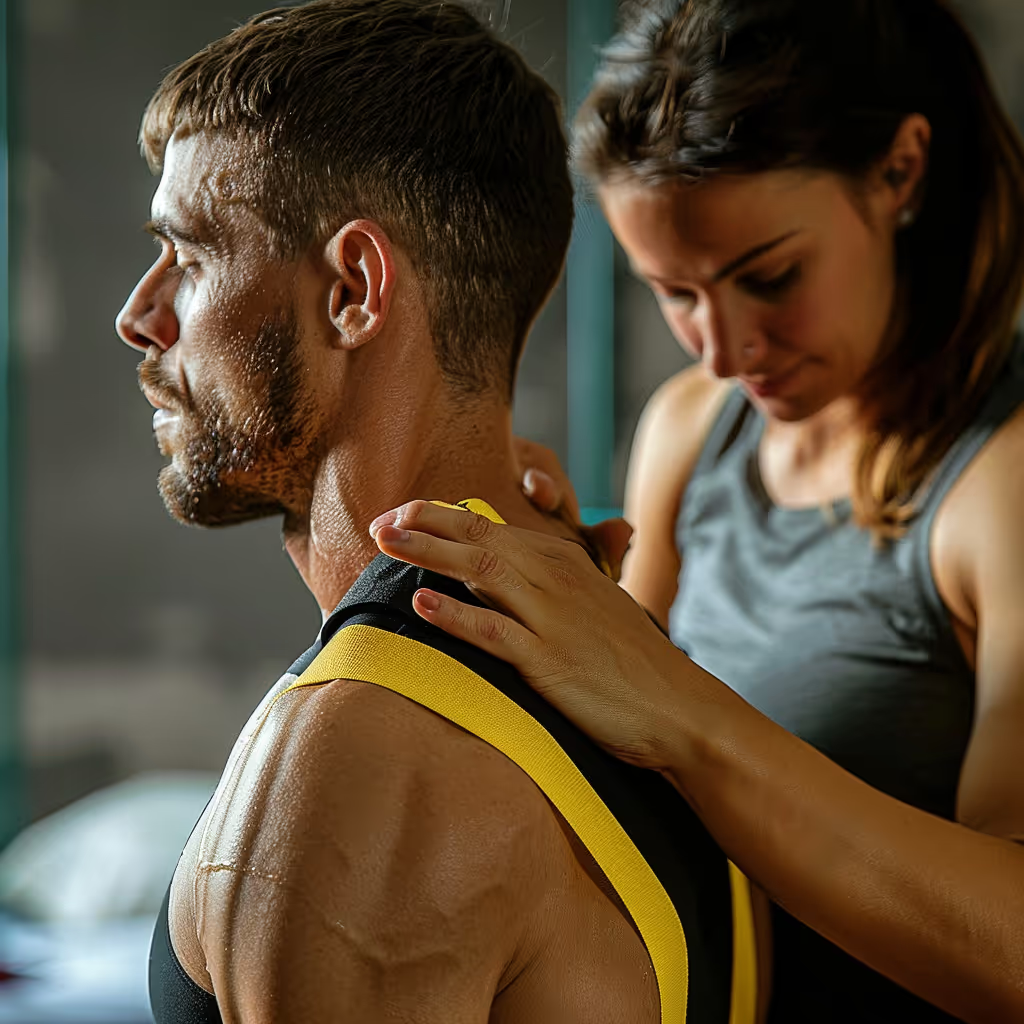
Knee Pain: Complete Guide
.png)
.png)
.png)




Knee pain affects 1 in 4 people. It turns simple actions like climbing stairs, getting up from a chair, or even walking into a challenge.
At Physioactif, we treat people with knee pain every day. Patellofemoral pain syndrome is the most common knee condition seen in physiotherapy.
Here's the good news: most knee pain improves with the right treatment. Physiotherapy and exercise are as effective as medication for pain relief.
What is Knee Pain (Gonalgia)?
Knee pain, also known as gonalgia, refers to any pain in or around the knee joint. It can be mechanical (triggered when you exert yourself) or inflammatory (present at rest). It can also be acute (sudden) or chronic (lasting more than 3 months).
Gonalgia affects everyone: athletes, sedentary individuals, young people, or older adults. Knee osteoarthritis is the most common cause among adults over 40-50 years old.
Types of Knee Pain
Who is affected?
Knee pain is extremely common in the general population:
- 25% of adults suffer from frequent knee pain
- 46% of people over 50 report pain
- 29% of Canadians with osteoarthritis have knee pain
- Women are affected twice as often as men
- The risk significantly increases after age 45
How Does Your Knee Work?
Your knee is the largest and most complex joint in your body. It connects the femur (thigh bone) to the tibia (shin bone) and contains two menisci that act as shock-absorbing cushions.
Knee Structures
The knee's four main ligaments play a crucial role:
- The anterior cruciate ligament (ACL) prevents the shin bone from moving forward.
- The posterior cruciate ligament (PCL) prevents the shin bone from moving backward.
- The collateral ligaments stabilize the sides of the knee
ACL injuries are common among athletes. To learn more, consult our guide on knee sprains and ACL tears.
Those that have changed our patients' lives the most. 1 per day, 2 min.
What Causes Knee Pain?
Knee pain can stem from several sources: cartilage wear (osteoarthritis), ligament injury (sprain), meniscus problems, or muscle tension. Age, being overweight, and trauma are the main risk factors.
Mechanical and Degenerative Causes
Knee osteoarthritis (gonarthrosis) causes the gradual wearing down of cartilage. In advanced cases, bones rub directly against each other. This condition affects:
- 65% of people over 65
- 80% of people over 80
To understand how to manage knee osteoarthritis, consult our complete guide on knee osteoarthritis.
Traumatic Causes
A knee sprain results from ligament damage. It is often caused by a sudden twisting motion or a rapid change in direction. The ACL is the most commonly affected ligament in athletes.
A meniscal injury occurs during a twisting motion. In younger individuals, it's often due to acute trauma. In older individuals, it's typically due to gradual wear and tear.
Inflammatory Causes
Rheumatoid arthritis, gout, and pseudogout cause knee pain. These conditions are characterized by pain at rest and morning stiffness lasting more than 30 minutes. To understand the different types of joint pain, consult our dedicated guide.
Muscular and Periarticular Causes
How to distinguish between different types of pain and recognize warning signs?
The location and type of pain indicate the source of the problem. Pain on the side suggests a meniscus issue. A feeling of instability points to ligament involvement. Diffuse pain at the front indicates a kneecap problem.1
Meniscal pain
Meniscal pain is felt along the joint line (where the thigh bone and shin bone meet), either on the inner or outer side of the knee.
Indicative signs:
- Clicking or popping sounds during movement
- Possible knee locking
- Intermittent swelling
- Pain when twisting the knee
Ligament pain
Ligament damage is characterized by a feeling of instability. Your knee may feel like it's "giving way." Consult our guide on ligament pain for more details.
10 Quick Tips for Understanding Your Pain
The ones that have made the biggest difference in my patients' lives. 1 a day, 2 minutes.
Joint pain (osteoarthritis)
Osteoarthritis pain follows a mechanical pattern. It is usually worst in the evening after a day of activity. Morning stiffness lasts less than 15 minutes. It typically does not wake you up at night.
Muscle pain
Muscle pain is located around the joint. It is accompanied by a feeling of the knee "giving way" and palpable tension.
Common Symptoms
Common symptoms include:
- Localized or widespread pain
- Morning Stiffness (less than 15 minutes for osteoarthritis)
- Swelling (joint effusion)
- Clicking, popping, or creaking sounds
- Feeling of Instability
- Limited range of motion
Warning signs requiring prompt consultation
Consult a professional the same day if you experience:
- Very Intense Pain
- Fever (possible sign of infection)
- Swollen, Red, and Warm Knee
- Knee swelling while on anticoagulants
When to call emergency services
Our physical therapists can assess your condition and provide you with a personalized treatment plan.
When should you see a professional?
Consult a professional if the pain persists for more than 3 days, gradually worsens, or if your knee is red, warm, and swollen. In Quebec, you do not need a medical referral to see a physiotherapist.
Consultation in the Coming Days
Make an appointment if:
- If pain persists after 3 days (despite rest, ice, and pain relievers)
- If your pain worsens
- If you can no longer bend or straighten your knee
- If swelling appears after an injury
Direct Access to a Physiotherapist
In Quebec, you can see a physiotherapist directly, without a doctor's referral. The physiotherapist will assess your condition, provide a diagnosis, and begin treatment. If needed, they will refer you to a doctor.
People who seek help quickly are 8 times less likely to develop chronic pain.
How Does a Physiotherapist Assess Your Knee?
Your physiotherapist will examine your knee by observing your gait, feeling the structures around the knee, and performing specific tests. This assessment helps identify the source of your pain and allows them to create a personalized treatment plan. To learn more, read our article on what to expect during a physiotherapy assessment.
The Clinical Examination
The assessment begins with observation:
- Standing position: checking for any deviations
- Walking: analyzing your gait and checking for any limping
- Knee: checking for swelling
Palpation helps identify painful structures such as bones, ligaments, menisci, and muscles.
Specific tests
When is Imaging Necessary?
Imaging is not always necessary. A clinical examination is often sufficient for diagnosis and treatment. X-rays can confirm osteoarthritis. An MRI is useful for meniscal injuries or if conservative treatment has not been effective.
How does physiotherapy treat knee pain, and is it effective?
The physiotherapy combines manual therapy, therapeutic exercises, and education. This approach is as effective as medication for knee osteoarthritis.2
Manual therapy
- Joint mobilizations to improve range of motion
- Soft tissue techniques to release tension
- Mulligan mobilizations, effective for osteoarthritis
Significant pain reduction occurs after 3 weeks of manual therapy.3
Therapeutic Exercises
The benefits of exercises can last up to a year. Without a maintenance program, these benefits tend to decrease around 18 months.
Education and advice
- Managing Pain in Daily Life
- Modifying activities that cause problems
- Importance of staying active
- Realistic Expectations
Complementary approaches
- Taping: supports the joint and helps reduce pain
- Braces (Orthoses): stabilize the knee
- Aquatic exercises: reduce stress on joints
For osteoarthritis, treatment combines exercises, education, and, if necessary, weight loss. Every kilo lost reduces the load on your knees.
Effectiveness demonstrated by research
Studies show a 75-85% success rate for treating knee pain with physiotherapy.4 The combination of therapeutic exercises, manual therapy, and education is particularly effective in reducing pain and improving function.
Treatment effectiveness depends on several factors: how early you seek consultation (earlier means better results), consistency with home exercises, the type of condition (meniscus, osteoarthritis, patellofemoral pain syndrome), and quadriceps strength. A comprehensive evaluation allows us to tailor treatment to your specific situation.
Most patients notice improvement within the first 3-4 weeks, with complete resolution in 8-12 weeks.5
Are you suffering from knee pain? Book an appointment for a comprehensive evaluation and a personalized treatment plan.
What exercises help relieve knee pain?
Quadriceps strengthening exercises, hamstring stretches, and balance exercises are the most beneficial. A 4 to 6-week program significantly improves pain.
Strengthening exercises
Balance exercises
Recommended Stretches
Bridge: Lie on your back with knees bent, then lift your hips. Hold for 3 to 5 seconds. Repeat 10 to 15 times.
Need professional advice?
Our physical therapists can assess your condition and provide you with a personalized treatment plan.
Make an appointmentMistakes to Avoid
- Do not push through if pain increases
- Avoid deep squats beyond 90 degrees
- Don't skip your warm-up
- Give the program 4 to 6 weeks.
Mild pain is acceptable at first. If it persists beyond 6 weeks, consult a physiotherapist.
Can You Treat Knee Pain Yourself?
Self-treatment can relieve mild knee pain (ice, rest, gentle stretches). However, without a precise diagnosis (meniscus vs. osteoarthritis vs. patellofemoral pain syndrome), exercises can worsen certain conditions. Without an accurate diagnosis, you risk maintaining compensations or doing counterproductive exercises that delay healing.
A physiotherapist uses clinical tests to identify the affected structure and adapts treatment accordingly. An evaluation helps identify the exact cause, rule out red flags, and create a progressive treatment plan. Exercises are tailored to your specific condition, not generic.
Our approach: professional assessment + supervised home exercise program = better long-term results.
Are you hesitating between self-treatment and a consultation? Free 15-min consultation to discuss your situation.
How long does recovery take, and how can recurrence be prevented?
The duration depends on the cause. Minor pain: a few days. Sprain: 2 to 6 weeks. Osteoarthritis: long-term management. Consulting early reduces the risk of chronic pain by 8 times. To understand how to manage chronic pain, consult our guide.
Recovery Times
Factors Influencing Recovery
- Severity of the Injury
- Age
- Physical Condition
- Adherence to the exercise program
- Timing of Consultation
How to Prevent Knee Pain
Maintain a healthy weight: every extra kilo adds 4 kg of pressure on your knees. Stay active, strengthen your muscles, and warm up. Movement nourishes cartilage.
Weight Management:
- Every extra kilo exerts 4 kg of additional pressure
- Losing 5 kg reduces the load by 20 kg with every step
- Weight loss reduces pain and prevents the progression of osteoarthritis
Exercise and Physical Activity:
Movement nourishes cartilage through synovial fluid. It prevents stiffness and strengthens muscles. A program 2 to 3 times a week protects your knees.
Warm-up and Recovery:
- Warm up for 5 to 10 minutes before activity
- Gradually prepare your joints.
- Allow yourself recovery time
Limit activities that cause pain. If you're unsure, consult a physiotherapist.
What are the frequently asked questions about knee pain?
Should you apply heat or cold?
Apply cold for an acute injury, inflammation, or swelling (48-72 hours). Apply heat for stiffness, muscle tension, or chronic pain. When in doubt, cold is safer.
Is it normal for my knee to crack?
Cracking sounds without pain are harmless. If accompanied by pain, swelling, or locking, consult a professional. Cracking is common with osteoarthritis but does not predict worsening.
Can I exercise with knee pain?
Yes, adjust the intensity. Mild pain is acceptable. Avoid exercises that significantly increase your pain. Movement helps promote healing.
Can knee osteoarthritis improve?
Cartilage doesn't regenerate, but symptoms can improve. Exercise and education are as effective as medication. Weight loss also offers benefits. Discover why osteoarthritis isn't always the cause of pain.
Do I need an MRI?
Not necessarily. A clinical examination is often enough. An MRI confirms meniscal injuries or is used if conservative treatment fails. For osteoarthritis, an X-ray is sufficient.
Is physiotherapy covered in Quebec?
Private insurance generally provides coverage. RAMQ does not cover it, except for specific exceptions. CNESST and SAAQ cover cases within their respective contexts.
How many sessions are needed?
A typical program includes 6 to 12 sessions. Home exercises are essential. Maintenance follow-ups may be recommended for osteoarthritis.
References
-
Crossley KM, Stefanik JJ, Selfe J, et al. 2016 Patellofemoral pain consensus statement from the 4th International Patellofemoral Pain Research Retreat. Br J Sports Med. 2016;50(14):839-843. doi:10.1136/bjsports-2016-096384
-
Fransen M, McConnell S, Harmer AR, et al. Exercise for osteoarthritis of the knee. Cochrane Database Syst Rev. 2015;1:CD004376. doi:10.1002/14651858.CD004376.pub3
-
Deyle GD, Henderson NE, Matekel RL, et al. Effectiveness of manual physical therapy and exercise in osteoarthritis of the knee. Ann Intern Med. 2000;132(3):173-181. doi:10.7326/0003-4819-132-3-200002010-00002
-
Collins NJ, Barton CJ, van Middelkoop M, et al. 2018 Consensus statement on exercise therapy and physical interventions for patellofemoral pain from the 5th International Patellofemoral Pain Research Retreat. Br J Sports Med. 2018;52(18):1170-1178. doi:10.1136/bjsports-2018-099397
-
Skou ST, Roos EM, Laursen MB, et al. A randomized, controlled trial of total knee replacement. N Engl J Med. 2015;373(17):1597-1606. doi:10.1056/NEJMoa1505467
This guide was written by the Physioactif team. For a personalized assessment, book an appointment with one of our physiotherapists.
Videos in this category
Other conditions

Hip osteoarthritis is the normal wear and tear of the hip joint. It is often said that osteoarthritis is the wear and tear of the cartilage between our bones. That is true, but it involves more than just the cartilage. Cartilage is a tissue that acts as a cushion between the surfaces of our bones and allows our joints to glide smoothly and move fluidly.
This is normal wear and tear of the knee joint. It’s often said that osteoarthritis is the wearing down of the cartilage between our bones. That’s true, but it’s more than just the cartilage. Cartilage is a tissue that acts as a cushion between the surfaces of our bones and allows our joints to glide smoothly and move fluidly.
It is an inflammation of the subacromial bursa in the shoulder joint.
A bursa is a small, thin sac filled with fluid that is found in many of the body's joints. This small sac acts as a cushion within the joint and lubricates the structures that are subject to increased friction.
It is a tissue that surrounds the shoulder and helps keep the shoulder bone in place within the joint. The capsule helps keep the joint stable.
Neck pain is a general term used to describe pain in the neck that has no specific cause, such as an accident or a sudden awkward movement. Neck pain is therefore synonymous with “my neck hurts, and nothing in particular happened.”
In both types of injury, pain is felt in the neck and then radiates into the arm, or vice versa.
It is a severe strain or tear of the muscle fibers in the groin or inner thigh.
Make an appointment now
We offer a three-pronged quality assurance approach: optimized treatment time, a second opinion from a physical therapist, and ongoing expertise to ensure effective care tailored to your needs.
Customer satisfaction is our top priority
At Physioactif, excellence guides everything we do, but our patients are the best ones to tell you about it. Take a look at their verified reviews to get a real sense of their experience.











Discover our physical therapy clinics
We have locations in several areas to better serve you.
Blainville
190 Bas-de-Sainte-Thérèse Road, Suite 110,
Blainville, Quebec
J7B 1A7
Located in Blainville, near Rosemère, the Physioactif clinic is easily accessible to residents of the area and the surrounding communities
Laval
3224 Jean-Béraud Ave., Suite 220, Laval,
QC H7T 2S4
Located in Chomedey, in the heart of Laval, the Physioactif clinic is easily accessible to people in the area
Montreal
8801 Lajeunesse Street,
Montreal,
QC H2M 1R8
Located in Ahuntsic, near Villeray, the Physioactif clinic is easily accessible to residents of both neighborhoods
Saint-Eustache
180 25th Avenue, Suite
201 Saint-Eustache
QC J7P 2V2
Located in Saint-Eustache, the Physioactif clinic is easily accessible to residents of the area and the surrounding communities
Vaudreuil
21 Cité-des-Jeunes Boulevard, Suite 240,
Vaudreuil-Dorion, Quebec
J7V 0N3
Located in Vaudreuil-Dorion, the Physioactif clinic is easily accessible to people in the area
Make an appointment now