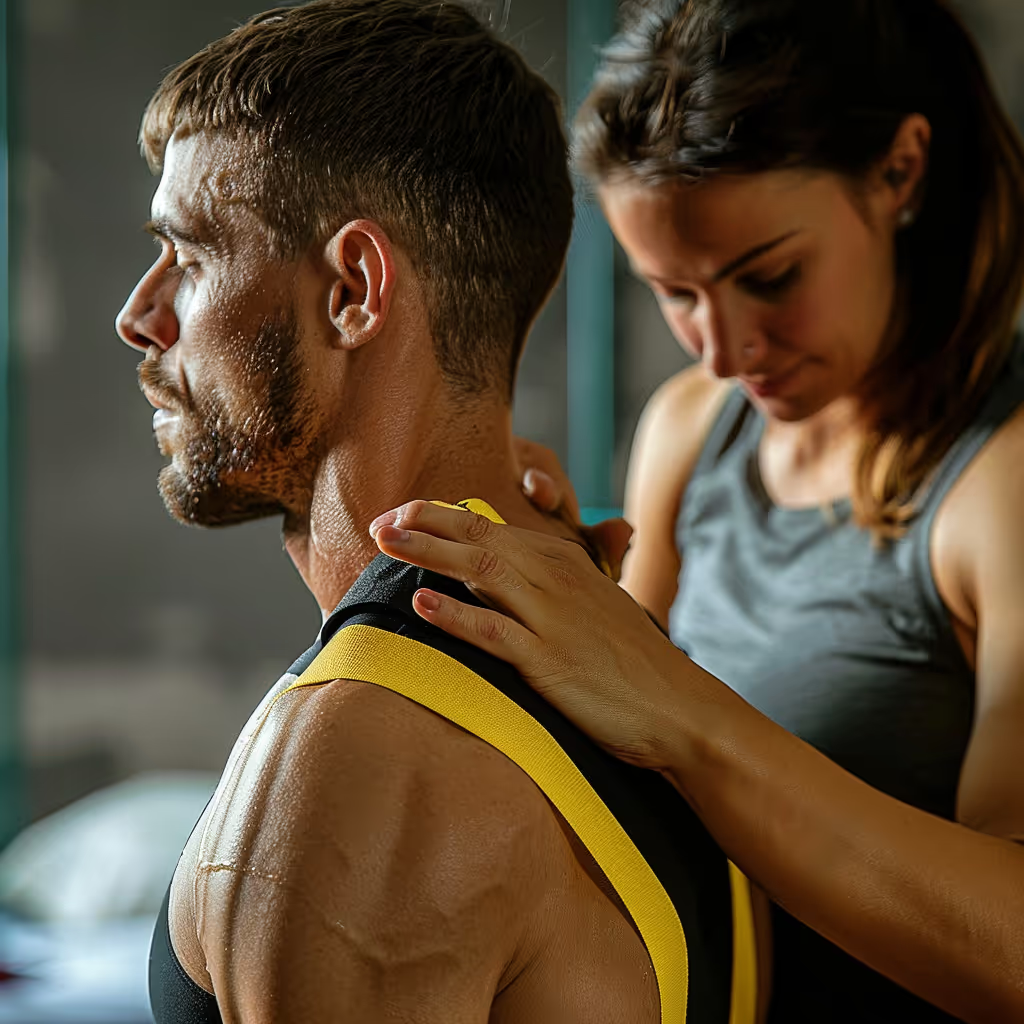
Do you experience shoulder pain that interferes with your daily activities? You are not alone. This condition affects up to 70% of the population during their lifetime.
5 et représente le troisième motif de consultation musculosquelettique. Nos [physiothérapeutes spécialisés](/services/physiotherapie) accompagnent quotidiennement des patients qui vivent avec cette douleur.
Voici la bonne nouvelle: dans la majorité des cas, la douleur à l'épaule n'est pas grave et ne nécessite pas de chirurgie. Entre 60 et 90% des personnes guérissent avec un [traitement conservateur](/ressources/eviter-la-chirurgie) sans intervention chirurgicale.
Ce guide vous explique pourquoi votre douleur survient, quelles en sont les causes principales et comment retrouver votre mobilité. Les méta-analyses de 2024 confirment que la [physiothérapie avec exercices spécifiques](/traitements/exercices-therapeutiques) constitue le traitement de première ligne pour les [douleurs de l'épaule et du bras](/douleurs/epaule-et-bras).
## 🎯 IDENTIFIER: Qu'est-ce que la douleur à l'épaule et pourquoi est-elle si fréquente?
La douleur à l'épaule affecte l'articulation ou ses structures environnantes. Cette condition touche presque une personne sur deux chaque année (prévalence annuelle de 47%). L'épaule sacrifie la stabilité pour l'amplitude de mouvement, ce qui explique cette fréquence élevée.
L'épaule fonctionne comme l'articulation la plus mobile du corps humain. Nos activités quotidiennes la sollicitent constamment: faire l'épicerie, le ménage, travailler à l'ordinateur. L'épaule travaille souvent contre la gravité, ce qui augmente le stress sur ses structures.
### Comment fonctionne l'articulation de l'épaule?
L'épaule comprend trois articulations principales. La tête de l'humérus s'emboîte dans une cavité peu profonde de l'omoplate, comme une balle de golf sur un tee. Cette configuration permet une grande mobilité mais offre peu de stabilité osseuse.
Quatre muscles stabilisateurs forment la [coiffe des rotateurs](/guide-complet/dechirure-coiffe-des-rotateurs). Ils maintiennent la tête de l'humérus centrée dans la cavité pendant les mouvements. La bourse sous-acromiale, un coussin rempli de liquide, réduit la friction lors de l'élévation du bras.
### Qui est le plus à risque de développer une douleur à l'épaule?
Facteur de risque
Risque relatif
Ce que ça signifie
Âge > 50 ans
OR 3,31
3 fois plus de risque
Diabète
OR 2,24
12% capsulite vs 2% population
Travail répétitif bras élevés
OR 2,41
Peintres, mécaniciens, coiffeurs
Tabagisme
Augmenté
Guérison ralentie
## 🔍 COMPRENDRE: Quelles sont les causes les plus fréquentes de la douleur à l'épaule?
Quatre conditions dominent les causes de douleur à l'épaule. La [tendinopathie de la coiffe des rotateurs](/guide-complet/tendinopathie-ou-tendinite-a-lepaule) représente 44 à 65% des cas. La [bursite sous-acromiale](/guide-complet/bursite-a-lepaule), la [capsulite rétractile](/guide-complet/capsulite) et le [syndrome d'accrochage](/guide-complet/syndrome-daccrochage-a-lepaule) complètent ce tableau clinique.
Condition
Fréquence
Symptôme principal
Durée guérison
Tendinopathie coiffe
44-65%
Arc douloureux 60-120°
3-6 mois
Bursite
Fréquente
Douleur nocturne
2-8 semaines
Capsulite
2-5%
Raideur toutes directions
18-30 mois
Accrochage
~50%
Pincement élévation
Variable
### Qu'est-ce que la tendinopathie de la coiffe des rotateurs?
La tendinopathie provoque une dégénérescence des tendons des quatre muscles stabilisateurs. Elle cause deux douleurs sur trois à l'épaule. La douleur survient lors de l'élévation du bras, surtout entre 60 et 120 degrés (arc douloureux caractéristique).
Le tendon du supra-épineux subit le plus souvent cette atteinte. Consultez notre [guide complet sur la tendinite de l'épaule](/guide-complet/tendinopathie-ou-tendinite-a-lepaule) pour comprendre cette condition en profondeur.
### Qu'est-ce que la bursite sous-acromiale?
La bursite enflamme la bourse située sous l'acromion. Elle cause une douleur à l'avant et sur le dessus de l'épaule. La douleur nocturne caractérise cette condition et vous réveille souvent si vous dormez sur l'épaule affectée. La plupart des cas guérissent en 2 à 8 semaines avec un [traitement conservateur](/ressources/eviter-la-chirurgie).
Découvrez notre [guide sur la bursite de l'épaule](/guide-complet/bursite-a-lepaule) pour des stratégies de gestion spécifiques.
### Qu'est-ce que la capsulite rétractile ou épaule gelée?
La capsulite épaissit la capsule articulaire progressivement. Vous perdez la capacité de bouger dans toutes les directions, même les mouvements passifs (effectués par quelqu'un d'autre) deviennent limités. Trois phases marquent son évolution: gel (6 semaines à 9 mois), gelée (4 à 12 mois), dégel (6 à 24 mois).
Le diabète augmente considérablement le risque. Les diabétiques développent une capsulite dans 12% des cas, contre seulement 2% de la population générale. Durée moyenne: 18 à 30 mois. Consultez notre [guide sur la capsulite](/guide-complet/capsulite) pour un accompagnement détaillé.
### Qu'est-ce que le syndrome d'accrochage sous-acromial?
L'accrochage survient quand l'espace entre l'humérus et l'acromion se rétrécit. Les structures molles (tendons, bourse) se coincent lors de l'élévation. La douleur apparait typiquement entre 60 et 120 degrés d'élévation. Cette condition représente environ 50% des consultations pour douleur à l'épaule.
Consultez notre [guide sur le syndrome d'accrochage](/guide-complet/syndrome-daccrochage-a-lepaule) pour comprendre les mécanismes et traitements spécifiques.
Ceux qui ont le plus changé la vie de mes patients. 1 par jour, 2 min.
// UTM tracking on interaction only (not on page load)
(function(){
var added = false;
function addUtm() {
if (added) return;
var url = new URL(window.location.href);
if (url.searchParams.has('utm_source')) return;
var path = window.location.pathname;
var parts = path.split('/').filter(Boolean);
url.searchParams.set('utm_term', parts[parts.length - 1] || 'homepage');
url.searchParams.set('utm_source', parts[0] || 'direct');
url.searchParams.set('utm_medium', 'cta-inline-form');
window.history.replaceState({}, '', url.toString());
added = true;
}
document.querySelectorAll('iframe[src*="clikzi.com"]').forEach(function(iframe) {
iframe.addEventListener('focus', addUtm);
iframe.parentElement.addEventListener('click', addUtm);
});
document.querySelectorAll('a[href*="clinicmaster.com"]').forEach(function(link) {
link.addEventListener('click', function() {
var path = window.location.pathname;
var parts = path.split('/').filter(Boolean);
var linkUrl = new URL(link.href);
if (!linkUrl.searchParams.has('utm_source')) {
linkUrl.searchParams.set('utm_term', parts[parts.length - 1] || 'homepage');
linkUrl.searchParams.set('utm_source', parts[0] || 'direct');
linkUrl.searchParams.set('utm_medium', 'cta-rdv');
link.href = linkUrl.toString();
}
});
});
})();
## Comment reconnaître les symptômes et diagnostiquer un problème à l'épaule?
Plusieurs symptômes signalent un problème à l'épaule. La douleur, localisée ou irradiant vers le bras, domine le tableau clinique. La raideur limite les activités quotidiennes: lever le bras, mettre une veste, se coiffer, attacher son soutien-gorge.
Condition
Symptôme principal
Caractéristique distinctive
Tendinopathie coiffe
Douleur à l'effort
Arc douloureux 60-120 degrés
Capsulite
Raideur progressive
Toutes directions limitées
Bursite
Douleur nocturne
Réveil si couché sur épaule
Déchirure coiffe
Faiblesse marquée
Incapacité rotations
**Pourquoi ai-je mal à l'épaule la nuit?**
Trois mécanismes physiologiques expliquent la douleur nocturne intense. Votre corps réduit la production de cortisol (hormone anti-inflammatoire) pendant la nuit. La position couchée comprime les structures enflammées. La circulation ralentie permet aux substances inflammatoires de s'accumuler localement.
**Quelle position de sommeil adopter?**
Deux positions soulagent efficacement la douleur nocturne. Dormez sur le côté opposé avec un oreiller devant vous et posez votre bras affecté dessus pour le soutenir. Ou dormez sur le dos avec un coussin sous le coude pour éviter la compression. Ne dormez jamais directement sur l'épaule douloureuse, cela aggrave l'inflammation.
**Comment établir le diagnostic?**
Le [physiothérapeute](/services/physiotherapie) établit le diagnostic par un examen clinique approfondi. Il évalue la mobilité active et passive, teste la force musculaire et reproduit la douleur par des tests spécifiques. L'imagerie reste réservée aux cas complexes ou avant une intervention chirurgicale.
L'examen clinique suffit dans la majorité des cas pour établir un diagnostic précis. Fait intéressant: l'IRM détecte des déchirures partielles chez 20% des personnes de 40-60 ans sans aucune douleur.
1 Ultrasound effectively visualizes tendons in real time. MRI is mainly used for pre-surgical evaluations.
Need professional advice?
Our physical therapists can assess your condition and offer you a personalized treatment plan.
[Make an appointment](https://physioactif.clinicmaster.com/clinic-selection?lang=fr-CA)
10 mini-tips to understand your pain
Those who have had the greatest impact on my patients' lives. 1 per day, 2 min.
## 💡 AGIR: Quels sont les traitements efficaces pour la douleur à l'épaule?
La [physiothérapie](/services/physiotherapie) constitue le traitement de première ligne recommandé. Les [exercices thérapeutiques spécifiques](/traitements/exercices-therapeutiques), la [thérapie manuelle](/services/therapie-manuelle) et les anti-inflammatoires en phase aiguë composent l'arsenal conservateur. Les infiltrations interviennent après 6-8 semaines d'échec. La chirurgie reste réservée aux échecs après 6-12 mois de traitement conservateur bien conduit.
Entre 60 et 90% des patients guérissent avec le traitement conservateur, sans recourir à la chirurgie.
Ce que vous voulez savoir
Chiffre
Ce que ça signifie
Taux succès sans chirurgie
60-90%
Physiothérapie fonctionne pour la majorité
Durée avant infiltration
6-8 semaines
Essayer physio d'abord
Succès conservateur
60% en 2 ans
Patience récompensée
### Comment soulager rapidement à la maison?
Appliquez [de la glace en phase aiguë](/traitements/glace-vs-chaleur): 15-20 minutes, 3-4 fois par jour pour réduire l'inflammation. Adoptez un repos relatif sans immobilisation complète, le mouvement favorise la guérison. Réservez la chaleur uniquement aux tensions musculaires chroniques, jamais en phase aiguë.
### Quand les infiltrations ou la chirurgie sont-elles nécessaires?
Les médecins prescrivent les infiltrations de cortisone après échec de 6-8 semaines de physiothérapie bien conduite. L'effet reste temporaire (quelques semaines à quelques mois). On limite généralement à 2-3 infiltrations par année pour éviter les effets secondaires sur les tendons.
Les chirurgiens interviennent rarement en première intention. Les indications principales: déchirure complète de la coiffe chez une personne active, déchirure traumatique aiguë récente, ou échec du traitement conservateur après 6-12 mois d'efforts soutenus.
## Comment la physiothérapie traite-t-elle la douleur à l'épaule et est-ce efficace?
La physiothérapie combine [exercices thérapeutiques](/traitements/exercices-therapeutiques), [thérapie manuelle](/services/therapie-manuelle) et éducation sur la gestion de la douleur. Les méta-analyses de 2024 confirment l'efficacité supérieure de cette approche multimodale jusqu'à 52 semaines de suivi.
**Efficacité démontrée par la recherche:**
La physiothérapie est reconnue comme un traitement efficace pour la douleur à l'épaule, avec des résultats soutenus par la recherche scientifique. Les études démontrent un taux de succès de 70-85% pour le traitement de la douleur à l'épaule par la physiothérapie.^2,3^ La combinaison d'exercices thérapeutiques, de thérapie manuelle et d'éducation s'avère particulièrement efficace pour réduire la douleur et améliorer la fonction.
L'efficacité du traitement dépend de plusieurs facteurs: la précocité de la consultation (plus tôt = meilleurs résultats), l'assiduité aux exercices à domicile, la présence de tendinite, la qualité de la coiffe des rotateurs, l'âge du patient. Une évaluation complète permet d'adapter le traitement à votre situation spécifique.
La plupart des patients constatent une amélioration dans les 2-4 semaines premières séances, avec une résolution complète en 8-12 semaines.
Vous souffrez de la douleur à l'épaule? [**Prenez rendez-vous**](https://physioactif.clinicmaster.com/clinic-selection?lang=fr-CA) pour une évaluation complète et un plan de traitement personnalisé.
### Quels types d'exercices?
Le programme débute par des contractions isométriques (sans mouvement) en phase initiale pour renforcer sans irriter. Vous progressez ensuite vers des exercices avec résistance progressive (élastiques, poids légers). Les exercices de stabilisation scapulaire (omoplate) jouent un rôle crucial souvent négligé.
Phase
Type d'exercice
Exemple
Initiale
Isométriques
Contraction sans mouvement
Intermédiaire
Résistance légère
Rotations avec élastique
Avancée
Renforcement fonctionnel
Mouvements quotidiens
## Quels exercices faire chez soi?
Plusieurs exercices simples complètent votre traitement à domicile. Le pendulaire de Codman améliore la mobilité sans stress. Les étirements de la capsule postérieure assouplissent l'articulation progressivement. Le renforcement isométrique renforce la coiffe sans douleur. Consultez toujours un [physiothérapeute](/ressources/quand-consulter-un-physiotherapeute) avant de débuter pour adapter les exercices à votre condition.
La régularité détermine le succès du traitement. Préférez 10 minutes chaque jour à 60 minutes une fois par semaine. Les premiers gains mesurables apparaissent généralement après 4-6 semaines d'exercices réguliers.
### L'exercice pendulaire de Codman
Les physiothérapeutes prescrivent cet exercice en premier durant la phase aiguë. Tenez-vous à côté d'une table et penchez-vous en prenant appui avec votre main saine. Laissez le bras affecté pendre librement, complètement relâché. Initiez des mouvements de balancement doux par de légers mouvements du corps, pas du bras. Effectuez des mouvements avant-arrière, latéraux, puis en cercles. Répétez 2-3 fois par jour, 1-2 minutes à chaque fois.
### Étirements efficaces
L'étirement de la capsule postérieure soulage particulièrement bien la raideur. Croisez le bras affecté devant la poitrine et tirez doucement le coude vers vous avec l'autre main pendant 30 secondes. Vous devriez sentir un étirement à l'arrière de l'épaule. L'étirement des pectoraux ouvre l'avant de l'épaule souvent contracté. Placez l'avant-bras dans un cadre de porte et tournez doucement le corps à l'opposé pendant 30 secondes.
### Peut-on Traiter la douleur à l'épaule Soi-Même?
L'auto-traitement peut soulager la douleur à l'épaule légère (glace, repos, étirements légers). Cependant, sans corriger la mécanique de l'épaule (posture, force de la coiffe), la douleur revient souvent. Sans diagnostic précis, vous risquez de maintenir des compensations ou de faire des exercices contre-productifs qui retardent la guérison.
Le physiothérapeute identifie les déséquilibres musculaires spécifiques et corrige la technique de mouvement pour prévenir les récidives. Une évaluation permet d'identifier la cause exacte, d'éliminer les drapeaux rouges, et de créer un plan de traitement progressif. Les exercices sont adaptés à votre condition spécifique, pas génériques.
Notre approche: évaluation professionnelle + programme d'exercices à domicile supervisé = meilleurs résultats à long terme.
Vous hésitez entre auto-traitement et consultation? [**Consultation gratuite de 15 min**](https://physioactif.clinicmaster.com/clinic-selection?lang=fr-CA) pour discuter de votre situation.
## Combien de temps pour guérir?
La durée de guérison varie considérablement selon la condition diagnostiquée. La bursite guérit relativement rapidement en 2-8 semaines. La tendinopathie nécessite plus de patience: 3-6 mois en moyenne. La capsulite demande le plus long délai: 18-30 mois pour une résolution complète. Environ 50% des patients s'améliorent significativement en 6 mois avec un traitement adéquat et régulier.
### Facteurs influençant la guérison
Plusieurs facteurs modifient la durée de récupération de manière importante. L'âge ralentit la régénération tissulaire chez les personnes de plus de 50 ans. Le diabète nécessite un contrôle glycémique optimal pour favoriser la guérison. Le tabagisme réduit significativement la circulation sanguine aux tendons. L'adhérence aux exercices prescrits constitue le facteur le plus important que vous contrôlez directement.
Condition
Durée typique
Facteurs aggravants
Bursite
2-8 semaines
Mouvements répétitifs
Tendinopathie
2-6 mois
Chronicité, dégénérescence
Capsulite
18-30 mois
Diabète, immobilisation
Post-chirurgie
3-12 mois
Âge, comorbidités
## Quand consulter un professionnel?
[Consultez un physiothérapeute](/ressources/quand-consulter-un-physiotherapeute) si la douleur persiste plus de 2 semaines malgré le repos relatif, perturbe votre sommeil de façon répétée, limite significativement vos activités quotidiennes ou s'accompagne de faiblesse musculaire notable. Une douleur thoracique irradiant vers l'épaule ou une perte de force brutale nécessite une consultation urgente.
### Drapeaux rouges urgents
Certains symptômes exigent une attention médicale immédiate. Une douleur thoracique irradiant vers l'épaule gauche accompagnée d'essoufflement ou de nausées: appelez le 911 immédiatement. Une perte de force brutale après un trauma peut signaler une rupture complète de la coiffe nécessitant une évaluation rapide. Une fièvre avec douleur articulaire suggère une possible infection articulaire. Une déformation visible indique une luxation ou fracture nécessitant des soins d'urgence.
### Qui consulter?
Au Québec, les [physiothérapeutes](/services/physiotherapie) offrent un accès direct sans ordonnance médicale. Ils peuvent évaluer, diagnostiquer et traiter les conditions musculosquelettiques de manière autonome. Le médecin de famille prescrit l'imagerie (radiographie, échographie, IRM) ou les infiltrations au besoin. L'orthopédiste intervient lorsque la chirurgie devient nécessaire après échec du traitement conservateur.
Consultez notre page sur les [douleurs de l'épaule et du bras](/douleurs/epaule-et-bras) pour plus d'informations sur les différentes conditions.
## Quels sont les points clés à retenir sur la douleur à l'épaule?
La douleur à l'épaule se traite efficacement sans chirurgie dans la vaste majorité des cas. La [tendinopathie de la coiffe](/guide-complet/tendinopathie-ou-tendinite-a-lepaule) cause deux douleurs sur trois. La [physiothérapie avec exercices spécifiques](/traitements/exercices-therapeutiques) constitue le traitement de première ligne selon les plus récentes données probantes.
**Points clés:**
- Une personne sur deux souffre de douleur à l'épaule chaque année,
4 but 60-90% recover without surgery
2
- First-line physical therapy has been proven to be highly effective in meta-analyses.
- Recovery time varies from a few weeks to several months, depending on the diagnosed condition.
- [Consult a professional](/resources/when-to-see-a-physical-therapist) if the pain persists for more than two weeks or disrupts your sleep.
You are not alone in this challenge. The right treatment combined with your commitment to exercise will help you regain a functional, pain-free shoulder. [Make an appointment](https://physioactif.clinicmaster.com/clinic-selection?lang=fr-CA) today to begin your journey to recovery.
## References
1. Shoulder pain prevalence and incidence: Meta-analysis of observational studies (2024). *Journal of Shoulder and Elbow Surgery*
2. Conservative treatment versus surgery for rotator cuff tears: Systematic review and meta-analysis (2024). *BMJ Open*
3. Risk factors for shoulder pain: Population-based cohort study (2023). *British Journal of Sports Medicine*
4. Physical therapy exercise protocols for rotator cuff tendinopathy: Clinical practice guidelines (2024). *Journal of Orthopaedic & Sports Physical Therapy*
5. Diabetes and adhesive capsulitis: Epidemiological analysis (2023). *Diabetes Care*
*Last updated: January 2026*
.png)
.png)
.png)