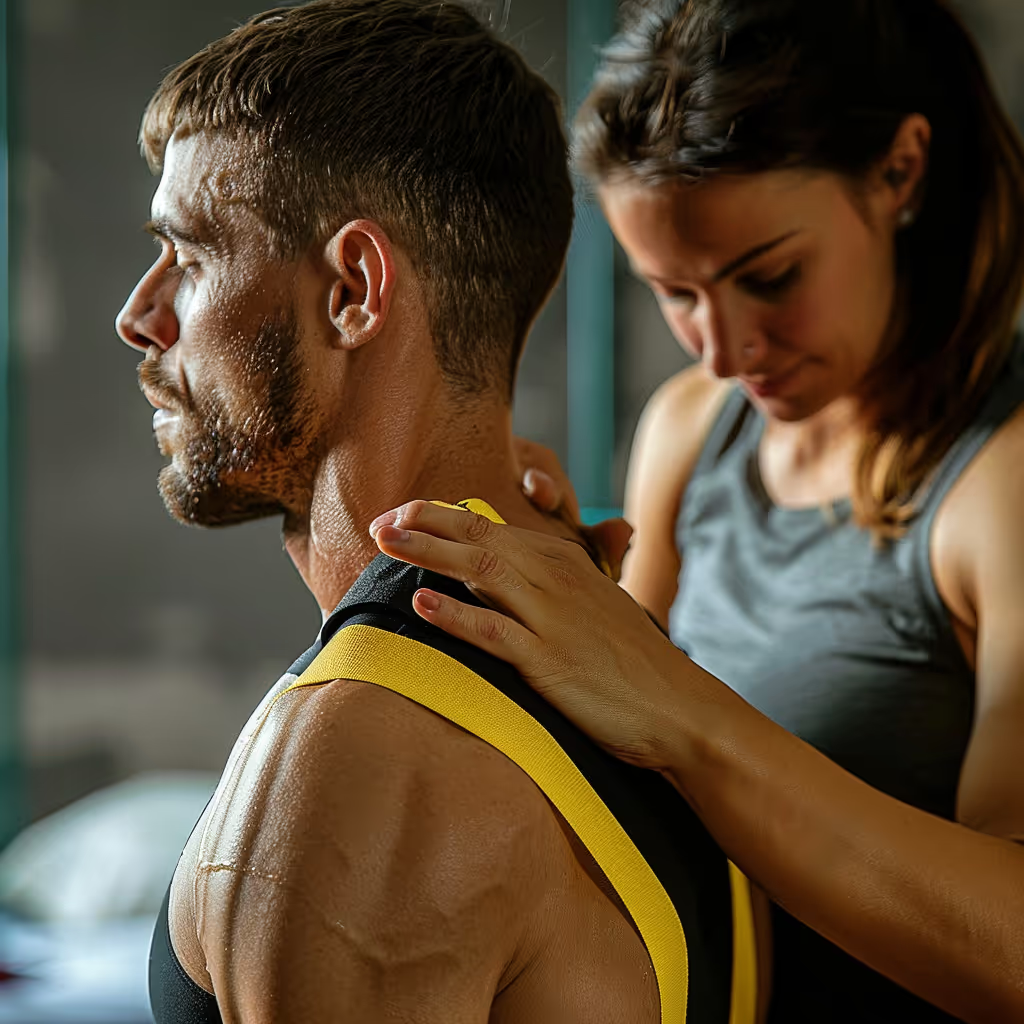
Physical therapy is the recommended first-line treatment for most acute pain. Studies show that seeing a physical therapist within the first few days after an injury reduces pain more quickly and lowers the risk of it becoming chronic.
1 Whether you have a recent sprain, a strained back, a sports injury, or post-operative pain, this active approach promotes optimal healing.
This guide explains how physical therapy works for acute problems. You will learn when to seek treatment, what techniques are used, and what to expect during your treatment. If you want to first understand what acute pain is and how it works, check out our [comprehensive guide to acute pain](/guide-complet/douleur-aigue-guide-complet).
## What is physical therapy for acute pain?
Physical therapy for acute pain is an early intervention that aims to optimize your recovery in the first few days after an injury. It combines accurate assessment of your condition, pain management, progressive mobilization, and education. The goal is to help you recover more quickly while preventing long-term complications.
Contrary to what many people think, you don't need to wait for the pain to subside before seeking treatment. On the contrary, early intervention yields better results.
2 Physiotherapists can safely intervene even in the first few days after an injury.
The modern approach to physiotherapy in the acute phase is based on the principle of optimal load. Your tissues heal better when they receive the right amount of movement and stress, neither too much nor too little. Prolonged complete rest, once thought to be necessary, is now recognized as harmful in most cases.
3
An important point: physical therapy for acute pain is not just about relieving your symptoms. It also aims to prevent the transition to chronic pain, a phenomenon that affects one in five people after an injury.
4 This prevention begins in the early days.
For an overview of physical therapy and its fundamental principles, see our [comprehensive guide to physical therapy](/resources/physical-therapy-everything-you-need-to-know).
## Why seek treatment early after an injury?
Seeking treatment from a physical therapist soon after an injury offers several important benefits. Studies show that early intervention reduces pain intensity, speeds up recovery, and significantly lowers the risk of developing chronic pain.
5
### Early intervention reduces the risk of chronicity
The transition from acute to chronic pain does not happen by chance. It depends on several factors, some of which can be modified by rapid intervention.
6
When your nervous system is exposed to intense pain for several weeks, it can become hypersensitive. This is called central sensitization. Once established, this sensitization is more difficult to treat. Early physical therapy helps control pain before this sensitization sets in.
Fear of movement, known as kinesiophobia, is another major risk factor for chronic pain.
7 If you avoid moving for fear of aggravating your injury, you enter a vicious cycle. Prolonged immobility weakens your muscles, stiffens your joints, and paradoxically increases your sensitivity to pain. A physical therapist helps you move safely from the outset, preventing this vicious cycle.
### Early movement promotes better healing
The PEACE and LOVE protocol has replaced the old RICE protocol for managing acute injuries.
8 This modern approach emphasizes the importance of controlled movement rather than complete rest.
**PEACE** (the first few days):
- **P**rotection: avoid activities that aggravate the pain
- **E**levation: elevate the limb to reduce swelling
- **A**void anti-inflammatories: avoid anti-inflammatory drugs that can interfere with healing
- **C**ompression: use a bandage to limit swelling
- **E**ducation: understand your injury and the healing process
**LOVE** (after a few days):
- **L**oad (optimal load): expose the tissue to appropriate stress
- **O**ptimism: maintaining a positive attitude promotes healing
- **V**ascularization: aerobic exercise increases blood flow
- **E**xercise: restore mobility, strength, and proprioception
Movement stimulates healing at the cellular level. It sends mechanical signals that activate the cells responsible for tissue repair, a process called mechanotransduction.
9 A physical therapist can guide you in finding the right amount of movement.
### Early education reduces anxiety
Not knowing what is happening with your body is stressful. This uncertainty can amplify your pain and delay your recovery. A quick assessment by a physical therapist gives you answers.
Understanding your injury, the expected healing time, and what you can actively do reduces anxiety and improves outcomes.
10 This is called therapeutic education, and it is an integral part of physical therapy treatment.
## What acute conditions does physical therapy treat?
Physical therapy effectively treats recent sprains, muscle strains, acute episodes of back or neck pain, bursitis and tendinitis in the inflammatory phase, post-operative pain, and mild to moderate trauma.
### Recent sprains and joint injuries
A sprain is an injury to the ligaments that stabilize a joint. Ankle sprains are the most common, with thousands of cases every day in North America.
11 The knee, wrist, and shoulder are also common sites.
Physical therapy is essential for complete healing of sprains. Without proper rehabilitation, the risk of recurrence is high, especially for ankle sprains. Studies show that up to 40% of people who do not undergo rehabilitation suffer a new sprain.
12
Treatment during the acute phase aims to:
- Control pain and swelling
- Maintain joint mobility
- Prevent loss of muscle strength
- Protect the ligament while it heals
To learn more about sprains and ligament injuries, see our [guide to ligament pain](/guide-complet/douleur-ligamentaire-guide-complet) and our [guide to physical therapy for ligament pain](/guide-complet/physiotherapie-douleur-ligamentaire).
### Recent muscle strains and injuries
A strain is a tear in the muscle fibers that occurs during intense exertion or sudden movement. The muscles most often affected are the hamstrings (back of the thigh), quadriceps, calves, and back muscles.
Early treatment of a strain makes all the difference. In the first few days, the physical therapist helps to control the pain and maintain appropriate mobility. Too much immobility promotes the formation of adhesions that can limit muscle function later on.
13
Progressive strengthening, particularly with eccentric exercises (where the muscle lengthens while working), can reduce recovery time by nearly 50% and significantly decrease the risk of re-injury.
14
For more information, see our [guide to muscle pain](/guide-complet/douleur-musculaire-guide-complet) and our [guide to physical therapy for muscle pain](/guide-complet/physiotherapie-douleur-musculaire).
### Acute episodes of back pain
Lumbago, back pain, lower back pain: these terms all describe an acute episode of lower back pain. It is one of the most common reasons for consulting a physical therapist.
The good news is that the vast majority of acute episodes of back pain improve within a few weeks. Early physical therapy accelerates this improvement and, above all, reduces the risk of the pain becoming chronic.
15
Studies show that people who see a physical therapist within the first few days of an acute episode of low back pain have better outcomes than those who wait.
16 They also use fewer medications and have fewer days of absence from work.
### Acute episodes of neck pain
A stiff neck or acute neck pain can occur after a sudden movement, poor sleeping position, or even for no apparent reason. The pain can be intense and significantly limit your movements.
Physical therapy helps reduce pain and restore mobility more quickly. Gentle manual techniques combined with exercises are particularly effective for acute neck pain.
17
### Bursitis and tendinitis in the inflammatory phase
Bursitis is inflammation of a bursa, a small cushion that protects the joints. Tendinitis is inflammation of a tendon. These conditions can cause acute and intense pain, especially in the shoulder, elbow, hip, or knee.
During the acute inflammatory phase, relative rest is appropriate, but not complete rest. The physical therapist identifies movements that should be temporarily avoided and those that can be maintained. They also work to identify and correct the factors that caused the inflammation in the first place.
### Post-operative pain
After surgery, physical therapy is often essential to regain mobility and strength. The timing of rehabilitation depends on the type of surgery, but it is usually sooner than you might think.
For many orthopedic surgeries, physical therapy can begin as early as the first or second day after the operation.
18 La mobilisation précoce réduit les complications, accélère la récupération et améliore les résultats à long terme.
10 mini-tips to understand your pain
Those who have had the greatest impact on my patients' lives. 1 per day, 2 min.
## Comment se déroule le traitement en physiothérapie pour une douleur aigue?
Le traitement de la douleur aigue en physiothérapie progresse à travers différentes phases. L'approche est adaptée à votre stade de guérison et à votre réponse au traitement.
### Phase immédiate (0 à 72 heures)
Dans les premiers jours suivant une blessure, l'objectif principal est de contrôler la douleur et de protéger les tissus sans nuire à la guérison.
**Ce que votre physiothérapeute fait :**
- Évalue précisément votre blessure pour écarter les problèmes graves
- Vous enseigne les techniques de protection appropriées
- Vous montre des mouvements doux à faire dans les limites de la douleur
- Vous donne des conseils sur l'utilisation du froid, de la compression et de l'élévation
- Discute de l'utilisation appropriée des médicaments avec votre médecin
À ce stade, la protection est importante, mais elle ne signifie pas l'immobilité totale. Des mouvements doux dans les amplitudes non douloureuses sont généralement bénéfiques, même dans les premières heures.
19
### Early recovery phase (3 to 14 days)
After the first few days, the tissue begins to repair itself. This is the time to gradually introduce more movement and stress.
**What your physical therapist does:**
- Gradually increases joint mobility
- Introduces light strengthening exercises
- Uses manual techniques to reduce stiffness and pain
- Encourages light aerobic activity (walking, stationary bike)
- Continues education about the healing process
The new tissue that is forming needs mechanical stress to orient itself correctly and become strong. This is why gradual movement is so important at this stage.
20
### Progressive recovery phase (2 to 6 weeks)
As healing progresses, the focus shifts to restoring strength and normal function.
**What your physical therapist does:**
- Increases the intensity of strengthening exercises
- Works on muscle endurance
- Improves proprioception (your sense of body position)
- Introduces exercises specific to your activities
- Prepares you to return to normal activities
During this phase, mild pain during exercises is often acceptable. The general rule is that pain should not exceed 3 or 4 out of 10 and should return to its baseline level within 24 hours.
21
### Return to Activities Phase (6 weeks and longer)
Before fully resuming your activities, it is important to make sure you are ready.
**What your physical therapist does:**
- Assesses whether you have regained sufficient strength and mobility
- Guides you through a gradual progression toward your activities
- Identifies and corrects risk factors for recurrence
- Provides you with a long-term maintenance program
Relying solely on the disappearance of pain to resume normal activities is a common mistake. Pain may decrease before healing is complete, leading to recurrence.
22
## What techniques are used to treat acute pain?
Physiotherapy techniques for acute pain aim to control pain, maintain mobility, and promote healing. Your physical therapist will select the most appropriate approaches based on your condition and stage of recovery.
### Therapeutic education
Education is one of the most powerful interventions in physical therapy for acute pain. Understanding your injury reduces anxiety and improves outcomes.
23
Your physical therapist explains:
- What has happened to your tissues
- How the healing process works
- What you can and cannot do
- How long recovery is likely to take
- How to distinguish normal healing pain from pain that is cause for concern
This education gives you a sense of control. You are no longer a passive victim of your injury. You understand what is happening and you know what to do.
### Therapeutic exercises
Exercise is the cornerstone of physical therapy treatment, even for acute pain. The type, intensity, and progression of the exercises are tailored to your stage of healing.
24
**Mobility exercises:** Gentle movements within pain-free ranges maintain flexibility and prevent stiffness.
**Strengthening exercises:** These start slowly and progress gradually. Strengthening is essential to protect healed tissue and prevent recurrence.
**Stabilization exercises:** These improve muscle control and coordination around the injured area.
**Aerobic exercises:** Walking, cycling, or swimming improve blood circulation and promote healing.
### Manual techniques
Manual techniques can provide quick pain relief and help restore mobility.
**Joint mobilization:** Gentle movements applied to the joints to reduce stiffness and pain.
25
**Soft tissue techniques:** Therapeutic massage and myofascial release relax tense muscles and improve circulation.
**Neurodynamic techniques:** Movements that help mobilize nerves and reduce their sensitivity.
These techniques are not long-term solutions in themselves, but they can create a window of opportunity for you to move and exercise with less pain.
### Complementary modalities
Depending on your condition, your physical therapist may use certain modalities to complement your treatment.
**Cold:** Reduces pain and swelling. It is particularly useful in the first few days after an injury. Apply for 15 to 20 minutes, several times a day.
**Heat:** Relaxes muscles and reduces stiffness. It is generally preferred after the first few days, once the initial swelling has subsided.
**Taping:** Elastic bandages can support the injured area and reduce pain during activities.
## How many sessions are needed to treat acute pain?
The number of sessions required depends on several factors: the nature of your injury, its severity, your overall health, and your goals.
### Frequency of sessions
**First week:** 2 to 3 sessions are often recommended. This frequency allows us to quickly establish a treatment program, control pain, and ensure that you are doing the exercises correctly.
**Weeks 2 to 4:** 1 to 2 sessions per week. As you progress and become more independent with your exercises, appointments are spaced out.
**Return to activities phase:** 1 session every 1 to 2 weeks or as needed. We ensure that you are progressing safely toward your normal activities.
### Total duration of treatment
The duration of treatment varies depending on the type of injury:
| Type of injury |
Typical treatment duration |
Number of sessions |
| Mild sprain (grade 1) |
2 to 4 weeks |
4 to 8 sessions |
| Moderate sprain (grade 2) |
4 to 8 weeks |
8 to 16 sessions |
| Mild muscle strain |
2 to 4 weeks |
4 to 8 sessions |
| Acute episode of back pain |
2 to 6 weeks |
4 to 12 sessions |
| Postoperative (depending on surgery) |
6 to 16 weeks |
12 to 24 sessions |
### Quand attendre des résultats
**Premières séances (1-2) :** Vous comprendrez mieux votre condition et aurez des outils pour gérer votre douleur. Un certain soulagement est possible, mais pas garanti.
**Semaines 1-2 :** La douleur devrait commencer à diminuer. Vous devriez pouvoir bouger un peu plus facilement.
**Semaines 2-6 :** L'amélioration devient plus évidente. Vous reprenez progressivement vos activités.
**Au-delà de 6 semaines :** La plupart des blessures aigues sont significativement améliorées. Le focus est sur la prévention des récidives et le maintien des gains.
Need professional advice?
Our physical therapists can assess your condition and offer you a personalized treatment plan.
Book an appointment
## Ce qui distingue Physioactif pour le traitement de la douleur aigue
Chez Physioactif, notre approche de la douleur aigue se base sur les données probantes les plus récentes. Nos physiothérapeutes sont formés aux techniques modernes de prise en charge précoce.
### Une prise en charge rapide
Nous comprenons que la douleur aigue nécessite une attention prompte. Nous faisons notre possible pour vous offrir un rendez-vous rapidement, idéalement dans les premiers jours suivant votre blessure.
### Une évaluation complète
Votre première séance inclut une évaluation approfondie. On identifie précisément ce qui cause votre douleur et on écarte les problèmes qui nécessitent une attention médicale urgente.
### Une approche active dès le départ
On ne vous dit pas simplement de vous reposer et d'attendre. On vous donne des outils concrets dès la première séance : des exercices adaptés, des stratégies de gestion de la douleur, des conseils pour maintenir vos activités de façon sécuritaire.
### Un suivi adapté à votre progression
On ajuste le traitement à mesure que vous guérissez. Chaque séance est adaptée à votre stade de récupération et à votre réponse au traitement.
### L'accent sur la prévention
On ne se contente pas de traiter la blessure actuelle. On identifie les facteurs qui ont contribué à votre problème et on travaille à les corriger pour prévenir les récidives.
## Comment prendre rendez-vous pour une évaluation?
Vous n'avez pas besoin d'une référence médicale pour consulter en physiothérapie au Québec. Vous pouvez prendre rendez-vous directement, même le jour de votre blessure.
Pour prendre rendez-vous, [cliquez ici](https://physioactif.clinicmaster.com/clinic-selection?lang=fr-CA) ou appelez l'une de nos cliniques. Notre équipe vous guidera vers le physiothérapeute le mieux adapté à votre condition.
Si vous avez des questions avant de prendre rendez-vous, n'hésitez pas à nous contacter. On peut vous aider à déterminer si la physiothérapie est appropriée pour votre situation.
Pour découvrir nos services de physiothérapie, consultez notre [page dédiée](/services/physiotherapie).
## Questions fréquentes sur la physiothérapie pour la douleur aigue
### Combien de temps devrais-je attendre avant de consulter un physiothérapeute?
Vous n'avez pas besoin d'attendre. Vous pouvez consulter dès le jour de votre blessure. Les études montrent que l'intervention précoce donne de meilleurs résultats.
26 The physical therapist can safely intervene even in the early days, adapting the treatment to your stage of recovery.
### Will physical therapy cause more pain at first?
Not necessarily. The goal is to relieve your pain, not make it worse. However, some exercises or techniques may cause temporary discomfort. If a technique causes you too much pain, tell your physical therapist. The treatment will be adjusted.
### Do I need an X-ray or MRI before consulting a physiotherapist?
In most cases, no. The physiotherapist can clinically assess your injury and determine whether imaging tests are necessary. In fact, studies show that too much imaging can sometimes be harmful by revealing normal abnormalities that are not the cause of your pain.
27
### What should I do while waiting for my appointment?
Follow the PEACE protocol for the first few days: protect the injured area without completely immobilizing it, elevate the limb if there is swelling, and use compression and cold if appropriate. Move gently within the limits of pain. Avoid activities that significantly aggravate your symptoms.
### Can I continue to work with an acute injury?
It depends on the nature of your work and your injury. Many people can continue to work with temporary modifications. Your physical therapist can advise you on possible adaptations and activities to avoid temporarily.
### Will anti-inflammatory drugs slow down my recovery?
This is a debated topic. Inflammation is part of the normal healing process, so completely blocking it could theoretically be harmful.
28 However, anti-inflammatory drugs taken at the recommended doses for a short period of time can help control pain. Discuss this with your doctor or pharmacist.
### When can I resume sports after an injury?
The answer depends on the injury, its severity, and the sport you play. The disappearance of pain does not mean that healing is complete. Your physical therapist can guide you in a gradual and safe return to sports. In general, you should have regained your strength and mobility before resuming sports.
### Does my insurance cover physical therapy?
Most private insurance plans in Quebec cover part of the cost of physical therapy. The amount and number of sessions covered vary depending on your policy. Check with your insurer for details of your coverage. We can provide you with the necessary receipts for your claims.
### If my pain decreases quickly, should I still continue physiotherapy?
Pain reduction is a good sign, but it does not necessarily mean that healing is complete. The tissue may still be fragile. Completing the rehabilitation program, especially the strengthening exercises, significantly reduces the risk of recurrence.
29
### What is the difference between physical therapy for acute pain and chronic pain?
Physical therapy for acute pain focuses on healing the injured tissue and preventing it from becoming chronic. Physical therapy for chronic pain uses a broader biopsychosocial approach that addresses changes in the nervous system and psychological and social factors.
30 For more information, see our guide on [physical therapy for chronic pain](/complete-guide/physical-therapy-chronic-pain).
---
## References
1 Fritz JM, et al. Primary care referral of patients with low back pain to physical therapy. Spine. 2012.
2 Childs JD, et al. A clinical prediction rule to identify patients with low back pain most likely to benefit from spinal manipulation. Annals of Internal Medicine. 2004.
3 Dahm KT, et al. Advice to rest in bed versus advice to stay active for acute low-back pain and sciatica. Cochrane Database of Systematic Reviews. 2010.
4 Katz J, Seltzer Z. Transition from acute to chronic postsurgical pain: risk factors and protective factors. Expert Review of Neurotherapeutics. 2009.
5 Ojha H, et al. The influence of timing of physical therapy on functional outcomes in patients with low back pain. JOSPT. 2019.
6 Frontiers in Molecular Neuroscience. Decoding pain chronification: mechanisms of the acute-to-chronic transition. 2025.
7 Vlaeyen JW, Linton SJ. Fear-avoidance and its consequences in chronic musculoskeletal pain. Pain. 2000.
8 Dubois B, Esculier JF. Soft-tissue injuries simply need PEACE and LOVE. British Journal of Sports Medicine. 2019.
9 Khan KM, Scott A. Mechanotherapy: how physical therapists' prescription of exercise promotes tissue repair. British Journal of Sports Medicine. 2009.
10 Louw A, et al. The effect of neuroscience education on pain, disability, anxiety, and stress in chronic musculoskeletal pain. Archives of Physical Medicine and Rehabilitation. 2011.
11 Waterman BR, et al. The epidemiology of ankle sprains in the United States. Journal of Bone and Joint Surgery. 2010.
12 Verhagen E, et al. The predictive value of the Ottawa ankle rules for ankle fractures. Annals of Emergency Medicine. 2002.
13 Jarvinen TAH, et al. Muscle injuries: biology and treatment. American Journal of Sports Medicine. 2005.
14 Askling CM, et al. Acute first-time hamstring strains during slow-speed stretching. American Journal of Sports Medicine. 2007.
15 Foster NE, et al. Prevention and treatment of low back pain: evidence, challenges, and promising directions. Lancet. 2018.
16 Fritz JM, et al. Early physical therapy for acute low back pain. Spine. 2015.
17 Gross A, et al. Manipulation and mobilization for neck pain. Cochrane Database of Systematic Reviews. 2015.
18 Pua YH, et al. Early initiation of physical therapy within 7 days after total knee replacement is associated with lower use of postacute care services. Physical Therapy. 2021.
19 Glasgow P, et al. Optimal loading: key variables and mechanisms. British Journal of Sports Medicine. 2015.
20 Bleakley CM, et al. PRICE needs updating, should we call the POLICE? British Journal of Sports Medicine. 2012.
21 Thomée R. A comprehensive treatment approach for patellofemoral pain syndrome in young women. Physical Therapy. 1997.
22 Bleakley CM, et al. The use of ice in the treatment of acute soft-tissue injury. American Journal of Sports Medicine. 2004.
23 Moseley GL, Butler DS. Fifteen Years of Explaining Pain: The Past, Present, and Future. Journal of Pain. 2015.
24 Chou R, et al. Nonpharmacologic Therapies for Low Back Pain. Annals of Internal Medicine. 2017.
25 Bialosky JE, et al. The mechanisms of manual therapy in the treatment of musculoskeletal pain. Manual Therapy. 2009.
26 Australian Physiotherapy Association. Early physiotherapy intervention in an Accident and Emergency Department reduces pain and improves satisfaction for patients with acute low back pain. 2008.
27 Chou R, et al. Imaging strategies for low-back pain. Lancet. 2009.
28 Duchesne E, et al. Impact of inflammation and anti-inflammatory modalities on skeletal muscle healing. Antioxidants. 2017.
29 Hupperets MD, et al. Effect of unsupervised home-based proprioceptive training on recurrences of ankle sprain. BMJ. 2009.
30 IASP Task Force. A classification of chronic pain for ICD-11. Pain. 2015.
.png)
.png)
.png)