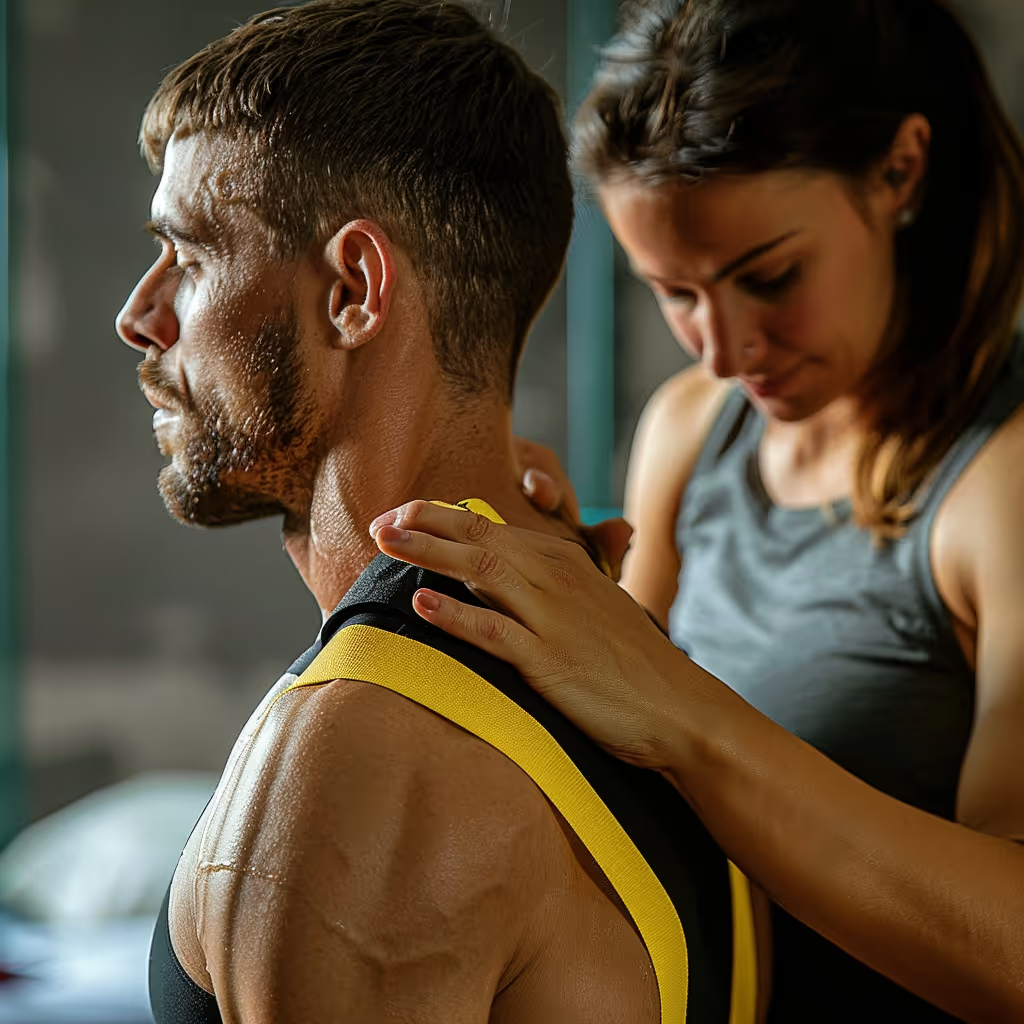
Concussion: symptoms, recovery, and treatment
.png)
.png)
.png)


What exactly is a concussion?
A concussion is a mild traumatic brain injury (TBI) that affects brain function without causing visible structural damage. It occurs when an external force causes the brain to accelerate rapidly inside the skull. It's like when you brake suddenly in a car: anything that isn't secured continues to move.
The term mild traumatic brain injury (MTBI) is also used to describe this injury. In the world of sports, the term concussion is more commonly used. Both terms describe the same condition: a temporary disruption in brain function.
The brain floats in a protective fluid inside the skull. During an impact or sudden acceleration, the brain hits the walls of the skull. This movement stretches and twists the neurons, the cells that transmit information. The result? Chemical and metabolic changes that temporarily disrupt their functioning.
A functional injury, not a structural one
A concussion is a functional injury. This means that your brain is not working as well as it should, but it is not physically damaged. It's like a computer infected with a virus: all the components are intact, but the system is running slowly.
This is why imaging tests such as CT scans or MRIs appear normal after a concussion. These tests show the structure of the brain, not how it functions. The absence of visible abnormalities does not mean that you do not have a concussion.
| Feature | Concussion (Mild Traumatic Brain Injury) | Moderate or severe CKD |
|---|---|---|
| Too bad | Functional (stretched neurons) | Structural (visible lesions) |
| Imaging | Normal | Visible anomalies |
| Loss of consciousness | Rare (less than 10%) | More frequent |
| Duration of symptoms | Days to weeks | Monthly permanent staff |
| Prediction | Excellent | Variable |
What are the causes and mechanisms of concussion?
A concussion occurs when the brain undergoes rapid acceleration inside the skull. The most common causes are contact sports, falls, car accidents, and direct blows to the head. The mechanism of injury involves a whiplash or rotational force.
The most common causes
In sports:- Ice hockey (body checking)
- Football (tackle)
- Soccer (heading, collision)
- Cycling (fall)
- Alpine skiing and snowboarding
- Falls (stairs, ladder, ice)
- Car or motorcycle accidents
- Direct blows to the head
- Workplace accidents
The blowback mechanism
When your head hits an object, the brain first strikes the skull wall on the side of the impact. This is the blow. The brain then rebounds and strikes the opposite wall. This is the counterblow. This double impact explains why symptoms can be felt on both sides of the head.
Rotational forces
Rotational forces are particularly dangerous for the brain. When the head spins rapidly, different parts of the brain move at different speeds. Neurons stretch and twist. This diffuse axonal injury disrupts communication between brain cells.
Side blows to the head produce more rotation than frontal blows. This is why hooks to the face in boxing cause more concussions than straight punches.
What are the symptoms of a concussion?
The symptoms of concussion fall into four categories: physical, cognitive, emotional, and sleep-related. The most common symptoms are headaches, dizziness, fatigue, difficulty concentrating, and sensitivity to light. Even a single symptom after an impact is enough to suspect a concussion.
Physical symptoms
Physical symptoms are usually the first to appear:
- Headaches (most common)
- Dizziness or lightheadedness
- Nausea or vomiting
- Excessive fatigue
- Blurred or double vision
- Sensitivity to light (photophobia)
- Sensitivity to noise (phonophobia)
- Balance problems
- Tinnitus (ringing in the ears)
Cognitive symptoms
Cognitive symptoms affect your ability to think clearly:
- Difficulty concentrating
- Memory problems
- Feeling of confusion or mental fog
- Slow to process information
- Difficulty finding the right words
- Slow reaction time
Emotional symptoms
Emotional symptoms are often underestimated but very real:
- Irritability
- Sadness or depressive mood
- Anxiety
- Mood swings
- Feeling of being "not like usual"
Sleep disorders
Sleep is often disrupted after a concussion:
- Sleeping more than usual
- Sleeping less than usual
- Difficulty falling asleep
- Non-restorative sleep
When do the symptoms appear?
Symptoms may appear immediately after the impact or develop gradually in the hours and days that follow. This is why it is important to monitor a person for at least 24 to 48 hours after a potential impact.
Important: Just because you feel fine in the minutes following an impact does not mean you have not suffered a concussion. Never return to play on the same day after a blow to the head.10 mini-tips to understand your pain
Those who have had the greatest impact on my patients' lives. 1 per day, 2 min.
How is concussion diagnosed?
The diagnosis of concussion is based on the history of the injury and clinical examination. There are no laboratory or imaging tests that can confirm a concussion. The assessment uses validated tools such as SCAT6 to quantify symptoms and deficits.
Clinical evaluation
A healthcare professional trained in concussions will ask you questions about:
- The circumstances of the impact (what, when, how)
- Your current symptoms and how they are progressing
- Any loss of consciousness or amnesia
- Your history of concussions
- Your existing health issues
Standardized assessment tools
The SCAT6 (Sport Concussion Assessment Tool, 6th edition) is the most widely used assessment tool in the world.
| Component | What she evaluates |
|---|---|
| Symptom scale | 22 symptoms rated on a 7-point scale |
| Orientation | Memory of recent events |
| Short-term memory | Word reminder |
| Concentration test | Numbers upside down, months upside down |
| Deferred recall | Short-term memory |
| Neurological examination | Reflexes, strength, coordination |
| Balance | BESS (Balance Error Scoring System) test |
Additional tests
Your physical therapist or doctor may perform additional tests:
Vestibular assessment: To check whether the inner ear is affected. Vestibular symptoms (dizziness, nausea when moving) are common after a concussion. Consult our guide to vertigo and dizziness for more information. Oculomotor assessment: To check how well the eyes are working. Problems with convergence, visual tracking, or saccades are common. Cervical assessment: To check whether the neck is contributing to the symptoms. Whiplash often accompanies concussion. See our guide onwhiplash injury to understand this associated injury.When is imaging necessary?
Imaging tests such as CT scans or MRIs cannot detect concussions. However, they may be necessary to rule out more serious injuries if you have any red flags (see section "When to seek emergency care").
What are the stages of recovery?
Recovery from a concussion is divided into three phases: the acute phase (relative rest), the subacute phase (gradual resumption of activities), and the full recovery phase. Most adults recover within 10 to 14 days. Children and adolescents may take up to 4 weeks.
Phase 1: Relative rest (24 to 72 hours)
The first 24 to 72 hours are crucial. Relative rest means:
What is permitted:- Light activities that do not significantly increase your symptoms
- Short walks
- Reading for short periods
- Lighthearted conversations
- Light cooking
- Activities that significantly increase your symptoms
- Intense sports and physical activities
- Extended screen time (television, phone, computer)
- Alcohol and recreational drugs
- Demanding cognitive work
Phase 2: Gradual recovery (after 24-48 hours without symptoms)
After a 24-hour period without symptoms at rest, you can gradually begin to resume your activities. This phase follows a step-by-step protocol.
Back to cognitive activities:- Light cognitive activities (45 minutes)
- Half days at school or work
- Full days with accommodations
- Normal return
- Walking or stationary bike (light intensity)
- Jogging or sport-specific exercises (non-contact)
- Team training sessions (no contact)
- Full training sessions with contact
- Return to play or competition
Phase 3: Full recovery
Most people recover completely. Returning to play or full work requires:
- No symptoms at rest or during exertion
- Normal performance on cognitive tests
- Medical evaluation confirming recovery
- For contact sports: authorization from a doctor or physical therapist
What are the treatment options?
Treatment for concussion combines initial rest, gradual resumption of activities, and active rehabilitation of the affected systems. Specialized physical therapy treats the vestibular system, the oculomotor system, and the neck. Aerobic exercise below the symptom threshold accelerates recovery.
Initial relative rest
Relative rest during the first 24 to 72 hours allows the brain to begin healing. Limit intense stimulation while remaining slightly active.
Active rehabilitation
Science has evolved: active treatment is now preferred over prolonged rest. Active approaches include:
Aerobic exercise below the symptom threshold: Studies show that light exercise (walking, stationary cycling) can begin 4 to 5 days after the injury. The intensity should remain below the level that causes an increase in symptoms. Vestibular rehabilitation: If you experience dizziness or balance problems, specific exercises can help. Oculomotor rehabilitation: Eye exercises can treat vision problems and reduce headaches. Cervical treatment: The neck is often injured at the same time as the brain. The physical therapy for neck pain can significantly reduce headaches and dizziness. If you also have persistent headaches, consult our guide to headaches and cephalalgia.Psychological treatment
Anxiety, stress, and depressive symptoms are common after a concussion. Psychological support may be part of the treatment plan, especially if symptoms persist.
How does physical therapy help after a concussion?
Physiotherapy specializing in concussions assesses and treats the three systems that are often affected: the vestibular system, the oculomotor system, and the cervical spine. Physiotherapists trained in concussions can guide the return to activity and significantly speed up recovery.
The complete assessment
Your physical therapist will conduct a detailed assessment including:
Assessment of symptoms: Standardized questionnaires to quantify your symptoms and track their progression. Vestibular assessment: Tests to check the functioning of your inner ear and your balance. Oculomotor assessment: Tests of eye movements, convergence, and visual tracking. Cervical assessment: Examination of the mobility, strength, and sensitivity of your neck. Stress test: Assessment of your exercise tolerance on a treadmill or stationary bike.Treatment of vestibular problems
Between 30 and 60% of people with concussions have vestibular symptoms. Vestibular rehabilitation uses:
- Eye stabilization exercises (fixing a target while moving your head)
- Habituation exercises (gradual exposure to provocative movements)
- Balance training (unstable surfaces, eyes closed)
Success rates are excellent: 75 to 85% of patients show significant improvement.
Treatment of oculomotor problems
Vision problems are common: difficulty focusing, double vision, sensitivity to light. Eye movement exercises may include:
- Convergence exercises (bringing the eyes together)
- Saccade exercises (moving your eyes quickly)
- Tracking exercises (following a moving target)
Neck treatment
Whiplash accompanies concussion in 70 to 85% of cases. When the brain undergoes acceleration, so does the neck. Cervical physical therapy includes:
- Joint mobilizations to restore movement
- Relaxation of tense muscles
- Neck stabilization exercises
- Postural correction
Treating the neck can significantly reduce headaches and dizziness. This is an often overlooked aspect of treatment. For more information, see our guide on neck pain.
The return-to-play protocol
Your physical therapist can supervise your return to sports according to a validated protocol. The progressive steps ensure a safe return:
| Step | Activity | Objective |
|---|---|---|
| 1 | Relative rest | Initial recovery |
| 2 | Light aerobic activity | Increase heart rate |
| 3 | Sport-specific exercises | Add movement |
| 4 | Contactless drive | More complex exercises |
| 5 | Contact training | Full participation |
| 6 | Back to the game | Competition |
Each step lasts at least 24 hours. If symptoms appear, you return to the previous step.
What is post-concussion syndrome?
Post-concussion syndrome (PCS) occurs when symptoms persist beyond the normal recovery period. PCS is generally diagnosed after 14 days in adults or 4 weeks in children. Between 10 and 30% of people with concussions develop prolonged symptoms.
Why do the symptoms persist?
Several factors may explain the persistence of symptoms:
Unresolved vestibular system injury: If the inner ear remains affected, dizziness and imbalance will persist. Untreated neck injury: The neck may continue to contribute to headaches and dizziness. Oculomotor problems: Uncorrected visual difficulties perpetuate symptoms. Autonomic dysfunction: The autonomic nervous system may remain unbalanced, causing exercise intolerance. Psychological factors: Anxiety, depression, and post-traumatic stress can amplify and maintain symptoms.Common symptoms of CFS
- Persistent headaches
- Chronic fatigue
- Difficulty concentrating
- Memory problems
- Irritability and mood swings
- Sleep disorders
- Sensitivity to light and noise
- Dizziness
Treatment of post-concussion syndrome
The treatment of SPC requires a multidisciplinary approach:
Specialized physical therapy: Treatment of vestibular, oculomotor, and cervical components. Subthreshold aerobic exercise: A program of progressive exercises that do not cause symptoms. Psychological management: Cognitive-behavioral therapy for anxiety and coping strategies. Medical management: Medications for headaches or other specific symptoms as needed.The prognosis generally remains favorable. Most people with SPC improve with proper treatment, even if it takes longer.
Need professional advice?
Our physical therapists can assess your condition and offer you a personalized treatment plan.
Book an appointmentWhen to seek medical advice and what are the red flags?
Consult a healthcare professional as soon as you suspect a concussion. The sooner you seek medical attention, the sooner you will receive the right advice for recovery. Most concussions are minor, but some symptoms require urgent attention.
Good reasons to seek prompt medical attention
- You have received a blow to the head and are experiencing at least one symptom.
- Your symptoms persist after a few days
- Your symptoms prevent you from functioning normally.
- You have a history of concussions
- You are an athlete and want to resume your sport
Red flags: When to go to the emergency room
Some symptoms may indicate a more serious injury. Go to the emergency room immediately if you notice:
| Symptom | Possible meaning |
|---|---|
| Severe headache that is getting worse | Possible cerebral hemorrhage |
| Repeated vomiting | Intracranial pressure |
| Seizures | Neurological impairment |
| Weakness on one side of the body | Focal brain injury |
| Difficulty speaking or understanding | Neurological impairment |
| Confusion that is getting worse | Deterioration of condition |
| Excessive sleepiness or inability to wake up | Neurological emergency |
| One pupil more dilated than the other | Neurological emergency |
| Prolonged loss of consciousness | Moderate or severe CKD |
| Clear fluid from the nose or ears | Skull fracture |
These symptoms are rare (less than 5% of cases), but serious. If in doubt, always consult a doctor.
Who should I consult?
Physical therapist trained in concussion care: Can assess and treat concussions, vestibular and cervical problems, and supervise your return to activities. In Quebec, you can consult without a prescription. Doctor: Can confirm the diagnosis, prescribe medication if necessary, and refer you to specialists. Neuropsychologist: Can assess cognitive functions in detail if symptoms persist.Frequently asked questions about concussions
Do you have to lose consciousness to have a concussion?
No. Less than 10% of concussions cause loss of consciousness. The presence of a single symptom after an impact is sufficient to suspect a concussion.
How long does a concussion last?
Most adults recover within 10 to 14 days. Children and adolescents may take up to 4 weeks. Approximately 10 to 30% of people have symptoms that persist longer.
Does the helmet protect against concussions?
Helmets protect against skull fractures and serious injuries, but they do not prevent concussions. The brain still moves inside the skull during an impact, even with a helmet. Helmets remain important for preventing more serious injuries.
Can I look at screens after a concussion?
For the first 24 to 48 hours, limit screen time. After that, you can use screens if it does not significantly increase your symptoms. Start with short periods and gradually increase.
Should I stay in the dark?
No. Complete rest in the dark is no longer recommended. Too much rest can even delay healing. Stay slightly active within the limits of your symptoms.
When can I start exercising again?
You must be completely symptom-free at rest and during exercise before beginning the return-to-play protocol. Full return to contact sports requires authorization from a healthcare professional.
Is a second concussion more serious?
People who have already had a concussion are at greater risk of suffering another one. The risk of prolonged symptoms also increases with repeated concussions. That is why it is essential to recover completely before resuming risky activities.
Can physical therapy really help?
Yes. Studies show that specialized physical therapy speeds up recovery. Treatment of the vestibular, oculomotor, and cervical components is particularly effective in reducing symptoms and recovery time.
Related conditions to explore
If you have suffered a concussion, other conditions may be related:
- Whiplash: often associated with concussion during an impact
- Neck pain: comprehensive guide: the neck often contributes to post-concussion symptoms
- Physical therapy for neck pain: treatments for the cervical component
- Headaches: a common symptom after a concussion
- Vertigo and dizziness: if you have vestibular problems
- Mild traumatic brain injury (MTBI): further information on MTBI
Key points to remember
Concussion is a functional brain injury that usually heals within 10 to 14 days. Prolonged complete rest is no longer recommended. Active treatment, including aerobic exercise below the symptom threshold and rehabilitation of the vestibular, oculomotor, and cervical systems, speeds up recovery. Specialized physical therapy is an effective first-line treatment. Seek medical attention promptly after an impact to receive the right advice and optimize your recovery.
Make an appointment with a physical therapist
If you have suffered a concussion or suspect you may have one, don't wait. Our physiotherapists trained in concussion care can assess your condition, treat the affected systems, and guide you toward a full recovery.
Book an appointmentReferences
- McCrory P, Meeuwisse W, Dvorak J, et al. Consensus statement on concussion in sport: the 6th International Conference on Concussion in Sport. British Journal of Sports Medicine. 2023;57(11):695-711.
- Schneider KJ, Leddy JJ, Guskiewicz KM, et al. Rest and treatment/rehabilitation following sport-related concussion: a systematic review. British Journal of Sports Medicine. 2017;51(12):930-934.
- Leddy JJ, Haider MN, Ellis MJ, Willer BS. Exercise is medicine for concussion. Current Sports Medicine Reports. 2018;17(8):262-270.
- Reneker JC, Moughiman MC, Cook CE. The diagnostic utility of clinical tests for differentiating between cervicogenic and other causes of dizziness after a sports-related concussion. International Journal of Sports Physical Therapy. 2015;10(7):998-1007.
- Ellis MJ, Leddy JJ, Willer B. Physiological, vestibulo-ocular, and cervicogenic post-concussion disorders: an evidence-based classification system with directions for treatment. Brain Injury. 2015;29(2):238-248.
Videos in this category
Other conditions

Hip osteoarthritis is a normal wear and tear of the hip joint. Osteoarthritis is often described as the wearing away of cartilage between our bones. While this is true, it involves more than just cartilage. Cartilage is a tissue that acts like a cushion between the surfaces of our bones, allowing our joints to glide smoothly and move with ease.
It is a normal wear and tear of the knee joint. Osteoarthritis is often described as the wearing away of cartilage between our bones. While this is true, it involves more than just cartilage. Cartilage is a tissue that acts like a cushion between the surfaces of our bones, allowing our joints to glide smoothly and move with ease.
A bursa is like a small, very thin, fluid-filled sac found in several joints throughout the body. This small sac acts as a cushion in the joint and lubricates structures that are exposed to more friction.
It is an inflammation of the subacromial bursa in the shoulder joint.
It is a tissue that surrounds the shoulder and allows the shoulder bone to stay in place within the joint. The capsule helps to stabilize the joint.
Cervicalgia is a general term to describe neck pain that does not have a specific cause, such as an accident or sudden movement. Cervicalgia is therefore synonymous with ''I have a pain in my neck and nothing in particular happened''.
In both injuries, there is pain felt in the neck that then radiates into the arm, or vice versa.
It is a significant stretch or tear of the muscle fibers in the groin or inner thigh muscles.
It is a significant stretch or tear of the muscle fibers in the hamstring muscles located at the back of the thigh.
Book an appointment now
We offer a triple quality guarantee: optimized time, double physiotherapy assessment, and ongoing expertise for effective care tailored to your needs.
Our clients' satisfaction is our priority.
À Physioactif, l’excellence guide chaque intervention, mais ce sont nos patients qui en parlent le mieux. Consultez plutôt leurs avis vérifiés pour vous faire une idée concrète de leur expérience.












Discover our physiotherapy clinics
We have multiple locations to better serve you.
Blainville
190 Chem. du Bas-de-Sainte-Thérèse Bureau 110,
Blainville, Quebec
J7B 1A7
Située à Blainville, à proximité de Rosemère, la clinique Physioactif est facilement accessible pour les résidents du secteur et des alentours
Laval
3224 Jean-Béraud Ave. Suite 220 Laval,
QC H7T 2S4
Située à Chomedey, au cœur de Laval, la clinique Physioactif est facilement accessible pour les personnes à proximité
Montreal
8801 Lajeunesse Street,
Montreal,
QC H2M 1R8
Située à Ahuntsic, à proximité de Villeray, la clinique Physioactif est facilement accessible pour les résidents des deux quartiers
St-Eustache
180 25th Avenue Suite
201 Saint-Eustache
QC J7P 2V2
Située à Saint-Eustache, la clinique Physioactif est facilement accessible pour les résidents du secteur et des environs
Vaudreuil
21 Cité-des-Jeunes Blvd. Suite 240,
Vaudreuil-Dorion, Quebec
J7V 0N3
Établie à Vaudreuil-Dorion, la clinique Physioactif est facilement accessible pour les gens du secteur
Book an appointment now