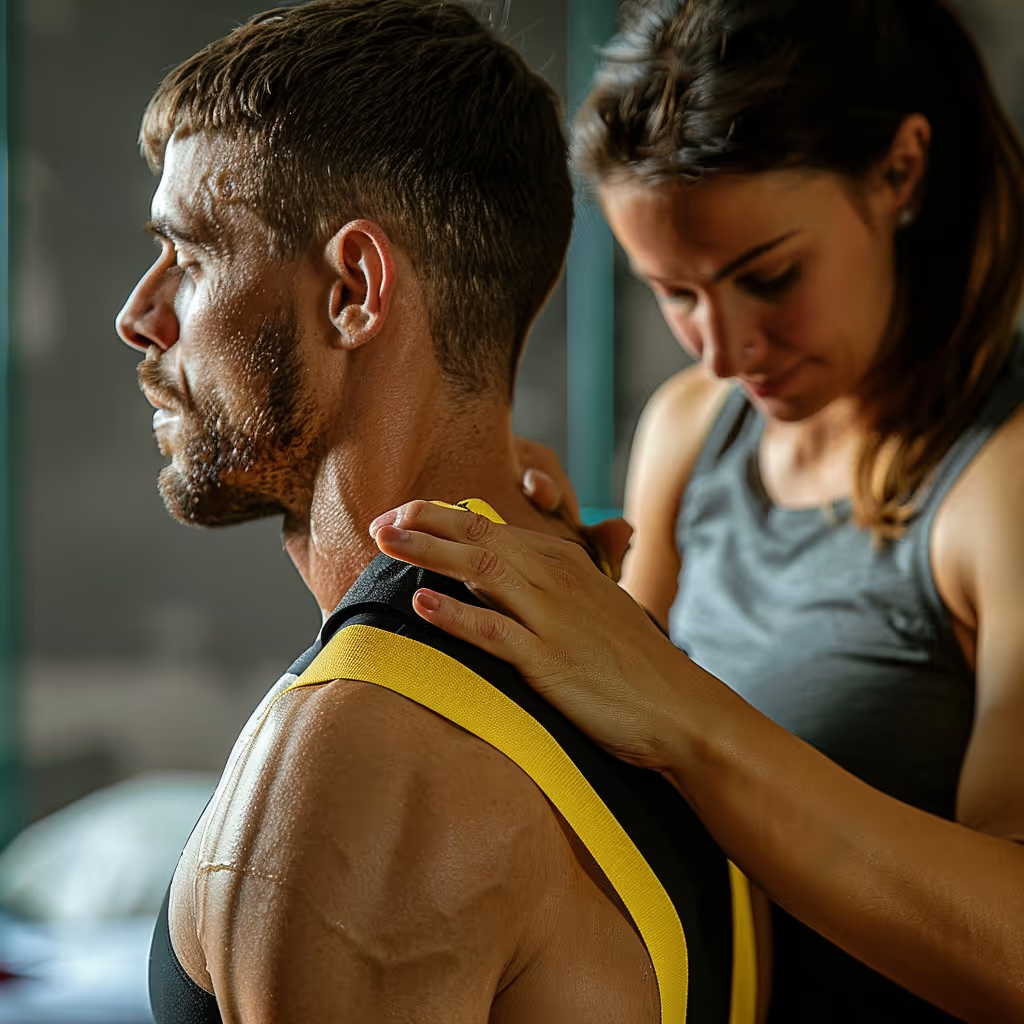
Physical Therapy for Joint Pain: How Physical Therapy Treats Your Joints
.png)
.png)
.png)


Physical therapy is the first line of treatment for most joint pain. Studies show results comparable to medication for osteoarthritis, with fewer side effects. Whether you have knee, hip, shoulder, or hand pain, this active approach helps you regain mobility and reduce pain.
This guide explains how physical therapy treats joint problems: conditions treated, techniques used, and how treatment works. To understand the causes of joint pain, see our comprehensive guide to joint pain.
What is physical therapy for joint pain?
Physical therapy for joint pain combines personalized assessment, therapeutic exercises, manual techniques, and education. This evidence-based approach reduces pain, restores joint function, and makes you more independent.
Unlike medication or injections, physical therapy puts you at the center of your recovery. You learn to understand your condition and manage your symptoms. This active involvement explains why the results last longer.
Therapeutic exercise is the cornerstone of treatment. It strengthens the muscles that support your joints, improves your mobility, and reduces the sensitivity of your nervous system. Manual techniques complement the exercises for optimal results.
Physical therapy is not passive. It is an active partnership between you and your therapist. Your commitment to doing exercises at home is essential. Rest assured, we will support you every step of the way.
For the fundamentals of physical therapy, check out our comprehensive guide.
What joint conditions does physical therapy treat?
Physical therapy treats osteoarthritis, inflammatory arthritis, bursitis, sprains, tendinopathies, and post-operative pain. It also helps with rehabilitation after injury and chronic pain.
| Condition | Description | Affected joints |
|---|---|---|
| Osteoarthritis | Cartilage wear, the most common form of arthritis | Knees, hips, hands, spine |
| Inflammatory arthritis | Rheumatoid arthritis, psoriatic arthritis | Multiple joints |
| Bursitis | Inflammation of the serous sacs (protective cushions) | Shoulder, hip, knee, elbow |
| Sprains | Ligament injuries | Ankle, knee, wrist |
| Tendinopathies | Rotator cuff, Achilles tendon, patellar tendon | Shoulder, ankle, knee |
| Postoperative | Prostheses, arthroscopy, ligament repair | Knee, hip, shoulder |
Osteoarthritis
Osteoarthritis is the most common form of arthritis. It responds well to physical therapy and affects the knees, hips, hands, and spine.A meta-analysis of 217 clinical trials (15,000+ patients) shows that therapeutic exercise works as well as anti-inflammatory drugs for pain and function, without the side effects.
Physical therapy for osteoarthritis includes: - Strengthening the muscles around the joint - Range of motion exercises to maintain mobility - Appropriate aerobic exercise (walking, cycling, swimming) - Education on load management
For osteoarthritis by region, see our guides onknee osteoarthritis,hip osteoarthritis, orlumbar osteoarthritis.
Inflammatory arthritis
Inflammatory arthritis (rheumatoid arthritis, psoriatic arthritis) also benefits from physical therapy. Even if medical treatment controls inflammation, exercise improves function and reduces pain.
Gentle joint mobilization maintains range of motion. It reduces stiffness without aggravating inflammation.
Bursitis
Bursae are small sacs filled with fluid. They reduce friction around joints. When they become inflamed (bursitis), the most commonly affected areas are the shoulder, hip, knee, and elbow.
Physical therapy identifies and corrects the factors causing overload. These factors include muscle weakness, biomechanical imbalance, and problematic movement patterns.
Sprains and joint injuries
Sprains are injuries to the ligaments that stabilize joints. Physical therapy helps to heal completely and prevent recurrence.
Treatment progresses in phases: - Acute phase: reduction of pain and swelling - Recovery phase: restoration of range of motion and start of strengthening - Rehabilitation phase: advanced strengthening and return to activities
Periarticular tendinopathies
Tendinopathies affect the tendons around the joints. The pain they cause often resembles joint pain. Tendinopathies of the rotator cuff, Achilles tendon, and patellar tendon respond well to progressive exercises.
Postoperative rehabilitation
Physical therapy helps restore mobility and strength after joint surgery. Whether it's a prosthesis, arthroscopy, or ligament repair, guided rehabilitation optimizes your results.
10 mini-tips to understand your pain
Those who have had the greatest impact on my patients' lives. 1 per day, 2 min.
How does physical therapy help treat joint pain?
Physical therapy strengthens muscles, improves mobility, reduces nervous system sensitivity, and teaches you how to manage your condition. It treats the cause rather than masking the symptoms.
| Mechanism | How it works | Profit |
|---|---|---|
| Reinforcement | Strong muscles stabilize and protect the joint. | Pain reduction, improved function |
| Mobility | Exercises and mobilization restore movement | Less stiffness, easier activities |
| Desensitization | Movement recalibrates the nervous system | Less intense pain |
| Education | Understanding your condition, home exercises | Long-term autonomy |
Muscle strengthening: protecting the joint
Strong muscles protect and stabilize the joint. It's like adding shock absorbers. When your muscles are weak, the joint absorbs more stress and pain increases.
Strengthening the quadriceps reduces pain and improves function in people with knee osteoarthritis. Strengthening the hip muscles helps stabilize the knee and reduce patellofemoral pain (pain at the front of the knee). For customized muscle strengthening programs, consult our physical therapists.
Rest assured, strengthening does not cause wear and tear on your joints. On the contrary, it protects them.
Improved joint mobility
Joint stiffness limits your movements and affects your daily activities. Being stiff in the morning is a classic symptom of osteoarthritis.
Range-of-motion exercises and mobilization help maintain or restore movement. Your physical therapist applies these gentle movements to your joints. Relief from stiffness and pain may be immediate.
Reduced sensitivity of the nervous system
When you have been in pain for a long time, your nervous system can become overly sensitive. This is called central sensitization, where your nerves become hypersensitive. It's like an alarm going off for no reason. Normal movements become painful.
Therapeutic exercise recalibrates this sensitivity. Movement sends positive signals to your brain and reduces this excessive reaction. Moving, even if it hurts a little at first, brings long-term benefits. Our program for persistent pain specifically addresses this phenomenon.
Education and self-management
Understanding your condition is essential. Education helps you learn what causes your pain, why movement helps, and how to adapt your activities.
Your physical therapist will teach you: - Which exercises to do at home - How to modify your activities to reduce pain - When to use heat or cold - How to progress toward your goals
This education empowers you. You learn to manage your condition on a daily basis rather than relying solely on clinic treatments. Our approachto teaching about the condition gives you the tools to understand and manage your pain.
What is the first physical therapy session for joint pain like?
The first session lasts 45 to 60 minutes. It includes a comprehensive assessment, a discussion of your goals, and often the start of treatment. You will leave with a better understanding of your condition and a plan for getting better.
Before your appointment
Please arrive 10-15 minutes early to fill out the forms. Wear comfortable clothing that allows access to the painful area (e.g., shorts if you have knee pain).
If possible, please bring: - Your test results (X-rays, MRIs) - A list of your medications - Information from your referring physician
The initial interview
Your physical therapist will ask questions about your pain and condition: - When and how the pain started - What makes your pain worse or better - How it affects your daily activities - Your goals (returning to sports, grocery shopping without pain, etc.)
The better your physical therapist understands your condition, the better he or she will be able to help you.
The physical examination
The examination identifies the structures causing your pain:
Mobility tests: Assessment of range of motion, comparison with the other side. Strength tests: Measurement of muscle strength around the joint. Weakness can contribute to pain. Palpation: The physical therapist uses his hands to identify sensitive areas. Specific tests: Clinical tests to distinguish between different causes (e.g., tests for knee menisci or rotator cuffs).Diagnosis and treatment plan
At the end of the assessment, your physical therapist will explain their findings and what is likely causing your pain. The treatment plan includes: - The techniques used - The frequency of sessions - Exercises to do at home - An estimate of recovery time
Treatment often begins during the first session with manual techniques, exercises, or education.
Need professional advice?
Our physical therapists can assess your condition and offer you a personalized treatment plan.
Book an appointmentWhat treatment techniques are used for joint pain?
Techniques include therapeutic exercises, joint mobilization, soft tissue therapy, education, and sometimes heat or cold. Your physical therapist selects techniques based on your assessment.
Therapeutic exercises
Exercise is the most effective and well-documented treatment for joint pain. It is the cornerstone of physical therapy.
| Type | Objective | Examples |
|---|---|---|
| Reinforcement | Strengthen the muscles that support the joint | Squats, bridges, extensions |
| Amplitude | Maintain or improve mobility | Stretching, pendulum movements |
| Aerobics | Improve overall condition, reduce inflammation | Walking, cycling, swimming |
| Neuromuscular | Improve control and coordination | Balance, proprioception |
Joint mobilizations
Mobilizations are gentle movements applied to your joints. They reduce stiffness, decrease pain, and improve range of motion.
Mobilizations can target: - Knee (femoro-tibial, femoro-patellar) - Hip - Shoulder - Small joints of the hands and feet - Facet joints of the spine
These techniques are safe, even for joints affected by osteoarthritis. For more information, see our guide on joint mobilization and manipulation.
Soft tissue therapy
The muscles around a painful joint often develop tension. Soft tissue therapy releases this tension.
Techniques include: - Therapeutic massage - Myofascial release (releasing the fascia surrounding the muscles) - Trigger point therapy (muscle knots) - Assisted stretching
These approaches improve circulation, reduce spasms, and allow muscles to regain their normal function.
Education and counseling
Your physical therapist will teach you how to manage your condition on a daily basis: - Pain science (understanding why you are in pain) - Load management (pacing your activities) - Ergonomic modifications - Self-management strategies
This education works just as well as manual treatments for certain conditions.
Additional terms and conditions
Heat: Relaxes muscles, reduces stiffness. Ideal before exercise or for morning stiffness. Cold: Reduces inflammation, numbs pain. Best used after exercise or for acute flare-ups with swelling. Taping: Elastic bandages to support the joint and reduce pain during activities.How many sessions are needed to see results?
Most patients notice improvement after 3-6 sessions (2-4 weeks). Moderate conditions take 6-10 weeks. Chronic or severe conditions may require 3 months or more.
| Phase | Frequency | Duration | Objective |
|---|---|---|---|
| Acute | 2-3 times per week | 2-4 weeks | Establish program, monitor pain |
| Progression | 1-2 times per week | 4-8 weeks | Advance autonomy, strengthen |
| Maintenance | 1 every 2-4 weeks | If necessary | Maintain gains, prevent relapses |
Total treatment duration
The OARSI guidelines recommend 5-16 week programs for hip and knee osteoarthritis. The duration depends on: - The severity of your condition - How long you have been experiencing pain - Your goals (sports vs. daily activities) - Your commitment to exercising at home
When to expect results
Weeks 1-2: Temporary relief, especially after sessions. Weeks 3-6: Stable improvement. Reduced pain, improved mobility, easier daily activities. Weeks 6-12: Significant strength gains. Most notable results. Beyond 12 weeks: The benefits continue with regular exercise.What exercises are recommended for joint pain?
Recommended exercises include strengthening around the joint, range-of-motion exercises, and low-impact aerobic activities (walking, cycling, swimming). The program adapts to your condition.
General principles
Movement helps. Even if moving hurts a little, appropriate exercise does not cause damage. On the contrary, it strengthens and protects your joints. Progress gradually. Start slowly. Pushing too hard too quickly can cause a flare-up of pain. Consistency matters more than intensity. Regular moderate exercise is more effective than occasional intense training. Listen to your body. A slight increase in pain during exercise is acceptable. Persistent pain lasting for hours afterward suggests that the intensity should be adjusted.Recommended aerobic activities
Walk: Simple, accessible, effective. Start with short distances. Swimming and aqua fitness: Water supports your weight and provides gentle resistance. Excellent for osteoarthritis. Stationary bike: Low impact, good for cardiovascular health and mobility. Adapted yoga: Combines stretching, strengthening, and relaxation.The CDC recommends 150 minutes of exercise per week to maintain joint health.
What is best to avoid or change
High-impact activities (running, jumping) can be difficult for painful joints. They are not prohibited but sometimes require modifications or a slower progression.
Excessive loads can stress your joints. Learn to pace yourself.
Avoiding movement altogether is the worst thing you can do. Inactivity makes joint pain worse.
What sets Physioactif apart for the treatment of joint pain
Our approach at Physioactif is based on the latest evidence-based research. Our physical therapists are trained in the most effective techniques.
A comprehensive assessment
Your first session includes a thorough assessment. We don't just focus on the painful joint. We look at your entire body to identify all contributing factors.
A personalized plan
Each plan is tailored to your condition, goals, and lifestyle. Someone who wants to return to tennis does not have the same needs as someone who wants to go grocery shopping without pain.
Exercises tailored to your reality
The prescribed exercises take into account your equipment, available time, and preferences. We want a realistic and sustainable program.
Tracking your progress
We measure your progress throughout the treatment. This allows us to adjust the program and show you your improvements in concrete terms.
Access to additional services
If necessary, our other professionals can contribute to your treatment. Massage therapy can complement physical therapy. To learn more about our approaches, visit our therapeutic approaches page.
How do I schedule an appointment for an evaluation?
You do not need a referral from a doctor to see a physical therapist in Quebec. You can make an appointment directly.
To make an appointment, click here or call one of our clinics. Our team will guide you to the physical therapist best suited to your condition.
If you have any questions before making an appointment, please contact us. We can help you determine whether physical therapy is right for your situation.
For our physical therapy services, please visit our dedicated page.
Frequently asked questions about physical therapy for joint pain
Can physical therapy really help osteoarthritis, or is it irreversible?
Osteoarthritis is irreversible, but pain and function can improve with physical therapy. Studies show that exercise reduces pain in a similar way to medication. Many people live well with osteoarthritis thanks to regular exercise. The goal is to minimize its impact on your life.
Can exercise cause further damage to my joints?
No. Appropriate exercise does not cause wear and tear. On the contrary, movement nourishes cartilage and strengthens protective muscles. It is inactivity that causes problems. The secret is to progress gradually and listen to your body.
How long before I see results?
Most patients notice improvement after 2-4 weeks. Significant results appear after 6-12 weeks. Some chronic conditions take longer.
Should I stop my activities if my joints hurt?
Not necessarily. In general, it is better to modify your activities rather than stop them altogether. Your physical therapist can help you find the right balance. The goal is to stay active while respecting your limits.
Is physical therapy effective if I have already tried it without success?
Possibly. Effectiveness depends on the type of treatment received and your commitment to the exercises. If your previous treatment did not include progressive exercises or if you were unable to maintain the program, a new attempt with an adapted approach could yield better results.
Do I need a referral to see a doctor?
No. In Quebec, you can consult a physical therapist directly without a medical referral (direct access). If your condition requires a medical diagnosis or tests, your physical therapist will refer you to the appropriate professional.
When should I consider surgery rather than physical therapy?
Surgery is considered after conservative treatments have failed for several months. Guidelines recommend trying physical therapy and exercise before surgery, except in emergencies. If physical therapy is not enough and your quality of life remains affected, discuss surgical options with your doctor.
Does my insurance cover physical therapy?
Most private insurance plans in Quebec cover part of the cost. The amount and number of sessions vary depending on your policy. Check with your insurer. We can provide you with the necessary receipts for your claims.
Videos in this category
Other conditions

Hip osteoarthritis is a normal wear and tear of the hip joint. Osteoarthritis is often described as the wearing away of cartilage between our bones. While this is true, it involves more than just cartilage. Cartilage is a tissue that acts like a cushion between the surfaces of our bones, allowing our joints to glide smoothly and move with ease.
It is a normal wear and tear of the knee joint. Osteoarthritis is often described as the wearing away of cartilage between our bones. While this is true, it involves more than just cartilage. Cartilage is a tissue that acts like a cushion between the surfaces of our bones, allowing our joints to glide smoothly and move with ease.
A bursa is like a small, very thin, fluid-filled sac found in several joints throughout the body. This small sac acts as a cushion in the joint and lubricates structures that are exposed to more friction.
It is an inflammation of the subacromial bursa in the shoulder joint.
It is a tissue that surrounds the shoulder and allows the shoulder bone to stay in place within the joint. The capsule helps to stabilize the joint.
Cervicalgia is a general term to describe neck pain that does not have a specific cause, such as an accident or sudden movement. Cervicalgia is therefore synonymous with ''I have a pain in my neck and nothing in particular happened''.
In both injuries, there is pain felt in the neck that then radiates into the arm, or vice versa.
It is a significant stretch or tear of the muscle fibers in the groin or inner thigh muscles.
It is a significant stretch or tear of the muscle fibers in the hamstring muscles located at the back of the thigh.
Book an appointment now
We offer a triple quality guarantee: optimized time, double physiotherapy assessment, and ongoing expertise for effective care tailored to your needs.

Our clients' satisfaction is our priority.
À Physioactif, l’excellence guide chaque intervention, mais ce sont nos patients qui en parlent le mieux. Consultez plutôt leurs avis vérifiés pour vous faire une idée concrète de leur expérience.












Discover our physiotherapy clinics
We have multiple locations to better serve you.
Blainville
190 Chem. du Bas-de-Sainte-Thérèse Bureau 110,
Blainville, Quebec
J7B 1A7
Située à Blainville, à proximité de Rosemère, la clinique Physioactif est facilement accessible pour les résidents du secteur et des alentours
Laval
3224 Jean-Béraud Ave. Suite 220 Laval,
QC H7T 2S4
Située à Chomedey, au cœur de Laval, la clinique Physioactif est facilement accessible pour les personnes à proximité
Montreal
8801 Lajeunesse Street,
Montreal,
QC H2M 1R8
Située à Ahuntsic, à proximité de Villeray, la clinique Physioactif est facilement accessible pour les résidents des deux quartiers
St-Eustache
180 25th Avenue Suite
201 Saint-Eustache
QC J7P 2V2
Située à Saint-Eustache, la clinique Physioactif est facilement accessible pour les résidents du secteur et des environs
Vaudreuil
21 Cité-des-Jeunes Blvd. Suite 240,
Vaudreuil-Dorion, Quebec
J7V 0N3
Établie à Vaudreuil-Dorion, la clinique Physioactif est facilement accessible pour les gens du secteur
Book an appointment now