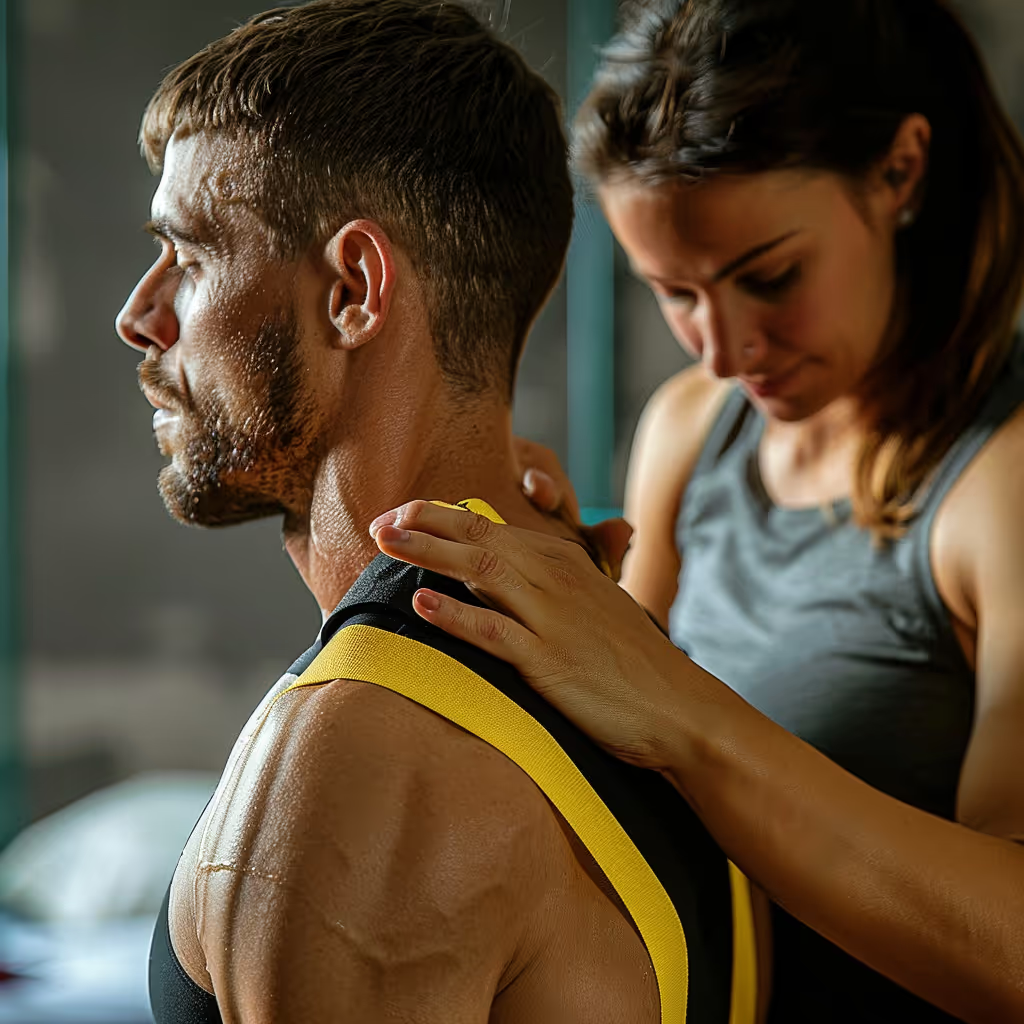
Joint Pain: A Comprehensive Guide to Understanding and Relieving Your Joints
.png)
.png)
.png)


Joint pain affects approximately 1 in 4 adults in Canada. This complaint is one of the most common reasons for medical consultations. Whether it affects your knees, hips, shoulders, or hands, this pain can limit your daily activities. This guide will help you understand what causes your pain, how to distinguish it from other types of pain, when to seek medical advice, and how to relieve it. Physical therapy is the recommended first-line treatment for most joint pain. To understand this discipline, consult our comprehensive guide to physical therapy.
What is joint pain and why is it so common?
Joint pain, or arthralgia, is discomfort felt in or around a joint. It affects nearly 25% of adults in Canada. This pain can originate in the cartilage, synovial membrane, ligaments, or underlying bone.
Arthralgia refers to joint pain, regardless of its cause. Arthritis involves inflammation with swelling, redness, or warmth. All arthritis causes joint pain. Not all joint pain is arthritis.
Your body has more than 360 joints. The joints most affected are generally those that are most mobile and used on a daily basis. Aging causes gradual wear and tear on cartilage. Obesity puts more pressure on weight-bearing joints. A sedentary lifestyle weakens the supporting muscles. The good news is that most joint pain responds well to treatment.
How does a joint work and what can cause pain?
A joint forms the junction between two bones. It contains protective cartilage, lubricating synovial fluid, an enveloping capsule, and stabilizing ligaments. Each component can become a source of pain if it is damaged or inflamed.
| Component | Function | What can go wrong |
|---|---|---|
| Articular cartilage | Covers the bones, allows sliding | Wear and tear, thinning (osteoarthritis) |
| Synovial fluid | Lubricates and nourishes cartilage | Decrease, change in composition |
| Joint capsule | Protective cover | Inflammation, excessive fluid production |
| Ligaments | Stabilize the joint | Strain, tear (sprain) |
Cartilage covers the ends of bones. This smooth tissue allows frictionless movement. With age or after injury, it can wear away.
Synovial fluid lubricates and nourishes cartilage. When it decreases or changes in composition, the joint functions less effectively.
The joint capsule surrounds the joint. Its inner membrane (synovium) produces synovial fluid. Inflammation causes swelling.
Ligaments connect bones to each other and stabilize the joint. A sprain occurs when they are stretched or torn.
How can I tell if my pain is coming from a joint, a muscle, or a nerve?
Joint pain is felt in or around the joint, with morning stiffness and sometimes swelling. Muscle pain is diffuse and related to movement. Nerve pain causes burning, tingling, or numbness.
Characteristics of joint pain
The location is precise: you can point exactly where it hurts. Your joints are stiff when you wake up. You are locked up in the morning. This stiffness lasts less than 30 minutes for osteoarthritis. It persists for more than an hour for inflammatory arthritis.
Swelling, warmth, or redness indicate active inflammation. Painless cracking is generally harmless.
Muscle pain
Muscle pain (myalgia) is felt in the muscle tissue after unusual exertion. If you move house all day, your muscles will be sore the next day. It usually subsides with rest.
Nerve pain
Nerve pain (neuropathic pain) causes burning, tingling, numbness, or electric shocks. It follows a nerve pathway. Sciatica runs from the buttock to the foot. The pain can be felt far from its source.
| Feature | Joint pain | Muscle pain | Nerve pain |
|---|---|---|---|
| Location | Precise, in articulation | Diffuse, in the muscle | Nervous journey follows |
| Sensation | Deafness, stiffness, cracking | Aches and pains, spasms | Burning, stinging |
| Swelling | Possible | Rare | No |
| Morning stiffness | Feature | Lightweight | Non-typical |
| Response at rest | Variable | Improvement | May persist |
10 mini-tips to understand your pain
Those who have had the greatest impact on my patients' lives. 1 per day, 2 min.
What are the main causes of joint pain?
The main causes include osteoarthritis (cartilage wear), inflammatory arthritis (rheumatoid arthritis), gout (uric acid crystals), bursitis (inflammation of the bursae), trauma, and infections. The cause determines the appropriate treatment.
Osteoarthritis: the most common cause
Osteoarthritis affects 65% of people over the age of 65. The cartilage gradually thins. The bones may develop osteophytes (bone spurs).
| Risk factor | Explanation |
|---|---|
| Advanced age | Risk increases after age 45 |
| Overweight | No more pressure on knees and hips |
| Previous injuries | Already damaged joints |
| Repetitive work | Accelerated wear |
| Genetics | Hereditary factor |
The joints most commonly affected are the knees, hips, hands (base of the thumb), and spine.Knee osteoarthritis andhip osteoarthritis are particularly common. Mechanical pain worsens with activity. Morning stiffness is brief (less than 30 minutes).
Osteoarthritis usually progresses slowly. Many people live well with this condition thanks to exercise and physical therapy. Check out our guides on knee pain or hip pain.
Inflammatory arthritis
Rheumatoid arthritis affects approximately 1% of the population. It affects two to three times more women than men. The immune system attacks the synovial membrane (autoimmune disease).
Characteristics: symmetrical involvement (both hands, both knees), prolonged morning stiffness (more than one hour), warm and swollen joints, generalized fatigue.
Early diagnosis is crucial. Current treatments can prevent joint damage if started early.
Gout
Uric acid crystals trigger intense inflammation. Characteristics: sudden and extremely intense pain (often at night), big toe affected in 50% of cases, red and very swollen joint.
Risk factors include a diet rich in purines (red meat, seafood), alcohol (especially beer), being overweight, and certain medications (diuretics). Gout can be effectively treated with anti-inflammatory drugs and preventive long-term treatment.
Bursitis
Serous bursae (approximately 160 in the body) reduce friction around joints. Common sites are the shoulder, elbow, knee, hip bursitis, and heel.
Causes include overuse, prolonged pressure (kneeling for long periods of time when cleaning), direct trauma, and infection. Bursitis responds well to rest, ice, and anti-inflammatory medication.
Trauma and infections
Acute injuries such as knee sprains, dislocations, fractures, and meniscus tears require prompt evaluation.
Septic arthritis (bacterial infection) is a medical emergency. Seek immediate medical attention if you have a joint that is very hot, red, and swollen, accompanied by fever and chills.
Which joints are most commonly affected?
| Articulation | Why vulnerable | Special features |
|---|---|---|
| Knee | Supports weight + greater mobility | Every extra pound = 4 kg of additional pressure |
| Hip | Supports body weight | Pain may radiate to the thigh or knee |
| Shoulder | Most mobile joint | Mobility = vulnerability |
| Hands and fingers | Essentials for daily activities | Frequent osteoarthritis and inflammatory arthritis |
| Feet | 33 joints per foot | Gout affects the big toe |
| Column | Dozens of joint facets | Facetal syndrome: 15-41% of lower back pain cases |
The knee is the joint most frequently affected by pain. Knee sprains, patellar tendonitis, and hamstring tendonitis are common among athletes. Every extra pound adds about 4 kg of pressure when walking.
The shoulder, the most mobile joint, is vulnerable to injury. Capsulitis and calcific tendinitis are common shoulder conditions. See our guide to shoulder pain.
Pain in your hands can make it difficult to shop for groceries or cook. Carpal tunnel syndrome is a common cause of pain in the hands and wrists. Osteoarthritis frequently affects the base of the thumb and the joints of the fingers.
Facetal syndrome causes 15 to 41% of chronic lower back pain.Lumbar osteoarthritis andcervical osteoarthritis are also common. See our guide to back pain.
How does aging affect your joints?
With age, cartilage thins, synovial fluid decreases, ligaments become less flexible, and bones lose density. These changes are normal. They do not always explain the pain. Regular exercise can slow down these effects.
| Change | What's happening | Impact |
|---|---|---|
| Cartilage | Thinning, regeneration decreases | Less protection |
| Synovial fluid | Becomes less viscous | Reduced lubrication |
| Ligaments/tendons | Become less flexible | Loss of flexibility |
| Collagen | Production declines after 25 years | Less resistant fabrics |
Age-related joint changes are normal. Pain is not inevitable. Many older people do not experience significant joint pain. Your MRI or X-ray results do not determine your level of pain.
Exercise stimulates the production of synovial fluid, strengthens supporting muscles, maintains range of motion, and improves bone density. Water exercise, walking, cycling, and adapted yoga are excellent.
When should you seek medical advice for joint pain?
Seek immediate medical attention if your joint is warm, red, and very swollen, accompanied by fever. Seek prompt medical attention if the pain persists for more than two weeks, limits your activities, or is accompanied by prolonged morning stiffness.
Signs of emergency
| Warning sign | Possible indication | Action |
|---|---|---|
| Warm, red, swollen joint + fever | Joint infection | Immediate emergency |
| Deformation after trauma | Fracture or dislocation | Immediate emergency |
| Complete inability to move | Serious injury | Same-day consultation |
| Pain + weight loss + fatigue | Systemic disease | Consultation this week |
Quick consultation
Consult your doctor if the pain persists for more than 2 weeks, if morning stiffness lasts longer than 30-60 minutes, if several joints are affected, if the swelling recurs, if the pain wakes you up at night, or if you are limping.
Reasonable expectation
You can wait if the pain is mild after unusual exertion, if you notice gradual improvement, if there is no swelling or heat, and if the pain responds to rest and simple measures. If there is no improvement after one to two weeks, consult your doctor.
How can physical therapy help your joint pain?
Physical therapy is the recommended first-line treatment. It combines strengthening exercises, joint mobilization, education, and activity advice. Studies show results comparable to or superior to medication for osteoarthritis.
Comprehensive assessment
Your physical therapist examines your range of motion, muscle strength, stability, movement patterns, the impact on your daily activities, and aggravating and relieving factors. A comprehensive assessment helps identify the specific cause of your pain.
Therapeutic exercises
Exercise is the most effective and well-documented treatment for joint pain.
| Type of exercise | Profit | Example |
|---|---|---|
| Reinforcement | Protects and stabilizes the joint | Quadriceps for the knee |
| Amplitude | Maintains mobility, prevents stiffness | Gentle stretching |
| Cardiovascular | Reduces systemic inflammation | Walking, swimming, cycling |
Strong muscles around the joint absorb shock better. Strengthening the quadriceps reduces pain and improves function for knee osteoarthritis.
Manual techniques and education
Joint mobilization and soft tissue therapy reduce stiffness. Understanding your condition helps you adapt your activities without avoiding them.
If your joint pain is affecting your quality of life, our physical therapists can develop a personalized plan for you. Learn more about our physical therapy services or schedule an appointment.
What other treatments are available for joint pain?
Treatments include medications (anti-inflammatory drugs, acetaminophen, injections), lifestyle changes (weight loss, adapted activity), and sometimes surgery.
Medications
| Medicine | Benefits | Considerations |
|---|---|---|
| NSAIDs (ibuprofen, naproxen) | Reduces inflammation and pain | Risks: stomach, kidneys, heart |
| Acetaminophen (Tylenol) | Relieves pain, gentle on the stomach | Does not reduce inflammation |
| Cortisone injections | Rapid reduction of inflammation | Often temporary effect |
Complementary approaches
Heat relaxes muscles and reduces stiffness. Cold reduces inflammation. Use cold for acute flare-ups with swelling. Use heat for chronic stiffness.
Supplements (glucosamine, chondroitin) have mixed scientific evidence. They are generally safe.
Surgery and lifestyle
Surgery becomes an option after conservative treatments have failed. Joint replacements (knee, hip) produce excellent results.
Losing 5 kg reduces the load on your knees by 20 kg with every step. Regular physical activity helps. Inactivity worsens pain in the long term.
What exercises can relieve joint pain?
Recommended exercises include muscle strengthening, gentle stretching, and low-impact activities (walking, cycling, swimming). Regular exercise reduces pain and improves function.
General principles
Movement is beneficial even if it causes a little pain. Appropriate exercise does not cause damage. Progress gradually: pushing yourself too hard can cause flare-ups of pain. Aim for consistency rather than intensity. Mild pain during exercise is acceptable. Pain that persists for hours afterward suggests that you need to adjust the intensity.
Recommended activities
| Activity | Advantage | For whom |
|---|---|---|
| Walk | Simple, accessible, effective | Everyone |
| Swimming/aqua fitness | Water supports weight | All joints |
| Stationary bike | Little impact | Knees and hips |
| Adapted yoga | Stretching + strengthening | Flexibility and balance |
What is best to avoid
Repetitive, prolonged impacts (running) can be difficult for painful joints. Consult our guide to sports physiotherapy to adapt your training. Avoid excessive loads and prolonged painful positions.
Frequently asked questions about joint pain
Does joint pain mean I have arthritis?
Not necessarily. Bursitis, tendinitis, trauma, and overuse can all cause pain without arthritis. A professional can distinguish the cause.
Is it normal for my joints to crack?
Painless cracking is generally harmless. It is caused by gas bubbles in the synovial fluid. If the cracking is accompanied by pain or swelling, consult your doctor.
Will joint pain worsen with age?
Not automatically. Age-related changes are normal. Pain is not inevitable. Regular exercise, a healthy weight, and an active lifestyle keep your joints in good shape.
Is cold or heat better?
Heat reduces stiffness. It is ideal for morning or chronic stiffness. Cold reduces inflammation. It is preferable for acute flare-ups with swelling. Try both.
Can I exercise despite my pain?
Yes, it is highly recommended. Appropriate exercise is the best documented treatment. It strengthens the supporting muscles and reduces pain in the long term. Choose suitable activities and progress gradually.
Do glucosamine and chondroitin work?
The evidence is mixed. Some people see modest benefits. Others see no difference. These supplements are generally safe. They are not a substitute for exercise.
When does surgery become necessary?
Surgery is considered when conservative treatments have been tried for several months without sufficient success, when pain seriously affects your quality of life, and when tests confirm a condition that can be corrected surgically. Joint replacement offers excellent results for advanced osteoarthritis.
Videos in this category
Other conditions

Hip osteoarthritis is a normal wear and tear of the hip joint. Osteoarthritis is often described as the wearing away of cartilage between our bones. While this is true, it involves more than just cartilage. Cartilage is a tissue that acts like a cushion between the surfaces of our bones, allowing our joints to glide smoothly and move with ease.
It is a normal wear and tear of the knee joint. Osteoarthritis is often described as the wearing away of cartilage between our bones. While this is true, it involves more than just cartilage. Cartilage is a tissue that acts like a cushion between the surfaces of our bones, allowing our joints to glide smoothly and move with ease.
A bursa is like a small, very thin, fluid-filled sac found in several joints throughout the body. This small sac acts as a cushion in the joint and lubricates structures that are exposed to more friction.
It is an inflammation of the subacromial bursa in the shoulder joint.
It is a tissue that surrounds the shoulder and allows the shoulder bone to stay in place within the joint. The capsule helps to stabilize the joint.
Cervicalgia is a general term to describe neck pain that does not have a specific cause, such as an accident or sudden movement. Cervicalgia is therefore synonymous with ''I have a pain in my neck and nothing in particular happened''.
In both injuries, there is pain felt in the neck that then radiates into the arm, or vice versa.
It is a significant stretch or tear of the muscle fibers in the groin or inner thigh muscles.
It is a significant stretch or tear of the muscle fibers in the hamstring muscles located at the back of the thigh.
Book an appointment now
We offer a triple quality guarantee: optimized time, double physiotherapy assessment, and ongoing expertise for effective care tailored to your needs.
Our clients' satisfaction is our priority.
À Physioactif, l’excellence guide chaque intervention, mais ce sont nos patients qui en parlent le mieux. Consultez plutôt leurs avis vérifiés pour vous faire une idée concrète de leur expérience.












Discover our physiotherapy clinics
We have multiple locations to better serve you.
Blainville
190 Chem. du Bas-de-Sainte-Thérèse Bureau 110,
Blainville, Quebec
J7B 1A7
Située à Blainville, à proximité de Rosemère, la clinique Physioactif est facilement accessible pour les résidents du secteur et des alentours
Laval
3224 Jean-Béraud Ave. Suite 220 Laval,
QC H7T 2S4
Située à Chomedey, au cœur de Laval, la clinique Physioactif est facilement accessible pour les personnes à proximité
Montreal
8801 Lajeunesse Street,
Montreal,
QC H2M 1R8
Située à Ahuntsic, à proximité de Villeray, la clinique Physioactif est facilement accessible pour les résidents des deux quartiers
St-Eustache
180 25th Avenue Suite
201 Saint-Eustache
QC J7P 2V2
Située à Saint-Eustache, la clinique Physioactif est facilement accessible pour les résidents du secteur et des environs
Vaudreuil
21 Cité-des-Jeunes Blvd. Suite 240,
Vaudreuil-Dorion, Quebec
J7V 0N3
Établie à Vaudreuil-Dorion, la clinique Physioactif est facilement accessible pour les gens du secteur
Book an appointment now