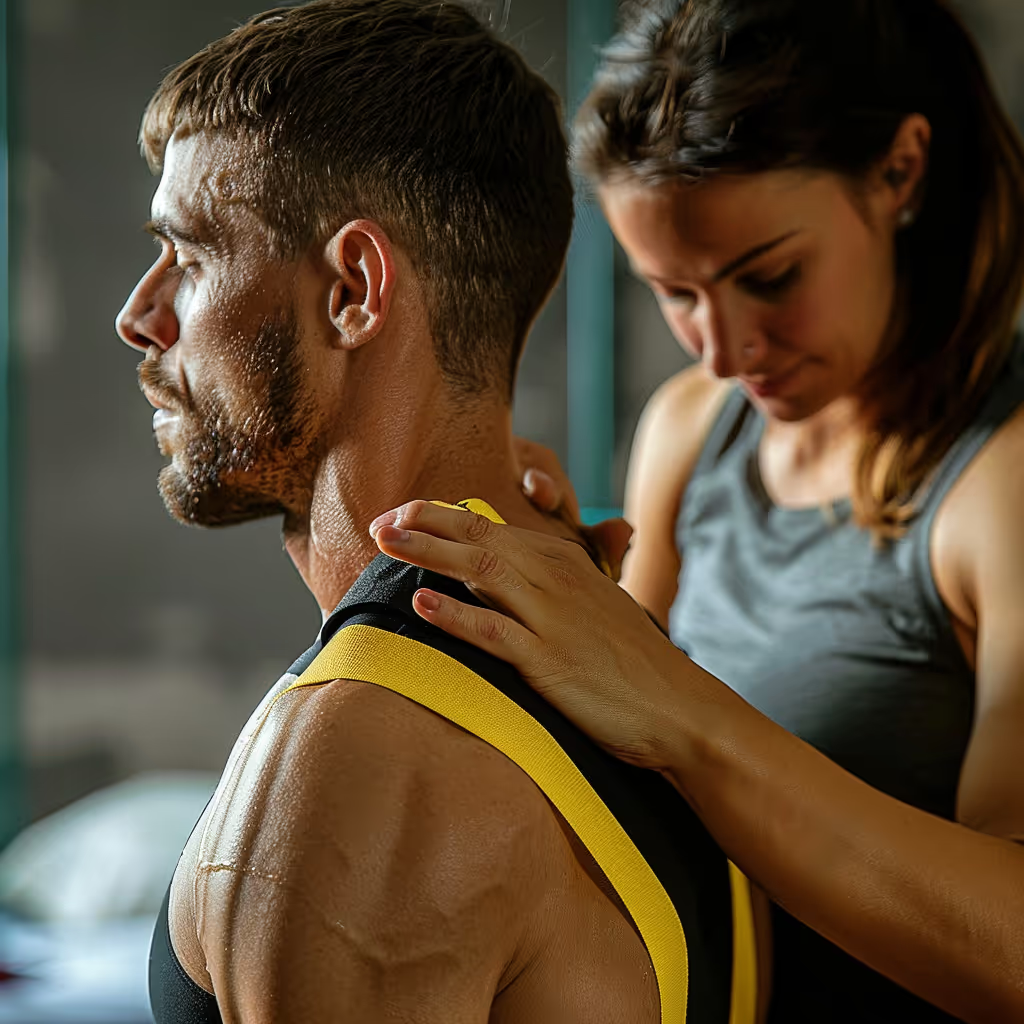
Lumbar Radiculopathy
This occurs when one or more nerves in the lower back are irritated or compressed, generally causing pain that radiates down the leg.
.png)
.png)
.png)


Lumbar Radiculopathy: A Comprehensive Guide to Understanding and Treating Nerve Irritation
Lumbar radiculopathy is a condition that affects the nerves in the lower back, often causing pain that radiates down the leg. Although this condition can be very painful and limiting, the good news is that it generally responds well to conservative treatment with physical therapy. Understanding this condition and knowing how to manage it can help you quickly return to your normal activities.
What is lumbar radiculopathy?
Lumbar radiculopathy occurs when one or more nerves in the lower back are irritated or compressed. This nerve irritation usually causes pain that radiates down the leg, following the path of the affected nerve. The term radiculopathy comes from the Latin word radix, meaning root, referring to the nerve root that emerges from the spine.
This condition is also known by other names depending on the specific nerve affected. Sciatica involves the sciatic nerve and causes pain in the back of the leg, while cruralgia affects the crural nerve and causes pain in the front of the thigh.
What is a nerve?
To better understand radiculopathy, it is helpful to know what a nerve is. Nerves are like electrical wires that run through our bodies, transmitting signals between the brain and different parts of the body. The lumbar nerves start at the lower back and run down the legs to the toes. They allow us to feel our legs when we touch them and provide the electrical signal to our muscles so that we can move.
When a nerve is irritated or compressed, it does not function normally. This can cause pain, numbness, tingling, or weakness in the area served by that nerve.
What are the symptoms of lumbar radiculopathy?
The main symptoms of lumbar radiculopathy include lower back pain accompanied by pain in the leg. The pain in the leg is often felt along a specific path, like a line running down the limb. This pain can affect the buttock, thigh, calf, and even the foot, depending on the nerve affected.
There may be burning, numbness, or tingling in the leg, sensations that reflect nerve irritation. Weakness in the leg may also be felt, particularly when nerve irritation is more severe.
In general, there are two types of symptoms for lumbar radiculopathy, depending on the movement or position that aggravates them. This classification is important because it guides the choice of exercises and postural advice.
Lumbar radiculopathy with symptoms in lumbar flexion (rounded back)
This type of radiculopathy occurs when pain is increased by positions or movements that round the lower back. Sitting for long periods of time typically worsens symptoms, as this position flexes the lumbar spine. Driving for long periods of time has the same effect. Leaning forward, putting on socks, pants, underwear, or shoes can trigger or increase pain. Sneezing or coughing, movements that increase pressure in the spinal canal, can also cause symptoms.
Lumbar radiculopathy with symptoms in lumbar extension (hollow back)
This type of radiculopathy occurs when pain is increased by positions or movements that arch the lower back. Walking for long periods of time can aggravate symptoms, especially if walking slowly. Paradoxically, walking faster can sometimes improve the situation because it slightly changes the lumbar mechanics. Standing for long periods of time, whether shopping, cooking, waiting in line, or watching a show while standing in one place, generally worsens symptoms.
Lying on your stomach or back with your legs stretched out can also cause pain. Storing items high up, such as in kitchen cabinets, is another activity that can trigger symptoms when extending.
It is possible to have both types of lumbar radiculopathy at the same time and therefore to experience symptoms in both categories. However, one category is often more pronounced than the other, which helps to guide treatment.
10 mini-tips to understand your pain
Those who have had the greatest impact on my patients' lives. 1 per day, 2 min.
What are the serious symptoms to watch out for?
The presence of certain signs and symptoms should prompt you to seek immediate medical attention at the emergency room or from a doctor. These red flags are rare but important to recognize because they may indicate serious nerve compression requiring rapid intervention.
Severe weakness or paralysis in one or both legs is a medical emergency. Similarly, significant or complete loss of sensation in one or both legs must be evaluated immediately. Recent loss of balance when walking or significant new incoordination are also worrying signs.
New difficulties controlling urine or stool, as well as loss of sensation in the genital area or when wiping after a bowel movement, may indicate cauda equina syndrome. This condition is a surgical emergency because prompt intervention can prevent permanent damage.
It is reassuring to know that these serious symptoms are present in less than 1% of cases of lower back pain. In most cases, although the pain can be very unpleasant, the condition improves with appropriate treatment.
What causes lumbar radiculopathy?
Lumbar radiculopathy can be caused by various factors. Sometimes the pain appears without any apparent trigger. Sometimes the pain is caused by a specific event. Here are some examples of possible causes.
Overloading the back beyond what we are used to is a common cause. Examples include spring or fall cleaning, gardening all weekend with a bent back, or driving for 10 hours in one day. These activities put more strain on the back than it is used to.
Paradoxically, a decrease in physical activity can lead to pain. If you have become less active than before, you may develop lower back pain because the muscles and structures in your back lose their ability to support everyday loads.
A new job, a new sport, or a new activity that puts strain on your back in a new way can also trigger radiculopathy. The body needs time to adapt to new demands, and progressing too quickly can irritate the nerves.
A car accident, a fall, or a sudden movement can traumatize the lumbar structures and irritate the nerves. These events can cause a lumbar disc herniation, which then compresses a nerve root.
How is lumbar radiculopathy diagnosed?
The diagnosis of lumbar radiculopathy is based on the history of symptoms and clinical examination. Your physical therapist or doctor will ask you questions about the onset of your pain, factors that aggravate or relieve it, and its impact on your daily activities.
It is important to know that medical imaging, whether X-ray or magnetic resonance imaging, is not relevant in 99% of cases. Studies show that changes visible on imaging are often present in people who are not experiencing any pain and do not necessarily predict the cause of your symptoms. A clinical diagnosis is usually sufficient to guide treatment.
When to consult a physiotherapist for lumbar radiculopathy?
You should consult a physical therapist if you have symptoms as described above, or if your doctor has already ruled out any other causes for your pain. Physical therapy for lower back pain offers an effective approach to treating radiculopathy.
You do not need to see a doctor before consulting a physical therapist. Physical therapists are front-line professionals who can assess your condition and refer you to other health care professionals if necessary. If your condition requires you to see a doctor, your physical therapist will be able to tell you and refer you appropriately.
What are the physiotherapy treatments for lumbar radiculopathy?
Your physical therapist will first conduct a comprehensive assessment to determine your limitations. This assessment examines several key elements. The mobility of your spine will be tested to identify segments that are less mobile. The sliding of your nerves will be evaluated to check for irritation or compression.
Your posture habits will be observed to identify positions that could contribute to your pain. The quality of your movements will be analyzed to identify inefficient movement patterns. Your strength and stability will be measured to assess your muscles' ability to support your spine.
Based on the results of this assessment, your physical therapist will use different therapeutic approaches. Joint mobilization and manipulation of your back joints and nerves can reduce pain and improve movement. These manual techniques are safe and effective when performed by a qualified professional.
Specific exercises will be prescribed for you to do at home to treat the cause of the problem and reduce pain.The McKenzie approach is often used to identify your directional preference, i.e., the movement that centralizes or reduces your symptoms. Stabilizing muscle exercises strengthen the deep muscles that support your spine.
Your physical therapist will also teach you how to balance your daily activities and leisure time to optimize healing. You will receive personalized advice on your posture and movements.
What to do at home for lumbar radiculopathy?
The first recommendation is to temporarily stop doing movements that cause too much pain, then gradually start doing them again afterwards. It is also important not to remain completely immobile for long periods of time, as you will be stiffer and in more pain afterwards.
For symptoms in lumbar flexion (rounded back)
Limit the amount of time you spend sitting and get up every 20 minutes to walk around a bit. Prolonged sitting increases pressure on the intervertebral discs and can aggravate nerve irritation.
When sitting, straighten your lower back slightly by sticking your buttocks out. Place a rolled towel under your lower back to remind yourself to sit up straighter. This lumbar support helps maintain the natural curve of your spine.
Go for walks often, for as long as feels comfortable. Running might even be good for you, although this depends on the individual. Walking is generally an excellent exercise because it keeps your back in a neutral position.
When driving, sit back in the seat and tilt the backrest slightly backward. Move the seat slightly closer to the steering wheel to avoid having to stretch. Lean forward slightly, using your hips rather than your spine.
When pain is present, spend a few minutes lying on your stomach or back with your legs stretched out. These positions should provide relief.
For lumbar extension symptoms (hollow back)
Limit the amount of time you spend standing and sit down every 20 minutes until the pain subsides. If you must remain standing in a static position, place one foot in front of the other and shift your weight slightly forward and backward. This slight movement reduces the load on the lumbar structures.
When cooking, place one foot inside the cabinet in front of you. This position slightly reduces the lumbar curve and relieves pressure on the posterior joints. When pain is present, spend a few minutes lying on your side with a pillow between your knees. This position keeps your spine aligned and should provide relief.
If you see no improvement after 10 days of home care, you should consult a physical therapist for a professional evaluation and personalized treatment.
The prognosis for lumbar radiculopathy
The statistics concerning lower back pain are encouraging. Approximately 90% of episodes of lower back pain heal within 6 to 12 weeks, and 50% of episodes of lower back pain heal within 1 to 2 weeks. These figures also apply to radiculopathies, with the majority responding well to conservative treatment.
Conditions associated with lumbar radiculopathy
Lumbar radiculopathy may be associated with other conditions affecting the spine. Lumbar disc herniation is one of the most common causes of nerve irritation. Lumbar facet syndrome may coexist with radiculopathy. Spinal stenosis can cause nerve compression, particularly in older individuals.
Low back pain is a common condition that often accompanies radiculopathy. Treatment aims to reduce both local back pain and pain radiating down the leg.
Getting help for your lumbar radiculopathy
If you suffer from back pain that radiates down your leg, our physical therapists can help you understand your condition and regain your mobility. A comprehensive assessment will identify the factors contributing to your pain and develop a personalized treatment plan.
Don't wait until the pain becomes chronic before seeking treatment. The sooner you act, the better the results are generally. Make an appointment today to begin your journey toward relief.
Sources
Alexander CE, Varacallo M. Lumbosacral Radiculopathy. InStatPearls [Internet] 2019 Mar 23. StatPearls Publishing.
.jpg)
.jpg)
.jpg)
Other conditions

Hip osteoarthritis is a normal wear and tear of the hip joint. Osteoarthritis is often described as the wearing away of cartilage between our bones. While this is true, it involves more than just cartilage. Cartilage is a tissue that acts like a cushion between the surfaces of our bones, allowing our joints to glide smoothly and move with ease.
It is a normal wear and tear of the knee joint. Osteoarthritis is often described as the wearing away of cartilage between our bones. While this is true, it involves more than just cartilage. Cartilage is a tissue that acts like a cushion between the surfaces of our bones, allowing our joints to glide smoothly and move with ease.
A bursa is like a small, very thin, fluid-filled sac found in several joints throughout the body. This small sac acts as a cushion in the joint and lubricates structures that are exposed to more friction.
It is an inflammation of the subacromial bursa in the shoulder joint.
It is a tissue that surrounds the shoulder and allows the shoulder bone to stay in place within the joint. The capsule helps to stabilize the joint.
Cervicalgia is a general term to describe neck pain that does not have a specific cause, such as an accident or sudden movement. Cervicalgia is therefore synonymous with ''I have a pain in my neck and nothing in particular happened''.
In both injuries, there is pain felt in the neck that then radiates into the arm, or vice versa.
It is a significant stretch or tear of the muscle fibers in the groin or inner thigh muscles.
It is a significant stretch or tear of the muscle fibers in the hamstring muscles located at the back of the thigh.
Book an appointment now
We offer a triple quality guarantee: optimized time, double physiotherapy assessment, and ongoing expertise for effective care tailored to your needs.

Our clients' satisfaction is our priority.
At Physioactif, excellence defines our approach. But don't take our word for it, see what our patients are saying.












Discover our physiotherapy clinics
We have multiple locations to better serve you.
Blainville
190 Chem. du Bas-de-Sainte-Thérèse Bureau 110,
Blainville, Quebec
J7B 1A7
Laval
Montreal
St-Eustache
Vaudreuil
21 Cité-des-Jeunes Blvd. Suite 240,
Vaudreuil-Dorion, Quebec
J7V 0N3
Book an appointment now