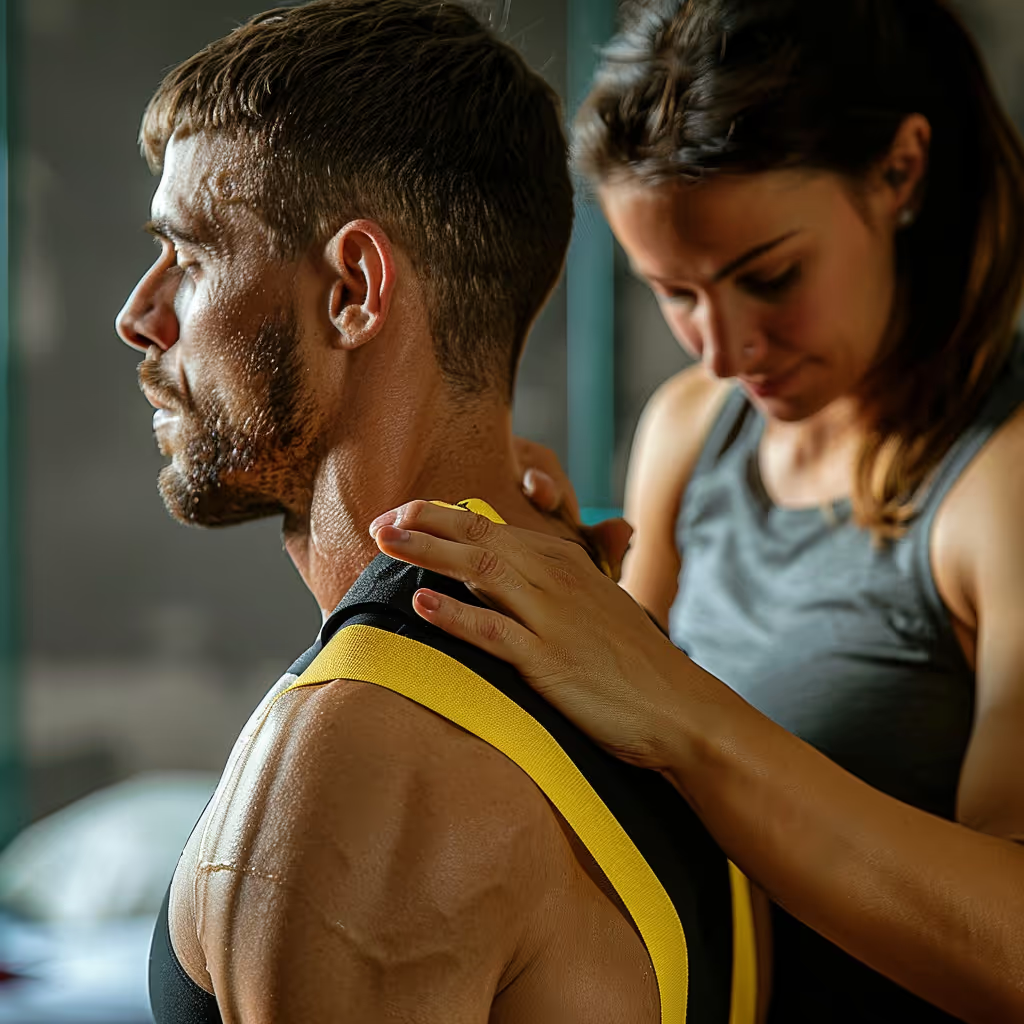
Muscle Pain: Complete Guide
.png)
.png)
.png)


You woke up with a stiff neck. Or you pushed yourself too hard at the gym and now you're having trouble walking down the stairs. Muscle pain is a part of life. Almost everyone experiences it at some point. As physical therapists specializing in musculoskeletal conditions, we see these situations every day.
The good news: the vast majority of muscle pain is temporary and responds well to treatment. Even injuries that seem serious usually heal completely withina few weeks.
- Muscle soreness after exercise disappears within 3 to 5 days, even withouttreatment.
- A mild muscle strain heals in 2 to 4 weeks with propercare.
- Chronic tension responds very well to physical therapy, even after months ofpain.
This guide helps you understand your muscle pain, distinguish between different types, know when to seek medical advice, and discover the best approaches to relieve and prevent it. To understand how physical therapy can help you, check out our comprehensive guide to physical therapy.
What is muscle pain and why is it so common?
Muscle pain (myalgia) is discomfort felt in muscle tissue. Your muscles account for about 40% of your body weight, making them the largest organ in your body. This significant mass and their constant use explain why muscle pain affects so many people.
Muscle is sensitive tissue. When you prick it with a needle, the sensation is really unpleasant.6 This natural sensitivity, combined with the constant use of your muscles, creates many opportunities for pain to occur.
Your muscles work constantly: grocery shopping, climbing stairs, typing, maintaining your posture. Even while you sleep, your muscles maintain certain positions.
Why do so many people suffer from muscle pain? Our sedentary lifestyle weakens muscles and makes them more vulnerable. Chronic stress keeps muscles tense for hours on end. Prolonged working positions create localized tension. Unusual exertion causes microtrauma.
Let's look at the different types of muscle pain.
What are the different types of muscle pain?
The main types of muscle pain are delayed onset muscle soreness (DOMS), strains, trigger points, and cramps. Each has distinct characteristics that help identify it.7
Delayed onset muscle soreness (DOMS)
Delayed onset muscle soreness (DOMS) is that unpleasant stiffness that appears 12 to 24 hours after unusual exercise.2 You move house on Saturday, and on Monday you find it difficult to walk down the stairs.
Muscle soreness is not a real injury. It is a normal reaction to an effort that has strained your muscles in a new way. Eccentric contractions (when the muscle lengthens while contracting) cause the most soreness: walking downhill, lowering a weight slowly, or slowing down while running.
Typical characteristics:
- Peak intensity between 48 and 72 hours
- Complete disappearance in 3 to 5 days
- Muscles tender to the touch and stiff
- Pain that decreases with gentle movement
Muscle strain
A strain (muscle strain or pulled muscle) is a real tear in the muscle fibers.3 The severity varies: from excessive stretching with little damage (grade 1) to complete muscle rupture (grade 3).
The moment of injury is distinct. You know exactly when it happened. Many people describe feeling something tear. If you cannot identify that moment, you probably do not have a strain.
The muscles most commonly affected are the hamstrings, quadriceps, calves, adductors, and lower back muscles.
Trigger points
Trigger points (muscle knots) are hypersensitive areas in muscle tissue.8 These points are painful when pressed and can cause pain elsewhere in the body (referred pain).
A trigger point is not a visible injury. It is a localized dysfunction, like a microspasm that does not relax. This area remains tense and sensitive, sometimes for months or years.
Cramps
A cramp is an involuntary, sudden, and painful contraction of an entire muscle.9 The famous "charley horse" that wakes you up at night with a locked calf is a classic example.
Cramps differ from trigger points in their intensity and duration. A cramp is violent but brief (lasting from a few seconds to a few minutes). A trigger point is less intense but can persist for weeks.
| Type | Appearance | Duration | Key feature |
|---|---|---|---|
| Delayed onset muscle soreness (DOMS) | 12-24 hours after exercise | 3-5 days | Improves with gentle movement |
| Muscle strain | Snapshot | 2-12 weeks depending on grade | Identifiable moment of injury |
| Trigger points | Progressive | Weeks to years | Pain referred elsewhere |
| Cramps | Sudden | Seconds to minutes | Very intense but brief |
Let's see how to distinguish these pains from joint or nerve pain.
How can I tell if my pain is coming from a muscle, joint, or nerve?
You can distinguish between these three types of pain by their location, sensation, and response to heat. Muscle pain is diffuse throughout the muscle and worsens with contraction. Joint pain is precise and localized. Nerve pain produces burning and tingling sensations along a specific path.10,11,12
Muscle pain is felt in the muscle tissue, not at a specific point. You can identify which muscle hurts, but it is an area rather than a point. The pain increases when you use the muscle. Painful muscles are sensitive to touch and cause stiffness. They often feel better after a hot bath or gradual warm-up.
Joint pain is localized precisely in or around a joint. You can point exactly where it hurts. It is often accompanied by morning stiffness that improves with movement. If your pain seems to be more joint-related, our guide to joint pain may help.
Nerve pain has unique characteristics: burning, tingling, or numbness following a specific path along the nerve. Sciatica, which runs down the leg, is a good example.
| Feature | Muscular | Articular | Nervous |
|---|---|---|---|
| Location | Diffuse, in the muscle | Precise, in articulation | Follows a nervous journey |
| Sensation | Tension, stiffness | Stiffness, cracking | Burning, tingling |
| Response to pressure | Sensitive to touch | Variable | Non-typical |
| Response to heat | Improvement | Variable | Variable |
Let's see what causes muscle pain.
10 mini-tips to understand your pain
Those who have had the greatest impact on my patients' lives. 1 per day, 2 min.
What are the main causes of muscle pain?
The most common causes are overwork and microtrauma, stress-related tension, prolonged poor posture, direct injuries (bruises and strains), and systemic conditions (infections and medications).13
Overwork is the most common cause. You have been exerting yourself more than usual. Your muscles have suffered microtrauma, causing inflammation and pain: a new exercise program, moving house, spring gardening, or repetitive physical work. Psychological stress due to actual muscle tension.14 When you are stressed, your muscles contract. This prolonged contraction becomes painful. The areas most affected are: neck, shoulders and upper backIt's a vicious circle. Pain increases stress, which increases tension. Poor posture tire certain muscles while others shorten.15 Leaning toward the screen for hours on end, your neck and shoulder muscles work hard to support your head. To improve your posture at work, check out our guide to ergonomics. Direct injuries like a blow to a muscle causes a bruise. Strains occur during intense exertion or sudden movements. To understand the complexity of back pain, see our comprehensive guide to back pain. Systemic conditions can also cause muscle pain. The flu often causes widespread muscle pain. Certain medications, particularly statins, cause muscle pain in about 1 in 10 people.16 The fibromyalgia due to widespread pain with fatigue and sleep disturbances.Let's see how to treat muscle pain at home.
How can you treat muscle pain at home?
You can treat mild to moderate pain with relative rest, cold or heat application, gentle stretching, and self-massage. These approaches effectively relieve most common muscle pain.
Relative rest means avoiding activities that aggravate the pain while remaining active. If your arms are sore after the gym, you can walk, ride a stationary bike, or do lower body exercises. You simply avoid straining your arms for a few days. The cold assistance within the first 48-72 hours after a acute injuryIt reduces inflammation and numbs the pain. Apply an ice pack wrapped in a cloth for 15-20 minutes at a time. Heat is more suitable for chronic tension. It relaxes muscles, increases circulation, and relieves stiffness. A hot bath, hot water bottle, or heating pad can help. When in doubt, heat is often more comfortable for non-traumatic muscle pain. Gentle stretching can relieve muscle tension. Stretch until you feel a slight tension, never to the point of pain. Hold for 20-30 seconds and repeat several times a day. Self-massage Using your hands, a tennis ball, or a foam roller can relieve tension and trigger points. Apply moderate pressure to tense areas for 30-60 seconds.If home treatments aren't enough, let's see how physical therapy can help.
How can physical therapy help with muscle pain?
Physical therapy offers professional assessment, manual techniques, a personalized exercise program, and education to prevent recurrence. It is often the most effective treatment for pain that does not resolve on its own.
The evaluation Start by understanding your pain. Where does it hurt? When did it start? What makes it worse or better? The physical therapist will then examine your movements, posture, strength, and flexibility to identify what is causing your pain. Manual techniques include myofascial release, trigger point therapy using direct pressure or dry needling, and mobilization of soft tissues.19 The exercise program aims to strengthen weak muscles, stretch shortened muscles, and improve movement control: progressive strengthening, specific stretching, stabilization exercises, and postural correction.20 Education helps you understand your condition, identify factors that aggravate it, and learn how to prevent recurrence.In Quebec, you can consult a physical therapist directly withouta medical referral.
Let's see when to consult.
When should you seek medical advice for muscle pain?
Seek immediate medical attention if you experience sudden and severe muscle weakness, high fever with intense pain, a swollen, red, and warm muscle, visible muscle deformation, or dark urine after intense exercise. See a physical therapist if the pain persists for more than 2 weeks without improvement.
| Warning sign | What this may indicate | Action |
|---|---|---|
| Sudden and severe weakness | Neurological problem | Immediate emergency |
| High fever + severe pain | Severe infection | Immediate emergency |
| Red, swollen, warm muscle | Muscle infection | Same-day emergency |
| Visible deformation | Complete rupture | Same-day emergency |
| Dark urine after exercise | Rhabdomyolysis | Immediate emergency |
- The pain persists for more than 2 weeks without improvement.
- The pain appeared for no apparent reason.
- You have generalized pain with fatigue
- You started taking a new medication and the pain began after that.
- Pain limits your daily activities
- You have chronic tension that won't go away
- You want to resume playing sports after an injury
- Home remedies are not enough
Let's see how to prevent muscle pain.
How can muscle pain be prevented?
You can prevent muscle pain by warming up before exercise, progressing gradually (10% rule), maintaining good posture and ergonomics, staying properly hydrated, exercising regularly, and managing stress.22,23
Warm-up A 5-10 minute warm-up prepares your muscles for exercise. Start slowly and gradually increase the intensity. The 10% rule suggests that you should not increase your training volume by more than 10% per week. Ergonomics matters a lot. The screen should be at eye level. Your feet should touch the floor. Your forearms should be parallel to the floor. Take regular breaks, get up, and move around for a few minutes every hour.24 Regular exercise strengthens your muscles and makes them more resistant to injury. Include reinforcement, flexibility, and aerobic exercise. Vary your activities to avoid overworking one muscle group. Hydration is important because dehydration can contribute to cramps. Drink water regularly, especially during exercise. Stress management helps prevent muscle tension. Incorporate relaxation techniques: deep breathing, meditation, yoga or relaxing activities.Frequently asked questions about muscle pain
How long does normal muscle pain last?Muscle soreness usually lasts 3 to 5 days. A mild strain heals in 2 to 4 weeks. Chronic tension can persist for weeks or months without proper treatment. If your pain does not improve after 2 weeks, consult a professional.
Does muscle soreness mean that my workout was effective?Not necessarily. Soreness indicates that you have done something new for your muscles. You can have an excellent workout without soreness if your body is adapted. Extreme soreness may indicate overexertion.
Should I exercise with sore muscles?Mild soreness is no reason to stop. Light exercise can speed up recovery.2 However, avoid putting intense strain on the same muscles before they have recovered.
Does stretching prevent muscle soreness?Research suggests that stretching before or after exercise does not significantly prevent muscle soreness.25 It remains useful for maintaining flexibility and reducing overall muscle tension.
Is fibromyalgia a real disease?Yes, fibromyalgia is recognized as a real condition. It is not a disease of the muscle itself. It is a problem with the nervous system that amplifies pain signals. The muscles are painful but not damaged. Treatment involves a comprehensive approach including exercise, sleep management, and sometimes medication.
References
- Mueller-Wohlfahrt HW, et al. Terminology and classification of muscle injuries in sport: the Munich consensus statement. Br J Sports Med. 2013;47(6):342-350.
- Hotfiel T, et al. Advances in delayed-onset muscle soreness (DOMS). Sportverletz Sportschaden. 2018;32(4):243-250.
- Jarvinen TA, et al. Muscle injuries: biology and treatment. American Journal of Sports Medicine. 2005;33(5):745-764.
- Foster NE, et al. Prevention and treatment of low back pain. Lancet. 2018;391(10137):2368-2383.
- Graven-Nielsen T, et al. Muscle pain: sensory implications and interaction with motor control. Clin J Pain. 2008;24(4):291-298.
- Mense S, et al. Muscle pain: understanding its nature, diagnosis, and treatment. Lippincott Williams & Wilkins; 2000.
- Shah JP, et al. Myofascial trigger points then and now: a historical and scientific perspective. PM R. 2015;7(7):746-761.
- Simons DG, et al. Myofascial pain and dysfunction: the trigger point manual. 2nd ed. Williams & Wilkins; 1999.
- Minetto MA, et al. Origin and development of muscle cramps. Exerc Sport Sci Rev. 2013;41(1):3-10.
- Cyriax J. Textbook of orthopedic medicine. Vol. 1. 8th ed. Baillière Tindall; 1982.
- Hunter DJ, et al. The symptoms of osteoarthritis and the genesis of pain. Rheum Dis Clin North Am. 2008;34(3):623-643.
- Baron R. Mechanisms of disease: neuropathic pain. Nat Clin Pract Neurol. 2006;2(2):95-106.
- Tiidus PM. Skeletal muscle damage and repair. Human Kinetics; 2008.
- Brosschot JF, et al. The perseverative cognition hypothesis: a review of worry, prolonged stress-related physiological activation, and health. J Psychosom Res. 2006;60(2):113-124.
- Sahrmann SA. Diagnosis and treatment of movement impairment syndromes. Mosby; 2002.
- Mammen AL. Statin-associated autoimmune myopathy. N Engl J Med. 2016;374(7):664-669.
- van den Berg R, et al. Advice to stay active as a single treatment for low back pain. Cochrane Database Syst Rev. 2017;7:CD008987.
- Malanga GA, et al. Mechanisms and efficacy of heat and cold therapies for musculoskeletal injury. Postgrad Med. 2015;127(1):57-65.
- Bialosky JE, et al. The mechanisms of manual therapy in the treatment of musculoskeletal pain. Man Ther. 2009;14(5):531-538.
- Kristensen J, et al. Resistance training in musculoskeletal rehabilitation: a systematic review. Br J Sports Med. 2016;50(18):1118-1124.
- Quebec Professional Order of Physiotherapy. Direct access to physiotherapy. 2024.
- Fradkin AJ, et al. Effects of warming up on physical performance: a systematic review with meta-analysis. J Strength Cond Res. 2010;24(1):140-148.
- Gabbett TJ. The training-injury prevention paradox: should athletes be training smarter and harder? British Journal of Sports Medicine. 2016;50(5):273-280.
- Hoe VC, et al. Ergonomic interventions for preventing work-related musculoskeletal disorders. Cochrane Database Syst Rev. 2018;12:CD010912.
- Herbert RD, et al. Stretching to prevent or reduce muscle soreness after exercise. Cochrane Database Syst Rev. 2011;(7):CD004577.
- Clauw DJ. Fibromyalgia: a clinical review. JAMA. 2014;311(15):1547-1555.
Videos in this category
Other conditions

Hip osteoarthritis is a normal wear and tear of the hip joint. Osteoarthritis is often described as the wearing away of cartilage between our bones. While this is true, it involves more than just cartilage. Cartilage is a tissue that acts like a cushion between the surfaces of our bones, allowing our joints to glide smoothly and move with ease.
It is a normal wear and tear of the knee joint. Osteoarthritis is often described as the wearing away of cartilage between our bones. While this is true, it involves more than just cartilage. Cartilage is a tissue that acts like a cushion between the surfaces of our bones, allowing our joints to glide smoothly and move with ease.
A bursa is like a small, very thin, fluid-filled sac found in several joints throughout the body. This small sac acts as a cushion in the joint and lubricates structures that are exposed to more friction.
It is an inflammation of the subacromial bursa in the shoulder joint.
It is a tissue that surrounds the shoulder and allows the shoulder bone to stay in place within the joint. The capsule helps to stabilize the joint.
Cervicalgia is a general term to describe neck pain that does not have a specific cause, such as an accident or sudden movement. Cervicalgia is therefore synonymous with ''I have a pain in my neck and nothing in particular happened''.
In both injuries, there is pain felt in the neck that then radiates into the arm, or vice versa.
It is a significant stretch or tear of the muscle fibers in the groin or inner thigh muscles.
It is a significant stretch or tear of the muscle fibers in the hamstring muscles located at the back of the thigh.
Book an appointment now
We offer a triple quality guarantee: optimized time, double physiotherapy assessment, and ongoing expertise for effective care tailored to your needs.

Our clients' satisfaction is our priority.
À Physioactif, l’excellence guide chaque intervention, mais ce sont nos patients qui en parlent le mieux. Consultez plutôt leurs avis vérifiés pour vous faire une idée concrète de leur expérience.









Discover our physiotherapy clinics
We have multiple locations to better serve you.
Blainville
190 Chem. du Bas-de-Sainte-Thérèse Bureau 110,
Blainville, Quebec
J7B 1A7
Située à Blainville, à proximité de Rosemère, la clinique Physioactif est facilement accessible pour les résidents du secteur et des alentours
Laval
3224 Jean-Béraud Ave. Suite 220 Laval,
QC H7T 2S4
Située à Chomedey, au cœur de Laval, la clinique Physioactif est facilement accessible pour les personnes à proximité
Montreal
8801 Lajeunesse Street,
Montreal,
QC H2M 1R8
Située à Ahuntsic, à proximité de Villeray, la clinique Physioactif est facilement accessible pour les résidents des deux quartiers
St-Eustache
180 25th Avenue Suite
201 Saint-Eustache
QC J7P 2V2
Située à Saint-Eustache, la clinique Physioactif est facilement accessible pour les résidents du secteur et des environs
Vaudreuil
21 Cité-des-Jeunes Blvd. Suite 240,
Vaudreuil-Dorion, Quebec
J7V 0N3
Établie à Vaudreuil-Dorion, la clinique Physioactif est facilement accessible pour les gens du secteur
Book an appointment now