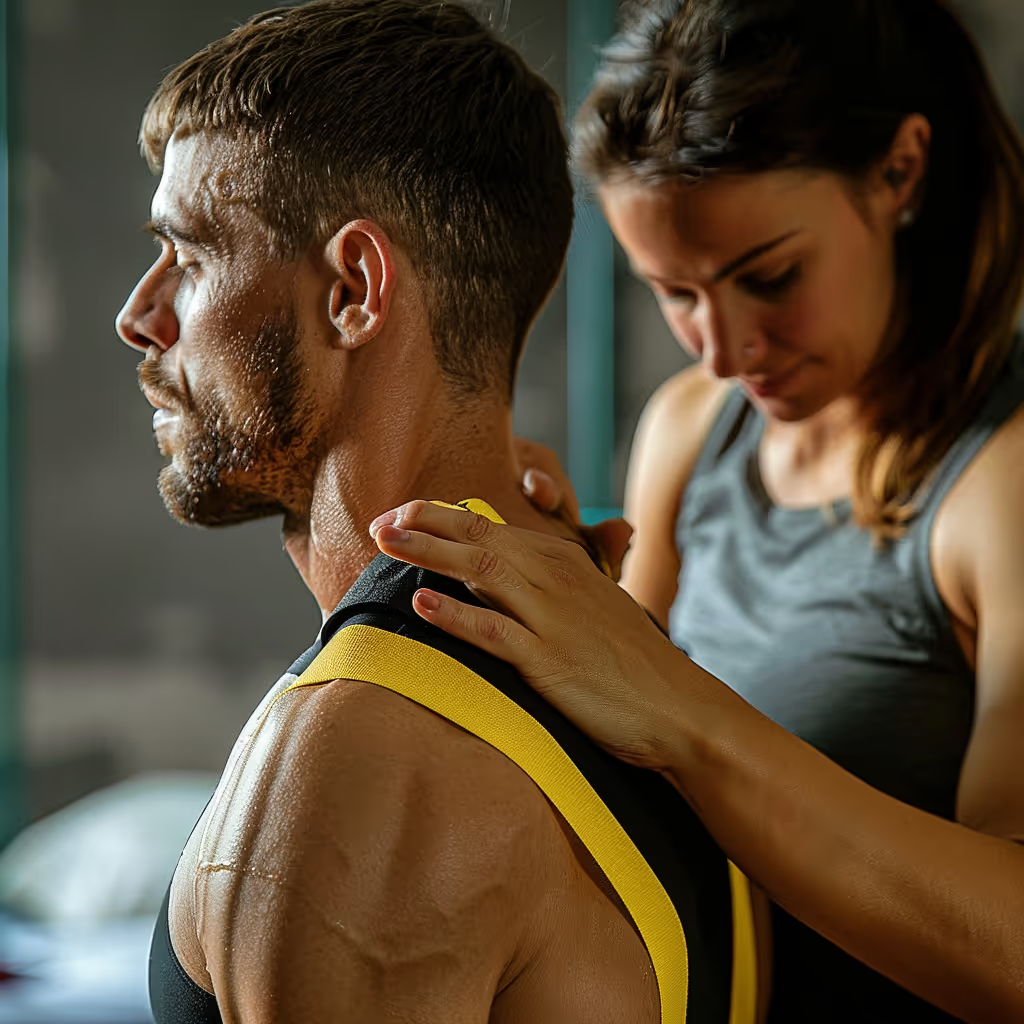


"I woke up Monday morning with a sore neck, but... I didn't do anything special during the night!?"
"I came back from my run, everything was fine, and a few hours later my ankle was stiff and painful, but I didn't fall?"
Do these sentences sound familiar? Perhaps you or a family member have already experienced similar situations. They leave you perplexed as to why pain suddenly appears for no apparent reason.
Differentiating between an injury and pain:
Indeed, we often confuse the following 2 concepts: Injury and pain.
During an accident, for example, a fall on a bicycle, there will likely be injuries. Whether the injured tissue is skin, muscle, or ligament, this injury causes pain. Especially at the very beginning, during the inflammatory reaction, when the body brings the necessary chemical ingredients to promote tissue healing.
This phase of significant pain generally lasts 48 hours to 4 days. After this, the pain gradually decreases over the following weeks, depending on the tissue that needs to heal. This example helps us understand that injury equals pain. But you probably already knew that.
What might surprise you more: We absolutely cannot assert the opposite. Pain ≠ injury.
For example, a severe headache doesn't mean your brain or skull is broken or damaged. We often feel pain without an injury.
Not convinced? Think about a famous 'brain freeze' from eating a popsicle too quickly... unpleasant, yes, but nothing dangerous!
Our perception of pain acts as an alarm signal to our body, alerting us to a perceived potential danger. Often, it's our body's way of telling us that its internal balance is disrupted. In other words, it's overloaded; we've given it more stress (physical or mental) than it can handle under the current circumstances.
How does an overuse injury occur?
When an overload pain occurs, you have to ask yourself questions:
- Are there things that are stressing my body more than usual lately?
- An overload injury can occur when increasing a sports activity (longer duration or intensity = more shocks, twists, tension)
- Unusual demanding one-time activity: doing spring cleaning, moving, shoveling, etc.
- Unusual sustained position: standing at a concert, crashing all weekend on a couch, etc.
- Changes in posture: car, office, etc.
- Psychological stress
What factors predispose you to an overuse injury?
Are there factors in my life that have recently made my body less resistant to stress?
- Illness
- Lack of sleep
- Change in diet
- Sedentary lifestyle
- Loss of physical fitness (e.g., summer vs. winter),
- Frequent alcohol or tobacco use
10 Quick Tips for Understanding Your Pain
The ones that have made the biggest difference in my patients' lives. 1 a day, 2 minutes.
How to control overuse pain?
The key to managing overload pain: quantifying mechanical stress.
Think of your ability to handle the amount of stress applied to your tissues during sports and daily activities as a budget. If your body is less resistant lately, you have a smaller budget, and you need to adjust your activities accordingly to avoid putting yourself in a risky situation where you are stressing your body beyond its tolerance, which could lead to pain.
When you add stress to your body (e.g. increasing your running distance), you must do it in small, gradual and slow increases to give the tissues time to create the necessary adaptations and increase their resistance (and therefore your 'budget').
To learn everything and become a master of quantifying mechanical stress.
To know what to do in the event of a running overload injury.
Customer satisfaction is our top priority
At Physioactif, excellence guides everything we do, but our patients are the best ones to tell you about it. Take a look at their verified reviews to get a real sense of their experience.











Discover our physical therapy clinics
We have locations in several areas to better serve you.
Blainville
190 Bas-de-Sainte-Thérèse Road, Suite 110,
Blainville, Quebec
J7B 1A7
Located in Blainville, near Rosemère, the Physioactif clinic is easily accessible to residents of the area and the surrounding communities
Laval
3224 Jean-Béraud Ave., Suite 220, Laval,
QC H7T 2S4
Located in Chomedey, in the heart of Laval, the Physioactif clinic is easily accessible to people in the area
Montreal
8801 Lajeunesse Street,
Montreal,
QC H2M 1R8
Located in Ahuntsic, near Villeray, the Physioactif clinic is easily accessible to residents of both neighborhoods
Saint-Eustache
180 25th Avenue, Suite
201 Saint-Eustache
QC J7P 2V2
Located in Saint-Eustache, the Physioactif clinic is easily accessible to residents of the area and the surrounding communities
Vaudreuil
21 Cité-des-Jeunes Boulevard, Suite 240,
Vaudreuil-Dorion, Quebec
J7V 0N3
Located in Vaudreuil-Dorion, the Physioactif clinic is easily accessible to people in the area
Make an appointment now