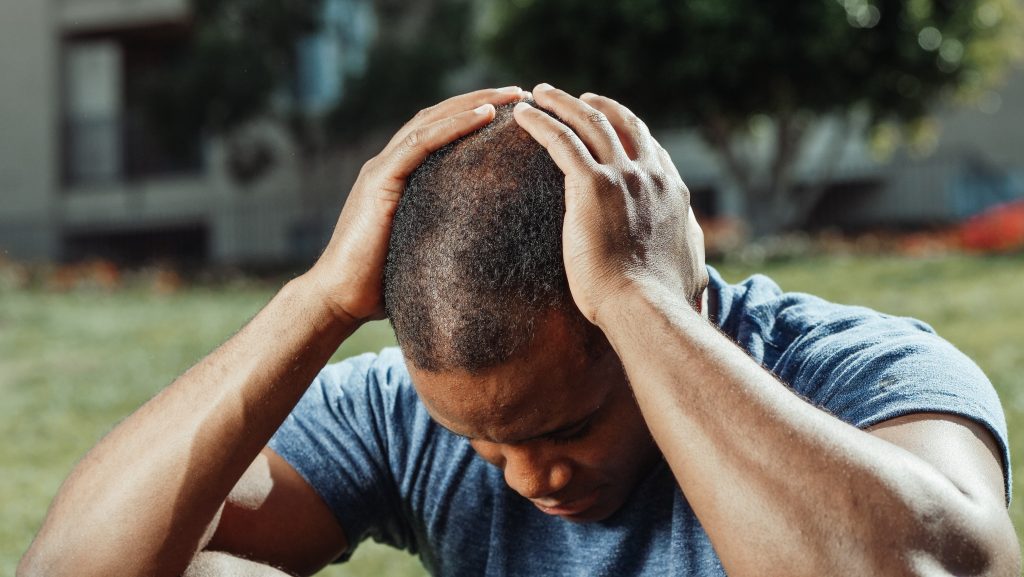

You or your child took a blow while playing sports or during a fall. Now you have a headache, you’re tired, or you feel “not quite yourself.” You’re wondering if it’s a concussion and what you should do. This uncertainty is stressful, especially with all the conflicting information out there; we’ll help you sort out the facts from the myths about concussions.
Recovery is generally favorable. A concussion is a genuine brain injury. According to the 2024 Quebec guidelines, symptoms have resolved in the majority of people after one month. A minority continues to experience difficulties for a longer period.1 The duration varies from person to person. Appropriate care can help when symptoms persist.
What science tells us about concussions:- A concussion can occur without loss of consciousness.2, 3
- Even a single symptom that appears after an impact may indicate a concussion.
- Relative rest involves reducing your physical activity for one or two days, while continuing with daily activities that you can tolerate. You don’t have to stay in bed in the dark until your symptoms go away. In a study of young people aged 11 to 22, five days of strict rest did not provide any additional benefit compared to one or two days followed by a gradual return to normal activity.4
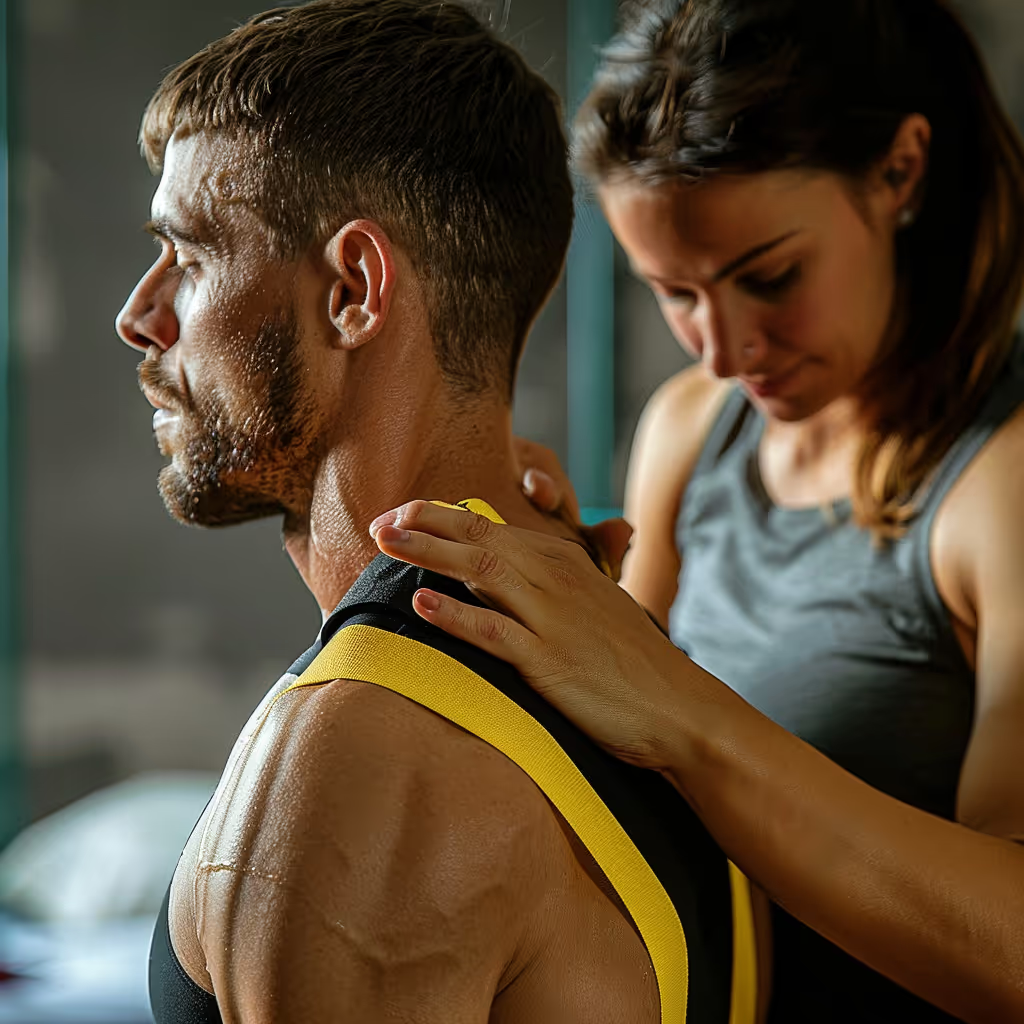
- A physical therapist trained in concussion care can evaluate the neck, balance, and eye movements. This professional can also provide guidance on resuming activities based on the difficulties observed.
This article helps you understand this injury. For treatment steps, consult our guide on treating concussions.
10 Quick Tips to Understand Your Pain
One tip a day for 10 days to help you better understand your pain. About a 2-minute read.
What is a concussion?
A concussion is an injury that disrupts brain function following an impact. A blow to the head, neck, or elsewhere on the body can cause the brain to shake. This force disrupts the activity of nerve cells. Standard brain imaging tests may appear normal even in the presence of a concussion. Therefore, a normal image alone is not enough to rule out this injury: the healthcare professional also assesses the symptoms and examines the person.3
What are the signs and symptoms of a concussion?
A concussion can cause headaches, dizziness, fatigue, and difficulty concentrating or sleeping. After an impact, even just one of these symptoms may raise suspicion of this injury. However, other conditions can cause the same symptoms. Headaches, dizziness, and sensitivity to light or noise are common. Symptoms may appear immediately or within the following hours or days.
What should you do after a collision?
If you suspect a concussion, stop the activity and seek medical evaluation. Avoid activities that pose a risk of another blow to the head or a fall until authorized by a healthcare professional.3
Go to the emergency room immediately if any of the following symptoms appear after the injury:1
- A severe headache or one that is getting worse.
- Repeated vomiting.
- Double vision or loss of vision.
- Seizures, which are repeated, uncontrolled movements.
- Difficulty walking or speaking.
- Weakness or loss of sensation in an arm or leg.
- Difficulty staying awake, confusion, or loss of consciousness.
- Difficulty recognizing people or places.
- Increased agitation or aggression, excessive crying, or unusual behavior.
How Can Physiotherapy Help?
Physical therapy can assess and treat a variety of issues following a concussion. Before scheduling an appointment, make sure the physical therapist has the necessary training to provide this care. Treatment may include physical activity that increases your breathing and heart rate, tailored to your tolerance.5 Exercises for the eyes, neck, and balance address the issues identified during the evaluation.6
When dizziness persists after the impact, the vestibular physical therapy specifically targets the balance system.In a study, 103 athletes aged 13 to 18 began a tailored exercise program within ten days of sustaining a concussion. Half of the young people in the exercise group had recovered after 13 days, compared with 17 days in the stretching group. Exercise intensity was determined following a stress test and adjusted to remain below the threshold at which symptoms worsened.5
Persistent difficulties with attention or memory also require an evaluation. Depending on the patient’s needs, the care team may include several professionals, including a neuropsychologist, who specifically evaluates these functions.3
How can we resume operations?
After the initial period of relative rest, resume activities gradually. A slight increase in symptoms may be acceptable: no more than two out of ten, lasting less than an hour. If the increase is more pronounced or lasts longer, stop the activity and wait until symptoms return to their previous level. Then resume at a lower intensity or for a shorter duration.3
See your doctor again if your symptoms get worse, show little improvement after two weeks, still limit your activities after a month, or prevent you from making progress.1
Persistent symptoms may improve with appropriate follow-up care. A case series describes six young athletes who received physical therapy for prolonged symptoms. Four returned to their previous activity level; two resumed their activities with modifications. Symptoms, balance, and eye control improved. Since no comparison group was monitored, these observations do not allow us to attribute all of the improvement to the treatment.6Study by Hugentobler and colleagues.
It’s true that concussions often come with headaches, but this injury can also affect balance, concentration, sleep, and mood. So it’s not an injury to be taken lightly!
A concussion can affect vision and the system that regulates balance, particularly through signals from the inner ear. Hac and Gold describe these problems as common in their review of the literature. Their causes vary, which makes assessment important. Review by Hac and Gold. For more information on these issues, see our pages on vertigo and dizziness and on physical therapy for balance disorders.
Where can I learn more about concussions?
Our guides and the “Parle-moi de santé” podcast explain the symptoms, common misconceptions, and follow-up care for concussions. You can read our pages on the myths and facts about concussions, the stages of treatment, and concussions, and then listen to the podcast featured below.
Concussion Blog
Our guide to concussions covers symptoms and recovery. The articles on the stages of treatment and myths and facts explain these topics in detail.
Concussion Podcast
In Episode 6 of Talk to Me About Health, physical therapist Alexis Gougeon sits down with Dave Ellemberg, a neuropsychologist, to discuss concussions. A neuropsychologist assesses the connections between the brain, mental abilities, and behavior.
You can also find the podcast episode on the following platforms:
Apple PodcastsNeed professional advice?
Our physical therapists can assess your condition and recommend a personalized treatment plan.
Make an appointmentSources
Links open in a new tab.
- Brochure - Mild Traumatic Brain Injury. (Back to sections: 1, 2, 3)
- McCrory P, Meeuwisse W, Dvořák J, Aubry M, Bailes J, Broglio S, et al. Consensus statement on concussion in sport—the 5th International Conference on Concussion in Sport held in Berlin, October 2016. Br J Sports Med. 2017;51(11):838-847. (Back to section: 1)
- Patricios JS, Schneider KJ, Dvorak J, Ahmed OH, Blauwet C, Cantu RC, et al. Consensus statement on concussion in sport: the 6th International Conference on Concussion in Sport—Amsterdam, October 2022. Br J Sports Med. 2023;57(11):695-711. (Back to sections: 1, 2, 3, 4, 5)
- Thomas DG, Apps JN, Hoffmann RG, McCrea M, Hammeke T. Benefits of strict rest after acute concussion: a randomized controlled trial. Pediatrics. 2015;135(2):213-23. (Back to section: 1)
- Leddy JJ, Haider MN, Ellis MJ, Mannix R, Darling SR, Freitas MS, et al. Early Subthreshold Aerobic Exercise for Sport-Related Concussion: A Randomized Clinical Trial. JAMA Pediatr. 2019;173(4):319-325. (Back to sections: 1, 2)
- Hugentobler JA, Vegh M, Janiszewski B, Quatman-Yates C. PHYSICAL THERAPY INTERVENTION STRATEGIES FOR PATIENTS WITH PROLONGED MILD TRAUMATIC BRAIN INJURY SYMPTOMS: A CASE SERIES. Int J Sports Phys Ther. 2015;10(5):676-89. (Back to sections: 1, 2)
- Report of the Working Group on Concussions Occurring During Recreational and Sports Activities.
- Hac NEF, Gold DR. Neuro-Visual and Vestibular Manifestations of Concussion and Mild TBI. Curr Neurol Neurosci Rep. 2022;22(3):219-228.
Customer satisfaction is our top priority
At Physioactif, excellence guides everything we do, but our patients are the best ones to tell you about it. Take a look at their verified reviews to get a real sense of their experience.








Discover our physical therapy clinics
We have locations in several areas to better serve you.
Blainville
190 Bas-de-Sainte-Thérèse Road, Suite 110,
Blainville, Quebec
J7B 1A7
Located in Blainville, near Rosemère, the Physioactif clinic is easily accessible to residents of the area and the surrounding communities
Boucherville
690 Rue de Montbrun, Suite S,
Boucherville, Quebec
J4B 8H2
Located in Boucherville, the Physioactif clinic is easily accessible to people in the area
Laval
3224 Jean-Béraud Ave., Suite 220, Laval,
QC H7T 2S4
Located in Chomedey, in the heart of Laval, the Physioactif clinic is easily accessible to people in the area
Montreal
8801 Lajeunesse Street,
Montreal,
QC H2M 1R8
Located in Ahuntsic, near Villeray, the Physioactif clinic is easily accessible to residents of both neighborhoods
Saint-Eustache
180 25th Avenue, Suite
201 Saint-Eustache
QC J7P 2V2
Located in Saint-Eustache, the Physioactif clinic is easily accessible to residents of the area and the surrounding communities
Vaudreuil
21 Cité-des-Jeunes Boulevard, Suite 240,
Vaudreuil-Dorion, Quebec
J7V 0N3
Located in Vaudreuil-Dorion, the Physioactif clinic is easily accessible to people in the area
Make an appointment now