Ligament Pain: Complete Guide
.png)
.png)
.png)



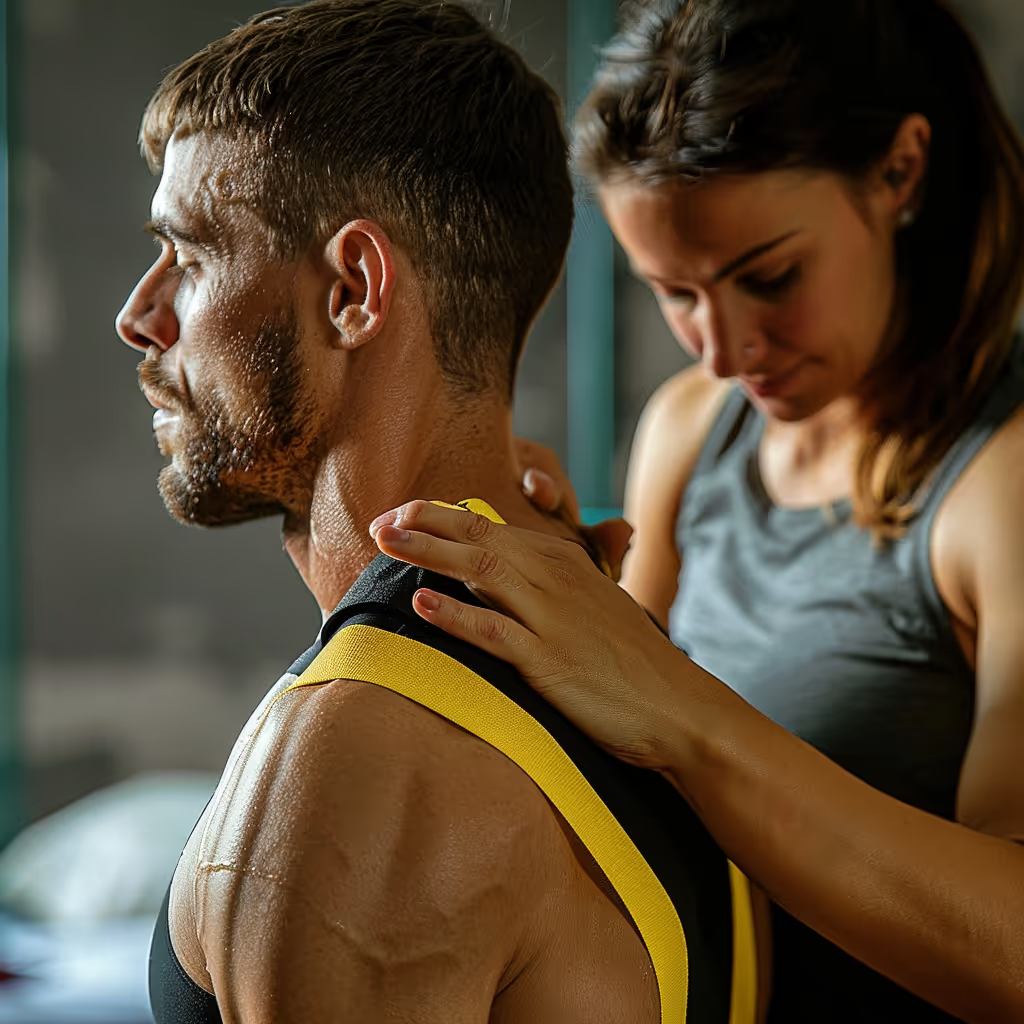
Ligament pain affects millions of people every year. Ankle sprains alone account for 25,000 cases per day in North America. You might have twisted your ankle on uneven ground, or sustained a knee injury during a sport. This pain can be intense and concerning.
Here's the good news: most ligament injuries heal well with proper care. This guide helps you understand what distinguishes ligament pain from other types of pain. You will learn about the different grades of sprains, realistic healing times, and how to optimize your recovery.
Physiotherapy is the first-line intervention for treating ligament injuries. To understand how this discipline can help you, consult our complete guide on physiotherapy and its therapeutic approaches.
What is a ligament and what is its role in joint stability?
A ligament is a band of fibrous tissue that connects one bone to another. Composed mainly of collagen, it stabilizes your joints and prevents excessive movements. Without ligaments, your joints would be unstable and non-functional.
Ligaments contain about 70% Type I collagen. This collagen forms extremely strong, braided fibers, like microscopic steel cables with some elasticity. The fibers align in the direction of tension to maximize their resistance. A natural crimp allows for slight lengthening without tearing.
A ligament connects bone to bone. A tendon connects muscle to bone. When you contract a muscle, the tendon transmits the force to the bone to create movement. The ligament acts like a safety strap that limits excessive movements.
Your body has hundreds of ligaments. Some are small, like those between the wrist bones. Others are large, like the cruciate ligaments in the knee. Each joint has its own system adapted to its needs.
How does a ligament sprain occur?
A sprain occurs when a joint is forced beyond its normal range of motion. A twisting motion, a fall, or a direct impact can stretch or tear the ligament fibers. The speed and force of the impact determine the severity.
Imagine these common scenarios. You're walking, and your foot suddenly turns on an uneven surface. You pivot in soccer, and your knee twists while your foot remains planted. You fall while skiing, and your thumb bends backward. In all these cases, the joint experiences a force that exceeds the ligament's ability to resist.
Several factors determine whether a sprain will occur. The speed and force of the impact are crucial. The position of the joint also plays a role, as certain positions make ligaments more vulnerable. Ligaments already weakened by a previous injury give way more easily.
A sprain differs from a muscle injury. A muscle strain or tear occurs in the muscle tissue, often during intense exertion. A sprain affects the ligament and occurs during a twisting motion or abnormal deviation. This distinction is important because the treatment and healing time differ.
What are the three grades of sprains and what do they mean for your recovery?
Sprains are classified into three grades based on severity. Grade I: stretch without tear, healing in 1-3 weeks. Grade II: partial tear, 4-6 weeks. Grade III: complete rupture, 8-12 weeks or surgery. This classification guides your treatment and establishes a realistic prognosis.
Grade I Sprain: Mild stretch
The ligament is stretched but remains intact. There is no tearing of the fibers. The joint remains stable.
What you might feel: mild to moderate pain, little swelling, and you can move and bear weight. Healing time: 1 to 3 weeks.Grade II Sprain: Partial tear
Some of the fibers are torn, but the ligament is not completely ruptured. The joint may show some instability.
What you might feel: Moderate to severe pain, significant swelling, possible bruising, difficulty bearing weight, and a feeling that the joint sometimes 'gives way'. Healing time: 4 to 6 weeks for initial healing, but full strength may take 3 to 6 months.Grade III Sprain: Complete tear
The ligament is completely torn. The joint becomes unstable because it has lost one of its stabilizing systems.
What you might feel: severe pain at the time of injury (which may lessen afterward as the ligament is no longer stressed), significant swelling, noticeable bruising, inability to bear weight, obvious instability. Healing time: 8 to 12 weeks for conservative healing, or 6 to 12 months if surgery is required.| Grade | Ligament damage | Stability | Healing time |
|---|---|---|---|
| Grade I (mild) | Stretch, intact fibers | Stable joint | 1-3 weeks |
| Grade II (moderate) | Partial tear | Slightly unstable | 4–6 weeks |
| Grade III (severe) | Complete tear | Unstable | 8-12 weeks to 12 months |
10 Quick Tips for Understanding Your Pain
The ones that have made the biggest difference in my patients' lives. 1 a day, 2 minutes.
How do ligaments heal and why is patience essential?
Ligament healing follows three phases: inflammation (days 1-7), proliferation (weeks 1-6), and remodeling (6 weeks to 12+ months). Ligaments heal more slowly than muscles because they have less blood supply. Respecting these timelines prevents recurrence.
Inflammatory phase (days 1 to 7)
Immediately after the injury, your body triggers an inflammatory response. Swelling, warmth, and pain signal this response. Specialized cells arrive to clear debris and prepare for healing.
This phase is necessary, even if it's uncomfortable. Inflammation attracts the cells that will rebuild the ligament. Completely blocking inflammation with medication can slow down healing. Moderate control is preferable.
Proliferation Phase (weeks 1 to 6)
Fibroblasts start producing new collagen. This initial collagen is Type III, which is less organized and less resistant than the original. The new tissue formed is more similar to scar tissue than a normal ligament.
During this phase, the healing ligament is fragile. Avoid excessive stress that could tear the new fibers. However, light and controlled mechanical stress actually stimulates collagen production and helps the fibers align correctly.
Remodeling Phase (weeks 6 to 12 months and beyond)
Type III collagen is gradually replaced by stronger Type I collagen. The fibers progressively align themselves in the direction of mechanical forces, making the ligament stronger over time.
This phase can last several months, or even over a year for severe injuries. Even after full recovery, the repaired ligament may not always regain its original strength. This highlights why preventing re-injury is so crucial.
Important point: a ligament reaches its maximum strength approximately 6 weeks after a Grade I sprain. For more severe sprains, this recovery period is even longer. A common mistake that often leads to re-injury is relying solely on the absence of pain to resume normal activities.
What are the most common sprains by body region?
The ankle is the most common site for sprains, accounting for 85% of ligament injuries in this joint. The knee (cruciate and collateral ligaments), wrist, shoulder, and cervical spine are also frequently affected. Each of these areas has its own unique characteristics.
The Ankle: The Most Common Sprain
Ankle sprains account for 85% of all ligament injuries in this joint. Nearly 25,000 people sprain their ankle every day in North America.
The typical mechanism is inversion, where the foot turns inward, stretching or tearing the ligaments on the outer side. The three lateral ligaments – the anterior talofibular, calcaneofibular, and posterior talofibular ligaments – are most commonly affected.
Most ankle sprains heal well with conservative treatment. To learn more, refer to our complete guide to ankle sprains.
The Knee: Cruciate and Collateral Ligaments
The knee has four main ligaments: two cruciate ligaments (anterior and posterior) and two collateral ligaments (medial and lateral). Injuries to the anterior cruciate ligament (ACL) are common in sports that involve pivoting.
ACL sprains typically occur during a sudden change of direction, an abrupt stop, or an uncontrolled landing. The classic mechanism involves the knee rotating while the foot remains planted.
The medial collateral ligament (MCL) is the most frequently injured knee ligament. It often heals well without surgery thanks to its good blood supply. For more in-depth information, refer to our guide on knee injuries.
The Wrist and Thumb
A thumb sprain, also known as "skier's thumb" or "gamekeeper's thumb," affects the ulnar collateral ligament at the base of the thumb. It occurs when the thumb is forced outwards, typically during a fall on a hand holding a ski pole.
Wrist sprains often affect the ligaments located between the small bones of the wrist (carpal bones). They can be challenging to diagnose and are sometimes mistaken for simple bruises. Persistent pain after a fall warrants an evaluation. To learn more, refer to our guide on wrist and hand pain.
The Shoulder
The acromioclavicular joint, located at the top of the shoulder, is frequently affected by direct falls. This type of sprain causes pain at the top of the shoulder. In severe cases, a visible deformity may appear, where the collarbone seems to be elevated.
Shoulder sprains often occur in contact sports (hockey, football) and sports with a risk of falling (cycling, skiing). To understand these injuries, consult our guide on acromioclavicular joint sprains.
The Spine
The ligaments of the spine can also be sprained, especially in the neck region. Whiplash is a classic example of a neck ligament sprain, occurring during sudden acceleration-deceleration, such as in a car accident. To understand cervical pain, refer to our complete guide to neck pain.
How can you tell the difference between ligament pain and other types of pain?
Ligament pain is characterized by a clear traumatic event (you usually know exactly when it happened), a precise location on the joint, rapid swelling, and a possible feeling of instability. Muscle pain typically occurs during exertion, whereas joint pain tends to develop gradually.
Distinctive Characteristics of Ligament Pain
Clear injury mechanism. Unlike muscle pain which may appear gradually, a sprain occurs during an identifiable event. You know exactly when and how it happened. A twist, a fall, an impact. Precise location. The pain is located directly on the injured ligament, usually at the joint. You can often pinpoint exactly where it hurts. Rapid swelling. Swelling often appears within minutes to hours after the injury. Very rapid swelling (within minutes) can indicate bleeding into the joint. This suggests a more severe injury. Possible instability. With Grade II and III sprains, you might feel that the joint is "loose" or doesn't hold well. This sensation is characteristic of ligament injuries. Pain when stretched. Pain increases when the ligament is stretched. For example, if you have an outer ankle sprain, turning your foot inward will increase the pain.Comparison with Muscle Pain
Muscle pain is felt within the muscle itself, not directly on the joint. It's related to muscle contraction: when you contract the affected muscle, it hurts. Muscle pain often improves with heat and gentle stretching.
A muscle strain occurs during intense exertion, not during a joint twisting movement. The muscle may have a specific tender point, or even a palpable defect in severe cases.
Comparison with Joint Pain
Joint pain can resemble ligament pain because both are felt within the joint. However, joint pain that isn't caused by trauma (like osteoarthritis) develops gradually. It is often accompanied by morning stiffness and cracking sounds, and it doesn't have a clear traumatic cause.
| Characteristic | Ligament pain | Muscle pain | Joint pain |
|---|---|---|---|
| Onset | Sudden, traumatic | During exertion or progressive | Progressive or insidious |
| Location | On the joint | In the muscle | In the joint |
| Swelling | Frequent and rapid | Possible but less pronounced | Variable, can be chronic |
| Instability | Possible (grades II-III) | No | Rare |
| Morning Stiffness | Not typical | Not typical | Characteristic |
Need professional advice?
Our physical therapists can assess your condition and provide you with a personalized treatment plan.
Make an appointmentWhen should you seek medical attention for a ligament injury?
Seek immediate medical attention if you notice a visible deformity, a complete inability to bear weight, very rapid swelling, numbness, or paleness in the limb. These signs could indicate a fracture, dislocation, or associated vascular or nerve damage.
Emergency signs: consult immediately
| Warning Sign | What it might indicate | Action |
|---|---|---|
| Visible joint deformity | Associated dislocation or fracture | Immediate emergency |
| Complete inability to bear weight | Possible severe injury | Urgent assessment |
| Very rapid swelling (minutes) | Bleeding into the joint | Prompt medical evaluation |
| Numbness or tingling | Possible nerve damage | Urgent assessment |
| Pale or cold limb | Possible vascular damage | Immediate emergency |
Signs requiring prompt consultation
Consult within the next few days if you experience any of these symptoms: joint instability; pain that doesn't lessen after 48-72 hours; swelling that persists or worsens; an inability to return to your normal activities after one week; or if it's a re-injury.
When waiting is reasonable
You can likely wait to consult if the pain is mild to moderate; if you can move the joint and bear weight (even with some discomfort); if the swelling is minor; and if you notice a gradual improvement. In such cases, home care may be sufficient for a Grade I sprain.
How can a ligament sprain be treated effectively?
The treatment follows three phases: protection with optimal loading (POLICE protocol, days 1-7), recovery of mobility and proprioception (weeks 1-4), then progressive strengthening (weeks 4-12+). Most grade I-II sprains heal without surgery with appropriate rehabilitation.
Phase 1: Protection and inflammation management (days 1 to 7)
Protection without complete immobilization. Relative rest is better than complete rest. Avoid activities that cause pain, but maintain gentle movement. Prolonged immobilization can delay healing by weakening tissues. Managing inflammation. The POLICE protocol (Protection, Optimal Loading, Ice, Compression, Elevation) has replaced the older RICE protocol. The focus is on optimal loading rather than complete rest. Ice can help control pain and swelling in the first 48 to 72 hours (15-20 minutes at a time, several times a day). Compression with an elastic bandage and elevating the limb also help reduce swelling. Medication. Acetaminophen (Tylenol) can relieve pain without interfering with healing. Anti-inflammatory medications (ibuprofen, naproxen) are useful for controlling excessive inflammation. However, prolonged use is not recommended as it can slow down tissue healing.Phase 2: Mobility recovery and start of strengthening (weeks 1 to 4)
Once the acute phase has passed, the goal is to regain full range of motion. We gradually introduce gentle mobility exercises. Light strengthening begins, respecting your pain threshold.
Proprioception exercises also begin. Proprioception is your body's ability to sense the position of your joint in space. It is often affected after a sprain. Simple balance exercises, like standing on one leg, help restore it.
Phase 3: Strengthening and functional return (weeks 4 to 12+)
Muscle strengthening becomes more intense and specific to the activities you want to resume. Progression follows the principle of progressive loading: gradually increasing intensity to stimulate the ligament's adaptation without overloading it.
Returning to activities happens in stages. Daily activities first, then recreational activities, and finally sports activities if applicable. Returning to competitive sports is generally not recommended until strength, balance, and confidence are fully restored.
When is surgery necessary?
Surgery is not always necessary, even for grade III sprains. The decision depends on several factors: which ligament is affected (some heal better than others without surgery), your activity level and goals, residual stability, and associated injuries.
For knee ACL injuries, recent studies show that intensive rehabilitation can produce results comparable to surgery in some patients. However, athletes participating in high-level pivoting sports often benefit more from surgery.
How does physiotherapy optimize ligament healing?
Physiotherapy combines comprehensive assessment, personalized exercises, manual techniques, and education to optimize your recovery. Proprioception exercises are particularly important: they restore your joint's sense of position and significantly reduce the risk of re-injury.
Comprehensive assessment
Your physiotherapist begins with a detailed assessment. They analyze your injury history and medical background. They perform a physical examination (stability tests, range of motion, strength). They evaluate your function (walking, climbing stairs) and identify factors that contributed to the injury.
Personalized exercise program
Therapeutic exercise is the cornerstone of treatment. We tailor your program to the grade of your sprain, the affected joint, and your goals. It evolves throughout your recovery, progressing from gentle mobility to strengthening, then to specific functional exercises.
Proprioception exercises are particularly important. After a sprain, your ability to sense the position of your joint is reduced. This reduction increases the risk of re-injury. Balance and coordination exercises help restore this protective function.
Manual techniques
Your physiotherapist may use several manual techniques. Joint mobilizations to improve range of motion. Soft tissue techniques to reduce adhesions and muscle tension. Specific techniques to promote healing.
Education and prevention
Understanding your injury helps you actively participate in your recovery. Your physiotherapist explains several essential elements: what is happening in your ligament, why certain activities should be temporarily avoided, how to progress safely, and how to prevent re-injury.
If your sprain affects your quality of life or if you want to optimize your recovery, our physiotherapists can assess your condition. Visit our page on physiotherapy services or book an appointment for an assessment.
How to prevent chronic instability after a sprain?
Chronic instability develops in 4 out of 10 people after an inadequately rehabilitated ankle sprain. To prevent it: complete your rehabilitation (don't rely solely on pain), do your proprioception exercises, strengthen stabilizing muscles, and use taping if necessary.
Why does chronic instability develop?
Chronic instability occurs in several situations: when the ligament heals but remains looser than before, when repeated sprains gradually stretch the ligament, when proprioception is not restored, or when stabilizing muscles are weak.
Up to 40% of people who experience an ankle sprain develop some form of chronic instability. This figure highlights the importance of comprehensive treatment and rehabilitation.
How to prevent chronic instability?
Complete your rehabilitation. Don't rely solely on the pain disappearing. Make sure you regain full strength, balance, and function before resuming your activities. Do your proprioception exercises. These balance exercises are essential for preventing recurrence. Continue them even after full recovery. Strengthen your stabilizing muscles. Strong muscles around the joint compensate for a slightly weakened ligament. They provide additional protection. Use taping or a brace if needed. For high-risk activities (pivoting sports), taping or a brace can offer additional support. This can be used during rehabilitation and beyond, if needed.Treatment for established chronic instability
If chronic instability is already present, an intensive strengthening and proprioception program can often stabilize the joint without surgery. We recommend physiotherapy for 3 to 6 months before considering surgery.
When conservative treatment fails, surgical options exist to reconstruct or strengthen the ligaments. Long-term results are generally good.
Frequently asked questions about ligament pain
How long does a sprain take to heal?
It depends on the grade. A grade I sprain heals in 1 to 3 weeks. A grade II sprain takes 4 to 6 weeks for initial healing, but full strength can take 3 to 6 months. A grade III sprain can take 8 to 12 weeks, or 6 to 12 months if surgery is necessary. These times are averages. Your recovery may be faster or slower depending on several factors.
Should you use ice or heat for a sprain?
Ice is preferable within the first 48 to 72 hours after the injury. It helps control swelling and numbs the pain. After this acute phase, heat can help relax tight muscles around the joint. Ice remains useful if swelling reappears or if you experience a flare-up of pain.
Can a sprain heal on its own without treatment?
A mild sprain (Grade I) often heals on its own with relative rest. However, without proper rehabilitation, the risk of recurrence significantly increases. Grade II and III sprains greatly benefit from professional treatment to optimize healing and prevent complications.
Can I walk on a sprain?
It depends on the severity. For a mild sprain, walking is often possible and even beneficial. For a moderate to severe sprain, you might initially need crutches. The general principle is to avoid activities that cause significant pain, but to maintain gentle movement whenever possible.
How can I tell if it's a sprain or a fracture?
Both can occur from the same trauma and present similar symptoms (pain, swelling, difficulty moving). A fracture is more likely in these situations: if you heard a 'crack,' if you absolutely cannot bear weight, if the pain is directly on the bone rather than the ligament, or if the pain does not improve after a few days. An X-ray can confirm or rule out a fracture.
Can ligaments heal completely?
Ligaments do heal, but the repaired tissue is not identical to the original ligament. The new tissue contains more Type III collagen and its structure is less organized. That said, with appropriate rehabilitation, function can be fully restored even if the microscopic structure differs slightly.
When can I return to sports after a sprain?
Returning to sports depends on the grade of the sprain, the sport you play, and your rehabilitation progress. Generally, wait until you have recovered several key elements: full range of motion, strength comparable to the uninjured side, restored balance and proprioception, and the ability to perform specific sports movements without pain or apprehension. For severe sprains, expect 3 to 6 months before a full return to competitive sports.
Videos in this category
Other conditions

Hip osteoarthritis is the normal wear and tear of the hip joint. It is often said that osteoarthritis is the wear and tear of the cartilage between our bones. That is true, but it involves more than just the cartilage. Cartilage is a tissue that acts as a cushion between the surfaces of our bones and allows our joints to glide smoothly and move fluidly.
This is normal wear and tear of the knee joint. It’s often said that osteoarthritis is the wearing down of the cartilage between our bones. That’s true, but it’s more than just the cartilage. Cartilage is a tissue that acts as a cushion between the surfaces of our bones and allows our joints to glide smoothly and move fluidly.
It is an inflammation of the subacromial bursa in the shoulder joint.
A bursa is a small, thin sac filled with fluid that is found in many of the body's joints. This small sac acts as a cushion within the joint and lubricates the structures that are subject to increased friction.
It is a tissue that surrounds the shoulder and helps keep the shoulder bone in place within the joint. The capsule helps keep the joint stable.
Neck pain is a general term used to describe pain in the neck that has no specific cause, such as an accident or a sudden awkward movement. Neck pain is therefore synonymous with “my neck hurts, and nothing in particular happened.”
In both types of injury, pain is felt in the neck and then radiates into the arm, or vice versa.
Make an appointment now
We offer a three-pronged quality assurance approach: optimized treatment time, a second opinion from a physical therapist, and ongoing expertise to ensure effective care tailored to your needs.
Customer satisfaction is our top priority
At Physioactif, excellence guides everything we do, but our patients are the best ones to tell you about it. Take a look at their verified reviews to get a real sense of their experience.











Discover our physical therapy clinics
We have locations in several areas to better serve you.
Blainville
190 Bas-de-Sainte-Thérèse Road, Suite 110,
Blainville, Quebec
J7B 1A7
Located in Blainville, near Rosemère, the Physioactif clinic is easily accessible to residents of the area and the surrounding communities
Laval
3224 Jean-Béraud Ave., Suite 220, Laval,
QC H7T 2S4
Located in Chomedey, in the heart of Laval, the Physioactif clinic is easily accessible to people in the area
Montreal
8801 Lajeunesse Street,
Montreal,
QC H2M 1R8
Located in Ahuntsic, near Villeray, the Physioactif clinic is easily accessible to residents of both neighborhoods
Saint-Eustache
180 25th Avenue, Suite
201 Saint-Eustache
QC J7P 2V2
Located in Saint-Eustache, the Physioactif clinic is easily accessible to residents of the area and the surrounding communities
Vaudreuil
21 Cité-des-Jeunes Boulevard, Suite 240,
Vaudreuil-Dorion, Quebec
J7V 0N3
Located in Vaudreuil-Dorion, the Physioactif clinic is easily accessible to people in the area
Make an appointment now