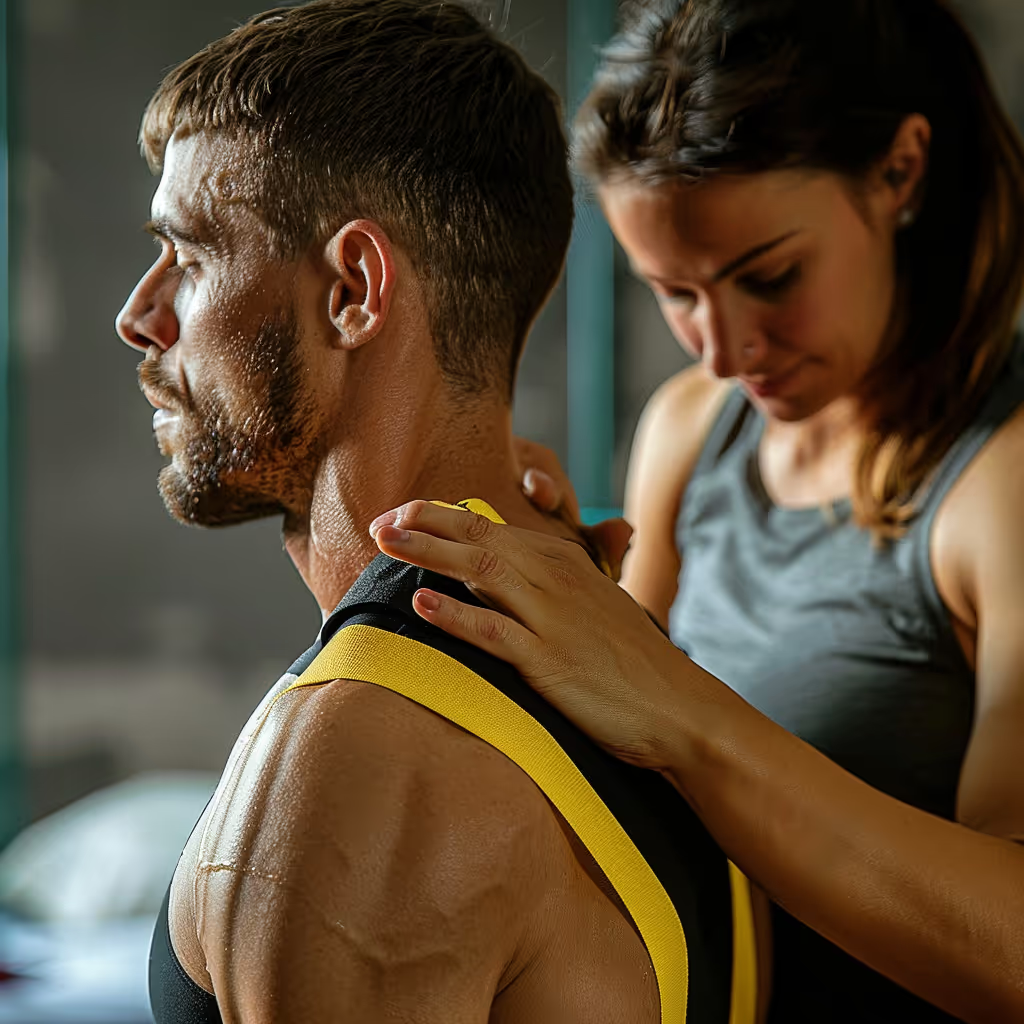
Hip osteoarthritis (coxarthrosis)
Hip osteoarthritis is the normal wear and tear of the hip joint. It is often said that osteoarthritis is the wear and tear of the cartilage between our bones. That is true, but it involves more than just the cartilage. Cartilage is a tissue that acts as a cushion between the surfaces of our bones and allows our joints to glide smoothly and move fluidly.
.png)
.png)
.png)





Synonym for hip osteoarthritis
- Coxarthrosis
What is hip osteoarthritis?
Hip osteoarthritis affects the entire joint, including the cartilage, bone, and synovial membrane—the thin layer that lines the inside of the joint.1, 2 It becomes more common with age, though it is not an inevitable consequence of aging.3
Cartilage covers the surfaces of the bones that meet at a joint. It allows them to glide smoothly and helps distribute pressure during movement.
As osteoarthritis progresses, the cartilage becomes thinner. However, all the structures that make up the hip joint can be affected.1 Changes can be observed in the cartilage, bone, ligaments, and muscles, as well as in the capsule that surrounds the joint and the synovial membrane that lines the inside of the joint and produces the lubricating fluid.
10 Quick Tips to Understand Your Pain
One tip a day for 10 days to help you better understand your pain. About a 2-minute read.
What are the symptoms of hip osteoarthritis?
Symptoms of hip osteoarthritis include progressive pain in the groin, morning stiffness, and difficulty moving the hip. Many people live with osteoarthritis without experiencing any pain.4, 1
The severity of the changes in the joint alone does not predict your pain or what you can do.
When osteoarthritis does cause symptoms, here's what you might experience:
- Pain in the groin area that develops gradually
- Hip stiffness, often worse in the morning or after a period of inactivity
- Morning stiffness lasting less than an hour is one of the symptoms consistent with hip osteoarthritis, though it is not sufficient on its own to make a diagnosis.5
- Decreased hip flexibility
- Creaking or cracking sounds with movement
- The pain can sometimes radiate to the buttock, thigh, or knee
Did you know? Osteoarthritis visible on an X-ray can exist without causing pain. Therefore, the evaluation also takes your symptoms and mobility into account.6
What are the risk factors for hip osteoarthritis?
Factors associated with hip osteoarthritis include age, certain previous injuries, hip shape, obesity, and high physical stress. Their significance varies from person to person.
A study conducted among residents of Johnston County, North Carolina, estimated that about one in four people who live to age 85 would develop symptomatic hip osteoarthritis.7 However, osteoarthritis is a chronic condition that generally progresses over several years, though the rate of progression varies greatly from person to person.2, 8
Certain factors are associated with a higher likelihood of developing hip osteoarthritis, but they do not allow us to predict how the condition will progress in an individual:
- A previous hip joint injury, such as a fracture or sprain, is associated with a higher risk of osteoarthritis.9
- Certain hip conditions: dysplasia, in which the hip socket does not adequately cover the rounded head of the femur, the thigh bone; or the so-called “cam” deformity, in which a bony bump is present at the junction between the head and the neck—the narrower part just below it10
- Obesity9
- Certain occupational activities that place a heavy physical strain on the hip9
- Certain high-level sports are associated with a higher risk of osteoarthritis, especially in the context of joint injuries. The results vary by sport, and moderate recreational activity is not associated with the same risk.11, 9
- An inflammatory condition can also cause hip symptoms, but this is a different problem than osteoarthritis
How is hip osteoarthritis diagnosed?
Hip osteoarthritis is diagnosed primarily by asking about your symptoms and examining your range of motion. An X-ray can confirm signs of osteoarthritis, but is not always necessary.4, 12
Your physical therapist can determine whether your symptoms and range of motion are consistent with hip osteoarthritis, assess your range of motion and strength, and identify situations that also require a medical evaluation.
Hip pain that worsens when the thigh rotates inward—a movement called internal rotation—may be one of the signs of osteoarthritis.1, 12, 5
A hip X-ray can reveal signs of osteoarthritis, such as narrowing of the space between the bones or osteophytes (small bony spurs). However, it is important to note that what is seen on an X-ray does not always correspond to your symptoms.1, 13 Some people have significant visible osteoarthritis but little or no pain, and vice versa.
When should you consult a physiotherapist for hip osteoarthritis?
You can see a physical therapist if you have pain, stiffness, or difficulty moving your hip that limits your activities. You can also make an appointment after your doctor has ruled out other causes of pain.
If you have persistent symptoms or symptoms related to a known case of osteoarthritis, you can schedule an appointment directly with a physical therapist. The physical therapist will refer you to a doctor if other causes need to be investigated.
Go to the emergency room if you experience severe pain after a fall or other injury, or if you can no longer walk or put weight on your leg. Tingling or a loss of sensation after an injury also requires urgent care.
Seek urgent medical attention if you experience sudden, severe pain without any injury, a warm and swollen hip, or a change in skin color around the hip. Hip pain accompanied by general malaise and a high fever—or sensations of heat, cold, or chills in addition to general malaise—also requires urgent medical attention. A warm, swollen hip warrants medical attention even without a fever. The UK’s National Health Service describes these warning signs.
Apart from these emergency situations, it is a good idea to see a doctor if:
- Pain limits your daily activities
- If your morning stiffness lasts an hour or longer, another cause should be considered, although this duration alone is not sufficient to establish a diagnosis. A physical therapist may refer you to a doctor based on other symptoms observed.5
- You have difficulty walking or climbing stairs
- Pain wakes you up at night
What are the physiotherapy treatments for hip osteoarthritis?
Physical therapy uses movement and tailored exercises to manage the symptoms of hip osteoarthritis. Your physical therapist will create a personalized program based on your needs and goals.
A tailored exercise program may provide a slight improvement in pain and in your ability to perform daily activities. The average effect is modest and varies depending on the individual and the treatment with which the exercise is compared.14, 15, 16
During active mobilization, the physical therapist maintains a gliding motion in the joint while you move your hip. In a trial involving 40 older adults, this technique reduced pain and improved certain movements and activities immediately after the session, compared with sham mobilization. A review published in 2015 did not confirm a long-term benefit of manual therapy.17, 18
Your physical therapist will first conduct a comprehensive evaluation to understand your symptoms and what makes your activities difficult. This evaluation includes:
- Your ability to move your hip
- Signs that might indicate that another problem is contributing to your symptoms
- The quality of your movements
- Your strength—for example, when getting up from a chair—and your balance when you put your weight on your leg
- Guide the movements of your hip with your hands to help reduce pain and make movement easier
- Providing you with specific exercises to improve control over your hip movements
- Prescribing exercises to regain mobility, reduce pain, and restore your muscle strength
- Teaching you how to properly manage your daily activities and hobbies
- Giving you advice on your posture and daily movements
Important: Osteoarthritis itself cannot be cured, as it is an irreversible degenerative process. However, treatment can completely eliminate the symptoms associated with hip osteoarthritis, even if the osteoarthritis is still present in the joint. Beyond osteoarthritis, several conditions can cause discomfort in this joint: our guide on physical therapy to relieve hip pain outlines the available approaches. There is currently no treatment that cures osteoarthritis or completely restores a joint to its previous condition. However, symptoms and functional ability can improve, even if changes in the joint tissues remain visible.2, 19 These visible changes may or may not be painful, and symptoms can vary over time. Treatment can help reduce symptoms and improve functional ability despite the changes in the joint.
What to do at home for hip osteoarthritis?
Physical activity tailored to your tolerance level can help manage the symptoms of hip osteoarthritis at home. Start slowly and gradually increase the intensity based on your tolerance.
Appropriate, gradual exercise helps reduce pain and makes it easier to live with hip or knee osteoarthritis. Treatment may also include advice on activities, weight management, footwear, and walking aids.
A prosthesis—an artificial hip—may be considered if non-surgical treatments do not provide sufficient relief. The 2023 surgical guidelines apply to people with moderate or severe osteoarthritis who experience pain and functional limitations, have tried non-surgical treatments, and have decided to undergo surgery in consultation with their doctor. The guidelines suggest not delaying surgery solely to repeat these non-surgical treatments. However, medical preparation may justify a delay, particularly to better control diabetes or reduce nicotine use. The timing of the procedure is determined based on your individual situation.20, 21, 22
If you don’t get much exercise, start with short, regular walks and gentle hip movements. A physical therapist can show you how to bend at the hip or practice transitioning from a sitting to a standing position based on your abilities. Gradually increase the duration or intensity. If an activity significantly worsens your symptoms, reduce it and ask how to adapt it. If you’re already active, continue with the activities you can tolerate.
Here are some additional tips that can help:- Temporarily stop movements that cause too much pain and gradually resume them later
- Avoid staying in the same position for long periods of time. Limit the amount of time you spend sitting. Replacing some of that sitting time with light activity is associated with certain benefits for overall health. These studies observed people’s habits; they do not prove that replacing sitting time directly alleviates hip osteoarthritis.23, 24
- Engage in physical activity every day according to your tolerance level
- Heat can help you relax. Stop using it if it makes your symptoms worse.
- After exercise, cold may provide short-term relief for some people, but this does not prove that it reduces inflammation
How to prevent hip osteoarthritis?
Physical activity supports joint health, but it does not guarantee prevention of hip osteoarthritis.25, 9
The Canadian guidelines suggest the following benchmarks for adults. If you have osteoarthritis, a healthcare professional can help you adapt them to your abilities:
- The general Canadian guideline is 150 minutes per week of moderate- to vigorous-intensity physical activity, tailored to each person’s abilities and health
- Get several hours of light physical activity, including time spent standing, as your ability allows
- Do strength training exercises that include major muscle groups twice a week
- For adults, aim for 8 hours or less per day spent sitting or lying down while awake, and break up long periods of sitting as often as possible
- For overweight or obese individuals living with hip osteoarthritis, guidelines generally recommend weight loss, often in combination with exercise. However, direct evidence specific to the hip remains limited.26, 27, 5
- Avoid accumulating multiple joint injuries
- A varied diet can support your overall health, though it does not guarantee that it will prevent hip osteoarthritis
To learn more
Episode 15 of the podcast by Alexis Gougeon, a physical therapist, discusses osteoarthritis and explores the topic in greater depth.
Find the episode on YouTube.
Need professional advice?
Our physical therapists can assess your condition and provide you with a personalized treatment plan.
Make an appointmentSources
Links open in a new tab.
- Katz JN, Arant KR, Loeser RF. Diagnosis and Treatment of Hip and Knee Osteoarthritis: A Review. JAMA. 2021;325(6):568-578. (Back to sections: 1, 2, 3, 4, 5)
- Yao Q, Wu X, Tao C, Gong W, Chen M, Qu M, et al. Osteoarthritis: Pathogenic Signaling Pathways and Therapeutic Targets. Signal Transduction and Targeted Therapy. 2023;8(1):56. (Back to sections: 1, 2, 3)
- Fan Z, Yan L, Liu H, Li X, Fan K, Liu Q, et al. The prevalence of hip osteoarthritis: a systematic review and meta-analysis. Arthritis Res Ther. 2023;25(1):51. (Back to section: 1)
- Mourad C, Vande Berg B. Osteoarthritis of the hip: Is radiography still needed? Skeletal Radiol. 2023;52(11):2259-2270. (Back to sections: 1, 2)
- Cibulka MT, Bloom NJ, Enseki KR, Macdonald CW, Woehrle J, McDonough CM. Hip Pain and Mobility Deficits—Hip Osteoarthritis: 2017 Revision. J Orthop Sports Phys Ther. 2017;47(6):A1-A37. (Back to sections: 1, 2, 3, 4)
- Lespasio MJ, Sultan AA, Piuzzi NS, Khlopas A, Husni ME, Muschler GF, et al. Hip Osteoarthritis: A Primer. Perm J. 2018;22:17-084. (Back to section: 1)
- Murphy LB, Helmick CG, Schwartz TA, Renner JB, Tudor G, Koch GG, et al. One in four people may develop symptomatic hip osteoarthritis during their lifetime. Osteoarthritis Cartilage. 2010;18(11):1372-9. (Back to section: 1)
- van Dijk GM, Dekker J, Veenhof C, van den Ende CH, Carpa Study Group. Course of functional status and pain in osteoarthritis of the hip or knee: a systematic review of the literature. Arthritis Rheum. 2006;55(5):779-85. (Back to section: 1)
- Richmond SA, Fukuchi RK, Ezzat A, Schneider K, Schneider G, Emery CA. Are Joint Injury, Sport Activity, Physical Activity, Obesity, or Occupational Activities Predictors for Osteoarthritis? A Systematic Review. Journal of Orthopaedic & Sports Physical Therapy. 2013;43(8):515-B19. (Back to sections: 1, 2, 3, 4, 5)
- Shapira J, Chen JW, Bheem R, Lall AC, Rosinsky PJ, Maldonado DR, et al. Radiographic factors associated with hip osteoarthritis: a systematic review. Journal of Hip Preservation Surgery. 2020;7(1):4-13. (Back to section: 1)
- Migliorini F, Marsilio E, Torsiello E, Pintore A, Oliva F, Maffulli N. Osteoarthritis in Athletes Versus Nonathletes: A Systematic Review. Sports Med Arthrosc Rev. 2022;30(2):78-86. (Back to section: 1)
- Metcalfe D, Perry DC, Claireaux HA, Simel DL, Zogg CK, Costa ML. Does This Patient Have Hip Osteoarthritis?: A Systematic Review of the Rational Clinical Examination. JAMA. 2019;322(23):2323-2333. (Back to sections: 1, 2)
- Kinds MB, Welsing PMJ, Vignon EP, Bijlsma JWJ, Viergever MA, Marijnissen ACA, et al. A systematic review of the association between radiographic and clinical osteoarthritis of the hip and knee. Osteoarthritis and Cartilage. 2011;19(7):768-778. (Back to section: 1)
- Is Exercise an Effective Treatment for Hip Osteoarthritis? | Cochrane. (Back to section: 1)
- Holden MA, Hattle M, Runhaar J, Riley RD, Healey EL, Quicke J, et al. Moderators of the effect of therapeutic exercise for knee and hip osteoarthritis: a systematic review and individual participant data meta-analysis. Lancet Rheumatol. 2023;5(7):e386-e400. (Back to section: 1)
- Bennell K. Physiotherapy management of hip osteoarthritis. J Physiother. 2013;59(3):145-57. (Back to section: 1)
- Beselga C, Neto F, Alburquerque-Sendín F, Hall T, Oliveira-Campelo N. Immediate effects of hip mobilization with movement in patients with hip osteoarthritis: A randomized controlled trial. Man Ther. 2016;22:80-5. (Back to section: 1)
- Wang Q, Wang TT, Qi XF, Yao M, Cui XJ, Wang YJ, et al. Manual Therapy for Hip Osteoarthritis: A Systematic Review and Meta-analysis. Pain Physician. 2015;18(6):E1005-20. (Back to section: 1)
- Bay-Jensen AC, Hoegh-Madsen S, Dam E, Henriksen K, Sondergaard BC, Pastoureau P, et al. Which elements are involved in reversible and irreversible cartilage degradation in osteoarthritis? Rheumatology International. 2009;30(4):435-442. (Back to section: 1)
- Moseng T, Vliet Vlieland TPM, Battista S, Beckwée D, Boyadzhieva V, Conaghan PG, et al. EULAR recommendations for the non-pharmacological core management of hip and knee osteoarthritis: 2023 update. Annals of the Rheumatic Diseases. 2024;83(6):730-740. (Back to section: 1)
- Hannon CP, Goodman SM, Austin MS, Yates A, Guyatt G, Aggarwal VK, et al. 2023 American College of Rheumatology and American Association of Hip and Knee Surgeons Clinical Practice Guideline for the Optimal Timing of Elective Hip or Knee Arthroplasty for Patients With Symptomatic Moderate-to-Severe Osteoarthritis or Advanced Symptomatic Osteonecrosis With Secondary Arthritis for Whom Nonoperative Therapy Is Ineffective. Arthritis Care Res (Hoboken). 2023;75(11):2227-2238. (Back to section: 1)
- Zhang W, Doherty M, Arden N, Bannwarth B, Bijlsma J, Gunther KP, et al. EULAR evidence-based recommendations for the management of hip osteoarthritis: report of a task force of the EULAR Standing Committee for International Clinical Studies Including Therapeutics (ESCISIT). Ann Rheum Dis. 2005;64(5):669-81. (Back to section: 1)
- del Pozo-Cruz J, García-Hermoso A, Alfonso-Rosa RM, Alvarez-Barbosa F, Owen N, Chastin S, et al. Replacing Sedentary Time: Meta-analysis of Objective-Assessment Studies. American Journal of Preventive Medicine. 2018;55(3):395-402. (Back to section: 1)
- Bull FC, Al-Ansari SS, Biddle S, Borodulin K, Buman MP, Cardon G, et al. World Health Organization 2020 guidelines on physical activity and sedentary behavior. Br J Sports Med. 2020;54(24):1451-1462. (Back to section: 1)
- Kraus VB, Sprow K, Powell KE, Buchner D, Bloodgood B, Piercy K, et al. Effects of Physical Activity on Knee and Hip Osteoarthritis: A Systematic Umbrella Review. Med Sci Sports Exerc. 2019;51(6):1324-1339. (Back to section: 1)
- Lim YZ, Wong J, Hussain SM, Estee MM, Zolio L, Page MJ, et al. Recommendations for weight management in osteoarthritis: A systematic review of clinical practice guidelines. Osteoarthr Cartil Open. 2022;4(4):100298. (Back to section: 1)
- Kolasinski SL, Neogi T, Hochberg MC, Oatis C, Guyatt G, Block J, et al. 2019 American College of Rheumatology/Arthritis Foundation Guideline for the Management of Osteoarthritis of the Hand, Hip, and Knee. Arthritis & Rheumatology. 2020;72(2):220-233. (Back to section: 1)
- Adults Aged 18–64 – 24-Hour Physical Activity Guidelines.
.jpg)
Other conditions

This is normal wear and tear of the knee joint. It’s often said that osteoarthritis is the wearing down of the cartilage between our bones. That’s true, but it’s more than just the cartilage. Cartilage is a tissue that acts as a cushion between the surfaces of our bones and allows our joints to glide smoothly and move fluidly.
It is an inflammation of the subacromial bursa in the shoulder joint.
A bursa is a small, thin sac filled with fluid that is found in many of the body's joints. This small sac acts as a cushion within the joint and lubricates the structures that are subject to increased friction.
It is a tissue that surrounds the shoulder and helps keep the shoulder bone in place within the joint. The capsule helps keep the joint stable.
Neck pain is a general term used to describe pain in the neck that has no specific cause, such as an accident or a sudden awkward movement. Neck pain is therefore synonymous with “my neck hurts, and nothing in particular happened.”
In both types of injury, pain is felt in the neck and then radiates into the arm, or vice versa.
It is a severe strain or tear of the muscle fibers in the groin or inner thigh.
Make an appointment now
We offer a three-pronged quality assurance approach: optimized treatment time, a second opinion from a physical therapist, and ongoing expertise to ensure effective care tailored to your needs.

Customer satisfaction is our top priority
At Physioactif, excellence guides everything we do, but our patients are the best ones to tell you about it. Take a look at their verified reviews to get a real sense of their experience.










Discover our physical therapy clinics
We have locations in several areas to better serve you.
Blainville
190 Bas-de-Sainte-Thérèse Road, Suite 110,
Blainville, Quebec
J7B 1A7
Located in Blainville, near Rosemère, the Physioactif clinic is easily accessible to residents of the area and the surrounding communities
Boucherville
690 Rue de Montbrun, Suite S,
Boucherville, Quebec
J4B 8H2
Located in Boucherville, the Physioactif clinic is easily accessible to people in the area
Laval
3224 Jean-Béraud Ave., Suite 220, Laval,
QC H7T 2S4
Located in Chomedey, in the heart of Laval, the Physioactif clinic is easily accessible to people in the area
Montreal
8801 Lajeunesse Street,
Montreal,
QC H2M 1R8
Located in Ahuntsic, near Villeray, the Physioactif clinic is easily accessible to residents of both neighborhoods
Saint-Eustache
180 25th Avenue, Suite
201 Saint-Eustache
QC J7P 2V2
Located in Saint-Eustache, the Physioactif clinic is easily accessible to residents of the area and the surrounding communities
Vaudreuil
21 Cité-des-Jeunes Boulevard, Suite 240,
Vaudreuil-Dorion, Quebec
J7V 0N3
Located in Vaudreuil-Dorion, the Physioactif clinic is easily accessible to people in the area
Make an appointment now