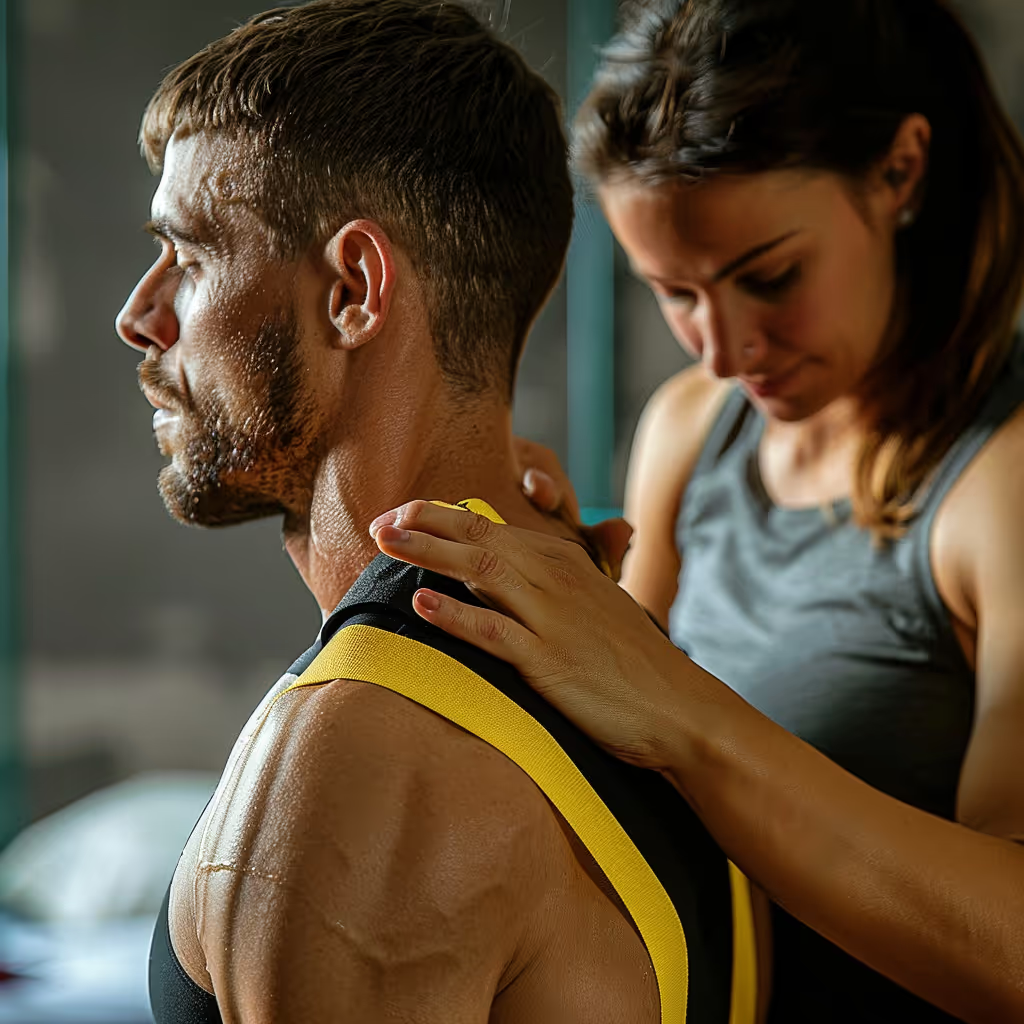
Cervicobrachialgia or cervical radiculopathy
In both types of injury, pain is felt in the neck and then radiates into the arm, or vice versa.
.png)
.png)
.png)



What is cervicobrachialgia or cervical radiculopathy?
Cervicobrachialgia refers to neck pain that radiates into the arm; cervical radiculopathy refers to damage to a nerve root in the neck. This pain may be accompanied by numbness, tingling, or weakness in the arm. Neck pain that radiates into the arm may have a neurological cause, but this must be evaluated.
What is the difference between cervicobrachialgia and radiculopathy?
Cervicobrachialgia describes the path of the pain, while radiculopathy describes a problem with the functioning of a nerve root. A nerve root is the part of the nerve that exits the spinal cord, inside the spinal column.
Radiculopathy refers to a condition in which a nerve root in the neck is not functioning properly. A physical exam may reveal weakness, loss of sensation, or changes in reflexes. The pain may radiate to the arm, with or without neck pain.
The term cervicobrachialgia describes the symptoms (neck pain that radiates into the arm) without necessarily confirming that a nerve is compressed.
10 Quick Tips to Understand Your Pain
One tip a day for 10 days to help you better understand your pain. About a 2-minute read.
These terms can be used together, but arm pain alone does not prove that a nerve is compressed. The examination helps distinguish nerve damage from pain originating in other structures, such as joints or muscles.
What are the symptoms of cervicobrachialgia?
Cervicobrachialgia causes neck pain that radiates down the arm, often accompanied by numbness, tingling, sensations of electric shocks, or weakness in the arm.
The clinical presentation varies from person to person. Often, but not always, you will feel pain or stiffness in your neck, shoulder blade area, or shoulder. The pain also radiates into one or both arms and can appear in different forms.
Common symptoms in the arm
| Type of sensation | Description |
|---|---|
| Electric shocks | Electric shock sensation radiating down the arm |
| Tingling | Tingling similar to when an arm "falls asleep" |
| Pins and needles sensation | Mild pricking sensations along the nerve pathway |
| Burning sensations | Intense heat sensation in certain areas |
Certain neck or arm movements can trigger symptoms when nerve tissue is sensitive. An increase in pain does not necessarily indicate a lesion. However, new or worsening weakness requires prompt evaluation.
Other possible symptoms
Some people may also experience:
- A loss of sensation in the arm or certain fingers
- A loss of strength in the arm
- A feeling of a "dead arm" or a very heavy arm
These symptoms may be associated with nerve damage, but they are not sufficient to confirm it. Any recent loss of strength or sensation should be evaluated immediately. If the loss is significant or is progressing rapidly, seek urgent medical evaluation.
Serious symptoms to watch for (red flags)
However, certain signs and symptoms should prompt you to seek immediate medical attention at an emergency room or with a doctor:
- Severe weakness or paralysis in one or both arms
- Significant or complete loss of sensation in one or both arms
- Recent Loss of Balance While Walking
- New difficulty coordinating arm or hand movements
- New difficulties with bladder or bowel control
- Loss of sensation in the genital area
If you experience any of these symptoms, seek immediate medical attention. These situations are rare but require urgent medical evaluation.
What causes cervicobrachialgia?
A herniated disc or changes related to osteoarthritis can irritate a nerve root in the neck and cause pain in the arm. Other types of pain originating in the muscles or joints of the neck can also radiate down into the arm. The nerves and the nervous system play a role in processing information from these tissues. In some people, the circuits in the spinal cord and brain become more responsive—a condition known as central sensitization. This increased sensitivity can contribute to pain; however, it is not present in all people with cervicobrachialgia.1
Main causes
Common causes of cervical radiculopathy include a herniated disc and changes in the discs or joints associated with osteoarthritis.2Cervical stenosis is a narrowing of a passageway in the neck. This can affect the passageway for a nerve root or the canal containing the spinal cord. Pain and stiffness alone are not sufficient to diagnose this condition.
When a herniated disc is the cause, part of the disc’s contents pushes against or through its outer layer and may irritate or compress a nerve root. Our guide to cervical herniated discs explains this condition in detail.
Unusual activity may precede the symptoms, such as straining to lift a heavy object. However, many people do not report any specific exertion or injury prior to the onset of symptoms.
Frequent triggers
Symptoms may begin gradually or suddenly. They may sometimes appear after:
- Significant exertion (lifting a heavy load)
- A neck or head injury (car accident, fall, impact)
- A sudden, awkward neck movement
After a whiplash injury, any pain that develops in the arm or new numbness should be evaluated. These symptoms should not automatically be attributed to the normal healing process of the neck.
How is cervicobrachialgia diagnosed?
The healthcare professional will evaluate cervicobrachialgia based on your symptom history and an examination of your neck, arm, and nerve function. Your physical therapist or doctor will ask you questions about:
- When the Pain Began
- What movements trigger the pain
- Where exactly you feel the symptoms in your arm
- If you have weakness or numbness
The clinical examination includes
The physical assessment will involve examining:
| Assessed element | Goal |
|---|---|
| Neck mobility | Identify limited or painful movements |
| Arm sensation | Check for numbness in certain areas |
| Muscle strength | Look for a weakness that could accompany nerve damage |
| The Response of Nerve Tissue to Movement | Observe whether certain movements trigger the symptoms and put strain on the nervous tissue |
Additional tests
An X-ray mainly shows the bones. Magnetic resonance imaging (MRI) can show the intervertebral discs, nerve roots, and spinal cord. It may be recommended if there are concerning signs or when symptoms persist despite initial treatment, often after four to six weeks. An electromyogram (EMG) measures the electrical activity of the muscles and can help distinguish between various causes of neurological symptoms.3
Diagnosis usually begins with a clinical examination. Additional tests are performed to answer a specific question, such as confirming compression or investigating another cause. Their usefulness depends on the symptoms and the results of the examination.4
When to consult a physiotherapist?
A physical therapy evaluation can be helpful for neck pain that radiates into the arm and limits daily activities, provided there are no signs of a medical emergency. New-onset weakness or loss of sensation warrants prompt evaluation. The serious signs described above require immediate medical attention.
If a doctor has ruled out an urgent cause, the physical therapist can continue the evaluation and organize rehabilitation. However, any significant new worsening of symptoms must be reevaluated by a doctor.
In private practice in Quebec, a physical therapy consultation does not require a doctor’s prescription. However, this does not replace an urgent medical evaluation when warning signs are present.
Physical therapy for neck pain offers exercises and treatments tailored to neck and arm pain. The treatment aims to relieve symptoms and restore movement in your neck and arm.
How is cervicobrachialgia treated in physical therapy?
Physical therapy treats cervicobrachialgia with tailored exercises, manual techniques, and advice on how to manage daily activities.
Your physical therapist will identify the movements, activities, and other factors associated with your symptoms. The examination also determines whether a nerve disorder is causing your difficulties.
Elements Assessed by the Physiotherapist
| Aspect evaluated | What we look for |
|---|---|
| Joint mobility | How Your Neck Vertebrae Move |
| The Response of Nerve Tissue to Movement | How symptoms change with neck and arm movements |
| Postural habits | How you hold yourself daily |
| Movement Quality | How you move your neck and arms |
| Strength and stability | Strength and endurance of the neck and arm muscles |
Personalized Treatment Plan
Nerve mobilization techniques (neuro-mobilization) are particularly effective for this type of condition. They help release the pinched or irritated nerve and can quickly relieve symptoms. To relieve pain that radiates into the arm, we teach a Neurodynamic arm exercise using a slider (ULNT 1) to be performed without triggering symptoms.Based on the assessment results, your physiotherapist will:
- May offer joint mobilization, guided joint movements using the hands, and, if appropriate, nerve mobilization to improve movement and try to relieve symptoms
- Will give you specific exercises to do at home to improve your movement and abilities
- Will teach you how to balance your daily activities to support a gradual return to normal activities
- Will give you advice on your posture and movement habits
Nerve mobilization techniques use arm and neck movements that stimulate nerve tissue. The physical therapist tailors these movements to your symptoms. A 2023 review reported relief and improved function in several comparisons. A 2024 review, which focused on symptoms persisting for more than three months, found primarily an improvement in mobility when these techniques were added to standard care, with no clear benefit regarding pain. A 2025 systematic review also reports potential benefits but rates the certainty of the results as low to very low. These techniques can therefore be tried depending on your situation, though there is no guarantee that they will release a pinched nerve or provide relief for everyone.5, 6, 7
Appropriate exercises can improve neck and arm function and help you return to your activities. The program may include strength training and mobility exercises. The progression depends on your ability and how you respond.8
What to Do at Home to Relieve Cervicobrachialgia?
Gentle neck movements, adjusting your activities, and comfortable arm support can help manage cervicobrachialgia at home. Temporarily limit movements that cause severe pain and change positions regularly.
Temporarily stop movements that cause a lot of pain. Gradually resume them later, as the pain decreases.
Non-surgical treatments are generally offered first, unless a serious condition requires a different course of treatment.4 Rapid neck manipulations require a prior evaluation and a discussion of the benefits, risks, and other options. Serious complications have been reported following thesemanipulations. ⁹, ¹⁰ Clinical trials cannot rule out rare serious complications, and isolated case reports are insufficient to estimate their frequency. Slower mobilization techniques and exercises are among the other options.
10 Quick Tips to Understand Your Pain
One tip a day for 10 days to help you better understand your pain. About a 2-minute read.
Practical Tips for Home
Gently move your neck, staying within a range of motion that feels comfortable. Movement helps maintain mobility. Stop any movement that significantly increases symptoms in your arm. Have your exercise program reviewed if the symptoms persist. Any new weakness requires prompt evaluation.
Support your arm if that helps. Try a comfortable position that doesn't strain your neck. Here are a few options:
- With a cushion under the armpit
- With the armrests of a chair or sofa
- By putting your hand in your pants pocket while standing
Limit the amount of time you spend in the same position (at the computer, watching TV, reading). Get up regularly for a few minutes to move your neck and shoulders.
Support your neck comfortably while sleeping with a pillow that fills the hollow of your neck. No sleeping position is inherently good or bad: if you wake up stiff or in more pain, try sleeping in a position other than on your stomach for a few nights and see what works best for you right now.
What else should you know about cervicobrachialgia?
Cervical radiculopathy often improves over time with non-surgical treatment, but the duration of recovery varies, and symptoms may return. The course of the condition depends, in particular, on the cause and the extent of nerve damage.
A study conducted in Rochester, United States, between 1976 and 1990 estimated approximately 83 new cases of cervical radiculopathy per 100,000 people per year.11 In this population, the incidence was highest among those aged 50 to 54, but younger and older individuals were also affected.
In people whose radiculopathy stems from a cervical disc herniation, most of the improvement often occurs within the first four to six months. In the cited review, approximately 83% had made a full recovery between 24 and 36 months.12 Non-surgical treatments, including physical therapy, are often the first step in management.4
The C7 and C6 nerve roots were the most commonly affected in this study. The letters and numbers indicate their exit levels in the neck.11 Involvement of the C6 nerve root can cause symptoms in the thumb and index finger; involvement of the C7 nerve root can affect the middle finger. These pathways overlap and vary. The examination therefore also assesses muscle strength, reflexes, and sensation. Identifying the affected nerve helps guide treatment.
Surgery is not routinely performed. In the absence of signs of an emergency or significant, progressive weakness, a physical therapy program may be tried before considering surgery. In the randomized controlled trial, surgery led to faster improvements in certain outcomes during the first year, but the difference compared with physical therapy alone narrowed after two years, and objective measures of physical function did not differ significantly between the groups.13, 14
Surgery may provide relief more quickly in the first few months. In an earlier trial involving radiculopathy associated with osteoarthritis, differences in pain and sensitivity had diminished after about sixteen months. A 2025 trial distinguished between herniated discs and osteoarthritis: at twelve months, it observed an average benefit from surgery for neck-related symptoms in the group with herniated discs, but no clear difference in the group with osteoarthritis. This average benefit remained below the threshold for significant improvement established by the study. These results do not guarantee that all treatments are equally effective for every individual.15, 16 Many people improve without surgery. However, persistent pain or a decline in strength warrants a reassessment of the care plan.
What related issues should we explore?
Several neck conditions can accompany or mimic cervicobrachialgia: neck pain, cervical disc herniation, cervical spinal stenosis, whiplash, and cervical osteoarthritis.
If you have neck pain that radiates into your arm, there may be other related issues:
- Neck Pain: A Complete Guide to understanding the different causes of neck pain
- Cervical Disc Herniation if a herniated disc is suspected
- Cervical stenosis: Understanding the narrowing of the spinal cord or nerve root canals
- Cervical Sprain if you have recently experienced trauma
- Cervical Osteoarthritis: Understanding Normal Age-Related Changes in the Neck Joints
- Neck pain, if the pain remains in the neck and does not radiate down the arm
- Arm neuralgia, if nerve pain is the predominant symptom in the limb
- Neural Pain: A Better Understanding of Nerve-Related Pain
- Physiotherapy for Neck Pain to learn more about treatments
Are you ready to see a physical therapist for your cervicobrachialgia?
A physical therapy evaluation can identify the factors associated with persistent neck and arm pain and help guide a treatment plan. If you experience any of the emergency signs described above, seek immediate medical evaluation instead.
If your neck and arm pain is limiting your daily activities or persists despite your best efforts, our physical therapists can help. The evaluation allows us to assess your symptoms, range of motion, and functional abilities so we can determine the most appropriate treatment plan.
Need professional advice?
Our physical therapists can assess your symptoms and provide you with a personalized treatment plan.
Make an appointmentReferences
Links open in a new tab.
- Latremoliere A, Woolf CJ. Central sensitization: a generator of pain hypersensitivity through central neural plasticity. J Pain. 2009;10(9):895-926. (Back to section: 1)
- Eubanks JD. Cervical radiculopathy: nonoperative management of neck pain and radicular symptoms. Am Fam Physician. 2010;81(1):33-40. (Back to section: 1)
- PM&R KnowledgeNow. Cervical Radiculopathy | PM&R KnowledgeNow. 2017. (Back to section: 1)
- Kuijper B, Tans JT, Schimsheimer RJ, van der Kallen BF, Beelen A, Nollet F, et al. Degenerative cervical radiculopathy: diagnosis and conservative treatment. A review. Eur J Neurol. 2009;16(1):15-20. (Back to sections: 1, 2, 3)
- Lascurain-Aguirrebeña I, Dominguez L, Villanueva-Ruiz I, Ballesteros J, Rueda-Etxeberria M, Rueda JR, et al. Effectiveness of neural mobilization for the treatment of nerve-related cervicobrachial pain: a systematic review with subgroup meta-analysis. Pain. 2024;165(3):537-549. (Back to section: 1)
- López-Pardo MJ, Calvache-Mateo A, Martín-Núñez J, Heredia-Ciuró A, López-López L, Valenza MC, et al. Routine Physical Therapy with and without Neural Mobilization in Chronic Musculoskeletal Neck Disorders with Nerve-Related Symptoms: Systematic Review and Meta-Analysis. Healthcare (Basel). 2024;12(12). (Back to section: 1)
- Gillot T, Lefebvre D, Michalak A, Miossec L, Combret Y, Prum G. Effect of median nerve neural mobilization and cervical lateral glide on pain, disability, and function in patients with nerve-related neck and arm pain: A systematic review and meta-analysis. Clin Rehabil. 2025;39(11):1405-1424. (Back to section: 1)
- Cheng CH, Tsai LC, Chung HC, Hsu WL, Wang SF, Wang JL, et al. Exercise training for patients with cervical radiculopathy before and after surgery: a literature review. J Phys Ther Sci. 2015;27(9):3011-8. (Back to section: 1)
- Ernst E. Manipulation of the cervical spine: a systematic review of case reports of serious adverse events, 1995–2001. Medical Journal of Australia. 2002;176(8):376-380. (Back to section: 1)
- Pankrath N, Nilsson S, Ballenberger N. Adverse Events After Cervical Spinal Manipulation—A Systematic Review and Meta-Analysis of Randomized Clinical Trials. Pain Physician. 2024;27(4):185-201. (Back to section: 1)
- Radhakrishnan K, Litchy WJ, O'Fallon WM, Kurland LT. Epidemiology of cervical radiculopathy. A population-based study from Rochester, Minnesota, 1976 through 1990. Brain. 1994;117 (Pt 2):325-35. (Back to sections: 1, 2)
- Wong JJ, Côté P, Quesnele JJ, Stern PJ, Mior SA. The course and prognostic factors of symptomatic cervical disc herniation with radiculopathy: a systematic review of the literature. Spine J. 2014;14(8):1781-9. (Back to section: 1)
- Engquist M, Löfgren H, Öberg B, Holtz A, Peolsson A, Söderlund A, et al. Surgery versus nonsurgical treatment of cervical radiculopathy: a prospective, randomized study comparing surgery plus physical therapy with physical therapy alone, with a 2-year follow-up. Spine (Phila Pa 1976). 2013;38(20):1715-22. (Back to section: 1)
- Peolsson A, Söderlund A, Engquist M, Lind B, Löfgren H, Vavruch L, et al. Physical function outcomes in patients with cervical radiculopathy after physiotherapy alone compared with anterior surgery followed by physiotherapy: a prospective randomized study with a 2-year follow-up. Spine (Phila Pa 1976). 2013;38(4):300-7. (Back to section: 1)
- Persson LC, Moritz U, Brandt L, Carlsson CA. Cervical radiculopathy: pain, muscle weakness, and sensory loss in patients with cervical radiculopathy treated with surgery, physical therapy, or a cervical collar. A prospective, controlled study. Eur Spine J. 1997;6(4):256-66. (Back to section: 1)
- Taso M, Sommernes JH, Sundseth J, Pripp AH, Bjorland S, Engebretsen KB, et al. Surgical versus Nonsurgical Treatment for Cervical Radiculopathy. NEJM Evid. 2025;4(4):EVIDoa2400404. (Back to section: 1)
- McCartney S, Baskerville R, Blagg S, McCartney D. Cervical radiculopathy and cervical myelopathy: diagnosis and management in primary care. Br J Gen Pract. 2018;68(666):44-46.
- Iyer S, Kim HJ. Cervical radiculopathy. Curr Rev Musculoskelet Med. 2016;9(3):272-80.
- Caridi JM, Pumberger M, Hughes AP. Cervical radiculopathy: a review. HSS J. 2011;7(3):265-72.
.jpg)
.jpg)
.jpg)
Other conditions

Hip osteoarthritis is the normal wear and tear of the hip joint. It is often said that osteoarthritis is the wear and tear of the cartilage between our bones. That is true, but it involves more than just the cartilage. Cartilage is a tissue that acts as a cushion between the surfaces of our bones and allows our joints to glide smoothly and move fluidly.
This is normal wear and tear of the knee joint. It’s often said that osteoarthritis is the wearing down of the cartilage between our bones. That’s true, but it’s more than just the cartilage. Cartilage is a tissue that acts as a cushion between the surfaces of our bones and allows our joints to glide smoothly and move fluidly.
It is an inflammation of the subacromial bursa in the shoulder joint.
A bursa is a small, thin sac filled with fluid that is found in many of the body's joints. This small sac acts as a cushion within the joint and lubricates the structures that are subject to increased friction.
It is a tissue that surrounds the shoulder and helps keep the shoulder bone in place within the joint. The capsule helps keep the joint stable.
Neck pain is a general term used to describe pain in the neck that has no specific cause, such as an accident or a sudden awkward movement. Neck pain is therefore synonymous with “my neck hurts, and nothing in particular happened.”
It is a severe strain or tear of the muscle fibers in the groin or inner thigh.
Make an appointment now
We offer a three-pronged quality assurance approach: optimized treatment time, a second opinion from a physical therapist, and ongoing expertise to ensure effective care tailored to your needs.

Customer satisfaction is our top priority
At Physioactif, excellence guides everything we do, but our patients are the best ones to tell you about it. Take a look at their verified reviews to get a real sense of their experience.










Discover our physical therapy clinics
We have locations in several areas to better serve you.
Blainville
190 Bas-de-Sainte-Thérèse Road, Suite 110,
Blainville, Quebec
J7B 1A7
Located in Blainville, near Rosemère, the Physioactif clinic is easily accessible to residents of the area and the surrounding communities
Boucherville
690 Rue de Montbrun, Suite S,
Boucherville, Quebec
J4B 8H2
Located in Boucherville, the Physioactif clinic is easily accessible to people in the area
Laval
3224 Jean-Béraud Ave., Suite 220, Laval,
QC H7T 2S4
Located in Chomedey, in the heart of Laval, the Physioactif clinic is easily accessible to people in the area
Montreal
8801 Lajeunesse Street,
Montreal,
QC H2M 1R8
Located in Ahuntsic, near Villeray, the Physioactif clinic is easily accessible to residents of both neighborhoods
Saint-Eustache
180 25th Avenue, Suite
201 Saint-Eustache
QC J7P 2V2
Located in Saint-Eustache, the Physioactif clinic is easily accessible to residents of the area and the surrounding communities
Vaudreuil
21 Cité-des-Jeunes Boulevard, Suite 240,
Vaudreuil-Dorion, Quebec
J7V 0N3
Located in Vaudreuil-Dorion, the Physioactif clinic is easily accessible to people in the area
Make an appointment now