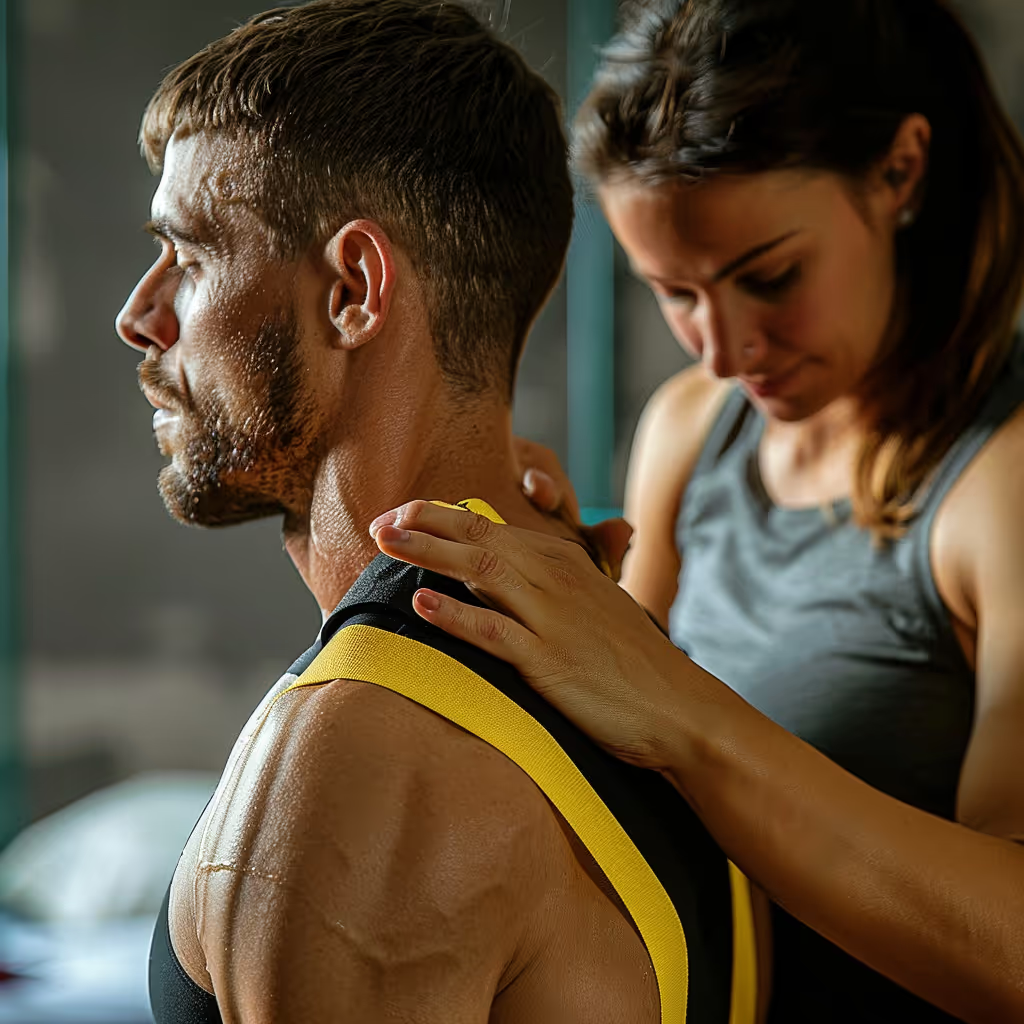
Hamstring strain
It is a severe strain or tear of the muscle fibers in the hamstrings, which are located at the back of the thigh.
.png)
.png)
.png)


A sudden pain in the back of your thigh while sprinting. You may have pulled a hamstring, one of the most common muscle injuries among athletes. This injury accounts for 37% of muscle injuries in professional soccer1 and affects both amateur and professional athletes alike.
Good news: With the right treatment and proper rehabilitation, most people are able to resume their normal activities. Here’s what you need to know to recover successfully.
What is a Hamstring Strain?
A hamstring strain is a tear in the muscle fibers at the back of the thigh, affecting one or more of the three muscles that make up this group: the biceps femoris, semitendinosus, and semimembranosus.
The hamstrings are made up of three distinct muscles. The biceps femoris is located on the outer side of the thigh, while the semitendinosus and semimembranosus are on the inner side.
The biceps femoris is the most commonly affected muscle: its long head is involved in 70% of injuries seen on MRI2. These injuries typically occur at the myotendinous junction, where the muscle meets the tendon2.
Two types of strains exist:| Type | Affected muscle | Mechanism | Typical example |
|---|---|---|---|
| Type 1 (sprint) | Biceps femoris3 | Explosive contraction | Sprint, acceleration |
| Type 2 (stretch) | Semimembranosus4 | Slow stretch, hip flexed and knee straight4 | Splits, high kick |
The hamstrings play an essential role: they bend the knee, extend the hip, and stabilize the pelvis during running.
What Causes a Hamstring Strain?
At the end of the leg's swing during running, the hamstrings are stretched the most while contracting to slow the leg down, which could explain the strain5.
This phase occurs just before the foot touches the ground during a sprint5.
Main Risk Factors:A meta-analysis published in the British Journal of Sports Medicine identifies the following risk factors:
| Risk factor | Relative risk | Impact |
|---|---|---|
| History of hamstring injury | 2.7 times higher (4.8 times if the injury is recent)6 | One of the two most significant factors |
| Older age6 | Significant | One of the two most significant factors |
| Low eccentric strength | Probable | Measurable by tests |
| Muscle Strength Imbalance | Probable | Correctable |
In professional soccer, injuries are more common toward the end of each half7.
Several factors increase the risk of a hamstring strain: older age, a previous hamstring injury, reduced flexibility in the quadriceps and hip flexors, and fatigue5.
High-risk sports:| Sport | Typical mechanism |
|---|---|
| Track and Field Sprinting | Acceleration |
| Soccer | Sprinting, Shooting |
| American Football | Sprinting, tackling |
| Dance and Ballet | Split, extension |
Hamstring strains are particularly common in sports that involve sprinting, accelerating, braking, changing direction quickly, and jumping8, such as track and field, soccer, American football, and dance.
Who is at Risk of a Hamstring Strain?
Advanced age and a previous muscle strain are the two strongest risk factors for muscle strain6. A significant proportion of hamstring strains recur within the first year after returning to sports, and the recurrence is often more severe than the initial injury5.
In men's professional soccer, there is slightly more than one hamstring injury per 1,000 hours of training and competition9. Players who have previously suffered a hamstring strain are particularly vulnerable6.
High-risk profile:| Factor | Risk Threshold | Measurement |
|---|---|---|
| Previous hamstring strain | Any previous injuries6 | Medical history |
| Age | More advanced | Non-Modifiable Factor |
That is why a comprehensive rehabilitation program before returning to sports is essential.
10 Quick Tips for Understanding Your Pain
The ones that have made the biggest difference in my patients' lives. 1 a day, 2 minutes.
How to Recognize the Symptoms of a Hamstring Strain?
The main symptom is a sudden, localized pain in the back of the thigh, sometimes accompanied by a popping sensation at the moment of injury10.
Typical symptoms by severity:| Symptom | Mild grade | Moderate grade | Severe grade |
|---|---|---|---|
| Pain11 | Lightweight | Moderate | Intense |
| Bruise | Absent or mild | Visible within 48-72 hours | Extensive |
| Swelling11 | Mild | Moderate | Important |
After a muscle strain, putting weight on the leg is painful, and you walk with a stiff leg to avoid bending the hip and knee11.
Clinical tests used by professionals:- Palpation of a specific tender point on the back of the thigh10
- Active Knee Extension Test: Pain-Induced Limitation12
- Passive Stretch Test: Pain During Muscle Elongation12
- Isometric Strength Test: Weakness and Pain12
A few days after an injury near the buttock, a bruise may appear on the buttock and the back of the thigh, extending down the leg11.
What are the different grades of severity?
Commonly used scales have three grades: minor, moderate, or complete injury13 (see the explanation of muscle injury grades). The British Athletics Muscle Injury classification, on the other hand, uses grades from 0 to 4, based on MRI findings13 :
| Grade | Description |
|---|---|
| Grade 0 | Pain without structural injury |
| Grade 1 | Minor muscle tear |
| Grade 2 | Moderate muscle tear |
| Grade 3 | Extensive lesion |
| Grade 4 | Complete tear |
Surgery is typically considered in cases of a complete rupture, especially when the tendon is torn near the buttock: early surgery yields better results in such cases11.
Grade 3 injuries and those that involve the tendon require more time before returning to training, while Grade 0 injuries require less time14. The actual recovery time varies greatly from person to person.
Two factors worsen the prognosis: a proximal location (near the buttock) and involvement of the tendon rather than the muscle314.
How to treat a hamstring strain?
The treatment follows the PEACE and LOVE principles15 : We protect the thigh during the first few days, then gradually reintroduce stress to the muscle. Our article on the PEACE and LOVE steps after a sprain or strain explains each letter.
Rehabilitation progression:Clinically, it is common to progress through the stages of rehabilitation: isometric, concentric, eccentric, and sport-specific.
| Phase | Type of exercise | Goal |
|---|---|---|
| 1 | Isometric | Muscle activation without movement |
| 2 | Concentric | Strengthening while shortening (muscle) |
| 3 | Eccentric | Strengthening while lengthening (muscle) |
| 4 | Sport-specific | Preparing for return to activity |
The Nordic hamstring exercise reduces the risk of injury by up to 51%16. Askling’s Protocol L allows for a faster return to sports than conventional approaches17.
Criteria for returning to sport:- Among the criteria for returning to play identified by experts are: regaining full strength and flexibility in the hamstrings relative to the healthy side, and no longer experiencing pain in the muscle18.
- No pain upon palpation
Other benchmarks, such as jump tests and confidence in playing again, apply to all injuries: our article on the criteria and steps for returning to sports after an injury goes into detail about them.
Need professional advice?
Our physical therapists can assess your condition and provide you with a personalized treatment plan.
Make an appointmentHow long does recovery take?
Recovery time varies greatly from person to person. The time it takes for a person to walk without pain helps predict how long it will take to return to sports19. A previous injury, on the other hand, increases the risk of a relapse. These guidelines should be part of the clinical evaluation19.
In professional soccer, a hamstring injury can keep a player out of the game for a variable period of time. Returning to the sport too soon increases the risk of a recurrence.
Thigh rehabilitation exercises proceed in four phases, from protection to a return to activities.
How to prevent recurrence?
Prevention relies on eccentric strengthening of the hamstrings. Nordic walking, a form of eccentric hamstring strengthening, helps reduce the risk of injury16.
The rest of the preventive measures apply to all muscles: a proper warm-up and a training load that increases gradually. Our article on how to pace your effort to avoid overuse injuries provides guidelines, and our article on preventing muscle pain covers warm-ups and stretching.
Evidence-based preventive protocol:| Element | Frequency | Proven Benefit |
|---|---|---|
| Nordic Hamstring Exercise | A 10-week progressive program, followed by once a week during the season20 | Reduces risk by up to 51%16 |
| Eccentric Strength | Maintain >337N21 | Identified Protective Threshold |
- Maintain a good balance of strength between the hamstrings and quadriceps
- Do not neglect pre-season training to develop eccentric strength
Key takeaways
- Hamstring strains are common but treatable injuries
- Advanced age and a previous muscle strain are the two strongest risk factors for muscle strain6
- The PEACE and LOVE protocol guides modern treatment15
- Returning to sport should be based on objective criteria, not a fixed timeline
References
- Ekstrand J, Hägglund M, Waldén M. Epidemiology of muscle injuries in professional soccer. Am J Sports Med. 2011;39(6):1226-32. ↩ Back to text
- Grange S, Reurink G, Nguyen AQ, Riviera-Navarro C, Foschia C, Croisille P, et al. Location of Hamstring Injuries Based on Magnetic Resonance Imaging: A Systematic Review. Sports Health. 2023;15(1):111-123. ↩ Back to text: 1st, 2nd citations
- Askling CM, Tengvar M, Saartok T, Thorstensson A. Acute first-time hamstring strains during high-speed running: a longitudinal study including clinical and magnetic resonance imaging findings. Am J Sports Med. 2007;35(2):197-206. ↩ Back to text: 1st, 2nd citations
- Askling CM, Tengvar M, Saartok T, Thorstensson A. Acute first-time hamstring strains during slow-speed stretching: clinical, magnetic resonance imaging, and recovery characteristics. Am J Sports Med. 2007;35(10):1716-24. ↩ Back to text: 1st, 2nd citations
- Erickson LN, Sherry MA. Rehabilitation and return to sport after a hamstring strain. J Sport Health Sci. 2017;6(3):262-270. ↩ Back to text: 1st, 2nd, 3rd, 4th references
- Green B, Bourne MN, van Dyk N, Pizzari T. Recalibrating the risk of hamstring strain injury (HSI): A 2020 systematic review and meta-analysis of risk factors for initial and recurrent hamstring strain injury in sport. Br J Sports Med. 2020;54(18):1081-1088. ↩ Back to text: 1st, 2nd, 3rd, 4th, 5th, 6th citations
- Woods C, Hawkins RD, Maltby S, Hulse M, Thomas A, Hodson A. The Football Association Medical Research Program: An Audit of Injuries in Professional Soccer—Analysis of Hamstring Injuries. Br J Sports Med. 2004;38(1):36-41. ↩ Back to text
- Freckleton G, Pizzari T. Risk factors for hamstring muscle strain injuries in sports: a systematic review and meta-analysis. Br J Sports Med. 2013;47(6):351-8. ↩ Back to text
- Ekstrand J, Waldén M, Hägglund M. Hamstring injuries have increased by 4% annually in men’s professional soccer since 2001: a 13-year longitudinal analysis of the UEFA Elite Club Injury Study. Br J Sports Med. 2016;50(12):731-7. ↩ Back to text
- Hickey JT, Opar DA, Weiss LJ, Heiderscheit BC. Rehabilitation of Hamstring Strain Injuries. J Athl Train. 2022;57(2):125-135. ↩ Back to text: 1st, 2nd citations
- Poudel B, Pandey S. Hamstring Injury. In: StatPearls [Internet]. Treasure Island (FL): StatPearls Publishing; 2023. ↩ Back to text: 1st, 2nd, 3rd, 4th, 5th, 6th references
- Heiderscheit BC, Sherry MA, Silder A, Chumanov ES, Thelen DG. Hamstring strain injuries: recommendations for diagnosis, rehabilitation, and injury prevention. J Orthop Sports Phys Ther. 2010;40(2):67-81. ↩ Back to text: 1st, 2nd, 3rd citations
- Pollock N, James SL, Lee JC, Chakraverty R. British Athletics Muscle Injury Classification: A New Grading System. Br J Sports Med. 2014;48(18):1347-51. ↩ Back to text: 1st, 2nd, 3rd honors
- Pollock N, Patel A, Chakraverty J, Suokas A, James SL, Chakraverty R. The time to return to full training is delayed and the recurrence rate is higher in acute intratendinous (“c”) hamstring injuries among elite track and field athletes: clinical application of the British Athletics Muscle Injury Classification. Br J Sports Med. 2016;50(5):305-10. ↩ Back to text: 1st, 2nd citations
- Dubois B, Esculier JF. Soft-tissue injuries simply need PEACE and LOVE. Br J Sports Med. 2020;54(2):72-73. ↩ Back to text: 1st, 2nd citations
- van Dyk N, Behan FP, Whiteley R. Including the Nordic hamstring exercise in injury prevention programs halves the rate of hamstring injuries: a systematic review and meta-analysis of 8,459 athletes. Br J Sports Med. 2019;53(21):1362-1370. ↩ Back to text: 1st, 2nd, 3rd citations
- Askling CM, Tengvar M, Thorstensson A. Acute hamstring injuries in Swedish elite soccer: a prospective randomized controlled clinical trial comparing two rehabilitation protocols. Br J Sports Med. 2013;47(15):953-9. ↩ Back to text
- Zambaldi M, Beasley I, Rushton A. Return-to-play criteria after hamstring injury in professional soccer: a Delphi consensus study. Br J Sports Med. 2017;51(16):1221-1226. ↩ Back to text
- Warren P, Gabbe BJ, Schneider-Kolsky M, Bennell KL. Clinical predictors of time to return to competition and of recurrence following hamstring strain in elite Australian footballers. Br J Sports Med. 2010;44(6):415-9. ↩ Back to text: 1st, 2nd citations
- Petersen J, Thorborg K, Nielsen MB, Budtz-Jørgensen E, Hölmich P. Preventive effect of eccentric training on acute hamstring injuries in men's soccer: a cluster-randomized controlled trial. Am J Sports Med. 2011;39(11):2296-303. ↩ Back to text
- Timmins RG, Bourne MN, Shield AJ, Williams MD, Lorenzen C, Opar DA. Short biceps femoris fascicles and eccentric knee flexor weakness increase the risk of hamstring injury in elite soccer: a prospective cohort study. Br J Sports Med. 2016;50(24):1524-1535. ↩ Back to text
Our physical therapists defined the research strategy, plan, and clinical content of this article. An AI tool assisted with the literature review and text editing to ensure consistency in content and writing style.
Other conditions

Hip osteoarthritis is the normal wear and tear of the hip joint. It is often said that osteoarthritis is the wear and tear of the cartilage between our bones. That is true, but it involves more than just the cartilage. Cartilage is a tissue that acts as a cushion between the surfaces of our bones and allows our joints to glide smoothly and move fluidly.
This is normal wear and tear of the knee joint. It’s often said that osteoarthritis is the wearing down of the cartilage between our bones. That’s true, but it’s more than just the cartilage. Cartilage is a tissue that acts as a cushion between the surfaces of our bones and allows our joints to glide smoothly and move fluidly.
It is an inflammation of the subacromial bursa in the shoulder joint.
A bursa is a small, thin sac filled with fluid that is found in many of the body's joints. This small sac acts as a cushion within the joint and lubricates the structures that are subject to increased friction.
It is a tissue that surrounds the shoulder and helps keep the shoulder bone in place within the joint. The capsule helps keep the joint stable.
In both types of injury, pain is felt in the neck and then radiates into the arm, or vice versa.
It is a severe strain or tear of the muscle fibers in the groin or inner thigh.
Make an appointment now
We offer a three-pronged quality assurance approach: optimized treatment time, a second opinion from a physical therapist, and ongoing expertise to ensure effective care tailored to your needs.

Customer satisfaction is our top priority
At Physioactif, excellence guides everything we do, but our patients are the best ones to tell you about it. Take a look at their verified reviews to get a real sense of their experience.










Discover our physical therapy clinics
We have locations in several areas to better serve you.
Blainville
190 Bas-de-Sainte-Thérèse Road, Suite 110,
Blainville, Quebec
J7B 1A7
Located in Blainville, near Rosemère, the Physioactif clinic is easily accessible to residents of the area and the surrounding communities
Boucherville
690 Rue de Montbrun, Suite S,
Boucherville, Quebec
J4B 8H2
Located in Boucherville, the Physioactif clinic is easily accessible to people in the area
Laval
3224 Jean-Béraud Ave., Suite 220, Laval,
QC H7T 2S4
Located in Chomedey, in the heart of Laval, the Physioactif clinic is easily accessible to people in the area
Montreal
8801 Lajeunesse Street,
Montreal,
QC H2M 1R8
Located in Ahuntsic, near Villeray, the Physioactif clinic is easily accessible to residents of both neighborhoods
Saint-Eustache
180 25th Avenue, Suite
201 Saint-Eustache
QC J7P 2V2
Located in Saint-Eustache, the Physioactif clinic is easily accessible to residents of the area and the surrounding communities
Vaudreuil
21 Cité-des-Jeunes Boulevard, Suite 240,
Vaudreuil-Dorion, Quebec
J7V 0N3
Located in Vaudreuil-Dorion, the Physioactif clinic is easily accessible to people in the area
Make an appointment now