Shoulder Pain: Understanding the Causes and Finding Solutions
.png)
.png)
.png)





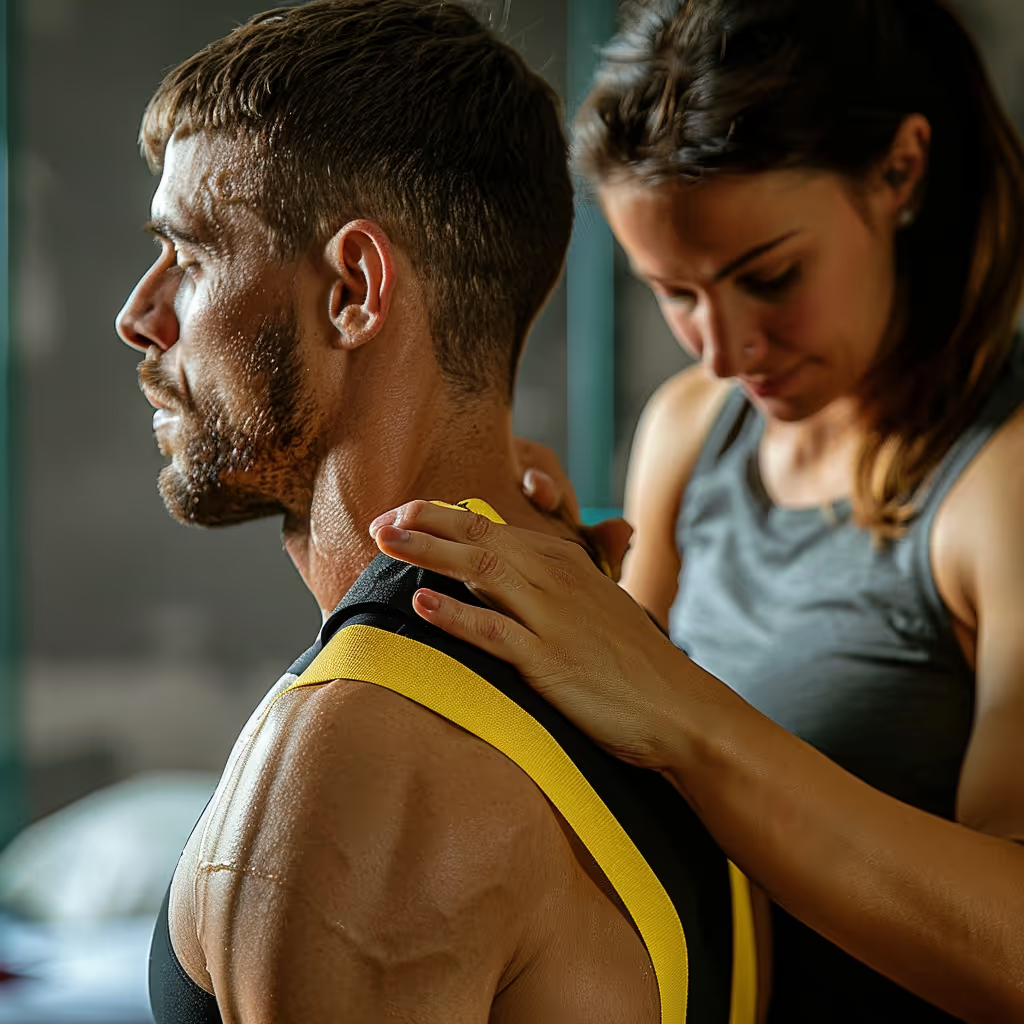
Shoulder pain can interfere with sleep, getting dressed, or working. Several conditions can cause these symptoms, including tendon pain or joint stiffness. Our physical therapists assess your range of motion, strength, and any activities you’re unable to perform to guide your treatment.
Many types of shoulder pain can be treated without surgery. A set of guidelines recommends non-surgical treatments, such as exercises, after ruling out serious damage to the bones, joints, or other organs.1Conservative treatment means treatment without surgery.
This guide outlines possible causes, exercises, and symptoms that warrant a medical consultation. The rotator cuff consists of four shoulder muscles and their tendons. A tendon is a strong band that connects a muscle to a bone. Tendinopathy refers to pain in these tendons, especially during physical activity, accompanied by difficulty using the arm. Physical therapy involving exercises is one of the first treatment options for this condition.2 The guide on physical therapy for shoulder pain explains the role of treatment.
What are the symptoms of shoulder pain, and how is it assessed?
Shoulder pain can limit movement or reduce strength; its evaluation is based on your symptoms and a physical examination. The healthcare professional assesses these symptoms along with your medical history, range of motion, and activities. Magnetic resonance imaging, or MRI, produces detailed images of internal structures. A visible abnormality on this test is not sufficient to explain the pain.3
10 Quick Tips to Understand Your Pain
One tip a day for 10 days to help you better understand your pain. About a 2-minute read.
The shoulder allows you to lift, extend, and rotate your arm. The joints and movements of the scapula give it a very wide range of motion.4 Grocery shopping, housework, or working on a computer places different demands on the shoulder. In a study of 17 healthy adults, muscle effort varied depending on the height of the arm and whether the person was pushing or pulling. Therefore, a high position did not always result in the greatest demand.5
How does the shoulder joint work?
The shoulder complex connects the humerus, the upper arm bone, to the scapula, the flat bone behind the shoulder. This connection is called the glenohumeral joint. The clavicle also connects the scapula to the sternum, the bone in the middle of the chest. These two joints are called the acromioclavicular and sternoclavicular joints. The scapula glides over the ribs during arm movements.
The rounded head of the humerus rests in a shallow socket in the scapula. This shape allows for a wide range of motion, but the bones alone provide little stability. The joint capsule is the envelope surrounding the joint. Ligaments are strong bands that connect the bones to one another. These structures, along with the muscles, help support the shoulder.6
The four muscles of the rotator cuff are the supraspinatus, the infraspinatus, the teres minor, and the subscapularis. They contribute to shoulder movement and stability.6 One review specifically highlights their role in limiting certain types of slippage of the humeral head. However, the exact role of each muscle during movement remains only partially understood.7
The subacromial bursa is a small pocket of fluid located beneath the acromion, a bony projection of the shoulder blade that extends over the humerus. Bursae reduce friction between structures such as tendons and bones.8 The subacromial bursa thus facilitates shoulder movement.9
What contextual information should be documented?
| Element | What the Assessment Aims to Achieve |
|---|---|
| Age | Injuries to the rotator cuff become more common with age. However, age alone does not determine the diagnosis or the duration of recovery.10 |
| Diabetes | People with diabetes are more likely to develop capsulitis, a condition characterized by marked stiffness in the shoulder. Other factors may account for part of this association; diabetes alone does not predict capsulitis.11 |
| Exercise with arms raised | The evidence regarding shoulder disorders is stronger when the elbows are raised above shoulder height. The duration and intensity of this exposure matter; the movement alone does not prove that it is the cause of your pain.12 |
| Smoking | An analysis found an association between current smoking and rotator cuff damage, with an odds ratio of 1.94 compared to nonsmokers. An odds ratio compares the proportion of affected individuals to unaffected individuals within each group. This figure does not mean that the percentage of affected individuals is doubled. Other comparisons between people who have never smoked, former smokers, and current smokers show no clear difference.10 |
What conditions could cause shoulder pain?
Shoulder pain may be associated with tendinopathy, bursitis, capsulitis, or a tendon tear. These conditions may overlap. The term “subacromial pain syndrome” refers to various types of pain around the tendons and bursa beneath the acromion.
The guides on rotator cuff tendinopathy, subacromial bursitis, frozen shoulder, and impingement syndrome cover each of these topics in detail.
| Problem | Possible events | Reference Point Limit |
|---|---|---|
| Rotator cuff tendinopathy | Pain when the arm lifts an object, raises itself, or resists a force. | A single painful movement does not indicate which tendon is affected. |
| Bursitis | Inflammation of the bursa; pain may occur during movement or at night. | The symptoms are similar to those of nearby tendons. |
| Capsulitis | Progressive stiffness in several directions, even when someone helps move the arm. | The exam also checks for other causes of stiffness. |
| Subacromial Pain Syndrome | Pain, especially when raising the arm or using it. | This name does not prove that a tendon is trapped under a bone. |
What is rotator cuff tendinopathy?
Rotator cuff tendinopathy refers to pain and difficulty using the arm associated with one or more of its tendons. Pain may occur during elevation or when resisting force. The examination interprets several signs collectively; imaging alone does not determine the source of the symptoms.2
The supraspinatus tendon is one of the tendons evaluated. Check out our comprehensive guide to shoulder tendinitis to better understand this condition.
What is subacromial bursitis?
Subacromial bursitis is an inflammation of the bursa located beneath the acromion.8 Pain at night or during movement does not allow this bursa to be identified as the sole source. A review of shoulder tests highlights the low quality of the data and the limitations of several tests when used alone.13Non-surgical treatment may be considered based on the examination findings, including physical therapy for shoulder bursitis, which targets the inflammation of the bursa and the mechanics of the shoulder.
Discover our guide to shoulder bursitis for specific management strategies.
What is adhesive capsulitis or frozen shoulder?
Capsulitis, also known as frozen shoulder, causes pain and a gradual loss of mobility. Your arm has a shorter range of motion when you raise it yourself and when someone else moves it for you.14
A trial randomly assigned 54 people with frozen shoulder to two groups. Both groups received an injection into the joint and physical therapy. One group also received a suprascapular nerve block—an injection to numb a nerve in the shoulder. The other group received a sham injection, without the active block.15
The average time for capsulitis to resolve was 5.4 months with the nerve block, compared to 11.2 months with the sham injection. This result applies to this specific protocol and does not predict the duration of your capsulitis.15 Check out our guide on capsulitis to learn about your options.
Another study followed 77 people for 24 months. A program of counseling and exercises that did not exceed the pain threshold was compared to more intensive stretching and assisted movements, which could exceed that threshold. At 24 months, 89% of the first group had regained normal or nearly normal, pain-free shoulder function, compared with 63% of the second group.16
The groups were recruited during two successive periods. Therefore, treatments were not randomly assigned, which limits the certainty of this comparison. In particular, the study excluded people with diabetes. It suggests that the intensity of the exercises should be adjusted; it does not demonstrate that all physical therapy is ineffective for frozen shoulder.
Our guide to the Physical Therapy for Adhesive Capsulitis explains this approach in greater detail.What is subacromial impingement syndrome?
Subacromial pain syndrome refers to shoulder pain often triggered by raising the arm. The term “impingement” comes from the idea that the tendons are pinched beneath the acromion. A guideline explains that this anatomical explanation alone does not account for all the symptoms.17
Subacromial decompression is a surgical procedure that involves removing bone from under the acromion to widen the space. A Cochrane review found no significant benefit compared with sham surgery in terms of pain, arm function, or quality of life up to one year. The comparison involved people without a complete rotator cuff tear. In the sham surgery, the surgeon examined the joint with a camera without performing the decompression.18 This result pertains to this specific procedure; it does not rule out any mechanical contribution to the symptoms.
Consult our guide to impingement syndrome to understand the specific mechanisms and treatments.
For subacromial pain syndrome, exercises are part of non-surgical treatment. A review found a reduction in pain compared with interventions that did not include exercise. However, the authors rated the certainty of this estimate as very low.19
How to recognize symptoms and diagnose a shoulder problem?
Pain, stiffness, and loss of strength are key indicators of a shoulder problem, and the diagnosis is based on your symptoms and a physical exam. The pain may be confined to the shoulder or radiate down the arm. Stiffness can make it difficult to perform tasks such as raising your arm, putting on a jacket, combing your hair, or fastening your bra.
| Manifestation | What it can guide |
|---|---|
| Pain during exercise or halfway through a movement | Pain associated with the rotator cuff is possible, but several structures can cause this symptom. |
| Progressive stiffness | Capsulitis may be the cause if movement is still limited even when someone helps move the arm. |
| Night Pain | It may accompany bursitis or a rotator cuff injury; it cannot distinguish between these conditions on its own. |
| Weakness in the arm | A rotator cuff tear can reduce the strength needed to lift or rotate the arm. A tear does not always make these movements impossible. A sudden loss of strength following an injury requires prompt evaluation. |
Why does my shoulder hurt at night?
Nighttime pain can vary depending on the position of the shoulder. It does not prove that a structure deteriorates overnight. In 20 healthy volunteers, pressure under the acromion was lower in a simulated supine sleeping position than when sleeping on the side or stomach. This experiment does not allow us to identify an ideal position for all painful shoulders.20
A cross-sectional study of 761 workers found no clear association between sleeping position and rotator cuff pain after adjusting for other factors. People experiencing pain might also have avoided certain positions. The nature of the association therefore remains uncertain.21
What sleeping position should I adopt?
Try a position that supports your arm and is comfortable. If you’re lying on your side, place a pillow in front of you and rest your sore arm on it. If you’re lying on your back, try placing a pillow under your elbow. Change positions if your symptoms worsen. The pillow is meant to provide comfort; it does not guarantee that pressure on your shoulder will be reduced.
How is the diagnosis made?
The physical therapist uses your answers and the clinical examination to guide the diagnosis. He or she checks your range of motion, strength, and the movements that trigger your symptoms. Pain at the midpoint is pain that occurs halfway up the arm as it is raised. In one review, this sign was present in 53% of people with subacromial syndrome and absent in 76% of those without it. It is therefore not sufficient on its own to confirm or rule out the diagnosis.22
Imaging is considered if it can influence treatment. It is not routinely performed for pain without trauma.23 The 2025 guidelines recommend considering imaging if tendinopathy does not improve despite appropriate treatment within a maximum of 12 weeks. Trauma or suspicion of a significant tear may warrant an earlier evaluation.2
A study examined the shoulders of 602 Finnish adults aged 41 to 76. An MRI revealed a rotator cuff abnormality in 96% of asymptomatic shoulders, compared with 98% of those with symptoms.3 These percentages refer to shoulders, not to different individuals in each group.
An abnormality on an MRI scan is therefore not enough to explain your pain. The healthcare professional will consider the scan results in conjunction with your symptoms and the physical exam to determine the next steps.3
Our physical therapists can assess your condition and provide you with a personalized treatment plan.
What treatment options can we discuss for shoulder pain?
Treatment for shoulder pain may involve adjusting daily activities, performing exercises, and managing pain. Physical therapy helps patients select and progress through exercises. Manual therapy, which uses the hands to mobilize joints and tissues, may also be discussed. Whether an injection or surgical consultation is recommended depends on the specific problem identified.
Subacromial decompression does not provide a significant benefit compared with simulated surgery in the study participants who did not have a complete rotator cuff tear.18 This conclusion does not apply to all shoulder surgeries.
| Option | Purpose and Background |
|---|---|
| Exercises and Adapting Activities | Regain useful movements and gradually resume tasks that are difficult. The program depends on strength, mobility, and goals. |
| Pain Medications | Make it easier to perform daily activities and help you sleep if necessary. A pharmacist or doctor will check for risks and interactions with your other medications. |
| Infiltration | An injection can help reduce pain in certain situations. The expected benefits and risks should be discussed to determine the precise diagnosis. |
| Follow-up or Expert Opinion | Reevaluate the diagnosis and treatment options if there is no improvement in pain, strength, or activity levels despite appropriate care. |
How can I relieve shoulder pain at home?
Keep your movements gentle and temporarily adjust any actions that worsen the pain. For example, move frequently used objects closer to you so you don’t have to reach as far. Avoid completely stopping use of your shoulder. Advice from the National Health Service (NHS). You can try applying ice or heat for comfort, using a protective barrier between your skin and the cold or heat source. A pharmacist can help you choose an appropriate medication.
When are injections or surgery necessary?
An injection is the administration of medication into a specific area. For rotator cuff tendinopathy, a corticosteroid injection—a type of medication in the cortisone family that reduces inflammation—can provide short-term pain relief. The 2025 guidelines recommend against using it as the first-line treatment.2 Your healthcare provider will discuss the expected benefits, risks, and your other health conditions with you.
Surgery may be necessary following an injury that results in significant loss of strength, or if appropriate treatment does not allow the patient to resume their activities. The decision takes into account the type of tear, the patient’s goals, and the risks. Subacromial decompression remains a precise procedure whose benefits are not well established for rotator cuff pain without a complete tear.18
How does physiotherapy treat shoulder pain, and is it effective?
Physical therapy helps reduce pain and restore function through tailored exercises and guidance. Results depend on the specific condition being treated. The program may include exercises, manual therapy, and guidance on pain management.
Data available for certain diagnoses:
10 Quick Tips to Understand Your Pain
One tip a day for 10 days to help you better understand your pain. About a 2-minute read.
Studies on treatments help clarify their benefits. A 2026 review included 89 trials in adults with rotator cuff tendinopathy. Shoulder exercises reduced pain and improved arm function compared with no treatment. However, the authors consider this estimate to be highly uncertain.24
In a review of subacromial syndrome, adding manual therapy to exercises provided a benefit for pain at the shortest follow-up interval only. The certainty of the evidence was very low.19 These limitations help guide the selection and reassessment of care; they do not mean that all physical therapy is ineffective.
The physical therapist works with you to choose exercises to do, such as putting on a jacket or reaching for a shelf. The therapist adjusts the program if your symptoms or abilities do not improve.
Measurements of pain, movement, and strength are used to track your progress over the course of your appointments. Gradual improvements in sleep and mobility are also taken into account.
What types of exercises?
Exercises can focus on mobility, strength, or regaining the ability to perform a specific task. The progression of the program depends on how you respond and on your goals. Scapular exercises can complement shoulder exercises. For example, a light pull with a resistance band works the muscles on the back of the shoulder while the elbow moves backward close to the body. An exercise to facilitate the lower trapezius specifically targets scapular control. Program from the American Academy of Orthopaedic Surgeons (AAOS).
| Type | Example | Goal |
|---|---|---|
| Contraction without movement, or isometric | Keep your elbow close to your body as you gently push your hand against resistance, without moving your arm. | Work the muscles without requiring a lot of movement. |
| Light resistance | Gently rotate your forearm outward using an appropriate resistance band, keeping your elbow close to your body. | Build strength in a specific movement. |
| Activity-Based Exercise | Lift a light object onto a reachable shelf, then increase the difficulty based on the response. | Plan a useful task at home or at work. |
What shoulder exercises can you do at home?
The Codman pendulum exercise and the arm stretch in front of the chest are two mobility exercises you can try if your condition allows. They should remain comfortable and be tailored to your limitations. Consult a physical therapist if the diagnosis is unclear or if the exercises worsen your symptoms. Any new weakness requires an evaluation. Tips and guidelines from the AAOS.
The duration, frequency, and difficulty of the exercises should be determined in consultation with your healthcare professional. Follow your post-surgery instructions. If you experience new pain or a noticeable increase in pain after exercising, stop that movement and have your exercise program adjusted.
The Codman Pendulum Exercise
The pendulum exercise allows for a gentle movement of the relaxed arm. Stand next to a table and lean forward, supporting yourself with your hand on the opposite side. Let the painful arm hang freely. Gentle body movements will cause the arm to swing forward and backward, side to side, and then in small circles. Keep the movement gentle.
Arm Stretch in Front of the Chest
This stretch targets the back of the shoulder. Gently bring your arm in front of your chest and support your upper arm with your other hand. Do not pull directly on your elbow. Stop before you feel any sharp pain, then gently return to the starting position. Only move as far as feels comfortable.
Can you treat shoulder pain on your own?
Mild pain can sometimes be managed initially with gentle movement and by adjusting your activities. Also try adopting a more comfortable position while performing your tasks. This adjustment does not prove that your posture was the cause. Seek medical advice if the pain worsens or does not begin to improve after two weeks. NHS Guidelines: The signs described in the “Urgent Care” section require immediate evaluation.
The physical therapist assesses your strength, range of motion, and any limitations in your activities. He or she also looks for signs that may require medical attention. The program is tailored to this assessment and your goals.
Our approach includes an assessment and a home exercise program that is adjusted based on the changes we observe.
How can you monitor changes in shoulder pain?
The follow-up tracks your pain, sleep, and ability to perform precise movements. For example, note whether you can put on your coat, reach a shelf, or carry a load more easily. Progress varies depending on the condition and treatment. The timeframes observed in the frozen shoulder trial describe this protocol; they are not a guaranteed timeline for your shoulder.15
Items to Document During Follow-Up
The healthcare professional takes into account your overall health, the duration of your symptoms, and changes in your activity level. Age, diabetes, and smoking can provide insight into your situation, but none of these factors can accurately predict your recovery.
| Situation | Changes to Compare |
|---|---|
| Bursitis or subacromial pain | Pain during movement, waking up at night, and ability to tolerate activities. |
| Tendinopathy | Strength to lift or rotate the arm, pain during exertion, and tasks that have become possible. |
| Capsulitis | Reach of the arm and mobility in multiple directions, with and without assistance. |
| After surgery | Pain, permitted activities, and the surgical team’s expected recovery plan. The steps depend on the procedure. |
When should you see a healthcare professional for shoulder pain?
If you have persistent shoulder pain that disrupts your sleep or limits your activities, you should see a doctor. Info-Santé 811 can help guide you if you’re unsure. Chest pain or severe difficulty breathing may require immediate medical attention.
Signs That Require Urgent Medical Attention
Call 911 if you experience severe difficulty breathing or sudden chest pain that does not go away. Chest tightness accompanied by pain that spreads to the arm, sweating, dizziness, or shortness of breath also requires immediate help. Signs described by the NHS
Get immediate medical attention for shoulder pain that appears suddenly, becomes very severe, or worsens rapidly. Pain following an injury, a deformed or severely swollen shoulder, or an inability to move your arm also require urgent medical attention. The same applies to a sudden loss of strength, loss of sensation, persistent tingling, or an abnormally cold or hot arm. Also seek immediate medical attention if you have a fever or feel ill, or if you experience severe pain in both shoulders. Guidelines for Urgent Care A dislocation means that the bones in the joint are no longer in place. Do not attempt to pop the shoulder back into place yourself. Call 911 if the person’s life appears to be in danger or if transport to the emergency room is not safe.
Who to consult?
In Quebec, you can generally see a physical therapist in private practice without a prescription. However, an insurer or public health plan may impose its own conditions. The physical therapist will refer you to a doctor if the evaluation warrants it. Imaging tests, injections, or recommendations for surgery should be discussed with the professional authorized to prescribe or perform them.
See also our guide to physical therapy for shoulder pain to better understand treatment options.
What are the key points to remember about shoulder pain?
Shoulder pain can often be treated initially without surgery, following an evaluation of the problem. For rotator cuff tendinopathy, a physical therapy program that includes exercises is one of the first recommended options.
Key points:
- These exercises are recommended for rotator cuff tendinopathy.2 Subacromial decompression does not provide a significant benefit compared to sham surgery in the study participants without a complete tear.18
- Active physical therapy, involving exercises tailored to your assessment, is a recommended treatment option for certain rotator cuff tendinopathies.
- Recovery varies. One review links more severe pain, neck pain, and long-standing symptoms to a less favorable outcome with first-line treatment. These factors suggest the need for monitoring and adjusting care; they do not predict your individual outcome.25
- Consult a healthcare professional if the pain persists or interferes with your sleep
An assessment can help you set specific goals and track your progress.
Need professional advice?
Make an appointmentReferences
Links open in a new tab.
- Yu H, Côté P, Wong JJ, Shearer HM, Mior S, Cancelliere C, et al. Noninvasive management of soft tissue disorders of the shoulder: A clinical practice guideline from the Ontario Protocol for Traffic Injury Management (OPTIMa) collaboration. Eur J Pain. 2021;25(8):1644-1667. (Back to section: 1)
- Desmeules F, Roy JS, Lafrance S, Charron M, Dubé MO, Dupuis F, et al. Rotator Cuff Tendinopathy: Diagnosis, Nonsurgical Medical Care, and Rehabilitation—A Clinical Practice Guideline. J Orthop Sports Phys Ther. 2025;55(4):235-274. (Back to sections: 1, 2, 3, 4, 5)
- Ibounig T, Järvinen TLN, Raatikainen S, Härkänen T, Sillanpää N, Bensch F, et al. Incidental Rotator Cuff Abnormalities on Magnetic Resonance Imaging. JAMA Intern Med. 2026;186(4):406-414. (Back to sections: 1, 2, 3)
- Babatunde OM, Kim HM, Desandis BA, Rogers CE, Levine WN. A Physician's Guide to the Physical Examination of the Shoulder. Phys Sportsmed. 2012;40(1):91-101. (Back to section: 1)
- McFarland DC, Poppo MN, McCain EM, Saul KR. Spatial dependency of shoulder muscle demand during dynamic one-handed and two-handed pushing and pulling. Appl Ergon. 2018;73:199-205. (Back to section: 1)
- La Rose J, Madrazo-Ibarra A, Varacallo MA. Anatomy, Rotator Cuff. StatPearls. 2026. (Back to sections: 1, 2)
- Sangwan S, Green RA, Taylor NF. Stabilizing characteristics of rotator cuff muscles: a systematic review. Disabil Rehabil. 2015;37(12):1033-43. (Back to section: 1)
- McGill KC, Patel R, Chen D, Okwelogu N. Ultrasound-guided bursal injections. Skeletal Radiol. 2023;52(5):967-978. (Back to sections: 1, 2)
- Kennedy MS, Nicholson HD, Woodley SJ. Clinical anatomy of the subacromial and related shoulder bursae: A review of the literature. Clin Anat. 2017;30(2):213-226. (Back to section: 1)
- Grusky AZ, Giri A, O'Hanlon D, Jain NB. The Relationship Between Aging and Smoking and Rotator Cuff Disease: A Systematic Review and Meta-analysis. Am J Phys Med Rehabil. 2022;101(4):331-340. (Back to sections: 1, 2)
- Hernigou P, Scarlat MM. The diabetic shoulder: association between diabetes mellitus and adhesive capsulitis—a systematic review and meta-analysis. Int Orthop. 2026;50(4):839-851. (Back to section: 1)
- Wærsted M, Koch M, Veiersted KB. Work above shoulder level and shoulder complaints: a systematic review. Int Arch Occup Environ Health. 2020;93(8):925-954. (Back to section: 1)
- Zhao Q, Palani P, Kassab NS, Terzic M, Olejnik M, Wang S, et al. Evidence-based approach to the shoulder examination for subacromial bursitis and rotator cuff tears: a systematic review and meta-analysis. BMC Musculoskeletal Disorders. 2024;25(1):1028. (Back to section: 1)
- Picasso R, Pistoia F, Zaottini F, Marcenaro G, Miguel-Pérez M, Tagliafico AS, et al. Adhesive Capsulitis of the Shoulder: Current Concepts on the Diagnostic Workup and Evidence-Based Protocol for Radiological Evaluation. Diagnostics (Basel). 2023;13(22). (Back to section: 1)
- Shanahan EM, Gill TK, Briggs E, Hill CL, Bain G, Morris T. Suprascapular nerve block for the treatment of adhesive capsulitis: a randomized, double-blind, placebo-controlled trial. RMD Open. 2022;8(2). (Back to sections: 1, 2, 3)
- Diercks RL, Stevens M. Gentle thawing of the frozen shoulder: a prospective study comparing supervised neglect with intensive physical therapy in 77 patients with frozen shoulder syndrome followed up for two years. J Shoulder Elbow Surg. 2004;13(5):499-502. (Back to section: 1)
- Diercks R, Bron C, Dorrestijn O, Meskers C, Naber R, de Ruiter T, et al. Guidelines for the diagnosis and treatment of subacromial pain syndrome: a multidisciplinary review by the Dutch Orthopaedic Association. Acta Orthop. 2014;85(3):314-22. (Back to section: 1)
- Karjalainen TV, Jain NB, Page CM, Lähdeoja TA, Johnston RV, Salamh P, et al. Subacromial decompression surgery for rotator cuff disease. Cochrane Database Syst Rev. 2019;1(1):CD005619. (Back to sections: 1, 2, 3, 4)
- Steuri R, Sattelmayer M, Elsig S, Kolly C, Tal A, Taeymans J, et al. Effectiveness of conservative interventions, including exercise, manual therapy, and medical management, in adults with shoulder impingement: a systematic review and meta-analysis of RCTs. Br J Sports Med. 2017;51(18):1340-1347. (Back to sections: 1, 2)
- Werner CM, Ossendorf C, Meyer DC, Blumenthal S, Gerber C. Subacromial pressures vary with simulated sleep positions. J Shoulder Elbow Surg. 2010;19(7):989-93. (Back to section: 1)
- Holdaway LA, Hegmann KT, Thiese MS, Kapellusch J. Is sleep position associated with glenohumeral shoulder pain and rotator cuff tendinopathy: a cross-sectional study. BMC Musculoskeletal Disorders. 2018;19(1):408. (Back to section: 1)
- Hegedus EJ, Goode AP, Cook CE, Michener L, Myer CA, Myer DM, et al. Which physical examination tests provide clinicians with the most value when examining the shoulder? Update of a systematic review with meta-analysis of individual tests. Br J Sports Med. 2012;46(14):964-78. (Back to section: 1)
- Cuff A, Parton S, Tyer R, Dikomitis L, Foster N, Littlewood C. Guidelines for the use of diagnostic imaging in musculoskeletal pain conditions affecting the lower back, knee, and shoulder: A scoping review. Musculoskeletal Care. 2020;18(4):546-554. (Back to section: 1)
- Lazzarini SG, Bettariga F, Mosconi B, Maestroni L, Cordani C, Bandini E, et al. Comparative effectiveness of physical therapy interventions in adults with rotator cuff tendinopathy: a systematic review and network meta-analysis. Br J Sports Med. 2026;60(13):970-982. (Back to section: 1)
- Kooijman MK, Barten DJ, Swinkels IC, Kuijpers T, de Bakker D, Koes BW, et al. Pain intensity, neck pain, and longer duration of symptoms predict poorer outcomes in patients with shoulder pain—a systematic review. BMC Musculoskeletal Disorders. 2015;16:288. (Back to section: 1)
- nhs.uk. Shoulder pain. 2017.
- Rotator Cuff and Shoulder Conditioning Program - OrthoInfo - AAOS.
- nhs.uk. Chest pain. 2017.
Videos in this category
Other conditions

Hip osteoarthritis is the normal wear and tear of the hip joint. It is often said that osteoarthritis is the wear and tear of the cartilage between our bones. That is true, but it involves more than just the cartilage. Cartilage is a tissue that acts as a cushion between the surfaces of our bones and allows our joints to glide smoothly and move fluidly.
This is normal wear and tear of the knee joint. It’s often said that osteoarthritis is the wearing down of the cartilage between our bones. That’s true, but it’s more than just the cartilage. Cartilage is a tissue that acts as a cushion between the surfaces of our bones and allows our joints to glide smoothly and move fluidly.
It is an inflammation of the subacromial bursa in the shoulder joint.
A bursa is a small, thin sac filled with fluid that is found in many of the body's joints. This small sac acts as a cushion within the joint and lubricates the structures that are subject to increased friction.
It is a tissue that surrounds the shoulder and helps keep the shoulder bone in place within the joint. The capsule helps keep the joint stable.
Neck pain is a general term used to describe pain in the neck that has no specific cause, such as an accident or a sudden awkward movement. Neck pain is therefore synonymous with “my neck hurts, and nothing in particular happened.”
In both types of injury, pain is felt in the neck and then radiates into the arm, or vice versa.
Make an appointment now
We offer a three-pronged quality assurance approach: optimized treatment time, a second opinion from a physical therapist, and ongoing expertise to ensure effective care tailored to your needs.

Customer satisfaction is our top priority
At Physioactif, excellence guides everything we do, but our patients are the best ones to tell you about it. Take a look at their verified reviews to get a real sense of their experience.







Discover our physical therapy clinics
We have locations in several areas to better serve you.
Blainville
190 Bas-de-Sainte-Thérèse Road, Suite 110,
Blainville, Quebec
J7B 1A7
Located in Blainville, near Rosemère, the Physioactif clinic is easily accessible to residents of the area and the surrounding communities
Boucherville
690 Rue de Montbrun, Suite S,
Boucherville, Quebec
J4B 8H2
Located in Boucherville, the Physioactif clinic is easily accessible to people in the area
Laval
3224 Jean-Béraud Ave., Suite 220, Laval,
QC H7T 2S4
Located in Chomedey, in the heart of Laval, the Physioactif clinic is easily accessible to people in the area
Montreal
8801 Lajeunesse Street,
Montreal,
QC H2M 1R8
Located in Ahuntsic, near Villeray, the Physioactif clinic is easily accessible to residents of both neighborhoods
Saint-Eustache
180 25th Avenue, Suite
201 Saint-Eustache
QC J7P 2V2
Located in Saint-Eustache, the Physioactif clinic is easily accessible to residents of the area and the surrounding communities
Vaudreuil
21 Cité-des-Jeunes Boulevard, Suite 240,
Vaudreuil-Dorion, Quebec
J7V 0N3
Located in Vaudreuil-Dorion, the Physioactif clinic is easily accessible to people in the area
Make an appointment now