Muscle Pain: Complete Guide
.png)
.png)
.png)




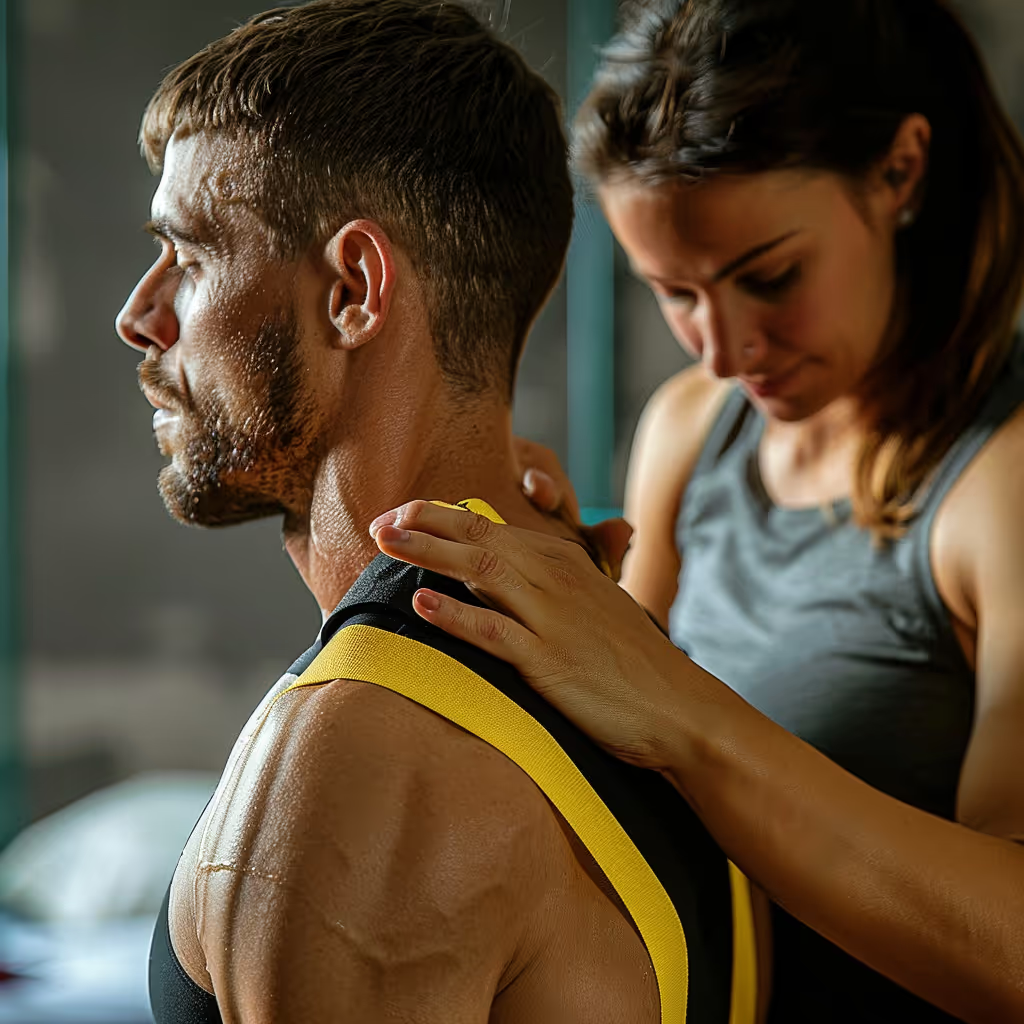
You wake up with a stiff neck. After an unusual workout, going down the stairs becomes difficult. Muscle pain can affect a small area or multiple muscles. Our physical therapists assess these pains and their impact on your movement. Our physical therapy guide for muscle pain explains the treatment process.
Many temporary muscle aches improve over time and with appropriate activities1. For sports injuries, a review reports good outcomes in terms of functional recovery for the majority of athletes treated without surgery. A severe injury, however, may require more extensive care and delay a return to sports.2
Muscle soreness after unusual exercise usually subsides within a few days3. Researchers classify it as a mild muscle injury. It is different from a severe muscle tear.4
- The time it takes to return to sports after a muscle strain depends on the severity of the injury, known as its grade. Two studies on the hamstrings and the calf report longer average recovery times for higher grades. These timeframes refer to the time it takes to resume sports, not the complete healing of the tissue.5, 6
- Persistent pain may also benefit from active treatment. For chronic back pain, recommendations include education and appropriate exercise. This approach does not guarantee the elimination of all muscle tension.7
This guide helps you understand muscle pain, distinguish between different types, know when to seek medical attention, and learn about possible treatments and ways to reduce certain risks. To understand how physical therapy can help you, check out our comprehensive guide to physical therapy.
10 Quick Tips to Understand Your Pain
One tip a day for 10 days to help you better understand your pain. About a 2-minute read.
What is muscle pain?
Muscle pain, or myalgia, is pain felt in one or more muscles. It can be localized or widespread1. Muscles enable movement and support the body. They make up a significant portion of the body’s mass.8
A muscle’s sensitivity can change. Pressure that is normally tolerable may become painful, and pain may also be felt at a distance from the stimulated muscle. These phenomena are studied in the context of muscle and joint pain.9, 10
Your muscles are involved in a variety of tasks: carrying groceries, climbing stairs, typing on a keyboard, or holding a certain position. The demands vary depending on the activity; not every muscle remains contracted all the time.
Unusual exertion, an injury, or stress-related tension may be accompanied by muscle pain11. The location of the pain, its onset, and associated symptoms guide the evaluation. A specific position or sensation alone is not enough to explain all cases of pain.
Let's look at the different types of muscle pain.
What are the different types of muscle pain?
Muscle pain includes, among other things, soreness after exercise, muscle strains, tender areas known as trigger points, and cramps. These categories describe different conditions; their symptoms may be similar.12, 13
Muscle soreness after exercise
Delayed-onset muscle soreness occurs after unusual physical exertion. According to the American College of Sports Medicine, it often begins 12 to 24 hours after exercise and may be most severe between 24 and 72 hours14. Hotfield’s review indicates that the pain peaks between 48 and 72 hours.4 For example, moving on Saturday can make climbing stairs difficult on Sunday or Monday.
Muscle soreness is a reaction of the muscle to unusual exertion, which may involve microscopic changes. It does not, on its own, indicate a significant tear. Eccentric contractions—in which the muscle exerts force while lengthening—are a common cause of muscle soreness; walking down a slope or slowly lowering a weight are examples of this.415 To learn more, find out what causes muscle soreness and cramps.
Typical characteristics:
- The pain often gets worse during the first three days after exercise.
- Muscle soreness usually subsides within a few days and rarely lasts more than five days3.
- Muscles tender to the touch and stiff
- Gentle movement can temporarily relieve pain15.
Muscle Strain
A muscle strain refers to a tear in muscle fibers. The term “pulled muscle” can also refer to excessive stretching without a complete tear16. The severity ranges from a minor strain to a major tear.2 Classifications vary: the study on the hamstrings uses four grades, while the one on the calf uses a classification based on medical images of the muscle.5, 6
The pain of a muscle strain often occurs during physical exertion or a sudden movement. A tearing sensation, weakness, or bruising can help identify the injury16. The patient’s account must be combined with a physical examination; not being able to recall a specific moment is not sufficient to rule out an injury.
The muscles most commonly affected include the hamstrings, quadriceps, calves, and adductors. The hamstrings are located at the back of the thigh, the quadriceps at the front of the thigh, and the adductors on the inner thigh; strains of the calf and lower back muscles are also possible.
Trigger Points
Trigger points, sometimes called muscle knots, are small, tender areas felt within a tight band of muscle. Pain may be present at rest, triggered by pressure, or felt at a distance.17 The definition and mechanisms of these points remain a subject of debate in research.13
How can you recognize them? Three main signs: tender points (96.9% of studies), referred pain (73.6%), and local contraction response (48.8%).18
A pressure-sensitive area alone does not confirm the presence of a tear. The explanation that trigger points result from a small, persistent contraction remains a hypothesis.19 Sensitivity may persist, but the examination must also consider other causes. Our guide to chronic pain explains pain that lasts.
Cramps
A cramp is a sudden, painful, involuntary muscle contraction.20 A calf cramp that wakes you up at night is one example.
A leg cramp can last from a few seconds to ten minutes. The muscle may remain tender after the cramp21. A persistent tender area and a brief contraction therefore do not describe the same phenomenon. Intensity alone is not enough to distinguish between them.
Recurrent cramps that disrupt sleep, last longer than ten minutes, or are accompanied by numbness or swelling warrant a doctor’s visit21.
| Type | Onset | Duration | Key characteristic |
|---|---|---|---|
| Muscle soreness after exercise | Often 12 to 24 hours after exercise | Usually a few days | Gentle movement can provide temporary relief |
| Muscle strain | Often during exercise | Return to sports: average time of about 1 to 8 weeks depending on the severity level in two sports studies, with no measurement ofcomplete recovery5, 6 | Pain, weakness, or bruising after physical exertion or an injury |
| Trigger Points | Variable | Sensitivity that may persist | Sensitive area; pain may sometimes be felt elsewhere |
| Cramps | Sudden | Seconds to minutes | Sudden, involuntary contraction |
Let's see how to distinguish these pains from joint or nerve pain.
How to tell if my pain is coming from a muscle, a joint, or a nerve?
A healthcare professional distinguishes between muscle, joint, and nerve pain by considering your description of the symptoms, your range of motion, muscle strength, and tenderness. No single sign is sufficient to make a definitive diagnosis.22, 23, 24 Muscle and joint pain can overlap.23 Nerve pain can be spontaneous or triggered by touch or movement.24 The following guidelines help describe your symptoms but are not a substitute for a physical examination.
Muscle pain may be localized to a small area or spread throughout the muscle. It may vary with exertion and pressure1. A tender muscle can also cause pain that is felt elsewhere.9 Heat may provide relief, but this relief does not prove that the pain originates in the muscle.
Joint pain can be felt in or around a joint. It may be accompanied by stiffness, especially upon waking, and may vary with activity.23 Its location alone is not enough to distinguish it from a related problem. Our guide to joint pain covers these situations.
Nerve damage can cause a burning sensation, tingling, numbness, or weakness25. These sensations are not exclusive to nerves. Sciatica, for example, can cause pain that radiates down the leg.
| Characteristic | Muscle | Joint-related | Nerve-related |
|---|---|---|---|
| Location | A small area or a larger region | In or around the joint | The area corresponding to the affected nerve, sometimes more extensive |
| Sensation | Possible tension, pain, or stiffness | Possible pain or stiffness | Possible burning, tingling, or numbness |
| Response to pressure | Sensitive to touch | Variable | Contact can also cause pain |
Let's look at what causes muscle pain.
What are the main causes of muscle pain?
Muscle pain can result from unusual physical exertion, stress-related tension, or an injury. It can also be caused by an infection, certain medications, and diseases that affect multiple parts of the body.2611 The context helps determine which tests and treatments are appropriate.
Unusual exertion can cause muscle soreness or an injury. A new exercise routine, moving, or a day of gardening can put extra strain on your muscles. Microscopic changes may occur after certain types of exertion, particularly those in which the muscle resists movement.4, 2 However, not all pain indicates a tear.
Psychological stress can accompany and influence pain. A review describes how anxiety and repetitive thoughts can prolong certain bodily responses to stress, such as changes in heart activity.27 For pain in the neck, shoulders, or upper back, the evaluation takes both activities and stress into account.
For some people, the fear of getting hurt leads them to avoid movement and reduces their participation in activities. The so-called “fear-avoidance” model describes this possible process in chronic pain.28 This model does not explain all types of pain, nor does it mean that you are responsible for your symptoms.
Staying in the same position for long periods can become uncomfortable. You can try changing your position and alternating tasks, then see what works best for you. A single posture does not account for all pain, and changing positions does not guarantee that the pain will go away. Our guide to ergonomics offers tips for making adjustments at work.29, 30
A blow to a muscle can cause a contusion—that is, an impact injury that can result in a bruise. A sudden strain can also stretch or tear muscle fibers.2 Our comprehensive guide to back pain covers other possible causes of back pain.
Problems affecting various parts of the body can cause muscle pain. The flu is one example11. Statins, medications that lower cholesterol, can also cause muscle symptoms. If a new symptom appears after starting these medications or after a dose change, you should discuss it with your prescriber—but do not stop taking the medication on your own1. Muscle damage linked to a reaction of the immune system—the body’s defense system—can also occur in a small proportion of people taking a statin.31
In a study called ASCOT, the first phase compared a statin to a placebo pill, with neither the participants nor the researchers knowing which treatment had been assigned. Reports of pain or other muscle symptoms were similar. During the extension phase, when the treatment was known and no longer randomly assigned, those taking a statin reported more of these symptoms.32 This comparison suggests a role for expectations, though it does not prove that every instance of pain is caused by them. A large meta-analysis of trials conducted without the knowledge of participants or researchers confirms a small, real excess of muscle pain or weakness, especially during the first year33.
Fibromyalgia can also involve widespread pain, fatigue, and non-restorative sleep.34
Let's look at how to treat muscle pain at home.
How to treat muscle pain at home?
Home care for mild muscle pain includes adjusting activities and taking steps to improve comfort. Heat can provide short-term relief from some types of pain.35 A serious injury or a warning sign described below requires evaluation; do not wait for home care to take effect.
Relative rest involves reducing activities that worsen the pain, then resuming movements that you can tolerate. If your arms are sore, walking or using a stationary bike can help you stay active without putting as much strain on them15. For recent back pain, a review found modest benefits to the recommendation to stay active compared to bed rest. This finding does not define the treatment for all muscle tears.36
Cold therapy can be used to relieve discomfort after an acute injury. Protect the skin with a cloth and avoid direct contact with ice. The NHS guide recommends applying cold for no more than 20 minutes for sprains and muscle injuries16. There is no evidence that applying ice leads to better tissue healing.37
Heat can provide temporary relief or a feeling of relaxation.35 It does not automatically correct a muscle or other tissue. A lukewarm bath or a wrapped hot water bottle can provide comfort. Avoid temperatures that are too hot, and stop if symptoms worsen. After a recent sprain or muscle injury, the NHS recommends avoiding heat for the first few days16. Our article on heat versus cold can help you decide.
Stretches should be tailored to the specific problem. For a calf cramp, stretching can relieve the cramp21. After an injury, do not push through sharp pain. A professional can show you how to adapt the stretch to your situation. The duration and number of repetitions should be based on your tolerance and the goal of the exercise.
If home treatments are not enough, let's see how physiotherapy can help.
How can physiotherapy help with muscle pain?
Physical therapy helps manage muscle pain and resume activities through assessment and tailored exercises. For certain persistent types of pain, particularly back pain, education and exercise are part of the recommended treatment.7 Resistance training—for example, using weights or resistance bands—can also increase strength, reduce pain, and improve function for several specific muscle and joint conditions.38 Our page on physical therapy for muscle pain provides detailed information on treatment.
The evaluation begins with your description of your symptoms: the location of the pain, when it started, activities that are difficult for you, and factors that affect your symptoms. The physical therapist then assesses your range of motion, strength, and sensitivity. They may recommend a medical evaluation if the signs suggest another issue. Find out how a physical therapy evaluation works at Physioactif.
Manual techniques encompass a variety of procedures performed by hand.
A review presents general hypotheses regarding the nervous system's responses to manual therapy.39 This model does not prove that pressure repairs tissue. Soft tissue release refers to techniques that target the fascia—the tissues that surround muscles, among other structures.
Dry needling involves inserting a needle into a muscle without injecting any medication. Studies are being conducted on this method.40 Physioactif does not offer this treatment and instead focuses on tailored exercises and patient education.
10 Quick Tips to Understand Your Pain
One tip a day for 10 days to help you better understand your pain. About a 2-minute read.
The exercise program may focus on strength, ease of movement, and regaining specific movements. Resistance training uses weights, resistance bands, or body weight.38 A review found increases in strength and improvements in pain and functional ability among people with conditions such as chronic back pain, knee osteoarthritis (which affects the joint tissues), tendon problems, or a hip replacement (an artificial joint).38 These results do not mean that all muscle pain has the same cause. Depending on your evaluation, exercises related to posture and movement may be incorporated.
Education helps you understand the problem and adjust activities that are difficult for you. For example, a professional can help you pace yourself and then gradually increase the amount you do. The goal is to resume meaningful activities, without promising to prevent any recurrence.7
In Quebec, you can see a physical therapist directly at a private clinic without a doctor's referral.41
Let's look at when to seek treatment.
When should you see a doctor for muscle pain?
Muscle pain requires urgent care if it is accompanied by muscle weakness, a high fever, a very stiff neck, difficulty breathing, or very dark urine. Pain that persists or limits your activities also warrants evaluation, even in the absence of these warning signs11. The situations below specify the timeframe and context; do not wait two weeks if you experience an urgent symptom.
| Warning Sign | What it might indicate | Action |
|---|---|---|
| Muscle weakness, or an inability to move a part of the body | A muscle or nerve problem that requires immediate evaluation | Call 91111 |
| High fever, severe neck stiffness, or vomiting | Infection or other serious medical condition | Call 91111 |
| New redness or swelling, especially accompanied by warmth in the affected area | Possible infection or other cause of inflammation | Seek medical attention promptly; on the same day if the area is red, warm, and swollen11 |
| New swelling following an injury, or a cold, bluish, or numb injured area | Possible fracture or significant injury, without a definitive diagnosis of a complete muscle tear | Immediate Assessment in the Emergency Department16 |
| Tea- or cola-colored urine; muscle pain that is much more severe than expected; or weakness or fatigue that prevents you from performing a task or exercise that you were previously able to do | Possible rhabdomyolysis: the breakdown of muscle fibers releases their contents into the bloodstream and can damage the kidneys.42 | Seek immediate medical attention if even one of these signs is present43 |
Also call 911 if you have difficulty breathing or swallowing along with muscle pain11. After an injury, severe or worsening pain, significant or increasing swelling, or an inability to bear weight requires urgent medical attention16. A new deformity without an obvious injury also warrants prompt medical evaluation.
See your doctor right away if:
- The pain persists or does not improve with appropriate treatment.
- The pain appeared without any obvious reason
- You experience widespread pain with fatigue
- The pain occurs after a medication is administered or the dose is changed.
See a physical therapist if:
- Pain limits your daily activities
- You have chronic tension that won't go away
- Do you want to get back into sports after an injury?
- Home treatments are not enough
How to prevent muscle pain.
How to prevent muscle pain?
Preventing muscle pain relies on appropriate activities, a gradual progression in training, and programs that prepare the body for sports movements. Some programs reduce injuries in specific populations; however, no single habit guarantees that you will avoid all pain.44 A distinction must be made between the effects of warm-ups on performance and those on injuries.45, 46
Stretching alone did not show a clear reduction in injury risk in Hart’s review. The data were limited; this finding does not prove that stretching is never beneficial.47
A structured warm-up can prepare you for physical activity. A study of 1,892 female soccer players aged 13 to 17 tested a program that combined strength training and movement control, among other elements. The group that followed the program had fewer injuries overall, as well as fewer overuse injuries and fewer serious injuries. The main finding regarding leg injuries remained inconclusive: the analyses did not allow for a clear distinction between the observed difference and chance.44 This was a comprehensive program, not just a few minutes of slow walking.
For your training, tailor your effort to what you’re already doing and to your recovery. A journal article suggests gradually building up your ability to handle the workload.46 This does not provide a one-size-fits-all rule.
Ergonomics involves adapting tools and workstations to the tasks at hand. A review of 15 studies involving 2,165 office workers found mixed results. The combination of an armrest and a mouse different from the one typically used reduced certain neck and shoulder problems. The evidence is inconclusive for several other adjustments.30 You can try adjusting your monitor, footrest, or forearm rest, and taking breaks, and then see how comfortable you feel. These personal experiments do not guarantee injury prevention.
Regular exercise helps improve your physical abilities. Strength training builds strength; walking, cycling, or other sustained activities build endurance. Stretching exercises can complement your routine based on your needs. Vary your activities and adjust the difficulty level rather than aiming for muscle soreness after every session.38, 45
Hydration deserves special attention during exercise, especially in hot weather. A lack of fluids can contribute to certain cramps, but cramps have several possible causes21. Research is also investigating changes in the activity of the nerves that control the muscles.20 Drinking more, therefore, does not resolve all cramps.
Stress management can be part of the support provided when pain and anxiety intensify. Calm breathing, an enjoyable activity, or adapted yoga are options to discuss based on your preferences. These measures do not guarantee the prevention of muscle pain.27, 28
What are the most common questions about muscle pain?
Frequently asked questions about muscle pain focus on its duration, soreness, continuing to exercise, stretching, and fibromyalgia.
How long does normal muscle pain last?Muscle soreness usually subsides within a few days3. They often peak within three days of exercise.4 A muscle tear or persistent pain follows a different course. Recovery is also judged by strength and the activities you can do, not just by the timeline. See a doctor if the pain worsens, remains unexplained, or does not improve; the emergency signs described above require immediate care.
Does muscle soreness mean my workout was effective?Muscle soreness isn't a measure of the quality of your workout. It usually occurs after an unusual level of exertion; your body can adapt to repeated exertion. A workout can therefore improve your performance without leaving you sore3. Extreme pain warrants evaluation rather than being viewed as a sign of success.
Should I work out when I have muscle soreness?Mild muscle soreness may allow you to continue with light activities. Light exercise can temporarily relieve the pain, though there is no evidence that it speeds up muscle repair15. Reduce the intensity or work a different muscle group before resuming strenuous activity that targets the same muscles.
Does stretching prevent muscle soreness?Stretching before or after exercise does not significantly reduce muscle soreness to a degree that improves comfort, according to a review of studies involving healthy adults.48 Stretching may serve other purposes, such as improving flexibility, but it does not provide reliable protection against muscle soreness.
Is fibromyalgia a real disease?Fibromyalgia is a real condition that often involves widespread pain, fatigue, and sleep disturbances. Research has shown, in particular, changes in the way the brain and spinal cord process pain. The spinal cord is a bundle of nerve tissue located within the spine that transmits messages between the brain and the body.34 This is not evidence of widespread muscle tears, but another injury may coexist. Treatment may include education, exercise, sleep aids, psychological approaches, and sometimes medication.
Need professional advice?
Our physical therapists can assess your condition and provide you with a personalized treatment plan.
Make an appointmentReferences
- Muscle Pain - Causes and Definition. Mayo Clinic. ↩ Back to text: 1st, 2nd, 3rd, 4th references
- Järvinen TA, Järvinen TL, Kääriäinen M, Kalimo H, Järvinen M. Muscle injuries: biology and treatment. Am J Sports Med. 2005;33(5):745-64. ↩ Back to text: 1st, 2nd, 3rd, 4th references
- Delayed Onset Muscle Soreness (DOMS): What It Is & Treatment. Cleveland Clinic. ↩ Back to text: 1st, 2nd, 3rd, 4th references
- Hotfiel T, Freiwald J, Hoppe MW, Lutter C, Forst R, Grim C, et al. Advances in Delayed-Onset Muscle Soreness (DOMS): Part I: Pathogenesis and Diagnostics. Sportverletz Sportschaden. 2018;32(4):243-250. ↩ Back to text: 1st, 2nd, 3rd, 4th, 5th citations
- Malliaropoulos N, Isinkaye T, Tsitas K, Maffulli N. Reinjury following acute posterior thigh muscle injuries in elite track and field athletes. Am J Sports Med. 2011;39(2):304-10. ↩ Back to text: 1st, 2nd, 3rd citations
- Prakash A, Entwisle T, Schneider M, Brukner P, Connell D. Connective tissue injury in calf muscle tears and return to play: MRI correlation. Br J Sports Med. 2018;52(14):929-933. ↩ Back to text: 1st, 2nd, 3rd citations
- Foster NE, Anema JR, Cherkin D, Chou R, Cohen SP, Gross DP, et al. Prevention and treatment of low back pain: evidence, challenges, and promising directions. Lancet. 2018;391(10137):2368-2383. ↩ Back to text: 1st, 2nd, 3rd citations
- Frontera WR, Ochala J. Skeletal muscle: a brief review of structure and function. Calcif Tissue Int. 2015;96(3):183-95. ↩ Back to text
- Arendt-Nielsen L, Graven-Nielsen T. Muscle pain: sensory implications and interaction with motor control. Clin J Pain. 2008;24(4):291-8. ↩ Back to text: 1st, 2nd citations
- Mense S, et al. Muscle Pain: Understanding Its Nature, Diagnosis, and Treatment. Lippincott Williams & Wilkins; 2000. ↩ Back to text
- Muscle aches. MedlinePlus Medical Encyclopedia, National Library of Medicine (United States). ↩ Back to text: 1st, 2nd, 3rd, 4th, 5th, 6th, 7th, 8th references
- Mueller-Wohlfahrt HW, Haensel L, Mithoefer K, Ekstrand J, English B, McNally S, et al. Terminology and classification of muscle injuries in sport: the Munich consensus statement. Br J Sports Med. 2013;47(6):342-50. ↩ Back to text
- Shah JP, Thaker N, Heimur J, Aredo JV, Sikdar S, Gerber L. Myofascial Trigger Points Then and Now: A Historical and Scientific Perspective. PM R. 2015;7(7):746-761. ↩ Back to text: 1st, 2nd citations
- American College of Sports Medicine (ACSM). Delayed Onset Muscle Soreness (DOMS). ACSM Information On... (PDF file, archived copy from web.archive.org dated May 31, 2024). ↩ Back to text
- Cheung K, Hume P, Maxwell L. Delayed-onset muscle soreness: treatment strategies and performance factors. Sports Med. 2003;33(2):145-64. ↩ Back to text: 1st, 2nd, 3rd, 4th citations
- NHS. Sprains and strains. National Health Service (United Kingdom). ↩ Back to text: 1st, 2nd, 3rd, 4th, 5th, 6th references
- Details for Travell & Simons' *Myofascial Pain and Dysfunction*: › Landman Library catalog. ↩ Back to text
- Li L, Stoop R, Clijsen R, Hohenauer E, Fernández-de-Las-Peñas C, Huang Q, Barbero M. Criteria Used for the Diagnosis of Myofascial Trigger Points in Clinical Trials on Physical Therapy: Updated Systematic Review. Clin J Pain. 2020;36(12):955-967. PMID 32841969. ↩ Back to text
- Gerwin RD, Dommerholt J, Shah JP. An expansion of Simons' integrated hypothesis of trigger point formation. Curr Pain Headache Rep. 2004;8(6):468-75. ↩ Back to text
- Minetto MA, Holobar A, Botter A, Farina D. Origin and development of muscle cramps. Exerc Sport Sci Rev. 2013;41(1):3-10. ↩ Back to text: 1st, 2nd citations
- NHS. Leg cramps. National Health Service (United Kingdom). ↩ Back to text: 1st, 2nd, 3rd, 4th references
- Cyriax, J. *Textbook of Orthopaedic Medicine*. Vol. 1. *Diagnosis of Soft Tissue Lesions*. 8th ed. London: Baillière Tindall; 1982. ↩ Back to text
- Hunter DJ, McDougall JJ, Keefe FJ. The symptoms of osteoarthritis and the genesis of pain. Rheum Dis Clin North Am. 2008;34(3):623-43. ↩ Back to text: 1st, 2nd, 3rd citations
- Baron R. Mechanisms of disease: neuropathic pain—a clinical perspective. Nat Clin Pract Neurol. 2006;2(2):95-106. ↩ Back to text: 1st, 2nd citations
- NHS. Peripheral neuropathy. National Health Service (United Kingdom). ↩ Back to text
- Tiidus, P.M. Skeletal Muscle Damage and Repair. Human Kinetics; 2008. ↩ Back to text
- Brosschot JF, Gerin W, Thayer JF. The perseverative cognition hypothesis: a review of worry, prolonged stress-related physiological activation, and health. J Psychosom Res. 2006;60(2):113-24. ↩ Back to text: 1st, 2nd citations
- Vlaeyen JWS, Linton SJ. The fear-avoidance model of chronic musculoskeletal pain: 12 years on. Pain. 2012;153(6):1144-1147. ↩ Back to text: 1st, 2nd citations
- Sahrmann, Inc. Diagnosis and Treatment of Movement Impairment Syndromes. Mosby; 2002. ↩ Back to text
- Hoe VC, Urquhart DM, Kelsall HL, Zamri EN, Sim MR. Ergonomic interventions for preventing work-related musculoskeletal disorders of the upper limb and neck among office workers. Cochrane Database Syst Rev. 2018;10(10):CD008570. ↩ Back to text: 1st, 2nd citations
- Mammen AL. Statin-Associated Autoimmune Myopathy. N Engl J Med. 2016;374(7):664-9. ↩ Back to text
- Gupta A, Thompson D, Whitehouse A, Collier T, Dahlof B, Poulter N, et al. Adverse events associated with unblinded, but not with blinded, statin therapy in the Anglo-Scandinavian Cardiac Outcomes Trial-Lipid-Lowering Arm (ASCOT-LLA): a randomized, double-blind, placebo-controlled trial and its non-randomized, non-blinded extension phase. Lancet. 2017;389(10088):2473-2481. ↩ Back to text
- Cholesterol Treatment Trialists' Collaboration. Effect of statin therapy on muscle symptoms: an individual participant data meta-analysis of large-scale, randomized, double-blind trials. Lancet. 2022;400(10355):832-45. ↩ Back to text
- Clauw DJ. Fibromyalgia: A Clinical Review. JAMA. 2014;311(15):1547-55. ↩ Back to text: 1st, 2nd citations
- Malanga GA, Yan N, Stark J. Mechanisms and efficacy of heat and cold therapies for musculoskeletal injuries. Postgrad Med. 2015;127(1):57-65. ↩ Back to text: 1st, 2nd references
- Dahm KT, Brurberg KG, Jamtvedt G, Hagen KB. Advice to rest in bed versus advice to stay active for acute low back pain and sciatica. Cochrane Database Syst Rev. 2010;2010(6):CD007612. ↩ Back to text
- Collins NC. Is ice right? Does cryotherapy improve outcomes for acute soft tissue injuries? Emerg Med J. 2008;25(2):65-8. ↩ Back to text
- Kristensen J, Franklyn-Miller A. Resistance training in musculoskeletal rehabilitation: a systematic review. Br J Sports Med. 2012;46(10):719-26. ↩ Back to text: 1st, 2nd, 3rd, 4th references
- Bialosky JE, Bishop MD, Price DD, Robinson ME, George SZ. The mechanisms of manual therapy in the treatment of musculoskeletal pain: a comprehensive model. Man Ther. 2009;14(5):531-8. ↩ Back to text
- Liu L, Huang QM, Liu QG, Ye G, Bo CZ, Chen MJ, et al. Effectiveness of dry needling for myofascial trigger points associated with neck and shoulder pain: a systematic review and meta-analysis. Arch Phys Med Rehabil. 2015;96(5):944-55. ↩ Back to text
- OPPQ. How does it work? ↩ Back to the text
- Criddle LM. Rhabdomyolysis. Pathophysiology, recognition, and management. Crit Care Nurse. 2003;23(6):14–22, 24–6, 28 throughout; quiz 31–2. ↩ Back to text
- Signs and Symptoms of Rhabdomyolysis. Centers for Disease Control and Prevention (CDC), NIOSH. ↩ Back to text
- Soligard T, Myklebust G, Steffen K, Holme I, Silvers H, Bizzini M, et al. Comprehensive warm-up program to prevent injuries in young female soccer players: a cluster-randomized controlled trial. BMJ. 2008;337:a2469. ↩ Back to text: 1st, 2nd citations
- Fradkin AJ, Zazryn TR, Smoliga JM. Effects of warming up on physical performance: a systematic review with meta-analysis. J Strength Cond Res. 2010;24(1):140-8. ↩ Back to text: 1st, 2nd citations
- Gabbett TJ. The training-injury prevention paradox: Should athletes be training smarter and harder? Br J Sports Med. 2016;50(5):273-80. ↩ Back to text: 1st, 2nd citations
- Hart, L. "Effect of stretching on the risk of sports injuries: a review." Clin J Sport Med. 2005;15(2):113. ↩ Back to text
- Herbert RD, de Noronha M, Kamper SJ. Stretching to prevent or reduce muscle soreness after exercise. Cochrane Database Syst Rev. 2011(7):CD004577. ↩ Back to text
Our physical therapists defined the research strategy, plan, and clinical content of this article. An AI tool assisted with the literature review and text editing to ensure consistency in content and writing style.
Videos in this category
Other conditions

Hip osteoarthritis is the normal wear and tear of the hip joint. It is often said that osteoarthritis is the wear and tear of the cartilage between our bones. That is true, but it involves more than just the cartilage. Cartilage is a tissue that acts as a cushion between the surfaces of our bones and allows our joints to glide smoothly and move fluidly.
This is normal wear and tear of the knee joint. It’s often said that osteoarthritis is the wearing down of the cartilage between our bones. That’s true, but it’s more than just the cartilage. Cartilage is a tissue that acts as a cushion between the surfaces of our bones and allows our joints to glide smoothly and move fluidly.
It is an inflammation of the subacromial bursa in the shoulder joint.
A bursa is a small, thin sac filled with fluid that is found in many of the body's joints. This small sac acts as a cushion within the joint and lubricates the structures that are subject to increased friction.
It is a tissue that surrounds the shoulder and helps keep the shoulder bone in place within the joint. The capsule helps keep the joint stable.
In both types of injury, pain is felt in the neck and then radiates into the arm, or vice versa.
It is a severe strain or tear of the muscle fibers in the groin or inner thigh.
Make an appointment now
We offer a three-pronged quality assurance approach: optimized treatment time, a second opinion from a physical therapist, and ongoing expertise to ensure effective care tailored to your needs.

Customer satisfaction is our top priority
At Physioactif, excellence guides everything we do, but our patients are the best ones to tell you about it. Take a look at their verified reviews to get a real sense of their experience.










Discover our physical therapy clinics
We have locations in several areas to better serve you.
Blainville
190 Bas-de-Sainte-Thérèse Road, Suite 110,
Blainville, Quebec
J7B 1A7
Located in Blainville, near Rosemère, the Physioactif clinic is easily accessible to residents of the area and the surrounding communities
Boucherville
690 Rue de Montbrun, Suite S,
Boucherville, Quebec
J4B 8H2
Located in Boucherville, the Physioactif clinic is easily accessible to people in the area
Laval
3224 Jean-Béraud Ave., Suite 220, Laval,
QC H7T 2S4
Located in Chomedey, in the heart of Laval, the Physioactif clinic is easily accessible to people in the area
Montreal
8801 Lajeunesse Street,
Montreal,
QC H2M 1R8
Located in Ahuntsic, near Villeray, the Physioactif clinic is easily accessible to residents of both neighborhoods
Saint-Eustache
180 25th Avenue, Suite
201 Saint-Eustache
QC J7P 2V2
Located in Saint-Eustache, the Physioactif clinic is easily accessible to residents of the area and the surrounding communities
Vaudreuil
21 Cité-des-Jeunes Boulevard, Suite 240,
Vaudreuil-Dorion, Quebec
J7V 0N3
Located in Vaudreuil-Dorion, the Physioactif clinic is easily accessible to people in the area
Make an appointment now