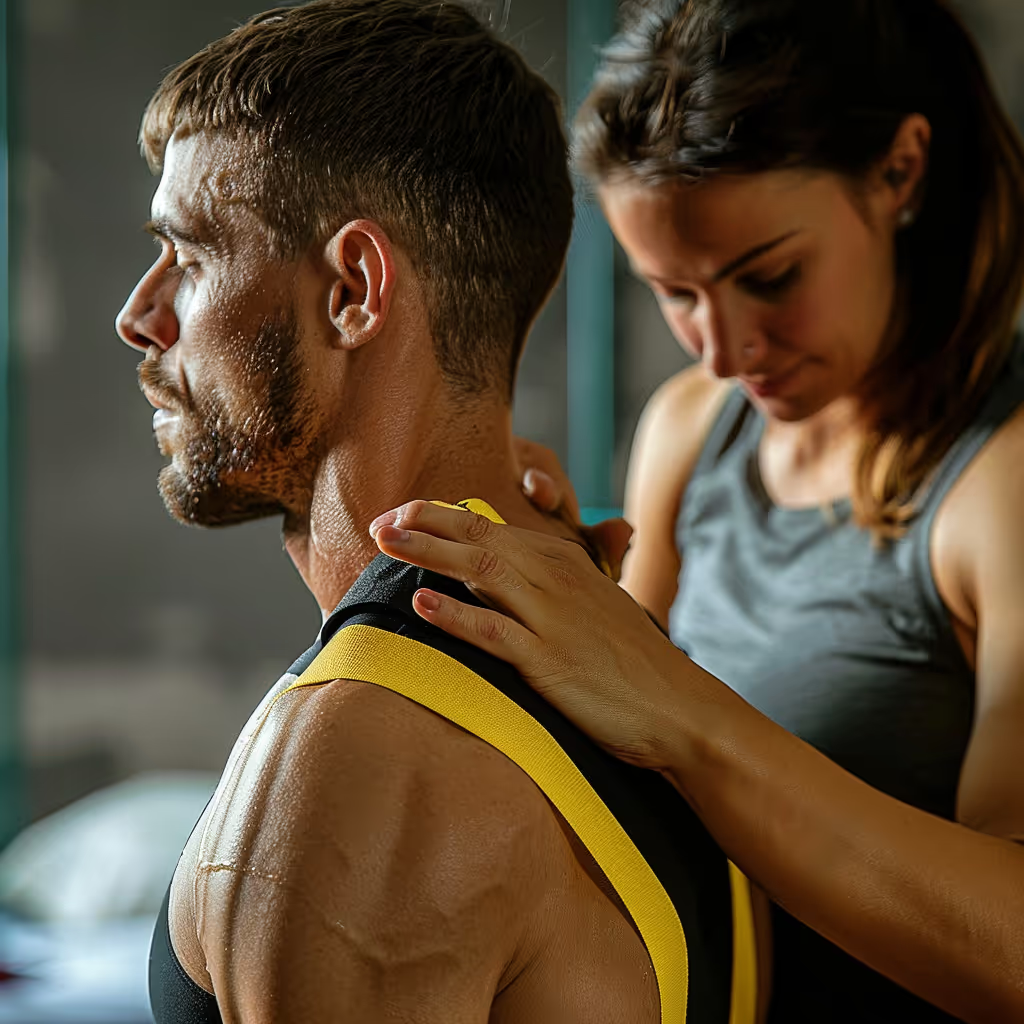


Returning to sports after an injury involves gradually resuming training and then the specific sports activities you want to participate in. This decision takes into account the injury, your abilities, the types of training you can tolerate, and your goals.
According to a meta-analysis of 69 studies, after anterior cruciate ligament reconstruction, 81% of people return to sports, 65% regain their previous level of performance, and 55% return to competition. This ligament is a band of tissue that helps stabilize the knee. Reconstruction is a surgical procedure that replaces it with a graft—a piece of tissue1. In another study, a delayed return to sports involving changes in direction was associated with fewer new knee injuries. This finding applies to people who have undergone ACL reconstruction, not all knee injuries2.
At Physioactif, we assess your injury, the movements required by your sport, and the activities you’d like to resume. We select exercises and tests based on these needs, then work with you to adjust your progress.
Why Tailor Rehabilitation to a Return to Sports?
Sports-specific rehabilitation builds the physical abilities needed for running, jumping, and changing direction. Rehabilitation combines treatment and exercises that help patients return to their activities. Being able to walk without pain isn’t always enough to handle a sprint, a jump landing, or a game.
10 Quick Tips to Understand Your Pain
One tip a day for 10 days to help you better understand your pain. About a 2-minute read.
Tests must be tailored to the specific injury and sport. A study of 171 young female basketball and floorball players—an indoor stick sport—linked certain types of jump landings to anterior cruciate ligament injuries. However, these measures were not effective enough at identifying which individuals would go on to sustain an injury3. Another study proposed a set of tests to be performed after this surgery; only 2 of the 28 participants evaluated met all of its criteria4. Our guide on sports physical therapy outlines the other needs addressed during care.
In a study of 106 people who had undergone anterior cruciate ligament (ACL) reconstruction, a delayed return to pivot sports was associated with fewer new injuries through the ninth month. A pivot sport, such as soccer, requires changing direction while keeping one foot planted2. Following anterior cruciate ligament tears, a study of 158 male professional athletes found 14 graft ruptures among the 42 participants who did not meet the criteria for completion of rehabilitation. It found 12 ruptures among the 116 who did meet those criteria5. These associations support a cautious approach, though they do not guarantee individual outcomes.
Physical therapy helps improve strength, mobility—that is, the range of motion in a joint—and the movements required for your sport. For example, the program may progress from simple knee movements to strength exercises, and then to jumps and changes of direction. Recommendations for Anterior Cruciate Ligament Rehabilitation6 describe this progression based on regained abilities.
What factors can help inform the decision to return to play?
Mobility, strength, athletic movements, psychological preparation, and the time that has elapsed all factor into the decision to return to play. Mobility refers to the range of motion in a joint. These factors work together; no single test can guarantee that a new injury will not occur.
Physical criteria to be tailored to the injury, the sport, and the individual
The mobility assessment measures how far the joint can move. After a knee injury, the physical therapist may check whether you can straighten and bend your knee, and then observe your gait and check for swelling. The goals also depend on the treatment you’ve received and your sports activities7.
Strength tests compare the injured limb to the unaffected side and to the demands of the sport. After ACL reconstruction, recommendations for anterior cruciate ligament rehabilitation6 combine these measurements with symptoms and range-of-motion tests. A previous review of 264 studies showed that only 13% used objective criteria to authorize a return8. In professional soccer, strength imbalances in the back of the thigh have been linked to muscle injuries, but a single measurement does not predict an individual’s outcome9.
Jump tests measure distance, height, speed, or landing control. A test battery designed for use after an ACL injury combines a vertical jump, a long jump, and lateral jumps10. In another study, only 13.9% of the 115 young athletes cleared to return to play met all the recommended thresholds for strength, jumping, and function. This finding highlights a discrepancy between clearance and test results; it does not, on its own, prove that these tests are invalid11.
Video analysis allows for a review of knee alignment, balance, and landing technique during a jump. Associations between certain movements and ACL injuries have been observed using three-dimensional measurements in young female athletes12. Standard video does not provide the same information and does not establish a cause in an individual. A review highlights the importance of assessing strength and jumping ability to prepare for a return to play13. Pain during a movement should be evaluated in conjunction with strength, range of motion, and tolerated activities; it cannot, on its own, be used to determine whether the tissues have fully healed.
Psychological and Timelines Criteria
The ACL-RSI questionnaire assesses emotions, confidence, and the perceived risk of re-injury following ACL surgery. Its twelve questions help facilitate discussion of psychological challenges14. The fear of re-injury has been linked to a failure to return to previous athletic performance levels in some studies15. The questionnaire complements other measures; it does not, on its own, serve as a basis for decision-making.
The time that has elapsed also matters, even as your abilities improve. After a muscle tear, the initial protective measures gradually give way to movements and exercises that you can tolerate16. Recovery follows the guidelines specific to the injury and, if surgery was performed, those provided by the surgical team.
What are the progression phases for returning to sport?
The return to sports progresses from treatment and rehabilitation exercises to training, and then to competition if that is your goal. The following five steps illustrate this progression; they do not constitute a one-size-fits-all protocol for every injury. The consensus on returning to sports17 distinguishes between resuming participation, returning to one’s chosen sport, and returning to the desired level of performance. The examples involving the knee are based on recommendations for anterior cruciate ligament rehabilitation6.
Phase 1: Early Rehabilitation
The first step is to regain basic movement and manage pain and swelling. After a knee injury, therapeutic exercises may include contracting the thigh muscles and sliding the heel to bend the knee. Walking, guided movements, and cardiovascular exercise should be adapted to the patient’s weight-bearing guidelines and the treatment received.
Before moving forward, the team checks, among other things, knee movement, gait, swelling, and leg control. After surgery, certain repairs require special protection even if you feel better.
Phase 2: Intermediate Rehabilitation
The second stage builds the strength and balance needed for more demanding activities. Gradual strengthening may include exercises on both legs, followed by exercises on one leg. Balance exercises, initial jumps, and cardiovascular activity—which works the heart and lungs—are introduced as appropriate.
To make progress, the team is focusing on improving strength, movement control, and functional tests—that is, tasks such as standing on one leg or jumping. A return to running also depends on the symptoms and how the knee responds after exercise.
Phase 3: Advanced Rehabilitation
The third stage prepares you for the faster, more demanding movements of your sport. In soccer, this may include sprints, sudden stops, and changes of direction. In basketball, it may involve practicing jumps and landings. The intensity, speed, and movements are tailored to your abilities and your sport.
At this stage, strength, jumping ability, symptoms, and confidence all factor into the decision. After ACL reconstruction, the performance of the operated leg is often considered adequate when it reaches at least 90% of that of the other leg. This comparison alone is not sufficient: two weak legs may appear symmetrical. The ACL-RSI questionnaire complements the assessment of emotions and confidence.
Phase 4: Returning to Training
The fourth stage reintroduces sports training. You can start with predictable, non-contact movements, then add reactions to a partner or opponent. The duration, intensity, and level of contact are increased based on the guidelines and how the participant responds to the sessions. Our guide on progressing through rehabilitation exercises describes this gradual approach.
Before competition, the team assesses the athlete’s tolerance for full-intensity training and sports-specific movements. A recurrence of swelling, unusual pain, or instability may require reducing the training load and revising the program.
Phase 5: Return to Competition and Prevention
The fifth stage reintroduces competition and maintains the regained abilities. Playing time may be limited at first and then increased depending on the response. Strengthening and prevention exercises continue. A review of exercise load emphasizes the importance of preparing for the demands of the sport through appropriate training, while avoiding sudden increases18. It does not establish a one-size-fits-all formula.
How to objectively assess readiness to return to sport?
Tests of strength, jumping, balance, and movement measure the abilities needed to return to sports. They make progress observable and help identify areas that need work. The choice of test depends on the specific movement to be resumed; predicting a new injury remains more uncertain.
An isokinetic test measures strength during a movement whose speed is controlled by a machine. It can compare the legs as well as the hamstrings—the muscles at the back of the thigh—to the quadriceps, the group of muscles at the front. In professional soccer players monitored over the course of a season, uncorrected imbalances were associated with more injuries to the muscles at the back of the thigh9. This finding does not mean that a strength ratio alone is sufficient to predict or prevent a tear.
After ACL reconstruction, four jump tests were analyzed to assess knee function (see our guide on knee pain): one-legged long jump, three consecutive jumps, three crossover jumps, and a timed six-meter jump19. These tests allow for monitoring changes in performance between two evaluations. A comparison showing approximately 90% performance between the legs does not replace other criteria for return to play.
The Star Excursion balance test involves standing on one leg and reaching in different directions with the other foot. Among 235 young basketball players, certain differences in distance were associated with the following injuries20. After an ankle sprain—an injury to the ligaments that connect the bones—other tests assess balance errors while standing on a firm surface or foam21. These tasks measure balance in a specific context; they do not, on their own, predict an injury.
Observing a squat, a jump landing, or a change of direction provides insight into balance and alignment during the task. A squat involves bending at the hips and knees to lower the body, then standing back up. The video allows us to review the movement with you and compare different attempts. Its interpretation depends on the task and the other results of the evaluation.
How to psychologically prepare for returning to sport?
Psychological preparation for a return to sports involves identifying fears, gradually resuming the movements that cause anxiety, and working toward concrete goals. After ACL reconstruction, the fear of injury and self-confidence are linked to a return to one’s previous athletic level22. These connections do not mean that the individual is responsible for their difficulties.
Recommendations for Anterior Cruciate Ligament Rehabilitation6 include setting goals, mentally rehearsing movements, and seeking psychological support as needed. Studies on the effect of these strategies on a return to sports remain limited.
Kinesiophobia refers to a fear of movement linked to a fear of pain or injury. In a study conducted after ACL surgery, participants who did not return to their previous level of activity reported greater fear15. This fear warrants discussion during recovery. It does not, on its own, indicate the extent of tissue healing.
A gradual return to play can break down the dreaded movement: practice a change of direction—first slowly, then faster, and finally with a partner. The order and difficulty are determined in consultation with you. Follow-up interviews with twelve athletes after a major injury show that the reasons for returning, their emotions, and their decision evolve over the course of several months23. This study describes experiences; it does not evaluate the effectiveness of a treatment.
Visualization involves imagining a movement without actually performing it. In a study of thirteen people who were skilled at imagining a sequence of finger movements, certain regions of the brain were active during both the imagined and the actual movements. However, their activity was not identical24. This study does not measure the effect of visualization on recovery from injury; it does not promise reduced anxiety or increased confidence.
A specific goal allows you to focus on a particular challenge. For example, you can practice landing a jump at a slower speed before attempting it in a faster sequence. Note the movement, any symptoms, and how confident you feel, then discuss the next step. A good test provides useful information, not proof that there is no risk.
A sports psychologist can help you work through fear, stress, or confidence issues. In interviews with ten male professional athletes, the participants described, among other things, frustration and self-doubt during their rehabilitation25. These accounts shed light on their needs, though they do not measure the effect of an intervention on their return to play or performance.
How can you reduce the risk of re-injury after returning to play?
Strength-training, balance, and sport-specific movement exercises can help reduce certain injuries after a return to play. The program depends on the sport and the injury. The studies below show specific benefits, though they do not eliminate all risk.
Some gains made through strength training may diminish when training stops26. A maintenance program helps you continue with sport-specific exercises. Forthe shoulder (see our guide on shoulder pain), rotator cuff strengthening targets the muscles involved in shoulder stability. The program can also work the muscles that control the scapula, the flat bone behind the shoulder.
Training load refers to the quantity and intensity of exercise: duration, frequency of sessions, speed, or weight lifted. Studies involving 95 endurance athletes and 53 rugby players have observed links between certain variations in training load andinjuries .²⁷, ²⁸ These studies support the monitoring of training sessions and symptoms, though they do not provide a single ratio that can predict an injury on its own.
The FIFA 11+ warm-up program combines running, strength, balance, and jumping. A synthesis of four studies involving recreational and intermediate-level soccer players reported an overall injury rate 39% lower than that of the control groups. The previous FIFA 11 program did not show the same benefit29.
In a study of 579 male amateur soccer players, a Nordic hamstring exercise program reduced hamstring injuries. The exercise involves kneeling down, having your ankles held in place, and resisting the forward movement of your body as you lower yourself, then landing on your hands. The difficulty is adjusted to your ability. There was no clear difference in the severity of the injuries30.
Among young female athletes, programs combining various strength and movement control exercises reduce certain ACL injuries31. Following an ankle sprain, a trial involving 522 athletes compared eight weeks of at-home balance exercises added to standard care with standard care alone. A new sprain was reported by 22% of the exercise group versus 33% of the control group over the course of the year32.
After ACL reconstruction, the program continues to include the exercises necessary for knee strength and control. Once training resumes, the team can reassess any remaining challenges and determine an appropriate training frequency. An editorial points out that rehabilitation following this surgery is often underutilized33.
Persistent pain, unusual fatigue, or a decline in performance may warrant a reassessment of the training load and other possible causes. The adjustment depends on the severity and progression of the symptoms, as well as the athlete's specific circumstances.
Follow-up physical therapy sessions allow for a review of symptoms, strength, movements, and tolerable exercises. The program can then be adjusted: reducing an activity that is not well tolerated, increasing an exercise that has become too easy, or preparing for a movement that is still being avoided. Follow-up care does not guarantee that no further injuries will occur.
How long does it take to return to sport?
Returning to sports can take a few weeks or several months, depending on the injury and the sport. After a sprain or muscle tear, feeling better day-to-day doesn’t mean you’re ready to run or resume contact sports. The NHS, the UK’s public health service, states that most of these injuries improve after two weeks, while severe cases can take months34. This guideline is not a personal green light to resume sports.
After an ankle sprain, support, movements, and exercises are tailored to the symptoms and activities. A review found that activities performed with a splint—a device that supports the ankle—yield better results than those performed with certain other forms of support; the other results are less consistent35.
After a hamstring tear, the recovery time depends on the severity of the injury and the resumption of walking, running, and accelerating. A review of studies reports encouraging results for certain exercises, including agility training and core stability exercises, but highlights the limited number of high-quality studies36. The trunk includes the back, abdomen, and pelvis.
Achilles tendinopathy is characterized by pain and difficulty using the Achilles tendon. This tendon is a band of tissue that connects the calf muscles to the heel. Treatment often takes several months. In a study of fifteen recreational runners with long-standing symptoms, all fifteen were able to resume their previous running level after twelve weeks of calf exercises. The small sample size and the non-randomized comparison limit the generalizability of the findings37. In a separate trial involving 38 participants, both groups followed the same exercise program. Continuing to run and jump while monitoring pain levels yielded results comparable to those seen when they initially stopped for six weeks; both groups showed improvement38.
Another condition, such as patellofemoral syndrome—which involves pain around or behind the kneecap—requires a tailored treatment plan. The treatment protocol for a tendon injury does not automatically apply to knee pain.
After ACL reconstruction, the decision to resume a pivot-based sport depends on the patient’s abilities and the time available. Recommendations for anterior cruciate ligament rehabilitation6 recommend waiting at least nine months and meeting functional criteria. This recommendation is based, in particular, on the association between an earlier return to play and new injuries2.
After an initial shoulder dislocation, the arm bone has slipped out of its joint. Stability, the extent of the injury, and the treatment received guide the return to activity; the disappearance of pain alone is not enough.
After a concussion —an injury that disrupts brain function—stop playing sports and seek a medical evaluation. Do not resume play on the same day. The 2023 Amsterdam Consensus39 updates the 2017 Berlin recommendations40. Return to play follows a step-by-step process and requires medical clearance before engaging in activities that involve a risk of impact, contact, or falls.
The timeline is adjusted based on symptoms, physical abilities, previous injuries, and the intensity of training you can handle. Also discuss your sleep, diet, and any factors that make recovery difficult. This information helps create a realistic plan; it does not allow for calculating an exact return date.
When should you consult a doctor before resuming exercise?
Severe pain, difficulty putting weight on the limb, or symptoms that are getting worse require prompt medical attention following an injury. Significant or increasing swelling or bruising, an inability to walk even a few steps, severe stiffness, or difficulty moving also require prompt medical attention. You should also seek medical attention if home care isn’t helping, or if you have a high fever, feel unusually hot or cold, or have chills.
Go to the emergency room if you hear a popping sound when the injury occurs, if there is deformity, numbness, or tingling, or if the skin turns blue, gray, or cold. You may have a fracture. These signs are described on the NHS page about sprains and muscle strains34. Don’t wait for your next physical therapy session.
10 Quick Tips to Understand Your Pain
One tip a day for 10 days to help you better understand your pain. About a 2-minute read.
After a blow to the head or body, seek immediate medical attention if any of the following warning signs are present: neck pain or tenderness, repeated vomiting, increasing confusion, seizures, weakness, tingling or burning sensations in the arms or legs, increasing agitation or aggression, double vision, severe or worsening headache, or increasing difficulty staying awake. If the person loses consciousness, call 911. Do not leave the person alone or remove their helmet; a neck injury is possible. Parachute’s Concussion Plan41 describes these steps.
Even without these urgent symptoms, persistent pain, a feeling that the joint is giving way, fear, or a new injury that limits your ability to resume activity are also reasons to see a doctor.
What does research say about returning to sport?
Research shows that a return to sports depends on the target level, and that physical and psychological abilities provide additional insights. Following ACL reconstruction, the overall findings indicate an 81% return to sports, a 65% return to the previous level, and a 55% return to competition1. Among elite athletes, another review reports an 83% return to the sport practiced prior to the injury42. The study populations and definitions differ: these percentages do not predict your specific outcome.
In a study of 115 young athletes following ACL reconstruction, the criteria for strength, jumping, and function were rarely all met at the time of clearance. Participants who met the strength criteria were more likely to maintain their activity level at the one-year follow-up11. In another study of 87 participants, psychological readiness scores were higher at six and twelve months among those who resumed their sport43.
However, a review of 209 studies reveals a wide variety of criteria. Time elapsed was the only criterion reported in 42% of the studies. The authors were unable to confirm the predictive value of the various methods44.
In the study of 158 male professional athletes who underwent ACL surgery, new graft ruptures were less common among those who met the criteria for completion of rehabilitation: 12 out of 116, compared with 14 out of 425. The criteria included, among other things, strength, jumping, and sport-specific movements. The result still indicates an association in this population.
Among 612 people evaluated five years after ACL reconstruction, 6% had experienced a graft rupture and 6% had experienced an ACL rupture in the other knee45. In a study of 106 people who played pivot sports, each additional month of waiting—up to nine months—was associated with a 51% reduction in the rate of new knee injuries. This result does not prove that the waiting period alone explains the difference2.
After a sprained ankle, some people continue to experience pain, swelling, or a feeling that their ankle is giving way. In a small study of nineteen people referred to a sports medicine clinic, only five reported no longer having any of these symptoms after about twenty-nine months. This group does not represent all cases of ankle sprains46. The trial of 522 athletes described above shows that adding balance exercises to standard care can reduce the incidence of new sprains32.
For the hamstrings, a previous injury is one of the factors associated with new injuries47. The Nordic program reduced the overall incidence of hamstring injuries in an amateur soccer trial, not just new injuries among players who were already injured30.
In a study of athletes with hamstring tears, tenderness in the muscle immediately after returning to play was associated with a higher incidence of new tears. Range-of-motion limitations and lack of strength also provided valuable insights. Images taken at the onset of the injury did not predict recurrence in this study. These results apply to the 64 participants for whom follow-up data were available and do not constitute a definitive rule for every athlete48.
Among 59 elite Australian football players, taking more than one day to walk without pain was associated with a return to competition taking longer than three weeks. A hamstring injury in the previous year was also associated with recurrences. These observations help inform discussions about prognosis—that is, the likely course of the injury—without setting an individual timeline49.
The decision to return to play may take into account the time elapsed, symptoms, strength, functional tests, range of motion, psychological readiness, and tolerated training. Following anterior cruciate ligament reconstruction, symmetry thresholds and the ACL-RSI are often reported, but no single result guarantees a return to play without re-injury44.
Prevention must be tailored to the sport and the injury. The International Olympic Committee’s consensus recommends monitoring the athlete’s training load, competitions, recovery, and well-being50. A training log can record duration, perceived difficulty, symptoms, and travel constraints. This data supports program adjustments; it does not provide a formula that eliminates injuries.
What are the most common questions about returning to sports after an injury?
Frequently asked questions about returning to sports focus on pain, recovery times after surgery, testing, braces, fear, prevention, and physical therapy sessions. They also address differing professional opinions, movement techniques, and recreational sports during treatment.
Can I return to sport if I still have a little pain?Mild pain does not always preclude all activity, but the decision depends on the injury and the instructions received. The Achilles tendon trial described above allowed for certain activities with pain monitoring as part of an exercise program. This approach does not automatically apply to a fracture or surgical repair. Persistent or increasing pain, or a loss of function, requires reevaluation. The emergency signs described above require immediate medical attention.
How long after ACL surgery can I return to soccer?After ACL reconstruction, the guidelines recommend waiting at least nine months before returning to pivot-based sports such as soccer and meeting the physical criteria. The waiting period may be longer depending on your symptoms, confidence level, and the intensity of training you can tolerate. Do not return to play simply because nine months have passed; discuss these factors with the team caring for your knee.
Are jump tests enough to determine when it's safe to return to sports?Jump tests alone are not enough. The evaluation also takes into account strength, mobility, symptoms, movements, confidence, and the level of exercise the patient can tolerate. A good jump result does not replace post-operative safety guidelines.
Should I wear a brace after returning to sports?An orthosis is a device, such as a splint, that supports a part of the body. After an ankle sprain, a splint and balance exercises can help prevent another sprain, according to the clinical guideline on ankle sprains51. The choice of a wrap or splint depends on the injury and the sport. These aids complement the exercises; they do not replace strength and mobility training.
What should I do if I'm afraid of getting injured again?Talk to your physical therapist about the movements that concern you. The program can help you gradually resume them, with specific goals and an appropriate level of difficulty. A sports psychologist can support you if fear, stress, or a lack of confidence are hindering your recovery. These approaches will need to be adjusted based on your response.
Can I do injury prevention even if I'm not currently injured?Yes. Certain warm-up, strength, and balance programs reduce specific injuries among the athletes studied. The FIFA 11+ and Nordic programs described above are examples of this. An assessment can help in choosing an appropriate program, but it cannot predict all injuries.
My doctor says I can return to activity, but my physiotherapist says no. Who should I listen to?Ask your healthcare professionals to work with you to clarify what is permitted: exercises, non-contact training, full training, or competition. The consensus on returning to sports17 recommends a shared decision-making process with clearly defined roles and a way to resolve disagreements. Your health remains the top priority: do not resume an activity that is not recommended while medical risks are still being clarified.
How many physiotherapy sessions are needed to return to sports?The number of sessions depends on the injury, the treatment, and your goals. After ACL reconstruction, follow-up care can last several months, and exercises continue between appointments. The sessions are primarily intended to track your progress and adjust the program, rather than to complete a set number of visits.
Should I change my running or jumping technique after my injury?Video analysis can document running or jumping technique. Its interpretation depends on the injury, symptoms, sport-specific requirements, and goals. If a change is attempted, its progress and tolerability can be reassessed; the analysis alone does not prove that the technique caused the injury or that a correction will prevent a recurrence.
Can I participate in recreational sports during my rehabilitation?A recreational activity can sometimes be continued if it complies with the guidelines for the injury and is well tolerated. Cycling, swimming, or using an elliptical machine may be options depending on the situation; activities involving pivoting and impact require different preparation. After surgery, also follow the restrictions related to the wound and weight-bearing. The goal is to stay active without compromising the necessary protection.
What role can an evaluation play in a return to sports?
An assessment compares your current abilities with the demands of the sport and identifies the areas you need to work on. Returning to the sport is often a physical and psychological challenge. Physical therapy can help you prepare for the movements, progress through the exercises, and discuss any obstacles you encounter.
We offer an assessment and a program tailored to your injury, your sport, and your goals. The tests are selected to address a specific issue and are then interpreted in light of your symptoms and training regimen. We adjust the steps as you make progress.
An injury can change the course of an athlete's career. Options for returning to play, adapting, or retiring are discussed based on your health and goals.
Need professional advice?
A physical therapy evaluation can document symptoms, abilities, and sports-related requirements in order to discuss options for progress.
Make an appointmentWhat studies does this guide draw on?
This guide is based on studies published in peer-reviewed scientific journals, including the systematic reviews and position statements on returning to sports listed below.
- Ardern CL, Taylor NF, Feller JA, Webster KE. Fifty-five percent return to competitive sport following anterior cruciate ligament reconstruction surgery: an updated systematic review and meta-analysis including aspects of physical functioning and contextual factors. Br J Sports Med. 2014;48(21):1543-52. ↩ Back to text: 1st, 2nd citations
- Grindem H, Snyder-Mackler L, Moksnes H, Engebretsen L, Risberg MA. Simple decision rules can reduce the risk of reinjury by 84% after ACL reconstruction: the Delaware-Oslo ACL cohort study. Br J Sports Med. 2016;50(13):804-8. ↩ Back to text: 1st, 2nd, 3rd, 4th references
- Leppänen M, Pasanen K, Kujala UM, Vasankari T, Kannus P, Äyrämö S, et al. Stiff Landings Are Associated With Increased ACL Injury Risk in Young Female Basketball and Floorball Players. Am J Sports Med. 2017;45(2):386-393. ↩ Back to text
- Gokeler A, Welling W, Zaffagnini S, Seil R, Padua D. Development of a test battery to enhance a safe return to sports after anterior cruciate ligament reconstruction. Knee Surg Sports Traumatol Arthrosc. 2017;25(1):192-199. ↩ Back to text
- Kyritsis P, Bahr R, Landreau P, Miladi R, Witvrouw E. Likelihood of ACL graft rupture: failure to meet six clinical discharge criteria before returning to sports is associated with a fourfold increased risk of rupture. Br J Sports Med. 2016;50(15):946-51. ↩ Back to text: 1st, 2nd citations
- Filbay SR, Grindem H. Evidence-based recommendations for the management of anterior cruciate ligament (ACL) rupture. Best Pract Res Clin Rheumatol. 2019;33(1):33-47. ↩ Back to text: 1st, 2nd, 3rd, 4th, 5th references
- Logerstedt DS, Snyder-Mackler L, Ritter RC, Axe MJ, Godges JJ, Orthopedic Section of the American Physical Therapy Association. Knee stability and movement coordination impairments: knee ligament sprain. J Orthop Sports Phys Ther. 2010;40(4):A1-A37. ↩ Back to text
- Barber-Westin SD, Noyes FR. Factors used to determine a return to unrestricted sports activities after anterior cruciate ligament reconstruction. Arthroscopy. 2011;27(12):1697-705. ↩ Back to text
- Croisier JL, Ganteaume S, Binet J, Genty M, Ferret JM. Strength imbalances and prevention of hamstring injury in professional soccer players: a prospective study. Am J Sports Med. 2008;36(8):1469-75. ↩ Back to text: 1st, 2nd citations
- Gustavsson A, Neeter C, Thomeé P, Silbernagel KG, Augustsson J, Thomeé R, et al. A test battery for evaluating hopping performance in patients with an ACL injury and patients who have undergone ACL reconstruction. Knee Surg Sports Traumatol Arthrosc. 2006;14(8):778-88. ↩ Back to text
- Toole AR, Ithurburn MP, Rauh MJ, Hewett TE, Paterno MV, Schmitt LC. Young Athletes Cleared for Sports Participation After Anterior Cruciate Ligament Reconstruction: How Many Actually Meet Recommended Return-to-Sport Criteria Thresholds? J Orthop Sports Phys Ther. 2017;47(11):825-833. ↩ Back to text: 1st, 2nd citations
- Hewett TE, Myer GD, Ford KR, Heidt RS, Colosimo AJ, McLean SG, et al. Biomechanical measures of neuromuscular control and valgus loading of the knee predict the risk of anterior cruciate ligament injury in female athletes: a prospective study. Am J Sports Med. 2005;33(4):492-501. ↩ Back to text
- Thomeé R, Kaplan Y, Kvist J, Myklebust G, Risberg MA, Theisen D, et al. Muscle strength and hop performance criteria prior to return to sports after ACL reconstruction. Knee Surg Sports Traumatol Arthrosc. 2011;19(11):1798-805. ↩ Back to text
- Webster KE, Feller JA, Lambros C. Development and preliminary validation of a scale to measure the psychological impact of returning to sports following anterior cruciate ligament reconstruction surgery. Phys Ther Sport. 2008;9(1):9-15. ↩ Back to text
- Kvist J, Ek A, Sporrstedt K, Good L. Fear of re-injury: a barrier to returning to sports after anterior cruciate ligament reconstruction. Knee Surg Sports Traumatol Arthrosc. 2005;13(5):393-7. ↩ Back to text: 1st, 2nd citations
- Järvinen TA, Järvinen TL, Kääriäinen M, Aärimaa V, Vaittinen S, Kalimo H, et al. Muscle injuries: optimizing recovery. Best Pract Res Clin Rheumatol. 2007;21(2):317-31. ↩ Back to text
- Ardern CL, Glasgow P, Schneiders A, Witvrouw E, Clarsen B, Cools A, et al. 2016 Consensus Statement on Return to Sport from the First World Congress in Sports Physical Therapy, Bern. Br J Sports Med. 2016;50(14):853-64. ↩ Back to text: 1st, 2nd citations
- Gabbett TJ. The training-injury prevention paradox: Should athletes be training smarter and harder? Br J Sports Med. 2016;50(5):273-80. ↩ Back to text
- Reid A, Birmingham TB, Stratford PW, Alcock GK, Giffin JR. Hop testing provides a reliable and valid outcome measure during rehabilitation following anterior cruciate ligament reconstruction. Phys Ther. 2007;87(3):337-49. ↩ Back to text
- Plisky PJ, Rauh MJ, Kaminski TW, Underwood FB. The Star Excursion Balance Test as a predictor of lower extremity injury in high school basketball players. J Orthop Sports Phys Ther. 2006;36(12):911-9. ↩ Back to text
- Docherty CL, Valovich McLeod TC, Shultz SJ. Postural control deficits in participants with functional ankle instability as measured by the balance error scoring system. Clin J Sport Med. 2006;16(3):203-8. ↩ Back to text
- Ardern CL, Taylor NF, Feller JA, Whitehead TS, Webster KE. Psychological responses matter in returning to pre-injury levels of sports performance after anterior cruciate ligament reconstruction surgery. Am J Sports Med. 2013;41(7):1549-58. ↩ Back to text
- Podlog L, Eklund RC. A Longitudinal Investigation of Competitive Athletes' Return to Sport Following Serious Injury. Journal of Applied Sport Psychology. 2006;18(1):44-68. ↩ Back to text
- Guillot A, Collet C, Nguyen VA, Malouin F, Richards C, Doyon J. Brain activity during visual versus kinesthetic imagery: an fMRI study. Hum Brain Mapp. 2009;30(7):2157-72. ↩ Back to text
- Arvinen-Barrow M, Massey WV, Hemmings B. The role of sports medicine professionals in addressing the psychosocial aspects of sports injury rehabilitation: professional athletes' views. J Athl Train. 2014;49(6):764-72. ↩ Back to text
- Mujika I, Padilla S. Detraining: Loss of Training-Induced Physiological and Performance Adaptations. Part II: Long-Term Insufficient Training Stimulus. Sports Med. 2000;30(3):145-54. ↩ Back to text
- Johnston R, Cahalan R, Bonnett L, Maguire M, Nevill A, Glasgow P, et al. Training Load and Baseline Characteristics Associated With New Injury/Pain in an Endurance Sports Population: A Prospective Study. Int J Sports Physiol Perform. 2019;14(5):590-597. ↩ Back to text
- Hulin BT, Gabbett TJ, Lawson DW, Caputi P, Sampson JA. The acute-to-chronic workload ratio predicts injury: a high chronic workload may reduce injury risk in elite rugby league players. Br J Sports Med. 2016;50(4):231-6. ↩ Back to text
- Thorborg K, Krommes KK, Esteve E, Clausen MB, Bartels EM, Rathleff MS. Effect of specific exercise-based soccer injury prevention programs on the overall injury rate in soccer: a systematic review and meta-analysis of the FIFA 11 and 11+ programs. Br J Sports Med. 2017;51(7):562-571. ↩ Back to text
- van der Horst N, Smits DW, Petersen J, Goedhart EA, Backx FJ. The preventive effect of the Nordic hamstring exercise on hamstring injuries in amateur soccer players: a randomized controlled trial. Am J Sports Med. 2015;43(6):1316-23. ↩ Back to text: 1st, 2nd citations
- Sugimoto D, Myer GD, Foss KD, Hewett TE. Specific exercise effects of preventive neuromuscular training interventions on the reduction of anterior cruciate ligament injury risk in young women: meta-analysis and subgroup analysis. Br J Sports Med. 2015;49(5):282-9. ↩ Back to text
- Hupperets MD, Verhagen EA, van Mechelen W. Effect of unsupervised home-based proprioceptive training on recurrences of ankle sprains: a randomized controlled trial. BMJ. 2009;339:b2684. ↩ Back to text: 1st, 2nd citations
- Grindem H, Arundale AJ, Ardern CL. Alarming underutilization of rehabilitation in athletes who have undergone anterior cruciate ligament reconstruction: four ways to change the game. Br J Sports Med. 2018;52(18):1162-1163. ↩ Back to text
- National Health Service (NHS), United Kingdom. Sprains and strains. ↩ Back to text: 1st, 2nd references
- Kemler E, van de Port I, Backx F, van Dijk CN. A systematic review of the treatment of acute ankle sprains: braces versus other types of functional treatment. Sports Med. 2011;41(3):185-97. ↩ Back to text
- Reurink G, Goudswaard GJ, Tol JL, Verhaar JA, Weir A, Moen MH. Therapeutic interventions for acute hamstring injuries: a systematic review. Br J Sports Med. 2012;46(2):103-9. ↩ Back to text
- Alfredson H, Pietilä T, Jonsson P, Lorentzon R. Heavy-load eccentric calf muscle training for the treatment of chronic Achilles tendinosis. Am J Sports Med. 1998;26(3):360-6. ↩ Back to text
- Silbernagel KG, Thomeé R, Eriksson BI, Karlsson J. Continued sports activity, using a pain-monitoring model, during rehabilitation in patients with Achilles tendinopathy: a randomized controlled study. Am J Sports Med. 2007;35(6):897-906. ↩ Back to text
- Patricios JS, Schneider KJ, Dvorak J, Ahmed OH, Blauwet C, Cantu RC, et al. Consensus statement on concussion in sport: the 6th International Conference on Concussion in Sport—Amsterdam, October 2022. Br J Sports Med. 2023;57(11):695-711. ↩ Back to text
- McCrory P, Meeuwisse W, Dvořák J, Aubry M, Bailes J, Broglio S, et al. Consensus statement on concussion in sport—the 5th International Conference on Concussion in Sport held in Berlin, October 2016. Br J Sports Med. 2017;51(11):838-847. ↩ Back to text
- Parachute. Smart Hockey Concussion Kit: Action Plan. Revised April 2025. ↩ Back to text
- Lai CCH, Ardern CL, Feller JA, Webster KE. Eighty-three percent of elite athletes return to their pre-injury sport after anterior cruciate ligament reconstruction: a systematic review with meta-analysis of return-to-sport rates, graft rupture rates, and performance outcomes. Br J Sports Med. 2018;52(2):128-138. ↩ Back to text
- Langford JL, Webster KE, Feller JA. A prospective longitudinal study to assess psychological changes following anterior cruciate ligament reconstruction surgery. Br J Sports Med. 2009;43(5):377-81. ↩ Back to text
- Burgi CR, Peters S, Ardern CL, Magill JR, Gomez CD, Sylvain J, et al. Which criteria are used to clear patients to return to sports after primary ACL reconstruction? A scoping review. Br J Sports Med. 2019;53(18):1154-1161. ↩ Back to text: 1st, 2nd citations
- Salmon L, Russell V, Musgrove T, Pinczewski L, Refshauge K. Incidence and risk factors for graft rupture and contralateral rupture after anterior cruciate ligament reconstruction. Arthroscopy. 2005;21(8):948-57. ↩ Back to text
- Anandacoomarasamy A, Barnsley L. Long-term outcomes of inversion ankle injuries. Br J Sports Med. 2005;39(3):e14; discussion e14. ↩ Back to text
- Opar DA, Williams MD, Shield AJ. Hamstring strain injuries: factors that lead to injury and re-injury. Sports Med. 2012;42(3):209-26. ↩ Back to text
- De Vos RJ, Reurink G, Goudswaard GJ, Moen MH, Weir A, Tol JL. Clinical findings immediately after returning to play predict hamstring re-injury, but baseline MRI findings do not. Br J Sports Med. 2014;48(18):1377-84. ↩ Back to text
- Warren P, Gabbe BJ, Schneider-Kolsky M, Bennell KL. Clinical predictors of time to return to competition and of recurrence following hamstring strain in elite Australian footballers. Br J Sports Med. 2010;44(6):415-9. ↩ Back to text
- Soligard T, Schwellnus M, Alonso JM, Bahr R, Clarsen B, Dijkstra HP, et al. How much is too much? (Part 1) International Olympic Committee consensus statement on training load in sport and risk of injury. Br J Sports Med. 2016;50(17):1030-41. ↩ Back to text
- Martin RL, Davenport TE, Fraser JJ, Sawdon-Bea J, Carcia CR, Carroll LA, et al. Ankle Stability and Movement Coordination Impairments: Lateral Ankle Ligament Sprains (2021 Revision). J Orthop Sports Phys Ther. 2021;51(4):CPG1-CPG80. ↩ Back to text
Our physical therapists defined the research strategy, plan, and clinical content of this article. An AI tool assisted with the literature review and text editing to ensure consistency in content and writing style.
Customer satisfaction is our top priority
At Physioactif, excellence guides everything we do, but our patients are the best ones to tell you about it. Take a look at their verified reviews to get a real sense of their experience.








Discover our physical therapy clinics
We have locations in several areas to better serve you.
Blainville
190 Bas-de-Sainte-Thérèse Road, Suite 110,
Blainville, Quebec
J7B 1A7
Located in Blainville, near Rosemère, the Physioactif clinic is easily accessible to residents of the area and the surrounding communities
Boucherville
690 Rue de Montbrun, Suite S,
Boucherville, Quebec
J4B 8H2
Located in Boucherville, the Physioactif clinic is easily accessible to people in the area
Laval
3224 Jean-Béraud Ave., Suite 220, Laval,
QC H7T 2S4
Located in Chomedey, in the heart of Laval, the Physioactif clinic is easily accessible to people in the area
Montreal
8801 Lajeunesse Street,
Montreal,
QC H2M 1R8
Located in Ahuntsic, near Villeray, the Physioactif clinic is easily accessible to residents of both neighborhoods
Saint-Eustache
180 25th Avenue, Suite
201 Saint-Eustache
QC J7P 2V2
Located in Saint-Eustache, the Physioactif clinic is easily accessible to residents of the area and the surrounding communities
Vaudreuil
21 Cité-des-Jeunes Boulevard, Suite 240,
Vaudreuil-Dorion, Quebec
J7V 0N3
Located in Vaudreuil-Dorion, the Physioactif clinic is easily accessible to people in the area
Make an appointment now