
Understanding Joints: Anatomy, Function, and Health
As physiotherapists, we work daily with patients concerned about their joint pain. Whether it's a knee cracking when climbing stairs, a stiff shoulder in the morning, or a painful hip after a walk, these symptoms affect most adults at some point in their lives. Joints are present throughout the body and can develop various problems.
Here's the good news: most joint problems can significantly improve with a tailored approach. According to clinical data, 70-80% of mechanical joint pain responds well to conservative interventions like physiotherapy.
Here's what research teaches us about joints:
- Movement nourishes cartilage: contrary to popular belief, prolonged rest weakens joints. Cartilage has no blood vessels and is nourished by diffusion during movement.
- Imaging "abnormalities" are often normal: studies show that 40% of 40-year-olds without pain exhibit signs of joint degeneration on MRI.¹
- Muscle strength protects more than rest: strong muscles reduce stress on joints and decrease the risk of developing osteoarthritis.²
This guide explores what joints are, how they work, and how to keep them healthy. You will also understand when it is helpful to consult a physiotherapist to optimize your mobility and reduce pain.
What is a Joint?
A joint is the point where two bones meet, allowing movement while also providing stability to the body. Without joints, the skeleton would be rigid and immobile. Each joint balances mobility and stability based on its specific role in the body.
The human body has over 300 joints, ranging from highly mobile ones (like the shoulder) to those that are almost immobile (like the joints between the skull bones). This variety allows for a full range of movements: walking, running, grasping objects, turning your head, and bending your fingers.
Joints are made up of several structures that work together. Bone surfaces are covered with cartilage, a smooth material that reduces friction. Ligaments hold the bones in place while still allowing movement. In the most mobile joints, a joint capsule surrounds the space between the bones and contains a lubricating fluid called synovial fluid.
Joint health depends on the balance between these different components. When one of them doesn't function properly (worn cartilage, weakened ligaments, inflammation), pain and limited movement can occur. Understanding the different types of joints helps explain why certain areas of the body are more vulnerable than others.
What Are the Different Types of Joints?
Joints are classified into three main types based on their structure and mobility: synovial (the most mobile), fibrous (immobile or nearly so), and cartilaginous (semi-mobile). Each type has a specific function in the body, depending on the need for movement or stability.
Synovial Joints: The Most Mobile
Synovial joints allow for a wide range of motion. They are characterized by a space between the bones filled with synovial fluid and surrounded by a joint capsule. The knee, shoulder, hip, wrist, and ankle are all synovial joints.
These joints have bone surfaces covered with articular cartilage, a fibrous capsule surrounding them, and ligaments that limit and control movements. The synovial fluid inside lubricates the surfaces and nourishes the cartilage.
Synovial joints are divided into subcategories. Ball-and-socket joints (like the shoulder and hip) allow movement in all directions. Hinge joints (like the knee and elbow) primarily allow for bending and straightening. Pivot joints (like those between the first two cervical vertebrae) allow for rotation.
Fibrous Joints: Maximum Stability
Fibrous joints are connected by dense fibrous tissue and allow little to no movement. Instead, they provide stability and protection. The sutures of the skull are the best-known example: the bones are so tightly joined that they barely move.
Other fibrous joints, such as the one between the tibia and fibula in the leg, allow for very slight movements that help distribute forces during walking. These joints sacrifice mobility to provide maximum stability.
Cartilaginous Joints: The Compromise
Cartilaginous joints are connected by cartilage (hyaline or fibrocartilage) and allow limited movement. The intervertebral discs between the vertebrae of the spine are a classic example: they allow small movements which, when combined along the entire spine, provide significant flexibility.
These joints absorb shock and allow for some flexibility while maintaining a strong structure. They are particularly important in areas that need to bear weight while still being able to adapt to movement.
Now that you know the types of joints, let's look at how mobile joints work in daily life.
How Do Joints Work?
Joints function through the coordinated interaction of several components: cartilage, which creates smooth surfaces; synovial fluid, which lubricates and nourishes; ligaments, which stabilize; and the joint capsule, which encloses everything. These structures work together to allow movement without excessive friction.
Articular Cartilage: The Gliding Surface
Articular cartilage covers the ends of bones in a synovial joint. This layer, 2 to 4 mm thick, is incredibly smooth (smoother than ice) and resilient. It allows bones to glide against each other with minimal friction.
Cartilage also acts as a shock absorber. Its spongy structure absorbs impacts during activities like running or jumping. This shock-absorbing ability protects the underlying bone from repeated impacts.
Articular cartilage does not have blood vessels. It receives nutrients through diffusion from the synovial fluid. This is why movement is essential: each time the joint moves, the cartilage compresses and decompresses like a sponge, allowing nutrients from the synovial fluid to enter and waste products to exit.
Synovial fluid: lubricant and source of nutrition
Synovial fluid is a thick, viscous liquid produced by the synovial membrane, which lines the inside of the joint capsule. It has two main functions: to lubricate the joint to reduce friction, and to nourish the cartilage, which does not have its own blood supply.
This fluid contains hyaluronic acid, which gives it its viscosity, along with nutrients and growth factors to keep the cartilage healthy. Its composition changes according to the joint's needs and can become more fluid during inflammation (which causes joint swelling).
The quality and quantity of synovial fluid depend on regular joint movement. Prolonged inactivity reduces its production and quality, which can weaken the cartilage over time. This is one reason why complete rest is rarely recommended for joint problems.
Ligaments: control and stability
Ligaments are bands of fibrous tissue that connect one bone to another. They have two main roles: to stabilize the joint and to limit excessive movements that could cause injuries.
Each joint has specific ligaments depending on the movements it needs to allow or prevent. The knee, for example, has four main ligaments that control front-to-back and rotational movements. If a ligament is torn or stretched (sprain), the joint becomes unstable.
Ligaments do not stretch much. Their role is to provide firm resistance to extreme movements. When they are repeatedly or excessively stressed, they can gradually weaken, increasing the risk of injury.
The joint capsule: the protective covering
The joint capsule is a fibrous structure that surrounds the synovial joint. Its outer layer is tough and protects the joint. Its inner layer (the synovial membrane) produces synovial fluid.
The capsule also contains nerve receptors that inform the brain about the joint's position and the tension exerted on it. This information is essential for coordinating movements and preventing injuries.
When a joint is injured or inflamed, the capsule can become stiff and contract. This happens in conditions like shoulder capsulitis (frozen shoulder), where the capsule tightens and severely restricts movement.
10 Quick Tips for Understanding Your Pain
The ones that have made the biggest difference in my patients' lives. 1 a day, 2 minutes.
Now that you understand the structures, let's explore the critical role of cartilage and synovial fluid in joint health.
What is the role of cartilage and synovial fluid?
Articular cartilage creates an ultra-smooth gliding surface and absorbs shocks, while synovial fluid nourishes it through diffusion and reduces friction between bone surfaces. These two elements form an interdependent system where regular movement is essential for maintaining cartilage health.
Cartilage: nutrition through movement
Articular cartilage has a unique characteristic: it has no blood vessels or nerves. This lack of blood supply means it relies entirely on synovial fluid for its nutrition and the removal of its waste products.
During movement, the cartilage compresses and decompresses. This mechanical action creates a pumping effect that draws nutrients from the synovial fluid into the cartilage and expels metabolic waste. The more regular the movement, the better the cartilage's nutrition.
This is why prolonged immobility is harmful to joints. Without movement, the cartilage does not receive the nutrients it needs, and waste products accumulate. The cartilage then becomes more fragile and prone to premature degradation, which can lead to osteoarthritis.
Synovial fluid: more than just a lubricant
Synovial fluid is not just a lubricant. It contains a high concentration of nutrients (glucose, amino acids, oxygen) and growth factors that keep cartilage cells (chondrocytes) alive and active.
Its viscosity changes depending on the forces applied to the joint. At rest, it is thick and viscous. During rapid movements, it becomes more fluid, which optimizes lubrication. This property is called thixotropy and allows synovial fluid to adapt to different activities.
Joint inflammation alters the composition of synovial fluid. It becomes more fluid and less effective at protecting cartilage. This is one reason why controlling inflammation is important in managing joint problems.
The importance of regular movement
The cartilage-synovial fluid system functions optimally with regular, moderate movement. Low-impact activities such as walking, swimming, or cycling stimulate synovial fluid production and maintain cartilage health.
Conversely, repeated impacts or excessive loads can damage cartilage faster than it can repair itself. Osteoarthritis often develops when the balance between cartilage stress and recovery is disrupted over a long period.
Loss of mobility due to age or injury creates a vicious cycle: less movement → less cartilage nutrition → more fragile cartilage → pain with movement → even less movement. Breaking this cycle through gradual mobilization is often essential for maintaining joint health.
Now that we understand how joints stay healthy, let's look at what can go wrong.
What are common joint problems?
Common joint problems include osteoarthritis (cartilage wear and tear), bursitis (inflammation of the bursae), joint instability (weakened ligaments), and capsular stiffness. These conditions affect different parts of the joint but often share similar symptoms like pain and limited movement.
Osteoarthritis: gradual cartilage wear and tear
Osteoarthritis is the most common joint condition. It affects 65% of people over 65 and 80% of those over 80.³ Osteoarthritis is characterized by the gradual wear and tear of joint cartilage, which exposes the underlying bone and causes pain.
Typical symptoms include pain that improves after warming up the joint but worsens with unusual intense activity. Morning stiffness is common but generally lasts less than 30 minutes, unlike inflammatory arthritis.
Osteoarthritis is not simply linked to aging. It results from an imbalance between the demands placed on the joint and its ability to repair itself. Risk factors include previous injuries, overweight, repetitive occupational movements, and genetics. For a comprehensive understanding of this condition, consult our complete guide to physiotherapy.
Bursitis: inflammation of the protective cushions
Bursitis is the inflammation of a bursa, a small, flat, fluid-filled sac that helps skin, muscles, tendons, and ligaments glide smoothly over bones. Bursae reduce friction around joints.
The shoulder is the most common site for bursitis, but elbows, hips, pelvis, knees, and heels are also regularly affected. Signs include pain with movement or touch, localized swelling, and sometimes redness and warmth.
Bursitis can be caused by repetitive movements, prolonged pressure on a joint, or direct trauma. It is often linked to underlying biomechanical problems such as muscle weakness or poor posture. Physiotherapy can help identify and correct these causes to prevent recurrence.
Joint Instability: Weakened Ligaments
Joint instability occurs when the ligaments that stabilize a joint are stretched, torn, or weakened. The joint can then move beyond its normal range, increasing the risk of dislocation (complete displacement of the bone out of the joint) or subluxation (partial displacement).
Symptoms include a feeling that the joint is "giving way" or "slipping out of place," intermittent pain during certain movements, and sometimes swelling after activity. Repeated sprains are a sign of chronic instability.
Treatment for joint instability aims to strengthen the muscles around the joint to compensate for weakened ligaments. Once stretched, ligaments do not regain their original length, but strong muscles can effectively stabilize the joint.
Joint Stiffness: Loss of Range of Motion
Joint stiffness manifests as a loss of range of motion. It can be caused by a thickening of the joint capsule (as in capsulitis), by osteoarthritis, or by prolonged immobilization following an injury.
Morning stiffness that improves after a few minutes of movement is generally linked to osteoarthritis. If it lasts longer than 30 minutes, it suggests joint inflammation like rheumatoid arthritis. Stiffness that persists all day often indicates a capsular problem.
Stiffness creates a vicious cycle: less movement → more stiffness → pain with movement → even less movement. Gradual and adapted mobilization is essential to regain joint range of motion.
Understanding these common problems helps identify when to seek professional help. Now, let's look at how physiotherapy can assist.
How does physiotherapy help joints?
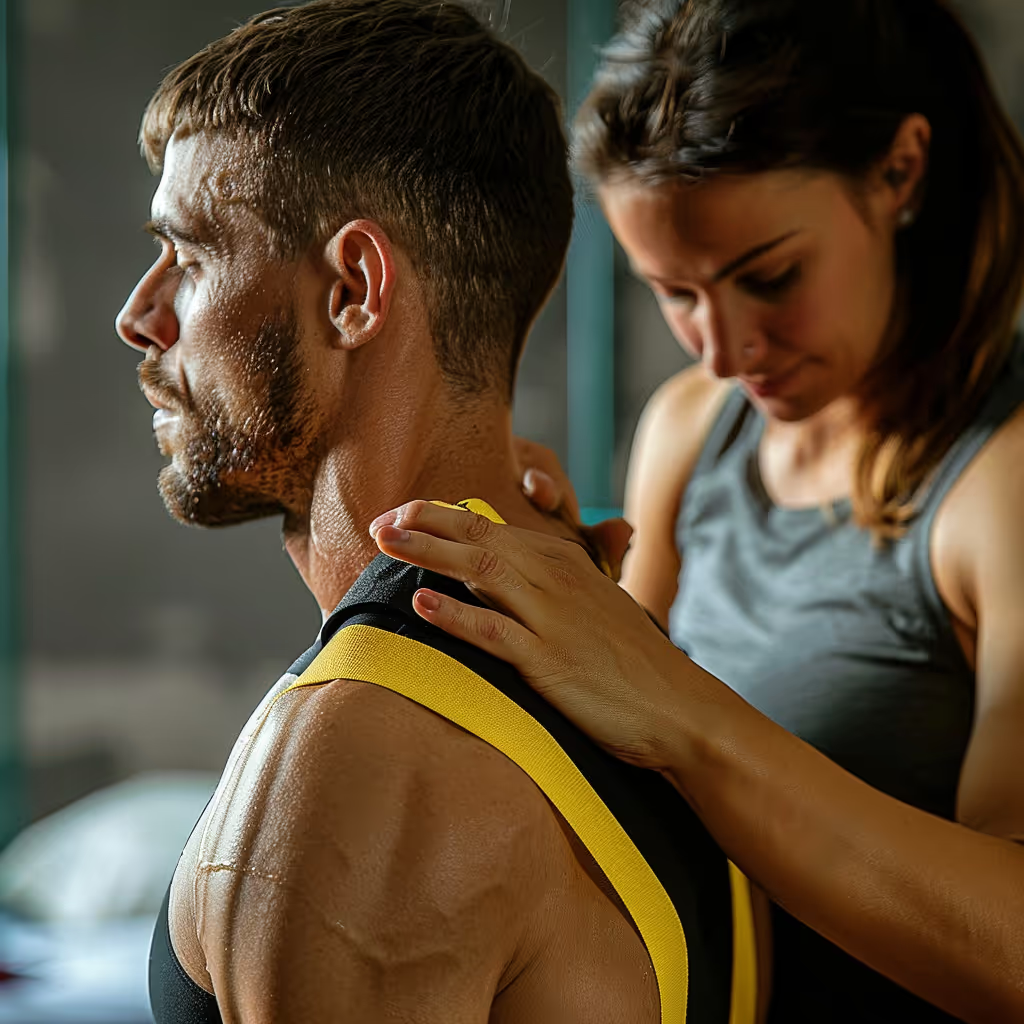
Physiotherapy improves joint mobility, strengthens protective muscles, and reduces pain through manual techniques and targeted exercises. Physiotherapists identify the underlying causes of joint problems (muscle weakness, poor biomechanics, capsular stiffness) and create a personalized treatment plan to restore optimal function.
Improved Mobility
One of the main goals of physiotherapy is to restore the joint's normal range of motion. Physiotherapists use joint mobilizations (gentle passive movements applied to the joint) to reduce stiffness and improve the gliding of joint surfaces.
These techniques are particularly effective for stiff joint capsules. Studies show that manual mobilization combined with stretching exercises can significantly improve joint range of motion in patients with capsulitis or post-traumatic stiffness.⁴
Active range of motion exercises (where the patient moves independently) complement passive mobilizations. They strengthen newly gained range of motion and help maintain long-term flexibility.
Protective Muscle Strengthening
Strong muscles around a joint reduce stress on cartilage and ligaments. They absorb some of the forces that would otherwise be directly transmitted to the joint. For people with osteoarthritis, muscle strengthening can significantly reduce pain.
Physiotherapists prescribe progressive strengthening exercises that target specific weakened muscles around the problematic joint. For the knee, this often includes the quadriceps and hamstrings. For the shoulder, it includes the rotator cuff and scapular stabilizers.
Strengthening does not worsen osteoarthritis, contrary to a common fear. Instead, it improves function and slows down the progression of wear and tear by optimizing how loads are distributed across the joint.
Pain relief
Physiotherapy uses several approaches to reduce joint pain. Manual techniques like soft tissue massage and joint mobilization activate pain control mechanisms in the nervous system.
Modalities such as ultrasound, heat, or cold can also temporarily relieve pain and facilitate exercises. Electrotherapy (TENS) can block pain signals and promote muscle relaxation.
However, lasting pain reduction primarily comes from correcting underlying causes: improving biomechanics, strengthening stabilizing muscles, and restoring normal mobility. Physiotherapists also teach you self-management strategies to control your symptoms between sessions.
Injury Prevention
You don't need to be injured to consult a physiotherapist. A preventive assessment can identify weaknesses, muscle imbalances, or biomechanical problems before they cause an injury.
Physiotherapists can optimize your movements for specific activities (sport, work), improve your posture, and teach you preventive exercises. This proactive approach is particularly useful if you are returning to an activity after a long break or if you have risk factors for osteoarthritis.
Need professional advice?
Our physical therapists can assess your condition and provide you with a personalized treatment plan.
Make an appointmentTo learn more about the full role of physiotherapy, consult our guide to physiotherapy.
Beyond professional treatment, you can also protect your joints in your daily life.
How to Protect Your Joints in Daily Life?
Protecting your joints daily involves reducing forces and stress on them, alternating between rest and activity, and adopting good postures and movement techniques. These simple strategies can significantly slow down joint wear and tear and prevent pain.
Reduce Force and Strain
Less stress on a joint means less long-term wear and tear. Use levers to increase your mechanical advantage. For example, to open a jar, use a jar opener instead of forcing it with your hands. Distribute loads across multiple joints instead of just one.
Carry heavy loads with both hands instead of just one. Use large joints (shoulder, hip) for lifting instead of small ones (fingers, wrist). Keep objects close to your body before lifting them to reduce the leverage on your joints.
These adjustments may seem minor, but they accumulate over thousands of daily movements. They can make a significant difference in preventing osteoarthritis, especially if you already have risk factors.
Avoid Prolonged Positions
Staying in the same position for a long time stiffens joints. Synovial fluid circulates less effectively, cartilage receives less nutrition, and the joint capsule slightly retracts. This is why you feel stiff after sitting for extended periods.
Change positions regularly, ideally every 30 minutes. If your job requires a static posture, take micro-breaks to move around. A few range of motion movements every hour help maintain joint lubrication.
For your neck, avoid spending more than 3 consecutive hours looking at your phone with your head tilted forward. This position puts enormous pressure on the cervical joints and can cause stiffness and chronic pain.
Balance Rest and Activity
A balance between rest and activity is essential for joint health. Too much rest weakens joints and muscles. Too much activity without recovery can damage them. The goal is to find the right balance.
Take breaks BEFORE you get exhausted. If you garden for hours without a break, your joints will be sore the next day. Taking short, frequent breaks allows you to continue the activity longer without overworking your joints.
After intense activity, give your joints time to recover. If you feel pain or stiffness that lasts more than 24 hours after an activity, it was likely too intense. Adjust the duration or intensity next time.
Joint protection techniques by region
For the neck: Keep your head straight and aligned with your torso. Adjust your computer screen height to eye level. Use a stand for reading instead of bending your head down.
For hands and wrists: Avoid repetitive movements without breaks. Use ergonomic tools that reduce strain on your fingers. Alternate between different tasks to avoid overworking the same joints.
For the knees: Avoid kneeling directly on hard surfaces. Use knee pads or a cushion. Climb stairs using your whole leg (hips and ankles), not just your knees.
These protection strategies are even more effective when combined with regular exercises.
What exercises help maintain joint health?
Range of motion exercises, muscle strengthening, and low-impact activities like swimming or cycling help maintain joint health. Practicing regularly 2 to 3 times a week for 10 to 15 minutes is enough to stimulate synovial fluid production and keep cartilage healthy.
Joint range of motion exercises
Range of motion exercises involve moving each joint through its full normal range of motion. They reduce stiffness, maintain the flexibility of the joint capsule, and stimulate synovial fluid circulation.
Perform shoulder rotations, knee flexions/extensions, ankle circles, and neck rotation movements. These simple exercises can be done in the morning upon waking or during work breaks.
Consistency is key. Even 5 minutes a day of range of motion exercises is more beneficial than one long session once a week. Daily movement maintains joint lubrication and prevents stiffness.
Muscle strengthening
Strong muscles protect joints by absorbing some of the forces transmitted to them. They also reduce the risk of joint instability and injuries. Strengthening doesn't need to be intense to be effective.
Start with bodyweight exercises or light resistance bands. Shallow squats strengthen the knees and hips. Rotator cuff exercises protect the shoulders. Glute bridges stabilize the pelvis and hips.
Gradually increase resistance over the weeks. Aim for 2 to 3 sessions per week with at least one rest day between sessions to allow for muscle recovery.
Low-Impact Activities
Low-impact activities like swimming, cycling, and walking are excellent for your joints. They stimulate synovial fluid production without putting excessive stress on the cartilage.
Swimming is particularly beneficial because buoyancy reduces the weight supported by your joints while allowing them to move through their full range of motion. Cycling keeps the knees moving without the impact of running.
Walking on soft surfaces (grass, dirt paths) is preferable to walking on asphalt or concrete. Start with short durations and gradually increase as tolerated.
Recommended Frequency and Duration
To maintain joint health, aim for a minimum of 2 to 3 sessions per week combining range of motion and strengthening exercises. Each session can last only 10 to 15 minutes if it is well-targeted.
Daily moderate physical activity is also important. 30 minutes of walking per day keeps joints lubricated and muscles active. This activity can be divided into several short periods throughout the day.
Avoid high-impact sports if you have risk factors for osteoarthritis (family history, previous injury, overweight). Football, basketball, and intensive running put a lot of stress on weight-bearing joints and can accelerate their wear and tear.
These preventive exercises are important, but sometimes professional intervention becomes necessary.
When should you consult a physiotherapist for your joints?
Consult a physiotherapist if you experience persistent joint pain for more than 2 weeks, limited movement affecting your daily activities, or signs of inflammation such as swelling, redness, or localized warmth. Physiotherapy can also play a preventive role before a problem becomes chronic.
Warning Signs That Require a Consultation
Pain that lasts more than 2 weeks without improvement, despite rest and self-care, warrants an evaluation. Persistent pain suggests an underlying issue that won't resolve on its own.
Functional limitation is an important sign: difficulty climbing stairs, lifting your arm, walking normally, or performing your daily activities. These limitations indicate that the joint is no longer functioning optimally.
Signs of inflammation (swelling, redness, warmth, constant pain even at rest) require prompt evaluation. They may indicate bursitis, inflammatory arthritis, or an infection that needs specific treatment.
The Preventive Role of Physiotherapy
You don't need to wait until you're injured to seek advice. A preventive assessment can identify biomechanical issues, muscle weaknesses, or imbalances that increase your risk of developing joint problems.
If you're returning to sports after a long break, have a family history of osteoarthritis, or are starting a new physically demanding job, a preventive assessment can help you optimize your movements and avoid injuries.
Physiotherapists can also teach you preventive exercises tailored to your specific risk factors. This proactive approach is much more effective than treating a problem once it has developed.
What a Physiotherapy Assessment Reveals
During an assessment, the physiotherapist evaluates your range of motion, muscle strength, joint alignment, and biomechanics. They identify any compensations your body has developed and structures that are overloaded.
This assessment allows for the creation of a personalized treatment plan that targets your specific issues. The physiotherapist can also reassure you if your symptoms are normal and only require minor adjustments to your habits.
In some cases, the physiotherapist may recommend a consultation with a doctor for further examinations (X-rays, MRI) if signs suggest a problem requiring more in-depth medical investigation.
What Should You Remember About Joints?
Joints are complex structures essential for every daily movement. Understanding how they work, the different types of joints, and the vital role of cartilage and synovial fluid helps you better protect your joint health.
Regular movement is your joints' best ally. It nourishes cartilage, maintains synovial fluid, and strengthens protective muscles. Combine moderate activity, daily protection strategies, and targeted exercises to preserve your joints long-term.
If you experience persistent pain, limited movement, or wish to optimize your joint health preventively, a physiotherapy consultation can guide you toward effective personalized strategies. Book an appointment at one of our 5 clinics in Greater Montreal for a complete assessment.
Customer satisfaction is our top priority
At Physioactif, excellence guides everything we do, but our patients are the best ones to tell you about it. Take a look at their verified reviews to get a real sense of their experience.












Discover our physical therapy clinics
We have locations in several areas to better serve you.
Blainville
190 Bas-de-Sainte-Thérèse Road, Suite 110,
Blainville, Quebec
J7B 1A7
Located in Blainville, near Rosemère, the Physioactif clinic is easily accessible to residents of the area and the surrounding communities
Laval
3224 Jean-Béraud Ave., Suite 220, Laval,
QC H7T 2S4
Located in Chomedey, in the heart of Laval, the Physioactif clinic is easily accessible to people in the area
Montreal
8801 Lajeunesse Street,
Montreal,
QC H2M 1R8
Located in Ahuntsic, near Villeray, the Physioactif clinic is easily accessible to residents of both neighborhoods
Saint-Eustache
180 25th Avenue, Suite
201 Saint-Eustache
QC J7P 2V2
Located in Saint-Eustache, the Physioactif clinic is easily accessible to residents of the area and the surrounding communities
Vaudreuil
21 Cité-des-Jeunes Boulevard, Suite 240,
Vaudreuil-Dorion, Quebec
J7V 0N3
Located in Vaudreuil-Dorion, the Physioactif clinic is easily accessible to people in the area
Make an appointment now