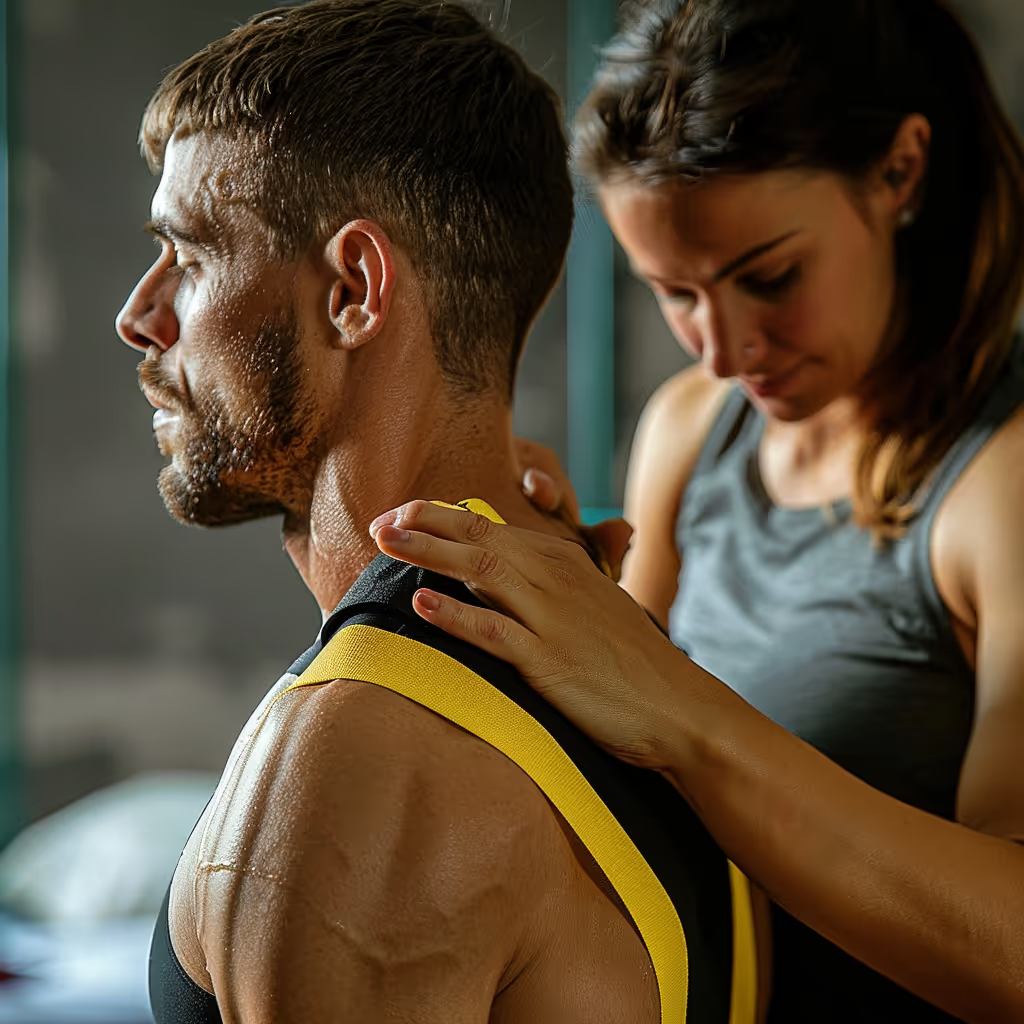


If you have ever experienced knee pain after a fall, a rapidly swelling ankle sprain, or concerning joint instability, you might wonder what happened inside your joint. As physiotherapists who treat ligament injuries (of the knee, ankle, and shoulder) daily, we find that many people don't know exactly what a ligament is or how it heals.
Good news: most ligament injuries (grades 1 and 2) heal completely without surgery. Studies show that 98% of medial collateral ligament (MCL) sprains of the knee recover with physiotherapy alone.¹ Even ligaments often considered fragile can heal with the right approach.
What research shows about ligaments:
- Early mobility aids healing: Contrary to the myth of complete rest, controlled movement stimulates ligament repair. Prolonged rest delays recovery.²
- Ligaments gradually strengthen: The remodeling phase lasts from 6 weeks to 6 months, during which the tissue regains up to 70-80% of its initial strength.³
- Prevention works: Multicomponent prevention programs reduce anterior cruciate ligament (ACL) injuries by 51 to 62%.⁴
This guide helps you understand what ligaments are, how they get injured, how they heal, and most importantly, how physiotherapy can optimize your recovery. You will also discover practical prevention strategies based on scientific evidence.
What is a Ligament?
A ligament is a band of dense connective tissue that connects one bone to another. It stabilizes joints by limiting excessive movements while allowing controlled mobility. The human body has over 900 ligaments, primarily concentrated in the limbs.⁵
Ligaments are primarily composed of type I collagen (about 75% of their solid material), elastin, and proteoglycans. These components make up about 33% of their mass, with the remaining 67% being water.⁶ This composition gives them a fibrous and resilient texture, similar to a rope or cord.
Some ligaments have an outer layer called the epiligament, which protects them and allows them to glide easily with surrounding tissues. This structure enables ligaments to absorb and redistribute mechanical forces during joint movements.
The vascularization (blood supply) of ligaments varies considerably. For example, the anterior cruciate ligament (ACL) in the knee has a poor blood supply, which makes its natural healing more difficult. Conversely, the medial collateral ligament (MCL) has an excellent blood supply, explaining why it heals so well without surgery.⁷
Now that you understand what a ligament is, let's look at how it works to keep your joints stable.
How Do Ligaments Work?
Ligaments provide passive stability to joints by limiting movement in certain directions. Unlike muscles, which actively generate movement, ligaments act as mechanical brakes that prevent excessive displacement that could damage the joint.⁸
Ligaments have viscoelastic properties. This means they can stretch slightly under tension and then return to their original shape when the tension is released. This controlled flexibility allows for a certain range of motion while protecting the joint from dangerous movements.
In addition to stabilizing limb joints (knee, ankle, shoulder, elbow), some ligaments support internal organs. For example, the ligaments of the liver and uterus help hold these organs in place.
Ligaments also contain sensory receptors called mechanoreceptors that detect joint position and movement. This information is transmitted to the brain to coordinate movements and prevent injuries. This is known as proprioception, a crucial sense for balance and coordination.⁹
Knowing how ligaments work, it's helpful to clarify a common confusion between ligaments and tendons.
What's the Difference Between Ligaments and Tendons?
Ligaments connect one bone to another bone, while tendons connect a muscle to a bone. This fundamental distinction determines their respective roles: ligaments provide joint stability, while tendons transmit muscle force to create movement.¹⁰
The internal structure also differs. The collagen fibers in ligaments are arranged in a crisscross pattern, which gives them multidirectional flexibility. Tendons have parallel fibers aligned in a single direction, optimized for transmitting significant tensile forces along a precise axis.¹¹
This structural difference explains why the terms used to describe injuries vary:
- Sprain: Injury to a ligament (stretch or tear)
- Strain: Injury to a tendon or muscle (stretch or tear)
Both types of tissues may appear visually similar, but their internal organization and function are distinct. Understanding this difference helps explain why an injured ligament requires a different rehabilitation approach than an injured tendon.
With this clarification made, let's now explore the types of ligament injuries.
What Are the Types of Ligament Injuries?
Ligament injuries are classified into three grades based on the severity of tissue damage. This classification guides treatment and helps estimate recovery time.¹²
Grade 1 (Mild Sprain):
The ligament is stretched, but the fibers remain intact. Pain is moderate, swelling is minimal, and the joint remains stable. Typical recovery: 1 to 3 weeks.
Grade 2 (Moderate Sprain, Partial Tear):
Some of the ligament fibers are torn. Pain is more intense, swelling is more noticeable, and the joint may show slight instability. Typical recovery: 3 to 6 weeks.
Grade 3 (Severe Sprain, Complete Tear):
The ligament is completely torn or detached from the bone. Initial pain can be intense (sometimes followed by numbness), swelling is significant, and the joint is unstable. Typical recovery: several months, sometimes up to a year if surgery is required.¹³
Ligament injuries generally occur during sudden movements, rapid changes in direction, joint twists, or direct trauma (impact). The ligaments of the knee (ACL, MCL, PCL, LCL) and ankle are among the most frequently injured, especially in athletes participating in sports involving pivoting and jumping.¹⁴
10 Quick Tips for Understanding Your Pain
The ones that have made the biggest difference in my patients' lives. 1 a day, 2 minutes.
The anterior cruciate ligament (ACL) deserves special mention. Due to its poor blood supply, complete ACL tears often require surgical reconstruction. If you wish to learn more about this specific injury, consult our guide on knee sprains and ACL tears. In contrast, the MCL, thanks to its abundant blood supply, heals naturally in 98% of Grade 1 and 2 cases.¹⁵
Understanding these grades helps contextualize the healing process that we will now explore.
How Do Ligaments Heal?
Ligament healing occurs in three distinct biological phases, each playing an essential role in tissue restoration. Understanding this process helps respect natural recovery times and avoid premature returns to activities.¹⁶
Inflammatory Phase (0 to 2 weeks):
Immediately after an injury, damaged blood vessels bleed into the injured area, forming a hematoma. Inflammatory cells arrive to clear away tissue debris. This phase is characterized by pain, swelling, warmth, and redness. This is a normal and necessary reaction to start the healing process.
Proliferation Phase (2 to 6 weeks):
Fibroblasts (specialized cells) begin producing new collagen to replace the damaged tissue. This initial collagen is disorganized and weak compared to the original collagen. During this phase, the tissue is fragile and needs protection from excessive stress.
Remodeling Phase (6 weeks to 6 months, sometimes longer):
The disorganized collagen gradually reorganizes itself along the lines of tension applied to the ligament. The tissue becomes stronger and more resilient. This is why a gradual return to activities with controlled loading is crucial: it guides the collagen's reorganization in the right direction.¹⁷
Several factors influence the speed and quality of healing:
- Age: Tissues regenerate more slowly with age
- General Health: Diabetes, smoking, and certain illnesses slow down healing
- Nutrition: Proteins, vitamin C, and zinc support collagen production
- Sleep: Tissue repair primarily occurs during sleep
- Associated Injuries: Associated injuries (cartilage, meniscus) complicate recovery¹⁸
The type of ligament affected also plays a major role. A Grade 2 MCL injury generally heals in 4 to 6 weeks with physiotherapy, while a completely torn ACL may require 9 to 12 months of post-surgical rehabilitation.¹⁹
Now that you understand the natural healing process, let's see how physiotherapy can optimize it.
How does physiotherapy help injured ligaments?
Physiotherapy is the first-line intervention for Grade 1 and 2 ligament injuries. Our approach combines pain and swelling control, gradual restoration of mobility, muscle strengthening, and proprioceptive training to ensure complete recovery and prevent recurrence.²⁰
Pain and Swelling Control (Initial Phase):
In the first few days following an injury, we use modalities like cryotherapy (ice), elevation, and compression techniques to reduce inflammation. Electrotherapy can also help manage acute pain.
Restoring Mobility:
Unlike the old recommendation for complete rest, we now know that early, controlled mobilization stimulates ligament healing. Movement improves blood circulation to the injured area and guides the organization of new collagen in the right direction. Prolonged rest, conversely, leads to joint stiffness and muscle weakness that delay recovery.²¹
Progressive Muscle Strengthening:
The muscles surrounding the injured joint play a protective role. We gradually progress from isometric exercises (contraction without movement) to controlled resistance exercises, and then to functional movements specific to your daily or sports activities.
Proprioceptive Training:
After a ligament injury, proprioception (the sense of joint position) is often impaired, increasing the risk of re-injury. We use balance and stabilization exercises to re-educate this sensory system. Exercises on unstable surfaces (balance board, cushion) are particularly effective.²²
For Grade 1 and 2 MCL sprains of the knee, conservative physiotherapy shows a 98% success rate, thus avoiding surgery in the vast majority of cases.²³ Even for more complex injuries, pre-surgical physiotherapy improves post-operative outcomes by maintaining muscle strength and mobility.
Adherence to the rehabilitation program is the most important factor for success. Patients who diligently follow their home exercises recover faster and experience fewer long-term complications.
Now that you understand how to treat a ligament injury, let's look at how to prevent them.
How to prevent ligament injuries?
Multi-component prevention programs significantly reduce the risk of ligament injuries, especially anterior cruciate ligament (ACL) tears. Studies show a 51% to 62% reduction in ACL injuries among athletes who regularly follow these programs.²⁴
Types of preventive exercises:
A comprehensive program integrates several complementary components:
- Plyometric Exercises: Controlled jumps and landings that train muscles to effectively absorb impacts
- Agility exercises: Controlled changes of direction, sudden stops, and pivots
- Muscle strengthening: Specifically targeting the hips, thighs (quadriceps and hamstrings), glutes, and core
- Proprioceptive training: Balance exercises on stable then unstable surfaces
- Flexibility: Stretches to maintain optimal range of motion²⁵
Appropriate movement technique:
The way you land after a jump or change direction directly influences the stress on your ligaments. Key principles include:
- Landing with knees aligned over your feet (avoiding knees collapsing inward)
- Slightly bending your knees, hips, and ankles to absorb impact
- Keeping your core stable and straight
- Distributing weight evenly on both legs when landing²⁶
Dynamic warm-up:
A 20-minute warm-up that includes dynamic exercises (not just static stretches) prepares muscles and ligaments for activity. This neuromuscular activation improves coordination and reduces the risk of injury during the subsequent activity.²⁷
High-risk groups:
Female athletes have a 4 to 6 times higher risk of ACL tears than their male counterparts. Anatomical differences (femoral angle, pelvic width), hormonal factors, and neuromuscular patterns (muscle recruitment patterns) explain this disparity. For these athletes, prevention programs are particularly crucial.²⁸
Sports involving rapid changes of direction, pivots, and jumps (soccer, basketball, volleyball, skiing) carry a high risk of ligament injuries. Prevention programs specific to these sports incorporate movements that mimic the demands of the activity.
Now that you know how to prevent injuries, it's helpful to have a timeline for recovery.
Need professional advice?
Our physical therapists can assess your condition and provide you with a personalized treatment plan.
Make an appointmentHow long does it take to recover from a ligament injury?
Recovery time varies considerably depending on the severity of the injury, the affected ligament, your age, your general health, and your adherence to the rehabilitation program. Here are typical timelines based on the sprain grade.²⁹
Grade 1 Sprain (mild):
- Full recovery: 1 to 3 weeks
- Return to light activities: 1 to 2 weeks
- Return to sport: 2 to 3 weeks (with physiotherapist's approval)
Grade 2 Sprain (moderate):
- Full recovery: 3 to 6 weeks
- Return to light activities: 2 to 4 weeks
- Return to sport: 6 to 8 weeks (with supervised progression)
Grade 3 sprain (severe, complete tear):
- Without surgery (if conservative treatment is possible): 8 to 12 weeks
- With surgery (ligament reconstruction): 6 to 12 months
- Return to competitive sport after surgery: 9 to 12 months minimum³⁰
Individual factors influencing recovery:
Several factors can speed up or slow down your healing:
- Previous injuries: A previously injured ligament may take longer to heal
- Associated injuries: Damage to cartilage, meniscus, or adjacent muscles prolongs recovery
- Adherence to the program: Patients who rigorously follow their exercises recover 30 to 40% faster³¹
- Nutritional status: Adequate intake of protein, vitamin C, and zinc supports healing
- Sleep quality: Tissue repair primarily occurs during deep sleep
- Smoking: Smoking reduces blood circulation and slows healing by 40 to 50%³²
Gradual return to activities:
Returning to sport or demanding activities should never be based solely on the absence of pain or a set timeline. Your physiotherapist will use functional tests to assess:
- Muscle strength (at least 90% of the uninjured leg)
- Full range of motion
- Joint stability
- Proprioception and balance
- The ability to perform sport-specific movements without limping or compensation³³
Returning too early increases the risk of re-injury by 2 to 6 times. Patience during rehabilitation is therefore an investment in your long-term health.
References
- Phisitkul P, et al. MCL injuries of the knee: current concepts review. Iowa Orthop J. 2006;26:77-90. https://pubmed.ncbi.nlm.nih.gov/16789454/
- Bleakley CM, et al. Management of acute soft tissue injury using protection, rest, ice, compression and elevation: recommendations from the Association of Chartered Physiotherapists in Sports and Exercise Medicine. Br J Sports Med. 2012;46(4):220-224. https://pubmed.ncbi.nlm.nih.gov/21821612/
- Frank CB. Ligament structure, physiology and function. J Musculoskelet Neuronal Interact. 2004;4(2):199-201. https://pubmed.ncbi.nlm.nih.gov/15615126/
- Myer GD, et al. The effects of plyometric versus dynamic stabilization and balance training on lower extremity biomechanics. Am J Sports Med. 2006;34(3):445-455. https://pubmed.ncbi.nlm.nih.gov/16282579/
- Cleveland Clinic. Ligaments: What They Are, Anatomy & Function. https://my.clevelandclinic.org/health/body/21604-ligament
- Woo SL, et al. Biomechanics of knee ligaments: injury, healing, and repair. J Biomech. 2006;39(1):1-20. https://pubmed.ncbi.nlm.nih.gov/16271583/
- Jacobson KE, Chi FS. Evaluation and treatment of medial collateral ligament and medial-sided injuries of the knee. Sports Med Arthrosc Rev. 2006;14(2):58-66. https://pubmed.ncbi.nlm.nih.gov/17135940/
- Physiopedia. Ligament. https://www.physio-pedia.com/Ligament
- Lephart SM, et al. Proprioception and neuromuscular control in joint stability. Hum Kinet. 2000.
- Benjamin M, et al. The skeletal attachment of tendons - tendon 'entheses'. Comp Biochem Physiol A Mol Integr Physiol. 2002;133(4):931-945. https://pubmed.ncbi.nlm.nih.gov/12485684/
- Kannus P. Structure of the tendon connective tissue. Scand J Med Sci Sports. 2000;10(6):312-320. https://pubmed.ncbi.nlm.nih.gov/11085557/
- Duthon VB, et al. Anatomy of the anterior cruciate ligament. Knee Surg Sports Traumatol Arthrosc. 2006;14(3):204-213. https://pubmed.ncbi.nlm.nih.gov/16235056/
- Noyes FR, Grood ES. The strength of the anterior cruciate ligament in humans and Rhesus monkeys. J Bone Joint Surg Am. 1976;58(8):1074-1082. https://pubmed.ncbi.nlm.nih.gov/1002748/
- Beynnon BD, et al. Ankle ligament injury risk factors: a prospective study of college athletes. J Orthop Res. 2001;19(2):213-220. https://pubmed.ncbi.nlm.nih.gov/11347693/
- Mook WR, et al. Management of medial-side knee injuries, part 1: medial collateral ligament. Am J Orthop. 2014;43(12):E319-E326. https://pubmed.ncbi.nlm.nih.gov/25490015/
- Lin TW, et al. Biomechanics of tendon injury and repair. J Biomech. 2004;37(6):865-877. https://pubmed.ncbi.nlm.nih.gov/15111074/
- Dunn MG, et al. Development of fibroblast-seeded ligament analogs for ACL reconstruction. J Biomed Mater Res. 1992;26(11):1363-1374. https://pubmed.ncbi.nlm.nih.gov/1447217/
- Huard J, et al. Muscle injuries and repair: current trends in research. J Bone Joint Surg Am. 2002;84(5):822-832. https://pubmed.ncbi.nlm.nih.gov/12004029/
- Wright RW, et al. Ipsilateral graft and contralateral ACL rupture at five years or more following ACL reconstruction. J Bone Joint Surg Am. 2011;93(12):1159-1165. https://pubmed.ncbi.nlm.nih.gov/21776554/
- Logerstedt D, et al. Knee pain and mobility impairments: meniscal and articular cartilage lesions. J Orthop Sports Phys Ther. 2010;40(6):A1-A35. https://pubmed.ncbi.nlm.nih.gov/20511698/
- Salter RB, et al. The biological effect of continuous passive motion on the healing of full-thickness defects in articular cartilage. J Bone Joint Surg Am. 1980;62(8):1232-1251. https://pubmed.ncbi.nlm.nih.gov/6777024/
- Lephart SM, et al. The role of proprioception in the management and rehabilitation of athletic injuries. Am J Sports Med. 1997;25(1):130-137. https://pubmed.ncbi.nlm.nih.gov/9006708/
- Petersen W, et al. Treatment of acute ankle ligament injuries: a systematic review. Arch Orthop Trauma Surg. 2013;133(8):1129-1141. https://pubmed.ncbi.nlm.nih.gov/23712708/
- Sugimoto D, et al. Prevention of anterior cruciate ligament injury in female athletes. Br J Sports Med. 2015;49(2):118. https://pubmed.ncbi.nlm.nih.gov/25248590/
- Hewett TE, et al. Reducing knee and anterior cruciate ligament injuries among female athletes. J Knee Surg. 2005;18(1):82-88. https://pubmed.ncbi.nlm.nih.gov/15742602/
- Krosshaug T, et al. Mechanisms of anterior cruciate ligament injury in basketball: video analysis of 39 cases. Am J Sports Med. 2007;35(3):359-367. https://pubmed.ncbi.nlm.nih.gov/17092928/
- Herman K, et al. The effectiveness of neuromuscular warm-up strategies. J Strength Cond Res. 2012;26(11):3134-3149. https://pubmed.ncbi.nlm.nih.gov/22344059/
- Hewett TE, et al. Biomechanical measures of neuromuscular control and valgus loading of the knee predict anterior cruciate ligament injury risk in female athletes. Am J Sports Med. 2005;33(4):492-501. https://pubmed.ncbi.nlm.nih.gov/15722287/
- Fong DT, et al. A systematic review on ankle injury and ankle sprain in sports. Sports Med. 2007;37(1):73-94. https://pubmed.ncbi.nlm.nih.gov/17190537/
- Barber-Westin SD, Noyes FR. Factors used to determine return to unrestricted sports activities after anterior cruciate ligament reconstruction. Arthroscopy. 2011;27(12):1697-1705. https://pubmed.ncbi.nlm.nih.gov/22137326/
- Grant JA, et al. Comparison of home versus formal physical therapy following total knee arthroplasty. J Bone Joint Surg Am. 2005;87(4):689-695. https://pubmed.ncbi.nlm.nih.gov/15805196/
- Silverstein P. Smoking and wound healing. Am J Med. 1992;93(1A):22S-24S. https://pubmed.ncbi.nlm.nih.gov/1497018/
- Grindem H, et al. Simple decision rules can reduce reinjury risk by 84% after ACL reconstruction. Br J Sports Med. 2016;50(13):804-808. https://pubmed.ncbi.nlm.nih.gov/27162233/
Customer satisfaction is our top priority
At Physioactif, excellence guides everything we do, but our patients are the best ones to tell you about it. Take a look at their verified reviews to get a real sense of their experience.











Discover our physical therapy clinics
We have locations in several areas to better serve you.
Blainville
190 Bas-de-Sainte-Thérèse Road, Suite 110,
Blainville, Quebec
J7B 1A7
Located in Blainville, near Rosemère, the Physioactif clinic is easily accessible to residents of the area and the surrounding communities
Laval
3224 Jean-Béraud Ave., Suite 220, Laval,
QC H7T 2S4
Located in Chomedey, in the heart of Laval, the Physioactif clinic is easily accessible to people in the area
Montreal
8801 Lajeunesse Street,
Montreal,
QC H2M 1R8
Located in Ahuntsic, near Villeray, the Physioactif clinic is easily accessible to residents of both neighborhoods
Saint-Eustache
180 25th Avenue, Suite
201 Saint-Eustache
QC J7P 2V2
Located in Saint-Eustache, the Physioactif clinic is easily accessible to residents of the area and the surrounding communities
Vaudreuil
21 Cité-des-Jeunes Boulevard, Suite 240,
Vaudreuil-Dorion, Quebec
J7V 0N3
Located in Vaudreuil-Dorion, the Physioactif clinic is easily accessible to people in the area
Make an appointment now