

Therapeutic Taping: A Complete Guide to K-Tape in Physiotherapy
CMS metadata:
- Meta Title: Therapeutic Taping: K-Tape in Physical Therapy
- Meta description: Kinesiology taping can provide short-term pain relief. Find out what the science says, how it works, and whether it’s effective.
- Slug: therapeutic taping
- Collection: Resources
- Author: Ariel Desjardins Légaré, PHT
- Scientifically reviewed by: Ariel Desjardins Légaré, PHT
Introduction
You’ve probably seen those colorful strips on athletes or your coworkers. Maybe your physical therapist has suggested taping for your knee or shoulder pain. You’re wondering if these adhesive strips can really help, or if it’s just a fad. As physical therapists who use taping in our practice, we understand these concerns.
Good news: Kinesio taping can provide short-term relief for certain musculoskeletal pain, with minimal risk of side effects.1 More than 70% of healthcare professionals use it to manage pain and improve proprioception.2
What science tells us may come as a surprise:
- The effectiveness is modest but real: Taping provides short-term pain relief, but is generally no more effective than a placebo or other treatments.3
- Most effective as an adjunct: Taping works best when combined with therapeutic exercises rather than used on its own.4
- The placebo effect matters: 45% of users feel stronger with taping, even in the absence of measurable objective differences.5
- A safe option: Taping carries a minimal risk of side effects and can be worn for several days.6
This guide explores what taping is, how it works according to theory and research, the conditions it treats, and what happens during a session. To learn more about the different approaches in physical therapy, check out our comprehensive guide.
What is therapeutic taping?
Therapeutic taping (K-tape or Kinesio Tape) is a technique that uses colored elastic adhesive strips applied to the skin to support muscles and joints, improve circulation, and potentially reduce pain during rehabilitation or athletic activity.
This technique was developed in the 1970s by Japanese chiropractor Dr. Kenzo Kase, who was looking for a way to prolong the benefits of his manual treatments between sessions. Unlike rigid bandages that restrict movement, taping allows for a full range of motion while providing support.
The bands have several distinctive features:
Elasticity: The bands stretch up to 140% of their resting length, mimicking the natural elasticity of the skin and muscles. This property allows the muscle to move freely while providing support.
Medical adhesive: A heat-activated acrylic adhesive is applied in a wavy pattern. This adhesive is activated by body heat and friction during application.
Water resistance: The strips are water-resistant, so you can shower, swim, and sweat. They typically last 3 to 5 days.
Various colors: Although available in several colors (black, blue, pink, beige), the color has no therapeutic effect. It is purely for aesthetic purposes.
Taping is now used in sports physical therapy and in the rehabilitation of various musculoskeletal conditions. Its popularity skyrocketed after the 2008 Olympic Games in Beijing.
How does therapeutic taping work?
Taping is thought to work by gently lifting the skin, which improves blood and lymphatic circulation, modulates pain signals, and provides proprioceptive support to the muscles without restricting movement.
These mechanisms are primarily based on theoretical assumptions. Although widely accepted in practice, some have not been systematically confirmed by research.7
Skin lifting
When the tape is applied with slight tension to stretched skin, and the skin then returns to its normal position, the tape forms ripples on the surface. These ripples are thought to create a microscopic space between the skin and the underlying tissues, allowing:
- Reduced pressure on mechanoreceptors
- Improved circulation of interstitial fluids
- Relief of pressure on pain-sensitive nerve endings
Improved traffic flow
The elevation would facilitate lymphatic drainage by creating low-pressure channels through which lymph flows more easily. This would explain why taping sometimes reduces swelling after an injury or surgery.
The subcutaneous space would also improve blood flow in the capillaries, delivering more oxygen to injured tissues.
Modulation of pain signals
According to the "gate control" theory, taping is thought to activate mechanoreceptors in the skin that transmit tactile signals to the central nervous system. These signals are believed to "close the gate" to pain signals coming from the same area.
Taping is thought to provide continuous tactile stimulation that modulates the transmission of pain signals.
Proprioceptive support
Proprioception is the ability to sense your body's position and movement in space. Taping is said to provide constant tactile feedback, increasing body awareness and helping to correct dysfunctional movement patterns.
This increased proprioceptive stimulation is thought to help:
- Maintain better posture
- Engage the right muscles at the right time
- Avoid movements that make the condition worse
Lightweight muscle support
K-tape is said to provide directional support to weakened muscles while allowing for a normal range of motion. When applied along the direction of the muscle fibers, it is said to facilitate contraction. When applied perpendicular to the muscle fibers, it is said to inhibit an overactive muscle.
Note: Although these mechanisms are theoretically plausible, some studies have found no significant difference in muscle blood flow with taping.8 The effectiveness may result from a combination of these mechanisms and placebo effects.
10 Quick Tips for Understanding Your Pain
10 Quick Tips for Understanding Your Pain
The ones that have made the biggest difference in my patients' lives. 1 a day, 2 minutes.
What conditions are treated with kinesiology taping?
Taping is used to treat various musculoskeletal conditions, including chronic low back pain (for which there is the strongest scientific evidence), tendonitis, patellofemoral syndrome, joint sprains, neck pain, and post-traumatic swelling.
Conditions with a higher level of evidence
Chronic low back pain: This is the condition with the highest level of scientific evidence. Kinesio Taping combined with physical therapy provides greater benefits than physical therapy alone in reducing pain and improving function in the short and medium term.9
If you suffer from lower back pain, kinesiology taping can be a useful complement to therapeutic exercises.
Commonly Treated Conditions
Patellofemoral syndrome (knee pain): Taping helps keep the kneecap (patella) properly aligned with the thighbone, reducing pain and irritation. This technique is popular among runners and athletes.10 See our guide on knee pain for more information.
Tendinitis: Kinesiology taping is frequently used for tendinitis of the shoulder (rotator cuff, biceps), knee (patellar, pes anserinus), and ankle (Achilles). It is believed to provide support to the tendon while allowing for movement. If you have shoulder tendinitis, ask your physical therapist if taping might help.
Joint Sprains: After an ankle or knee sprain, taping provides gentle structural support while allowing for early mobilization. It facilitates a gradual return to normal activities.
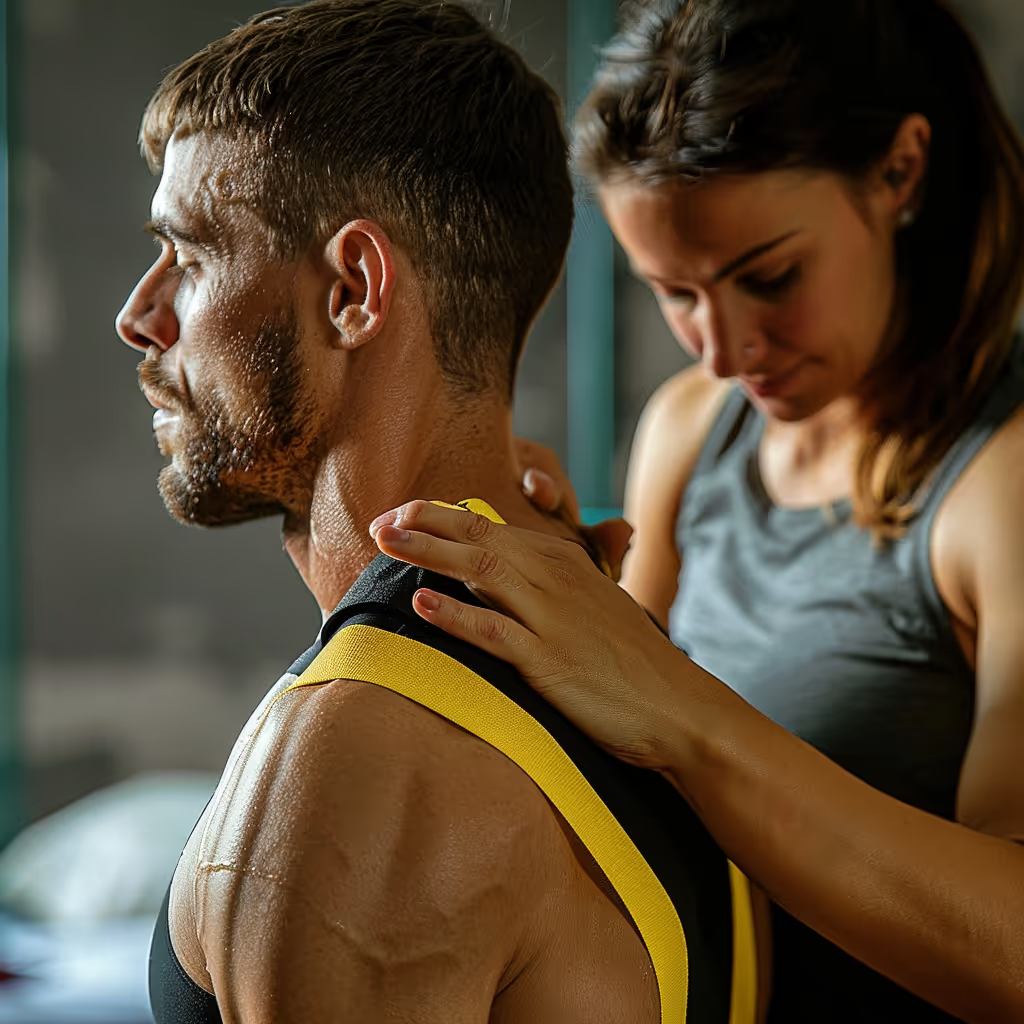
Neck pain: Kinesiology tape is applied to the neck and upper back muscles to reduce muscle tension and improve posture. This is helpful for people who spend long hours working at a computer.
Muscle pain: Muscle pain caused by overuse, tension, or spasms can be alleviated with taping. It helps relax overactive muscles or facilitates the activation of weakened muscles.
Edema and swelling: Lymphatic taping uses specific techniques to promote the drainage of edema following injury, surgery, or in certain medical conditions.
Contraindications
Taping is NOT recommended in these situations:
Open wounds: Never apply to broken, cut, or scraped skin.
Skin infections: Any skin infection (cellulitis, impetigo) is an absolute contraindication.
Allergies to adhesives: Some people are allergic to acrylic adhesives. A patch test should be performed before full application.
Delicate skin: Older adults or those taking long-term corticosteroids may have delicate skin that is prone to tearing when the dressing is removed.
Deep vein thrombosis: The presence of a blood clot in the deep veins is a contraindication, as taping could theoretically dislodge the clot.
For more complex conditions affecting the shoulder, your physical therapist will determine whether taping is appropriate. An understanding of knee anatomy or shoulder anatomy can also help you understand how taping works.
What happens during a therapeutic taping session?
During a session, the physical therapist assesses your condition, prepares the skin (cleans and dries it), applies the tape using specific techniques with the appropriate tension, and then provides instructions on how to wear it (usually for 3–5 days).
Initial Assessment
Before any treatment, your physical therapist will conduct a comprehensive evaluation:
Assessment: Discussion of your symptoms, history of the injury, and activities that worsen or relieve the pain. This evaluation determines whether taping is appropriate.
Physical examination: Tests of range of motion and muscle strength, palpation of painful areas, and specific orthopedic tests.
Setting Goals: Taping can be used for various purposes:
- Structural support (to stabilize a joint)
- Muscle facilitation (assisting a weakened muscle)
- Muscle inhibition (relaxing an overactive muscle)
- Postural correction
- Lymphatic drainage (to reduce swelling)
- Pain Modulation
The choice of technique depends on the main objective.
Preparing the skin
Proper preparation is essential to ensure optimal adhesion and prevent irritation:
Cleaning: The area is cleaned with alcohol or mild soap to remove oils, lotions, and sweat. Clean skin allows for better adhesion.
Thoroughly dry: The skin must be completely dry. Any moisture will reduce adhesion.
Shaving if necessary: For areas with heavy hair growth, shaving may be recommended. However, it is not always necessary. The tape generally adheres well even with short hair.
Positioning: The joint or muscle is placed in a specific position—often in a stretched position—before the tape is applied. This initial position determines the effect of the taping once the skin returns to its neutral position.
Application of Kinesio Taping
Choosing a color: Although color has no therapeutic effect, the choice can have a positive psychological impact. Some people prefer colors that match their clothes, while others choose bright colors.
Cutting the strips: The strips are cut into different patterns depending on the intended use:
- "I"-shaped strip: a simple straight strip
- Y-shaped strip: a strip split in two at one end
- "X" pattern: two intersecting bands
- "Fan-shaped" band: multiple slits for lymphatic drainage
Application with appropriate tension: The applied tension ranges from 0% (no tension) to 75% of maximum stretch, depending on the desired effect:
- 0–15%: for lymphatic drainage
- 25–35%: for muscle facilitation or inhibition
- 50–75%: for structural support or mechanical correction
The ends (anchors) are always applied without tension to prevent them from coming loose.
Direction of application: The direction has a theoretical meaning:
- Along the direction of the muscle fibers: muscle facilitation
- Against the grain: muscle inhibition
- Perpendicular to the fibers: postural correction or decompression
Activating the adhesive: The physical therapist rubs the tape vigorously to activate the heat-activated adhesive. The friction generates heat, improving adhesion.
Post-application instructions
Important instructions after application:
Duration of use: The tape can generally be worn for 3 to 5 days. After this time, the adhesive loses its effectiveness and the tape begins to peel off.
Recommended activities: The tape is designed to be worn during your normal daily activities, including exercise, work, and sleep.
Water resistance: You can shower while wearing the tape. After showering, gently pat yourself dry. Avoid long baths or swimming in chlorinated water.
Warning signs: Remove the tape immediately if you experience:
- Severe itching
- Skin redness that extends beyond the edges
- Burning sensation
- Numbness or tingling
- Increased pain
Removing the tape: To remove it painlessly:
- Apply oil (baby oil, olive oil) along the edges
- Pull slowly in the direction of hair growth
- Pull the strip toward itself (parallel to the skin) rather than upward
- Remove it in the shower or after wetting the strip
For specific conditions, such as those treated in physical therapy for knee pain, taping will be incorporated into a comprehensive treatment plan.
Is therapeutic taping really effective?
Scientific studies show that taping can provide short-term relief from musculoskeletal pain, but its effectiveness is generally no greater than that of a placebo or other treatment modalities.
This section provides an honest overview of what the research tells us about the effectiveness of taping. It is important to understand both the potential benefits and the limitations.
What the research says
Short-term effectiveness for pain relief: Several studies have shown that taping can reduce pain in the short term (ranging from a few days to a few weeks).11 However, this reduction is often modest and comparable to that achieved with placebo interventions.
No better than placebo: A 2014 systematic review concluded that Kinesio Taping was no more effective than sham taping (placebo) in the majority of studies.12 When differences were observed, the effect sizes were small and likely not clinically significant.
No superior to other modalities: Compared to manual therapy, exercises, electrotherapy, or no treatment, taping generally does not show clear superiority.13 It is no more effective than conventional taping techniques.14
Best evidence: chronic low back pain in combination: The only high-level evidence pertains to the use of taping for chronic low back pain in combination with rehabilitation. In this context, taping combined with exercises offers more pronounced effects than exercises alone in reducing pain and improving function in the short and medium term.15
No effect on athletic performance: Contrary to popular belief, studies have not shown that taping improves athletic performance. Research has shown that it does not affect jump height or performance in soccer players.16
The placebo effect is significant
45% of users feel stronger: In a study, 45% of participants reported feeling stronger while using K-Tape, despite the absence of any measurable objective differences.17 This placebo effect represents a real psychological benefit.
Expectations influence the outcome: If you believe that taping will help you, you are more likely to actually feel a benefit. Positive expectations can influence pain perception and increase confidence in movement.
The placebo effect has therapeutic value: Even if the effect of taping is largely due to the placebo effect, that does not make it useless. A placebo effect that allows a patient to move with less fear, participate more actively in their rehabilitation, and experience less pain in the short term can have real therapeutic value.18
Need professional advice?
Our physical therapists can assess your condition and provide you with a personalized treatment plan.
Make an appointmentEvidence-based recommendations
Use as an adjunct, not as a standalone treatment: Taping should never be the only intervention. It works best when incorporated into an active rehabilitation program that includes therapeutic exercises, education, and activity modifications.19
More effective when combined with exercise: The strongest evidence comes from studies in which taping was used in combination with other interventions, particularly strengthening and motor control exercises.20
Acceptable short-term relief: If taping allows a patient to maintain or resume their activities with less pain while they address the underlying causes, it is a reasonable approach.
Minimal risk, low cost: Taping carries a very low risk of serious side effects (primarily skin irritation) and is relatively inexpensive. This favorable risk-benefit ratio makes it a reasonable option as a complementary treatment.
Our clinical position
In light of this evidence, our approach at Physioactif is to:
- Using taping as a supplement to an active exercise program
- Assess effectiveness on an individual basis
- Never present taping as a "miracle cure"
- Prioritize education and therapeutic exercises as cornerstones of treatment
- Recognize the placebo effect as a legitimate component of care
Taping can be a useful tool, but it is just one tool among many. Our goal is always to help you understand your condition and develop the independence you need to manage your musculoskeletal health in the long term.
Our physical therapists can assess your condition and provide you with a personalized treatment plan.
FAQ on Kinesio Taping
How long should the tape stay on?
Usually 3 to 5 days. The tape is water-resistant but gradually loses its adhesive properties. After 5 days, most of the tape begins to peel off on its own.
Can you shower while wearing kinesiology tape?
Yes, the tape is water-resistant. You can shower as usual. After showering, pat the tape dry gently with a towel rather than rubbing it vigorously.
Does taping hurt?
No, when applied correctly, it should not cause pain. You should feel a slight tugging sensation on the skin and perhaps a feeling of support, but no pain. If you experience pain, severe itching, a burning sensation, or if the skin becomes red, remove it immediately.
What is the difference between K-tape and rigid taping?
K-tape is elastic and allows for full range of motion. It is designed to be worn for several days, is water-resistant, and is primarily intended to manage pain and improve proprioception.
Rigid taping (McConnell or traditional athletic taping) uses non-elastic tape to restrict movement. It is typically applied before physical activity and removed afterward. Its primary purpose is mechanical stabilization.
Who can apply therapeutic tape?
Physical therapists trained in taping techniques are the most qualified professionals. Specific training is strongly recommended to ensure optimal and safe application.
Proper implementation requires:
- In-depth understanding of musculoskeletal anatomy
- Accurate clinical assessment of the condition
- Knowledge of various techniques depending on the therapeutic goal
- Ability to determine the appropriate tension, direction, and pattern
Does the color of the tape have a therapeutic effect?
No, the color is purely aesthetic. The mechanical and adhesive properties are identical regardless of the color. No scientific research has demonstrated any therapeutic difference between the colors.
Can you exercise while wearing kinesiology tape?
Yes, not only can you exercise while wearing kinesiology tape, but that is often the main goal. Kinesiology tape is designed to be worn during physical activity. It allows for a full range of motion while providing support and pain relief.
Taping is popular in running, volleyball, basketball, tennis, swimming, and contact sports.
How can I remove the tape without causing pain?
To remove comfortably:
-
Use oil: Apply baby oil, olive oil, or coconut oil along the edges. The oil will dissolve the adhesive.
-
Remove it in the shower: Warm water helps soften the adhesive. Start peeling up a corner in the shower and slowly remove it.
-
Pull in the direction of hair growth: Slowly remove the hair in the direction it grows, never against it.
-
Pull parallel to the skin: Fold the tape over itself and pull it parallel to the skin's surface rather than perpendicular to it.
-
Take it slow: The slower you remove it, the less uncomfortable it will be.
Is kinesiology taping covered by insurance?
In most cases, yes. Taping is generally considered part of physical therapy treatment and is included in the cost of the session. There are usually no specific additional fees.
Check with your insurance provider to find out how many sessions are covered each year and the reimbursement rate.
Are there any side effects to taping?
Side effects are generally rare and minor:
Skin irritation: This is the most common side effect. It may cause redness, itching, or a burning sensation under the patch. If this occurs, remove the patch immediately.
Allergic reaction: Some people are allergic to the adhesive. Symptoms include a rash, severe itching, or hives.
Blisters or skin tears: Rare, but may occur in people with very sensitive skin or if the tape is removed too abruptly.
Discomfort or restriction: If applied too tightly, it may cause discomfort, restriction, or numbness. This indicates that it has been applied incorrectly.
Overall, taping is considered a very low-risk procedure. Serious side effects are extremely rare.
Conclusion
Therapeutic taping is a treatment modality that can provide short-term pain relief and support during rehabilitation, particularly when combined with therapeutic exercises. Although research suggests that its effectiveness is no greater than that of a placebo in many cases, the placebo effect itself has real therapeutic value that should not be overlooked.
At Physioactif, we use kinesiology taping as one tool among many in our comprehensive approach to rehabilitation. We believe in the importance of evidence-based practice, which means being transparent about the limitations of kinesiology taping while recognizing its role as a potentially useful adjunct in certain clinical situations.
If you are experiencing musculoskeletal pain and are wondering whether taping might help, we invite you to consult one of our physical therapists for a comprehensive evaluation. We can determine whether taping is appropriate for you and, more importantly, help you develop an active rehabilitation program that addresses the underlying causes of your condition.
To learn more about our therapeutic approaches, check out our comprehensive guide to physical therapy.
References
-
Ahchealthenews.com. (2026). Is kinesiology tape a secret weapon for pain relief? https://www.ahchealthenews.com/2026/01/05/kinesiology-tape-pain-relief-secret-weapon/
-
Kase JC, Tatsuyuki H, Tomoki O. Development of Kinesio Tape. Kinesio Taping Perfect Manual. Kinesio Taping Association. 1996.
-
Williams S, Whatman C, Hume PA, Sheerin K. Kinesio taping in the treatment and prevention of sports injuries: a meta-analysis of the evidence for its effectiveness. Sports Med. 2012;42(2):153-164.
-
NeuroXtrain. Kinesio Tape (KT): Between Misuse and Common Misconceptions, What Does the Literature Say? https://www.neuroxtrain.com/articles/644/
-
NeuroXtrain. Kinesio Tape (KT): Between Misuse and Common Misconceptions, What Does the Literature Say? https://www.neuroxtrain.com/articles/644/
-
Ahchealthenews.com. (2026). Is kinesiology tape a secret weapon for pain relief? https://www.ahchealthenews.com/2026/01/05/kinesiology-tape-pain-relief-secret-weapon/
-
Kalron A, Bar-Sela S. A systematic review of the effectiveness of Kinesio Taping. Eur J Phys Rehabil Med. 2013;49(5):699-709.
-
University of Delaware. Kinesio Tape: Does It Really Work? https://sites.udel.edu/coe-engex/2019/05/06/kinesio-tape-does-it-really-work/
-
NeuroXtrain. Kinesio Tape (KT): Between Misuse and Common Misconceptions, What Does the Literature Say? https://www.neuroxtrain.com/articles/644/
-
Warden SJ, Hinman RS, Watson MA Jr, Avin KG, Bialocerkowski A, Crossley KM. Patellar taping and bracing for the treatment of chronic knee pain: a systematic review and meta-analysis. Arthritis Rheum. 2008;59(1):73-83.
-
Mostafavifar M, Wertz J, Borchers J. A systematic review of the effectiveness of kinesio taping for musculoskeletal injuries. Phys Sportsmed. 2012;40(4):33-40. https://pubmed.ncbi.nlm.nih.gov/23306413/
-
Parreira Pdo C, Costa Lda C, Hespanhol LC Jr, Lopes AD, Costa LO. Current evidence does not support the use of Kinesio Taping in clinical practice: a systematic review. J Physiother. 2014;60(1):31-39. https://www.sciencedirect.com/science/article/pii/S1836955314000095
-
Kalron A, Bar-Sela S. A systematic review of the effectiveness of Kinesio Taping. Eur J Phys Rehabil Med. 2013;49(5):699-709.
-
Health Online. Kinesio Taping: Effective or Just a Placebo Effect? https://www.sante-sur-le-net.com/kinesio-taping-efficace-effet-placebo/
-
NeuroXtrain. Kinesio Tape (KT): Between Misuse and Common Misconceptions, What Does the Literature Say? https://www.neuroxtrain.com/articles/644/
-
University of Delaware. Kinesio Tape: Does It Really Work? https://sites.udel.edu/coe-engex/2019/05/06/kinesio-tape-does-it-really-work/
-
NeuroXtrain. Kinesio Tape (KT): Between Misuse and Common Misconceptions, What Does the Literature Say? https://www.neuroxtrain.com/articles/644/
-
Painscience.com. Kinesio Taping: The Science in Detail. https://www.painscience.com/articles/kinesio-taping.php
-
Access Training. Taping for Musculoskeletal Pain: Techniques, Benefits, and Scientific Studies. https://www.accesformation.fr/post/taping
-
Access Training. Taping for Musculoskeletal Pain: Techniques, Benefits, and Scientific Studies. https://www.accesformation.fr/post/taping
Customer satisfaction is our top priority
At Physioactif, excellence guides everything we do, but our patients are the best ones to tell you about it. Take a look at their verified reviews to get a real sense of their experience.











Discover our physical therapy clinics
We have locations in several areas to better serve you.
Blainville
190 Bas-de-Sainte-Thérèse Road, Suite 110,
Blainville, Quebec
J7B 1A7
Located in Blainville, near Rosemère, the Physioactif clinic is easily accessible to residents of the area and the surrounding communities
Laval
3224 Jean-Béraud Ave., Suite 220, Laval,
QC H7T 2S4
Located in Chomedey, in the heart of Laval, the Physioactif clinic is easily accessible to people in the area
Montreal
8801 Lajeunesse Street,
Montreal,
QC H2M 1R8
Located in Ahuntsic, near Villeray, the Physioactif clinic is easily accessible to residents of both neighborhoods
Saint-Eustache
180 25th Avenue, Suite
201 Saint-Eustache
QC J7P 2V2
Located in Saint-Eustache, the Physioactif clinic is easily accessible to residents of the area and the surrounding communities
Vaudreuil
21 Cité-des-Jeunes Boulevard, Suite 240,
Vaudreuil-Dorion, Quebec
J7V 0N3
Located in Vaudreuil-Dorion, the Physioactif clinic is easily accessible to people in the area
Make an appointment now