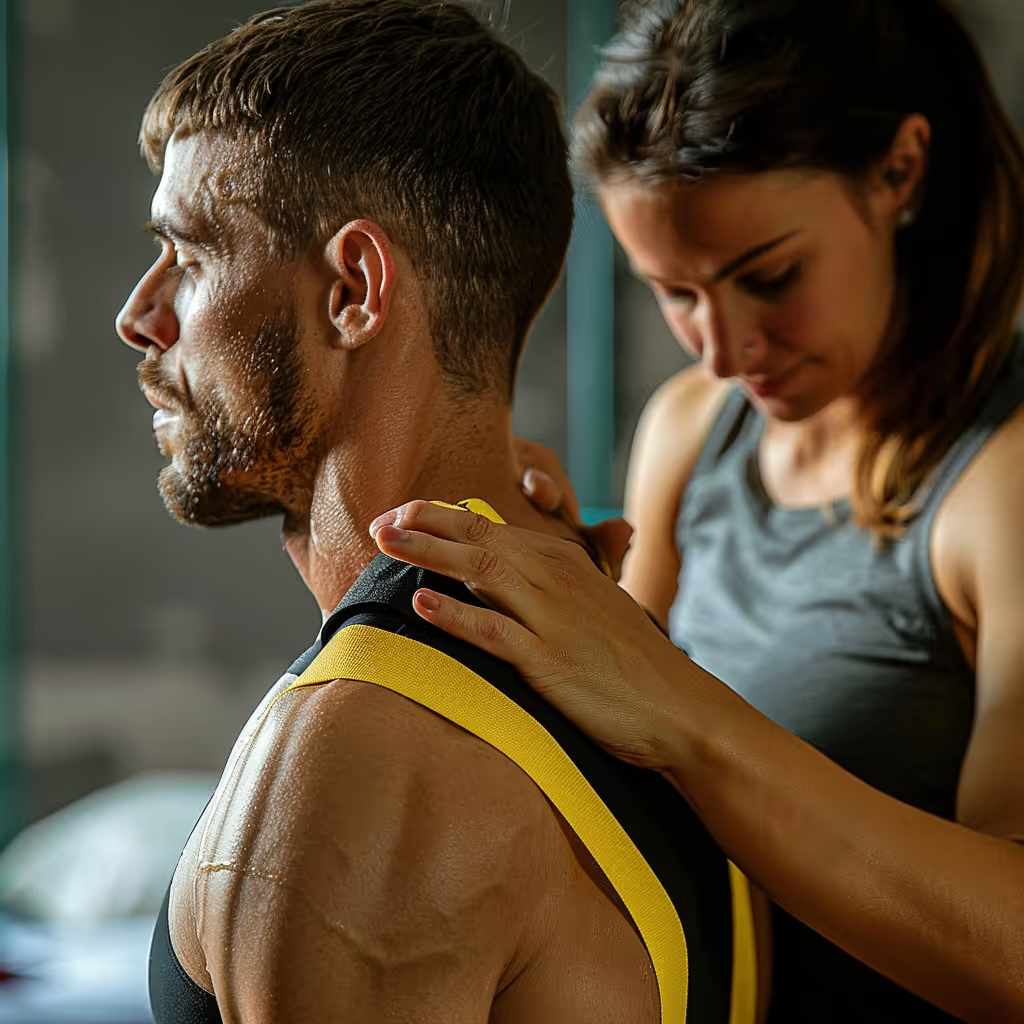


You've tried several treatments for your pain, and perhaps some have offered temporary relief, but nothing seems to "fix" the problem for good. This search for a miracle solution can be exhausting, especially when pain affects your work, hobbies, and relationships.
Your participation matters: Programs that teach people how to manage chronic pain may provide some short-term relief from pain and improve daily functioning. They may also slightly boost participants’ confidence in their ability to manage their condition. These average gains remain modest.1.10 Quick Tips to Understand Your Pain
One tip a day for 10 days to help you better understand your pain. About a 2-minute read.
- Active approaches involve you in your treatment, for example through exercises and strategies to better manage pain. They are among the options being studied for chronic lower back pain2.
- A workout may temporarily reduce the pain caused by a test in people without chronic pain. This effect depends on the type of exercise and remains uncertain in people who live with chronic muscle or joint pain3. This finding alone does not demonstrate which neural mechanism accounts for the benefits of exercise.
- Pacing activities can help stabilize the level of activity and reduce fatigue-related difficulties. However, studies do not show a direct reduction in pain intensity4.
- Combining multiple strategies does not guarantee additional benefits. In one review, adding cognitive-behavioral therapy—which focuses on thoughts and habits—to exercise yielded mixed results. After excluding studies with exceptionally large effects, the benefit for pain was no longer clear immediately after treatment. Small improvements in pain and activity levels persisted at follow-up5.
This guide presents strategies for better managing chronic pain. For a quick overview, you can also check out our quick tips for understanding pain. To understand the role of the nervous system, see our article on the neuroscience of pain.
How Can You Take an Active Role in Managing Your Pain?
You can play an active role in managing your pain by adjusting your activities, exercising regularly, and taking care of your sleep and social connections. A healthcare professional can help you set realistic goals.
Chronic pain can make you feel as though you’re losing control of your life. Self-management programs teach ways to manage activities and symptoms. Their average benefits in terms of pain, activities, and confidence in one’s abilities are modest1.
You can try one strategy at a time, observe its effect on your activities, and adjust your plan with your physical therapist.
What is the difference between active and passive approaches?
Active approaches require your participation, while passive approaches are administered by another person or a device. The choice of treatment depends on the therapy and your condition. Research on chronic low back pain does not provide evidence that one category is always superior tothe other.², ⁶
Two Ways to Participate in Care
Passive approaches:Passive approaches include massage, manual therapy, medications, andelectrotherapy, which uses an electric current. Massage may improve pain and short-term functional ability in some cases of low back pain. The duration of the benefits varies depending on the treatment with which it is compared, and the evidence is uncertain6. Research on electrostimulation is based on very low-quality evidence7.
Active approaches:Active approaches include exercise, stress management, and lifestyle changes. Exercise can reduce pain and improve function in many chronic conditions. The average effects are often small to moderate and vary by condition; follow-up periods rarely exceed one year8.
A massage can be part of an active program when this combination is appropriate for your situation. Exercises, advice, and a return to activities are central to the physical therapy plan.
Why is exercise helpful for managing pain?
Exercise can help manage pain by improving your ability to perform daily activities. Exercise programs often result in small to moderate improvements in pain and physical function, with varying effects on well-being8. Whether there is an immediate reduction in pain sensitivity after a session remains unclear in people living with chronic pain3.
Why Move When You're in Pain?
Appropriate exercise can help you resume important activities, even when pain persists:
- A session may temporarily reduce sensitivity to a painful test in a healthy person. The effect remains uncertain in the presence of persistent pain3
- Exercise can improve your endurance and your ability to move.
- A gradual return to activity can help you regain ease of movement. Your nervous system plays a role in controlling these movements.
- Physical activity can contribute to your well-being.
- Gradual goals can help build your confidence in your abilities.
On average, more active adults have lower levels of certain markers of inflammation in their blood. This association does not prove that physical activity is the cause of this difference9.
How to Move Smartly
Start smallIf you haven't been active for a long time, start with a short period of light, comfortable activity. You can walk, swim, or do gentle exercises.
Progress graduallyIncrease the volume and intensity in small increments, based on your tolerance rather than a fixed percentage.
Balance Your Activities (see the next section).Spread out your efforts to avoid large fluctuations from day to day.
Accept some discomfortA little pain during exercise doesn't automatically mean you're getting injured. Adjust your effort to keep symptoms manageable. Unusual pain or pain that gets worse warrants a reevaluation.
Recognize how much activity you can handleThe amount of activity you can tolerate may vary depending on the day, how well you’ve slept, and your symptoms. A decrease in this tolerance does not, on its own, indicate an injury or a specific neurological mechanism. Persistent pain cannot automatically be explained by increased sensitivity of the nervous system10. Adjust your activity level and progress based on how your body responds.
For chronic low back pain, this review did not identify any type of exercise that was clearly superior to the others11. Choose an activity that you enjoy, that you can adapt to your abilities, and that you can stick with.
Gradual Exposure
Gradual exposure involves gradually resuming a movement that you avoid out of fear. You can try this with a professional. For persistent lower back pain, research is limited and does not show a clear advantage over other gradual programs12 :
- Identify the movement or activity you're avoiding
- Break it down into small steps
- Start with the easiest version
- Gradually progress towards the full version
- Celebrate each step you achieve
A physiotherapist can safely guide you through this process.
What is work-life balance, and how can you manage your energy?
Activity pacing involves spacing out your tasks and breaks to manage your energy more evenly. You plan a manageable amount of activity, then adjust it based on your abilities.
The Cycle of Overactivity and Exhaustion
Some people with chronic pain alternate between two situations:
- Overactivity: When the pain subsides, the person takes on many tasks to make up for lost time.
- Exhaustion: Fatigue or a flare-up of pain then forces the person to significantly reduce their activities.
These wide fluctuations can make it difficult to plan daily activities. Balancing activities can reduce fluctuations in activity levels, stiffness, and fatigue-related difficulties. However, the studies do not show a direct decrease in pain intensity4.
The Strategy for Balancing Activities
The balance of activities distributes efforts according to a flexible schedule:
Plan rather than reactPlan your tasks in advance, and then adjust them if your symptoms or abilities change.
Break down tasksBreak a task down into manageable parts and schedule breaks.
Respect your limitsTake a break before you get exhausted, even when you're feeling fine.
Be consistentAim for a fairly steady pace, then gradually increase the intensity based on how well you can handle it.
Practical Example
Example without task allocation:Monday: The person cleans for four hours.
Tuesday through Thursday: Pain or fatigue limits his activities.
Friday: She's feeling better and is resuming many of her usual tasks.
Example with distributed tasks:Monday: The person cleans for 30 minutes, takes a break, and then cleans for another 30 minutes.
Tuesday: She still divides her housework into two sessions with a break in between.
These time frames are provided for illustrative purposes only. Adjust the duration of tasks and breaks to suit your situation.
Why is sleep a cornerstone of pain management?
Sleep plays a role in pain management because disrupted nights can increase sensitivity to certain painful stimuli. The effects vary depending on the individual and the nature of the sleep disruption13. The mechanisms linking sleep to pain regulation remain unclear14.
Why Sleep Matters
Poor-quality sleep can have several consequences:
- Some types of stimulation may feel more painful.
- Fatigue can make it harder to do your usual activities.
- Your mood and energy levels may suffer as a result.
- Pain and sleep difficulties can occur together, yet there is no single mechanism that explains this link.
Sleep problems are associated with an increased risk of persistent muscle or joint pain. Persistent pain may also precede sleep difficulties, but the results vary and the long-term link remains uncertain15.
In a study involving 20 healthy volunteers, sleep deprivation lowered the heat pain threshold—that is, the temperature at which heat became painful16. This experimental result does not allow us to predict the effect of a bad night’s sleep on each individual. The links between sleep and chronic pain remain complex15.
Sleep recovery can also alter the response to painful stimuli. In nine healthy men, a night of recovery following interruptions in deep sleep increased the pain pressure tolerance threshold by 15% compared to the baseline measurement. This increase was not significant following interruptions in REM sleep, another phase of sleep17. This small trial did not demonstrate the same effect in people with chronic pain.
Strategies for Better Sleep
Basic sleep hygiene:- Maintain a regular sleep schedule
- A cool, dark, and quiet room.
- Limit screen time before bedtime.
- Avoid caffeine after noon.
- Avoid drinking alcohol before bedtime.
- Find comfortable positions (supportive pillows)
- Relaxation techniques before bed
- Avoid staying in bed awake for too long
Consult a professional. Severe sleep disorders may require a specialized evaluation.
How do breathing and relaxation help relieve pain?
Slow breathing and relaxation can help some people reduce their pain or cope with it better. Slow breathing alters heart rate parameters related to the heart’s autonomic regulation, which does not in itself prove an effect on pain18. Trials on relaxation report varying benefits depending on the technique and the condition19. You can try a method that feels comfortable and see how it works for you.
What These Techniques Can Offer
Stress is associated with persistent neck or arm pain, but this association does not prove that it is the cause20. Slow breathing can increase the variation in the time between heartbeats. This measurement provides insight into part of the heart’s autonomic regulation, without proving that the entire body enters a single recovery mode18. Depending on the technique and your situation, you may want to:
- Deliberately relax your muscles.
- Find a more comfortable way to get through a flare-up of pain.
- Establish a calm bedtime routine.
- Reduce your feelings of tension or anxiety. The results of relaxation techniques vary from one study to another19
Diaphragmatic Breathing
You can try this gentle, abdominal breathing exercise:
- Sit or lie down comfortably
- Place one hand on your chest, the other on your stomach
- Breathe in gently through your nose, letting your belly move naturally, without straining.
- Exhale slowly through your mouth.
- Repeat this for a few minutes, for as long as it feels comfortable for you.
Practice during quiet moments to get used to the technique. Return to your normal breathing if you feel dizzy or uncomfortable.
10 Quick Tips to Understand Your Pain
One tip a day for 10 days to help you better understand your pain. About a 2-minute read.
Other Techniques
- Progressive Muscle Relaxation: Tense and then relax each muscle group
- Mindfulness Meditation: Observe your sensations without judgment
- Visualization: Imagine a calm and safe place
How do you manage your thoughts when you're in pain?
You can manage pain-related thoughts by identifying them, examining what underlies them, and choosing a helpful course of action. Acceptance means acknowledging the current situation so you can move forward, without resigning yourself to simply enduring it.
The power of beliefs
Your thoughts and beliefs can influence how you cope with pain. Several studies have shown that very worrying thoughts about pain are associated with more pain or greater difficulty coping21. This link does not mean that the pain is imaginary or that you are responsible for it. Nor does it demonstrate a specific brain mechanism21.
Cognitive strategies
Notice automatic thoughtsWhen pain increases, what thoughts spontaneously come to mind? Identifying them is the first step.
Challenge negative thoughts- Is that really true?
- What is the evidence?
- Is there another way to see the situation?
Focus on one thing you can do right now—even if it's small.
Practice acceptanceAcceptance does not mean resignation. It means stopping the fight against reality so you can act effectively.
Why does social support make a difference when it comes to pain?
Social support can help you cope with pain by providing assistance, a listening ear, and opportunities to stay active. Perceived social support is associated with a better quality of life and fewer depressive symptoms. Studies do not show that it directly reduces pain intensity22.
Avoid isolation
Pain can make it difficult to go out and spend time with loved ones. You can tailor your social interactions to your energy levels and choose the type of support that works best for you. Studies on social support primarily highlight the following associations:
- People who receive more support often report a better quality of life.
- Perceived support and satisfaction with that support are associated with fewer depressive symptoms.
- The effects may vary depending on the type of support and the reactions of loved ones. Most studies measure these associations at a single point in time and do not establish a cause-and-effect relationship22
Strategies
- Communicate with Your Loved Ones About What You're Experiencing
- Maintain Social Activities, Even Adapted Ones
- Join support groups if available
- Accept help when it is offered
When should you see a professional about your pain?
You should consult a professional when pain limits your activities, when you’re concerned about its cause, or when you need help adjusting your coping strategies. A physical therapist trained in pain management will assess your condition and work with you to develop a personalized plan.
Physiotherapy for chronic pain
A physical therapist trained in pain management can:
- Assess your condition holistically
- Guide you through a tailored exercise program
- To teach you how to pace your activities and gradually resume movement.
- To help you take stress, your thoughts, and the available support into account in your care plan.
The interdisciplinary team
When dealing with complex pain, several professionals may work together:
- Physiotherapist
- Family physician or physician specializing in pain management
- Psychologist specializing in pain management
- Occupational Therapist
- Nutritionist
How can you build your own "toolkit" for managing pain?
You build your set of strategies by trying one approach at a time and keeping the ones that help you in your daily life. You can choose actions to take during pain flare-ups and establish daily habits, such as staying active, pacing yourself, and maintaining a sleep routine.
Personalizing your strategies
A strategy that works for one person may not be as suitable for another. Choose your tools based on your goals, your response, and the advice you’ve received.
For pain flare-ups
- Diaphragmatic Breathing
- Heat or ice (whatever brings you relief)
- Gentle movements
- Distraction through an enjoyable activity
- Reminder: A flare-up similar to your usual episodes may subside. Any new, different, or worsening pain warrants a reevaluation.
Daily
- Regular movement
- Pacing Activities
- Sleep routine
- Stress Management
- Relationships with Loved Ones
What should you keep in mind to better manage your pain?
You can better manage your pain by choosing activities and habits that are appropriate for your situation. Exercise can improve pain and physical function, with varying effects8. Adding other strategies may be helpful depending on your needs, but a combination does not always provide additional benefit5.
- Active approaches allow you to participate in your care and adapt your activities.
- Exercise can help improve your abilities. Start at a level you can handle and build up gradually.
- Adjusting the level of activity can help maintain a consistent level of effort and reduce fatigue-related difficulties, though it does not guarantee a reduction in pain4.
- Sleep is worth your attention. A consistent routine can help you get more restful nights of sleep.
- Slow breathing alters certain indicators of heart rate regulation. This result does not guarantee a reduction in your pain18.
- Strategies that focus on thoughts can help people resume activities. In some studies, a reduction in fear or highly distressing thoughts accounts for a small portion of this benefit, without explaining the decrease in pain intensity. The quality of these analyses remains low23.
- Social support is associated with a better quality of life and fewer depressive symptoms. These associations do not prove a direct effect on pain22.
- Build your personalized toolkit
Your plan should take into account the area where you're experiencing pain and your condition. Our guides on the back, neck, shoulders, and knees can supplement this advice.
Where can I find more resources on pain management?
You can find more information in our articles on chronic pain, on the neuroscience and psychology of pain, on the difference between acute and chronic pain, and on physical therapy in general.
- Understanding Chronic Pain
- The Neuroscience of Pain
- The Psychology of Pain
- Differences Between Acute Pain and Chronic Pain
- Physiotherapy: Everything you need to know
Need professional advice?
Our physical therapists can assess your condition and provide you with a personalized treatment plan.
Make an appointmentReferences
Links open in a new tab.
- Elbers S, Wittink H, Pool JJM, Smeets RJEM. The effectiveness of generic self-management interventions for patients with chronic musculoskeletal pain on physical function, self-efficacy, pain intensity, and physical activity: A systematic review and meta-analysis. Eur J Pain. 2018;22(9):1577-1596. (Back to sections: 1, 2)
- Baroncini A, Maffulli N, Manocchio N, Bossa M, Foti C, Schäfer L, et al. Active and passive physical therapy in patients with chronic low-back pain: a Level I Bayesian network meta-analysis. J Orthop Traumatol. 2025;26(1):66. (Back to sections: 1, 2)
- Wewege MA, Jones MD. Exercise-Induced Hypoalgesia in Healthy Individuals and People With Chronic Musculoskeletal Pain: A Systematic Review and Meta-Analysis. J Pain. 2021;22(1):21-31. (Back to sections: 1, 2, 3)
- Guy L, McKinstry C, Bruce C. Effectiveness of Pacing as a Learned Strategy for People With Chronic Pain: A Systematic Review. Am J Occup Ther. 2019;73(3):7303205060p1-7303205060p10. (Back to sections: 1, 2, 3)
- Cheng JOS, Cheng ST. Effectiveness of physical and cognitive-behavioral intervention programs for chronic musculoskeletal pain in adults: A systematic review and meta-analysis of randomized controlled trials. PLoS One. 2019;14(10):e0223367. (Back to sections: 1, 2)
- Furlan AD, Giraldo M, Baskwill A, Irvin E, Imamura M. Massage for low-back pain. Cochrane Database Syst Rev. 2015;2015(9):CD001929. (Back to sections: 1, 2)
- Gibson W, Wand BM, Meads C, Catley MJ, O'Connell NE. Transcutaneous electrical nerve stimulation (TENS) for chronic pain—an overview of Cochrane Reviews. Cochrane Database Syst Rev. 2019;2(2):CD011890. (Back to section: 1)
- Geneen LJ, Moore RA, Clarke C, Martin D, Colvin LA, Smith BH. Physical activity and exercise for chronic pain in adults: an overview of Cochrane Reviews. Cochrane Database Syst Rev. 2017;4(4):CD011279. (Back to sections: 1, 2, 3)
- Klasson CL, Sadhir S, Pontzer H. Daily physical activity is negatively associated with thyroid hormone levels, inflammation, and immune system markers among men and women in the NHANES dataset. PLoS One. 2022;17(7):e0270221. (Back to section: 1)
- Velasco E, Flores-Cortés M, Guerra-Armas J, Flix-Díez L, Gurdiel-Álvarez F, Donado-Bermejo A, et al. Is chronic pain caused by central sensitization? A review and critical perspective. Neurosci Biobehav Rev. 2024;167:105886. (Back to section: 1)
- van Middelkoop M, Rubinstein SM, Verhagen AP, Ostelo RW, Koes BW, van Tulder MW. Exercise therapy for chronic nonspecific low-back pain. Best Pract Res Clin Rheumatol. 2010;24(2):193-204. (Back to section: 1)
- Macedo LG, Smeets RJ, Maher CG, Latimer J, McAuley JH. Graded activity and graded exposure for persistent nonspecific low back pain: a systematic review. Phys Ther. 2010;90(6):860-79. (Back to section: 1)
- Rouhi S, Topcu J, Egorova-Brumley N, Jordan AS. The impact of sleep disturbance on pain perception: A systematic review examining the moderating effect of sex and age. Sleep Med Rev. 2023;71:101835. (Back to section: 1)
- Herrero Babiloni A, Brazeau D, Jodoin M, Theis-Mahon N, Martel MO, Lavigne GJ, et al. The Impact of Sleep Disturbances on Endogenous Pain Modulation: A Systematic Review and Meta-Analysis. J Pain. 2024;25(4):875-901. (Back to section: 1)
- Runge N, Ahmed I, Saueressig T, Perea J, Labie C, Mairesse O, et al. The bidirectional relationship between sleep problems and chronic musculoskeletal pain: a systematic review with meta-analysis. Pain. 2024;165(11):2455-2467. (Back to sections: 1, 2)
- Kundermann B, Spernal J, Huber MT, Krieg JC, Lautenbacher S. Sleep deprivation affects thermal pain thresholds but not somatosensory thresholds in healthy volunteers. Psychosom Med. 2004;66(6):932-7. (Back to section: 1)
- Onen SH, Alloui A, Gross A, Eschallier A, Dubray C. The effects of total sleep deprivation, selective sleep interruption, and sleep recovery on pain tolerance thresholds in healthy subjects. J Sleep Res. 2001;10(1):35-42. (Back to section: 1)
- Laborde S, Allen MS, Borges U, Dosseville F, Hosang TJ, Iskra M, et al. Effects of voluntary slow breathing on heart rate and heart rate variability: A systematic review and a meta-analysis. Neurosci Biobehav Rev. 2022;138:104711. (Back to sections: 1, 2, 3)
- Vambheim SM, Kyllo TM, Hegland S, Bystad M. Relaxation techniques as an intervention for chronic pain: A systematic review of randomized controlled trials. Heliyon. 2021;7(8):e07837. (Back to sections: 1, 2)
- Ortego G, Villafañe JH, Doménech-García V, Berjano P, Bertozzi L, Herrero P. Is there a relationship between psychological stress or anxiety and chronic nonspecific neck-arm pain in adults? A systematic review and meta-analysis. J Psychosom Res. 2016;90:70-81. (Back to section: 1)
- Shimada S, Doorenbos AZ, Goldstein E, Wi D. A Systematic Review of Pain Catastrophizing and Chronic Musculoskeletal Pain. Pain Manag Nurs. 2026;27(1):e72-e84. (Back to sections: 1, 2)
- Rinaudo CM, Van de Velde M, Steyaert A, Mouraux A. Navigating the biopsychosocial landscape: A systematic review on the association between social support and chronic pain. PLoS One. 2025;20(4):e0321750. (Back to sections: 1, 2, 3)
- Murillo C, Vo TT, Vansteelandt S, Harrison LE, Cagnie B, Coppieters I, et al. How do psychologically based interventions for chronic musculoskeletal pain work? A systematic review and meta-analysis of specific moderators and mediators of treatment. Clin Psychol Rev. 2022;94:102160. (Back to section: 1)
Customer satisfaction is our top priority
At Physioactif, excellence guides everything we do, but our patients are the best ones to tell you about it. Take a look at their verified reviews to get a real sense of their experience.










Discover our physical therapy clinics
We have locations in several areas to better serve you.
Blainville
190 Bas-de-Sainte-Thérèse Road, Suite 110,
Blainville, Quebec
J7B 1A7
Located in Blainville, near Rosemère, the Physioactif clinic is easily accessible to residents of the area and the surrounding communities
Boucherville
690 Rue de Montbrun, Suite S,
Boucherville, Quebec
J4B 8H2
Located in Boucherville, the Physioactif clinic is easily accessible to people in the area
Laval
3224 Jean-Béraud Ave., Suite 220, Laval,
QC H7T 2S4
Located in Chomedey, in the heart of Laval, the Physioactif clinic is easily accessible to people in the area
Montreal
8801 Lajeunesse Street,
Montreal,
QC H2M 1R8
Located in Ahuntsic, near Villeray, the Physioactif clinic is easily accessible to residents of both neighborhoods
Saint-Eustache
180 25th Avenue, Suite
201 Saint-Eustache
QC J7P 2V2
Located in Saint-Eustache, the Physioactif clinic is easily accessible to residents of the area and the surrounding communities
Vaudreuil
21 Cité-des-Jeunes Boulevard, Suite 240,
Vaudreuil-Dorion, Quebec
J7V 0N3
Located in Vaudreuil-Dorion, the Physioactif clinic is easily accessible to people in the area
Make an appointment now