
Sports Physiotherapy: Treating Athletic Injuries
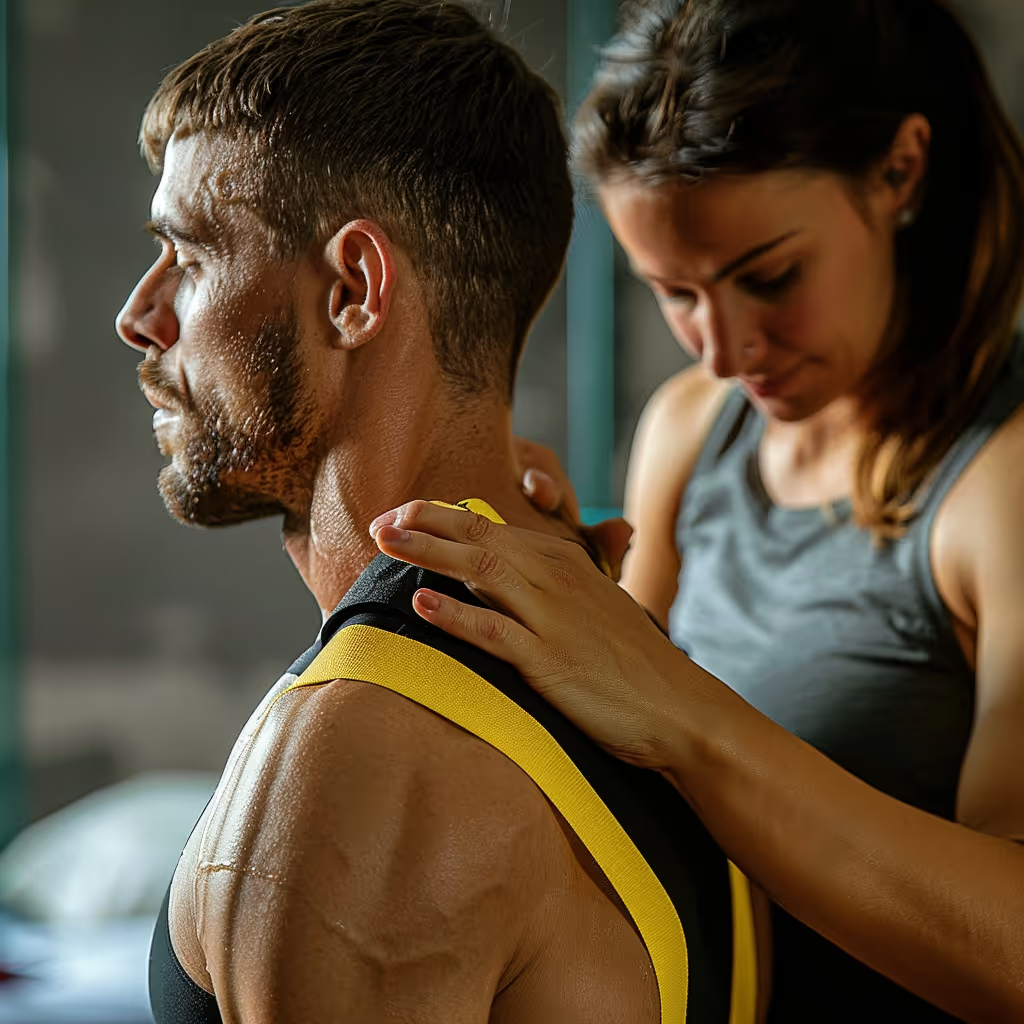
Sports physiotherapy is a specialized branch of rehabilitation focused on the unique needs of athletes and active individuals. It combines expertise in biomechanics, movement analysis, and functional rehabilitation to treat injuries, prevent recurrence, and optimize sports performance.
Here's the good news: as physiotherapists specializing in musculoskeletal rehabilitation, we regularly work with recreational and competitive athletes facing injuries that affect their sports activities. Our approach integrates biomechanical assessment, progressive rehabilitation, and science-based return-to-play protocols.
What is Sports Physiotherapy?
Sports physiotherapy stands out for its specific approach to the mechanical and physiological demands of sports. It's not just about treating injuries; it also includes prevention, rehabilitation, and optimizing athletic performance.
This specialization requires a deep understanding of specific sports movements, the unique biomechanical stresses of each discipline, and associated injury risk factors. Sports physiotherapists must master on-field functional assessment, acute injury management, and progressive return-to-sport protocols.
Interventions combine several therapeutic modalities tailored for athletes: manual therapy to restore joint mobility, therapeutic exercises to rebuild strength and motor control, and functional progression towards specific sports movements1,2.
What are the Most Common Sports Injuries?
Sports injuries vary considerably depending on the sport played, training frequency, and individual risk factors. However, certain trends emerge based on the type of activity.
Running Injuries
Running generates impact forces equivalent to 2 to 3 times body weight with each stride. Common injuries include iliotibial band syndrome, plantar fasciitis, patellofemoral pain syndrome, and tibial stress fractures. These conditions often result from too rapid an increase in training volume, biomechanical deficiencies, or inadequate equipment3,4.
Anterior knee pain affects 20 to 40% of runners, generally linked to muscle imbalances in the hips and thighs. Ankle and foot pain also accounts for a significant portion of consultations among runners.
Hockey Injuries
Hockey combines rapid changes in direction, physical contact, and explosive movements on a slippery surface. Traumatic injuries include ankle sprains, muscle contusions, and concussions. Overuse injuries frequently affect the hip adductors, hip flexors, and groin area5.
Hockey players also face high risks of shoulder injuries, particularly acromioclavicular separations and glenohumeral instabilities resulting from impacts against the boards.
Soccer Injuries
Soccer intensely strains the lower limbs with repeated sprints, changes in direction, and kicks. Ankle sprains account for 20 to 30% of all soccer injuries, followed by anterior cruciate ligament (ACL) injuries and hamstring muscle tears6.
Non-contact mechanisms, such as sudden pivots or landing from jumps, cause the majority of serious knee injuries. Women have a 2 to 8 times higher risk of ACL rupture compared to men playing the same sport, partly due to biomechanical and hormonal differences7.
Tennis Injuries
Tennis places repetitive stress on the upper limb and requires explosive lateral movements. Lateral epicondylalgia (tennis elbow) affects 40 to 50% of regular players, caused by overuse of wrist extensors during backhands8.
Shoulder injuries include rotator cuff tendinopathies, labral tears, and chronic instabilities. Lower limbs also sustain injuries, particularly ankle sprains and calf strains during rapid movements.
How does the return-to-play protocol work?
The return to sport after injury follows a structured progression through several phases, each with objective criteria to meet before moving to the next step. This gradual approach minimizes the risk of re-injury while restoring the athlete's confidence.
Phase 1: Symptom Control and Protection
Immediately after an injury, the goal is to manage inflammation, protect damaged tissues, and maintain range of motion within pain-free limits. The PEACE & LOVE protocol guides the initial interventions: Protection, Elevation, Avoid anti-inflammatories, Compression, Education, then Load, Optimism, Vascularization, Exercise9.
This phase typically lasts from a few days to several weeks, depending on the severity of the injury. Progression criteria include a significant reduction in pain at rest, resolution of swelling, and the ability to perform basic movements without compensation.
Phase 2: Restoration of Physical Capacity
Once acute symptoms are controlled, rehabilitation focuses on restoring full joint range of motion, muscle strength, and neuromuscular control. Therapeutic exercises progress in a measured way according to the principle of progressive overload.
Goals include achieving at least 90% of the strength of the uninjured side, restoring symmetrical range of motion, and demonstrating adequate control during basic functional movements. This phase typically requires 4 to 12 weeks, depending on the injured structure10.
10 Quick Tips to Understand Your Pain
The ones that have most changed my patients' lives. 1 per day, 2 min.
Phase 3: Reintegration of Sport-Specific Movement
The transition to sport-specific activities begins once basic physical capacities are restored. The progression of exercises in rehabilitation follows a logical hierarchy: simple movements at reduced speed, then a gradual increase in complexity, speed, and intensity.
For example, for a soccer player with an ankle sprain, the progression might include: straight-line running, running with 45-degree changes of direction, then 90-degree, short sprints, and finally, return to practice with moderate contact.
Phase 4: Return to Competition
Full return to competition requires meeting objective and functional criteria. Performance tests include unilateral jumps (Limb Symmetry Index ≥90%), sport-specific agility tests, and validated questionnaires of perceived function11.
Psychological considerations also play a crucial role. An athlete's confidence, assessed by scales such as the ACL-RSI (Return to Sport after Injury), predicts the success of their return to play. Athletes with low confidence have an increased risk of re-injury, even if their physical capacities are restored12.
How does physiotherapy optimize sports performance?
Beyond injury treatment, sports physiotherapy contributes to performance optimization by improving movement mechanics, training load management, and the prevention of muscular imbalances.
Biomechanical analysis identifies inefficient or risky movement patterns that limit performance or predispose to injuries. For example, weakness in the hip abductors can lead to the knee collapsing inward during running, increasing stress on the anterior cruciate ligament and reducing propulsion efficiency13.
Training load management is a key element of sustainable performance. The acute-to-chronic workload ratio helps determine if an athlete is accumulating too much relative stress compared to their adaptive capacity. A ratio greater than 1.5 correlates with a significantly increased risk of injury14.
Interventions include correcting mobility deficits that limit technical efficiency, targeted strengthening of sport-specific muscle chains, and optimizing recovery strategies. Therapeutic taping can also support performance by facilitating optimal muscle recruitment or providing proprioceptive feedback.
What are sports injury prevention programs?
Structured prevention programs reduce injury incidence by 30 to 50% when applied consistently. These protocols integrate neuromuscular control, strengthening, and plyometric exercises.
The FIFA 11+ program for soccer is one of the most studied prevention protocols. This 20-minute program includes dynamic warm-up exercises, core and lower limb strengthening, and plyometrics. Studies show a 30 to 50% reduction in knee and ankle injuries among teams that apply it regularly15.
Essential components of preventive programs include:
Neuromuscular Control: Balance and stabilization exercises on unstable surfaces improve proprioception and muscle reaction times. These adaptations protect against non-contact injury mechanisms, such as ankle sprains or ACL tears.
Eccentric Strengthening: Muscle work during the lengthening phase (eccentric) increases tolerance to high loads and reduces the risk of muscle tears. The Nordic hamstring protocol reduces the incidence of injuries to these muscles in soccer players by 51%16.
Plyometrics and Jump Training: Structured jumping exercises teach safe landing patterns and improve explosive force production. Focusing on correct knee alignment during landing (avoiding excessive valgus) reduces stress on the ACL.
Load Management: Properly adjusting training volume and intensity allows tissues to adapt without being overloaded. Weekly increases should generally not exceed 10 to 15% of the total volume to minimize overuse injuries.
When should you see a sports physiotherapist?
Consulting a sports physiotherapist offers benefits at various stages of an athlete's journey, not just when obvious injuries occur.
After an Acute Injury: Early assessment (24 to 72 hours post-injury) allows for an accurate diagnosis, initiation of appropriate treatment, and prevention of secondary complications. Even seemingly minor injuries, such as a grade 1 ankle sprain, benefit from early interventions to prevent chronic instability17.
For Persistent Pain: Any pain that persists for more than 2 weeks despite modified rest warrants a consultation. Overuse pain, if ignored, often progresses to more severe conditions requiring extended periods of rest.
Before Starting a New Sport: Preventive biomechanical assessment identifies individual risk factors (mobility deficits, strength asymmetries, risky movement patterns) before they lead to injuries. This proactive approach is particularly relevant for high-risk sports such as soccer, basketball, or skiing.
In Preparation for Competition: The pre-competition period offers an opportunity to optimize mechanics, address minor imbalances, and refine load management strategies to ensure optimal performance for competition.
Following an Unexplained Drop in Performance: A sudden drop in performance without an obvious cause can signal subtle biomechanical issues, cumulative fatigue, or subclinical injuries requiring professional assessment.
What are your questions about sports physiotherapy?
How long does typical sports rehabilitation take?
The duration varies considerably depending on the nature and severity of the injury. A moderate ankle sprain typically requires 4 to 6 weeks to return to sport, while an anterior cruciate ligament reconstruction requires 6 to 12 months. Chronic tendinopathies may require 3 to 6 months of progressive rehabilitation. The key lies in adhering to objective progression criteria rather than arbitrary timelines18.
Does sports physiotherapy differ from regular physiotherapy?
Sports physiotherapy is a specialization within musculoskeletal physiotherapy. It is distinguished by its emphasis on returning to high-intensity activities, mastery of specific return-to-play protocols, and a deep understanding of the biomechanical demands of various sports. Sports physiotherapists are trained to assess and treat on the field during competitions.
Can sports injuries be completely prevented?
Need professional advice?
Our physiotherapists can assess your condition and offer you a personalized treatment plan.
Book an appointmentNo program can entirely eliminate the risk of injury, especially in contact or high-velocity sports. However, structured preventive interventions significantly reduce the incidence and severity of injuries. Studies show reductions of 30 to 70% for certain types of injuries when programs are applied consistently19.
What therapeutic modalities are used in sports physiotherapy?
Interventions combine manual therapy to restore joint and tissue mobility, progressive therapeutic exercises to rebuild physical capacity, and electrotherapeutic modalities when appropriate. Shockwave therapy effectively treats certain chronic tendinopathies. Therapeutic taping supports injured structures and facilitates optimal movement patterns during rehabilitation.
What happens during an initial consultation?
The initial assessment typically lasts 60 minutes and includes a detailed injury history, examination of joint range of motion and muscle strength, specific functional tests, and biomechanical analysis of relevant movements. The physiotherapist then establishes a functional diagnosis and a personalized treatment plan with measurable goals and a realistic timeline for returning to sport.
What is the athlete's role in their rehabilitation?
Sports rehabilitation requires active participation from the athlete. Success depends on adherence to the home exercise program, following the prescribed exercise progressions, and honest communication regarding symptoms. Athletes who actively engage in their rehabilitation return to sport faster and with lower recurrence rates20.
Is sports physiotherapy only for high-level athletes?
Absolutely not. Sports physiotherapy benefits any active individual, from the occasional recreational runner to the elite athlete. The principles of progressive rehabilitation, biomechanical analysis, and safe return to activity apply regardless of the competition level. Our Physioactif clinics treat athletes of all levels with the same science-based approach.
References
- Hoch MC, McKeon PO. Joint mobilization improves spatiotemporal postural control and range of motion in those with chronic ankle instability. J Orthop Res. 2011;29(3):326-332. https://pubmed.ncbi.nlm.nih.gov/20886646/
- Bleakley CM, Glasgow P, MacAuley DC. PRICE needs updating, should we call the POLICE? Br J Sports Med. 2012;46(4):220-221. https://pubmed.ncbi.nlm.nih.gov/21504965/
- van Gent RN, Siem D, van Middelkoop M, et al. Incidence and determinants of lower extremity running injuries in long distance runners: a systematic review. Br J Sports Med. 2007;41(8):469-480. https://pubmed.ncbi.nlm.nih.gov/17473005/
- Taunton JE, Ryan MB, Clement DB, et al. A retrospective case-control analysis of 2002 running injuries. Br J Sports Med. 2002;36(2):95-101. https://pubmed.ncbi.nlm.nih.gov/11916889/
- Emery CA, Meeuwisse WH. Injury rates, risk factors, and mechanisms of injury in minor hockey. Am J Sports Med. 2006;34(12):1960-1969. https://pubmed.ncbi.nlm.nih.gov/16902233/
- Junge A, Dvorak J. Soccer injuries: a review on incidence and prevention. Sports Med. 2004;34(13):929-938. https://pubmed.ncbi.nlm.nih.gov/15487905/
- Hewett TE, Myer GD, Ford KR. Anterior cruciate ligament injuries in female athletes: Part 1, mechanisms and risk factors. Am J Sports Med. 2006;34(2):299-311. https://pubmed.ncbi.nlm.nih.gov/16423913/
- Bisset L, Beller E, Jull G, et al. Mobilisation with movement and exercise, corticosteroid injection, or wait and see for tennis elbow. BMJ. 2006;333(7575):939. https://pubmed.ncbi.nlm.nih.gov/17012266/
- Dubois B, Esculier JF. Soft-tissue injuries simply need PEACE and LOVE. Br J Sports Med. 2020;54(2):72-73. https://pubmed.ncbi.nlm.nih.gov/31097375/
- Ardern CL, Glasgow P, Schneiders A, et al. 2016 Consensus statement on return to sport from the First World Congress in Sports Physical Therapy, Bern. Br J Sports Med. 2016;50(14):853-864. https://pubmed.ncbi.nlm.nih.gov/27226389/
- Barber-Westin SD, Noyes FR. Factors used to determine return to unrestricted sports activities after anterior cruciate ligament reconstruction. Arthroscopy. 2011;27(12):1697-1705. https://pubmed.ncbi.nlm.nih.gov/22137326/
- Webster KE, Feller JA. Exploring the high reinjury rate in younger patients undergoing anterior cruciate ligament reconstruction. Am J Sports Med. 2016;44(11):2827-2832. https://pubmed.ncbi.nlm.nih.gov/27159297/
- Powers CM. The influence of abnormal hip mechanics on knee injury: a biomechanical perspective. J Orthop Sports Phys Ther. 2010;40(2):42-51. https://pubmed.ncbi.nlm.nih.gov/20118526/
- Gabbett TJ. The training-injury prevention paradox: should athletes be training smarter and harder? Br J Sports Med. 2016;50(5):273-280. https://pubmed.ncbi.nlm.nih.gov/26758673/
- Bizzini M, Dvorak J. FIFA 11+: an effective programme to prevent football injuries in various player groups worldwide. Br J Sports Med. 2015;49(9):577-579. https://pubmed.ncbi.nlm.nih.gov/25878073/
- van der Horst N, Smits DW, Petersen J, et al. The preventive effect of the nordic hamstring exercise on hamstring injuries in amateur soccer players. Am J Sports Med. 2015;43(6):1316-1323. https://pubmed.ncbi.nlm.nih.gov/25794868/
- Doherty C, Bleakley C, Delahunt E, Holden S. Treatment and prevention of acute and recurrent ankle sprain. Br J Sports Med. 2017;51(20):1477-1479. https://pubmed.ncbi.nlm.nih.gov/28259847/
- Myer GD, Paterno MV, Ford KR, et al. Rehabilitation after anterior cruciate ligament reconstruction: criteria-based progression through the return-to-sport phase. J Orthop Sports Phys Ther. 2006;36(6):385-402. https://pubmed.ncbi.nlm.nih.gov/16776488/
- Lauersen JB, Andersen TE, Andersen LB. Strength training as superior, dose-dependent and safe prevention of acute and overuse sports injuries. Br J Sports Med. 2018;52(24):1557-1563. https://pubmed.ncbi.nlm.nih.gov/29644912/
- Brewer BW, Cornelius AE, Van Raalte JL, et al. Rehabilitation adherence and anterior cruciate ligament reconstruction outcome. Psychol Health Med. 2004;9(2):163-175. https://pubmed.ncbi.nlm.nih.gov/15182209/
Our clients' satisfaction is our priority.
At Physioactif, excellence guides everything we do, but our patients' experiences truly speak for themselves. Check out their verified reviews to get a clear picture of what to expect.












Discover our physiotherapy clinics
We have multiple locations to better serve you.
Blainville
190 Chem. du Bas-de-Sainte-Thérèse Bureau 110,
Blainville, Quebec
J7B 1A7
Located in Blainville, near Rosemère, the Physioactif clinic is easily accessible for residents in the area and surrounding communities.
Laval
3224 Jean-Béraud Ave. Suite 220 Laval,
QC H7T 2S4
Located in Chomedey, in the heart of Laval, the Physioactif clinic is easily accessible for those in the vicinity.
Montreal
8801 Lajeunesse Street,
Montreal,
QC H2M 1R8
Located in Ahuntsic, near Villeray, the Physioactif clinic is easily accessible for residents of both neighborhoods.
St-Eustache
180 25th Avenue Suite
201 Saint-Eustache
QC J7P 2V2
Located in Saint-Eustache, the Physioactif clinic is easily accessible for residents in the area and surrounding communities.
Vaudreuil
21 Cité-des-Jeunes Blvd. Suite 240,
Vaudreuil-Dorion, Quebec
J7V 0N3
Located in Vaudreuil-Dorion, Physioactif clinic is easily accessible for people in the area.
Book an appointment now