

What does science say about shock wave therapy?
Science shows that shock waves can help treat certain tendinopathies, with effects that vary greatly depending on the body region and the type of tendinopathy1. They are not a substitute for active treatment: for Achilles, patellar, and gluteal tendinopathies, the best reviews recommend exercise as the first-line treatment for at least three months before even considering additional treatment2. And when someone says that conservative treatment didn’t work for them, the first question isn’t which other treatment to try, but whether that treatment was actually carried out properly.
You may have heard of shockwave therapy as a treatment option for tendonitis that won’t heal. This treatment has been around since the 1990s and is one of the tools used in musculoskeletal physical therapy3. However, it is not a miracle cure, nor is it the primary approach used by all physical therapists.
Here is what controlled studies say about this treatment method, in which cases it can help, and how Physioactif addresses tendinopathies beyond the use of shock waves.
What is shockwave therapy?
Shock wave therapy uses acoustic waves transmitted through the skin to a specific area. These waves deliver energy to the tissues, triggering a series of biological responses4. The review describing this mechanism focuses on musculoskeletal tissues in general, not on the tendon specifically. The technology was originally designed to break up kidney stones5.
To fully understand what is happening in the targeted tendon, it helps to Understanding Tendons and their healing process.10 Quick Tips for Understanding Your Pain
The ones that have made the biggest difference in my patients' lives. 1 a day, 2 minutes.
The technology was developed in the 1980s for lithotripsy and was subsequently studied in orthopedics and traumatology4. It has been used in physical therapy for several years.
There are two main types of shock waves:
Radial shock waves are generated by an accelerated projectile that strikes an applicator in contact with the skin. Their pressure is greatest at the source and then disperses, resulting in a more superficial field6. Clinically, they are used in particular for structures close to the surface, such as plantar fasciitis or Achilles tendinitis. The Cochrane protocol describes the physics of the device in the context of heel pain, without establishing Achilles tendinopathy as an indication.
Focused shock waves can be generated using various technologies. Their pressure field is adjusted to converge on a selected point inside the body, typically a few centimeters from the skin, allowing them to reach deep structures6. Clinically, they are preferred for tendon calcifications or deep structures. It is important to note that trials comparing the two modalities show no clear advantage of one over the other in terms of pain, function, or range of motion7.
How does shockwave therapy work?
Shock wave therapy delivers mechanical energy to tissues, which can temporarily alter pain and trigger biological responses observed primarily in the laboratory.
Local analgesia. Some people experience relief immediately after the session. Several mechanisms could explain this change, but no specific mechanism has been demonstrated in treated individuals. This relief does not prove that the tendon has healed.
Hypothesis of micro-lesions in tendon tissue. Basic research suggests that low energy densities trigger biological responses and initiate tendon repair8. Other studies report changes in the substance surrounding tendon cells—known as the matrix—and in the number of these cells, but also indicate that excessively high energy levels can damage the tendon’s structure5. These results come primarily from laboratory studies. They do not demonstrate that the treatment always creates controlled and safe micro-lesions in a person.
Vascular stimulation. Shock waves can induce hypervascularization and neovascularization: an increase in blood flow and the formation of new capillaries. The studies reporting these effects—along with the activation of pathways related to angiogenesis, cell proliferation, and collagen—are primarily laboratory studies8, and neovascularization is observed primarily in animal models or on isolated tissues5. It has not been demonstrated that this improved blood supply subsequently facilitates the delivery of growth factors and tissue repair in a treated individual.
Reorganization of scar tissue. In the laboratory, changes in the tendon matrix and collagen formation are observed following shock wave treatment5. However, human studies do not demonstrate that shock waves break up adhesions, reorganize scar tissue, or realign collagen fibers.
In the case of tendon calcifications (such as certain forms of rotator cuff tendinitis), the term “decalcifying effect” is often used. What is measured is that the average diameter of the calcium deposits decreases on imaging after treatment9. The sequence typically described—gradual fragmentation followed by resorption by the body in the weeks that follow—has not been established by these studies.
It’s important to qualify this: these mechanisms have been documented in laboratory studies, and clinical studies show benefits that vary greatly from one condition to another. The effect is well-supported for plantar fasciitis, but negligible or uncertain for patellar and Achilles tendinopathies10, and it also differs between the upper limbs, the lower limbs, and calcific forms1. It is a common belief that the magnitude of the effect also depends on the protocol and whether it is combined with exercise—a notion that these reviews have not directly tested.
What conditions are examined in the literature?
Shock wave therapy has been studied for chronic tendinopathies—that is, tendon problems that have persisted for quite some time. The reported results vary widely depending on the condition being treated: a meta-analysis of 45 trials found the weakest effects for epicondylitis and the strongest for rotator cuff injuries, with significant differences among trials addressing the same condition11. Not all of these trials focused on chronic forms of the condition.
Plantar fasciitis is the best-documented indication: the most comprehensive reviews show a significant effect on pain and function10. Shock waves are also used for shoulder tendinopathies, including calcific tendinitis. Regarding the rotator cuff, however, the Cochrane Review finds very few clinically significant benefits, with protocols varying widely from one trial to another3.
Calcific tendinitis of the shoulder is a special case: shock waves can reduce pain, improve function, and eliminate some of the deposits—especially at high energy levels—but the certainty of these results is very low12. Focused shock waves do not appear to be superior to radial shock waves in terms of this effect12.
Lateral epicondylitis (tennis elbow) is the condition where expectations are most disappointed: the meta-analysis finds no clinically significant improvement in pain or grip strength, even though the subgroup treated with radial waves shows a favorable trend that falls just short of this threshold13. For medial epicondylitis (golfer’s elbow), the data remain insufficient to automatically apply the conclusion regarding tennis elbow.
Patellar tendinopathy (jumper's knee) responds variably: when combined with an exercise in which the muscle works while lengthening (eccentric exercise), shock waves do not provide any short-term benefit in terms of pain or function, and their effect is negligible compared to a sham treatment10. The cornerstone of treatment remains a supervised program of progressive loading: the best systematic reviews recommend exercise alone as the first-line treatment for at least three months before even considering additional therapy2. Shockwave therapy is sometimes added as a supplement, but never as a substitute.
Achilles tendinopathy is the condition for which the evidence has changed the most: the most recent review finds no clinically significant benefit in terms of pain or disability—whether for the insertion or the mid-portion of the tendon—regardless of whether shock waves are administered alone or in combination with another treatment, and its authors advise against their routine use14. Here, the progressive loading program is not the foundation to which something else is added—it is the treatment itself.
Other conditions have been studied, though with less evidence. For greater trochanter pain syndrome—which includes trochanteric bursitis and gluteus medius tendinopathy—short-term relief has been reported, though with a high degree of uncertainty because the available trials have a high risk of bias15. Regarding bone conditions, tibial periostitis, certain stress injuries, and fractures that heal poorly or not at all have been the subject of specialized medical guidelines based on low-level evidence16. For iliotibial band syndrome, the evidence is insufficient to conclude that there is a benefit.
The assessment takes into account the duration of the problem, the quality of the diagnosis, and the area to be treated. These factors guide clinical decision-making, but studies do not allow for an accurate prediction of an individual’s outcome.
What happens during a shockwave therapy session?
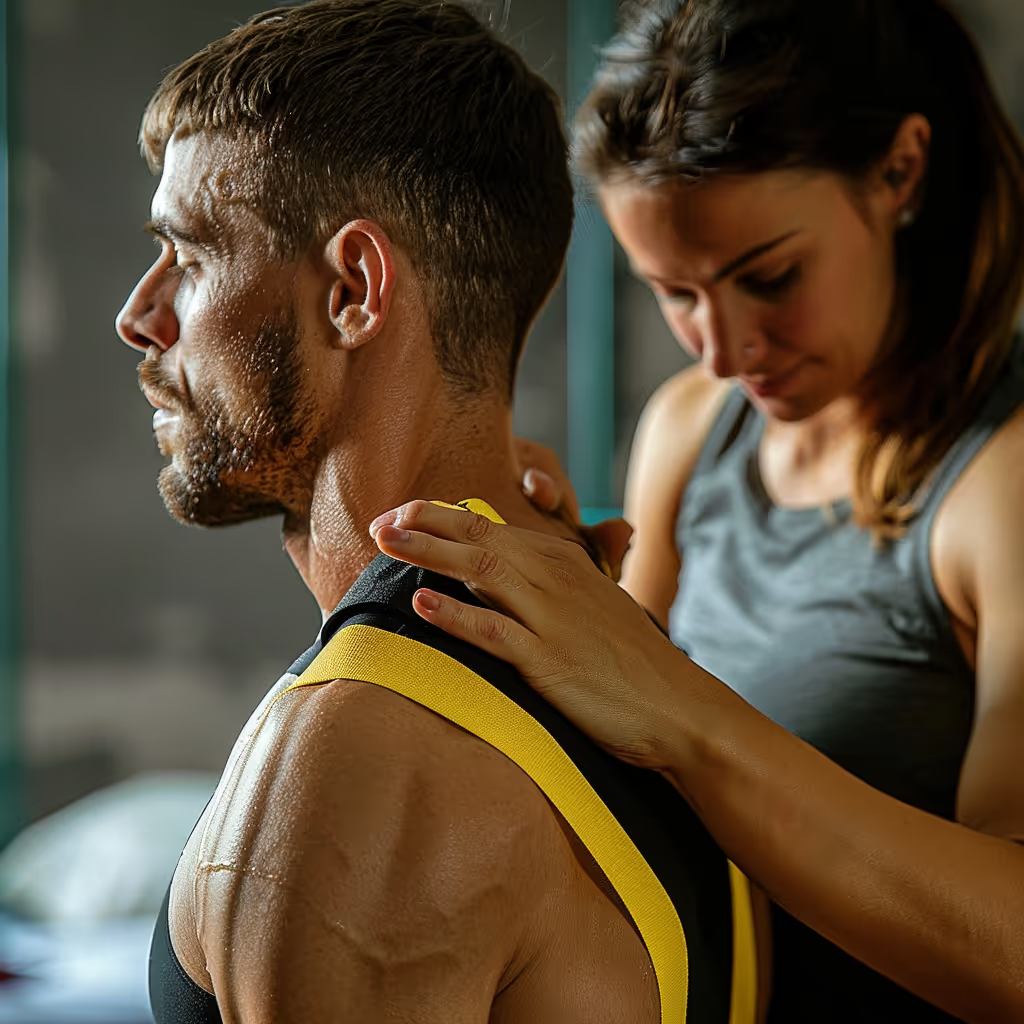
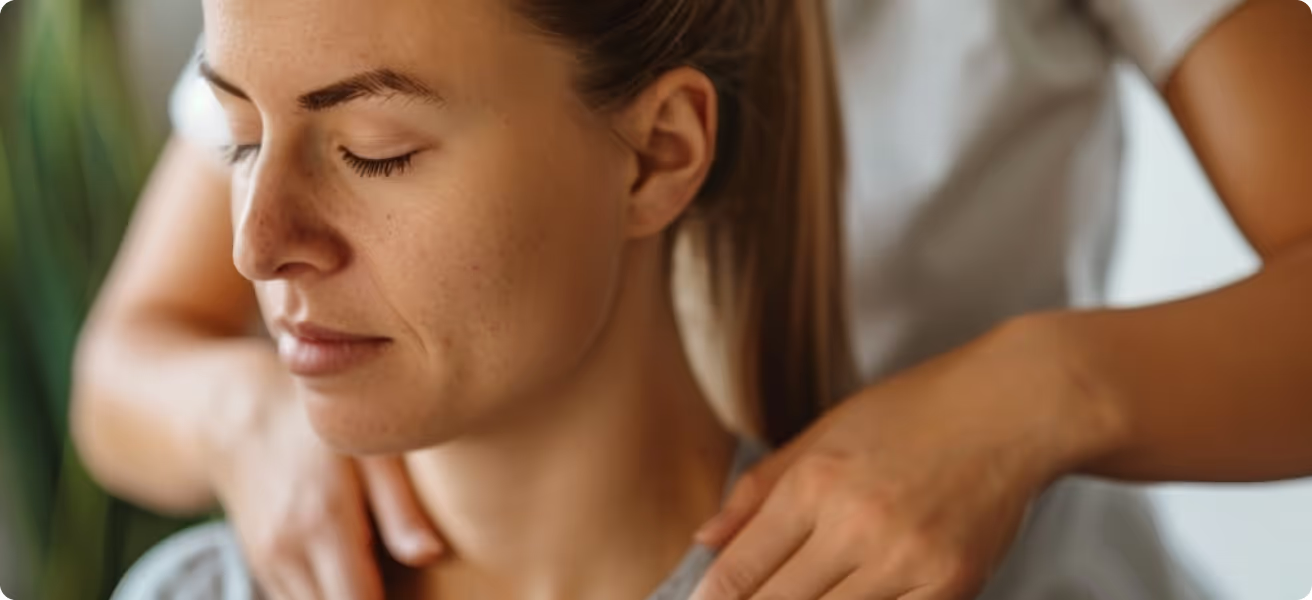
During a session, the physical therapist applies a conductive gel to the skin and then moves an applicator over the affected area to deliver acoustic waves, following an evaluation to locate the area to be treated.
Understanding how a session works can help you know what to expect.
The initial evaluation begins with a discussion of medical history, current symptoms, and treatments already attempted. The physical therapist examines the affected area to locate tender points and assess range of motion. Clinical guidelines use areas of maximum pain to guide the application17.
The patient is positioned on an examination table in a position that provides good access to the area to be treated.
Applying the conductive gel to the skin allows sound waves to be transmitted to deep tissues.
The treatment involves moving the applicator over the affected area. The duration of each session varies depending on the area being treated and the device used. The intensity is adjusted gradually based on the patient’s tolerance.
A highly sensitive area can make the first few sessions more uncomfortable. The practice review describes pain during treatment as an expected effect, without attributing it to a measured level of inflammation17.
Immediately afterward, the area may be slightly red or tender. Some people experience immediate relief, while others feel temporary soreness after the session. These reactions are usually temporary. Any intense or persistent reaction should be reported to the physical therapist.
The number of sessions varies depending on the condition being treated and the response to treatment.
Between sessions, the physical therapist adapts the activities and exercises based on your condition and tolerance.
What are some frequently asked questions about shock wave therapy?
Frequently asked questions about shock wave therapy include pain during treatment, how long it takes to see results, side effects, contraindications, the cost of a session, and the role of exercise.
Does shockwave therapy hurt?
The sensation is described as discomfort that should remain tolerable. Its intensity varies depending on local sensitivity, device settings, and the energy level used. The first few sessions may be more uncomfortable. The intensity can be adjusted at any time. Clinical guidelines recommend treatment without anesthesia17, while the Cochrane protocol includes treatments with or without anesthesia6. Therefore, it cannot be stated that anesthesia is never necessary.
How long until I see results?
Some people report rapid relief, although the mechanism behind this is not yet known. In the calcifying cap group, improvements in pain and function were also measured at 24 weeks12, although these results cannot be directly attributed to measurable tissue healing.
What are the possible side effects?
The reported side effects are mainly local: pain at the injection site, redness, bruising, hematoma, nerve irritation with numbness or tingling, and superficial swelling17. The same review also mentions headaches and migraines among possible effects elsewhere in the body, as well as a few reported serious complications. The exact frequency of serious complications remains uncertain.
What are the contraindications?
Precautions depend on the type of device, the energy used, and the treatment area. The practice guidelines list active infection and pregnancy as absolute contraindications for all energy types, as well as a malignant tumor in the treatment area for focused waves. For high-energy treatment, a significant coagulation disorder and the presence of a growth plate in the treatment area are relative contraindications. The use of anticoagulants, a pacemaker, or other implanted devices are important factors to evaluate, but they are not uniform absolute contraindications17. Venous thrombosis must be reported prior to treatment so that the practitioner can assess the necessary precautions. A medical screening is performed before any treatment.
How much does a shockwave therapy session cost?
The cost of a session varies from clinic to clinic. Since this is a physical therapy treatment, some private insurance plans may cover it. The Régie de l'assurance maladie du Québec (RAMQ) does not reimburse physical therapy sessions provided at private clinics.
Does shockwave therapy replace exercise?
No. Shock waves can reduce pain, though the effect varies greatly depending on the condition11. However, a shockwave session is no substitute for a tendon-strengthening program or active work on the biomechanical factors that contributed to the injury. For Achilles and patellar tendinopathies, as well as greater trochanter pain syndrome, exercise remains the first-line treatment, and no additional treatment has been shown to be clearly superior to exercise alone2. Shockwave therapy can be used in conjunction with an exercise program, but it should never replace it. Whether it reduces recurrences or corrects imbalances has not been measured: the available reviews focus on pain and function, not on relapses.
10 Quick Tips for Understanding Your Pain
The ones that have made the biggest difference in my patients' lives. 1 a day, 2 minutes.
Can shock waves break up calcifications?
Studies do not support the claim that shock waves directly break up calcifications. Follow-up X-rays often show a reduction—and sometimes a complete disappearance—of calcium deposits after a series of treatments, and this reduction is more pronounced at higher energy levels12. In the pooled trials, complete resolution was notably observed at 12 weeks; these data do not allow for determining the exact duration of the process. The mechanism often proposed—fragmentation into small pieces that the body subsequently reabsorbs—has not been established by imaging studies9. Focused waves do not appear to be more effective than radial waves in producing this effect12.
Can I continue my activities after a session?
It is recommended that you avoid strenuous activities that put strain on the treated area after the session. Light activities are permitted. The physical therapist will provide specific instructions based on your condition.
What should you do if shockwave therapy isn't working?
If no improvement is seen after a full course of sessions, the first question isn’t which other treatment modality to try. It’s whether the active treatment was actually performed—and performed properly. There are five things to check. The diagnosis has been confirmed, not merely assumed based on the term “tendinitis.” The workload has actually increased over the weeks, rather than remaining the same set of three exercises. The program has lasted long enough for the condition being treated. For Achilles and patellar tendinopathies, as well as greater trochanter pain syndrome, the best reviews recommend at least three months of exercise alone before even considering additional treatment2; this timeframe is not a universal rule for all conditions. Someone monitored the progression and adjusted it, rather than simply handing out an exercise sheet at the first visit. And rest, on its own, does not count as conservative treatment. If any one of these five elements is missing, we cannot yet conclude that conservative treatment has actually failed: we must first review how it was carried out. Only then is the diagnosis reevaluated, and we look at what might be perpetuating the symptoms: muscle weakness, biomechanical issues, referred pain, or nerve damage. The number of sessions in a series varies depending on the condition being treated. Medical options may include injections or, in some cases, surgery. A consultation with a medical specialist may be recommended if the condition is severe.
How does Physioactif treat tendinopathies?
At Physioactif, treatment for tendinopathies begins with a diagnostic evaluation and an exercise program that gradually increases in intensity. Shockwave therapy may be used to supplement this program in some cases.
First, make sure it really is tendinopathy
Several conditions can cause pain that resembles tendinopathy. In the shoulder region, the terms “rotator cuff tendinopathy,” “bursitis,” and “subacromial impingement” overlap, and the evaluation must also rule out referred pain that does not originate in the shoulder18. In many overuse conditions, peripheral nerve involvement can mimic or accompany tendon pain19. Sensitization of the nervous system may also accompany persistent tendinopathy, especially in the upper extremity, though it does not replace the diagnosis of tendinopathy20. If “tendinitis” that is not actually tendinitis is treated, the results will be disappointing regardless of the treatment modality used.
Our initial evaluation aims to confirm the diagnosis before proposing a treatment plan. This approach reduces the risk of treating a condition that does not explain the symptoms. You can ask the physical therapist what factors his or her diagnosis is based on.
Next, progressive loading rather than simply "resting"
Rest alone is not a treatment for tendinopathy: for Achilles and patellar tendinopathies, as well as greater trochanter pain syndrome, exercise is recommended as the first-line treatment2. An appropriate mechanical load is therefore used. It is important to note that the benefit of this load is not necessarily due to visible reconstruction of the tendon’s structure: a systematic review did not find this link for eccentric exercise, with limited support on the side of heavy, slow resistance21. Current scientific understanding does not limit treatment to a single form of exercise. For Achilles and patellar tendinopathies, as well as greater trochanter pain syndrome, recommended programs vary depending on the condition. They may include exercises involving movement under controlled load and, in some cases, isometric contractions when movement is poorly tolerated2. Progression toward movements specific to the individual’s activities is tailored on a case-by-case basis; no single three-phase sequence is suitable for all tendinopathies.
The progressive loading program is tailored to your tendinopathy, your pain level, your current ability, and your goals. The reviews support exercise as a first-line treatment, though they do not allow us to determine the exact proportion of the outcome that can be attributed to it2.
When we consider shock waves
Shockwave therapy may be appropriate in specific cases. Calcific tendinitis of the rotator cuff, when calcification is confirmed by imaging: pain and function may improve, although the evidence supporting this is very weak12. Plantar fasciitis that persists despite well-administered active treatment: this is the best-supported indication10. “Properly conducted” means something specific: the diagnosis was confirmed, the workload was actually increased over the course of several weeks, the program lasted long enough for the condition being treated, and someone monitored progress and made adjustments. For Achilles and patellar tendinopathies, as well as greater trochanter pain syndrome, the best systematic review recommends at least three months of exercise before adding treatment2; this timeframe does not automatically apply to plantar fasciitis. If any of these conditions are missing, we cannot yet conclude that active treatment has truly failed: we must first review how it was conducted before moving on to another modality. For insertion tendinopathies, caution is warranted: regarding the Achilles tendon, recent data show no clinically significant benefit14. For calcific tendinopathy and plantar fasciitis, when shockwave therapy is used, it complements the active treatment program; it never replaces it.
Disappointing results following shockwave therapy warrant a reassessment of the diagnosis and the active treatment plan. A few exercises prescribed only once, without progression or adjustment, do not constitute a comprehensive program of progressive loading. The physical therapist therefore reviews the duration, progression, and tolerability of the program before concluding that conservative treatment has failed or proposing an alternative modality.
Products by Condition
Here are our detailed guides to the most common tendinopathies:
- Tendinopathy or tendinitis in the shoulder
- Calcific tendinitis in the shoulder
- Patellar Tendinopathy
- Patellar tendonitis or tendinopathy
- Achilles tendonitis or tendinopathy
- Gluteal muscle tendinitis or tendinopathy
- Goosefoot tendinitis or tendinopathy
- Adductor tendinitis or tendinopathy
Each guide covers the specific characteristics of the condition, differential diagnosis, the phases of active treatment, and situations in which a medical consultation or a complementary treatment such as shockwave therapy may be considered.
Not sure if shockwave therapy is right for you?
Our physical therapists can assess your tendinopathy and help you choose the right treatment plan, whether or not it includes shockwave therapy.
Make an appointmentReferences
- Elgendy MH, Khalil SE, ElMeligie MM, Elazab DR. Effectiveness of extracorporeal shockwave therapy in the treatment of upper and lower limb tendinopathies: A systematic review and meta-analysis. Physiother Res Int. 2024;29(1):e2042. ↩ Back to text: 1st, 2nd citations
- Challoumas D, Crosbie G, O'Neill S, Pedret C, Millar NL. Effectiveness of Exercise Treatments with or without Adjuncts for Common Lower Limb Tendinopathies: A Living Systematic Review and Network Meta-analysis. Sports Med Open. 2023;9(1):71. ↩ Back to text: 1st, 2nd, 3rd, 4th, 5th, 6th, 7th, 8th citations
- Surace SJ, Deitch J, Johnston RV, Buchbinder R. Shock wave therapy for rotator cuff disease with or without calcification. Cochrane Database Syst Rev. 2020;3(3):CD008962. ↩ Back to text: 1st, 2nd citations
- Simplicio CL, Purita J, Murrell W, Santos GS, Dos Santos RG, Lana JFSD. Mechanisms of extracorporeal shock wave therapy in musculoskeletal regenerative medicine. J Clin Orthop Trauma. 2020;11(Suppl 3):S309-S318. ↩ Back to text: 1st, 2nd citations
- Poenaru D, Sandulescu MI, Cinteza D. Biological effects of extracorporeal shockwave therapy in tendons: A systematic review. Biomed Rep. 2023;18(2):15. ↩ Back to text: 1st, 2nd, 3rd, 4th citations
- Jessup RL, Oates MJ, Johnston RV, Buchbinder R. Shockwave therapy for plantar heel pain (plantar fasciitis). Cochrane Database of Systematic Reviews. 2019. ↩ Back to text: 1st, 2nd, 3rd citations
- Ismail Hassan M, Ibrahim Abdelhamed A, Emad T, Hesham Sallam M, Samy H, Hesham Elkhodary H, et al. Focused shock wave versus radial pressure wave therapy for musculoskeletal disorders: A systematic review and meta-analysis. J Back Musculoskelet Rehabil. 2026:10538127261477948. ↩ Back to text
- Chen Y, Lyu K, Lu J, Jiang L, Zhu B, Liu X, et al. Biological response of extracorporeal shock wave therapy to tendinopathy in vivo (review). Front Vet Sci. 2022;9:851894. ↩ Back to text: 1st, 2nd citations
- Al-Abbad H, Allen S, Morris S, Reznik J, Biros E, Paulik B, et al. The effects of shockwave therapy on musculoskeletal conditions based on changes in imaging: a systematic review and meta-analysis with meta-regression. BMC Musculoskeletal Disorders. 2020;21(1):275. ↩ Back to text: 1st, 2nd citations
- Charles R, Fang L, Zhu R, Wang J. The effectiveness of shockwave therapy for patellar tendinopathy, Achilles tendinopathy, and plantar fasciitis: a systematic review and meta-analysis. Front Immunol. 2023;14:1193835. ↩ Back to text: 1st, 2nd, 3rd, 4th citations
- Majidi L, Khateri S, Nikbakht N, Moradi Y, Nikoo MR. The effect of extracorporeal shock wave therapy on pain in patients with various tendinopathies: a systematic review and meta-analysis of randomized controlled trials. BMC Sports Sci Med Rehabil. 2024;16(1):93. ↩ Back to text: 1st, 2nd citations
- Brindisino F, Marruganti S, Lorusso D, Cavaggion C, Ristori D. The effectiveness of extracorporeal shock wave therapy for rotator cuff calcific tendinopathy. A systematic review with meta-analysis. Physiother Res Int. 2024;29(3):e2106. ↩ Back to text: 1st, 2nd, 3rd, 4th, 5th, 6th citations
- Yoon SY, Kim YW, Shin IS, Moon HI, Lee SC. Does the Type of Extracorporeal Shock Therapy Influence Treatment Effectiveness in Lateral Epicondylitis? A Systematic Review and Meta-analysis. Clinical Orthopaedics & Related Research. 2020;478(10):2324-2339. ↩ Back to text
- Korakakis V, Kotsifaki R, Sotiralis Y, Malliaras P. Shockwave Therapy for Midportion and Insertional Achilles Tendinopathy: A Nail in the Coffin? A Systematic Review With Meta-Analysis. J Orthop Sports Phys Ther. 2026;56(5):282-299. ↩ Back to text: 1st, 2nd citations
- Rhim HC, Shin J, Beling A, Guo R, Pan X, Afunugo W, et al. Extracorporeal Shockwave Therapy for Greater Trochanteric Pain Syndrome: A Systematic Review with Meta-Analysis of Randomized Clinical Trials. JBJS Rev. 2024;12(8). ↩ Back to text
- Prisco LC, Zhao E, Lynch O, Hoo JS, Tenforde AS, Goolsby M. Use of Extracorporeal Shockwave Therapy for the Management of Bone Pathologies: A Systematic Review. Clin J Sport Med. 2026;36(4):e86-e114. ↩ Back to text
- Tenforde AS, Borgstrom HE, DeLuca S, McCormack M, Singh M, Hoo JS, et al. Best practices for extracorporeal shockwave therapy in musculoskeletal medicine: Clinical application and training considerations. PM R. 2022;14(5):611-619. ↩ Back to text: 1st, 2nd, 3rd, 4th, 5th citations
- Haas R, Ibounig T, Buchbinder R. Management of Shoulder Pain in Primary Care: A Review. JAMA Intern Med. 2026. ↩ Back to text
- Krish P, Kapur A, Patel K, Wolin S, Hershfeld B, Cohn RM, et al. Peripheral Nerve Entrapment Conditions That Mimic Overuse Syndromes: A Symptom-First Diagnostic Framework. Am J Phys Med Rehabil. 2026. ↩ Back to text
- Plinsinga ML, Brink MS, Vicenzino B, van Wilgen CP. Evidence of Nervous System Sensitization in Commonly Presenting and Persistent Painful Tendinopathies: A Systematic Review. J Orthop Sports Phys Ther. 2015;45(11):864-75. ↩ Back to text
- Drew BT, Smith TO, Littlewood C, Sturrock B. Do structural changes (e.g., collagen/matrix) explain the response to therapeutic exercises in tendinopathy: a systematic review. Br J Sports Med. 2014;48(12):966-72. ↩ Back to text
Our physical therapists defined the research strategy, plan, and clinical content of this article. An AI tool assisted with the literature review and text editing to ensure consistency in content and writing style.
Customer satisfaction is our top priority
At Physioactif, excellence guides everything we do, but our patients are the best ones to tell you about it. Take a look at their verified reviews to get a real sense of their experience.









Discover our physical therapy clinics
We have locations in several areas to better serve you.
Blainville
190 Bas-de-Sainte-Thérèse Road, Suite 110,
Blainville, Quebec
J7B 1A7
Located in Blainville, near Rosemère, the Physioactif clinic is easily accessible to residents of the area and the surrounding communities
Boucherville
690 Rue de Montbrun, Suite S,
Boucherville, Quebec
J4B 8H2
Located in Boucherville, the Physioactif clinic is easily accessible to people in the area
Laval
3224 Jean-Béraud Ave., Suite 220, Laval,
QC H7T 2S4
Located in Chomedey, in the heart of Laval, the Physioactif clinic is easily accessible to people in the area
Montreal
8801 Lajeunesse Street,
Montreal,
QC H2M 1R8
Located in Ahuntsic, near Villeray, the Physioactif clinic is easily accessible to residents of both neighborhoods
Saint-Eustache
180 25th Avenue, Suite
201 Saint-Eustache
QC J7P 2V2
Located in Saint-Eustache, the Physioactif clinic is easily accessible to residents of the area and the surrounding communities
Vaudreuil
21 Cité-des-Jeunes Boulevard, Suite 240,
Vaudreuil-Dorion, Quebec
J7V 0N3
Located in Vaudreuil-Dorion, the Physioactif clinic is easily accessible to people in the area
Make an appointment now