Patellar tendonitis or tendinopathy
It is an irritation of the patellar tendon, or the kneecap tendon.
.png)
.png)
.png)



Terms associated with patellar tendinopathy
- Patellar Tendinopathy
- Patellar tendinopathy
- Jumper's knee, the English term for "jumper's knee"
- Jumper's knee: a term that can also refer to a problem with the tendon located above the kneecap
- Note the distinction: quadriceps tendinopathy affects the tendon above the kneecap, rather than the one below it
What is the difference between tendinitis and tendinopathy?
Tendinitis refers to inflammation of a tendon, while tendinopathy refers to persistent pain in a tendon that limits activity when the tendon is in use. A tendon is a strong cord that transmits force from a muscle to a bone. The term “tendinopathy” alone does not specify the specific changes in the tissue. Read the consensus on these terms. Certain inflammatory processes may contribute to tendinopathy, even in the absence of the classic signs of recent inflammation1.
A 1999 review primarily described structural changes in painful tendons in athletes, without the cells typically associated with recent inflammation2. These observations do not rule out all inflammatory processes. They explain why the term “tendinopathy” is used to describe the condition without presuming its exact mechanism.
In practice, your program depends mainly on your symptoms and your abilities. Physical therapy primarily uses progressive exercises and adjusts the amount of stress placed on the tendon. The evaluation also identifies areas that can be addressed, such as weakness or limited mobility.
10 Quick Tips to Understand Your Pain
One tip a day for 10 days to help you better understand your pain. About a 2-minute read.
What is patellar tendinopathy?
Patellar tendinopathy is persistent pain in the tendon located beneath the kneecap, which limits activities that put stress on the knee. The patella is the small bone at the front of the knee; the tibia is the large bone at the front of the lower leg. The patellar tendon connects them and transmits the force from the quadriceps—the group of muscles at the front of the thigh—to straighten the knee.
Anatomy of the Patellar Tendon
The patellar tendon is often about 4 to 5 cm long, though this varies from person to person. It attaches to the lower part of the patella and extends to the tibial tuberosity, the bony bump you can feel below theknee.³, ⁴ A large portion of its fibers attaches to the front of the patella, in its lower part.
When the quadriceps contracts, the force is transmitted through the patellar tendon to extend the leg5. This mechanism is essential for walking, running, jumping, and climbing stairs.
Difference Between the Patellar and Quadriceps Tendons
The quadriceps tendon is located just above the kneecap, connecting the quadriceps muscle to the kneecap. The patellar tendon, on the other hand, is below the kneecap and connects it to the shin bone. Both can become irritated, but patellar tendinopathy (below the kneecap) is more common in athletes.
The term “jumper’s knee” can refer to a problem with either the quadriceps tendon or the patellar tendon. These tendons have different attachments and functions. It’s important to specify which one is causing pain in order to tailor the exercise program6.
Who is affected?
Patellar tendinopathy is common in jumping sports. Among elite athletes, it primarily affects volleyball andbasketball players⁷, ⁸. It also occurs in recreational athletes. Sports that involve repeated jumping pose the highest risk, hence the nickname "jumper's knee."
In growing adolescents, this same pulling of the tendon on the tibia can instead cause the Osgood-Schlatter disease, which we cover in detail in a separate guide.What are the causes of patellar tendinopathy?
Patellar tendinopathy is associated with repeated stress on the tendon, particularly from jumping, but its exact cause remains incompletely understood. The tendon can adapt to training; the amount of exertion, movements, and recovery may all be factors to consider inthe evaluation⁹, ¹⁰. These factors do not constitute a single, proven cause in every individual.
Training Overload
A rapid increase in activity warrants consideration when pain occurs. A review found an association with a higher training volume, but data on specific risk factors remain limited or contradictory11. In healthy young men, twelve weeks of exercise altered the way the tendon deforms under force10. This study demonstrates the tendon’s ability to adapt; it does not establish a rate of progression that would prevent injury.
Examples of changes in activity to discuss:
- Getting Back into Running After Winter Without Making Progress
- Start an intensive program of squats—those exercises where you bend your knees to lower yourself
- Increasing the frequency or intensity of workouts
- Going on a mountain hike without preparation
Strength, flexibility, and movement patterns
A physical therapist can assess your strength, flexibility, and movement patterns. Some of these factors are associated with tendinopathy, but it is not known for certain whether they cause the problem11. The evaluation may include:
- Gluteal Muscle Strength
- Flexibility in the quadriceps and hamstrings, the muscles at the back of the thigh
- The ability to flex the ankle by lifting the foot upward
- The inward movement of the knee during a motion
An ankle that bends less upward—a movement known as dorsiflexion—has been linked to the onset of this problem in young basketball players who were followed for one year. This association does not prove that the ankle is the cause of every case oftendon pain12, 11.
Movements that put strain on the tendon
In a study of 20 healthy adults, single-leg jumps, changes of direction while running, and single-leg squats with the heel elevated placed significant stress on the tendon. Lunges—a step forward with the knees bent—and stepping down from a stair generally placed less stress on it13. This helps in choosing a progression, without classifying these movements as dangerous in and of themselves.
- Jumps and landings (volleyball, basketball)
- Deep squats with weight
- Lunges
- Going down hills or stairs
- Sprints and changes of direction
What are the symptoms of patellar tendinopathy?
Patellar tendinopathy causes localized pain at the tip of the kneecap or just below it. The pain gets worse with activities that put stress on the tendon.
Typical location
The pain is located precisely:
- At the lower tip of the kneecap (inferior pole)
- Just below the kneecap, on the tendon itself
- Pain above the kneecap is more likely related to the quadriceps tendon and must be distinguished from
You can often reproduce the pain by pressing on this area.
How Pain Changes During Activities
Pain may occur after physical activity or at the start of exertion, subside during exertion, and then return afterward. It may also make it difficult to climb stairs or sit for long periods. These situations do not necessarily occur in that order. Improvement is still possible even when the pain has persisted for a long time.
Activities that increase pain
- Doing a squat or a lunge
- Going up or down stairs
- Running, especially downhill
- Jumping and landing
- Sitting for a long time with your knee bent
- Getting up from a chair
How is patellar tendinopathy diagnosed?
The diagnosis of patellar tendinopathy is based on your description of your symptoms and an examination of your range of motion, strength, and areasof pain .¹⁴, ¹⁵ Imaging is not routinely performed. An ultrasound uses sound waves inaudible to the human ear to visualize the tendon; an MRI creates images using a magnetic field. These tests can be helpful when the diagnosis remains uncertain.
Pain in the front of the knee can have more than one cause. Some knee problems cause symptoms very similar to those of the patellar tendon.16 The purpose of the evaluation is precisely to determine the source of the pain before choosing a treatment.
Knee Examination and Evaluation
Your physiotherapist will assess:
- The precise location of the pain
- Movements that reproduce your symptoms
- Quadriceps strength and flexibility
- Ankle mobility
- How the hip, knee, and ankle move together
Tests that help identify the problem
Two tests are particularly useful:
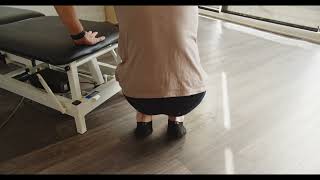
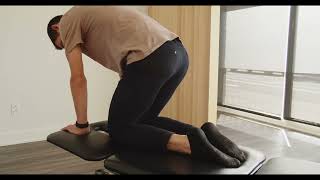
Incline squat: A squat performed on a surface inclined at 25 degrees increases tension on the patellar tendon. Pain at the tip of the patella is a sign of tendinopathy that should be interpreted in conjunction with otherfindings.¹⁷, ¹⁸, ¹⁴
Pressure on the tendon: Direct pressure on the lower tip of the patella often reproduces the characteristic pain, which can help pinpoint the problem; however, this sign must be interpreted in conjunction with the symptoms and other tests, as mild tenderness may be normal in athleteswho are pain-free.¹⁹, ²⁰
Imaging
An X-ray mainly shows the bones. It may be normal, but it can also reveal calcium deposits near the tendon or help identify other causes of pain. An X-ray alone is not enough to explain your symptoms.
An ultrasound may reveal a thickened tendon or a different texture.21 Such changes may also be present without pain. The choice between MRI and ultrasound depends on the clinical presentation, particularly if the diagnosis remains uncertain or if expected improvementsdo not occur22, 15.
What are the risk factors for patellar tendinopathy?
High training volume is associated with patellar tendinopathy, and jumping sports are among the most commonly affected. The evidence linking muscle stiffness and improper training progression to this condition remains limited and does not support classifying them as major risk factors11.
Studies are investigating whether the way people move can help predict injuries. Among recreational female runners, greater braking force with each step was associated with more running injuries23. This study did not focus solely on the patellar tendon and does not prove that correcting this factor alone prevents patellar tendinopathy.
Program Elements to Be Reviewed
- The amount of training and the rate at which it increases
- Flexibility of the quadriceps and the muscles at the back of the thigh
- Gluteal Muscle Strength
- Ankle mobility
- Jumping and Landing Techniques, Based on the Difficulties Observed
- The running surface and your comfort; its hardness is not, on its own, an established risk factor
Age, Sex, and Medical History
- Males: In a review of several studies, the proportion of people affected was slightly higher among men than among women, but the data do not allow for a definitive conclusion regarding a difference between the sexes7
- Age: Patellar tendinopathy affects adolescents and adult athletes; in a review of several studies, the proportion of people affected was higher among athletes aged 18 and older than among younger athletes7.
- A previous episode of patellar tendinopathy, which should be noted during the evaluation
When should you seek medical attention for patellar tendon pain?
Pain in the patellar tendon warrants a medical consultation if it persists, limits your activities, or makes it difficult to return to sports. A physical therapist can assess these issues and recommend a tailored treatment plan. However, certain symptoms require urgent medical attention, as described below.
Signs that warrant a consultation
See a doctor if the pain does not improve, limits your daily activities, prevents you from exercising at your usual level, or occurs while you are resting or at night.
Seek urgent medical attention if the pain is severe, if you cannot move your knee or put weight on it, if your knee is severely swollen or deformed, or if it locks up, gives out, or clicks painfully. A high fever or feelings of heat, cold, or chills, along with a red or warm knee, also require urgent medical attention. Read about the signs that require prompt evaluation.
After a popping sound or an injury, sudden difficulty straightening the knee may indicate a tendon tear and should be evaluated promptly. Read about the signs of a patellar tendon tear.
Direct Access
In Quebec, you can see a physical therapist directly without a doctor's referral. If your condition requires additional tests, your physical therapist will refer you to the appropriate professional.
If you also experience pain in other areas of the knee, such as pain behind the knee or on the sides, please mention it during your assessment.
How does physical therapy treat patellar tendinopathy?
Physical therapy treats patellar tendinopathy through progressive strengthening and adjustments to athletic and daily activities. Guidelines recommend starting with exercises, even though confidence in estimates of their effectiveness remains limited15. A review of twelve studies reports improvements in pain, strength, and functional ability that may persist after the program ends24.
Comprehensive assessment
Your physiotherapist will assess:
- Your sports and training history
- Your ankle, knee, and hip mobility
- The strength of your quadriceps, glutes, and calf muscles
- Your squat and jumping technique, if relevant
- Movements or actions that could contribute to the difficulties
Progressive exercise program
Strengthening exercises form the basis oftreatment15, 25. A progression can combine the following four steps. The choice, order, and difficulty should be tailored to your symptoms; this is not a one-size-fits-all protocol.
Phase 1 - Isometric Exercises:An isometric contraction involves working the muscle while holding a position. A study of six volleyball players observed an immediate reduction in pain that persisted 45 minutes after these contractions. Another study involving 21 participants found a slight immediate reduction in pain, similar whether the contractions were static or involved movements against resistance, with no clear sustained effect at 45minutes.²⁶, ²⁷ Holding a partial squat for an appropriate amount of time may be an option, depending on your tolerance.
Phase 2 - Slow movements against resistance:You can do squats, push a platform with your legs on a leg press machine, or extend your knee against resistance. The movement should be slow, and the range of motion should be adjusted to what you can handle.
Phase 3 - Progressive Loading Exercises:You gradually increase the weights and the difficulty of the exercises, depending on your tolerance.
Phase 4 - Jumps and Quick Movements:You're practicing jumps, landings, and movements that require you to generate force quickly as you prepare to return to sports.
Adjusting Daily and Athletic Activities
Adjusting the amount and intensity of your exercise allows you to stay active while the tendon heals. You should reduce the duration or frequency of your workouts depending on how your knee responds. Avoid movements that cause severe pain for a while. Stick to activities you can tolerate well, such as swimming, biking, or walking. Then gradually reintroduce the problematic activities.
10 Quick Tips to Understand Your Pain
One tip a day for 10 days to help you better understand your pain. About a 2-minute read.
Complementary Techniques
Depending on your assessment, your physiotherapist may also use:
- Manual therapy—that is, guided movements using the hands—to help improve limited mobility when an evaluation warrants it
- Taping, or the use of adhesive tape, can make certain movements more comfortable when resuming physical activity. In a trial involving 97 athletes, taping reduced pain in the short term compared to no taping, but showed no clear advantage over a control group that used a different type of tape. Read the study on taping
- Advice on equipment and technique
What exercises can you do at home for patellar tendinopathy?
At home, you can perform quadriceps contractions, modified squats, and other progressive exercises tailored to yourtolerance level²⁴, ²⁸. The sets, repetitions, and durations listed below are examples to be adjusted—not a program to follow in its entirety from the start. Agree on an acceptable level of pain with your physical therapist and also monitor your response after each session. Reduce the intensity if the pain exceeds this threshold or remains more severe the next day. Stop immediately if you experience sudden or severe pain, and have the urgent symptoms described above evaluated.
Isometric exercises (initial phase)
Isometric Quadriceps Contraction:- Sit with your leg straight and supported
- Tense the front of your thigh by gently pressing the back of your knee against the support
- You can aim for 45 seconds, five times, with breaks, if that length of time works for you; start with a shorter duration if necessary
- See if this exercise makes your knee feel better; immediate relief varies depending on the person and the exercise
Isometric wall squat. Slide your back down the wall until your knees are bent at a comfortable angle. Hold the position, then release. Adjust the angle to stay comfortable. Repeat as tolerated.
Strengthening Exercises (Intermediate Phase)
Incline Squat:- Use a stable, non-slip ramp with a support to help you maintain your balance. The height of 2 to 3 inches given as an example should be adjusted; avoid using a book or a board that might slip.
- Lower yourself slowly over 3 seconds
- Rise back up over 3 seconds
- 3 sets of 15 repetitions
- Light to moderate load
- Slow and controlled movement
- 3 sets of 15 repetitions
To step down from a small step, place the leg you want to work on a stable step. Slowly lower the other foot toward the floor, then bring it back up. Use the handrail for balance, and adjust the height and number of repetitions according to your tolerance.
Complementary Stretches
Quadriceps Stretch:- Stand with your feet firmly planted on the ground, and bring your foot behind you if you can do so comfortably
- Keep your knees together
- Hold for 30-45 seconds
- Sitting, with one leg extended forward
- Lean forward while keeping your back straight
- Hold for 30-45 seconds
Can you treat patellar tendonitis on your own?
Here's what you can try on your own:You can temporarily reduce activities that are very painful, continue with movements you can tolerate, and try gentle stretches. A cold pack wrapped in a cloth can provide relief for up to 20 minutes at a time. It’s important to gradually resume your exercises. A program that’s too difficult or not rigorous enough may not meet your needs; an evaluation can help tailor it to your needs.
The Role of the Physical Therapist:The physical therapist adjusts the intensity of the exercises to gradually build up the tendon’s tolerance. The evaluation aims to identify the likely cause of the symptoms, check for signs that require medical attention, and help select appropriate exercises. It does not guarantee that a single cause will be identified with certainty.
Follow-up with at-home exercises:Assessment and follow-up can help you use the program at home and adjust it based on your progress. Home exercises have also been shown to be beneficial in studies; the best approach to follow-up depends on your needs.
How long does it take to recover from patellar tendinopathy?
Recovery from patellar tendinopathy often takes several months, with a recommended strengthening program lasting at least twelve weeks. This guideline is intended to help plan and reassess treatment, not to guarantee a specific recovery date. If progress is insufficient, the diagnosis and treatment plan should be reevaluated. Read the treatment guide.
In a trial involving 76 athletes, nearly all of whom had been experiencing symptoms for more than six weeks, two home exercise programs improved pain levels and functional ability. At 24 weeks, the progressive program had improved scores by an average of 28 points on a 100-point questionnaire, compared with 18 points for the slow-descent exercises; the adjusted difference between the groups was 9 points. The desired return to sports at the previous level was achieved by 43% versus 27% of the participants followed, with no statistically significant difference. Read the study by Breda and colleagues. These favorable results do not imply the same timeline for every individual.
Factors That Can Aid Recovery
Habits to encourage:- See a doctor if the pain persists or interferes with your daily activities
- Follow the program regularly and let us know what's preventing you from sticking to it
- Adjust the amount of force based on the knee's response
- Address the issues related to strength, mobility, or movement identified during the evaluation
- Symptoms that persist without improvement
- Continuing activities that cause severe pain
- Difficulty doing the exercises regularly
- Returning to sport too quickly
Return to sport
Returning to sports is a step-by-step process. The physical therapist will assess the strength of both legs, your ability to jump and perform sports-specific movements, how your knee responds, and your confidence level. Symptoms must remain within the agreed-upon limits and should not worsen as the sessions progress.
Resuming activity at a pace that exceeds what your knee can handle may cause your symptoms to flare up again. Work with your physical therapist to adjust your activity level rather than relying solely on a schedule.
Studies have investigated whether differences between the two legs can predict injury. The results vary widely depending on the tests, sports, and individuals. A difference in strength, power, or balance can help in choosing exercises, but correcting it does not guarantee that an injury will be prevented29.
How to prevent recurrence?
To minimize the risk of recurrence, you can continue with strengthening exercises, gradually increase the intensity of your workouts, and monitor how your knee responds. These habits support a gradual return to physical activity, though they do not guarantee that pain will not return.
Prevention Strategies:- Continue doing strength-training exercises on a regular basis.
- Increase your training volume in small increments from one week to the next, adjusting based on how your knee feels the next day
- Warm up adequately before intense activities
- Vary your activities so you don't constantly repeat the same movements
- Maintain comfortable flexibility in the muscles at the front and back of the thigh
Reduce intensity if you notice:
- Pain that gradually increases over several days
- Morning stiffness that persists long after waking up
- Pain that does not return to its usual level before the next session
- Decreased performance
If your knee pain persists despite these adjustments, see a doctor. It's better to take action early than to wait for the problem to get worse.
If you are a runner, the prevention principles are similar to those for shin splints or Achilles tendinopathy: gradual progression and regular strengthening.
Need professional advice?
Our physical therapists can assess your condition and recommend a personalized treatment plan.
Make an appointmentReferences
Links open in a new tab.
- Mosca MJ, Rashid MS, Snelling SJ, Kirtley S, Carr AJ, Dakin SG. Trends in the theory that inflammation plays a causal role in tendinopathy: a systematic review and quantitative analysis of published reviews. BMJ Open Sport Exerc Med. 2018;4(1):e000332. (Back to section: 1)
- Khan KM, Cook JL, Bonar F, Harcourt P, Astrom M. Histopathology of common tendinopathies. Update and implications for clinical management. Sports Med. 1999;27(6):393-408. (Back to section: 1)
- Hohenberger GM, Dreu M, Kreuzthaler H, Gruber G, Riedl R, Schwarz A, et al. Patellar Tendon Length Is Associated with Lower Extremity Length but Not Gender. Indian J Orthop. 2020;54(3):352-357. (Back to section: 1)
- Basso O, Johnson DP, Amis AA. The anatomy of the patellar tendon. Knee Surg Sports Traumatol Arthrosc. 2001;9(1):2-5. (Back to section: 1)
- Nisell R, Ekholm J. Patellar forces during knee extension. Scand J Rehabil Med. 1985;17(2):63-74. (Back to section: 1)
- Sprague A, Epsley S, Silbernagel KG. Distinguishing Quadriceps Tendinopathy and Patellar Tendinopathy: Semantics or Significant? J Orthop Sports Phys Ther. 2019;49(9):627-630. (Back to section: 1)
- Nutarelli S, da Lodi CMT, Cook JL, Deabate L, Filardo G. Epidemiology of Patellar Tendinopathy in Athletes and the General Population: A Systematic Review and Meta-analysis. Orthop J Sports Med. 2023;11(6):23259671231173659. (Back to sections: 1, 2, 3)
- Lian OB, Engebretsen L, Bahr R. Prevalence of jumper's knee among elite athletes from different sports: a cross-sectional study. Am J Sports Med. 2005;33(4):561-7. (Back to section: 1)
- Morgan S, Coetzee FF. Proposing a Patellar Tendinopathy Screening Tool Based on a Systematic Review. S Afr J Physiother. 2018;74(1):454. (Back to section: 1)
- Malliaras P, Kamal B, Nowell A, Farley T, Dhamu H, Simpson V, et al. Patellar tendon adaptation in relation to load intensity and contraction type. J Biomech. 2013;46(11):1893-9. (Back to sections: 1, 2)
- Sprague AL, Smith AH, Knox P, Pohlig RT, Grävare Silbernagel K. Modifiable risk factors for patellar tendinopathy in athletes: a systematic review and meta-analysis. Br J Sports Med. 2018;52(24):1575-1585. (Back to sections: 1, 2, 3, 4)
- Backman LJ, Danielson P. A limited range of ankle dorsiflexion predisposes junior elite basketball players to patellar tendinopathy: a 1-year prospective study. Am J Sports Med. 2011;39(12):2626-33. (Back to section: 1)
- Scattone Silva R, Song KE, Hullfish TJ, Sprague A, Silbernagel KG, Baxter JR. Patellar Tendon Load Progression during Rehabilitation Exercises: Implications for the Treatment of Patellar Tendon Injuries. Med Sci Sports Exerc. 2024;56(3):545-552. (Back to section: 1)
- Malliaras P, Cook J, Purdam C, Rio E. Patellar Tendinopathy: Clinical Diagnosis, Load Management, and Advice for Challenging Case Presentations. J Orthop Sports Phys Ther. 2015;45(11):887-98. (Back to sections: 1, 2)
- Ophey M, Koëter S, van Ooijen L, van Ark M, Boots F, Ilbrink S, et al. Dutch Multidisciplinary Guideline on Anterior Knee Pain: Patellofemoral Pain and Patellar Tendinopathy. Knee Surg Sports Traumatol Arthrosc. 2025;33(2):457-469. (Back to sections: 1, 2, 3, 4)
- Lee PYF, Nixion A, Chandratreya A, Murray JM. Synovial Plica Syndrome of the Knee: A Commonly Overlooked Cause of Anterior Knee Pain. Surg J (N Y). 2017;3(1):e9-e16. (Back to section: 1)
- Zwerver J, Bredeweg SW, Hof AL. Biomechanical analysis of the single-leg decline squat. Br J Sports Med. 2007;41(4):264-8; discussion 268. (Back to section: 1)
- Mendonça Lde M, Ocarino JM, Bittencourt NF, Fernandes LM, Verhagen E, Fonseca ST. The Accuracy of the VISA-P Questionnaire, Single-Leg Decline Squat, and Tendon Pain History in Identifying Patellar Tendon Abnormalities in Adult Athletes. J Orthop Sports Phys Ther. 2016;46(8):673-80. (Back to section: 1)
- Maffulli N, Oliva F, Loppini M, Aicale R, Spiezia F, King JB. The Royal London Hospital Test for the clinical diagnosis of patellar tendinopathy. Muscles Ligaments Tendons J. 2017;7(2):315-322. (Back to section: 1)
- Cook JL, Khan KM, Kiss ZS, Purdam CR, Griffiths L. Reproducibility and clinical utility of tendon palpation to detect patellar tendinopathy in young basketball players. Victorian Institute of Sport Tendon Study Group. Br J Sports Med. 2001;35(1):65-9. (Back to section: 1)
- Warden SJ, Brukner P. Patellar tendinopathy. Clin Sports Med. 2003;22(4):743-59. (Back to section: 1)
- Catapano M, Babu AN, Tenforde AS, Borg-Stein J, McInnis KC. Tendinopathy of the Knee Extensor Mechanism: Evaluation, Treatment, and Prevention. Curr Sports Med Rep. 2022;21(6):205-212. (Back to section: 1)
- Napier C, MacLean CL, Maurer J, Taunton JE, Hunt MA. Kinetic risk factors for running-related injuries in female recreational runners. Scand J Med Sci Sports. 2018;28(10):2164-2172. (Back to section: 1)
- Núñez-Martínez P, Hernández-Guillen D. Management of Patellar Tendinopathy Through Monitoring, Load Control, and Therapeutic Exercise: A Systematic Review. J Sport Rehabil. 2022;31(3):337-350. (Back to sections: 1, 2)
- Rosen AB, Wellsandt E, Nicola M, Tao MA. Clinical Management of Patellar Tendinopathy. J Athl Train. 2022;57(7):621-631. (Back to section: 1)
- Rio E, Kidgell D, Purdam C, Gaida J, Moseley GL, Pearce AJ, et al. Isometric exercise induces analgesia and reduces inhibition in patellar tendinopathy. Br J Sports Med. 2015;49(19):1277-83. (Back to section: 1)
- Holden S, Lyng K, Graven-Nielsen T, Riel H, Olesen JL, Larsen LH, et al. Isometric exercise and pain in patellar tendinopathy: A randomized crossover trial. J Sci Med Sport. 2020;23(3):208-214. (Back to section: 1)
- Breda SJ, Oei EHG, Zwerver J, Visser E, Waarsing E, Krestin GP, et al. Effectiveness of progressive tendon-loading exercise therapy in patients with patellar tendinopathy: a randomized clinical trial. Br J Sports Med. 2021;55(9):501-509. (Back to section: 1)
- Guan Y, Bredin SSD, Taunton J, Jiang Q, Wu N, Warburton DER. Association Between Inter-Limb Asymmetries in Lower-Limb Functional Performance and Sports Injuries: A Systematic Review of Prospective Cohort Studies. J Clin Med. 2022;11(2). (Back to section: 1)
- Ferretti A, Puddu G, Mariani PP, Neri M. The natural history of jumper's knee. Patellar or quadriceps tendonitis. Int Orthop. 1985;8(4):239-42.
.jpg)
Other conditions

Hip osteoarthritis is the normal wear and tear of the hip joint. It is often said that osteoarthritis is the wear and tear of the cartilage between our bones. That is true, but it involves more than just the cartilage. Cartilage is a tissue that acts as a cushion between the surfaces of our bones and allows our joints to glide smoothly and move fluidly.
This is normal wear and tear of the knee joint. It’s often said that osteoarthritis is the wearing down of the cartilage between our bones. That’s true, but it’s more than just the cartilage. Cartilage is a tissue that acts as a cushion between the surfaces of our bones and allows our joints to glide smoothly and move fluidly.
It is an inflammation of the subacromial bursa in the shoulder joint.
A bursa is a small, thin sac filled with fluid that is found in many of the body's joints. This small sac acts as a cushion within the joint and lubricates the structures that are subject to increased friction.
It is a tissue that surrounds the shoulder and helps keep the shoulder bone in place within the joint. The capsule helps keep the joint stable.
Neck pain is a general term used to describe pain in the neck that has no specific cause, such as an accident or a sudden awkward movement. Neck pain is therefore synonymous with “my neck hurts, and nothing in particular happened.”
In both types of injury, pain is felt in the neck and then radiates into the arm, or vice versa.
Make an appointment now
We offer a three-pronged quality assurance approach: optimized treatment time, a second opinion from a physical therapist, and ongoing expertise to ensure effective care tailored to your needs.
Customer satisfaction is our top priority
At Physioactif, excellence guides everything we do, but our patients are the best ones to tell you about it. Take a look at their verified reviews to get a real sense of their experience.









Discover our physical therapy clinics
We have locations in several areas to better serve you.
Blainville
190 Bas-de-Sainte-Thérèse Road, Suite 110,
Blainville, Quebec
J7B 1A7
Located in Blainville, near Rosemère, the Physioactif clinic is easily accessible to residents of the area and the surrounding communities
Boucherville
690 Rue de Montbrun, Suite S,
Boucherville, Quebec
J4B 8H2
Located in Boucherville, the Physioactif clinic is easily accessible to people in the area
Laval
3224 Jean-Béraud Ave., Suite 220, Laval,
QC H7T 2S4
Located in Chomedey, in the heart of Laval, the Physioactif clinic is easily accessible to people in the area
Montreal
8801 Lajeunesse Street,
Montreal,
QC H2M 1R8
Located in Ahuntsic, near Villeray, the Physioactif clinic is easily accessible to residents of both neighborhoods
Saint-Eustache
180 25th Avenue, Suite
201 Saint-Eustache
QC J7P 2V2
Located in Saint-Eustache, the Physioactif clinic is easily accessible to residents of the area and the surrounding communities
Vaudreuil
21 Cité-des-Jeunes Boulevard, Suite 240,
Vaudreuil-Dorion, Quebec
J7V 0N3
Located in Vaudreuil-Dorion, the Physioactif clinic is easily accessible to people in the area
Make an appointment now