Achilles tendonitis or tendinopathy
It's an irritation of the Achilles tendon.
.png)
.png)
.png)


Persistent pain behind the heel prevents you from running or walking normally. This condition affects up to 52% of runners during their athletic careers. Achilles tendinopathy is much more common among athletes. Its lifetime prevalence is 23.9% among athletes, compared to 5.9% in the general population.
Here's the good news: with the right treatment, the vast majority of Achilles tendinopathies heal completely. This guide explains how to recognize this injury, understand its causes, and treat it effectively. Our physiotherapists at Physioactif help patients return to activity every day with protocols based on the best evidence-based practices.
What is the difference between tendinitis and tendinopathy?
Confusion between these two terms is common, but the distinction is clinically important. Tendinitis involves acute inflammation of the tendon, usually in the first few days following a sudden injury. Tendinopathy describes chronic degeneration of the tendon without true inflammation, resulting from gradual overuse.
Chronic tendon pain is not caused by inflammation, as the term “tendinitis” might suggest. Rather, it involves damage to the tendon itself, a condition known as tendinopathy. This distinction fundamentally changes the approach to treatment. Anti-inflammatory medications are less effective than previously thought for chronic tendinopathies. Progressive strengthening exercises and load adaptation are now the standard of care.
What is the Achilles tendon and why is it vulnerable?
The Achilles tendon connects the calf muscles (gastrocnemius and soleus) to the heel bone (calcaneus). It is the thickest and strongest tendon in the human body. It withstands considerable forces: between 6 and 8 times your body weight during running.
When this load exceeds the tendon's capacity, it can tear: our guide on the Achilles tendon tear explains how to recognize and treat this tear.This structure results from the fusion of three calf muscles into a single insertion point. Despite its robustness, the tendon has a particular area of vulnerability. The region located between 2 and 6 cm above its insertion receives less blood. This limited blood supply explains why this area is injured more frequently.
Achilles tendinopathy most often affects the middle portion of the tendon. The insertional form—where the tendon attaches to the heel—is less common.
What causes Achilles tendinopathy?
Gradual overuse is the cause of most Achilles tendinopathies. The tendon adapts to the loads placed on it, but this adaptation takes time. Training mistakes, such as increasing training volume or intensity too quickly, are a common cause of Achilles tendinopathy.
A too-rapid increase in training volume often triggers this injury. Sudden changes in footwear, especially switching to minimalist shoes, can alter your biomechanics. Also, resuming activity after a long break is considered a high-risk period.
Contributing Biomechanical Factors:
- Excessive calf or soleus muscle stiffness
- Weakness in the intrinsic foot muscles
- Inadequate motor control of the ankle
- Excessive pronation or supination of the foot
- Reduced ankle dorsiflexion mobility
Problematic Training Factors:
- A problematic training factor: a sudden increase in weekly volume, rather than a specific percentage threshold.
- Suddenly introducing hill workouts or interval training
- Increasing jumps without proper progression
- Changing training surfaces (e.g., from asphalt to trails)
- Accumulating activities that stress the tendon without adequate recovery
Individual Risk Factors:
- Age between 30 and 50 (peak incidence)
- Previous history of Achilles tendinopathy
- Use of certain antibiotics (e.g., fluoroquinolones)
- Metabolic conditions (such as diabetes, high cholesterol)
- Being overweight, which increases mechanical load
What are the symptoms of Achilles tendinopathy?
Morning pain during your first steps is the most typical and telling symptom. This stiffness usually lessens after a few minutes of movement, a phenomenon known as "warming up." However, the pain may then return during or after physical activity.
Typical Symptom Progression:
In the early stage, pain occurs only after exertion. In the intermediate stage, it occurs at the start of activity, subsides as the body warms up, and then returns. In the advanced stage, pain persists during activity and limits performance. In the severe stage, constant pain affects daily activities. If treated early, Achilles tendinopathy can be reversible. In the early stage—known as the reactive stage—the tendon retains the ability to return to its normal state if the load is adjusted in time.
Clinical Signs to Watch For:
- Noticeable pain and stiffness in the morning during the first few minutes
- Tenderness when touching the tendon, often in a specific spot
- Visible or palpable thickening of the tendon (a nodule)
- Crepitation (a cracking sensation) during movement
- Pain that increases when putting weight on the balls of your feet
- Weakness when pushing off or jumping
- Discomfort when climbing stairs, hills, or walking on uneven ground
Warning sign requiring immediate consultation: Sudden and intense pain accompanied by an audible popping sound, a palpable gap in the tendon, or a complete inability to push off on your toes suggests a partial or complete rupture. This situation is a medical emergency requiring rapid evaluation to determine if conservative or surgical treatment is indicated.
How is Achilles tendinopathy diagnosed?
The diagnosis is based primarily on a clinical examination and a detailed history of symptoms. A clinical evaluation by an experienced physical therapist—which combines several tests, such as palpation and load-bearing pain—usually allows for the identification of Achilles tendinopathy, even though no single test is completely accurate.
Components of Clinical Assessment:
The detailed history explores when your symptoms started, identifiable triggers, how they've progressed over time, and their impact on your daily activities. The clinician will ask about any recent changes in your training, footwear, or activities.
Systematic palpation precisely locates the painful area. The physiotherapist will feel along the entire length of the tendon to identify any thickening, nodules, or areas of increased tenderness.
The painful arc test confirms that the pain originates from the tendon. By moving the foot into plantarflexion and dorsiflexion, the sensitive area moves with the tendon, confirming its tendinous origin rather than involvement of surrounding tissues.
Functional Tests Assessing Capacity:
- Single-leg heel raise (unilateral strength test)
- Repeated single-leg hops
- Stair descent test
- Ankle dorsiflexion assessment
- Calf isometric strength measurement
When is Imaging Necessary?
Musculoskeletal ultrasound allows for direct visualization of the tendon's internal structure, identifying areas of degeneration, measuring thickening, and detecting partial tears. This imaging method is accessible, radiation-free, and allows for a dynamic examination.
MRI offers superior resolution and visualizes surrounding structures. It is indicated in complex cases, when an associated condition is suspected, or before surgery.
Standard X-rays do not show the tendon itself (soft tissues are invisible to X-rays), but they can be useful for identifying calcifications within the tendon, bone problems in the heel, or structural abnormalities contributing to the injury.
Imaging is primarily used to confirm atypical cases, assess severity in resistant chronic cases, or plan interventional treatment. In most cases, a clinical examination is sufficient to establish the diagnosis and begin treatment.
What are the physiotherapy treatments for Achilles tendinopathy?
Strength training exercises, including eccentric exercises, are the first-line treatment with the strongest research support. However, they do not work for everyone: about 45% of patients do not improve sufficiently with exercise programs alone. This approach is based on solid scientific evidence.
The physical therapist monitors progress and combines different therapeutic approaches. Treatment is tailored to the stage of the injury and the patient’s activity level. Eccentric exercises are not the only effective option. Combined strengthening—or training with heavy loads and slow movements—is supported by an equally strong body of evidence, which allows for flexibility in tailoring the program to the patient.
Supervised Eccentric Exercise Program:
The classic protocol spans 12 weeks with two daily exercises: straight-knee exercises to target the gastrocnemius, and bent-knee exercises to engage the soleus. Each exercise includes 3 sets of 15 repetitions, performed slowly (3 seconds for the lowering phase).
Progressive loading starts with body weight, then gradually adds a weighted backpack or dumbbells as tolerated. Mild pain during the exercise (up to 5/10) is acceptable and even desirable, but it should not persist the next day or progressively increase.
10 Quick Tips for Understanding Your Pain
The ones that have made the biggest difference in my patients' lives. 1 a day, 2 minutes.
Education on Load Management:
The concept of load management is a fundamental pillar of modern treatment. The physiotherapist helps identify irritating activities and modify them temporarily, without imposing complete rest, which would be counterproductive.
Gradual progression towards a full return to activities follows a continuum: modifying activities, adapting load, progressing volume, increasing intensity, and finally returning to sport-specific activities.
Complementary Manual Therapy:
Soft-tissue work can provide short-term relief for pain in the supratibial-Achilles complex: the physical therapist targets restrictions and improves ankle mobility. This work prepares the way for the real treatment—restoring the tendon’s load-bearing capacity through progressive exercises.
Working on the entire posterior muscle chain optimizes biomechanics. Restrictions in the knee, hip, or back can alter ankle mechanics and overload the Achilles tendon.
Complementary Therapeutic Modalities:
Shockwave therapy is an option for more stubborn cases, especially when other nonsurgical treatments have not been effective. This treatment stimulates the body's natural healing processes.
Dry needling can stimulate healing in refractory chronic tendinopathies.
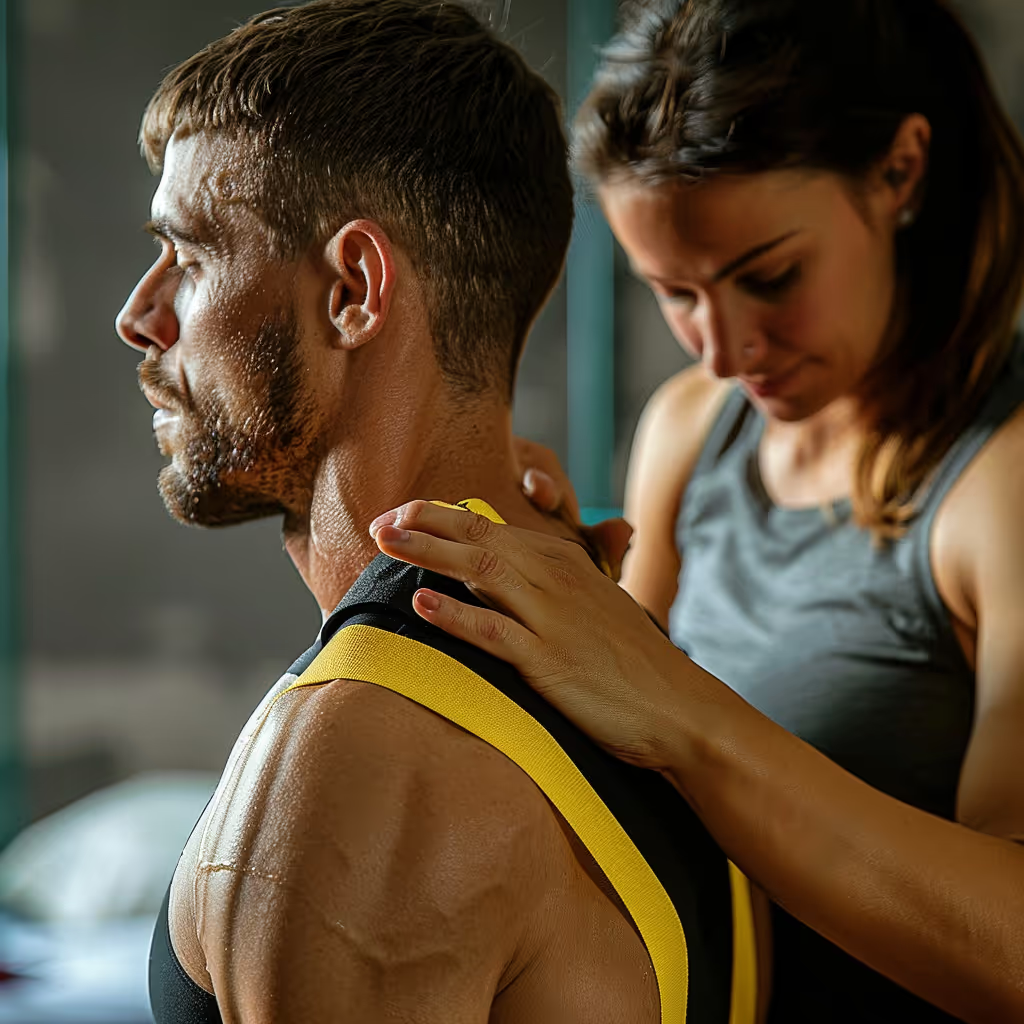
Neuromuscular taping may provide temporary relief by partially unloading the tendon, although evidence of its long-term effectiveness remains limited. Cortisone injections should be used with caution for the Achilles tendon, as cases of rupture following injection have been reported.
Why Complete Rest is Not Recommended:
The tendon needs mechanical stress to heal and strengthen. Complete rest leads to deconditioning, loss of strength, and muscle atrophy, which make it harder to return to activity. Maintaining modified physical activity (cycling, swimming, elliptical training) promotes healing while preserving cardiovascular fitness and overall muscle strength. Complete rest is not recommended for Achilles tendinopathy that is not in an acute phase. Instead, it is advised to continue recreational activities within tolerable pain limits while following a rehabilitation program.
Our physiotherapists at Physioactif use an evidence-based approach. Physiotherapy for sports injuries integrates these principles into all our rehabilitation protocols.
What specific exercises help heal Achilles tendinopathy?
Heel drop exercises, also known as eccentric exercises, form the foundation of rehabilitation. This eccentric movement, where the muscle lengthens under tension, stimulates the reorganization of tendon fibers and gradually strengthens the tendon's ability to bear load.
Detailed technique for classic eccentric exercise:
Stand on a stair step or a step platform with the balls of your feet on the surface and your heels hanging off. Rise up onto the balls of both feet by contracting your calves. Then, shift all your weight onto the affected foot (lift the other foot). Slowly lower your heel below the level of the step, counting to 3 seconds, while controlling the movement. Use both feet to push back up to the starting position.
Perform two variations: with knees straight (targets the gastrocnemius) and with knees bent at approximately 30 degrees (targets the soleus). Complete 3 sets of 15 repetitions for each variation, twice a day, 7 days a week for 12 weeks.
Load progression:
Weeks 1-2: Body weight only, establish technique
Weeks 3-4: Add 2-5 kg in a backpack if the exercise becomes easy
Weeks 5-8: Gradually increase the load by 2-5 kg each week
Weeks 9-12: Maintain a load that allows you to complete repetitions with moderate effort
Complementary strengthening exercises:
Standing bilateral calf raises strengthen concentric force. Perform 3 sets of 15-20 repetitions with a 2-second pause at the top of the movement.
Isometric exercises in a raised calf position provide short-term pain relief. Hold the elevated position for 30-45 seconds, repeating 4-5 times.
Progressive functional training incorporates squats, lunges, and single-leg exercises to prepare for a return to specific activities.
Mobility and flexibility exercises:
The straight-knee calf stretch targets the gastrocnemius. Face a wall, place your back foot flat on the floor with your knee straight, and lean forward until you feel the stretch. Hold for 30 seconds, repeat 3 times.
The bent-knee stretch targets the soleus and Achilles tendon. Use the same position but with the back knee slightly bent, focusing on lowering your heel towards the floor. Hold for 30 seconds, repeat 3 times.
Dorsiflexion mobilization with an elastic band improves ankle range of motion. Attach an elastic band around your ankle, pull your shin forward while keeping your heel on the ground. Perform 20 slow repetitions.
Interpreting pain during exercises:
Mild to moderate pain (2–5 out of 10) during exercise is normal and even desirable. It’s a sign that the tendon is being challenged without being overloaded. Stop if the pain exceeds 5 out of 10 during exercise, or if it persists for more than 24 hours after the session. A gradual increase in pain over several days indicates that the workload should be reduced. It’s okay to feel a little pain during and after exercises. This is part of the rehabilitation process and does not necessarily mean you’re aggravating the injury.
When to progress to more advanced exercises?
Progression toward running, jumping, and specific sports activities follows specific criteria. You should be able to do 25 single-leg calf raises without pain, jump in place 10 times on one foot without pain, and walk for 30 minutes without symptoms before considering a gradual return to running. When running, the Achilles tendon承受s peak loads equivalent to several times your body weight. This is one of the reasons why resuming running must be done very gradually.
Rehabilitation exercises are customized according to your condition and goals. Our physiotherapists specializing in sports injuries supervise this progression to ensure a safe return to sport.
Can You Treat Achilles Tendinitis Yourself?
Self-treatment can relieve mild Achilles tendinitis (ice, rest, gentle stretches). However, without specific eccentric exercises, healing is much slower. Without an accurate diagnosis, you risk maintaining compensations or doing counterproductive exercises that delay healing.
The physiotherapist prescribes eccentric exercises with optimal progression for tendon healing. An evaluation helps identify the exact cause, rule out red flags, and create a progressive treatment plan. Exercises are tailored to your specific condition, not generic.
Our approach: professional assessment + supervised home exercise program = better long-term results.
Are you hesitating between self-treatment and a consultation? Free 15-min consultation to discuss your situation.
How Long Does Healing Take and How Can Relapses Be Prevented?
Recovery time:
Recovery from tendinopathy can take 6 to 12 months, sometimes longer. It takes less time when symptoms and tendon damage are less severe. This may seem like a long time, but it reflects the time needed for structural changes to occur in the tendon. The first improvements in symptoms usually occur after 4 to 6 weeks of appropriate treatment.
Factors influencing healing time:
The duration of symptoms prior to treatment affects the prognosis. Tendinopathy treated early responds better than a chronic condition. Adherence to the exercise program is the most important factor. Doing the exercises regularly makes a big difference. The best program is often simply the one the person is most likely to follow. Continuing activities that aggravate the condition slows down healing.
Typical recovery timeline:
Weeks 1-3: Adapting to exercises, learning load management.
Weeks 4-6: First improvements, decreased morning stiffness, better daily tolerance.
Weeks 7-12: Continuous improvement, increased functional capacity, gradual reintroduction of activities.
Months 4-6: Consolidating gains, gradual return to full activities, maintaining a preventive program.
Objective criteria for returning to sport:
The absence of pain in all daily activities is a prerequisite. Climbing stairs, walking on uneven terrain, and standing on your tiptoes should not cause any discomfort.
The strength of the calf must be close enough to that of the healthy side—as measured by tests such as the number of single-leg step-ups—before a full return to sports can be considered. The number of single-leg calf step-ups and isometric strength measured on a dynamometer provide objective measurements.
The ability to perform single-leg jumps without pain demonstrates that the tendon can tolerate high dynamic loads. Test progressively: jumping in place, forward jumps, lateral jumps, then jumps with changes of direction.
The eccentric control stair descent test evaluates functional capacity. Descend one step by controlling the movement with one leg, repeat 10 times without pain or excessive fatigue.
Signs that progression should be slowed down:
An increase in morning pain or worsening stiffness indicates overload. Pain that lasts more than 24 hours after an activity or requires regular painkillers suggests that you need to reduce the intensity or volume of your activity.
The appearance of swelling, redness, or increased tenderness to the touch signals excessive irritation. Your tendon communicates its limits: learn to recognize and respect them.
Rehabilitation after a sports injury requires patience and consistency. Our physiotherapists support you at every stage, adjusting the rehabilitation program according to your progress.
How to prevent recurrence:
Gradually increasing the intensity of your training is the best form of prevention. Avoiding sudden increases in weekly training volume protects the tendon better than aiming for a specific percentage. A gradual increase is preferable. This gradual approach, without sudden changes, protects the tendon by giving it time to adapt to the new loads.
Effective training strategies:
Training periodization alternates between weeks of high intensity and weeks of recovery. This might include a few weeks of progression followed by a week of significantly reduced volume to allow for recovery.
Need professional advice?
Our physical therapists can assess your condition and provide you with a personalized treatment plan.
Make an appointmentDiversifying training surfaces reduces repetitive stress. Alternate between asphalt, synthetic tracks, dirt trails, and grass. Each surface engages the tendon differently and distributes mechanical stress.
Gradually incorporating high-intensity activities prevents overload. Interval, hill, or speed sessions should be introduced gradually, never all at once. Start with moderate intensities for short durations before increasing.
Preventive strengthening program:
Maintain calf strength with eccentric exercises 2-3 times a week, even after full recovery. This maintenance program takes 10-15 minutes and significantly reduces the risk of recurrence.
Proprioception and balance exercises improve ankle motor control. Stand on one foot for 30 seconds, progress to unstable surfaces, add perturbations, or close your eyes.
Overall strengthening of the posterior chain (glutes, hamstrings, lower back) optimizes running biomechanics and reduces the load on the Achilles tendon.
Footwear selection and management:
Excessive shoe wear (more than 600-800 km for running shoes) reduces cushioning and alters biomechanics. Track your mileage and replace shoes before the sole is completely worn out.
The transition to different types of shoes requires a very gradual approach. Switching to minimalist shoes or shoes with a low heel-to-toe drop significantly increases the load on the Achilles tendon. This transition should take place over several months, with very gradual increases in the distance run in the new shoes.
Rotating between several pairs of shoes that vary slightly in characteristics (drop, cushioning, support) distributes mechanical stress differently with each outing.
Respecting pain signals:
Pain is a warning signal that should never be ignored. A slight discomfort at the start of a run that disappears with a warm-up may be acceptable, but pain that increases during effort or persists after activity requires immediate load modification.
The principle of "not exceeding 3 out of 10" during activity is a practical guide. If pain reaches or exceeds this level, the activity is likely too intense or prolonged for the tendon's current capacity.
Lifestyle factors:
Adequate hydration influences tendon health. Tendons are composed of 65-70% water, and chronic dehydration can affect their mechanical properties.
Sufficient sleep (7-9 hours) is essential for tissue repair processes. Chronic sleep deprivation compromises healing and increases the risk of injury.
Stress management and overall recovery impact training load tolerance. High psychological stress combined with a high training load creates an environment conducive to injuries.
Recurrence statistics and implications:
In some patients, symptoms may persist or recur in the years following the initial episode, requiring more intensive treatment. This rate decreases significantly among individuals who maintain a regular strengthening program and follow the principles of gradual progression.
Recurrences most often occur when activities are resumed too quickly after healing, when progression principles are not followed during training, or when strengthening exercises are prematurely abandoned.
Sports injury prevention integrates these principles into a holistic approach to maintaining musculoskeletal health. Our physiotherapists offer preventive assessments and personalized programs for athletes of all levels.
When should you consult a physiotherapist for Achilles tendinopathy?
Consult if Achilles tendon pain persists for more than two weeks despite reducing your activities. Early intervention significantly shortens healing time and prevents the condition from becoming chronic.
Reasons to consult promptly:
Pain that does not decrease with relative rest or progressively worsens requires a professional evaluation. Prolonged waiting allows tendon degeneration to advance and complicates treatment.
Symptoms that persist despite reasonable self-treatment, with no improvement, indicate that it is advisable to seek medical attention to obtain a diagnosis and an appropriate treatment plan. The tendon does not heal on its own at this stage and requires active intervention.
Pain that affects your daily activities like walking, climbing stairs, or simply getting up in the morning already has a significant impact on your quality of life. Do not let the condition deteriorate further.
Sudden, intense pain accompanied by a snapping sensation is an emergency. This presentation suggests a partial or complete rupture that requires immediate evaluation to determine the appropriate treatment.
Significant difficulty or inability to stand on your tiptoes indicates significant functional impairment. This shows that the tendon can no longer support normal loads.
What a physiotherapy assessment includes:
A thorough history explores the onset of symptoms, triggering factors, how symptoms have changed over time, treatments already tried, and their effectiveness. This information guides the diagnosis and treatment plan.
A systematic physical examination includes tendon palpation, strength tests, range of motion assessment, gait observation, and biomechanical analysis. These elements help establish an accurate diagnosis.
Identifying contributing factors involves examining your equipment (shoes), training habits, biomechanics, and individual risk factors. Correcting these elements is an integral part of the treatment.
Establishing a personalized treatment plan considers your goals, activity level, the severity of your condition, and your ability to follow the program. The plan evolves based on your response to interventions.
Benefits of early consultation:
Seeing a physical therapist early on allows you to get a reliable diagnosis and a tailored treatment plan right from the start, and to avoid self-treatment mistakes that prolong the discomfort. The tendon is less damaged, and the necessary adjustments are less extensive.
Prompt identification and correction of causal factors prevent worsening and reduce the risk of the condition becoming chronic. The longer you wait, the more biomechanical compensations develop and complicate the clinical picture.
Early learning about load management and appropriate exercises gives you the tools to actively take charge of your recovery. This empowerment improves treatment adherence and long-term results.
Our services at Physioactif:
At Physioactif, our physiotherapists specializing in musculoskeletal disorders use protocols based on the best available evidence. You do not need a medical referral to consult for physiotherapy in Quebec, as we are first-line healthcare professionals.
Our approach integrates comprehensive biomechanical assessment, supervised exercise programs, manual therapy techniques, and regular follow-ups. Book an appointment today to start your rehabilitation.
For other causes of pain in the calf and ankle area, see our comprehensive guide to calf pain. If you’re a runner concerned about injury prevention, our guide to common running injuries provides comprehensive information on the various conditions that affect runners. Among runners, Achilles tendinopathy is the most common type of lower-limb tendinopathy.
Scientific References
-
Lopes AD, Hespanhol LC Jr, Yeung SS, Costa LO. What are the main running-related musculoskeletal injuries? A systematic review. Sports Med. 2012;42(10):891-905. DOI: 10.2165/11631170-000000000-00000
-
Maffulli N, Khan KM, Puddu G. Overuse tendon conditions: time to change a confusing terminology. Arthroscopy. 1998;14(8):840-3. DOI: 10.1016/s0749-8063(98)70021-0
-
Komi PV, Fukashiro S, Järvinen M. Biomechanical loading of Achilles tendon during normal locomotion. Clin Sports Med. 1992;11(3):521-31. PMID: 1638636
-
Cook JL, Purdam CR. Is tendon pathology a continuum? A pathology model to explain the clinical presentation of load-induced tendinopathy. Br J Sports Med. 2009;43(6):409-16. DOI: 10.1136/bjsm.2008.051193
-
James SL, Bates BT, Osternig LR. Injuries to runners. Am J Sports Med. 1978;6(2):40-50. DOI: 10.1177/036354657800600202
-
Silbernagel KG, Thomeé R, Thomeé P, Karlsson J. Eccentric overload training for patients with chronic Achilles tendon pain: a randomised controlled study with reliability testing of the evaluation methods. Scand J Med Sci Sports. 2001;11(4):197-206. DOI: 10.1034/j.1600-0838.2001.110402.x
-
Martin RL, Davenport TE, Reischl SF, et al. Heel pain-plantar fasciitis: revision 2014. J Orthop Sports Phys Ther. 2014;44(11):A1-33. DOI: 10.2519/jospt.2014.0303
-
Alfredson H, Pietilä T, Jonsson P, Lorentzon R. Heavy-load eccentric calf muscle training for the treatment of chronic Achilles tendinosis. Am J Sports Med. 1998;26(3):360-6. DOI: 10.1177/03635465980260030301
-
Magnusson SP, Langberg H, Kjaer M. The pathogenesis of tendinopathy: balancing the response to loading. Nat Rev Rheumatol. 2010;6(5):262-8. DOI: 10.1038/nrrheum.2010.43
-
Silbernagel KG, Thomeé R, Eriksson BI, Karlsson J. Continued sports activity, using a pain-monitoring model, during rehabilitation in patients with Achilles tendinopathy: a randomized controlled study. Am J Sports Med. 2007;35(6):897-906. DOI: 10.1177/0363546506298279
-
Nielsen RO, Parner ET, Nohr EA, Sørensen H, Lind M, Rasmussen S. Excessive progression in weekly running distance and risk of running-related injuries: an association which varies according to type of injury. J Orthop Sports Phys Ther. 2014;44(10):739-47. DOI: 10.2519/jospt.2014.5164
-
Johannsen F, Olesen JL, Øhlenschlæger TF, Lundgaard-Nielsen M, Cullum C, Jakobsen J. Efficacy of prolotherapy in comparison to other injection therapies or exercise therapy for the treatment of Achilles tendinopathy: A systematic review and meta-analysis. Scand J Med Sci Sports. 2022;32(9):1271-1288. DOI: 10.1111/sms.14187
.jpg)
.jpg)
Other conditions

Hip osteoarthritis is the normal wear and tear of the hip joint. It is often said that osteoarthritis is the wear and tear of the cartilage between our bones. That is true, but it involves more than just the cartilage. Cartilage is a tissue that acts as a cushion between the surfaces of our bones and allows our joints to glide smoothly and move fluidly.
This is normal wear and tear of the knee joint. It’s often said that osteoarthritis is the wearing down of the cartilage between our bones. That’s true, but it’s more than just the cartilage. Cartilage is a tissue that acts as a cushion between the surfaces of our bones and allows our joints to glide smoothly and move fluidly.
It is an inflammation of the subacromial bursa in the shoulder joint.
A bursa is a small, thin sac filled with fluid that is found in many of the body's joints. This small sac acts as a cushion within the joint and lubricates the structures that are subject to increased friction.
It is a tissue that surrounds the shoulder and helps keep the shoulder bone in place within the joint. The capsule helps keep the joint stable.
Neck pain is a general term used to describe pain in the neck that has no specific cause, such as an accident or a sudden awkward movement. Neck pain is therefore synonymous with “my neck hurts, and nothing in particular happened.”
In both types of injury, pain is felt in the neck and then radiates into the arm, or vice versa.
Make an appointment now
We offer a three-pronged quality assurance approach: optimized treatment time, a second opinion from a physical therapist, and ongoing expertise to ensure effective care tailored to your needs.
Customer satisfaction is our top priority
At Physioactif, excellence guides everything we do, but our patients are the best ones to tell you about it. Take a look at their verified reviews to get a real sense of their experience.







Discover our physical therapy clinics
We have locations in several areas to better serve you.
Blainville
190 Bas-de-Sainte-Thérèse Road, Suite 110,
Blainville, Quebec
J7B 1A7
Located in Blainville, near Rosemère, the Physioactif clinic is easily accessible to residents of the area and the surrounding communities
Boucherville
690 Rue de Montbrun, Suite S,
Boucherville, Quebec
J4B 8H2
Located in Boucherville, the Physioactif clinic is easily accessible to people in the area
Laval
3224 Jean-Béraud Ave., Suite 220, Laval,
QC H7T 2S4
Located in Chomedey, in the heart of Laval, the Physioactif clinic is easily accessible to people in the area
Montreal
8801 Lajeunesse Street,
Montreal,
QC H2M 1R8
Located in Ahuntsic, near Villeray, the Physioactif clinic is easily accessible to residents of both neighborhoods
Saint-Eustache
180 25th Avenue, Suite
201 Saint-Eustache
QC J7P 2V2
Located in Saint-Eustache, the Physioactif clinic is easily accessible to residents of the area and the surrounding communities
Vaudreuil
21 Cité-des-Jeunes Boulevard, Suite 240,
Vaudreuil-Dorion, Quebec
J7V 0N3
Located in Vaudreuil-Dorion, the Physioactif clinic is easily accessible to people in the area
Make an appointment now