Manual Therapy: How Does It Really Work?
.png)
.png)
.png)


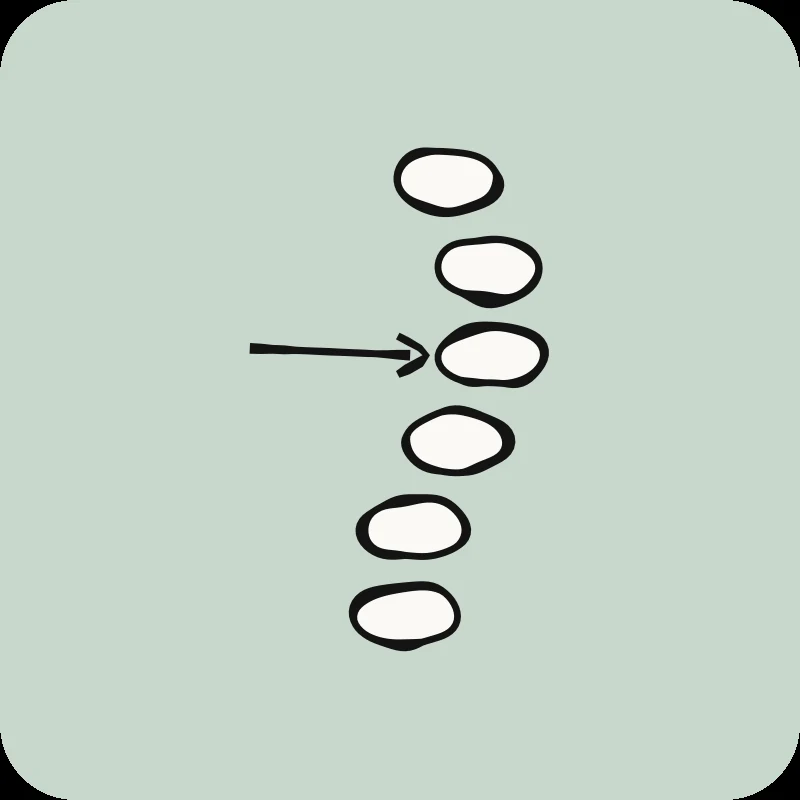


Perhaps a friend told you that a physiotherapist "put back" their shoulder with a dramatic crack. Or an acquaintance swears their vertebrae were "out of place" before manual treatment. Does it hurt? Is it dangerous? Does anything actually get "put back" into place?
Here's the reality: manual therapy can complement a treatment plan, but it does not realign any joints. Some people notice a change after a manual therapy technique, while others notice little to no change.
Nothing “pops back into place” in your body, and your vertebrae are not misaligned. Simplistic mechanical explanations do not adequately describe the observed effects. Current models propose an interaction between nervous system responses, the treatment context, and certain mechanical effects, but the precise mechanisms have notbeen established.¹, ² Manual therapy is sometimes used in conjunction with an active treatment plan, but results vary depending on the condition, the technique, and the comparison group studied.
What is manual therapy and how does it work?
Short answer: Manual therapy encompasses techniques that a physical therapist applies with their hands. These techniques can temporarily alter pain, movement, or sensitivity, but their exact mechanisms remain unclear.
10 Quick Tips for Understanding Your Pain
The ones that have made the biggest difference in my patients' lives. 1 a day, 2 minutes.
Manual therapy includes techniques a physiotherapist applies with their hands to your joints, muscles, and tissues. It includes joint mobilizations (gentle movements), manipulations (rapid movements sometimes with a cracking sound), myofascial release (sustained pressure), therapeutic massage, and neuromuscular techniques. It is one tool among many, never used alone.
The physical therapist does not “put anything back in place.” Rather, manual therapy conveys information through touch and movement. The brain, the spinal cord, expectations, and context can all play a role in the response, though no single mechanism explains all of the effects.
The spinal cord transmits and modulates messages between the body and the brain. The “gate control” theory proposes that certain sensory information can temporarily alter pain-related messages3. This theory describes pain in general and does not prove the specific mechanism underlying manual therapy3. However, it helps explain why rubbing a painful area can change how it feels.
The brain also has systems that can reduce sensitivity to pain1. Manual therapy may temporarily alter certain signs of sensitivity, but the biological mechanisms remain unclear4. A temporary response does not guarantee a lasting effect.
After a session, the response varies from person to person. A temporary reduction in symptoms may make it easier to perform movements or exercises that were previously uncomfortable. However, a single session does not guarantee a lasting change in the nervous system or tissue strengthening.
Many professions use manual techniques. In physical therapy, these techniques can be incorporated into assessments, exercises, explanations, and strategies for returning to activities. To see how this approach can be applied to a specific condition, check out our guide on physical therapy for shoulder pain.
What are the main manual therapy techniques?
Short answer: The main manual therapy techniques are mobilizations, manipulations, therapeutic massage, myofascial release, and nerve mobilizations. The physical therapist chooses a technique based on the patient’s condition, preferences, and response.
Your physiotherapist uses five main categories of manual techniques.
Joint mobilizations
Mobilizations are slow movements performed on a joint. The physical therapist gently moves the joint and observes the pain, range of motion, and tolerance. The therapist selects the range of motion and the specific part of the movement based on the treatment goal and your response. A review on frozen shoulder suggests a possible benefit of end-range mobilizations, but with very low certainty5. Treatment must remain tolerable.
Manipulations
Manipulations are rapid movements that sometimes produce the well-known “cracking” sound. This sound results from the rapid formation of a gas bubble in the synovial fluid, as demonstrated by a real-time imaging study of finger joints6. The cracking sound does not mean that something has been “put back in place”; it simply corresponds to the formation of a gas bubble in the joint. Its presence is not an established measure of the treatment’s effectiveness, and several equally effective techniques do not produce this sound at all. Your physical therapist prepares the joint before performing a manipulation, if indicated.
The method of spinal manipulation appears to matter little: in 161 pooled trials, the differences between spinal manipulation procedures are small and likely of no clinical significance, although the certainty of this evidence remains low to very low7.
Myofascial Release
Myofascial release involves sustained pressure. The physical therapist maintains the pressure for a certain amount of time and adjusts it based on your tolerance. You may feel the pressure or notice a change while the technique is being applied. This sensation does not prove that the fascia has changed or that the technique will be effective.
Therapeutic massage
Therapeutic massage primarily involves kneading, friction, and compression of a muscle area. It can temporarily alter how a person feels, but its effect depends on the technique used and the outcome measured. A controlled trial of massage on a tender point found no change in local nutrient-rich blood flow8. Pressure should remain tolerable.
Neuromuscular techniques
Nerve mobilization techniques gently move a nerve and the surrounding tissues. They may reduce pain in certain types of lower back pain or in pain that starts in the neck and radiates down the arm. Their effectiveness remains uncertain for pain on the outer side of the elbow, known as epicondylalgia, and most clinical results are negative for carpal tunnel syndrome9. To understand the mechanisms of neuromuscular pain, see our guide on pain education. A tingling sensation may occur, but it does not prove that the technique is effective.
These five categories describe different actions, but the name of the technique alone does not predict the result.
Your physical therapist selects and combines techniques based on your condition, your preferences, and your response. No single technique is universally superior: spinal manipulation techniques produce similar effects7, and for frozen shoulder, certain techniques offer advantages for specific outcomes, though none is superior in all cases10. The choice is reassessed based on your progress.
What conditions can be treated with manual therapy?
Short answer: Manual therapy can be incorporated into the treatment of certain types of pain in the back, neck, shoulders, and other parts of the body. Its effectiveness varies depending on the condition, the technique used, and the desired outcome.
Manual therapy can be part of a treatment plan for several musculoskeletal conditions, though it is not necessary for everyone.
Back and neck pain
For certain back problems, spinal manipulation or mobilization may provide modest relief. This finding applies to chronic low back pain. It does not automatically apply to a lumbar sprain or to a specific combination with exercises11. For chronic low back pain, the results are generally modest and comparable to those of other recommendedshort-term treatments12, 13. To better understandthe anatomy of the back and herniated discs, consult our specialized guides. For certain types of chronic neck pain, manipulation or mobilization may improve pain and function in the short term14. The evidence does not show that specific muscle relaxation accounts for this effect.
Shoulder Problems
Some types of shoulder pain may respond to manual therapy combined with exercises. The effect depends on the condition and the technique. In subacromial syndrome—a type of shoulder pain often triggered by raising the arm—a study on Maitland-style thoracic mobilization reported a reduction in pain and difficulty with daily activities. Other techniques have not shown a significant effect15.The anatomy of the shoulder helps guide the evaluation. Shoulder tendinopathy does not automatically mean that a joint is restricted. Mobilization may temporarily alter movement without realigning the joint1. For adhesive capsulitis, the benefits of manual therapy and exercise remain uncertain. A Cochrane review reports better short-term outcomes with a glucocorticoid injection than with a combination of the two16.
Other Body Regions
For pain in the knee, hip, foot, elbow, or wrist, the usefulness of a manual therapy technique depends on the diagnosis and the treatment goal. For plantar fasciitis, the addition of joint mobilization and soft-tissue techniques can improve function; the additional effect on pain is less consistent17. Certain cervical mobilizations or manipulations may reduce pain and difficulties associated with cervicogenic headaches18. In certain muscular disorders ofthe temporomandibular joint (TMJ), which connects the jaw to the skull, manual therapy can reduce pain and improve mouth opening in the short term19. For pain on the outer side of the elbow (lateral epicondylitis) and carpal tunnel syndrome, the results of nerve mobilization are uncertain or generally negative9. The physical therapist tailors the treatment plan based on the assessment.
Sports Conditions
Some athletes use manual therapy to temporarily relieve post-exercise symptoms and manage muscle tension. Its preventive effect on overuse injuries has not been established by the available research.
These examples show that results vary depending on the region, the condition, and the technique used.
Important Contraindications
Certain conditions require precautions or are contraindications for specific techniques. Your physiotherapist conducts a thorough screening to identify these situations before applying manual techniques.
The assessment helps identify situations in which a technique needs to be modified or avoided. The physical therapist then selects the option that is appropriate for your health condition.
What happens during a session at Physioactif?
Short answer: A session at Physioactif begins with an assessment, after which the physical therapist selects the techniques, exercises, and advice best suited to your needs. The therapist monitors your progress and adjusts the treatment plan as needed.
A session always begins with an assessment to tailor the treatment to your progress.
Initial Assessment
During your first visit, your physical therapist will gather information about your condition, medical history, and goals. He or she will observe your movements and perform tests tailored to your symptoms. This evaluation helps determine whether a manual technique is appropriate and how to incorporate it into your treatment plan.
Applying the Techniques
Your physical therapist will use a technique based on your tolerance. For mobilization, they often start with a gentle movement and then adjust the range of motion based on your response. You may feel a stretch or pressure, but the sensation should remain tolerable.
A manual therapy technique may be recommended when the evaluation warrants it. Myofascial release involves applying sustained pressure to the tissues. Your physical therapist will adjust each movement based on your feedback and tolerance.
Exercises and Advice
A session may include specific exercises to improve movement, build strength, or support an activity that is important to you. The physical therapist selects these exercises based on the evaluation and your tolerance. He or she may also suggest activity modifications and self-management strategies.
Treatment Frequency and Duration
The number of sessions varies depending on your condition, your goals, and how you respond to treatment. The physical therapist reassesses your progress and adjusts the frequency of sessions. The goal is to support your independence without promising a specific number of sessions.
Does Manual Therapy Hurt, and Is It Safe?
Short answer: Manual therapy is generally safe when a physical therapist tailors it to your condition, but it can cause discomfort or temporary reactions. Any sharp pain or unusual symptoms should be reported immediately.
In the trials included in a review, no major adverse events were observed. This absence does not prove that the risk is zero. Minor and transient reactions were more common20.
Sensations During Treatment
Manual therapy may cause temporary discomfort. Any stretching or pressure should remain tolerable. You should report any sharp pain, new weakness, or other unusual symptoms. Your physical therapist will adjust the intensity based on your feedback.
Is Cracking Dangerous?
The cracking sound is caused by gas bubbles forming in the synovial fluid.6 It’s not the bone that cracks. It’s the same mechanism as when you crack your knuckles. The cracking has no therapeutic value. Many effective treatments do not produce any cracking. You can ask to avoid manipulations. There are almost always alternatives.
Before performing a manipulation, the physical therapist assesses your health and identifies any situations that require an adjustment or a different approach. In Quebec, joint and spinal manipulations require training certificates issued by the Ordre professionnel de la physiothérapie du Québec21. Severeosteoporosis, a recent fracture, or certain vascular problems may influence the choice of technique. Temporary tenderness may occur after a session22.
Post-Treatment Soreness
Some people experience temporary soreness after a session. The duration varies from person to person. If the discomfort worsens, persists, or concerns you, contact your physical therapist.
Minor side effects are common after a manipulation: increased pain, stiffness, or headaches, reported in 50% to 67% of participants in the large case series included in a systematic review23.
Safety and Qualifications
In Quebec, physical therapists are members of the Professional Order of Physical Therapy of Quebec (OPPQ)24. Their assessment guides the choice of techniques and the necessary precautions to be taken before manual therapy.
10 Quick Tips for Understanding Your Pain
The ones that have made the biggest difference in my patients' lives. 1 a day, 2 minutes.
What Are the Scientifically Proven Benefits?
Short answer: Scientific evidence shows modest and primarily short-term effects on pain, mobility, or function for certain conditions. Results vary depending on the condition, the technique, and the treatment being compared.
Manual therapy may help some people, but studies do not show a consistent effect across all conditions.
Short-Term Pain Reduction
For certain conditions (acute low back pain, neck pain, shoulder problems), manual therapy may produce modest, short-term improvements in pain orfunction.², ²³, ¹⁴, ¹⁵ Results vary depending on the condition and the technique used. To understand how pain works, see our guide on pain education.
For acute low back pain, a major review reports a modest benefit of spinal manipulation on pain and function in the short term. The average improvement remains small, and the response varies from person to person23.
Improved Mobility
Certain manual techniques can increase range of motion in the short term under certain conditions. This change is not consistent and varies from person to person. It does not represent a lasting realignment of the joint, and its exact mechanisms have not been established1. The physical therapist will assess whether this change helps you perform an activity that is important to you.
Combining with Exercise
For certain cases of nonspecific neck pain, combining manual therapy and exercise may be more effective than either approach alone in the short- or medium-term25. For chronic low back pain, one review reports that manipulation produces effects comparable to those of other recommended treatments. Another review reports small improvements in pain and function with manipulation or mobilization, especially compared to ano-intervention control group12, 13. For examples of therapeutic exercises, explore our resources.
Manual therapy can be used in conjunction withtherapeutic exercise. Exercise directly targets movement, strength, or a specific activity. The response after a session varies from person to person.
For chronic pain, manual therapy can be incorporated into an active treatment plan that includes exercise and education. This combination does not produce the same results for everyone, and manual therapy is not a substitute for active treatment.
Limitations and Realism
Some people respond very well to manual therapy. Others derive little benefit from it. Your physical therapist continually evaluates your response and adjusts the treatment plan if you are not making progress as expected.
For acute or subacute neck pain, a few sessions of home exercises, along with guidance, yield results comparable to spinal manipulation for up to 52 weeks26. In other words, exercise alone may be sufficient for this specific condition, though this conclusion should not be generalized to all conditions treated with manual therapy.26
Is Manual Therapy Covered?
Short answer: Manual therapy may be covered when it is part of a physical therapy session, depending on your insurance plan or your eligibility for a public insurance plan. Check the terms of your coverage before you begin.
Manual therapy is a physical therapy service; insurance coverage depends on your plan.
Group Insurance
Physical therapy may be covered by group insurance plans in Quebec, depending on your plan. Manual therapy is not billed separately; it is included in your physical therapy session. Check the details of your coverage before beginning treatment. Some plans require a doctor’s prescription, while others allow direct access without a referral.
Public Plans (CNESST, SAAQ)
Public insurance plans cover physical therapy when eligibility criteria are met. If your condition is the result of a work-related or car accident, you may be eligible for full coverage. Your physical therapist can guide you through the claims process.
Costs at Physioactif
At Physioactif, we provide a physical therapy receipt after each session. You can use this receipt to file a claim in accordance with your insurer’s guidelines. Manual therapy is included in the session when indicated.
Payment Options
If you don't have private insurance, ask about rates and payment options before your appointment. This information will help you choose a plan that fits your needs and situation.
Frequently Asked Questions About Manual Therapy?
Short answer: Frequently asked questions include how long the effects last, the role of manual therapy before surgery, the frequency of sessions, and adjustments based on age. The answers depend on the condition, the evaluation, and the goals.
How long do the effects last?
The effects can last from a few hours to several days, but their duration varies widely. An immediate response does not necessarily predict the long-term outcome. The physical therapist primarily monitors changes in your activities, movement, and symptoms.
Can manual therapy replace surgery?
Manual therapy alone is not a substitute for indicated surgery. For certain herniated discs accompanied by leg pain, one study reports good results with a structured nonsurgical treatment plan27. For recent cervical radiculopathy—nerve pain that starts in the neck and radiates down the arm—physical therapy combined with home exercises reduces pain more effectively during the first six weeks than a “wait-and-see” approach28. A doctor determines whether surgery is still necessary.
What is the difference between manual therapy and chiropractic?
Physical therapists and chiropractors may use certain similar manual techniques. In physical therapy, manual therapy can be incorporated into a movement assessment, exercises, explanations, and strategies for resuming your activities. The specific plan, however, depends on the professional and your condition.
How often should I receive treatments?
The frequency depends on your condition, your goals, and how you respond. The physical therapist reassesses the effects and adjusts the schedule, continuing or discontinuing the sessions based on the results.
Is manual therapy suitable for seniors?
Manual therapy may be appropriate for an older adult when the physical therapist tailors it to the person’s health, goals, and tolerance. In cases of osteoporosis, certain techniques are modified or avoided. Geriatric physical therapy may also include exercises to improve mobility and support daily activities. Forosteoarthritis, the treatment plan depends on the person’s symptoms and abilities.
Do I need to prepare before a session?
No special preparation is usually necessary. Wear comfortable clothing and bring your imaging results if they are available. Be sure to mention any medications you are taking, any health issues you have, and any concerns you may have before treatment.
Need professional advice?
Our physical therapists can assess your condition and provide you with a personalized treatment plan.
Make an appointmentReferences
Links open in a new tab.
- Bialosky JE, Bishop MD, Price DD, Robinson ME, George SZ. The mechanisms of manual therapy in the treatment of musculoskeletal pain: a comprehensive model. Man Ther. 2009;14(5):531-8. (Back to sections: 1, 2, 3, 4)
- Bialosky JE, Beneciuk JM, Bishop MD, Coronado RA, Penza CW, Simon CB, et al. Unraveling the Mechanisms of Manual Therapy: Modeling an Approach. J Orthop Sports Phys Ther. 2018;48(1):8-18. (Back to sections: 1, 2)
- Melzack R, Wall PD. Pain mechanisms: a new theory. Science. 1965;150(3699):971-9. (Back to sections: 1, 2)
- Martínez-Pozas O, Sánchez-Romero EA, Beltran-Alacreu H, Arribas-Romano A, Cuenca-Martínez F, Villafañe JH, et al. Effects of Orthopedic Manual Therapy on Pain Sensitization in Patients With Chronic Musculoskeletal Pain: An Umbrella Review With Meta-Meta-analysis. Am J Phys Med Rehabil. 2023;102(10):879-885. (Back to section: 1)
- Kubuk BS, Carrasco-Uribarren A, Cabanillas-Barea S, Ceballos-Laita L, Jimenéz-Del-Barrio S, Pérez-Guillén S. The effects of end-range interventions in the management of primary adhesive capsulitis of the shoulder: a systematic review and meta-analysis. Disabil Rehabil. 2024;46(15):3206-3220. (Back to section: 1)
- Kawchuk GN, Fryer J, Jaremko JL, Zeng H, Rowe L, Thompson R. Real-time visualization of joint cavitation. PLoS One. 2015;10(4):e0119470. (Back to sections: 1, 2)
- Nim C, Aspinall SL, Cook CE, Corrêa LA, Donaldson M, Downie AS, et al. The Effectiveness of Spinal Manipulative Therapy in Treating Spinal Pain Does Not Depend on the Application Procedures: A Systematic Review and Network Meta-analysis. J Orthop Sports Phys Ther. 2025;55(2):109-122. (Back to sections: 1, 2)
- Moraska AF, Hickner RC, Rzasa-Lynn R, Shah JP, Hebert JR, Kohrt WM. Increase in Lactate Without Change in Nutritive Blood Flow or Glucose at Active Trigger Points Following Massage: A Randomized Clinical Trial. Arch Phys Med Rehabil. 2018;99(11):2151-2159. (Back to section: 1)
- Basson A, Olivier B, Ellis R, Coppieters M, Stewart A, Mudzi W. The Effectiveness of Neural Mobilization for Neuromusculoskeletal Conditions: A Systematic Review and Meta-analysis. J Orthop Sports Phys Ther. 2017;47(9):593-615. (Back to sections: 1, 2)
- Khandaloo A, Taghizadeh Delkhoush C, Ehsani F. Comparative efficacy of different joint mobilization techniques in adhesive capsulitis of the shoulder: a systematic review and meta-analysis of randomized controlled trials. J Man Manip Ther. 2026:1-16. (Back to section: 1)
- Rubinstein SM, van Middelkoop M, Assendelft WJ, de Boer MR, van Tulder MW. Spinal manipulative therapy for chronic low-back pain. Cochrane Database Syst Rev. 2011;2011(2):CD008112. (Back to section: 1)
- Rubinstein SM, de Zoete A, van Middelkoop M, Assendelft WJJ, de Boer MR, van Tulder MW. Benefits and harms of spinal manipulative therapy for the treatment of chronic low back pain: systematic review and meta-analysis of randomized controlled trials. BMJ. 2019;364:l689. (Back to sections: 1, 2)
- Coulter ID, Crawford C, Hurwitz EL, Vernon H, Khorsan R, Suttorp Booth M, et al. Manipulation and mobilization for treating chronic low back pain: a systematic review and meta-analysis. Spine J. 2018;18(5):866-879. (Back to sections: 1, 2)
- Gross A, Langevin P, Burnie SJ, Bédard-Brochu MS, Empey B, Dugas E, et al. Manipulation and mobilization for neck pain compared with an inactive control or another active treatment. Cochrane Database Syst Rev. 2015;2015(9):CD004249. (Back to sections: 1, 2)
- Yu S, Chen S, Yang Z, Ma X, Gou L, Yang L. The effects of different types of thoracic manual therapy on shoulder dysfunction: a systematic review with meta-analysis. Musculoskelet Sci Pract. 2026;84:103565. (Back to sections: 1, 2)
- Page MJ, Green S, Kramer S, Johnston RV, McBain B, Chau M, et al. Manual therapy and exercise for adhesive capsulitis (frozen shoulder). Cochrane Database Syst Rev. 2014;2014(8):CD011275. (Back to section: 1)
- Fraser JJ, Corbett R, Donner C, Hertel J. Does manual therapy improve pain and function in patients with plantar fasciitis? A systematic review. J Man Manip Ther. 2018;26(2):55-65. (Back to section: 1)
- Xu X, Ling Y. Comparative safety and efficacy of manual therapy interventions for cervicogenic headache: a systematic review and network meta-analysis. Front Neurol. 2025;16:1566764. (Back to section: 1)
- Zhang L, Liu M, Li X, Zhao C. Comparative effectiveness of nonpharmacological therapies for adult myogenic temporomandibular disorders: a network meta-analysis of randomized trials. BMC Oral Health. 2026;26(1). (Back to section: 1)
- Carnes D, Mars TS, Mullinger B, Froud R, Underwood M. Adverse events and manual therapy: a systematic review. Man Ther. 2010;15(4):355-63. (Back to section: 1)
- OPPQ. Administrative Procedures — Training Certificates for Performing Procedures. (Back to section: 1)
- Carlesso LC, Gross AR, Santaguida PL, Burnie S, Voth S, Sadi J. Adverse events associated with the use of cervical manipulation and mobilization for the treatment of neck pain in adults: a systematic review. Man Ther. 2010;15(5):434-44. (Back to section: 1)
- Paige NM, Miake-Lye IM, Booth MS, Beroes JM, Mardian AS, Dougherty P, et al. Association of Spinal Manipulative Therapy With Clinical Benefit and Harm for Acute Low Back Pain: Systematic Review and Meta-analysis. JAMA. 2017;317(14):1451-1460. (Back to sections: 1, 2, 3)
- Quebec Professional Order of Physiotherapy. The Two Professions of Physiotherapy [Internet]. Accessed September 18, 2026. (Back to section: 1)
- Hidalgo B, Hall T, Bossert J, Dugeny A, Cagnie B, Pitance L. The efficacy of manual therapy and exercise for treating nonspecific neck pain: A systematic review. J Back Musculoskelet Rehabil. 2017;30(6):1149-1169. (Back to section: 1)
- Bronfort G, Evans R, Anderson AV, Svendsen KH, Bracha Y, Grimm RH. Spinal manipulation, medication, or home exercise with advice for acute and subacute neck pain: a randomized trial. Ann Intern Med. 2012;156(1 Pt 1):1-10. (Back to sections: 1, 2)
- Saal JA, Saal JS. Nonoperative treatment of herniated lumbar intervertebral discs with radiculopathy. An outcome study. Spine (Phila Pa 1976). 1989;14(4):431-7. (Back to section: 1)
- Kuijper B, Tans JT, Beelen A, Nollet F, de Visser M. Cervical collar or physical therapy versus a “wait-and-see” approach for recent-onset cervical radiculopathy: a randomized trial. BMJ. 2009;339:b3883. (Back to section: 1)
Manual therapy encompasses techniques that physical therapists apply using their hands. Its mechanisms of action remain unclear, and its effects are generally modest and short-term for certain conditions.
Keep these points in mind: Manual manipulation does not realign a vertebra. The response varies depending on the person, the condition, and the technique. A cracking sound does not prove the treatment is effective. You can ask for another option.
An active rehabilitation plan can address range of motion, strength, functional activities, and independence. Manual therapy can complement this plan when it addresses a specific goal and its effects are reassessed.
If you are concerned about pain or limited mobility, an evaluation can determine whether a manual therapy technique is appropriate. The physical therapist will explain the options, potential benefits, limitations, and precautions to you.
Videos in this category
Other conditions

Hip osteoarthritis is the normal wear and tear of the hip joint. It is often said that osteoarthritis is the wear and tear of the cartilage between our bones. That is true, but it involves more than just the cartilage. Cartilage is a tissue that acts as a cushion between the surfaces of our bones and allows our joints to glide smoothly and move fluidly.
This is normal wear and tear of the knee joint. It’s often said that osteoarthritis is the wearing down of the cartilage between our bones. That’s true, but it’s more than just the cartilage. Cartilage is a tissue that acts as a cushion between the surfaces of our bones and allows our joints to glide smoothly and move fluidly.
It is an inflammation of the subacromial bursa in the shoulder joint.
A bursa is a small, thin sac filled with fluid that is found in many of the body's joints. This small sac acts as a cushion within the joint and lubricates the structures that are subject to increased friction.
It is a tissue that surrounds the shoulder and helps keep the shoulder bone in place within the joint. The capsule helps keep the joint stable.
Neck pain is a general term used to describe pain in the neck that has no specific cause, such as an accident or a sudden awkward movement. Neck pain is therefore synonymous with “my neck hurts, and nothing in particular happened.”
In both types of injury, pain is felt in the neck and then radiates into the arm, or vice versa.
Make an appointment now
We offer a three-pronged quality assurance approach: optimized treatment time, a second opinion from a physical therapist, and ongoing expertise to ensure effective care tailored to your needs.

Customer satisfaction is our top priority
At Physioactif, excellence guides everything we do, but our patients are the best ones to tell you about it. Take a look at their verified reviews to get a real sense of their experience.




Discover our physical therapy clinics
We have locations in several areas to better serve you.
Blainville
190 Bas-de-Sainte-Thérèse Road, Suite 110,
Blainville, Quebec
J7B 1A7
Located in Blainville, near Rosemère, the Physioactif clinic is easily accessible to residents of the area and the surrounding communities
Boucherville
690 Rue de Montbrun, Suite S,
Boucherville, Quebec
J4B 8H2
Located in Boucherville, the Physioactif clinic is easily accessible to people in the area
Laval
3224 Jean-Béraud Ave., Suite 220, Laval,
QC H7T 2S4
Located in Chomedey, in the heart of Laval, the Physioactif clinic is easily accessible to people in the area
Montreal
8801 Lajeunesse Street,
Montreal,
QC H2M 1R8
Located in Ahuntsic, near Villeray, the Physioactif clinic is easily accessible to residents of both neighborhoods
Saint-Eustache
180 25th Avenue, Suite
201 Saint-Eustache
QC J7P 2V2
Located in Saint-Eustache, the Physioactif clinic is easily accessible to residents of the area and the surrounding communities
Vaudreuil
21 Cité-des-Jeunes Boulevard, Suite 240,
Vaudreuil-Dorion, Quebec
J7V 0N3
Located in Vaudreuil-Dorion, the Physioactif clinic is easily accessible to people in the area
Make an appointment now