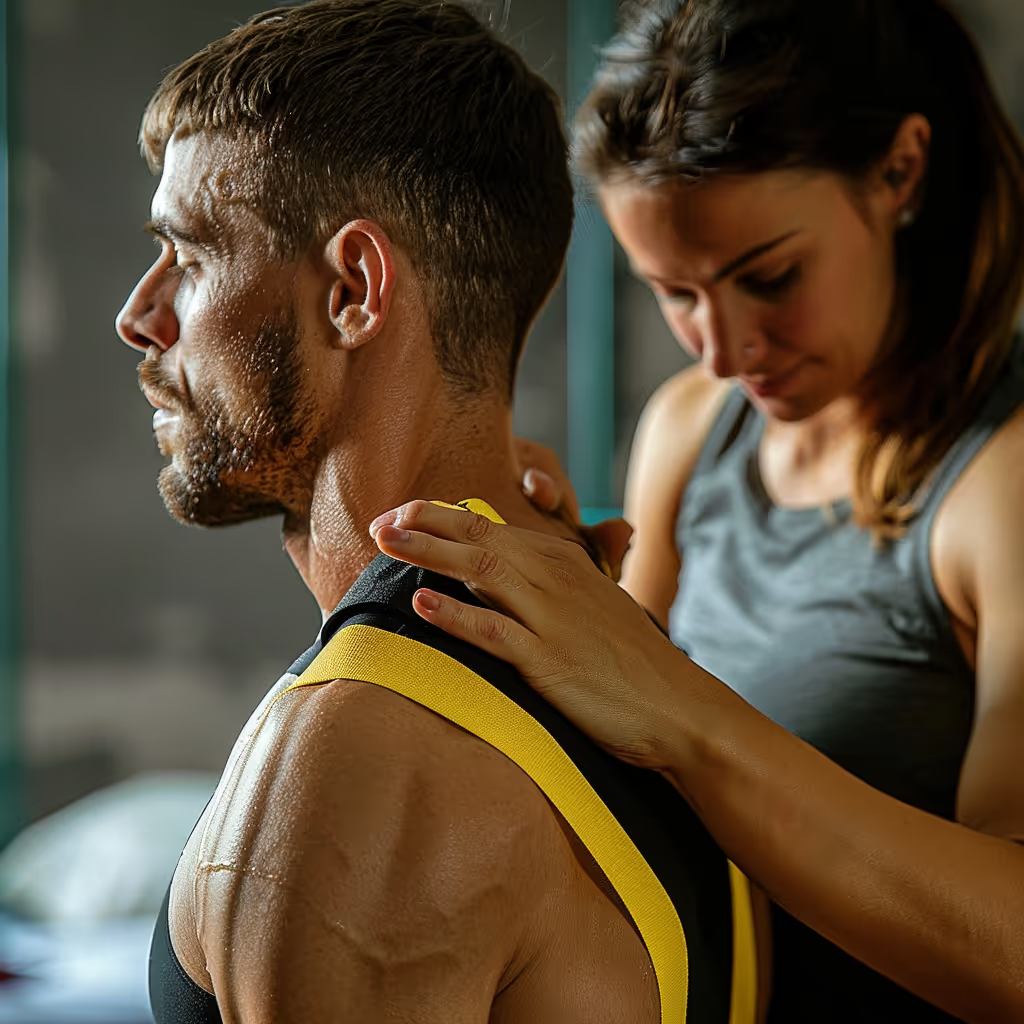


The spine is made up of bones, discs, joints, nerves, muscles, and ligaments. These components support the body, protect nerve structures, and enable movement. Understanding this anatomy helps put back pain,lumbar disc herniation, facet syndrome, and muscle tension into context. The ability to adapt and the progression of symptoms vary depending on the structure, the condition, and the individual.
It also helps us understand the role of intervertebral discs, which cushion the impact between the vertebrae.What is the spine and what is its main role?
The spine is a flexible bony structure that supports your body and protects your spinal cord. It usually consists of about 33 vertebrae, some of which fuse together during development. It protects the spinal cord, the extension of the brain that runs down the back and from which nerves branch out. It supports your body’s weight. It also allows for trunk movements (bending, twisting, stretching).1
The spine performs three essential functions for your body.2 First, it protects your spinal cord. It also protects the nerve roots. These roots transmit messages between the spinal cord and the body, particularly regarding movement and sensation in the trunk and limbs. Second, it supports the weight of your head, trunk, and arms. It transfers this load to your pelvis and legs. Finally, it allows for a wide variety of movements. You can bend forward, stretch backward, twist, and lean to the side.
10 Quick Tips to Understand Your Pain
One tip a day for 10 days to help you better understand your pain. About a 2-minute read.
The spine has natural curves in the neck, upper back, and lower back. These curves are part of its normal anatomy and, on their own, do not constitute abnormalities or explain symptoms.3, 4 A physical therapist can assess symptoms, function, and activity limitations to discuss appropriate treatment options. To learn more about the role of physical therapy in musculoskeletal disorders—which affect muscles, bones, and joints—check out our comprehensive guide on physical therapy and its role in treating musculoskeletal disorders.
What are the main structures that make up the spine?
The spine consists of vertebrae, discs, joints, nerve structures, muscles, and ligaments. The vertebrae are the stacked bones. The discs act as cushions between these bones. The facet joints are small joints at the back of the vertebrae. The spinal cord and nerves transmit nerve signals. The muscles and ligaments contribute to stability and movement.
Each part of your spine has a specific role.5 The vertebrae are the stacked bones. They form the basic structure. A typical vertebra has a body at the front and an arch at the back. Together, they define the spinal canal, the tunnel that houses the spinal cord. The atlas, the first vertebra in the neck, is an exception: it forms a ring and has no vertebral body.6, 7
Intervertebral discs are located between the vertebrae and help distribute some of the forces. They consist of a water-rich central nucleus and a fibrous ring made up of several layers.8 Their structure and how they change with age are detailed in our comprehensive guide to intervertebral discs. The resolution of certain herniations is discussed later, in the section that explains their causes and limitations.
The facet joints are small joints. They are located at the back of each vertebra. They guide the movements of your spine, particularly rotation—the movement that allows you to turn your torso.9
The spinal cord extends from the brain down into the spinal canal. In adults, it usually ends near L1-L2, rather than at exactly the same level in everyone. The lumbar and sacral nerve roots continue downward into the canal and form the cauda equina, a bundle of nerves.10
Ultimately, muscles and ligaments form a complete system. They stabilize your spine. They also enable controlled movement.11
How are the vertebrae in the spine arranged?
The vertebrae are divided into five regions. The cervical region consists of 7 vertebrae in the neck. The thoracic region consists of 12 vertebrae in the upper and middle back. The lumbar region consists of 5 vertebrae in the lower back. The sacral region consists of 5 fused vertebrae that form the sacrum. The coccygeal region forms the coccyx. It most often consists of 4 small vertebrae, but their number and degree of fusion vary.12, 1
The following table shows the regions of your spine:13
| Region | Number of vertebrae | Location | Main Function | Characteristics |
|---|---|---|---|---|
| Cervical | 7 (C1-C7) | Neck | Head mobility | Small, very mobile |
| Thoracic | 12 (T1-T12) | Upper and middle back | Organ protection | Attached to ribs |
| Lumbar | 5 (L1-L5) | Lower back | Weight support | Wider and stronger |
| Sacral | 5 (fused) | Between hips | Connection to pelvis | Forms the solid sacrum |
| Coccygeal | Most often 4, variable fusion | Base of the spine | Attachment point | Forms the coccyx |
The vertebrae generally become wider from the neck down to the lower back. This arrangement helps identify the different regions of the spine. Lower back pain may be felt in the lower back, but its location alone is not enough to identify the structure involved.14, 15 For the neck and upper back, see our guides on neck pain and thoracic back pain.
What is the role of the intervertebral discs between the vertebrae?
The discs act as shock absorbers between the vertebrae. They provide flexibility to your back. They also absorb shocks during everyday movements.8 For example, when you walk, run, or lift objects.
Intervertebral discs function in part as hydraulic structures. They absorb and distribute forces. The gel-like nucleus in the center is hydrophilic, meaning it attracts and retains water. This property allows it to deform under load and redistribute pressure toward the outer fibrous ring, which is made up of strong layers. The nucleus thus retains water and distributes pressure within the disc.16
Your intervertebral discs absorb significant forces, particularly during activities such as jumping or lifting objects. The annulus fibrosus typically consists of 15 to 25 distinct layers of collagen—a protein that forms strong fibers—depending on the region of the disc, the level of the spine, and age. The fibers run at alternating oblique angles from one layer to the next. These layers are not perfectly uniform; their number and thickness vary depending on the location within the disc and age.17, 18
Contrary to popular belief, discs are not fragile. They are very sturdy. Discs can tolerate heavy loads, but this tolerance varies depending on the individual, the task, the frequency of repetition, and the progression. Changes in the discs as we age are normal. For example, the gradual decrease in water content. These are normal processes. They are also observed in people without symptoms, and their frequency increases with age.19, 20
How does the lumbar region of the spine work?
The lumbar region supports the weight of the upper body and allows the trunk to bend, straighten, and rotate. Its five vertebrae, L1 through L5, work in conjunction with the discs and joints. Their large vertebral bodies transmit a significant portion of the forces that run along the spine’s axis.7
The lumbar region combines mobility and stability.21 The lumbar vertebrae have large vertebral bodies, and the discs in this region are among the thickest in the spine. Flexion allows the trunk to bend forward; extension allows it to straighten or bend backward. These movements and rotation vary from person to person and depending on the level of the spine.7, 22 Disc height and the range of rotation are therefore not the same for everyone.
Lumbar lordosis is a natural forward curvature. It is part of normal anatomical variation and is not a defect. The alignment of the pelvis and spine may be considered during the examination, but it does not, on its own, predict comfort or tolerance for standing.3, 23
The lumbar facets are oriented primarily in a vertical plane, but their anatomy is three-dimensional and varies by level. Their shape helps guide and limit movement, particularly flexion, extension, and rotation. Their behavior also depends on the position and the forces applied, rather than on a simple, fixed distribution of load among the vertebral levels.7, 24
Several muscles work together in the lower back. The multifidus muscles are small, deep muscles located near the vertebrae. The erector spinae muscles run along the spine. The quadratus lumborum muscles are located on either side of the lower back. The abdominal muscles also play a role in this process. They control movements of the lower back. They also generate intra-abdominal pressure (pressure inside your abdomen), which helps stabilize your back during physical activity. The exact way in which this pressure affects the load on your vertebrae is still a matter of debate.25
Why can the lower back be painful?
Lower back pain can depend on several factors, including the condition of the tissues, activities, and the way the nervous system processes signals. Activities generate forces that compress the tissues or cause them to slide against one another. These forces are part of the back’s normal functioning. Studies do not show that any single posture or movement alone explains lower back pain.26, 27
The lumbar region connects the upper and lower body.28 The lumbar region is located at the transition point between the rigid thorax (rib cage) and the pelvis. The forces transmitted from the upper and lower body include, in particular, compressive and shear forces. The lumbar region transmits forces from the upper body to the pelvis and legs.27
When lifting a load, moving it away from the body can alter the forces measured in biomechanical models.29 Symptoms following physical exertion are interpreted in light of the context, the physical examination, and their progression; the reported movement alone is not sufficient to identify a lumbar sprain.
Your tissues can adapt to certain loads as your training progresses. The intervertebral discs should not be viewed as structures incapable of tolerating movement. A review published in 2016 focused primarily on cells, laboratory tissues, and animals. It did not prove that training strengthens human intervertebral discs. A subsequent human study found that the intervertebral discs of regular runners were better hydrated. However, this comparison does not prove that running causes these differences or that it is suitable for everyone.30, 31
Exercise and training can be resumed gradually, depending on symptoms, abilities, and goals. Deep muscle training is suitable for some people; for others, more general strength training yields comparable results.32 Discover our exercise program for stabilizing muscles, which can be adapted based on your assessment and response to the exercises.
What are the important anatomical terms for a patient to understand?
The main anatomical terms are the facet joint, the foramen, the spinal canal, the nerve root, and the spinous process. The facet joint is a small joint between the vertebrae. The foramen allows nerves to pass through. The spinal canal contains the spinal cord and nerve roots. A nerve root connects the spinal cord to a nerve. The spinous process is the bony bump you can feel in the center of your back.
Clear explanations of anatomical terms can make it easier to understand and discuss your condition with a physical therapist or another healthcare professional. Medical terminology can be difficult to understand. Ask your healthcare professional to explain any unfamiliar terms and how they relate to your situation.33
Facet joints are small joints located at the back of each vertebra. They facilitate some of the movement between the vertebrae. Facet syndrome refers to a clinical hypothesis in which a facet joint may contribute to symptoms.Lumbar osteoarthritis, on the other hand, describes joint changes that are often visible but painless; the two terms are not synonymous.
The intervertebral foramen is a lateral opening between two vertebrae through which the nerve roots exit. A narrowing of this opening can be observed on imaging. Its association with radicular symptoms—that is, symptoms that may radiate down the leg—is evaluated in conjunction with the patient’s history, physical examination, and clinical course.34 Check out our comprehensive guide to lumbar spinal stenosis to learn more about the treatment options discussed based on the evaluation.
The spinal canal is the central space formed by the stacking of the vertebral arches. It contains your spinal cord and nerve roots. Lumbar stenosis—that is, a narrowed spinal canal—can be associated with symptoms in the legs and reduced walking ability. In people whose legs become painful or heavy when walking due to irritated nerves, several factors related to pain, function, and the shape of the canal influence walking. The degree of narrowing therefore does not always correspond to the severity of symptoms.35
Nerve roots are branches of the nervous system that emerge from the spinal cord. They supply overlapping regions. The lumbar and sacral nerve roots may contribute to sensation and movement in the legs, but a single area is not sufficient to identify a specific nerve root.15
The spinous process is the bony bump you can feel in the center of your back. It serves as an attachment point for muscles and ligaments.
These structures form an integrated system. Each part contributes to protection, support, and mobility.36
How do the anatomical structures of the spine interact during movement?
The joints, discs, muscles, and ligaments work together to enable and control the spine's movements. The facet joints guide part of the movement. The discs change shape under force. The muscles and ligaments contribute to stability.
The biomechanics of your spine involve complex coordination. Different parts work together. When you bend forward, the vertebrae change position and the discs deform. The disc nucleus may shift backward. This behavior varies and, on its own, does not predict a herniation or pain. The facet joints and discs guide movement and limit its range. Ligaments also contribute to stability.37, 9
Your back muscles help control movement. The erector spinae and multifidus muscles are among these muscles. Their activity adjusts depending on the task and stability requirements.
When you straighten or lean your torso backward, the facet joints, intervertebral discs, and muscles work together. A study of 11 people shows that the facet joints rotate and slide differently depending on the movement and the level of the lumbar spine.38
During rotation, the nervous system adjusts muscle activity to stabilize the back. As a result, the different parts of the back do not always work in the same way. Their contribution varies depending on the movement.11
These structures work together. The passive structures are the bones, discs, and ligaments. The active structures are your muscles. Together, they protect your spinal cord and nerve roots. They also enable functional movements. The nervous system coordinates their work to balance stability with movement.11 These movements are necessary for daily activities.27
Are degenerative changes in the spine normal as we age?
Degenerative changes in the spine are common with age and may occur without pain. Facet osteoarthritis (age-related changes in the small joints of the back), decreased disc height, and osteophytes (small bony spurs) may be present without symptoms. Their prevalence varies depending on the type of change and age. These changes do not necessarily cause pain. They are part of the natural aging process.
Imaging studies of asymptomatic individuals have changed our understanding. These studies have transformed what we know about degenerative changes in the spine. A major review examined 3,110 people. None of these people had back pain. The findings are significant:20
- Degenerative disc changes: 37% at age 20, 96% at age 80
- Disc bulges already affect about 40% of 30-year-olds who have no pain, and disc degeneration affects about 68% of 40-year-olds.20
- Facet osteoarthritis, like other degenerative changes, is often part of the normal aging process and does not necessarily cause pain.
These changes in imaging findings are common even in the absence of pain. They must be interpreted in conjunction with the symptoms and physical examination. Many people with advanced facet joint osteoarthritis remain active and functional.
These data show that several degenerative changes become more common with age and are often present without causing pain. Their presence on imaging alone is therefore not sufficient to explain symptoms or determine treatment; their significance depends on the clinical context.
Magnetic resonance imaging (MRI) is a test that produces images of the inside of the body. If you undergo this test, the changes seen on the images do not necessarily mean you will experience pain. Degenerative changes visible on an MRI generally have little predictive value for future pain when considered in isolation. Many people with these changes continue their daily activities. How these changes progress varies from person to person. Alarming or poorly contextualized communication of the results can increase anxiety and fear of worsening symptoms. Explaining that these changes are common helps put them into context without implying that imaging is never important.39, 40 To better understand how to use imaging appropriately, see our article on medical imaging and musculoskeletal pain, which explains why MRI results should be interpreted with caution and contextualized by your physical therapist.
This perspective helps put imaging results into perspective. The evaluation takes into account your activities, your symptoms, and the imaging results as a whole.41
In a study on sciatica—pain that radiates down the leg—the presence of a herniated disc on an MRI taken one year later did not distinguish between people whose symptoms had disappeared or nearly disappeared and those who continued to experience discomfort.42
10 Quick Tips to Understand Your Pain
One tip a day for 10 days to help you better understand your pain. About a 2-minute read.
What myths about spinal anatomy should be debunked?
Common myths portray the spine as perfect, the discs as fragile, and osteoarthritis as always painful. Curves are normal. Discs can tolerate movement. Osteoarthritis can be present without causing pain.
Appropriate explanations about recent lower back pain can modestly reduce anxiety, both in the short and long term. A review of 14 trials, involving 4,872 people, observed this effect. The results pertain to comprehensive educational interventions. Simply reading a list of myths, therefore, does not guarantee the same effect.43 If you’ve heard worrying information about your back, know that the reality is often more reassuring.
Myth 1: "A straight spine is ideal"The curves of the neck, upper back, and lower back are part of normal anatomy and vary widely from person to person. They are not, in and of themselves, abnormalities. Observational studies show certain associations between lumbar lordosis and low back pain, but their results vary. They do not show that a specific curvature causes the symptoms. Therefore, a specific curvature cannot be presented as the ideal shape for everyone.3, 4
Myth 2: "Discs are fragile"Words like “degeneration” or “tear” can cause anxiety and make people afraid of movement. They do not automatically mean that the back is fragile. Tolerance for physical activities depends on the individual, the task, and the progression. Research on how intervertebral discs adapt to exercise does not allow for the establishment of a universal safe load.44, 31
Myth 3: "Wear and tear equals pain"Degenerative changes visible on imaging are often present in people without symptoms. Pain can be influenced by several factors, including the condition of the tissues, the way the nervous system processes signals, and lifestyle factors such as stress or sleep. Structural appearance alone, therefore, does not explain pain.45, 46
In the cited study, most degenerative changes, when considered in isolation, were not associated with pain intensity six years later, regardless of whether or not the participants had pain at baseline. Some associations were present, but their magnitude was generally small.39
Myth 4: "The spine cannot heal"The tissues in the back can change over time, but the extent of these changes varies. A summary of studies on the reduction of herniated discs and our comprehensive guide to lumbar disc herniation are detailed in the following section. While complete resolution of the condition is not guaranteed, symptoms and functional abilities may improve.
Can the spine heal and regenerate?
The tissues of the spine can change over time, but their ability and speed of adaptation vary. Symptoms and function may also improve even if imaging findings do not return to normal.42 A return to normal activities should be gradual and tailored to each person’s progress.
Recovery varies depending on the tissue and the situation:
Herniated Discs: The reduction in the amount of tissue protruding from the disc, known as resorption, varies depending on the type of herniation observed. In a protrusion, the base connecting the protruding portion to the disc remains wider than that portion. In an extrusion, the protruding portion is wider than its base in at least one view of the imaging study, or it is no longer attached to the disc. When the fragment is completely detached, it is referred to as sequestration. Bulging refers more to a more diffuse widening of the disc’s outline; it is not a localized herniation. These terms describe the type of herniation, not the severity of your symptoms. The terminology used by spinal and radiology societies defines these differences.
Extrusions and sequestrations tend to decrease more frequently on imaging than protrusions or bulges in patients managed without surgery.47
Fissures in the fibrous ring: Their presence on imaging alone does not explain the symptoms or predict their progression. Therefore, an image of a tear alone does not provide a timeline for recovery.Paravertebral muscles (muscles along the spine): The back muscles can adapt to exercise. A study of 59 people with persistent lower back pain compared three programs over a 10-week period. Only the program combining stabilization and strengthening exercises with controlled movements and held postures showed a statistically significant increase in the surface area of the multifidus muscle on imaging at all three measured levels. The analysis thus supported an increase for this program; it did not allow for a conclusion regarding the other two. This result demonstrates the possibility of muscular adaptation, without specifying a recovery timeframe for each individual. Danneels and colleagues describe this comparison of training programs.
Another study compared 32 people with chronic lower back pain and 23 people without pain. Only the multifidus muscle, at the base of the fourth lumbar vertebra, had a smaller cross-sectional area in the group with pain. The amount of fat in the muscles studied did not differ significantly between the groups. This comparison does not allow us to determine whether the muscular difference precedes or follows the pain.48 A programof muscle-strengthening and endurance exercises can improve strength and the ability to sustain effort, depending on your symptoms, abilities, and goals.48
Ligaments and facet capsules (envelopes surrounding the small joints): After an injury, recovery time varies depending on the tissue involved, the extent of the injury, and the individual. The recovery time should be estimated based on your specific situation.Movement, exercises, and progressive load increases can be part of an active approach. The choice and intensity of these depend on symptoms, abilities, physical condition, and goals.
In a study on sciatica, 84% of participants reported a complete or nearly complete resolution of symptoms after one year. The 283 participants had a lumbar disc herniation and were taking part in a trial comparing early surgery with care that did not involve initial surgery, with the option of surgery at a later date. At the one-year follow-up, the presence of the herniation on MRI did not distinguish between those whose symptoms had disappeared or nearly disappeared and those who continued to experience discomfort.42
When to consult a physiotherapist for a spinal problem?
A physical therapy consultation is recommended when back pain persists or limits your activities. Significant stiffness, leg pain, weakness, or numbness also warrant an evaluation. Certain symptoms require urgent medical attention, as explained below. The evaluation is designed to examine possible causes, your functional abilities, and symptoms that require medical attention.
In a chart review study, earlier referral to physical therapy was associated with fewer imaging tests, injections, and surgeries later on. The study did not measure pain, function, or the progression to persistent pain.49 Here’s when to seek care:
Signs Requiring Prompt Evaluation:- Persistent pain: Back pain that persists despite self-care warrants an evaluation. The timing of a medical consultation also depends on the pain’s intensity, its progression, and any associated symptoms.
- Pain radiating down the leg: Pain that travels down the leg may be described as sciatica when it follows the back of the leg, or as cruralgia when it runs along the front of the thigh. The path of the pain can guide the evaluation, but is not sufficient on its own to identify a cause. See our comprehensive guide on lumbocruralgia and radicular pain to learn more about the symptoms and treatment options discussed based on the evaluation.
- Significant stiffness: Marked morning stiffness that limits your daily movements warrants an evaluation. For example, difficulty bending over to put on your shoes.
- Neurological Symptoms: Numbness, tingling, or muscle weakness in your legs. These symptoms affect your nerves.
Situations that require urgent medical evaluation are rare, but they do occur, and it's worth knowing how to recognize them. However, you should seek immediate medical attention if you have:
- Loss of bowel or bladder control (you can no longer control your bodily functions)
- Bilateral leg weakness (both legs are weak)
- Saddle anesthesia (loss of sensation between the legs)
- New or gradually worsening nighttime pain accompanied by, for example, fever, unexplained weight loss, or a history of cancer
The American College of Physicians’ recommendations cover several non-pharmacological approaches. For acute or subacute low back pain, they also note that improvement often occurs over time; they do not identify physical therapy as the sole first-line treatment.51
The evaluation examines symptoms, function, possible contributing factors, and signs that warrant a referral to a medical professional. The treatment plan may include education, exercises, and, depending on the response, manual therapy. For certain types of low back pain,the McKenzie approach to guided self-care uses repetitive movements, particularly when they centralize the symptoms—that is, bring them back toward the center of the back.
To discuss your back symptoms and possible treatment options, you can use our back pain homepage to schedule an appointment.
Need professional advice?
Our physical therapists can assess your condition and provide you with a personalized treatment plan.
Make an appointmentReferences
Links open in a new tab.
- DeSai C, Reddy V, Agarwal A. Anatomy, Back, Vertebral Column. StatPearls. 2023. (Back to sections: 1, 2)
- Bogduk, N. *Clinical and Radiological Anatomy of the Lumbar Spine*. 5th ed. Edinburgh: Churchill Livingstone; 2012. (Back to section: 1)
- Dionne AC, Gorroochurn P, Miller R, Katiyar P, Bennion S, Bonsignore-Opp L, et al. Normative Thoracic, Lumbar, Pelvic, and Global Sagittal Alignment Parameters for Asymptomatic Adults: A Systematic Review and Meta-Analysis of >35,900 Volunteers. Spine (Phila Pa 1976). 2025;50(17):1188-1200. (Back to sections: 1, 2, 3)
- Chun SW, Lim CY, Kim K, Hwang J, Chung SG. The relationships between low back pain and lumbar lordosis: a systematic review and meta-analysis. Spine J. 2017;17(8):1180-1191. (Back to sections: 1, 2)
- Neumann, DA. *Kinesiology of the Musculoskeletal System: Foundations for Rehabilitation*. 3rd ed. St. Louis: Elsevier; 2017. (Back to section: 1)
- Bednar DA, Almansoori KA. Solitary C1 Posterior Fixation for Unstable Isolated Atlas Fractures: Case Report and Systematic Review of the Literature. Global Spine J. 2016;6(4):375-82. (Back to section: 1)
- Waxenbaum JA, Reddy V, Williams C, Futterman B. Anatomy, Back, Lumbar Vertebrae. StatPearls. 2026. (Back to sections: 1, 2, 3, 4)
- Welke B, Daentzer D, Neidlinger-Wilke C, Liebsch C. [Biomechanics of the intervertebral disc: Consequences of degenerative changes]. Orthopadie (Heidelb). 2024;53(12):912-917. (Back to sections: 1, 2)
- Jaumard NV, Welch WC, Winkelstein BA. Biomechanics and mechanotransduction of spinal facet joints in normal, injured, and degenerative conditions. J Biomech Eng. 2011;133(7):071010. (Back to sections: 1, 2)
- Margetis K, Das JM, Emmady PD. Spinal Cord Injuries. StatPearls. 2026. (Back to section: 1)
- Panjabi MM. The stabilizing system of the spine. Part I. Function, dysfunction, adaptation, and enhancement. J Spinal Disord. 1992;5(4):383-9; discussion 397. (Back to sections: 1, 2, 3)
- Guneri B, Gungor G. Morphological Features of the Coccyx in the Turkish Population and Interrelationships Among the Parameters: A Computed Tomography-Based Analysis. Cureus. 2021;13(11):e19687. (Back to section: 1)
- Drake RL, Vogl AW, Mitchell AWM. Gray's Anatomy for Students. 4th ed. Philadelphia: Elsevier; 2020. (Back to section: 1)
- Waxenbaum JA, Reddy V, Margetis K. Anatomy, Back, Cervical Vertebrae. StatPearls. 2026. (Back to section: 1)
- Albert HB, Hansen JK, Søgaard H, Kent P. Where do patients with MRI-confirmed single-level radiculopathy experience pain, and what is the clinical interpretability of these pain patterns? A cross-sectional diagnostic accuracy study. Chiropr Man Therap. 2019;27:50. (Back to sections: 1, 2)
- Grignon B, Gross S, Roland J, Braun M. [Lumbar intervertebral disc. Structure. Current state of knowledge]. Bull Assoc Anat (Nancy). 1994;78(243):49-52. (Back to section: 1)
- Marchand F, Ahmed AM. Investigation of the laminate structure of the lumbar disc anulus fibrosus. Spine (Phila Pa 1976). 1990;15(5):402-10. (Back to section: 1)
- Han SK, Chen CW, Wierwille J, Chen Y, Hsieh AH. Three-dimensional mesoscale analysis of translamellar cross-bridge morphologies in the annulus fibrosus using optical coherence tomography. J Orthop Res. 2015;33(3):304-11. (Back to section: 1)
- Vo NV, Hartman RA, Patil PR, Risbud MV, Kletsas D, Iatridis JC, et al. Molecular mechanisms of biological aging in intervertebral discs. J Orthop Res. 2016;34(8):1289-306. (Back to section: 1)
- Brinjikji W, Luetmer PH, Comstock B, Bresnahan BW, Chen LE, Deyo RA, et al. Systematic literature review of imaging features of spinal degeneration in asymptomatic populations. AJNR Am J Neuroradiol. 2015;36(4):811-6. (Back to sections: 1, 2, 3)
- Panjabi MM. The stabilizing system of the spine. Part II. Neutral zone and instability hypothesis. J Spinal Disord. 1992;5(4):390-6; discussion 397. (Back to section: 1)
- Widmer J, Fornaciari P, Senteler M, Roth T, Snedeker JG, Farshad M. Kinematics of the Spine Under Healthy and Degenerative Conditions: A Systematic Review. Ann Biomed Eng. 2019;47(7):1491-1522. (Back to section: 1)
- Coenen P, Parry S, Willenberg L, Shi JW, Romero L, Blackwood DM, et al. Associations of prolonged standing with musculoskeletal symptoms—A systematic review of laboratory studies. Gait Posture. 2017;58:310-318. (Back to section: 1)
- Inoue N, Orías AAE, Segami K. Biomechanics of the Lumbar Facet Joint. Spine Surg Relat Res. 2020;4(1):1-7. (Back to section: 1)
- Stokes IA, Gardner-Morse MG, Henry SM. Abdominal muscle activation increases lumbar spinal stability: analysis of the contributions of different muscle groups. Clin Biomech (Bristol). 2011;26(8):797-803. (Back to section: 1)
- Swain CTV, Pan F, Owen PJ, Schmidt H, Belavy DL. No consensus on the causality of spinal postures or physical exposure and low back pain: A systematic review of systematic reviews. J Biomech. 2020;102:109312. (Back to section: 1)
- Cholewicki J, McGill SM. Mechanical stability of the in vivo lumbar spine: implications for injury and chronic low back pain. Clin Biomech (Bristol). 1996;11(1):1-15. (Back to sections: 1, 2, 3)
- McGill SM. The biomechanics of low back injury: implications for current practice in industry and clinical settings. J Biomech. 1997;30(5):465-75. (Back to section: 1)
- Amin DB, Tavakoli J, Freeman BJC, Costi JJ. Mechanisms of Failure Following Simulated Repetitive Lifting: A Clinically Relevant Biomechanical Cadaveric Study. Spine (Phila Pa 1976). 2020;45(6):357-367. (Back to section: 1)
- Belavý DL, Quittner MJ, Ridgers N, Ling Y, Connell D, Rantalainen T. Running exercise strengthens the intervertebral disc. Sci Rep. 2017;7:45975. (Back to section: 1)
- Belavý DL, Albracht K, Bruggemann GP, Vergroesen PP, van Dieën JH. Can Exercise Positively Influence the Intervertebral Disc? Sports Med. 2016;46(4):473-85. (Back to sections: 1, 2)
- Macedo LG, Maher CG, Latimer J, McAuley JH. Motor control exercises for persistent, nonspecific low back pain: a systematic review. Phys Ther. 2009;89(1):9-25. (Back to section: 1)
- Sanders KA, Taylor AM. What does it mean? Translating anatomical language to engage public audiences. Anat Sci Educ. 2025;18(12):1329-1336. (Back to section: 1)
- Sundaram PS, Regis PAP, Rajadurai OJW, Purushothaman K, Kumar MS, Kanchan N. Assessment of Lumbar Foraminal Stenosis: Diagnostic Value and Clinical Correlation: A Systematic Review. J Orthop Case Rep. 2026;16(3):388-399. (Back to section: 1)
- Houle M, Bonneau JD, Marchand AA, Descarreaux M. Physical and Psychological Factors Associated With Walking Capacity in Patients With Lumbar Spinal Stenosis and Neurogenic Claudication: A Systematic Scoping Review. Front Neurol. 2021;12:720662. (Back to section: 1)
- Standring S, editor. Gray's Anatomy: The Anatomical Basis of Clinical Practice. 42nd ed. London: Elsevier; 2021. (Back to section: 1)
- Deneuville JP, Billot M, Cervantes A, Peterlongo S, Meyer M, Kolder M, et al. Dynamic behavior of the nucleus pulposus within the intervertebral disc under loading: a systematic review and meta-analysis exploring the concept of a dynamic disc model. Front Bioeng Biotechnol. 2025;13:1582438. (Back to section: 1)
- Kozanek M, Wang S, Passias PG, Xia Q, Li G, Bono CM, et al. Range of motion and orientation of the lumbar facet joints in vivo. Spine (Phila Pa 1976). 2009;34(19):E689-96. (Back to section: 1)
- Kasch R, Truthmann J, Hancock MJ, Maher CG, Otto M, Nell C, et al. Association of Lumbar MRI Findings with Current and Future Back Pain in a Population-Based Cohort Study. Spine (Phila Pa 1976). 2022;47(3):201-211. (Back to sections: 1, 2)
- Rajasekaran S, Dilip Chand Raja S, Pushpa BT, Ananda KB, Ajoy Prasad S, Rishi MK. The effects of an MRI report on catastrophizing among patients and surgeons and the benefits of “clinical reporting”: results from an RCT and blinded trials. Eur Spine J. 2021;30(7):2069-2081. (Back to section: 1)
- Jarvik JG, Hollingworth W, Heagerty PJ, Haynor DR, Boyko EJ, Deyo RA. Three-year incidence of low back pain in an initially asymptomatic cohort: clinical and imaging risk factors. Spine (Phila Pa 1976). 2005;30(13):1541-8; discussion 1549. (Back to section: 1)
- el Barzouhi A, Vleggeert-Lankamp CL, Lycklama à Nijeholt GJ, Van der Kallen BF, van den Hout WB, Jacobs WC, et al. Magnetic resonance imaging in the follow-up assessment of sciatica. N Engl J Med. 2013;368(11):999-1007. (Back to sections: 1, 2, 3)
- Traeger AC, Hübscher M, Henschke N, Moseley GL, Lee H, McAuley JH. Effect of Primary Care-Based Education on Reassurance in Patients With Acute Low Back Pain: Systematic Review and Meta-analysis. JAMA Intern Med. 2015;175(5):733-43. (Back to section: 1)
- Farmer C, O'Connor DA, Lee H, McCaffery K, Maher C, Newell D, et al. Consumer understanding of terms used in imaging reports requested for low back pain: a cross-sectional survey. BMJ Open. 2021;11(9):e049938. (Back to section: 1)
- Tagliaferri SD, Ng SK, Fitzgibbon BM, Owen PJ, Miller CT, Bowe SJ, et al. Relative contributions of the nervous system, spinal tissue, and psychosocial health to nonspecific low back pain: A multivariate meta-analysis. Eur J Pain. 2022;26(3):578-599. (Back to section: 1)
- Runge N, Ahmed I, Saueressig T, Perea J, Labie C, Mairesse O, et al. The bidirectional relationship between sleep problems and chronic musculoskeletal pain: a systematic review with meta-analysis. Pain. 2024;165(11):2455-2467. (Back to section: 1)
- Chiu CC, Chuang TY, Chang KH, Wu CH, Lin PW, Hsu WY. The probability of spontaneous regression of lumbar herniated discs: a systematic review. Clin Rehabil. 2015;29(2):184-95. (Back to section 1)
- Danneels LA, Vanderstraeten GG, Cambier DC, Witvrouw EE, De Cuyper HJ. CT imaging of trunk muscles in patients with chronic low back pain and healthy control subjects. Eur Spine J. 2000;9(4):266-72. (Back to sections: 1, 2)
- Fritz JM, Childs JD, Wainner RS, Flynn TW. Primary care referral of patients with low back pain to physical therapy: impact on future health care utilization and costs. Spine (Phila Pa 1976). 2012;37(25):2114-21. (Back to section: 1)
- Cook CE, George SZ, Reiman MP. Red flag screening for low back pain: nothing to see here, move along: a narrative review. Br J Sports Med. 2018;52(8):493-496. (Back to section: 1)
- Qaseem A, Wilt TJ, McLean RM, Forciea MA, Clinical Guidelines Committee of the American College of Physicians, Denberg TD, et al. Noninvasive Treatments for Acute, Subacute, and Chronic Low Back Pain: A Clinical Practice Guideline From the American College of Physicians. Ann Intern Med. 2017;166(7):514-530. (Back to section: 1)
- Adams MA, Dolan P. Spine biomechanics. J Biomech. 2005;38(10):1972-1983.
- McGill SM. Low Back Disorders: Evidence-Based Prevention and Rehabilitation. 3rd ed. Champaign: Human Kinetics; 2016.
- Urban JP, Roberts S. Degeneration of the intervertebral disc. Arthritis Res Ther. 2003;5(3):120-30.
- Roussouly P, Pinheiro-Franco JL. Biomechanical analysis of the spino-pelvic organization and adaptation in pathology. Eur Spine J. 2011;20 Suppl 5(Suppl 5):609-18.
- Hodges PW, Richardson CA. Inefficient muscular stabilization of the lumbar spine associated with low back pain. A motor control evaluation of the transversus abdominis. Spine (Phila Pa 1976). 1996;21(22):2640-50.
- American Academy of Orthopaedic Surgeons. Spine Basics. OrthoInfo. n.d. [accessed September 18, 2026].
- White AA, Panjabi MM. Clinical Biomechanics of the Spine. 2nd ed. Philadelphia: Lippincott Williams & Wilkins; 1990.
- Oxland TR. Fundamental Biomechanics of the Spine: What We Have Learned in the Past 25 Years and Future Directions. J Biomech. 2016;49(6):817-832.
- Kalichman L, Li L, Kim DH, Guermazi A, Berkin V, O'Donnell CJ, et al. Facet joint osteoarthritis and low back pain in a community-based population. Spine (Phila Pa 1976). 2008;33(23):2560-5.
- O'Sullivan P, Caneiro JP, O'Keeffe M, O'Sullivan K. Unraveling the Complexity of Low Back Pain. J Orthop Sports Phys Ther. 2016;46(11):932-937.
- Brinckmann P, Biggemann M, Hilweg D. Prediction of the compressive strength of human lumbar vertebrae. Spine (Phila Pa 1976). 1989;14(6):606-10.
- Moseley GL, Butler DS. Fifteen Years of Explaining Pain: The Past, Present, and Future. J Pain. 2015;16(9):807-13.
- Zhong M, Liu JT, Jiang H, Mo W, Yu PF, Li XC, et al. Incidence of Spontaneous Resorption of Lumbar Disc Herniation: A Meta-Analysis. Pain Physician. 2017;20(1):E45-E52.
- Khan AN, Jacobsen HE, Khan J, Filippi CG, Levine M, Lehman RA, et al. Inflammatory biomarkers of low back pain and disc degeneration: a review. Ann N Y Acad Sci. 2017;1410(1):68-84.
Customer satisfaction is our top priority
At Physioactif, excellence guides everything we do, but our patients are the best ones to tell you about it. Take a look at their verified reviews to get a real sense of their experience.










Discover our physical therapy clinics
We have locations in several areas to better serve you.
Blainville
190 Bas-de-Sainte-Thérèse Road, Suite 110,
Blainville, Quebec
J7B 1A7
Located in Blainville, near Rosemère, the Physioactif clinic is easily accessible to residents of the area and the surrounding communities
Boucherville
690 Rue de Montbrun, Suite S,
Boucherville, Quebec
J4B 8H2
Located in Boucherville, the Physioactif clinic is easily accessible to people in the area
Laval
3224 Jean-Béraud Ave., Suite 220, Laval,
QC H7T 2S4
Located in Chomedey, in the heart of Laval, the Physioactif clinic is easily accessible to people in the area
Montreal
8801 Lajeunesse Street,
Montreal,
QC H2M 1R8
Located in Ahuntsic, near Villeray, the Physioactif clinic is easily accessible to residents of both neighborhoods
Saint-Eustache
180 25th Avenue, Suite
201 Saint-Eustache
QC J7P 2V2
Located in Saint-Eustache, the Physioactif clinic is easily accessible to residents of the area and the surrounding communities
Vaudreuil
21 Cité-des-Jeunes Boulevard, Suite 240,
Vaudreuil-Dorion, Quebec
J7V 0N3
Located in Vaudreuil-Dorion, the Physioactif clinic is easily accessible to people in the area
Make an appointment now