Shin splints
It is an inflammation of the lining of the tibia, which is called the periosteum.
.png)
.png)
.png)




Shin splints: causes, symptoms, and complete treatment
Tibial periostitis causes pain on the inner edge of the tibia—the large bone in the leg—during physical activity. This condition, also known as medial tibial stress syndrome, is particularly common among runners and military recruits. Physical therapy can help you adjust your activity levels and exercises so you can gradually resume running.
Synonyms: Medial Tibial Stress Syndrome (MTSS), shin splints
What are shin splints (tibial periostitis)?
Tibial periostitis is pain along the inner edge of the tibia caused by repetitive stress. For a long time, it was attributed solely to inflammation of the periosteum—the membrane covering the bone—which is pulled by the muscles. Current explanations also take into account the bone’s adaptation to stress. Tibial periostitis and stress fractures—small cracks caused by repetitive stress—are among the possible conditions. Tibial periostitis does not automatically progress to a fracture, but continuing with training that exacerbates the condition can lead to more serious injury.1
The periosteum is a thin membrane surrounding the bone. Its blood vessels nourish the bone. Its nerves detect and transmit information about stimuli that could damage tissues: this is called nociception. This information can contribute to pain, but it is not pain itself. Pain also depends on the individual’s context and does not directly reflect the condition of the periosteum.
10 Quick Tips to Understand Your Pain
One tip a day for 10 days to help you better understand your pain. About a 2-minute read.
An anatomical study examined the tibias of 50 cadavers. The soleus, a deep muscle in the calf; the flexor digitorum communis, a muscle that helps bend the toes; and a fibrous membrane in the leg all had attachments near the area where pain typically occurs. This supports the hypothesis of traction at that location. The posterior tibial muscle, another muscle located in the leg, had no attachment in this area in the specimens studied. This finding limits the hypothesis of direct tension from this muscle in this area; it does not determine the cause of every instance of pain.2
Periostitis is one of the injuries commonly seen in running.3 It also affects military recruits in training.1 It is a common cause of leg pain during exercise among athletes.3 Running and repeated jumping are among the associated activities. The frequency varies depending on the study population and the duration of follow-up.1
Among runners, injuries often affect the knee, foot, or ankle, as well as the lower leg.4 A review of 36 studies involving 23,047 runners reports, in its detailed results, that 25.8% of injuries occurred in the knee, 24.4% in the foot or ankle, and 20.9% in the lower leg. These proportions describe the distribution of injuries, not the individual risk of shin splints.4
Anatomy of the Shin Bone (Tibia) and Periosteum
The tibia is the main bone that supports the body's weight in the leg. Its periosteum contains many sensitive nerve fibers, known as A-delta and C fibers. These fibers are more densely concentrated in the periosteum than in the hard outer part of the bone or in the bone marrow, the tissue inside the bone. Of these three parts of the bone, the periosteum is particularly sensitive to potentially dangerous stimuli.5 This means that neither pain nor the severity of an injury can be determined based on a single nerve signal.
What Causes Shin Splints?
Repeated exertion that exceeds the leg’s ability to adapt can contribute to tibial periostitis. Changes in training, recovery, running form, and footwear should all be considered together. None of these factors alone explains all cases.
Changes to the Training Schedule
Running longer or faster can increase the strain on the leg. However, research has not found a consistent link between any specific training parameter and all running injuries.4 Your training progression should therefore take into account distance, intensity, recovery days, and how your body responds to workouts. A fixed percentage does not guarantee that you’ll avoid injury.
A gradual progression can begin with alternating periods of walking and running. Faster intervals can be postponed until slower running is well tolerated. Knee pain may occur alongside shin pain; it should also be evaluated.
Movements and Forces During a Run
Pronation refers specifically to the inward movement of the foot during the ground contact phase. Valgus describes a knee that shifts inward. These movements alone do not constitute a problem or a definite cause of pain. Your physical therapist may also observe your stride rate, the number of steps per minute, and your stride length. The forces acting on the leg depend, among other things, on your speed and running style.
A physical therapist can assess whether hip strength and knee movement affect your comfort or your ability to run. Any differences observed do not necessarily prove that they are the cause of shin pain. These factors may also be evaluated in relation to patellofemoral syndrome, which is pain on the front of the knee around the kneecap.
A review of 18 studies reports a faster increase in vertical weight-bearing strength among individuals who have previously experienced a stress fracture.6 The analyses did not show a clear difference between the groups in terms of maximum force values at either of the two time points studied. They do not prove that a rapid increase in force alone causes future injury.6
Braking force is the horizontal force that slows the body’s forward motion at the beginning of the push-off phase. A study of recreational female runners found that a higher braking force was associated with more injuries during a 15-week half-marathon training program.7 The researchers recruited 74 female runners and included 65 of them in the final analysis. The third with the highest braking force had an injury rate 5.08 times that of the middle third and 7.98 times that of the lowest third. This association does not prove a causal relationship and is not limited to periostitis.7
Shoes and Wear and Tear
The foam in a shoe can change as it wears out.8 In a laboratory test on EVA foam—a type of foam used in shoe soles—the maximum pressure under the foot increased by an average of 100% after 500 km. Damage to the foam became apparent after 750 km. These measurements pertain to the specific shoe studied; they do not prove that all shoes must be replaced after 500 km or that they cause periosteitis.8 Above all, check to see if your shoes remain comfortable and suitable for your activity.
Minimalist shoes—which are more flexible and have less cushioning—can change the way your calves and feet work. If you switch to a different type of shoe, start with short runs and pay attention to how your body responds before increasing the duration.
Training Surfaces
Switching from a road to a trail, a track, or grass changes the nature of the activity. However, the hardness of the surface alone is not enough to predict an injury. You can try a different surface for your comfort, without assuming that it will prevent injuries caused by repetitive motion.
What Are the Symptoms of Shin Splints?
Periostitis causes diffuse pain on the inner side of the shin, especially while running. The pain may change during activity, after exercise, and at rest; its progression varies depending on the individual and the diagnosis. The shin may be tender to the touch over a span of several centimeters.
Typical location
The pain is mainly located toward the back of the inner edge of the tibia. It usually extends over several centimeters, often in the lower half of the leg. The location alone does not indicate which tissue is contributing to the pain.
Muscle pain in the calf is felt within the muscle itself. Periostitis is most noticeable along the inner edge of the tibia. Pressing on this area may reproduce the pain, but does not, on its own, identify the specific tissue involved.
Possible Pain Profile
Pain can manifest in several ways during and after a race:
- Pain at the start of a run
- Decreases during warm-up
- Returns if activity continues
- Disappears with rest
Pain may also persist after exercise, occur when walking, upon waking, or after sitting for a long time. If your symptoms become more frequent or further limit your activities, have your leg re-evaluated rather than assuming it’s still just periostitis.
Signs to watch for
Significant swelling, pronounced warmth, or redness do not fit the typical presentation and require prompt evaluation. Numbness, tingling, or weakness may stem from a nerve—such as in leg neuralgia—or from another problem. Compartment syndrome occurs when pressure builds up in an enclosed space containing muscles; this pressure can interfere with blood flow and nerve function. Symptoms that recur with exertion and then subside with rest also require evaluation.
Sudden, severe pain; pain that worsens rapidly; a leg that feels very tight or is severely swollen; or a new loss of strength or sensation requires urgent medical evaluation. Do not wait to see if training or exercises improve the situation. Significant pain in the shin or an injury in that area also warrants prompt medical attention. An inability to put weight on the leg also requires prompt evaluation. The NHS describes acute compartment syndrome as an emergency; its page on periostitis also highlights severe pain and injuries that require prompt medical attention.
Difference from Other Leg Pains
A calf strain—a torn muscle—causes significant pain in the calf. Achilles tendinopathy—pain in the tendon behind the ankle—is also located elsewhere than along the edge of the tibia. These differences guide the examination but are not sufficient to make a diagnosis.
How to Differentiate Shin Splints from a Stress Fracture?
Periostitis usually causes widespread pain, whereas a stress fracture is often more painful at a specific point. Very localized pain, especially at rest or at night, increases the likelihood of a fracture but does not confirm it. The table provides guidelines; it is not a substitute for a physical examination.
| Characteristic | Shin splints | Stress fracture |
|---|---|---|
| Painful Area | The pain associated with tibial periostitis is usually diffuse, extending along the inner edge of the tibia. | The pain from a stress fracture is often more localized, concentrated in a specific spot. |
| Location | Toward the back of the inner edge of the tibia | Varies depending on the site visited |
| Pain at Rest | Varies; significant pain at rest requires reevaluation | It's possible, especially if the injury worsens |
| Night Pain | May occur; nighttime pain warrants a reevaluation of the diagnosis | Possible |
| Local Swelling | Variable; significant swelling warrants consideration of another cause | Sometimes Present |
| X-ray | Usually normal | The fracture may not be visible, especially at first |
When Medical Imaging Is Needed
An X-ray may not show anything at the onset of a stress fracture. If the X-ray raises suspicion of a fracture, magnetic resonance imaging (MRI)—which produces detailed images using a magnetic field—can help confirm the diagnosis.9 A review reports that X-rays detected 12 to 56 out of 100 stress fractures of the lower extremities, compared with 68 to 99 out of 100 for MRI. These figures varied across studies. Interpretation must take into account the symptoms and the physical examination.10
A tuning fork is a small metal instrument that vibrates when struck. Pressing it against the leg to cause pain is not sufficient to diagnose a fracture. A review also concluded that tests using ultrasound to induce pain lack sufficient accuracy. This is not the same as an ultrasound scan, which produces images.11 Among 63 male service members, the tuning fork test detected only 61.5% of cases classified as stress fractures by MRI. It yielded a negative result in only 25% of individuals without this condition on MRI. This classification included early bone signs, not just a visible crack. The test should therefore not be used on its own.12
What are the risk factors?
A history of shin pain, training, recovery, and bone health are among the factors to consider when it comes to periostitis. Their importance varies from person to person. An association observed in one group does not allow you to calculate your risk based on a single factor.
Modifiable factors
- A recent increase in running distance or pace—discuss this with your doctor in light of your symptoms
- Shoe wear and comfort, without a universal replacement mileage
- Change in surface and the leg's response during strides
- Strength in the calf and foot needed for walking, running, or standing on tiptoes
- Number of steps per minute and step length, compared at similar speeds
- Exercises to develop the skills you need for your sport
- Running Technique and Changes That Improve Your Comfort
- Recovery Days, Fatigue, and Other Physical Activities
Background and Factors to Consider
- Gender and training experience: Differences emerge among certain groups, but these do not allow for predicting each individual’s risk.13
- A Previous Episode of Tibial Pain: Diagnosis and Course
- Foot shape and movement, without automatically assuming that flat feet are the cause
- Inward movement of the knee while running, without automatically considering it a flaw
- Shape of the leg; describe it without using this information alone to determine the cause of the pain
A study found that 20,257 British service members sought treatment for this problem between 2010 and 2018. The researchers compared the frequency of diagnoses each year across different military groups.13 In 2018, periostitis affected 7.03% of female recruits, compared to 1.60% of female personnel who had already completed training and 4% of male recruits. It was therefore more than four times as common among female recruits as among women who had already completed training. These results do not automatically apply to all female runners.13
Nutritional Factors
Diet and bone health deserve special attention if pain recurs or if a fracture is suspected. The body must receive enough energy for physical activity and its other functions. An insufficient intake may require an evaluation by a doctor or a nutritionist.
How Does Physiotherapy Treat Shin Splints?
Physical therapy helps runners adjust their training intensity, build the strength needed for running, and plan their return to running. The physical therapist first determines whether the symptoms require a medical evaluation. A running analysis is included when it can guide a beneficial change.
Comprehensive assessment
Your physiotherapist will assess:
- Your recent running and training history
- The mobility of your ankle and foot
- The strength of your calf, foot, and hip muscles
- Your running technique (with video analysis if recommended)
- Foot and Knee Movements During the Support Phase
- Leg muscle flexibility
- Trunk and pelvis stability
A running gait analysis can compare your comfort and running form before and after an adjustment. A variation in movement is not necessarily a problem that needs to be corrected.
Personalized Treatment Plan
Adjust your activities: It may be necessary to temporarily reduce the distance you run, without stopping all activities. Continue with movements and activities that you can tolerate. A suspected fracture requires immediate protection and a medical evaluation.
Targeted Exercises: Strength-training exercises can target the calf, foot, and hip, depending on your specific challenges. Their goal is to help you regain the abilities needed for walking and running.
Adjusting stride length: You can try slightly changing the number of steps per minute while maintaining the same speed. In a study of 45 healthy runners, increasing this number by 5% or 10% reduced the energy absorbed by the knee with each step. This does not prove that this change cures periostitis. Your point of contact with the ground does not automatically change. Study on cadence and joint movements.
Manual techniques: Joint mobilization involves gently moving a joint with the hands. It can be tried if the ankle is stiff. Manual therapy on the calf or foot may also provide temporary relief. The physical therapist will then check to see if you can move more easily. Activities and exercises are used to continue the recovery process; however, the evidence supporting the effectiveness of any single technique for periostitis remains limited.
Cold Therapy and Devices: Ice wrapped in a cloth can help relieve pain. It is not a substitute for adjusting the intensity of your activities. Therapeutic ultrasound, which uses sound waves, and laser therapy are device-based treatments sometimes offered elsewhere. Your treatment plan at Physioactif focuses on movement, exercises, and adjusting the intensity of your activities.
Treatment progression
Progress can be guided by four objectives, though the timeline may vary from person to person:
- Initial goal: Symptom relief and adjustment of activities based on tolerance
- Strength Training: Increase the number of exercises based on your ability and how you feel after the session
- Getting Back to Running: Start with short runs and try out helpful adjustments
- Maintenance: Keep doing the necessary exercises and gradually increase the number of outings
What exercises help with recovery from periostitis?
Heel raises, foot exercises, and balancing on one leg can help restore the abilities needed for running. Hip exercises may also be helpful, depending on the results of your evaluation. The following examples should be selected in consultation with your physical therapist; they are not a one-size-fits-all prescription. Reduce or stop any exercise that worsens your pain. If a fracture is suspected, you’ll need to take different precautions before attempting these exercises.
Calf strengthening program
Heel Raises (Calf):- Stand with both feet on the ground, holding onto a counter or a sturdy chair
- Stand on your tiptoes at a controlled speed
- Descend with the same control
- Choose a number of repetitions that feels comfortable during and after the exercise
- Add balancing on one leg or a weight only if this progression is well tolerated
- With your feet firmly planted, rise onto the balls of both feet
- Lift one foot, then slowly lower the heel of the other leg—only if this variation is tolerated
- Adjust the number of repetitions based on how you feel during and after the exercise
- The calf muscle works by lengthening during the descent: this is eccentric contraction.
Strengthening the Muscles of the Foot and Leg
The posterior tibial muscle is located in the lower leg and acts on the foot. It is therefore distinct from the small muscles located entirely within the foot.
Strengthening the posterior tibial muscle:- While seated, attach an elastic band to a stable object and loop it around the front of your foot
- Keep your heel on the ground and your knee still, then gently turn the sole of your foot inward against the resistance band
- Return slowly; choose a resistance level that allows you to perform this movement without pushing through the pain
- Adjust the number of repetitions based on your ability and how your body responds after the exercise
- Seated or standing, feet flat
- Activate the arch of the foot by bringing the forefoot closer to the heel
- Hold the position only for as long as it feels comfortable, without curling your toes
- Relax, then repeat as much as you can
- While sitting, place your foot on a towel and bring it back by curling your toes
- Separate and spread your toes
- Choose these exercises to improve foot mobility and strength
Stability and control exercises
Single-leg balance:- Standing near a counter, lift one foot and balance on the other
- Use your hands as needed; reduce this support only if you remain stable
- Gradually increase the duration based on your balance
- Standing on a low step, hold onto the handrail and let one foot hang off the edge
- Bend your supporting knee to gently bring your other heel closer to the floor, then stand back up
- Choose a speed that allows for comfortable, controlled movement
- Repeat as much as you can, without letting the pain get worse
- Standing near a support, lift one foot and then bend the supporting knee slightly
- Lower yourself as if to sit down, then come back up without going very deep
- Repeat only as long as the movement remains comfortable and controlled
Hip Strengthening
Strengthening your hips can complement your exercise program if your strength or control in this area limits your activities:
Lift your leg while lying on your side:- Lie on your side, bend your lower leg for stability; lift your upper leg, keeping it straight, then lower it slowly
- Choose a height and number of repetitions that feel comfortable
10 Quick Tips to Understand Your Pain
One tip a day for 10 days to help you better understand your pain. About a 2-minute read.
- Lying on your back with one knee bent and your foot on the floor, keep the other leg raised; gently lift your pelvis and then lower it again
- Start with both feet on the ground if the one-legged bridge is too difficult
- Adjust the number of repetitions to your ability, without making the pain worse
Your physical therapist will choose exercises tailored to your specific challenges, such as standing on one leg or climbing a step. The NHS’s examples of strength-building exercises for runners include heel raises and the bridge. The form of these exercises can be adapted without requiring everyone to do the same number of repetitions.
Cross-training activities
Cycling, swimming, using an elliptical trainer, a short hike, or deep-water running with a flotation belt can temporarily replace a workout that causes pain. These activities help maintain some level of physical fitness through different types of exercise. Stick with the ones that remain comfortable during and after the activity, depending on your diagnosis.
A study measured very small deformations of the tibia during running and jumping in six healthy individuals. It did not evaluate recovery from periostitis.14 Four participants completed all the jumps. The deformations during a 52-cm downward jump were not significantly higher than those during running at 17 km/h. The bone compressed and stretched more rapidly during running. This does not prove that jumping is recommended while experiencing active pain.14
These activities may also be considered if you have plantar fasciitis, pain under the foot near the heel, or other foot pain. The choice of activity will depend on your overall symptoms.
How long does recovery take?
Periostitis can improve within a few weeks, but persistent pain may take several months to resolve completely. The NHS describes a typical improvement within a few weeks with the necessary adjustments. In a study of 74 athletes with persistent symptoms, the average time it took—depending on the group—to run for 18 minutes straight at an intensity that made conversation difficult was approximately 102 to 118 days. Fourteen participants dropped out due to a lack of progress. This result measures a running goal, not the healing time for each tissue. Your progress also depends on changes in training load.
Return to Running Protocol
Resuming exercise begins with walking at a comfortable pace without pain, followed by short periods of slow running alternated with walking. Next, gradually increase the duration of your runs before resuming high-intensity workouts or hill training. Be sure to allow for recovery time between workouts. These steps should be adapted based on your diagnosis and how your leg responds; they do not apply to a fracture that still requires protection.
Golden rules for returning to running
If the pain worsens during the session or remains more severe afterward, go back to the previous step and have the treatment plan adjusted. Treatment usually begins without surgery, after ruling out other possible causes.3 Guidelines for progression are still based in part on clinical experience; comparisons between programs remain limited.3
Discuss distance, speed, and rest days with your physical therapist. New pain at rest, very localized pain, or worsening symptoms despite adjustments require a reevaluation.
How to prevent recurrence?
Preventing recurrence relies on a gradual increase in running distance, adequate recovery, and appropriate exercises. These measures prepare you to resume running but do not guarantee that a recurrence will not occur. The rule of increasing distance by 10% per week is not a proven preventive method for everyone.4 A review of training studies finds conflicting results; your training plan should take your individual situation into account.4
Management options to be adjusted
Training Progression:- Gradually increase your training volume
- Avoid increasing both duration and speed at the same time if this worsens your symptoms
- Plan your rest days based on how tired you are and your other activities
- Choose the type of workout based on your goal, such as steady-state running, interval training, or free-rhythm running
- Choose a comfortable surface, without assuming that it will prevent injuries
- Replace shoes that are no longer suitable for the activity due to wear and tear or lack of comfort
- Choose one or more comfortable pairs depending on your activities, with no guarantee of prevention
- Take into account the duration, the slope, and changes in terrain
- Strengthen the muscles needed for walking, running, and climbing stairs
- Work on your balance if standing on one leg is difficult
- Strengthen Your Hips If Weakness Is Limiting Your Activities
- Work on improving flexibility in your calves or thighs if stiffness is hindering your movements
- Try making a small change to the number of steps per minute while maintaining a similar pace, to see if that helps
- Do not require everyone to land on the forefoot or heel; compare comfort levels after making a change
- Observe whether adjusting the torso or pelvis makes running easier
- Only keep a change in stride length if it improves comfort or your running performance
Monitor function, symptoms, and recovery
If the pain increases or if you find it harder to walk or run, temporarily reduce the activities that aggravate the pain. Adjust the distance, surface, and rest periods. Seek medical attention if the pain persists or worsens despite these adjustments; the emergency signs described above require immediate attention.
The same training and recovery considerations apply to patellar tendinopathy(pain in the tendon beneath the kneecap) and iliotibial band syndrome(pain on the outer side of the knee). The program is tailored to the specific condition present.
Long-term monitoring
During and after operations resume, monitor for the following changes:
- Sudden increase in morning stiffness
- Pain that reappears after long runs
- Tenderness to touch along the shin bone
- Excessive muscle fatigue
These changes warrant a reassessment of physical activity, rest, and other possible factors.
When to consult a physiotherapist?
A physical therapist can help you if your pain persists, worsens, or limits your activities, as well as with planning your return to running. Severe pain or an injury to the shinbone requires prompt medical attention; the warning signs described above may require emergency care. To schedule a physical therapy appointment, you can contact the clinic directly.
Signs that warrant a consultation
- Persistent pain that worsens or increasingly limits activities
- Pain that prevents you from running normally
- Pain present when walking or at rest
- Nighttime pain that disrupts sleep, especially if it is very localized or also occurs at rest
- Frequent recurrences despite your prevention efforts
- Want to improve your running technique?
- Training for a Specific Sporting Event (Marathon, Triathlon)
What the assessment includes
Your physical therapist will assess your strength, your movements, and how you distribute your weight. A video of you running can help compare your comfort and movement before and after an adjustment, if applicable.
The assessment also includes:
- Ankle mobility, particularly its ability to bring the top of the foot toward the leg
- Calf and foot strength assessment
- Balance and Movement Control
- Leg alignment analysis
- Discussion of your training program
In Quebec, you can see a physical therapist directly at a private clinic without a doctor’s referral. However, some insurance plans or public health services may require a referral. If medical imaging or a medical opinion is needed, the physical therapist will refer you to the appropriate professional.
Available treatment options
Our clinics offer several services to treat shin splints:
- Manual therapy, if it improves comfort or restores limited movement
- Personalized therapeutic exercises
- Gait analysis to try an adjustment that improves your movement or comfort
- Gradual return to activity program
The duration of an evaluation, the number of sessions, and the time it takes to return to competition vary from person to person; your physical therapist will develop a plan tailored to your goals.
Frequently Asked Questions
Frequently asked questions about periostitis include whether to continue running, compression socks, heat or cold therapy, bandages, and returning to competition.
Can I continue running with shin splints?
It may be necessary to reduce or temporarily stop running if it makes the pain worse. When to resume running depends on the diagnosis, your gait, and how you feel in the hours that follow. A less painful activity can help you maintain your physical condition. Do not continue running if you suspect a fracture without medical advice.
Do compression socks help?
Compression socks can be worn if they make you feel comfortable, but they are no substitute for adjusting your exercise intensity. Ina study of 74 athletes, adding them to a progressive run did not clearly shorten recovery time compared to the progressive run alone. Adding stretching and calf-strengthening exercises also had no clear benefit in terms of recovery time. This does not rule out the usefulness of exercises tailored to your specific challenges.
Should I apply ice or heat?
Ice can relieve pain, though there is no evidence that it speeds up healing. Wrap it in a cloth and limit application to 20 minutes. Heat can be used for comfort if it feels good. Protect your skin and stop if the sensation becomes uncomfortable. Neither heat nor cold should be used to mask pain in order to push through exercise.
Can an adhesive bandage help?
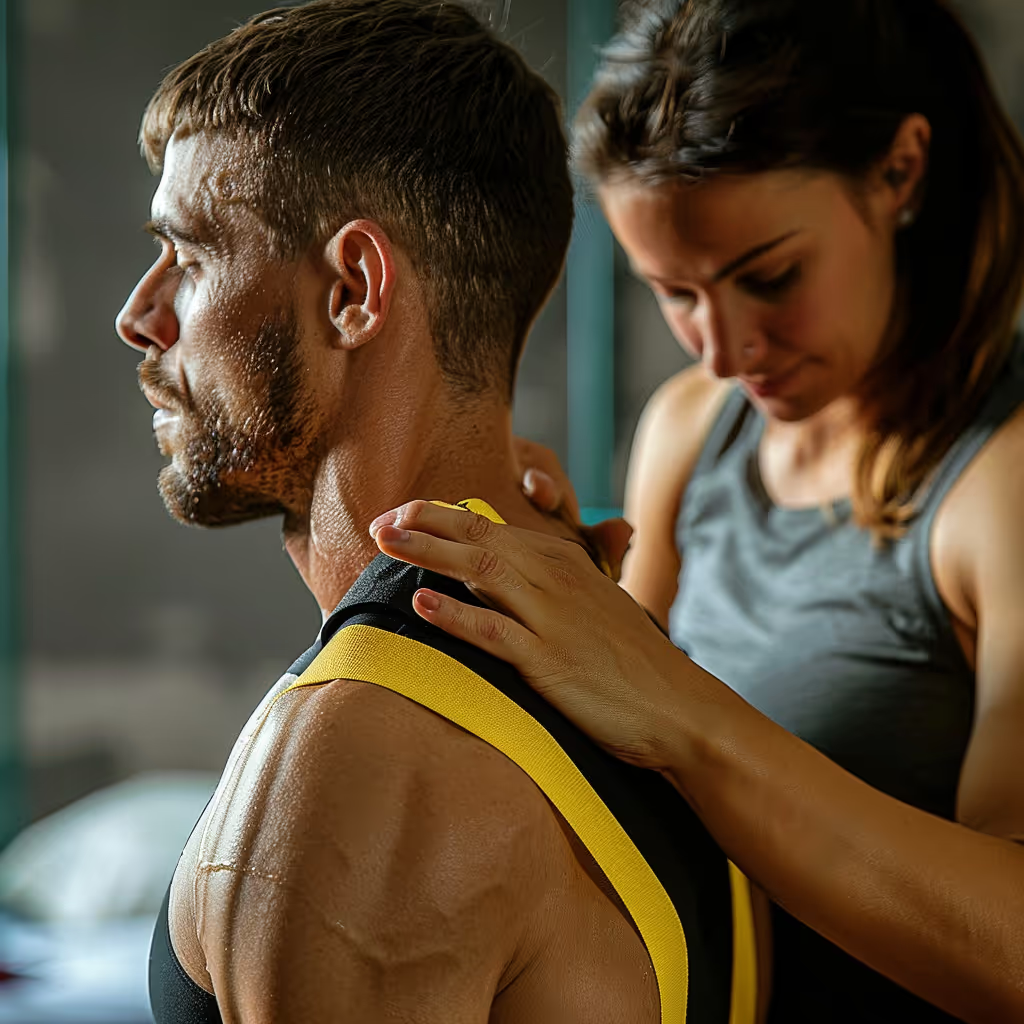
An adhesive bandage is a strip applied to the skin. You can discuss this with your physical therapist if you’re looking for comfortable, short-term support. A small walking study involving 20 people with current or past periosteitis and 20 control participants found a slower increase in strength under the inner midfoot after applying a tape. This result does not prove healing or a reduction in pain while running. Taping remains a potential adjunct to adaptive strategies and exercises.
How long before I can participate in a race?
Participating in a race requires gradually building up your tolerance for the planned distance and intensity—it’s not just about being able to walk without pain. This process can take anywhere from a few weeks to several months, depending on your progress. Your physical therapist can develop a return-to-running plan and review the appropriateness of your chosen race date with you.
Need professional advice?
Our physical therapists can assess your condition and provide you with a personalized treatment plan.
Make an appointmentReferences
Links open in a new tab.
- Larson A, McClure CJ, May T, Oh R. Medial Tibial Stress Syndrome. StatPearls. 2025. (Back to sections: 1, 2, 3)
- Beck BR, Osternig LR. Medial tibial stress syndrome. The location of muscles in the leg in relation to symptoms. J Bone Joint Surg Am. 1994;76(7):1057-61. (Back to section: 1)
- Galbraith RM, Lavallee ME. Medial tibial stress syndrome: conservative treatment options. Curr Rev Musculoskelet Med. 2009;2(3):127-33. (Back to sections: 1, 2, 3, 4)
- Fredette A, Roy JS, Perreault K, Dupuis F, Napier C, Esculier JF. The Association Between Running Injuries and Training Parameters: A Systematic Review. J Athl Train. 2022;57(7):650-671. (Back to sections: 1, 2, 3, 4, 5)
- Oostinga D, Steverink JG, van Wijck AJM, Verlaan JJ. An understanding of bone pain: A narrative review. Bone. 2020;134:115272. (Back to section: 1)
- van der Worp H, Vrielink JW, Bredeweg SW. Do runners who suffer injuries have higher vertical ground reaction forces than those who remain injury-free? A systematic review and meta-analysis. Br J Sports Med. 2016;50(8):450-7. (Back to sections: 1, 2)
- Napier C, MacLean CL, Maurer J, Taunton JE, Hunt MA. Kinetic risk factors for running-related injuries in female recreational runners. Scand J Med Sci Sports. 2018;28(10):2164-2172. (Back to sections: 1, 2)
- Verdejo R, Mills NJ. Heel-shoe interactions and the durability of EVA foam running shoe midsoles. J Biomech. 2004;37(9):1379-86. (Back to sections: 1, 2)
- Fredericson M, Bergman AG, Hoffman KL, Dillingham MS. Tibial stress reaction in runners. Correlation of clinical symptoms and scintigraphy with a new magnetic resonance imaging grading system. Am J Sports Med. 1995;23(4):472-81. (Back to section: 1)
- Wright AA, Hegedus EJ, Lenchik L, Kuhn KJ, Santiago L, Smoliga JM. Diagnostic Accuracy of Various Imaging Modalities for Suspected Lower Extremity Stress Fractures: A Systematic Review With Evidence-Based Recommendations for Clinical Practice. Am J Sports Med. 2016;44(1):255-63. (Back to section: 1)
- Schneiders AG, Sullivan SJ, Hendrick PA, Hones BD, McMaster AR, Sugden BA, et al. The ability of clinical tests to diagnose stress fractures: a systematic review and meta-analysis. J Orthop Sports Phys Ther. 2012;42(9):760-71. (Back to section: 1)
- May T, Marra J, Leu A, Torbert D, VanWagner T, Alexander Z, et al. Accuracy of the Tuning Fork Test for Determining the Presence and Location of Tibial Stress Fractures in a Military Training Population. Mil Med. 2021;186(7-8):733-736. (Back to section: 1)
- Farquharson E, Roberts AJ, Warland AI, Parnis N, O'Connell NE. Prevalence of medial tibial stress syndrome in the British Armed Forces: a population-based study. BMJ Mil Health. 2026;172(1):66-72. (Back to sections: 1, 2, 3)
- Milgrom C, Finestone A, Levi Y, Simkin A, Ekenman I, Mendelson S, et al. Do high-impact exercises produce higher tibial strains than running? Br J Sports Med. 2000;34(3):195-9. (Back to sections: 1, 2)
- Heiderscheit BC, Chumanov ES, Michalski MP, Wille CM, Ryan MB. Effects of manipulating step rate on joint mechanics during running. Med Sci Sports Exerc. 2011;43(2):296-302.
.jpg)
.jpg)
.jpg)
Other conditions

Hip osteoarthritis is the normal wear and tear of the hip joint. It is often said that osteoarthritis is the wear and tear of the cartilage between our bones. That is true, but it involves more than just the cartilage. Cartilage is a tissue that acts as a cushion between the surfaces of our bones and allows our joints to glide smoothly and move fluidly.
This is normal wear and tear of the knee joint. It’s often said that osteoarthritis is the wearing down of the cartilage between our bones. That’s true, but it’s more than just the cartilage. Cartilage is a tissue that acts as a cushion between the surfaces of our bones and allows our joints to glide smoothly and move fluidly.
It is an inflammation of the subacromial bursa in the shoulder joint.
A bursa is a small, thin sac filled with fluid that is found in many of the body's joints. This small sac acts as a cushion within the joint and lubricates the structures that are subject to increased friction.
It is a tissue that surrounds the shoulder and helps keep the shoulder bone in place within the joint. The capsule helps keep the joint stable.
Neck pain is a general term used to describe pain in the neck that has no specific cause, such as an accident or a sudden awkward movement. Neck pain is therefore synonymous with “my neck hurts, and nothing in particular happened.”
In both types of injury, pain is felt in the neck and then radiates into the arm, or vice versa.
Make an appointment now
We offer a three-pronged quality assurance approach: optimized treatment time, a second opinion from a physical therapist, and ongoing expertise to ensure effective care tailored to your needs.

Customer satisfaction is our top priority
At Physioactif, excellence guides everything we do, but our patients are the best ones to tell you about it. Take a look at their verified reviews to get a real sense of their experience.







Discover our physical therapy clinics
We have locations in several areas to better serve you.
Blainville
190 Bas-de-Sainte-Thérèse Road, Suite 110,
Blainville, Quebec
J7B 1A7
Located in Blainville, near Rosemère, the Physioactif clinic is easily accessible to residents of the area and the surrounding communities
Boucherville
690 Rue de Montbrun, Suite S,
Boucherville, Quebec
J4B 8H2
Located in Boucherville, the Physioactif clinic is easily accessible to people in the area
Laval
3224 Jean-Béraud Ave., Suite 220, Laval,
QC H7T 2S4
Located in Chomedey, in the heart of Laval, the Physioactif clinic is easily accessible to people in the area
Montreal
8801 Lajeunesse Street,
Montreal,
QC H2M 1R8
Located in Ahuntsic, near Villeray, the Physioactif clinic is easily accessible to residents of both neighborhoods
Saint-Eustache
180 25th Avenue, Suite
201 Saint-Eustache
QC J7P 2V2
Located in Saint-Eustache, the Physioactif clinic is easily accessible to residents of the area and the surrounding communities
Vaudreuil
21 Cité-des-Jeunes Boulevard, Suite 240,
Vaudreuil-Dorion, Quebec
J7V 0N3
Located in Vaudreuil-Dorion, the Physioactif clinic is easily accessible to people in the area
Make an appointment now