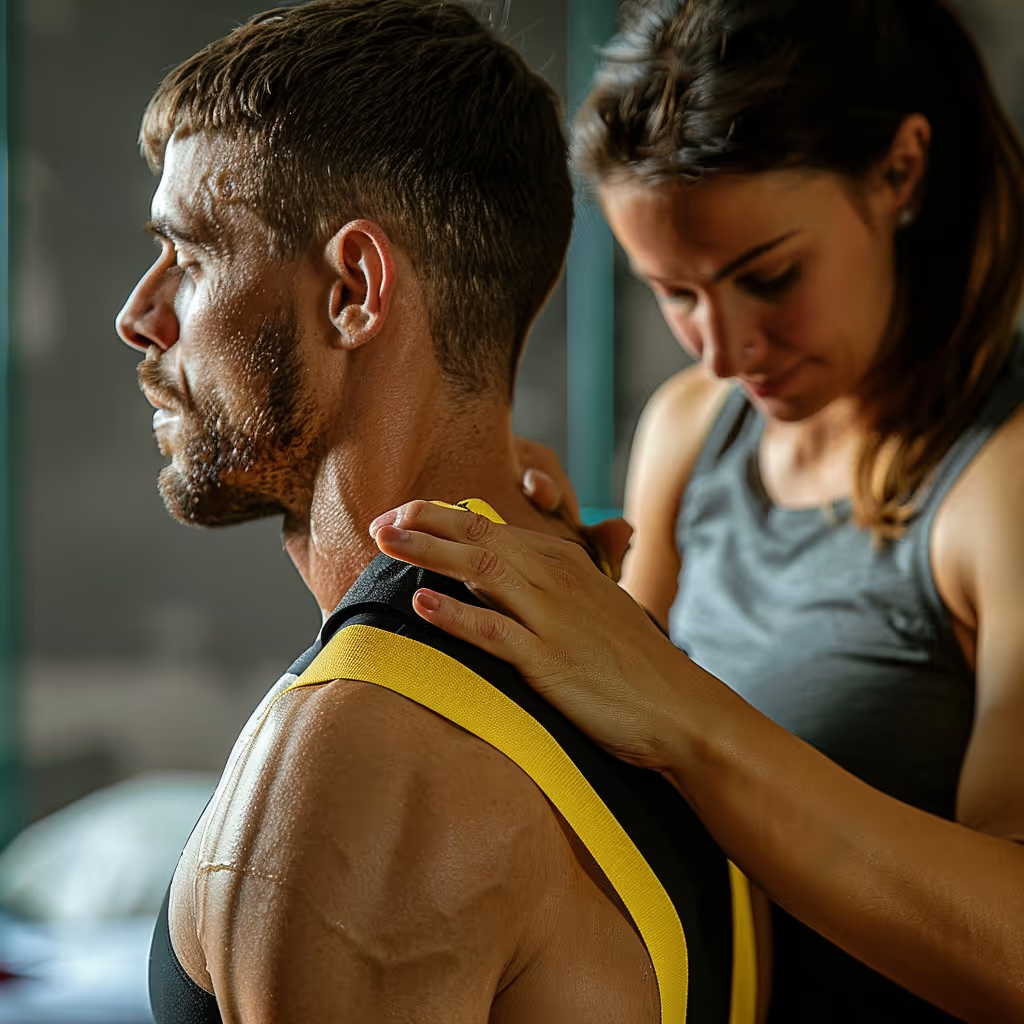
Calcific Tendinitis of the Shoulder
It occurs when one or more of the shoulder tendons are irritated and calcium deposits have formed in the tendons.
.png)
.png)
.png)


Calcific Tendinitis in the Shoulder: A Complete Guide to Understanding and Treating This Condition
Calcific tendinitis of the shoulder involves a calcium deposit in a tendon—a strong band that connects a muscle to a bone. Physical therapy for calcific tendinitis offers active management of this condition. The deposit affects the rotator cuff, a group of muscles and tendons that stabilize the shoulder.1 It may be visible on imaging tests—exams that show the inside of the body—without causing any symptoms. Its presence, size, and appearance alone do not explain the pain or predict how the condition will progress.
This page provides guidelines for discussing symptoms and options that can support important activities. The course of the condition varies from person to person. For an overview of conditions affecting the shoulder, see our comprehensive guide to shoulder pain.
What is calcific tendinitis of the shoulder?
Calcific tendinitis is characterized by deposits of calcium crystals, called hydroxyapatite, in the rotator cuff tendons.1 The deposits mainly form in the supraspinatus tendon, on the top of the shoulder, or in the infraspinatus tendon, at the back of the shoulder.1, 2
10 Quick Tips to Understand Your Pain
One tip a day for 10 days to help you better understand your pain. About a 2-minute read.
Contrary to popular belief, these deposits are not pieces of hard bone. The appearance of a deposit can vary on imaging, and cannot, on its own, predict symptoms or recovery. This descriptive model is often presented in three phases. These stages do not describe a fixed or predictive course for every individual.
What are the three phases of calcific tendinitis?
A descriptive model is often presented in three phases: formation, rest, and resorption.3 These stages do not describe a mandatory or predictable course for every individual.
Phase 1: Formation
The model describes the formation as the gradual accumulation of crystals in the tendon.3 The exact cause is not known for every individual. Pain may be absent, mild, or severe. On an X-ray, the deposit often appears dense with sharp contours.
Many people go through this phase without ever experiencing symptoms. Calcifications are sometimes discovered by chance during imaging tests performed for other reasons.
Phase 2: Rest
During the so-called resting phase, the deposit remains present and its appearance changes little.3 Symptoms may or may not be present. An image alone cannot predict how they will progress.
Phase 3: Resorption
Resorption refers to the gradual removal of the deposit by the body's cells.3 Some people experience more pronounced symptoms at this stage, but pain alone does not confirm this phase or predict recovery.
Patients may report severe pain, limited arm elevation, nighttime pain, or stiffness; however, these signs alone are not sufficient to identify a specific phase or the underlying structure.
The progression of the lesion and symptoms varies. A follow-up evaluation is recommended if symptoms persist, change, or limit important activities.
What truly causes calcific tendinitis?
The exact cause of calcium deposits is not known for every individual. Changes in tendon cell activity have been suggested, but they do not explain why a deposit forms in a specific person. Nor does the intensity of the pain provide any insight into what happens to the deposit.
Who is most at risk of developing calcific tendinitis?
Deposits are more commonly associated with adults aged 30 to 60 and with women, according to a study of 1,219 adults.2 Among people who experienced pain beneath the bony protrusion above the shoulder, a deposit larger than 1.5 cm was more frequently associated with symptoms. These results describe groups. No single factor can predict who will develop calcific tendinitis.
Work, sports, and daily activities are evaluated when they alter symptoms or limit function. They are not sufficient on their own to explain the presence of a deposit.
What are the symptoms of calcific tendinitis?
Symptoms of calcific tendinitis may include pain, stiffness, or difficulty moving the shoulder. These symptoms alone are not enough to identify a specific stage of calcification. Some calcifications cause no symptoms and are discovered by chance during an examination performed for another reason.
The classic pattern sometimes associates the resorption phase with sudden, intense pain, even in the absence of obvious trauma.3 This model does not allow for confirming the phase in an individual based on pain alone. The pain may be located on the top or side of the shoulder and radiate down the arm. Significant nighttime pain, difficulty raising the arm, and tenderness upon touch may limit activities.
A distinctive feature of the resorption phase is that it often begins very suddenly. You may wake up with severe pain even though you felt fine the day before. The speed at which symptoms appear is interpreted in the context of the patient’s history, physical examination, and other signs; it does not, on its own, identify the cause.
How is calcific tendinitis diagnosed?
The diagnosis is based on your symptom history, a physical exam, and medical imaging. The clinical evaluation includes questions about when symptoms began, how they have progressed, their intensity, movements that make them worse, and their impact on sleep. The examination may involve observing movement and strength, as well as palpation—that is, applying pressure with the fingers to locate a tender area—to guide the diagnosis, although no single test can confirm it on its own.
An X-ray can confirm the presence and appearance of a calcium deposit. This finding is interpreted in conjunction with the symptoms and physical examination, as it alone cannot reliably determine the stage of the condition, the cause of the pain, or its progression.
An ultrasound shows the deposit and other structures during the exam. The results of an ultrasound alone do not confirm the source of the symptoms. Magnetic resonance imaging, or MRI, provides detailed images of the muscles, tendons, and other tissues around the shoulder. The healthcare provider decides whether it is necessary based on clinical findings, including a possible rotator cuff tear.
Shoulder pain can have several possible causes; the evaluation takes into account, among other things, shoulder bursitis—an inflammation of a small fluid-filled sac that reduces friction—as well as range of motion, overall health, and signs that require prompt medical evaluation.
What treatments are available for calcific tendinitis?
Available treatments may include physical therapy, medication, injections, shock wave therapy, guided aspiration, and, in some cases, surgery. The choice depends on symptoms, activity limitations, the evaluation, patient preferences, and the response to initial treatment.1
Conservative Treatments
Physical therapy for shoulder pain can help you regain functional movement and gradually resume challenging activities. The physical therapist may recommend guided movements and progressive exercises, then adapt them based on your symptoms and progress.1
Extracorporeal shock wave therapy is sometimes considered when symptoms persist. Some comparisons show improvements in pain or functional ability, but the studies have limitations and the results vary.1 Some people also report increased pain during or after this treatment.1
A cortisone injection is an injection of this medication, which reduces inflammation. The healthcare professional who prescribes it discusses the decision based on the patient’s symptoms, other possible causes, and the expected benefits and risks.
Ultrasound-guided aspiration, also known as flushing, uses a needle to aspirate or flush out part of the deposit. This option is discussed based on symptoms, test results, and patient preferences.1 A reduction in the deposit does not guarantee an improvement. Platelet-rich plasma, or PRP, is a preparation of your own blood enriched with platelets. In a trial involving 80 adults, aspiration followed by PRP yielded less favorable clinical results after six weeks, more favorable results after six months, and comparable results after one and two years, compared to aspiration followed by a cortisone injection.4 This result does not demonstrate the overall superiority of PRP.
Medications, including anti-inflammatory drugs, are discussed with a pharmacist or doctor based on symptoms, other medications, health conditions, and contraindications.
Surgery
Surgery can remove the deposit using small incisions and a camera when symptoms persist despite other treatments.5 The surgeon takes into account the extent of the lesions, the patient’s activities, and their goals. Recovery varies depending on the procedure performed and the patient’s response.
What can I do at home to relieve my calcific tendinitis?
At home, relative rest temporarily reduces activities that worsen symptoms, without stopping all movement. You can also try applying cold or heat briefly and choosing a comfortable sleeping position. After an evaluation, a gentle movement might involve resting your pain-free hand on a table and letting the other arm swing slowly through a comfortable range of motion. Stop this movement if it significantly increases the pain. Cambridge University Hospitals demonstrates this type of movement.
Sleeping positions can be adjusted for comfort; the person can try using an armrest or another position and choose the one that improves their sleep without worsening their symptoms.
Maintaining a certain degree of mobility is important even during painful episodes. Gentle movements or exercises may be selected following an assessment based on symptoms, function, and the intended activities; their progression is adjusted and reevaluated based on the observed response.
Seek prompt medical advice in the following situations:
- sudden or severe pain;
- an arm that cannot be moved, a deformity, or severe swelling;
- persistent tingling, loss of sensation, or an arm that feels hot or cold to the touch;
- pain that developed after an injury;
- severe pain in both shoulders, a fever, or general malaise.
Home remedies should not delay seeking prompt medical advice. For less urgent pain that persists or limits your activities, a physical therapy consultation can help clarify your options and refer you to other services if needed. The NHS provides details on these warning signs.
What is the prognosis for calcific tendinitis?
The deposit may resolve on its own, and symptoms may improve, but some people continue to experience pain or have limited mobility.6 The duration of recovery cannot be determined based on the lesion or a presumed phase. Follow-up focuses on important activities and the response to treatments tried.
The size and appearance of the lesion are described in the images, but they alone do not predict pain, functional limitations, or recovery. The evaluation combines imaging, symptoms, and activities to tailor the treatment plan.
What conditions are associated with calcific tendinitis?
Rotator cuff tendinopathy and bursitis may be associated with calcific tendinitis. The evaluation determines whether these conditions correspond to the symptoms.
Following an injury or in cases of persistent pain, a shoulder sprain and adhesive capsulitis—or “frozen shoulder”—are among the possible diagnoses considered based on the patient’s history, physical examination, and clinical course.
How can you get help for your calcific tendinitis?
For help, you can schedule an appointment with the Physioactif team. A physical therapy evaluation can help you understand your symptoms, assess the challenges you face in your daily activities, and choose the right treatment. The physical therapist will work with you to try out different options and then adjust the plan based on your response and your goals.
The professional can also refer you to a doctor or another service when the situation calls for it.
Need professional advice?
Our physical therapists can assess your condition and provide you with a personalized treatment plan.
Make an appointmentSources
Links open in a new tab.
- Lafrance S, Doiron-Cadrin P, Saulnier M, Lamontagne M, Bureau NJ, Dyer JO, et al. Is ultrasound-guided lavage an effective intervention for rotator cuff calcific tendinopathy? A systematic review with a meta-analysis of randomized controlled trials. BMJ Open Sport Exerc Med. 2019;5(1):e000506. (Back to sections: 1, 2, 3, 4, 5, 6, 7, 8)
- Louwerens JK, Sierevelt IN, van Hove RP, van den Bekerom MP, van Noort A. Prevalence of calcific deposits within the rotator cuff tendons in adults with and without subacromial pain syndrome: clinical and radiologic analysis of 1,219 patients. J Shoulder Elbow Surg. 2015;24(10):1588-93. (Back to sections: 1, 2)
- Uhthoff HK, Loehr JW. Calcific Tendinopathy of the Rotator Cuff: Pathogenesis, Diagnosis, and Management. J Am Acad Orthop Surg. 1997;5(4):183-191. (Back to sections: 1, 2, 3, 4, 5)
- Oudelaar BW, Huis In 't Veld R, Ooms EM, Schepers-Bok R, Nelissen RGHH, Vochteloo AJH. Efficacy of Adjuvant Application of Platelet-Rich Plasma After Needle Aspiration of Calcific Deposits for the Treatment of Rotator Cuff Calcific Tendinitis: A Double-Blind, Randomized Controlled Trial With 2-Year Follow-up. Am J Sports Med. 2021;49(4):873-882. (Back to section: 1)
- DE Carli A, Pulcinelli F, Rose GD, Pitino D, Ferretti A. Calcific tendinitis of the shoulder. Joints. 2014;2(3):130-6. (Back to section: 1)
- Chianca V, Albano D, Messina C, Midiri F, Mauri G, Aliprandi A, et al. Rotator cuff calcific tendinopathy: from diagnosis to treatment. Acta Biomed. 2018;89(1-S):186-196. (Back to section: 1)
- Speed CA, Hazleman BL. Calcific tendinitis of the shoulder. N Engl J Med. 1999;340(20):1582-1584.
- Louwerens JK, Sierevelt IN, van Noort A, van den Bekerom MP. Evidence for minimally invasive therapies in the management of chronic calcific tendinopathy of the rotator cuff: a systematic review and meta-analysis. J Shoulder Elbow Surg. 2014;23(8):1240-1249.
Videos in this category
.jpg)
Other conditions

Hip osteoarthritis is the normal wear and tear of the hip joint. It is often said that osteoarthritis is the wear and tear of the cartilage between our bones. That is true, but it involves more than just the cartilage. Cartilage is a tissue that acts as a cushion between the surfaces of our bones and allows our joints to glide smoothly and move fluidly.
This is normal wear and tear of the knee joint. It’s often said that osteoarthritis is the wearing down of the cartilage between our bones. That’s true, but it’s more than just the cartilage. Cartilage is a tissue that acts as a cushion between the surfaces of our bones and allows our joints to glide smoothly and move fluidly.
It is an inflammation of the subacromial bursa in the shoulder joint.
A bursa is a small, thin sac filled with fluid that is found in many of the body's joints. This small sac acts as a cushion within the joint and lubricates the structures that are subject to increased friction.
It is a tissue that surrounds the shoulder and helps keep the shoulder bone in place within the joint. The capsule helps keep the joint stable.
Neck pain is a general term used to describe pain in the neck that has no specific cause, such as an accident or a sudden awkward movement. Neck pain is therefore synonymous with “my neck hurts, and nothing in particular happened.”
In both types of injury, pain is felt in the neck and then radiates into the arm, or vice versa.
Make an appointment now
We offer a three-pronged quality assurance approach: optimized treatment time, a second opinion from a physical therapist, and ongoing expertise to ensure effective care tailored to your needs.
Customer satisfaction is our top priority
At Physioactif, excellence guides everything we do, but our patients are the best ones to tell you about it. Take a look at their verified reviews to get a real sense of their experience.










Discover our physical therapy clinics
We have locations in several areas to better serve you.
Blainville
190 Bas-de-Sainte-Thérèse Road, Suite 110,
Blainville, Quebec
J7B 1A7
Located in Blainville, near Rosemère, the Physioactif clinic is easily accessible to residents of the area and the surrounding communities
Boucherville
690 Rue de Montbrun, Suite S,
Boucherville, Quebec
J4B 8H2
Located in Boucherville, the Physioactif clinic is easily accessible to people in the area
Laval
3224 Jean-Béraud Ave., Suite 220, Laval,
QC H7T 2S4
Located in Chomedey, in the heart of Laval, the Physioactif clinic is easily accessible to people in the area
Montreal
8801 Lajeunesse Street,
Montreal,
QC H2M 1R8
Located in Ahuntsic, near Villeray, the Physioactif clinic is easily accessible to residents of both neighborhoods
Saint-Eustache
180 25th Avenue, Suite
201 Saint-Eustache
QC J7P 2V2
Located in Saint-Eustache, the Physioactif clinic is easily accessible to residents of the area and the surrounding communities
Vaudreuil
21 Cité-des-Jeunes Boulevard, Suite 240,
Vaudreuil-Dorion, Quebec
J7V 0N3
Located in Vaudreuil-Dorion, the Physioactif clinic is easily accessible to people in the area
Make an appointment now