Acromioclavicular sprain
A shoulder sprain involves the stretching or tearing of one or more ligaments in the shoulder. When a ligament is stretched or torn, bleeding can occur within the joint, leading to swelling and bruising.
.png)
.png)
.png)


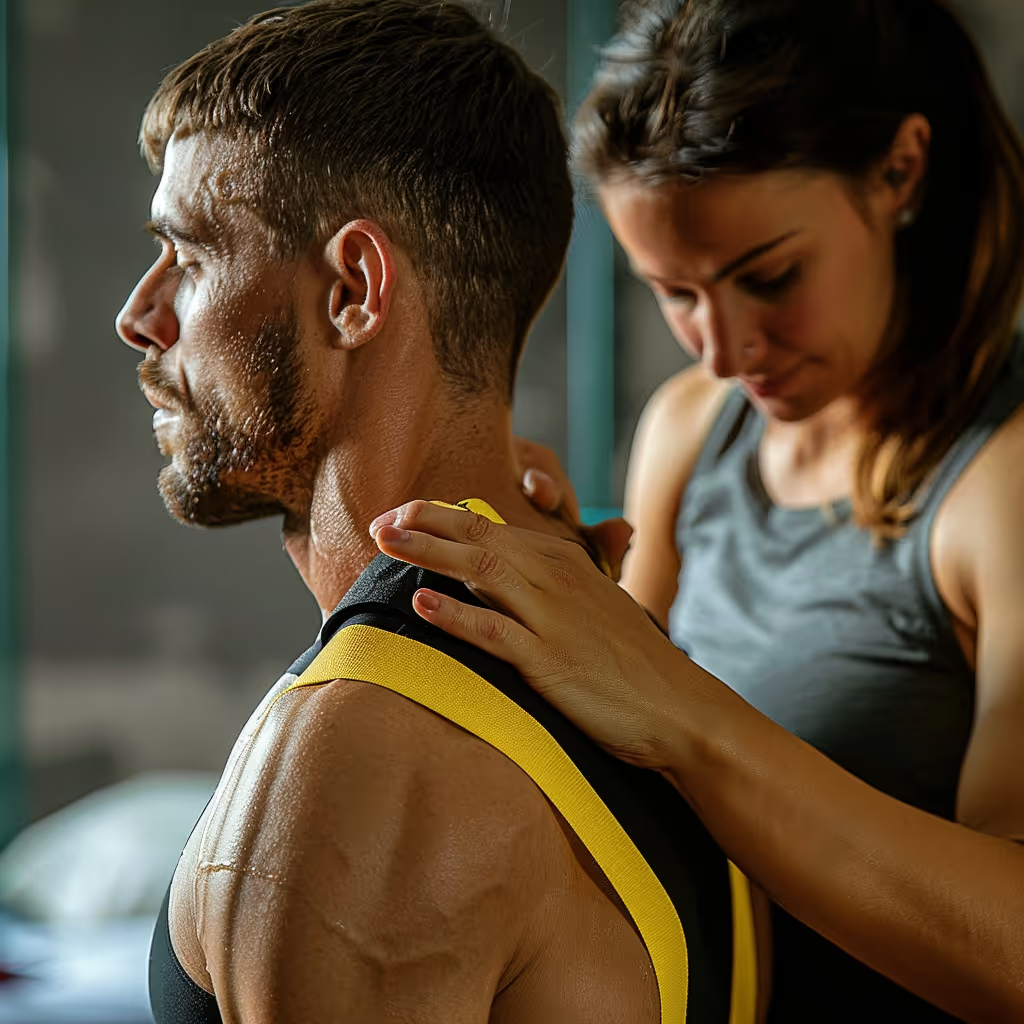
An acromioclavicular sprain affects the ligaments at the top of the shoulder, near the collarbone. These bands of strong tissue connect the bones and help keep the joint in place. This injury is common among athletes, especially after a fall or a collision.
Grade I and II acromioclavicular sprains are generally treated without surgery. The grade describes the severity of the injury. Treatment includes temporary protection of the arm and a gradual return to movement.1 Recovery is often favorable, but symptoms may persist. In a small study of 33 people, 17 (52%) were symptom-free at the final follow-up. Nine people, or 27%, required surgery for persistent problems, on average 26 months after the injury. The 24 people who did not undergo surgery were reevaluated after an average of 6.3 years. These results from a small group do not predict your outcome.2
This guide explains the signs to look for, the six degrees of injury, and possible treatments. It also explains when urgent medical attention is needed.
What is an acromioclavicular sprain?
An acromioclavicular sprain is an injury to the ligaments that stabilize the joint between the collarbone and the acromion, the upper part of the shoulder blade. It is also known as an AC sprain. A separation of the bones in this joint is called an acromioclavicular dislocation.
10 Quick Tips to Understand Your Pain
One tip a day for 10 days to help you better understand your pain. About a 2-minute read.
This joint is located at the top of your shoulder, where you can feel the small bump of your collarbone. The ligaments that stabilize this area are:
- The acromioclavicular ligaments connect the clavicle directly to the acromion
- The coracoclavicular ligaments connect the clavicle to the coracoid process, a bony protrusion of the scapula located below the clavicle
When ligaments are stretched or torn after an accident, the joint may become less stable. In some severe injuries, the collarbone appears raised relative to the rest of the shoulder. A bump then becomes visible.
This injury particularly affects participants in contact sports (rugby, hockey, judo), cyclists, and skiers. Our guide to shoulder anatomy explains the bones, ligaments, and muscles in this area.
What are the different grades of acromioclavicular sprains?
The six Rockwood grades describe a sprain without displacement, a partial tear of the supporting structures, or a more significant separation of the joint. The classification takes into account the ligaments involved and the direction of the clavicle’s displacement.3
Grade I: Mild sprain
The acromioclavicular ligaments are stretched but remain intact. The coracoclavicular ligaments are intact, and the bones are not displaced.
- Return to sports: Reid's 2012 review suggests approximately 2 to 4 weeks as a guideline for Grade I.1 A return to sports also depends on the movements, strength, and skills required by the sport.
- Treatment: temporary protection and restoration of movement, without surgery.
Grade II: Moderate sprain
The acromioclavicular ligaments are torn. The coracoclavicular ligaments are stretched but not completely torn. The joint may become wider and less stable.
- Returning to sports: approximately 4 to 6 weeks, according to this 2012 review, with adjustments based on pain, mobility, strength, and the specific sport.1
- Treatment: Generally does not require surgery. Care follows the same progression as for Grade I, with protection appropriate for the injury.1
Grade III: Complete separation of the joint
The acromioclavicular and coracoclavicular ligaments are completely torn. The clavicle is positioned higher than the acromion, and a lump may appear at the top of the shoulder.
Adjacent muscles may also be injured. In a study of 46 people who underwent surgery for a complete joint separation, 43—or about 94%—had an injury to the deltoid, the trapezius, or both. These muscles cover the shoulder and upper back. This figure reflects this specific surgical group and does not apply to all sprains.4
- Returning to sports: The 2012 review suggests a return to sports approximately 6 to 12 weeks after non-surgical treatment. A later return may be necessary, especially if symptoms persist or following surgery.1
- Treatment: The choice between non-surgical and surgical treatment takes into account symptoms, requirements, preferences, associated lesions, and the course of the disease
Grades IV–VI: Severe displacement
In Grade IV, the clavicle is displaced backward, into or through the trapezius muscle. In Grade V, it is much higher than the acromion. In Grade VI, it passes under the acromion, sometimes under the coracoid process. Tears in adjacent muscles may accompany these injuries.3
- Returning to sports after surgery: often several months. The 2025 review reports an average of about 127 days—or nearly 18 weeks—for people who have undergone surgery, across all severity levels.5 This timeframe refers to the return to sports, not the complete healing of the ligaments.
- Treatment: Specialized evaluation; surgery is often considered, but the decision depends on the lesion, symptoms, needs, and preferences
These guidelines for returning to sports should be discussed with your healthcare team. Published programs provide different timeframes. In the 2025 review, the average return time was approximately 52 days—or 7.4 weeks—without surgery, compared to 127 days with surgery. The groups did not necessarily have injuries of the same severity. Therefore, this difference alone does not demonstrate the effect of the treatment.5
What are the symptoms of an acromioclavicular sprain?
An acromioclavicular sprain can cause pain at the top of the shoulder, swelling, a lump, or difficulty raising the arm. These symptoms may also occur with other injuries; an examination helps distinguish between them.
The pain can be mild or severe. The intensity of the pain alone is not enough to determine the severity of the sprain.
Immediate symptoms (first few hours)
Severe pain at the top of the shoulder
Pain may be felt near the AC joint and radiate into the shoulder. Its location and intensity vary.
Difficulty raising the arm
Raising the arm or bringing it close to the body can increase pain and limit movement in some people.
Visible deformation (grades III to VI)
A bump at the top of the shoulder may be visible in some displaced injuries; its presence alone is not sufficient to determine the grade.
Localized swelling
The shoulder may swell near the collarbone. The swelling varies depending on the injury.
Symptoms in the following days
- Bruise around the joint
- Pain when you touch the injured area
- Nighttime pain that disrupts sleep
- A sensation that the shoulder moves too much or a clicking sound during certain movements (Grades II and III)
When to Seek Medical Attention Immediately
Pain following a fall or other accident requires urgent medical attention. Also seek medical attention immediately if any of the following symptoms appear:
- Sudden or severe pain, deformity, or significant swelling of the shoulder.
- An inability to move the arm.
- Persistent tingling, loss of sensation, or an arm that feels unusually hot or cold.
- Severe pain in both shoulders.
- A feeling of fever or general malaise.
A pale arm or the absence of a pulse at the wrist may indicate a circulation problem: go to the emergency room. A deformity or loss of sensation following an injury also requires evaluation in the emergency room. Do not wait for a physical therapy appointment. 6, 7
Pain that worsens should be re-evaluated, even in the absence of these signs. It is not necessary to have multiple symptoms or to recall a specific injury in order to seek medical attention.
What causes an acromioclavicular sprain?
An acromioclavicular sprain usually occurs after an impact to the side of the shoulder, often during a fall or sports-related contact. Falling onto the hand or elbow can also transmit force to this joint.
Shoulder pain that develops after an injury is consistent with an AC joint sprain. The mechanism may be direct or indirect, and the absence of a specific memory of the injury alone is not sufficient to rule it out.
Traumatic mechanisms
During a direct impact, the acromion may be pushed downward relative to the clavicle. The ligaments connecting these bones are then stretched or torn. The arm is often close to the body at the moment of impact.1
Sports in which these falls or collisions may occur
- Contact sports: rugby, ice hockey, soccer, judo
- Cycling sports: road cycling, mountain biking, motocross
- Winter sports: downhill skiing, snowboarding
- Equestrian sports: horseback riding, rodeo
Pain that develops gradually may have another cause, such as shoulder tendinopathy—persistent pain related to a tendon. A tendon connects a muscle to a bone. The term “snapping syndrome” also refers to certain types of pain that occur during shoulder movements. An evaluation helps distinguish these problems from a sprain.
How is an acromioclavicular sprain diagnosed?
The healthcare professional diagnoses an acromioclavicular sprain based on the patient’s account of the accident and a physical examination of the shoulder. The healthcare professional assesses range of motion, tenderness, and stability. X-rays, which produce images of the bones, may reveal a dislocation or fracture. However, X-rays alone do not always determine the exact severity of the injury.
Clinical examination
Your physical therapist or doctor will evaluate several factors:
History of the injury
The healthcare professional will ask you how the injury occurred and how your symptoms have progressed. A fall onto your shoulder or a direct blow may guide the examination.
Visual inspection
- Visible deformity at the top of the shoulder (grades III to VI)
- Localized swelling at the AC joint
- Bruise, a bruise under the skin
Shoulder Palpation and Movement
- Pain when the healthcare professional presses on the AC joint
- Mobility of the tip of the clavicle may be observed, although this alone does not confirm the diagnosis
- Moving the arm in front of the chest may cause pain. The healthcare professional interprets this finding in light of the patient's account of the accident and the rest of the examination.
X-rays
Depending on the examination procedure and results, X-rays may be ordered for:
- Complete the accident report and the shoulder examination
- Measuring bone displacement to help determine the grade
- Check for a fracture of the clavicle or acromion
Other shoulder injuries may occur in the same accident and be mistaken for an acromioclavicular sprain, including a shoulder dislocation—in which the upper arm bone slips out of its socket—or a tear in the rotator cuff, the muscles and tendons that help lift and rotate the arm. A physical examination and imaging tests are used to distinguish between them.
X-rays taken from multiple angles help determine the direction of the dislocation. A lateral view of the joint can be important for identifying a clavicle that has been displaced backward. The usefulness of X-rays taken with added weight remains a matter of debate.
In Quebec, a physical therapist who holds the required certification may order an X-ray for an injury to the muscles, bones, or joints caused by an accident that occurred less than 72 hours ago. The physical therapist must be the first professional to assess the injury, according to the rules of the Ordre professionnel de la physiothérapie du Québec. If a physician has already evaluated you, the physical therapist must contact the physician to obtain this referral.8
Additional Tests for Certain Complex Injuries
- Ultrasound: It can reveal certain lesions in the muscles and tissues surrounding the joint.
- Magnetic resonance imaging (MRI): It provides detailed images of ligaments and other tissues, especially if a related injury is suspected.
- Computed tomography (CT) scan: This X-ray exam shows the bones from multiple angles. It can answer a specific question about their position, but it does not always provide a more precise classification of the injury.
Once the diagnosis has been confirmed and the severity determined, the question becomes: How should this injury be treated?
What are the treatment options based on the severity of the acromioclavicular sprain?
Treatment is generally non-surgical for grades I and II, often non-surgical initially for grade III, and usually surgical for grades IV through VI following a specialist evaluation. Your symptoms, activities, and preferences also play a role in the decision.3
In a Canadian study, 83 people with Grade III, IV, or V tears were randomly assigned to one of two treatment groups. In this study, the non-surgical treatment yielded better results at six weeks and three months in terms of arm function. At 6 months, 1 year, and 2 years, the questionnaire on arm function showed no clear difference between the groups. Surgery using a hook plate improved bone alignment but required more reoperations. These results apply to this specific technique and this group of patients.9
Treatment of Stage I and II Cancer Without Surgery
Phase 1: Protection and Relief (the first few days)
- Relative rest: Limit activities that worsen the pain and stick to the movements your healthcare provider has approved
- Sling: It can support the arm for a few days to a few weeks, depending on the injury and the instructions you've been given
- Ice: Use as needed for temporary relief, placing a cloth between the skin and the cold source.
- Medication: Ask your pharmacist or doctor which option is right for your medical condition.
Phase 2: Gradual resumption of activity (over the following weeks, depending on tolerance)
- Gently swing the relaxed arm back and forth, then lift the arm with the other hand for support
- A gradual return to light daily activities
Phase 3: Strengthening and Resuming Activities (thereafter, depending on tolerance)
- Strengthening the rotator cuff with appropriate resistance
- Scapular Stabilization: Exercises that help the shoulder blade glide smoothly over the rib cage when you raise your arm.
- Returning to sports: The timing depends on pain, mobility, strength, the demands of the sport, and progress
Treatment for Stage III: Comparing Non-Surgical Care and Surgery
For Grade III, non-surgical treatment involves initial rest and progressive exercises. Surgery may be considered if the pain persists or if the shoulder moves too much and continues to limit your activities. The specialist also takes into account any associated injuries and your preferences.1 The discussion focuses in particular on:
- The movements involved in your sport, including throws, contact, and overhead movements.
- The physical demands and movements required by your job.
- Your activity level, your goals, and how much you care about visible muscle definition.
- Pain or discomfort that persists despite appropriate treatment and exercises.
The timing of the surgery is decided in consultation with the surgeon. It depends on the injury, your activities, and your progress. Surgery can reduce the displacement, but it also carries risks, such as infection, irritation from the implant, or the need for another procedure. The specialist weighs these risks against the expected benefits.
Treatment of Stages IV through VI: Specialized Evaluation
For these grades, surgery is generally recommended in the literature.
After surgery, the sling protects the repair site for several weeks. Some protocols call for six to eight weeks of protection following a reconstruction—a procedure that replaces or reinforces injured ligaments. The exact duration depends on the technique used and the surgeon’s instructions.10
- Physical therapy: begins according to the surgeon's protocol and continues for several months.
- Returning to sports: several months after surgery, depending on recovery.
After surgery, rehabilitation—that is, the care needed to regain your abilities—progresses according to the type of repair performed. Permitted movements come before more demanding strengthening exercises. The surgeon and physical therapist coordinate these steps.
What role does physical therapy play in recovery?
Physical therapy helps relieve pain, restore shoulder movement, and strengthen the muscles needed for your activities. The program focuses in particular on the rotator cuff and scapular control.
Physical therapy for shoulder pain tailors exercises to your injury and goals. Guided movements using the therapist’s hands can also help restore mobility to a stiff or painful shoulder. The therapist adjusts the intensity of these movements to ensure a manageable progression.10
Exercise Steps Based on the Injury
Grade I and II cases treated without surgery
- Pain Management and Restoration of Mobility
- Gradual strengthening of the muscles that control the shoulder blade and arm
- Practicing the movements needed for work, daily tasks, or sports
- Follow-up: The number of sessions is determined after the assessment and adjusted based on the student's grade level, objectives, and progress.
Grade III treated without surgery
For Grade III injuries treated without surgery, the steps are similar. The treatment plan may take longer if the shoulder remains painful or unstable.
- Gradual strengthening tailored to symptoms, function, target activities, and the observed response
A study of 34 people with a Grade III separation that had become persistent found an unusual position of the shoulder blade at rest in 24 of them—about 70 percent. The researchers referred to this issue as scapular dyskinesia, a disorder affecting the movement of the shoulder blade. It was not present in all participants.11 In another study, 24 individuals with this condition followed a strength-training and stretching program. After one year, this movement problem had resolved in 18 of the 23 individuals followed up, or 78.2%. Shoulder function had also improved. Since this study lacked a comparison group, it is not possible to determine the exact extent to which the exercises contributed to these improvements.12
Surgically treated conditions
- Initial phase: protection and exercises permitted according to the surgical technique and the surgeon's protocol.
- Next step: Gradually remove the sling and resume movement according to the surgeon’s instructions and your tolerance.
- Strength Training: Gradually increase resistance as healing progresses and the surgeon's protocol allows.
- Returning to sports after surgery: according to the surgeon’s protocol, once mobility, strength, and the specific movements required for the sport have been regained.
- Follow-up: The frequency and duration are tailored to the surgeon's protocol, the treatment goals, and the patient's progress.
10 Quick Tips to Understand Your Pain
One tip a day for 10 days to help you better understand your pain. About a 2-minute read.
The exercises you learn during your appointment can be continued at home. Your healthcare provider will tell you which ones to do, how often, and within what limits.
Reviews conducted in 2012 and 2021 did not identify any randomized controlled trials that directly compared different rehabilitation programs to determine which program was superior to the others. The exercises and the pace of the sessions should therefore be tailored to your specific challenges and progress.1, 10
What can you do at home for an acromioclavicular sprain?
Home care includes temporary shoulder protection, ice as needed, and progressive exercises approved for your injury. After surgery, your surgeon’s instructions will determine which movements are permitted.
Work with your physical therapist to choose exercises that are appropriate for your stage of recovery. A significant increase in pain, new weakness, or loss of range of motion warrants a follow-up evaluation.
PEACE & LOVE Principles After an Injury
PEACE is a guide for the first few days: relative rest, supporting the arm, and information about the injury. Light compression may sometimes be recommended, but it should not be too tight. Ask your doctor or pharmacist for advice on medications.
LOVE focuses on a gradual return to activity: gradually increasing the level of exertion you can tolerate, maintaining confidence in your recovery, and resuming exercises. An activity such as walking can help maintain your endurance without putting excessive strain on your shoulder. These principles should be adapted to the severity of your condition and your postoperative instructions.
Progressive exercises to do at home
Have the exercises and their start times confirmed before beginning them. The following examples refer to an authorized return to activity, not a recently operated shoulder without specific instructions.
Small arm swings
Lean forward, supporting yourself on a table with your healthy arm. Let your injured arm hang loosely, then gently swing it back and forth. Avoid straining if the pain increases significantly.
Movement of the shoulder blades
Gently bring your shoulder blades toward each other without shrugging your shoulders. Your physical therapist can demonstrate this movement with your arm supported to reduce the strain on the joint.
Arm Rotation with Light Resistance
When strengthening exercises are permitted, keep your elbow bent close to your body and move your forearm outward against a light resistance band. The choice of resistance, number of repetitions, and progression depends on your symptoms.
Small weights can then be used to strengthen the arm. Gradually increase the load and have a therapist check any movements that are still difficult.10, 13
Tips for Sleeping and Getting Back to Your Routine
When sleeping, try to support your arm with a pillow while lying on your back or on your healthy side. Avoid putting direct pressure on your shoulder if it is painful. After surgery, keep the sling on at night if this is part of your instructions.
Activities to Avoid at the Beginning
Avoid heavy lifting and sudden movements shortly after the injury, and avoid contact sports and returning to sports too soon as long as pain and instability persist.
The return to activities is a gradual process. Persistent pain or a shoulder that feels unstable warrants follow-up to adjust treatment.
What problems might persist after an acromioclavicular sprain?
An acromioclavicular sprain can cause pain, stiffness, a feeling of instability, or a lump. A return to normal activities may occur before symptoms have completely disappeared.
A study enrolled 47 people with a Grade I or II sprain. Among those who completed the questionnaire, 14 (40%) reported significant pain at six months. At the final follow-up, after at least one year, there were five such individuals (14%). These results reflect the participants who completed the questionnaire, not the entire study population.14
Progression depends on the injury and the activities
The severity of the injury, the location, and other injuries all affect recovery. Your activities and treatment also play a role. For a more severe injury, the specialist will discuss with you the chances of improvement, possible limitations, and the steps you can expect.
A lump may remain after non-surgical treatment, even if the arm functions well. In a study of Grade III and V dislocations, 25 of the 35 participants were followed up 18 to 20 years later. The joint was more often prominent or unstable, and appeared wider on X-rays, in the non-surgical group. Clinical outcomes, however, were equally good in both groups at this follow-up. The surgery at that time used pins—small metal rods; this result does not reflect all current techniques.15
Persistent pain, bothersome clicking sounds, or difficulty at work or during sports are reasons to schedule a follow-up evaluation. The goals of your follow-up care may change as your needs change.
What are some frequently asked questions about acromioclavicular sprains?
The most common questions people ask after an acromioclavicular sprain are about returning to work, wearing a sling, driving, resuming exercise, the lump at the top of the shoulder, surgery, and the number of physical therapy sessions.
Can I work with an AC sprain?
In some cases, you can continue doing desk work with adapted tasks and your arm supported. Work that involves carrying, pushing, or raising your arms may require taking time off or modifying your tasks. Your return to work depends on the severity of your condition and the movements you can perform without worsening your symptoms.
Should I wear a scarf?
The sling can support the arm for a few days to a few weeks after a sprain treated without surgery. After surgery, it protects the healing site according to a specific protocol. Ask when to remove it for care, exercises, and at night; do not shorten the prescribed immobilization period. For a minor sprain treated without surgery, permitted gentle movements help limit stiffness.10, 13
Can I drive with an AC sprain?
Driving becomes a possibility once you no longer need a sling and can control the steering wheel and perform emergency maneuvers without pain or hesitation. This milestone alone is not enough. Follow your healthcare provider’s instructions and check your insurance coverage.13
How long before I can go back to the gym?
Returning to the gym begins with exercises that protect the shoulder. For the upper body, start with low resistance and increase it as directed. Pushing exercises, heavy weights, and overhead movements can be resumed later. General guidelines for returning to sports are approximately 2 to 4 weeks for a Grade I injury, 4 to 6 weeks for a Grade II injury, and 6 to 12 weeks for a Grade III injury without surgery. After surgery, a full return to activity may take several months. These guidelines do not replace an evaluation of the specific movements you wish to resume.1
Will the lump on top of my shoulder go away?
A small lump may remain, even after a Grade I or II sprain. It is more noticeable in more severe sprains, such as a Grade III sprain. Its presence does not necessarily mean that the shoulder will function poorly. If you are concerned about its appearance, pain, or instability, discuss it with your healthcare provider.13
Do I need surgery for my stage III cancer?
Grade III does not always require surgery. The decision is based on your symptoms, activities, preferences, and response to treatment. You can discuss both options with your specialist; no mandatory course of physical therapy sessions can replace this advice.
If pain persists, a follow-up evaluation is first and foremost intended to determine its cause and discuss appropriate options.
How many physical therapy sessions will I need?
The number of physical therapy sessions varies depending on the severity of the condition, the response to treatment, and the physical therapist's follow-up care.
What should you know about an acromioclavicular sprain?
The key points are to have the injury evaluated, follow the recommended precautions, and gradually resume movement. Grade I and II injuries often heal well without surgery. For more severe injuries, the choice of treatment and return to activities require a discussion tailored to your specific situation.
Key points to remember:
- Grades I and II are generally treated without surgery, but the time it takes to resume normal activities and the presence of residual symptoms vary from person to person.
- Grade III can be treated without surgery or with surgery, depending on your specific situation
- Higher grades require specialized evaluation; surgery is often considered, but the decision depends on the grade, symptoms, activities, and preferences.
- Physical therapy can help guide the restoration of mobility, strength, and activities when symptoms or goals warrant it.
- Following a tailored program and reporting any difficulties to your support professional can help ensure safe progress.
After a shoulder injury, have the injury examined. If you experience any of the urgent symptoms described above, seek medical attention immediately. Once these issues have been addressed, a physical therapist can help you resume your activities.
You can review the grades of acromioclavicular sprains and check out our guide on shoulder and arm pain.
Need professional advice?
Our physical therapists can assess your condition and provide you with a personalized treatment plan.
Make an appointmentSources
Links open in a new tab.
- Reid D, Polson K, Johnson L. Acromioclavicular joint separations, grades I–III: a review of the literature and development of best practice guidelines. Sports Med. 2012;42(8):681–96. (Back to sections: 1, 2, 3, 4, 5, 6, 7, 8, 9)
- Mouhsine E, Garofalo R, Crevoisier X, Farron A. Grade I and II acromioclavicular dislocations: results of conservative treatment. J Shoulder Elbow Surg. 2003;12(6):599-602. (Back to section: 1)
- Gorbaty JD, Hsu JE, Gee AO. Classifications in Brief: Rockwood Classification of Acromioclavicular Joint Separations. Clin Orthop Relat Res. 2017;475(1):283-287. (Back to sections: 1, 2, 3)
- Lizaur A, Marco L, Cebrian R. Acute dislocation of the acromioclavicular joint. Traumatic anatomy and the importance of the deltoid and trapezius muscles. J Bone Joint Surg Br. 1994;76(4):602-6. (Back to section: 1)
- Elliott WC, Olivo B, Abraham A, Hernandez EJ, Hanna T. Return to Sport After Acromioclavicular Injury: A Systematic Review of Modifiable Factors. J Clin Med. 2025;14(21). (Back to sections: 1, 2)
- nhs.uk. Shoulder pain. 2017. (Back to section: 1)
- nhs.uk. Sprains and strains. 2017. (Back to section: 1)
- OPPQ. X-ray Orders—Archives. (Back to section: 1)
- Canadian Orthopaedic Trauma Society. Multicenter Randomized Clinical Trial of Nonoperative Versus Operative Treatment of Acute Acromioclavicular Joint Dislocation. J Orthop Trauma. 2015;29(11):479-87. (Back to section: 1)
- LeVasseur MR, Mancini MR, Berthold DP, Cusano A, McCann GP, Cote MP, et al. Acromioclavicular Joint Injuries: Effective Rehabilitation. Open Access J Sports Med. 2021;12:73-85. (Back to sections: 1, 2, 3, 4, 5)
- Gumina S, Carbone S, Postacchini F. Scapular dyskinesis and SICK scapula syndrome in patients with chronic type III acromioclavicular dislocation. Arthroscopy. 2009;25(1):40-5. (Back to section: 1)
- Carbone S, Postacchini R, Gumina S. Scapular dyskinesis and SICK syndrome in patients with chronic type III acromioclavicular dislocation. Results of rehabilitation. Knee Surg Sports Traumatol Arthrosc. 2015;23(5):1473-1480. (Back to section: 1)
- University Hospitals Sussex NHS Foundation Trust. Minor injury to the acromioclavicular joint (ACJ grade 1 to 2 injury) - University Hospitals Sussex NHS Foundation Trust. (Back to sections: 1, 2, 3, 4)
- Shaw MB, McInerney JJ, Dias JJ, Evans PA. Acromioclavicular joint sprains: the post-injury recovery period. Injury. 2003;34(6):438-42. (Back to section: 1)
- Joukainen A, Kröger H, Niemitukia L, Mäkelä EA, Väätäinen U. Results of Surgical and Non-surgical Treatment of Rockwood Types III and V Acromioclavicular Joint Dislocation: A Prospective, Randomized Trial With an 18- to 20-Year Follow-up. Orthop J Sports Med. 2014;2(12):2325967114560130. (Back to section: 1)
- Collins DN. Disorders of the Acromioclavicular Joint. In: Rockwood and Matsen’s The Shoulder. 4th ed. Philadelphia: Saunders/Elsevier; 2009. pp. 453–526.
- Bontempo NA, Mazzocca AD. Biomechanics and treatment of acromioclavicular and sternoclavicular joint injuries. Br J Sports Med. 2010;44(5):361-9.
- Bannister GC, Wallace WA, Stableforth PG, Hutson MA. The management of acute acromioclavicular dislocation. A randomized prospective controlled trial. J Bone Joint Surg Br. 1989;71(5):848-50.
.jpg)

%20(1).jpg)
Other conditions

Hip osteoarthritis is the normal wear and tear of the hip joint. It is often said that osteoarthritis is the wear and tear of the cartilage between our bones. That is true, but it involves more than just the cartilage. Cartilage is a tissue that acts as a cushion between the surfaces of our bones and allows our joints to glide smoothly and move fluidly.
This is normal wear and tear of the knee joint. It’s often said that osteoarthritis is the wearing down of the cartilage between our bones. That’s true, but it’s more than just the cartilage. Cartilage is a tissue that acts as a cushion between the surfaces of our bones and allows our joints to glide smoothly and move fluidly.
It is an inflammation of the subacromial bursa in the shoulder joint.
A bursa is a small, thin sac filled with fluid that is found in many of the body's joints. This small sac acts as a cushion within the joint and lubricates the structures that are subject to increased friction.
It is a tissue that surrounds the shoulder and helps keep the shoulder bone in place within the joint. The capsule helps keep the joint stable.
Neck pain is a general term used to describe pain in the neck that has no specific cause, such as an accident or a sudden awkward movement. Neck pain is therefore synonymous with “my neck hurts, and nothing in particular happened.”
In both types of injury, pain is felt in the neck and then radiates into the arm, or vice versa.
Make an appointment now
We offer a three-pronged quality assurance approach: optimized treatment time, a second opinion from a physical therapist, and ongoing expertise to ensure effective care tailored to your needs.
Customer satisfaction is our top priority
At Physioactif, excellence guides everything we do, but our patients are the best ones to tell you about it. Take a look at their verified reviews to get a real sense of their experience.









Discover our physical therapy clinics
We have locations in several areas to better serve you.
Blainville
190 Bas-de-Sainte-Thérèse Road, Suite 110,
Blainville, Quebec
J7B 1A7
Located in Blainville, near Rosemère, the Physioactif clinic is easily accessible to residents of the area and the surrounding communities
Boucherville
690 Rue de Montbrun, Suite S,
Boucherville, Quebec
J4B 8H2
Located in Boucherville, the Physioactif clinic is easily accessible to people in the area
Laval
3224 Jean-Béraud Ave., Suite 220, Laval,
QC H7T 2S4
Located in Chomedey, in the heart of Laval, the Physioactif clinic is easily accessible to people in the area
Montreal
8801 Lajeunesse Street,
Montreal,
QC H2M 1R8
Located in Ahuntsic, near Villeray, the Physioactif clinic is easily accessible to residents of both neighborhoods
Saint-Eustache
180 25th Avenue, Suite
201 Saint-Eustache
QC J7P 2V2
Located in Saint-Eustache, the Physioactif clinic is easily accessible to residents of the area and the surrounding communities
Vaudreuil
21 Cité-des-Jeunes Boulevard, Suite 240,
Vaudreuil-Dorion, Quebec
J7V 0N3
Located in Vaudreuil-Dorion, the Physioactif clinic is easily accessible to people in the area
Make an appointment now