
Manual Therapy in Physical Therapy: Techniques, Current Research, and FCAMPT Training
Manual therapy is one of the cornerstones of musculoskeletal physical therapy. It is also a field rife with myths, exaggerated claims, and mechanistic oversimplifications. This article provides an overview of what manual therapy really is, what recent meta-analyses say about it, and why the FCAMPT postgraduate training program tangibly improves the quality of clinical reasoning.
What is manual therapy?
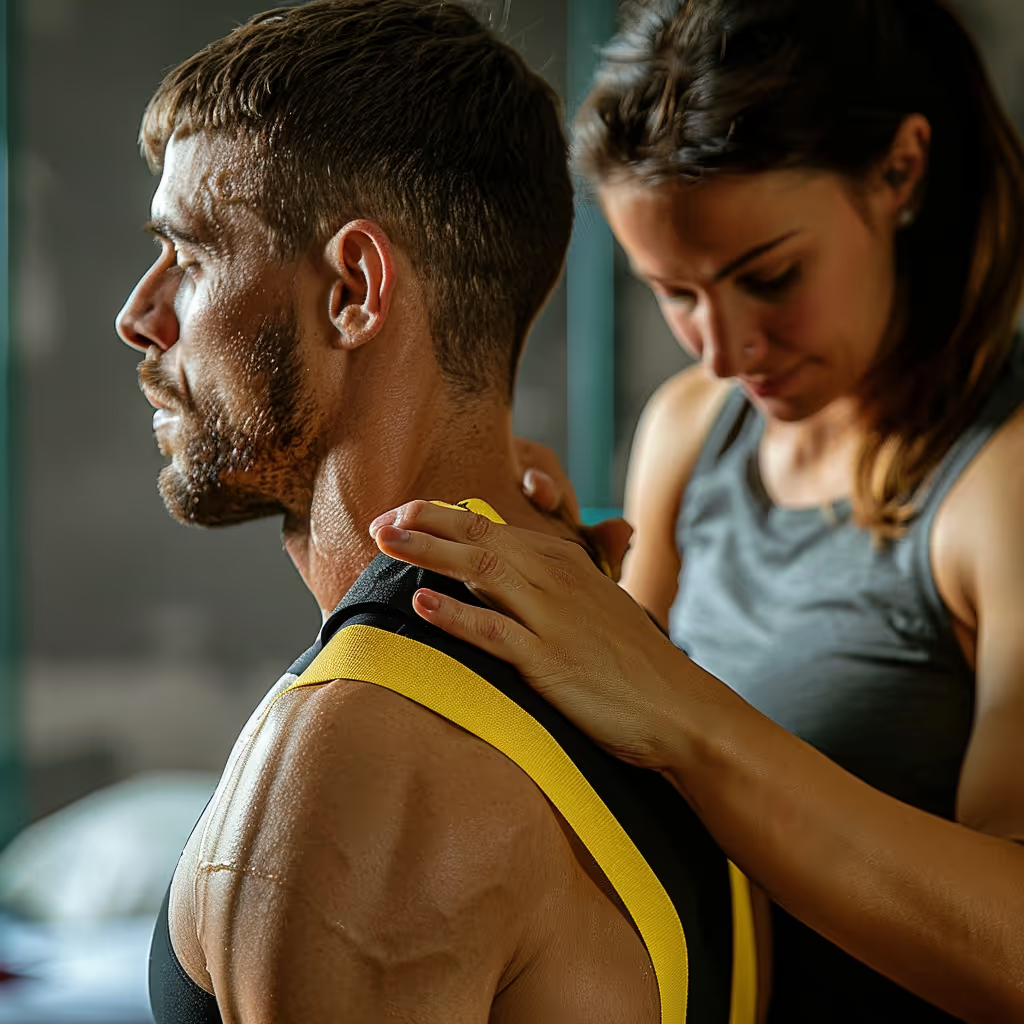
Manual therapy is a treatment approach in physical therapy that involves techniques applied directly to the patient’s tissues using the hands. The physical therapist assesses and treats musculoskeletal dysfunctions, including those affecting joints, muscles, tendons, fascia, and peripheral nerves.
The goal is not merely to “reduce pain.” It is to modulate sensory perception in the affected area, to create a temporary window of opportunity to move differently, and to guide the patient toward a return to their activities. This approach is very different from the traditional view, which presented manual therapy as a form of “repair” or mechanical “realignment.”
In Quebec, manual therapy is part of the university curriculum for physical therapists. Advanced practice is then developed through postgraduate training, with the FCAMPT (Fellowship of the Canadian Academy of Manipulative Physiotherapy) certification serving as the Canadian standard.
Types of Manual Therapy
Joint mobilization: gentle, controlled movements applied to the joints to restore their range of motion. These movements vary in intensity, ranging from very light to more vigorous.
Spinal manipulation: quick, low-amplitude techniques, sometimes accompanied by a cracking sound (cavitation, the release of gas into the synovial fluid). The cracking sound has no therapeutic significance in itself.
Soft tissue mobilization: manual techniques applied to muscles, tendons, fascia, and peripheral nerves to modulate sensation and mobility. This differs from traditional massage and from “myofascial release” as practiced in passive therapy schools (see the dedicated section below).
Neural mobilization: techniques designed to restore the normal gliding motion of peripheral nerves within their sheaths, which are useful for certain types of radiating pain.
Neuromuscular techniques: approaches that use contraction-relaxation, reciprocal inhibition, or co-contraction to modify muscle tone and restore a movement pattern.
How does manual therapy work?
Manual therapy affects several systems simultaneously. The modern understanding of this, supported by research in neuroscience and biomechanics, differs significantly from the traditional mechanistic explanation.
Neurological effects (the predominant effect)
Manual techniques stimulate sensory receptors in the skin, muscles, fascia, and joint capsules. These signals activate several pain-modulating mechanisms:
Melzack and Wall’s gate control theory: non-painful sensory input (pressure, movement, stretching) partially blocks the transmission of pain signals in the spinal cord. This is why rubbing a painful area provides temporary relief.
Descending modulation: the brainstem and higher centers send signals that reduce pain transmission. Manual therapy can activate these pathways, triggering the release of endogenous opioids and other analgesic neurotransmitters.
Post-manipulation hypoalgesia is a well-documented phenomenon: following spinal manipulation, pressure pain thresholds increase in the treated area. The effect is bilateral (present even on the untreated side), suggesting a central mechanism rather than a simple local response.
Mechanical effects (limited)
The idea that manipulations “realign” vertebrae or that mobilizations “release” locked joints has largely been discarded by modern research. Kinematic radiography and dynamic MRI imaging show that the movements produced are small, transient, and do not permanently alter the position of the structures.
What can change mechanically in the short term: the viscosity of the synovial fluid, local circulation, and the texture felt on palpation. These changes are real but temporary. Lasting tissue changes result from repeated loading and movement, not from a single manual intervention.
Autonomic effects
Manual therapy influences the autonomic nervous system. Cervical mobilization can produce a transient sympathetic response (a slight increase in heart rate, peripheral vasoconstriction). Lumbar or thoracic mobilization tends to dampen autonomic activation. These effects contribute to pain modulation and a reduction in the generalized muscle guarding associated with chronic conditions.
The science behind manual therapy: What do the studies really say?
Manual therapy is one of the most extensively studied interventions in physical therapy. Here is the current state of the evidence for the most common conditions.
Lower Back Pain (Lombalgia)
Cochrane systematic reviews and other major meta-analyses conclude that manual therapy (mobilization and manipulation) provides short-term benefits in terms of pain relief and functional improvement for both acute and chronic low back pain. The effects are comparable to those of other recommended active interventions (exercise, pain education). In the long term, the combination of manual therapy and exercise generally yields better results than either approach used alone.
International clinical practice guidelines (NICE in the United Kingdom, Canadian and U.S. guidelines) include manual therapy as a first-line treatment option for low back pain, in combination with exercise and education.
Neck pain
Meta-analyses of nonspecific neck pain show that cervical and thoracic mobilizations and manipulations result in greater pain reduction and functional improvement than placebo and are comparable to other active interventions. Thoracic manipulations are particularly noteworthy: they often provide relief of neck pain with a more favorable safety profile than direct cervical manipulations.
For headaches of cervical origin, several studies have shown that a combination of manual therapy and specific exercises targeting the upper cervical region is beneficial.
Rotator cuff and shoulder
For shoulder pain related to the rotator cuff (formerly known as “tendinitis” or “impingement syndrome”), the combination of manual therapy and supervised exercises produces results comparable to surgery for many patients, as demonstrated by several randomized controlled trials. Manual therapy alone is not sufficient: it is the combination that makes the difference.
For adhesive capsulitis (frozen shoulder), gradual joint mobilization is a central component of treatment, taking into account the stage of the condition (painful phase, stiffness phase, recovery phase).
Limitations of the current research
The short-term effects of manual therapy are well established: pain reduction, improved mobility, and local and regional hypoalgesia. The long-term effects almost always depend on combining treatment with an exercise program, pain education, and lifestyle modifications.
Studies are sometimes limited by: the heterogeneity of protocols, the difficulty of defining a credible placebo for a manual intervention, variability among practitioners, and the lack of standardization of techniques. These limitations do not invalidate the general conclusions, but they explain why the clinical evidence is nuanced rather than categorical.
In the end, manual therapy is not a miracle cure. Nor is it a placebo. It is a clinically useful tool whose effectiveness is maximized when integrated into a comprehensive treatment plan and administered by a clinician who can determine the right timing, technique, and intensity.
FCAMPT: Advanced Training in Manual Therapy in Canada
The FCAMPT (Fellowship of the Canadian Academy of Manipulative Physiotherapy) certification is the leading postgraduate program in manual therapy in Canada. If you want to know what specifically sets a physiotherapist trained in manual therapy apart from others, this is the program to look into.
What is FCAMPT Certification?
The FCAMPT certification is awarded by the Canadian Academy of Manipulative Physiotherapy, a member organization of IFOMPT (International Federation of Orthopaedic Manipulative Physical Therapists), the international federation that sets global standards for advanced practice in manual therapy.
To become certified, physical therapists complete several years of structured postgraduate training, totaling approximately 1,500 to 2,000 additional hours of training beyond their basic university education. The program combines advanced theoretical training, clinical mentoring, practical exams, and written exams, and culminates in a national final exam that includes a clinical component involving actual patients.
Why this matters to you as a patient
The FCAMPT training program is not just about learning additional manual techniques. Above all, it focuses on clinical reasoning: the ability to make an accurate differential diagnosis, recognize red flags that require medical referral, tailor the intervention appropriately to the stage of the condition, and intelligently combine manual therapy, exercise, and patient education.
In practical terms, this changes three things about your care: a more precise diagnosis (which prevents you from treating a misdiagnosed condition for weeks on end), a more structured treatment strategy (clear priorities, consistent progression), and better judgment regarding when to intervene manually and when to prioritize other approaches.
The FCAMPT Approach at Physioactif
Several members of the Physioactif team hold FCAMPT certification and serve as instructors in Canadian manual therapy training programs. Our approach is grounded in this framework: rigorous clinical reasoning, precise manual techniques—which are never used as an end in themselves—and systematic integration with an exercise and education program.
This approach explains why the previous sections of this article are nuanced rather than enthusiastic. Scientific rigor is at the heart of our practice, not just a superficial touch added at the end.
10 Quick Tips for Understanding Your Pain
The ones that have made the biggest difference in my patients' lives. 1 a day, 2 minutes.
Soft tissue manual therapy
Soft tissues are everything that isn't bone: muscles, tendons, fascia, ligaments, peripheral nerves, and skin. Manual work on these structures is an integral part of manual therapy. It is also an area where terminology often causes confusion, because different terms (massage, myofascial release, soft tissue mobilization, myofascial release) are sometimes used interchangeably even though they refer to different practices.
What types of structures are we working on?
Manual soft tissue therapy can target several structures, each with its own specific characteristics:
Muscles: We focus on muscle tone, areas of increased sensitivity (sometimes called trigger points), and functional flexibility. Current scientific understanding views these areas as neurophysiological phenomena (regions where the nervous system maintains a high level of local activation), not as true mechanical “knots.”
Fascia: connective tissue that envelops and connects structures. While their sensitivity and the perception of gliding between layers can be adjusted, their long-term mechanical properties are difficult to alter manually.
Peripheral nerves: neural mobilization (“neurodynamics”) focuses on the gliding and tension of nerves within their sheaths. This is a distinct category that requires a thorough understanding of nerve anatomy.
The mechanical effect: why it is limited
Manual force applied through the hands, even over an extended period, is not sufficient to permanently alter the structure of dense connective tissue. Biomechanical studies show that much greater forces, sustained over hours, would be required to produce structural changes.
That doesn't mean nothing is happening. It means that what's changing isn't the structure of the tissue, but rather the perception and neural regulation of the affected area.
The neurophysiological effect: where the action really takes place
As with other manual techniques, the primary effect is neurophysiological: modulation of sensory input, gate control, descending modulation, and local and regional hypoalgesia. These effects are real and well-documented, and they explain why precise manual work on soft tissues can reduce pain and improve mobility within hours.
This understanding changes the intensity and duration of the treatment. If the effect is neurophysiological, there is no need to apply extreme pressure for 20 minutes to “break up an adhesion”: brief, precise, and appropriately intense work is sufficient, and it must be quickly followed by active movement to consolidate the effect.
A clear contrast to "myofascial release"
The semantic distinction between “myofascial release” and “soft tissue mobilization” reflects a real difference in practice:
"Myofascial release, " as understood by traditional schools (Myofascial Release, Barnes, and others), is a passive approach: very slow pressure applied and held for long periods, aiming for prolonged relaxation, and based on a mechanistic hypothesis regarding the "release" of the fascia. The proposed mechanism is not supported by current research, and the effect is short-lived. The focus is on the immediate sensation of relaxation.
"Soft tissue mobilization, " as defined by FCAMPT manual therapy, is an active and targeted approach: a brief maneuver integrated into the patient’s active movement or immediately followed by exercises. The recognized mechanism is neurophysiological. The rationale centers on creating a temporary window of opportunity to move differently, which is then consolidated through progressive loading.
In practical terms: if you leave a session feeling like you’ve simply “had a deep massage” and weren’t asked to do any active work, you were most likely in the first scenario. If you moved, tensed, stretched, and were given a set of exercises to do between sessions, you were in the second.
To better understand the limitations of the passive approach and what the research says about it, check out our article on myofascial release.
What conditions are treated with manual therapy?
Manual therapy is used to treat a wide range of musculoskeletal conditions. The physical therapist will first assess whether this approach is appropriate for your situation and the stage of your condition.
Back and neck pain
Back problems are the most common indication for treatment. Whether it’s acute or chronic lower back pain, neck pain, or stiffness in the upper back, manual therapy can be an effective treatment, provided it is combined with exercise and patient education.
Lumbar sprains respond particularly well to spinal mobilization combined with specific exercises, especially when treatment is initiated early.
Shoulder Problems
Shoulder pain responds very well to manual therapy combined with a progressive exercise program. Shoulder tendinopathy and frozen shoulder are conditions where a structured approach makes a real difference.
Other Body Regions
Manual therapy can be applied to virtually any area of the body: the knee, hip, foot, elbow, wrist, and TMJ. Headaches caused by cervical issues often respond well to a combination of upper cervical and thoracic manipulation. Athletes use manual therapy to optimize recovery and support their training regimen.
To explain the neurophysiological approach in simple terms
If you’d like a simpler, more narrative explanation of what really happens when a physical therapist works on your tissues, be sure to check out our companion article, “How Manual Therapy Really Works,” which covers the same mechanisms without getting into clinical details.
What happens during a manual therapy session?
Every session begins with an assessment. Even if this isn’t your first visit, the physical therapist will reassess your condition to tailor the treatment to your progress.
Initial Assessment
During your first visit, the physical therapist will gather information about your current condition, medical history, and goals. The physical assessment includes observing your posture and movement, performing specific tests to identify restrictions and sensitized structures, and using palpation to map out areas of tension and their responsiveness.
This assessment determines whether manual therapy is appropriate for your situation and which techniques are suitable. Certain conditions require special precautions or preclude the use of certain techniques. Screening for red flags is an integral part of this step.
Applying the Techniques
Joint mobilization typically begins with gentle movements to prepare the tissues, then progresses in range of motion and intensity depending on the response.
Spinal manipulations, when indicated, are performed with precision following proper preparation, and only if the evaluation confirms their appropriateness and the absence of contraindications.
Soft tissue mobilization involves targeted pressure, usually brief, integrated into the patient's active movement.
You should feel a sensation of stretching, pressure, or movement—never sharp pain. Constant communication with the physical therapist allows for real-time adjustments.
Exercises and Advice
A session is never limited to manual techniques. The physical therapist teaches specific exercises, offers advice on adjusting daily activities, and explains the reasoning behind the treatment plan. This education empowers the patient to take an active role in their recovery, rather than simply being a passive recipient of treatment.
Frequency and duration
The number of sessions varies depending on the nature and severity of the condition. Acute issues: 3 to 6 sessions are often sufficient. Chronic conditions: 8 to 12 sessions or more, with sessions becoming less frequent as you make progress. The goal is self-reliance, not dependence on treatment.
FAQ on Manual Therapy
Does manual therapy hurt?
Manual therapy should not be painful, although some discomfort may occur during certain techniques. You should feel a sensation of stretching or pressure within tolerable limits. If you experience sharp pain, please let us know immediately so we can adjust the treatment. Increased sensitivity within 24 to 48 hours after a session is normal, similar to the feeling you get after trying a new exercise.
Are manipulations (cracking) dangerous?
Spinal manipulations performed by a qualified physical therapist, following a proper assessment and thorough screening, are considered safe. The cracking sound is caused by cavitation (the release of gas in the synovial fluid), not by a bone “popping back into place.” Serious complications are extremely rare (fewer than 1 in several million cases). Certain conditions (severe osteoporosis, recent fractures, certain inflammatory arthritides, specific vascular problems) are contraindications identified during the evaluation.
How long do the effects last?
The immediate effects (pain relief, improved mobility) last from a few hours to a few days following a single treatment session. Long-term benefits develop gradually through a combination of manual therapy, exercise, and patient education, as well as by addressing the factors that contributed to the initial problem.
What, specifically, changes when a physical therapist is FCAMPT-certified?
The accuracy of the differential diagnosis, the quality of clinical reasoning, and the precision with which interventions are tailored. This isn’t just a list of additional techniques; it’s training in reasoning and decision-making. For complex conditions or those that haven’t responded to previous treatments, this distinction is often what breaks the deadlock.
Do meta-analyses really all agree on its effectiveness?
No, and that’s to be expected. Clinical science is rarely unanimous. Meta-analyses of manual therapy for low back pain, neck pain, and shoulder pain generally conclude that there is a short-term, modest-to-moderate positive effect, which is enhanced when combined with exercise. Some reviews are more cautious, particularly regarding long-term effects. The overall conclusion is: a useful and evidence-based intervention, particularly as part of a multimodal approach.
Can manual therapy replace surgery?
For some conditions, yes; for others, no. Several studies show that for lumbar disc herniations, mild to moderate spinal stenosis, and various shoulder conditions, conservative treatment—including manual therapy—produces results comparable to surgery for many patients. However, certain situations require surgical intervention (significant complete tears, displaced fractures, certain severe degenerative conditions). The physical therapist recognizes these situations and refers patients as needed.
What is the difference between manual therapy in physical therapy and chiropractic care?
The two disciplines share certain techniques. The main difference lies in their overall approach: physical therapy integrates manual therapy into a treatment plan that systematically includes exercises, education, and self-management. Physical therapists in Quebec receive university-level training that covers the entire musculoskeletal system as well as other systems. Manual therapy is one tool among many—never an end in itself.
Does my insurance cover manual therapy?
Manual therapy is an integral part of physical therapy treatments and is generally covered in the same way as other physical therapy services. Check the details of your coverage (number of sessions per year, reimbursement amount, and whether a doctor’s prescription is required). The CNESST and the SAAQ cover treatments when the criteria are met.
How often should I receive treatments?
For recent acute issues: 2 to 3 times a week at first, gradually spacing out the sessions. For chronic conditions: an initial, more intensive treatment, followed by a long-term maintenance program. The frequency decreases as you manage your condition through movement and exercise.
Do I need to do anything special to prepare?
No special preparation is needed. Wear comfortable clothing that allows access to the areas to be treated. Avoid using thick creams or lotions on the treatment areas on the day of your appointment. Please bring any recent medical imaging results with you, if you have them.
An evaluation by a physical therapist trained in manual therapy?
Several members of our team are FCAMPT-certified and combine manual therapy, exercise, and education into a structured treatment plan.
Make an appointmentCustomer satisfaction is our top priority
At Physioactif, excellence guides everything we do, but our patients are the best ones to tell you about it. Take a look at their verified reviews to get a real sense of their experience.











Discover our physical therapy clinics
We have locations in several areas to better serve you.
Blainville
190 Bas-de-Sainte-Thérèse Road, Suite 110,
Blainville, Quebec
J7B 1A7
Located in Blainville, near Rosemère, the Physioactif clinic is easily accessible to residents of the area and the surrounding communities
Laval
3224 Jean-Béraud Ave., Suite 220, Laval,
QC H7T 2S4
Located in Chomedey, in the heart of Laval, the Physioactif clinic is easily accessible to people in the area
Montreal
8801 Lajeunesse Street,
Montreal,
QC H2M 1R8
Located in Ahuntsic, near Villeray, the Physioactif clinic is easily accessible to residents of both neighborhoods
Saint-Eustache
180 25th Avenue, Suite
201 Saint-Eustache
QC J7P 2V2
Located in Saint-Eustache, the Physioactif clinic is easily accessible to residents of the area and the surrounding communities
Vaudreuil
21 Cité-des-Jeunes Boulevard, Suite 240,
Vaudreuil-Dorion, Quebec
J7V 0N3
Located in Vaudreuil-Dorion, the Physioactif clinic is easily accessible to people in the area
Make an appointment now