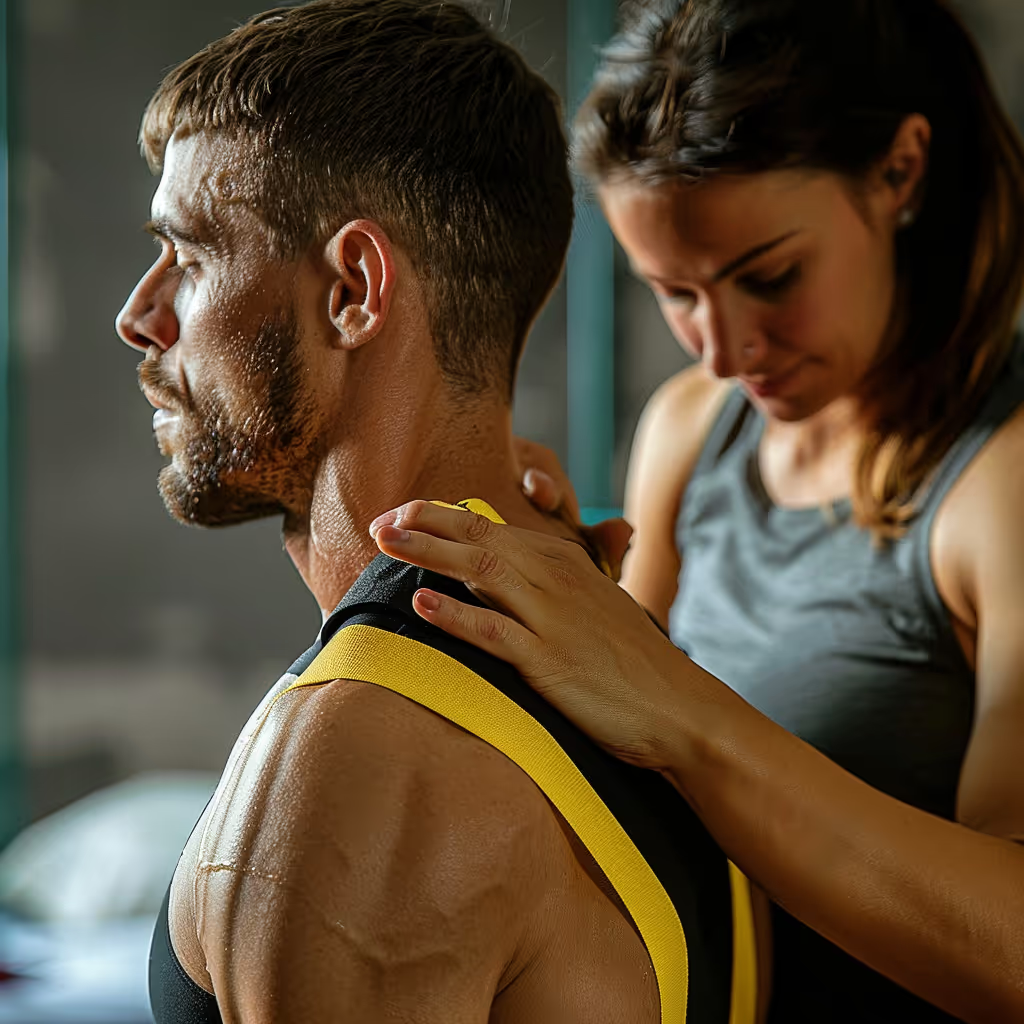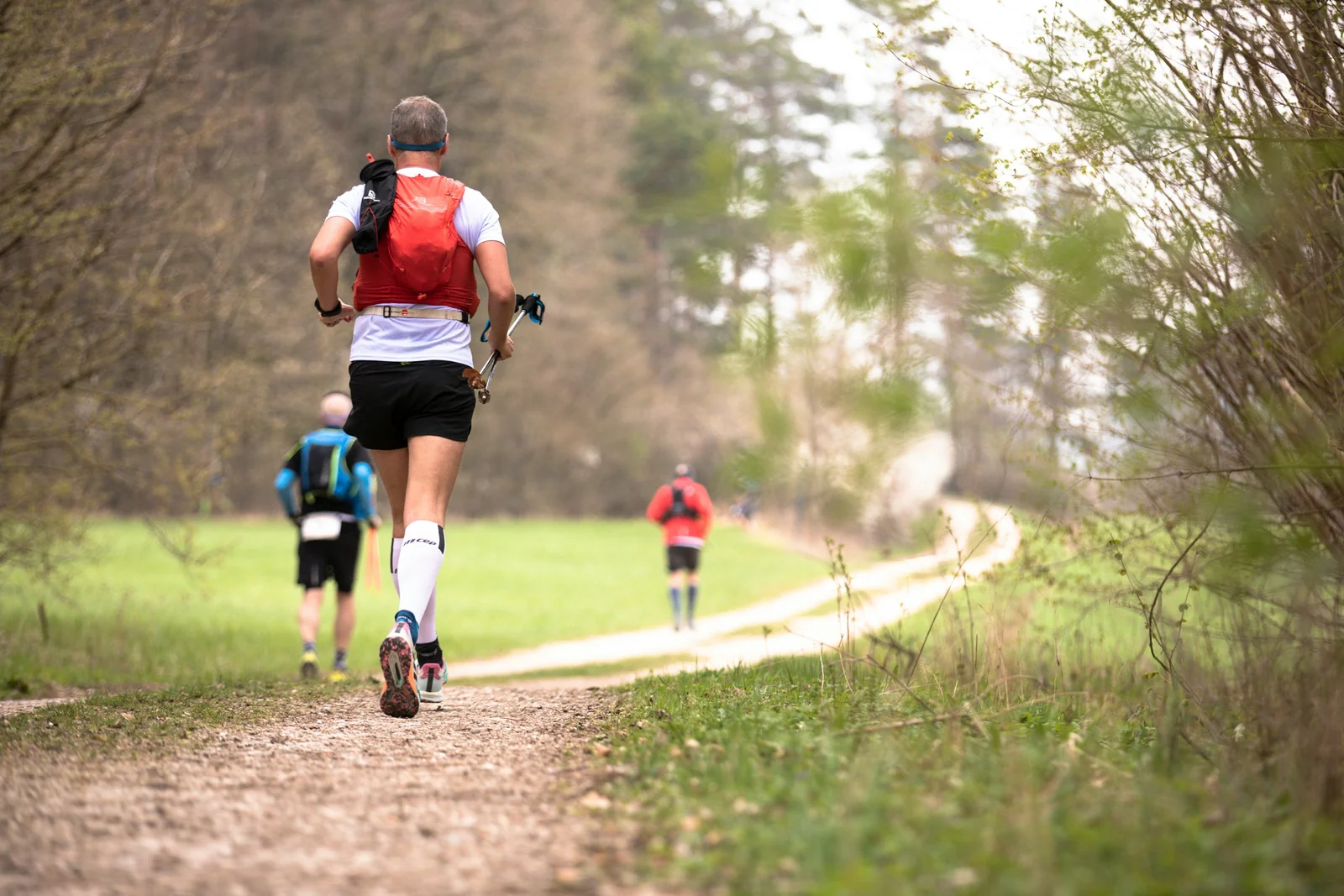


You've injured yourself while running and don't know what to do. Should you stop completely? Continue despite the pain? Take anti-inflammatories and push through it? This uncertainty is frustrating, especially when running is part of your routine and well-being.
In a follow-up study of beginner runners, 108 of the 225 people who had stopped running after six months cited an injury as the main reason. This accounted for 48% of the dropouts in this group. 1 The return to running depends on the specific injury. However, studies do not provide a training progression that works for everyone. 2
Can you keep running when you're injured?
La course peut parfois se poursuivre sous une forme adaptée, selon la blessure et son évaluation. Certaines blessures demandent toutefois un arrêt temporaire. La distance, la durée, la vitesse et la fréquence des sorties peuvent être ajustées. Les études ne retrouvent pas de lien constant entre l’un de ces éléments et les blessures2. La décision tient aussi compte de la douleur, de l’enflure et de votre capacité à marcher ou à faire les activités courantes. Un physiothérapeute peut vous aider à choisir le moment et la forme de la reprise3.
10 Quick Tips to Understand Your Pain
One tip a day for 10 days to help you better understand your pain. About a 2-minute read.
You can adjust your weekly running mileage. A 2007 review linked high weekly mileage to injuries among men who run long distances. It also found a link to previous injuries. These findings do not establish a specific mileage that is dangerous for everyone. 4 A systematic review published in 2024 found associations with training, health, lifestyle, body composition, and movement patterns. The studies vary widely, and their quality is low or very low. Therefore, no single factor can explain all injuries. 5
What science teaches us about managing running injuries:- Alternating between walking and running can make it easier to get back into shape, once your injury allows you to run
- Shortening your runs and scheduling recovery days allows you to tailor your return to running to your symptoms
- Relief from medication alone is not enough to determine whether you can resume running the same distance
- Getting enough sleep is part of recovery and well-being
This article provides concrete recovery strategies. To understand why injuries recur, consult our article on recurrent running injuries.
When should you see a physical therapist for a running injury?
It’s a good idea to see a physical therapist if your pain persists, limits your activities, or makes it difficult to get back to running. A professional who works with active people can assess your running and sports needs and work with you to develop a plan.
After an injury, seek urgent medical attention if the pain is severe or getting worse, if there is significant swelling or bruising or if these symptoms are getting worse, if you cannot put weight on the area or take a few steps, or if the area is very stiff or difficult to move. A high fever or feelings of heat, cold, or chills after the injury also warrant seeking medical attention.
Rendez-vous à l’urgence si vous avez entendu un craquement lors de la blessure, si la région est déformée, engourdie ou présente des picotements, ou si sa peau devient bleue, grise ou froide. Chaque signe peut suffire. Si la douleur s’aggrave ou ne s’améliore pas malgré les soins, faites-la évaluer6.
Is there a training regimen that prevents injuries?
No universal formula for distance, duration, or running frequency has been shown to prevent injuries in all runners. Scientific data does not consistently link these training factors to the risk of injury. 2
Does running wear out your knees?
Running is not consistently linked to an increased risk of knee osteoarthritis. Osteoarthritis alters the joint and can cause pain or stiffness; it is not simply a result of wear and tear from impact. A 2023 review found no increased risk of knee osteoarthritis among runners. The results of an earlier review were more mixed. The limited quality of the studies prevents a definitive conclusion about a causal effect. This earlier review also included studies on surgery for knee osteoarthritis. Runners underwent this surgery less frequently. The pooled odds ratio is 0.46, with a 95% confidence interval of 0.30 to 0.71. These figures describe a statistical association, with its margin of uncertainty, and do not guarantee individual protection. For more information, see our article “Does Running Cause Osteoarthritis?”7, 88
The association with fewer surgeries is therefore reassuring. However, it does not prove that running caused this difference between the groups. 8
Can you treat yourself?
Certaines blessures légères peuvent se gérer à domicile, si aucun signe médical préoccupant n’est présent et si l’évolution est favorable. Vous pouvez adapter les efforts imposés à la région blessée et choisir une chaussure appropriée (voir notre article sur les souliers à porter pour la course) et une façon de courir adaptée à vos symptômes (voir notre article sur la meilleure technique de course).
See also: What shoes to wear for running and the best running technique.
How can you manage a running injury in your daily life?
Daily care involves a combination of appropriate physical activity, other tolerable activities, adequate sleep, and exercises tailored to the injury. When running is permitted, alternating between running and walking can be part of the plan. Medications are used to provide relief; they should not be the sole factor in deciding when to resume running.
The following measures should be chosen based on your situation:
- Alternate between walking and running during permitted runs. Allow for recovery days between runs. Reduce or stop running if pain increases during the session, if sharp pain occurs, or if swelling persists. Seek advice if symptoms do not return to their usual level.
- Do not take medication for the sole purpose of continuing to run as you did before. Consult your pharmacist or doctor for pain relief, without stopping a prescribed treatment on your own. Pain helps you adjust your activities, but its intensity does not accurately reflect the condition of the tissues.
- Choose another low-impact activity, such as swimming, cycling, or running in water. These options can help you stay physically active while you recover. Also, adjust the duration and intensity of these activities if they trigger pain.
- Prendre soin du sommeil et prévoir assez de temps pour dormir selon vos besoins. Le sommeil soutient la santé et la préparation à l’effort9. Le délai de guérison dépend aussi du type et de la gravité de la blessure.
- Choose strengthening exercises in consultation with the professional treating the injury. For prevention, a study involving 118 recreational runners tested a program targeting the muscles of the foot and ankle. The exercises were taught and supervised for eight weeks, then continued with remote follow-up. Over the course of a year, this group experienced fewer injuries than the group that followed a warm-up and stretching routine without this strengthening. This result supports a preventive approach; it does not demonstrate treatment for an existing injury. 10
Where can I learn more about running injuries?
The podcast “Parle-moi de santé” explores the prevention and treatment of running injuries in its first episode. Alexis Gougeon interviews Blaise Dubois.
Episode #1 discusses the prevention and treatment of running injuries.
- Écouter l'épisode 1 de Parle-moi de santé sur la course à pied, sur YouTube
- Écouter l'épisode 1 de Parle-moi de santé sur la course à pied, sur Podbean
Source:
- Fokkema T, Hartgens F, Kluitenberg B, Verhagen E, Backx FJG, van der Worp H, et al. Reasons and predictors of discontinuation of running after a running program for novice runners. J Sci Med Sport. 2019;22(1):106-111.↩ Back to text
- Fredette A, Roy JS, Perreault K, Dupuis F, Napier C, Esculier JF. The Association Between Running Injuries and Training Parameters: A Systematic Review. J Athl Train. 2022;57(7):650-671.↩ Back to text: 1st, 2nd, 3rd mentions
- Berkshire Healthcare NHS Foundation Trust (NHS), Royaume-Uni. Physiotherapy advice for returning to running.↩ Back to text
- van Gent RN, Siem D, van Middelkoop M, van Os AG, Bierma-Zeinstra SM, Koes BW. Incidence and determinants of lower extremity running injuries in long distance runners: a systematic review. Br J Sports Med. 2007;41(8):469-80; discussion 480.↩ Back to text
- Correia CK, Machado JM, Dominski FH, de Castro MP, de Brito Fontana H, Ruschel C. Risk factors for running-related injuries: An umbrella systematic review. J Sport Health Sci. 2024;13(6):793-804.↩ Back to text
- National Health Service (NHS), Royaume-Uni. Sprains and strains.↩ Back to text
- Burfield M, Sayers M, Buhmann R. The association between running volume and knee osteoarthritis prevalence: A systematic review and meta-analysis. Phys Ther Sport. 2023;61:1-10.↩ Back to text
- Timmins KA, Leech RD, Batt ME, Edwards KL. Running and Knee Osteoarthritis: A Systematic Review and Meta-analysis. Am J Sports Med. 2017;45(6):1447-1457.↩ Back to text: 1st, 2nd, 3rd mentions
- Walsh NP, Halson SL, Sargent C, Roach GD, Nédélec M, Gupta L, et al. Sleep and the athlete: narrative review and 2021 expert consensus recommendations. Br J Sports Med. 2021;55(7):356-68.↩ Back to text
- Taddei UT, Matias AB, Duarte M, Sacco ICN. Foot Core Training to Prevent Running-Related Injuries: A Survival Analysis of a Single-Blind, Randomized Controlled Trial. Am J Sports Med. 2020;48(14):3610-3619.↩ Back to text
Nos physiothérapeutes ont défini la stratégie de recherche, le plan et le contenu clinique de cet article. Un outil d’IA a soutenu la recherche documentaire et la révision du texte pour assurer une cohérence du contenu et du style d’écriture.
Need professional advice?
Our physical therapists can assess your condition and recommend a personalized treatment plan.
Make an appointmentCustomer satisfaction is our top priority
At Physioactif, excellence guides everything we do, but our patients are the best ones to tell you about it. Take a look at their verified reviews to get a real sense of their experience.










Discover our physical therapy clinics
We have locations in several areas to better serve you.
Blainville
190 Bas-de-Sainte-Thérèse Road, Suite 110,
Blainville, Quebec
J7B 1A7
Located in Blainville, near Rosemère, the Physioactif clinic is easily accessible to residents of the area and the surrounding communities
Boucherville
690 Rue de Montbrun, Suite S,
Boucherville, Quebec
J4B 8H2
Located in Boucherville, the Physioactif clinic is easily accessible to people in the area
Laval
3224 Jean-Béraud Ave., Suite 220, Laval,
QC H7T 2S4
Located in Chomedey, in the heart of Laval, the Physioactif clinic is easily accessible to people in the area
Montreal
8801 Lajeunesse Street,
Montreal,
QC H2M 1R8
Located in Ahuntsic, near Villeray, the Physioactif clinic is easily accessible to residents of both neighborhoods
Saint-Eustache
180 25th Avenue, Suite
201 Saint-Eustache
QC J7P 2V2
Located in Saint-Eustache, the Physioactif clinic is easily accessible to residents of the area and the surrounding communities
Vaudreuil
21 Cité-des-Jeunes Boulevard, Suite 240,
Vaudreuil-Dorion, Quebec
J7V 0N3
Located in Vaudreuil-Dorion, the Physioactif clinic is easily accessible to people in the area
Make an appointment now