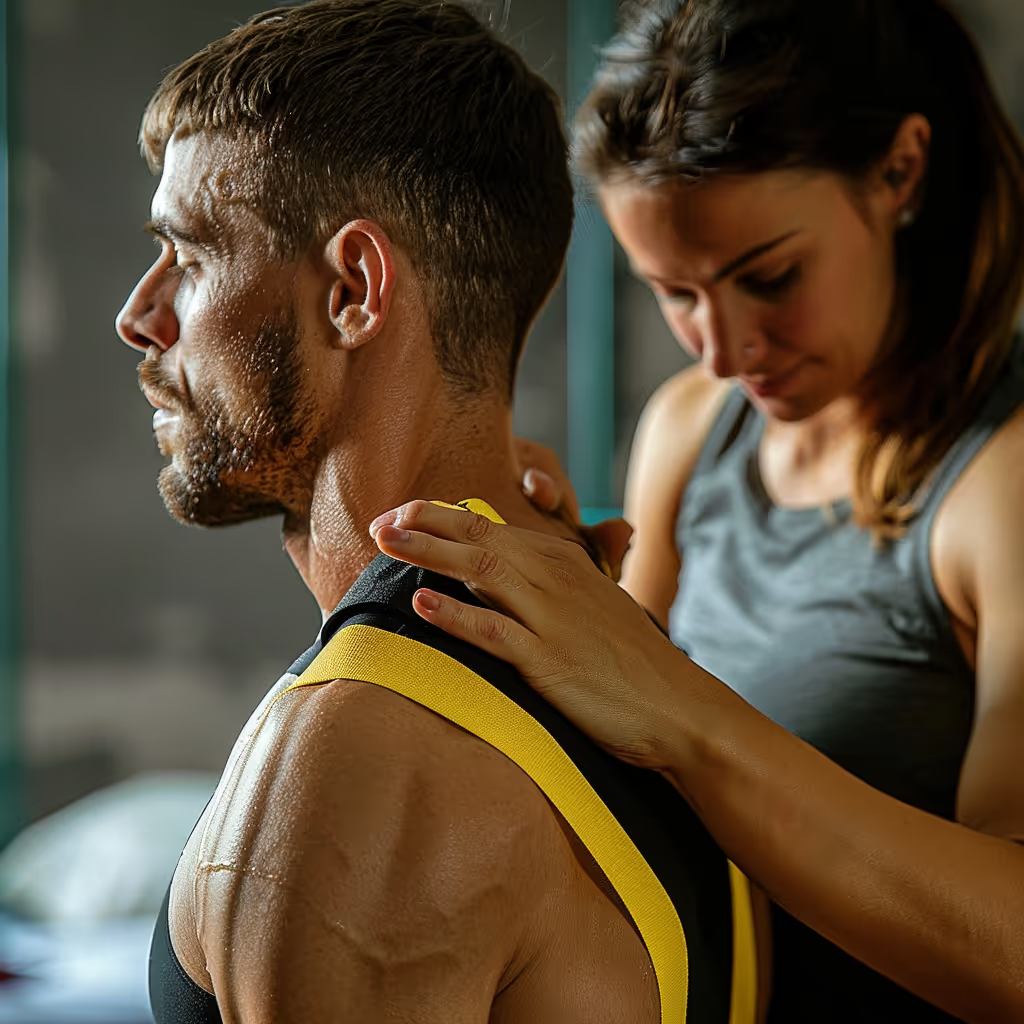


If you've ever had a fracture, you're likely familiar with the seemingly endless period of immobilization, the concern about your bones' strength after healing, and questions about how your body rebuilds damaged bone. As physiotherapists specializing in musculoskeletal rehabilitation, we regularly see patients who want to understand how their bones work and heal. Fractures affect about 15-20% of the population at some point in their lives,¹ so it's natural to want to know what's happening inside your body.
Good news: bones are remarkable living structures with an impressive ability to heal. In most cases, a fracture fully mends within 6 to 12 weeks, depending on the bone affected.² Your bones are much stronger and more adaptable than you might realize.
What science teaches us about bones (and often comes as a surprise):
- Bones are constantly renewing themselves: Your entire skeleton completely rebuilds every 7 to 10 years through a continuous process called bone remodeling.³
- Activity strengthens bones: Contrary to what you might think, prolonged rest actually weakens bones, while weight-bearing exercise makes them stronger.⁴
- Healing is an active process: A fracture doesn't just 'mend'; it actively rebuilds new bone tissue that can be even stronger than the original bone.⁵
- Physiotherapy accelerates recovery: Guided exercises during and after the bone has mended reduce complications and help restore function more quickly.⁶
This guide will help you understand the structure of your bones, their many functions, the fascinating process of fracture healing, and how to maintain their health. To learn more about physiotherapy and how it can help you after a bone injury, please consult our complete guide to physiotherapy.
What are Bones?
Bones are living structures made of mineralized connective tissues, primarily calcium and phosphorus. They form the human skeleton, providing support, protecting organs, and producing blood cells.
The adult human skeleton consists of 206 bones, while a newborn has around 350.⁷ This difference is due to some bones fusing together during growth. Contrary to the common static image, bone is a living tissue that is constantly renewing itself. Each bone is made up of water (about 25% of its mass), organic materials like collagen (25%), and inorganic mineral salts, mainly calcium phosphate crystals (50%).⁸
The organic part, made of collagen, gives bones their flexibility and resistance to pulling forces. The mineral part provides their hardness and resistance to compression. This unique combination makes bones both strong and slightly flexible, allowing them to support body weight while absorbing impacts.
Bone tissue is constantly remodeled by three types of specialized cells:
- Osteoblasts: Cells that build new bone by secreting bone matrix
- Osteoclasts: Cells that resorb (break down) old bone tissue
- Osteocytes: Mature cells that maintain bone tissue and detect remodeling needs
This constant remodeling allows bones to adapt to mechanical stress, repair tiny fractures, and maintain their strength throughout your life.
How are bones structured?
Bones have two main types of structure: cortical bone, a dense, compact outer layer that provides strength and protection, and trabecular bone, a spongy inner matrix that contains blood cell-producing bone marrow.
Layered Structure
The cortical bone (also known as compact bone) forms the outer layer of all bones. Dense and solid, it makes up about 80% of the skeleton's bone mass.⁹ This layer protects internal structures and provides maximum resistance to compression and twisting forces. Cortical bone is especially thick in the central parts of long bones (like the femur), where it needs to support significant weight.
The trabecular bone (also known as spongy bone) is found inside bones, especially at the ends of long bones and within the vertebrae. Despite its name, this structure is not weak; it's organized into a network of thin trabeculae (small beams) aligned with the main lines of force. This 'honeycomb' architecture maximizes strength while keeping the bone lightweight. Trabecular bone is also the primary site for bone remodeling, as its large internal surface makes metabolic exchanges easier.
Bone Marrow
Inside many bones is the bone marrow, a soft tissue essential for producing blood cells. There are two types:
- Red Marrow: Actively produces red blood cells, white blood cells, and platelets (hematopoiesis). In adults, it is mainly found in flat bones (sternum, ribs, pelvis) and the ends of long bones.
- Yellow Marrow: Primarily composed of fat cells, it can convert back to red marrow if the body needs to produce more blood cells.
The Periosteum
The outer surface of the bone is covered by a membrane called the periosteum, which is rich in blood vessels and nerves. This membrane plays a crucial role in bone nutrition, growth in thickness, and repair after a fracture. The periosteum also makes fractures painful because it contains many nerve endings.
This complex, multi-layered structure allows bones to fulfill their many functions while continuously adapting to the body's needs.
What Do Bones Do in the Human Body?
Bones perform six essential functions: providing structural support for the body, protecting vital organs like the heart and brain, facilitating movement with muscles, producing blood cells, storing minerals, and regulating calcium metabolism.
1. Structural Support
The skeleton forms the rigid framework upon which all the body's soft tissues rest. Without this bone structure, the human body could not stand upright or maintain its shape. The long bones of the legs, for example, support the entire body weight during walking and running.
2. Protection of Vital Organs
Several bones form protective structures around the most vulnerable organs:
- The skull protects the brain from impacts
- The rib cage (ribs and sternum) protects the heart and lungs
- The vertebrae protect the spinal cord
- The pelvis protects the reproductive organs and part of the digestive system
3. Facilitating Movement
Bones act as levers that muscles pull on to generate movement. The joints between bones allow for a wide variety of movements: flexion, extension, rotation, and abduction. Without this rigid structure, muscles could not create effective movement. Skeletal muscles attach to bones via tendons to create this mechanical interaction essential for movement.
4. Blood Cell Production (Hematopoiesis)
Red bone marrow produces all types of blood cells:
- Red blood cells (erythrocytes): transport oxygen
- White blood cells (leukocytes): defend against infections
- Platelets (thrombocytes): enable blood clotting
An adult produces approximately 200 billion red blood cells per day.¹⁰ This massive production is only possible thanks to the specialized environment of the bone marrow.
5. Mineral Storage
Bones act as a reservoir for 99% of the body's calcium and 85% of its phosphorus.¹¹ These minerals can be released into the bloodstream when the body needs them for other functions (muscle contraction, nerve transmission, blood clotting). This storage function is essential for mineral homeostasis.
6. Regulation of Calcium Metabolism
Bones actively participate in regulating blood calcium levels. When blood calcium decreases, osteoclasts resorb bone tissue to release calcium. When it increases, osteoblasts deposit excess calcium into the bone matrix. This process keeps blood calcium within a very narrow range, which is essential for the body to function properly.
How Do Bones Renew Themselves?
Bone remodeling is a continuous process where osteoclasts break down old bone tissue and osteoblasts form new bone, completing a full cycle in about four months to maintain bone strength and health.
This remodeling process occurs throughout life, but its balance changes with age. In children and adolescents, bone formation exceeds resorption, allowing for skeletal growth. In young adults (up to 30-40 years old), formation and resorption are balanced, keeping bone mass stable. After age 40, resorption tends to slightly exceed formation, leading to a gradual bone loss of 0.5-1% per year.¹²
The Remodeling Cycle
A complete bone remodeling cycle lasts an average of 4 months¹³ and occurs in four phases:
Phase 1 - Activation: Biomechanical or hormonal signals activate bone cells in a specific area.
10 Quick Tips for Understanding Your Pain
The ones that have made the biggest difference in my patients' lives. 1 a day, 2 minutes.
Phase 2 - Resorption: Osteoclasts break down old bone, a process that takes about 2 weeks. These cells secrete acids and enzymes that dissolve the mineral matrix and degrade collagen.
Phase 3 - Reversal: A transition period where osteoclasts die and are replaced by osteoblast precursor cells.
Phase 4 - Formation: Osteoblasts fill the cavity with new bone, a process that takes about 3 months. They first deposit the organic matrix (osteoid), which then gradually mineralizes.
Regulation of Remodeling
Bone remodeling is regulated by several factors:
- Mechanical Stress: Physical activity stimulates bone formation (Wolff's Law). Astronauts in zero gravity can lose 1-2% of bone mass per month.¹⁴
- Hormones: Parathyroid hormone (PTH), calcitonin, and estrogens regulate the activity of osteoclasts and osteoblasts.
- Vitamin D and Calcium: Essential for bone mineralization.
- Growth Factors: Various local proteins coordinate remodeling.
This process allows bones to adapt to mechanical stresses, repair daily microfractures, and maintain mineral homeostasis. It is thanks to this constant remodeling that a fracture can heal completely.
How Does a Bone Fracture Heal?
Fracture healing occurs in three phases: the inflammatory phase with hematoma formation (a few days), the reparative phase with callus formation (20-60 days), and the remodeling phase, which strengthens the bone (months to years).
Phase 1: Inflammation (Days 1-7)
Immediately after a fracture, blood vessels in the bone and periosteum rupture, causing bleeding at the fracture site. A hematoma (a collection of clotted blood) forms around and between the bone fragments. This accumulation of blood creates a favorable environment for healing by bringing immune cells and growth factors.
The inflammatory response quickly begins: white blood cells clear cellular debris, and stem cells start migrating to the fracture site. This phase generally lasts 5 to 7 days and is accompanied by pain, swelling, and local warmth.
Phase 2: Repair (Days 7-60)
This phase is divided into two stages:
Formation of the Fibrocartilaginous Callus (Weeks 1-3): Stem cells differentiate into chondroblasts and fibroblasts, which produce cartilage and fibrous tissue. This soft callus begins to fill the gap between bone fragments, but it is not yet rigid. This is why immobilization remains necessary during this period.
Formation of the Hard Bony Callus (Weeks 3-8): Chondroblasts are gradually replaced by osteoblasts, which deposit bone matrix. The cartilage mineralizes, forming a hard bony callus that solidly unites the fragments. At this stage, the bone can generally bear limited weight. The duration of this phase varies depending on the affected bone: a finger may heal in 3-4 weeks, while a femur requires 8-12 weeks.¹⁵
The bony callus is initially wider than the original bone, forming a bulge visible on X-rays. This excess bone tissue compensates for imperfect alignment of the fragments and ensures a strong union.
Phase 3: Remodeling (Months 3 to Years)
Once the hard callus has formed, the longest phase begins: remodeling. Osteoclasts gradually resorb the excess bone tissue from the callus, while osteoblasts strengthen the areas subjected to the greatest mechanical stress. This process follows Wolff's Law: the bone reorganizes itself according to the lines of force it experiences.
Over time, the callus decreases in size, and the bone gradually returns to its original shape. Remodeling can continue for several years after a major fracture. Eventually, it often becomes impossible to detect on X-rays where the fracture was, as the bone has completely rebuilt itself.
Factors influencing healing
Several factors affect the speed and quality of healing:
- Age: Children heal about twice as fast as adults.¹⁶
- Bone Type: Weight-bearing bones (femur, tibia) take longer to heal than non-weight-bearing bones (radius, clavicle).
- Blood Supply: Good blood flow speeds up healing.
- Immobilization: Necessary to allow callus formation, but should not be excessive.
- Nutrition: Calcium, vitamin D, and proteins are essential.
- Smoking: Slows healing by 30-50%.¹⁷
- Certain Diseases: Diabetes and osteoporosis can impair healing.
Understanding this process helps healthcare professionals optimize healing conditions and determine the appropriate time to introduce physiotherapy.
How Does Physiotherapy Help After a Bone Injury?
Physiotherapy begins early in the bone healing process with progressive mobilization exercises, muscle strengthening around the fractured area, and techniques to prevent joint stiffness and restore full function.
Timing of Physiotherapy Intervention
The physiotherapist's role evolves according to the healing phases:
During Immobilization (Inflammatory Phase and Early Repair): Even if the fractured bone must remain still, the physiotherapist works to maintain mobility in adjacent joints. For example, after a wrist fracture, the shoulder and fingers are mobilized to prevent secondary stiffness. Gentle isometric exercises (muscle contraction without movement) maintain muscle tone.
Post-Immobilization (End of Repair Phase): Once the bony callus is strong enough (generally 4-8 weeks depending on the fracture), active mobilization begins. This is the critical phase where physiotherapy makes the biggest difference. Immobilized joints quickly become stiff, and muscles atrophy by 1-3% per week of immobilization.¹⁸
Advanced Remodeling Phase: The physiotherapist guides the progression towards full functional activities, including return to sport or work.
Main interventions
Joint Mobilization: After immobilization, the affected joint almost always presents significant stiffness. The physiotherapist uses passive mobilizations (where they move the joint) and active mobilizations (where the patient moves it themselves) to restore range of motion. This progression must be gradual so as not to compromise the ongoing healing.
Muscle Strengthening : Muscle atrophy begins on the very first day of immobilization. A muscle can lose up to 30% of its strength after 6 weeks in a cast.¹⁹ The strengthening program starts with low-resistance exercises and gradually progresses. The physiotherapist ensures that the muscles around the fractured area regain their strength, endurance, and coordination.
Progressive Weight-Bearing : For lower limb fractures, the return to full weight-bearing is gradual. The physiotherapist guides this process with weight-transfer exercises, walking with assistive devices (crutches, cane), and then normal walking. This controlled progression stimulates bone healing according to Wolff's Law, while protecting the healing bone.
Proprioceptive Rehabilitation : Proprioception (the sense of your body's position in space) is often impaired after a fracture. Balance exercises on stable and then unstable surfaces restore this ability, reducing the risk of falls or re-injury.
Edema Management : Persistent swelling after cast removal is common. Lymphatic drainage techniques, compression, and elevation help reduce the swelling.
Functional Rehabilitation : The ultimate goal is to regain all daily living activities. The physiotherapist creates exercises specific to the patient's needs: climbing stairs, carrying loads, driving, or playing sports.
Proven Benefits
Research shows that physiotherapy after a fracture:
- Reduces the duration of functional recovery by 30-40%²⁰
- Decreases the risk of permanent joint stiffness
- Restores muscle strength more quickly
- Reduces chronic post-fracture pain
- Improves return to daily living activities and work
- Decreases the risk of re-injury due to deconditioning
Physiotherapy is not optional after a fracture; it is an essential component of treatment that maximizes the chances of a full recovery. To learn more about our physiotherapy services for musculoskeletal injuries, consult our complete guide to physiotherapy.
How to maintain healthy bones?
To maintain healthy bones, regularly engage in weight-bearing physical activities like walking and muscle strengthening, consume enough calcium and vitamin D, and avoid smoking, which weakens bones.
Exercise: The Foundation of Bone Health
Bone is living tissue that adapts to the stresses placed upon it. The more you use your bones, the stronger they become. Conversely, inactivity leads to rapid bone loss.
Recommended Activities :
-
Weight-Bearing Exercises : Walking, jogging, dancing, climbing stairs, and impact sports (tennis, basketball) stimulate bone formation. These activities force bones to support body weight against gravity, which triggers bone remodeling. Aim for at least 30 minutes per day, 5 days a week.
-
Resistance Training : Lifting weights or using resistance bands creates tension on the bones, stimulating their strengthening. Resistance training is particularly effective for increasing bone density in the hips and spine. Two to three sessions per week are sufficient.
-
Balance Exercises : Tai chi, yoga, and specific balance exercises reduce the risk of falls, which are the main cause of fractures in older adults. These activities also strengthen bones while improving stability. To learn more about fall prevention exercises, consult our dedicated guide.
Note: While swimming and cycling are excellent for cardiovascular health, they stimulate bone formation less because they do not create vertical stress on the skeleton.
Nutrition for Strong Bones
Calcium: The Essential Bone Mineral
Calcium is the main mineral component of bone. Daily requirements are 1,000 mg for adults aged 19 to 50, and 1,200 mg for women over 50 and men over 70.²¹
Dietary Sources of Calcium:
Need professional advice?
Our physical therapists can assess your condition and provide you with a personalized treatment plan.
Make an appointment- Dairy products: Milk (300 mg per cup), yogurt (300 mg per container), cheddar cheese (200 mg per 30 g)
- Canned fish with bones: Sardines (325 mg per 100 g), salmon (180 mg per 100 g)
- Green vegetables: Kale (150 mg per cooked cup), broccoli (60 mg per cup)
- Nuts and seeds: Almonds (75 mg per 30 g), sesame seeds (280 mg per 30 g)
- Fortified plant-based milks: Most contain as much calcium as cow's milk
It's best to spread your calcium intake throughout the day, as the body can only absorb about 500 mg of calcium at one time.
Vitamin D: Calcium's Activator
Without vitamin D, the body can only absorb 10-15% of dietary calcium. With adequate vitamin D levels, absorption increases to 30-40%.²² Vitamin D is found in few foods:
- Fatty fish: Salmon (600 IU per 100 g), mackerel (250 IU per 100 g)
- Eggs: The yolk contains approximately 40 IU
- Fortified milk and orange juice: Approximately 100 IU per glass
- Sun exposure: 10-15 minutes of sun on the arms and legs, 2-3 times per week, may be sufficient in summer
In Quebec, insufficient sunlight between October and March often makes supplementation necessary. Health Canada recommends 600 IU per day for adults aged 19-70, and 800 IU for those over 70.²³
Proteins: Bone's Framework
The collagen that forms the organic matrix of bone is a protein. Insufficient protein intake compromises bone strength. Aim for 1.0-1.2 g of protein per kilogram of body weight per day, especially for older individuals.²⁴
Lifestyle Factors
Avoid smoking: Tobacco reduces calcium absorption, decreases estrogen production (in women), and increases cortisol production—all factors that weaken bones. Smokers have a 30-40% increased risk of fracture.²⁵
Limit alcohol: Excessive alcohol consumption (more than 2 drinks per day) interferes with calcium absorption and impairs bone remodeling.
Maintain a healthy weight: Being underweight increases the risk of osteoporosis, but obesity also does (due to chronic inflammation).
Osteoporosis Screening
Who should get a bone density test?
- All women aged 65 and older
- All men aged 70 and older
- Individuals with a history of fracture after age 50
- People with risk factors (family history, prolonged use of corticosteroids, early menopause)
Bone densitometry (DEXA scan) measures bone mineral density and helps detect osteoporosis before a fracture occurs. This early detection allows for interventions with lifestyle changes and, if necessary, medications that reduce the risk of fracture by 30-70%.²⁶
Bone health is built throughout life. Habits adopted from a young age (physical activity, adequate nutrition) create "bone capital" that protects against osteoporosis later in life. But it's never too late to act: even after age 70, exercise and proper nutrition can slow down or even partially reverse bone loss.
When to consult a healthcare professional for your bones?
Consult a professional if you experience persistent bone pain, have sustained an injury with functional impairment, are at risk of osteoporosis, or have a history of frequent fractures.
Signs requiring prompt consultation
Certain symptoms indicate that a medical evaluation is necessary:
After an injury:
- Intense pain that does not improve with rest
- Inability to bear weight on a limb (for legs)
- Inability to use a limb normally (for arms)
- Visible deformity or significant swelling
- Marked tenderness at a specific point on the bone
- Numbness or tingling downstream from the injury (may indicate nerve damage)
Without apparent injury:
- Persistent deep bone pain that worsens at night
- Bone pain accompanied by fever (may indicate an infection)
- Bone pain in someone with a history of cancer (risk of metastasis)
- Spontaneous fractures or fractures after minimal trauma (a sign of severe osteoporosis)
Risk factors requiring screening
Even without symptoms, some people should consult for an evaluation of their bone health:
Osteoporosis risk factors:
- Postmenopausal woman (especially if early menopause before age 45)
- Family history of osteoporosis or hip fracture
- Faible poids corporel (IMC < 20)
- Prolonged use of corticosteroids (prednisone, etc.)
- Certain diseases: hyperthyroidism, celiac disease, inflammatory bowel diseases
- History of fracture after age 50
- Men with low testosterone
Warning Signs of Bone Loss :
- Height loss of more than 3-4 cm
- Progressive stooped posture (thoracic kyphosis)
- Persistent back pain without a clear cause
The Role of Physiotherapy
Physiotherapists play an important role in several aspects of bone health:
After a Fracture : Once the bone callus has sufficiently healed, the physiotherapist creates a personalized rehabilitation program that includes:
- Restoring range of motion
- Progressive muscle strengthening
- Retraining balance and proprioception
- Gradual return to functional activities
Osteoporosis Prevention : Physiotherapists can design exercise programs specifically tailored to:
- Increase or maintain bone density
- Improve balance and prevent falls
- Strengthen muscles that protect fragile bones
- Adapt daily activities to reduce fracture risk
After an Osteoporosis Diagnosis : Contrary to popular belief, people with osteoporosis should NOT avoid exercise. On the contrary, a supervised program is essential. The physiotherapist assesses which movements are safe and which ones to avoid (for example, avoiding forward bending of the spine, which increases the risk of vertebral fracture).
Chronic Bone Pain : If you experience persistent bone pain, a physiotherapy assessment can help to:
- Identify if the pain truly originates from the bone or another structure
- Determine if a medical consultation is necessary
- Develop a pain management plan if appropriate
When to Act?
Bone health often deteriorates silently for years before a fracture reveals the problem. Not waiting for a fracture to occur is the best strategy. If you have risk factors, talk to your doctor to discuss bone density screening (osteodensitometry). If you have already experienced a fracture, make sure to complete a physiotherapy rehabilitation program to maximize your recovery and prevent future injuries.
At Physioactif, our physiotherapists specialize in musculoskeletal rehabilitation and can support you in your recovery after a bone injury or in preventing bone health problems. Book an appointment for a personalized assessment.
References
-
Court-Brown CM, Caesar B. Epidemiology of adult fractures: A review. Injury. 2006;37(8):691-697. doi:10.1016/j.injury.2006.04.130
-
Einhorn TA, Gerstenfeld LC. Fracture healing: mechanisms and interventions. Nat Rev Rheumatol. 2015;11(1):45-54. doi:10.1038/nrrheum.2014.164
-
Clarke B. Normal bone anatomy and physiology. Clin J Am Soc Nephrol. 2008;3 Suppl 3(Suppl 3):S131-S139. doi:10.2215/CJN.04151206
-
Robling AG, Castillo AB, Turner CH. Biomechanical and molecular regulation of bone remodeling. Annu Rev Biomed Eng. 2006;8:455-498. doi:10.1146/annurev.bioeng.8.061505.095721
-
Marsell R, Einhorn TA. The biology of fracture healing. Injury. 2011;42(6):551-555. doi:10.1016/j.injury.2011.03.031
-
Handoll HH, Sherrington C, Mak JC. Interventions for improving mobility after hip fracture surgery in adults. Cochrane Database Syst Rev. 2011;(3):CD001704. doi:10.1002/14651858.CD001704.pub4
-
Standring S, ed. Gray's Anatomy: The Anatomical Basis of Clinical Practice. 41st ed. Elsevier; 2016.
-
Buckwalter JA, Glimcher MJ, Cooper RR, Recker R. Bone biology. J Bone Joint Surg Am. 1995;77(8):1256-1275.
-
Seeman E. Bone quality: the material and structural basis of bone strength. J Bone Miner Metab. 2008;26(1):1-8. doi:10.1007/s00774-007-0793-5
-
Rauch F, Schoenau E. The developing bone: slave or master of its cells and molecules? Pediatr Res. 2001;50(3):309-314. doi:10.1203/00006450-200109000-00003
-
Peacock M. Calcium metabolism in health and disease. Clin J Am Soc Nephrol. 2010;5 Suppl 1:S23-S30. doi:10.2215/CJN.05910809
-
Riggs BL, Melton LJ 3rd. Involutional osteoporosis. N Engl J Med. 1986;314(26):1676-1686. doi:10.1056/NEJM198606263142605
-
Hadjidakis DJ, Androulakis II. Bone remodeling. Ann N Y Acad Sci. 2006;1092:385-396. doi:10.1196/annals.1365.035
-
LeBlanc A, Schneider V, Shackelford L, et al. Bone mineral and lean tissue loss after long duration space flight. J Musculoskelet Neuronal Interact. 2000;1(2):157-160.
-
Nanchahal J, Nayagam S, Khan U, et al. Standards for the Management of Open Fractures of the Lower Limb. British Association of Plastic, Reconstructive and Aesthetic Surgeons; British Orthopaedic Association; 2009.
-
Rodriguez-Merchan EC. Pediatric skeletal trauma: a review of 3 200 cases. Clin Orthop Relat Res. 2005;432:77-83. doi:10.1097/01.blo.0000155088.91934.ae
-
Sloan A, Hussain I, Maqsood M, Eremin O, El-Sheemy M. The effects of smoking on fracture healing. Surgeon. 2010;8(2):111-116. doi:10.1016/j.surge.2009.10.014
-
LeBlanc AD, Schneider VS, Evans HJ, Pientok C, Rowe R, Spector E. Regional changes in muscle mass following 17 weeks of bed rest. J Appl Physiol. 1992;73(5):2172-2178. doi:10.1152/jappl.1992.73.5.2172
-
Berg HE, Larsson L, Tesch PA. Lower limb skeletal muscle function after 6 wk of bed rest. J Appl Physiol. 1997;82(1):182-188. doi:10.1152/jappl.1997.82.1.182
-
Handoll HH, Rangan A, Shastri N, Goodchild L, Crowther MA. Physiotherapy for proximal humeral fractures in adults. Cochrane Database Syst Rev. 2006;2006(4):CD003523. doi:10.1002/14651858.CD003523.pub3
-
Institute of Medicine. Dietary Reference Intakes for Calcium and Vitamin D. The National Academies Press; 2011. doi:10.17226/13050
-
Holick MF. Vitamin D deficiency. N Engl J Med. 2007;357(3):266-281. doi:10.1056/NEJMra070553
-
Health Canada. Vitamin D and Calcium: Revision of Dietary Reference Intakes. 2012.
-
Bonjour JP. Protein intake and bone health. Int J Vitam Nutr Res. 2011;81(2-3):134-142. doi:10.1024/0300-9831/a000063
-
Kanis JA, Johnell O, Oden A, et al. Smoking and fracture risk: a meta-analysis. Osteoporos Int. 2005;16(2):155-162. doi:10.1007/s00198-004-1640-3
-
Black DM, Rosen CJ. Clinical Practice. Postmenopausal Osteoporosis. N Engl J Med. 2016;374(3):254-262. doi:10.1056/NEJMcp1513724
Customer satisfaction is our top priority
At Physioactif, excellence guides everything we do, but our patients are the best ones to tell you about it. Take a look at their verified reviews to get a real sense of their experience.











Discover our physical therapy clinics
We have locations in several areas to better serve you.
Blainville
190 Bas-de-Sainte-Thérèse Road, Suite 110,
Blainville, Quebec
J7B 1A7
Located in Blainville, near Rosemère, the Physioactif clinic is easily accessible to residents of the area and the surrounding communities
Laval
3224 Jean-Béraud Ave., Suite 220, Laval,
QC H7T 2S4
Located in Chomedey, in the heart of Laval, the Physioactif clinic is easily accessible to people in the area
Montreal
8801 Lajeunesse Street,
Montreal,
QC H2M 1R8
Located in Ahuntsic, near Villeray, the Physioactif clinic is easily accessible to residents of both neighborhoods
Saint-Eustache
180 25th Avenue, Suite
201 Saint-Eustache
QC J7P 2V2
Located in Saint-Eustache, the Physioactif clinic is easily accessible to residents of the area and the surrounding communities
Vaudreuil
21 Cité-des-Jeunes Boulevard, Suite 240,
Vaudreuil-Dorion, Quebec
J7V 0N3
Located in Vaudreuil-Dorion, the Physioactif clinic is easily accessible to people in the area
Make an appointment now