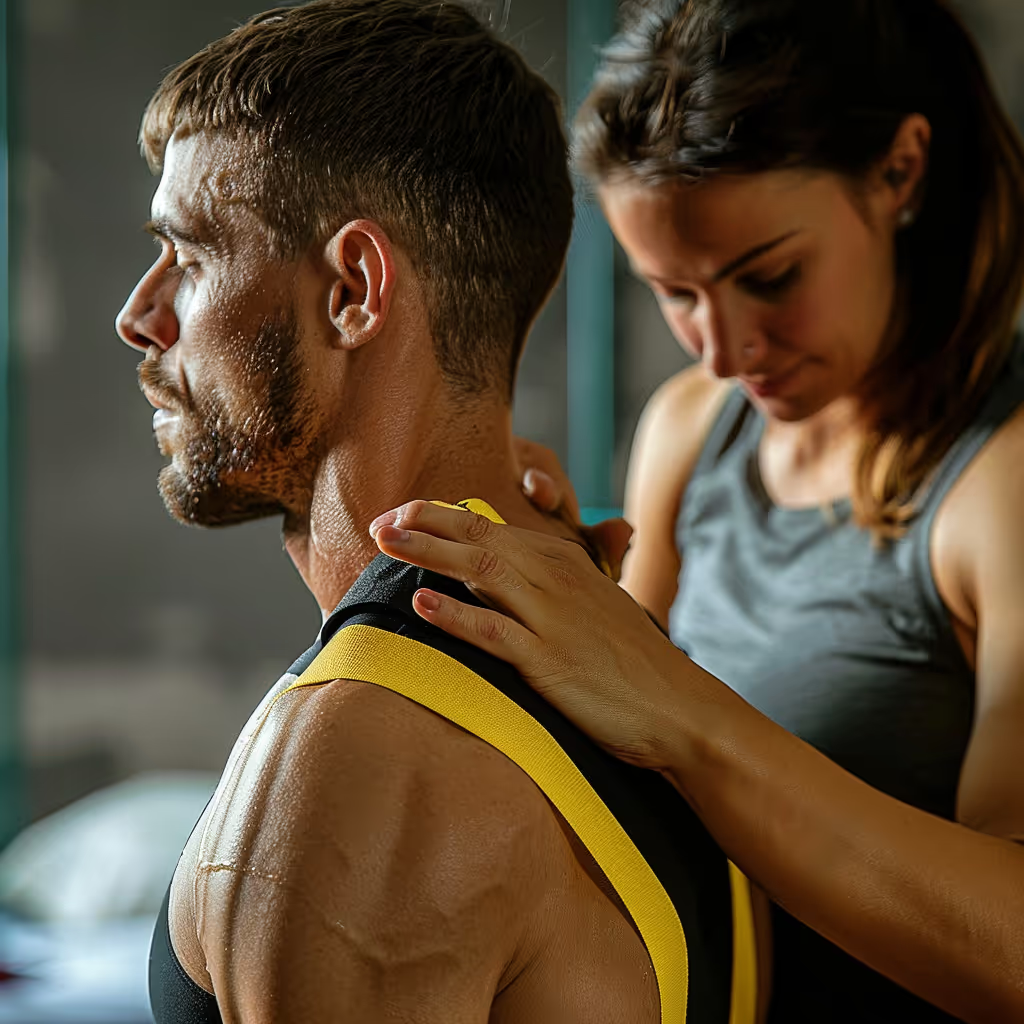


Understanding Tendons: Anatomy, Function, and Injury Prevention
You might be experiencing persistent Achilles tendon pain after your morning jog, or perhaps shoulder discomfort that limits your daily movements. As physiotherapists specializing in musculoskeletal disorders, we regularly see patients concerned about these tendon pains that seem to take forever to heal. You are not alone: tendinopathies account for 30% to 50% of sports and work-related injuries.
Here's the good news: 80% to 90% of tendinopathies improve with appropriate conservative treatment, without requiring surgery. Most tendon pains do not indicate a serious injury, but rather an insufficient adaptation to mechanical demands.
Here's what science reveals about tendons, which often surprises our patients:
- Tendons don't always get inflamed: The term "tendinitis" (inflammation) is less accurate than "tendinopathy" (degenerative change). Microscopic studies show that painful tendons exhibit collagen disorganization rather than classic inflammation.
- Poor blood supply explains slow healing: Tendons receive 7 to 10 times less blood than muscles, which is why full recovery can take 3 to 12 months, or even 1 to 2 years for complete maturation.
- Progressive loading is the best treatment: Unlike complete rest, heavy slow resistance training shows the best scientific evidence for stimulating tendon regeneration.
- Tendons can support 17 times your body weight: Their unique Type I collagen composition gives them exceptional strength, provided they are properly conditioned.
This guide explores tendon anatomy, their biomechanical function, common injury mechanisms, and evidence-based prevention and treatment strategies. To learn more about physiotherapy in general, consult our complete guide to physiotherapy.
What is a tendon?
A tendon is a strong band of dense fibrous connective tissue that connects muscles to bones to transmit muscle contraction force and produce joint movement. Primarily composed of collagen fibers organized in a hierarchical structure, a tendon can withstand up to 17 times the body's weight in tension and compression. The adult human body contains approximately 4,000 tendons of varying sizes.
Key Anatomical Differentiation:
Tendons differ from ligaments and muscles in their function and composition:
- Tendons: connect muscle to bone, transmit force, composed of dense collagen
- Ligaments: connect bone to bone, stabilize joints, also rich in collagen but with more elastin
- Muscles: generate force through contraction, composed of contractile muscle fibers and connective tissue
This distinction is important for understanding injury mechanisms and the specific therapeutic approaches for each tissue. If you are experiencing knee pain that may involve tendons, consult our guide on knee pain.
The tendon is an integral part of the musculotendinous unit, where the myotendinous junction (muscle-tendon) and the osteotendinous junction (tendon-bone) represent critical biomechanical transition zones, often vulnerable to injury.
How tendons are made
Tendons are composed of 65% to 80% Type I collagen, arranged in parallel longitudinal fibers that provide their tensile strength. This hierarchical architecture includes two protective layers (the outer epitendon and inner endotendon) and specialized cells called tenocytes. This entire structure is characterized by poor vascularization but rich sensory innervation, including Golgi Type III mechanoreceptors.
Hierarchical Collagen Structure:
The structural organization of a tendon follows a precise hierarchy:
- Tropocollagen: basic collagen molecules
- Microfibrils: tropocollagen assemblies
- Subfibrils: groups of microfibrils
- Fibrils: structures visible under an electron microscope
- Collagen Fibers: bundles of fibrils (visible under a light microscope)
- Fascicles: groups of fibers
- Tendon: final assembly of fascicles
This organization allows for efficient force transmission while maintaining some elasticity. Collagen fibers have a characteristic wavy pattern (crimp pattern) that straightens out when put under tension, acting as a shock absorption system.
Protective Layers:
- Epitendon: an outer sheath of connective tissue that encloses the entire tendon, facilitates gliding between adjacent structures, and contains the main blood vessels and nerves
- Endotendon: a thin layer of connective tissue that surrounds each individual fascicle, allows for the transmission of (limited) nutrients, and coordinates the action of the different fascicles
Cellular Composition:
Tenocytes and tenoblasts make up only 5% of the tendon's volume but play a crucial role:
- Tenoblasts: young, active cells that produce collagen and the extracellular matrix.
- Tenocytes: mature, star-shaped cells aligned between collagen fibers, responsible for tissue maintenance and repair.
Vascularization and Innervation:
The low vascularization of tendons (7 to 10 times less than muscles) explains their slow healing. Blood vessels come from three sources: the myotendinous junction, the osteotendinous junction, and the paratendon (outer sheath). In contrast, tendons have rich sensory innervation, including:
- Golgi mechanoreceptors (tendon organs): detect tension and regulate muscle contraction
- Free nerve endings: signal pain
- Proprioceptive receptors: provide information about joint position and movement.
This dense nerve supply explains why tendinopathies are painful and how tendons contribute to precise motor control.
What is the purpose of tendons in the body?
Tendons transmit the force generated by muscles to bones to produce joint movement by converting muscle contraction into bone displacement. They also act as biomechanical shock absorbers, absorbing up to 35% of mechanical stress to protect muscles and joints from impact, and provide constant proprioceptive feedback via the Golgi tendon organs, which regulate muscle tension.
Primary Function: Force Transmission
When a muscle contracts, it shortens and pulls on its insertion tendons. This pull is transmitted to the bone, creating joint movement according to the laws of biomechanical leverage. The efficiency of this transmission depends on:
- Pennation angle (the angle between muscle fibers and the tendon): affects the maximum force that can be transmitted
- Tendon length: shorter tendons transmit more force but allow less movement
- Tendon stiffness: a stiffer tendon transmits force more quickly
Secondary Function: Storage and Release of Elastic Energy
During activities like running or jumping, tendons act like biomechanical springs. During the landing phase (or eccentric phase), the tendon stretches and stores elastic energy. In the propulsion phase (or concentric phase), this energy is released, contributing to more efficient movement.
The Achilles tendon perfectly illustrates this phenomenon: during walking, it stores and releases up to 35% of the total mechanical energy, reducing the amount of muscle work required. This energy-saving ability is crucial for endurance activities.
Tertiary function: neuromuscular regulat
ion and proprioception
10 Quick Tips for Understanding Your Pain
The ones that have made the biggest difference in my patients' lives. 1 a day, 2 minutes.
Golgi tendon organs, located at the muscle-tendon junction, detect changes in tension. When tension becomes excessive, they trigger an inhibitory reflex (inverse myotatic reflex) that reduces muscle contraction, thereby protecting the system from tears.
This proprioceptive function continuously informs the central nervous system about:
- The state of muscle tension
- Joint position
- The speed and range of movement
This information allows for fine motor adjustments and precise coordination, which are essential for complex movements and injury prevention.
What are the most common tendon injuries?
Tendon injuries include tendinopathy (chronic degeneration of collagen with fiber disorganization), tendinitis (rare acute inflammation), partial tears (rupture of some fascicles), and complete ruptures (total interruption of tendon continuity). Commonly affected tendons are the Achilles (12-18% of runners), the rotator cuff (30% of adults >60 years old), the patellar tendon (14% of jumping athletes), and the adductors (10-15% of pivot sports).
Clarified terminology: tendinopathy vs. tendinitis
For decades, the term "tendinitis" (suffix "-itis" = inflammation) was used for all tendon pain. Advances in histopathology have revealed that most chronic tendinopathies do NOT show classic inflammation but rather:
- Disorganization of the collagen matrix
- Increase in type III collagen (weaker than type I)
- Disorganized neovascularization (growth of new blood vessels)
- Presence of pain-sensing nerve fibers accompanying these new blood vessels
The term "tendinopathy" is therefore more accurate to describe this progressive degeneration. True tendinitis (acute inflammation) primarily occurs within the first 48-72 hours after a traumatic injury.
Categories of tendon injuries:
- Overload tendinopathy (the most common)
- Gradual progression over weeks/months
- Pain at the start of activity that lessens with warming up
- Characteristic morning stiffness
-
Caused by an imbalance between mechanical load and the body's ability to adapt
-
Partial tear
- Rupture of some tendon fibers
- Acute pain during a specific effort
- Partial loss of strength
-
Diagnosed by ultrasound or MRI
-
Complete tear
- Complete tendon tear
- Sensation of a "whip" or "snap"
- Immediate functional incapacity
- Often requires surgical intervention
Common locations and at-risk populations:
- Achilles Tendon: runners, racquet sports, ages 30-50
- Rotator Cuff: manual laborers, throwing sports, ages >40
- Patellar Tendon: basketball, volleyball, jumping sports
- Hip Adductors: soccer, hockey, pivoting sports
- Epicondyles (elbow): tennis, repetitive gripping work
For a deeper understanding of specific tendinopathies, consult our guides on Achilles tendon tendinopathy and patellar tendon tendinopathy.
Identified risk factors:
- Sudden increase in training volume or intensity (training error #1)
- Deficient biomechanics (poor movement technique)
- Muscular imbalances (relative weakness in certain muscle groups)
- Reduced or excessive flexibility
- Age (progressive loss of collagen quality after 30 years old)
- Certain medications (fluoroquinolones, corticosteroids)
- Metabolic diseases (diabetes, high cholesterol)
Why do tendons hurt?
Tendon pain is caused by a gradual breakdown of the tissue. This process leads to the production of more type III collagen (which is less strong than type I) and the disorganized growth of new blood vessels, accompanied by pain-sensing nerve fibers that release pain-causing substances. Contrary to popular belief, most chronic tendon problems (tendinopathies) do NOT involve classic inflammation. Instead, they are characterized by a structural disorganization triggered by repetitive stress that exceeds the tissue's ability to repair itself.
Degenerative Mechanism (Non-Inflammatory):
When a tendon is subjected to repetitive or excessive loads without adequate recovery, a cascade of tissue changes begins:
- Initial Decompensation Phase (0-2 weeks)
- Micro-tears in collagen fibers
- Activation of tendon cells to repair damage
-
If the stress continues: the tissue cannot fully repair itself
-
Disorganization Phase (2-12 weeks)
- Disorganization of the collagen matrix
- Increased production of type III collagen (which is "softer" and less strong)
- Decrease in type I collagen (strong)
-
Change in the normal wavy structure of the fibers
-
Chronic Phase (>12 weeks)
- Neovascularization (disorganized growth of new blood vessels)
- Invasion of sensory nerve fibers accompanying these new blood vessels
- These nerve fibers release pain-sensing neurotransmitters (substance P, CGRP)
- Result: chronic pain even with moderate loads
Factors Triggering Pain:
- Repetitive Mechanical Stress: performing the same movements thousands of times (running, hitting a ball, lifting)
- Insufficient Conditioning: tendons not prepared for the imposed loads
- Inadequate Warm-up: cold tissues are less elastic and more vulnerable
- Insufficient Recovery: inadequate rest time between efforts for regeneration
- Prolonged Sedentary Lifestyle: deconditioned tendons lose their ability to adapt
- Aging: natural decrease in collagen quality and quantity after age 30
The Role of Genetics:
Recent studies identify genetic polymorphisms associated with an increased risk of tendinopathy, particularly genes coding for:
- Collagen synthesis (COL5A1)
- Matrix metalloproteinases (MMP3)
- Growth factors (TGF-β1)
However, genetics are NOT destiny: they influence susceptibility, but modifiable factors (training, technique, recovery) remain crucial.
Why do tendons heal slowly?
Tendons heal slowly due to their limited blood supply, which restricts the delivery of nutrients, oxygen, and repair cells. Complete healing involves three successive phases: inflammatory (5-7 days), proliferative (several weeks), and remodeling (6-8 weeks up to 1-2 years for complete maturation), with each phase requiring a delicate balance between progressive mechanical loading and protection against excessive stress that could compromise healing.
Impact of Low Blood Supply:
Tendons receive 7 to 10 times less blood than muscles. This anatomical characteristic is explained by their function: to transmit force rather than generate energy (unlike muscles, which require a massive blood supply for contraction).
Consequences of this Low Blood Supply:
- Limited nutrient supply (glucose, amino acids)
- Limited oxygen supply (slowed energy metabolism)
- Slow arrival of immune cells and growth factors
- Slow elimination of metabolic waste
The areas where the tendon connects to muscle (myotendinous) and bone (osteotendinous) have a relatively better blood supply, but the central portion of the tendon (midsubstance) is particularly avascular. This explains why tendinopathies in the mid-portion are the slowest to heal.
Phases of Tendon Healing:
Phase 1: Inflammatory (0-7 days)
- Goal: to clean the injured area
- Process: arrival of inflammatory cells (neutrophils, macrophages)
- Production of growth factors
- Formation of a provisional fibrin clot
- Recommendation: avoid excessive stress, relative protection, no complete rest
Phase 2: Proliferative (7 days to 6 weeks)
- Goal: rebuild the tissue
- Process: activation of tenocytes and tenoblasts
- Massive production of type III collagen (temporary scar tissue)
- Start of neovascularization
- Recommendation: gradual introduction of controlled loads to guide fiber alignment
Phase 3: Remodeling (6 weeks to 1-2 years)
- Goal: strengthen and organize the tissue
- Process: gradual replacement of type III collagen with type I collagen
- Realignment of fibers according to mechanical stress lines
- Decrease in cellularity and vascularization
- Progressive increase in mechanical strength
- Recommendation: systematic progression of load, patience for complete maturation
Factors influencing healing speed:
Need professional advice?
Our physical therapists can assess your condition and provide you with a personalized treatment plan.
Make an appointment- Age: slower healing after 40 (reduced cellular activity)
- Severity of injury: complete ruptures require 2-3x more time than simple tendinopathies
- Location: avascular areas heal more slowly
- Mechanical load: too little delays healing, too much causes new damage
- Nutrition: adequate intake of protein, vitamin C, zinc
- Smoking: reduces vascularization and slows healing by 30-50%
- Comorbidities: diabetes, metabolic disorders affect healing
Why Patience is Essential:
Tendon scar tissue reaches:
- 30% of its normal strength at 3 weeks
- 50% at 6 weeks
- 80% at 3 months
- 100% only after 1 year (or even 2 years for complete maturation)
Resuming activity too early or too intensely can interrupt the remodeling process and turn an acute tendinopathy into a stubborn chronic problem.
How does physiotherapy help tendons heal?
Physiotherapy primarily promotes tendon healing through Heavy Slow Resistance (HSR) training, which stimulates the production of quality collagen and the realignment of fibers. Complementary treatments include extracorporeal shockwave therapy (which stimulates regeneration through controlled micro-trauma), manual therapy (mobilizations to limit adhesions), ultrasound, and movement re-education to correct biomechanical deficits, all with a minimum protocol of 12 weeks of continuous progressive loading.
Evidence-Based Approach: Heavy Slow Resistance Training
Research shows that Heavy Slow Resistance (HSR) training outperforms all other conservative interventions for tendinopathies. This method involves:
Principles of HSR:
- Heavy loads (70-85% of maximum strength)
- Slow execution speed (6 seconds per repetition: 3 sec concentric + 3 sec eccentric)
- Moderate volume (3-4 sets of 6-8 repetitions)
- Frequency: 3 times per week
- Gradual progression over 12+ weeks
Mechanisms of Action:
- Mechanotransduction stimulation: tenocytes detect the load and increase type I collagen synthesis
- Fiber realignment along stress lines
- Increase in tendon cross-sectional area
- Improvement in viscoelastic properties
- Reduction of pathological neovascularization
Comparison with classic eccentric training:
HSR produces similar or superior improvements compared to pure eccentric training, with less pain during exercises and better patient compliance.
Shockwave Therapy (ESWT - Extracorporeal Shockwave Therapy):
Mechanism: Shockwaves create controlled micro-traumas that:
- Stimulate neo-angiogenesis (formation of new healthy blood vessels)
- Trigger the release of growth factors
- Fragment calcium deposits (if present)
- Induce an analgesic effect by hyperstimulation of nerve fibers
Typical protocol: 3-6 sessions, 1 week apart, 2000-2500 shocks per session.
Evidence: Meta-analyses show 60-70% improvement for Achilles and shoulder tendinopathies.
Manual therapy and mobilizations:
Goals:
- Prevent or treat tissue adhesions
- Improve tendon gliding
- Restore joint mobility
- Reduce biomechanical compensations
Techniques: deep transverse frictions (Cyriax), joint mobilizations, myofascial release of adjacent muscles.
Other modalities (variable evidence):
- Therapeutic Ultrasound: thermal and mechanical effect, limited evidence
- Low-Intensity Laser: may reduce pain and acute inflammation
- Neuro-Proprioceptive Taping: mechanical support, sensory feedback
- Electrotherapy (TENS, Interferential): temporary pain relief
Movement re-education:
Identify and correct deficits:
- Deficient biomechanics (running technique, sports movements)
- Muscle imbalances (weakness, inhibition)
- Motor control deficits
- Joint mobility limitations
Video analysis and functional assessment help identify contributing factors specific to each patient.
Treatment duration and progression:
Realistic Timeline:
- Weeks 0-2: reduce irritability, introduce minimal load
- Weeks 3-6: progress HSR load, begin return to modified activities
- Weeks 7-12: progress towards specific sports activities
- Weeks 12+: consolidation, recurrence prevention
Key points: 12 weeks is the absolute minimum, 6 months is a more realistic timeframe for a full return to sport.
How to care for your tendons daily?
To protect your tendons, gradually increase your training load following the 10% rule (maximum 10% increase in weekly volume). Warm up properly for 10-15 minutes before intense activities. Allow 48-72 hours of recovery between sessions that stress the same tendons. Practice preventive strength training 2-3 times a week. Avoid repetitive movements without prior progressive conditioning, and maintain regular physical activity to counteract the harmful effects of a sedentary lifestyle.
Principle of Gradual Progression (The 10% Rule):
The #1 training mistake causing tendinopathies is increasing the load too quickly. The 10% rule states:
- Increase training volume by a maximum of 10% per week
- Example: if you run 20 km this week, a maximum of 22 km next week
- Applies to: distance, intensity, frequency, total workload
Deload weeks (recovery weeks):
Every 3-4 weeks, reduce your training volume by 20-30% to allow for supercompensatory adaptation. Tendons adapt more slowly than muscles, so respecting this timeframe is crucial.
Appropriate Warm-up:
An effective warm-up to protect your tendons includes:
- General aerobic phase (5-7 min): brisk walking, light jogging, cycling
-
Goal: increase tissue temperature, blood circulation
-
Dynamic joint mobilizations (3-5 min): controlled movements through the full range of motion
- Goal: joint lubrication, neuromuscular activation
- Specific activation (2-3 min): progressive movements similar to the planned activity
- Goal: prepare specific movement patterns
Avoid: prolonged static stretches before exercise (they reduce strength and power)
Recovery and Rest:
Tendons need 48-72 hours to recover from intense activity:
- Plan rest days or cross-training
- Avoid consecutive intense sessions that stress the same tendons
- Adequate sleep (7-9 hours): essential for tissue repair
- Appropriate nutrition: proteins (1.6-2.2 g/kg), vitamin C, omega-3
Preventive Strength Training:
Muscle strength protects tendons by:
- Reducing the relative stress on the tendon for a given load
- Improving motor control and joint stability
- Increasing the capacity to absorb impact forces
Minimum program:
- 2-3 sessions per week
- Focus: stabilizing muscles and complete muscle chains
- Include eccentric exercises (superior protection)
- Gradual load progression
Recognize early warning signs:
Consult a physiotherapist if:
- Tendon pain lasting >2 weeks
- Morning stiffness lasting >30 minutes
- Pain gradually increasing despite relative rest
- Pain interfering with daily activities
- Sensation of the tendon "cracking" or "grinding"
Early intervention = faster healing and prevention of chronicity.
Lifestyle factors:
- Avoid smoking: reduces vascularization and collagen quality
- Maintain a healthy weight: overweight = increased stress on weight-bearing tendons (Achilles, patellar)
- Manage stress: chronically elevated cortisol affects tissue regeneration
- Regular physical activity: a sedentary lifestyle degrades tendon quality
What should you remember about tendons?
Tendons are remarkable structures primarily composed of hierarchically organized type I collagen. They play an essential biomechanical role by transmitting muscle force, absorbing shocks, and providing constant proprioceptive feedback. Their limited blood supply explains why tendon injuries require patience and appropriate treatment, often taking 3 to 12 months for complete recovery.
Modern physiotherapy, focused on heavy and slow resistance training (HSR) combined with shockwave therapy and movement re-education, offers the best scientific evidence to promote tendon regeneration. Prevention relies on gradual progression, adequate warm-up, sufficient recovery, and preventive strength training.
If you are experiencing persistent tendon pain or want to optimize your training program to prevent injuries, our physiotherapists can assess your specific condition and create a personalized, evidence-based treatment plan. Book an appointment at one of our Greater Montreal clinics for a complete assessment.
Customer satisfaction is our top priority
At Physioactif, excellence guides everything we do, but our patients are the best ones to tell you about it. Take a look at their verified reviews to get a real sense of their experience.












Discover our physical therapy clinics
We have locations in several areas to better serve you.
Blainville
190 Bas-de-Sainte-Thérèse Road, Suite 110,
Blainville, Quebec
J7B 1A7
Located in Blainville, near Rosemère, the Physioactif clinic is easily accessible to residents of the area and the surrounding communities
Laval
3224 Jean-Béraud Ave., Suite 220, Laval,
QC H7T 2S4
Located in Chomedey, in the heart of Laval, the Physioactif clinic is easily accessible to people in the area
Montreal
8801 Lajeunesse Street,
Montreal,
QC H2M 1R8
Located in Ahuntsic, near Villeray, the Physioactif clinic is easily accessible to residents of both neighborhoods
Saint-Eustache
180 25th Avenue, Suite
201 Saint-Eustache
QC J7P 2V2
Located in Saint-Eustache, the Physioactif clinic is easily accessible to residents of the area and the surrounding communities
Vaudreuil
21 Cité-des-Jeunes Boulevard, Suite 240,
Vaudreuil-Dorion, Quebec
J7V 0N3
Located in Vaudreuil-Dorion, the Physioactif clinic is easily accessible to people in the area
Make an appointment now