
Musculoskeletal Physiotherapy: Treating Pain and Injuries
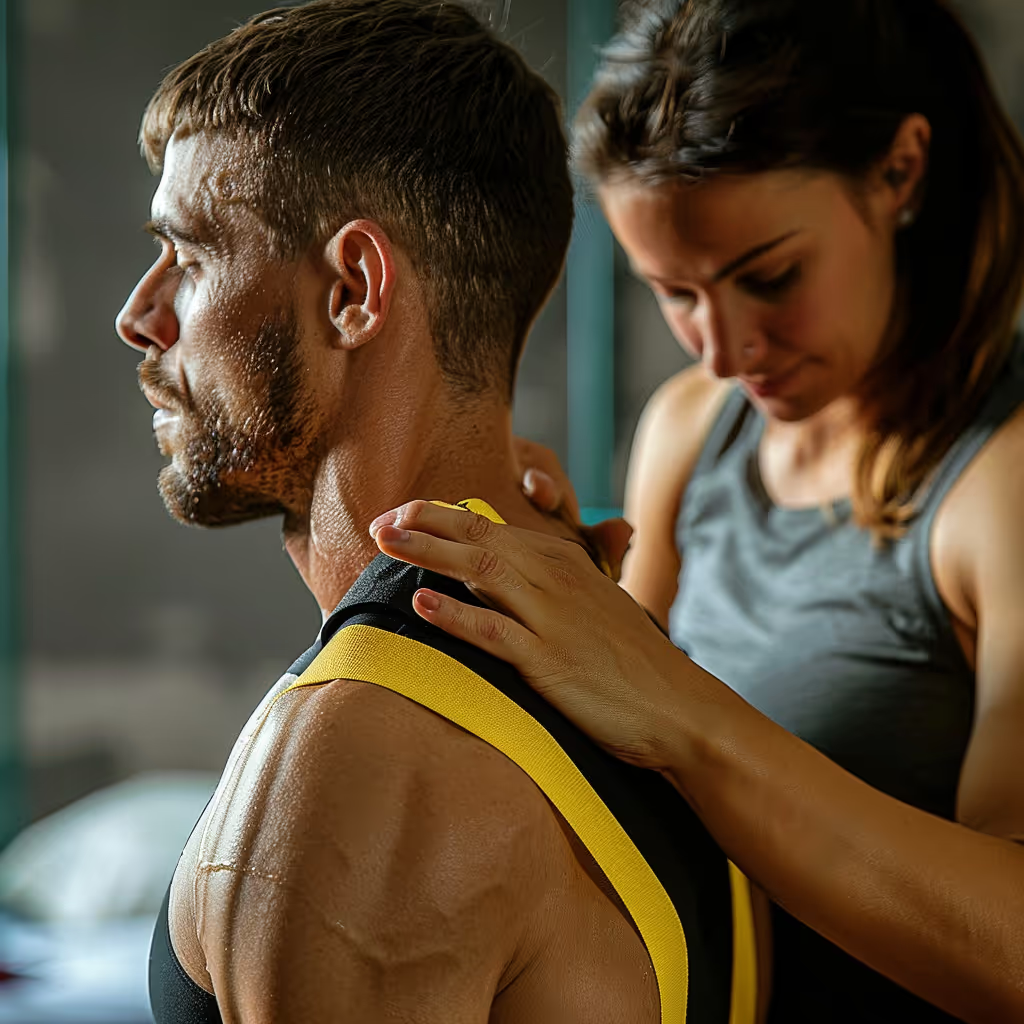
Musculoskeletal physiotherapy is the largest specialty within our profession. It treats pain and limitations related to muscles, bones, joints, tendons, and ligaments. This approach combines thorough assessment, manual treatments, and therapeutic exercises to restore movement and reduce pain.
Here's the good news: research clearly demonstrates the effectiveness of this approach for a wide range of conditions, from low back pain to osteoarthritis. For low back pain, guidelines list physical activity and physical therapy among the first approaches to try. The idea is to stay active and rely as little as possible on pain medication.
In this article, you will discover how this specialty works, what conditions it treats, and what scientific research tells us about its effectiveness.
What is musculoskeletal physiotherapy?
Musculoskeletal physiotherapy focuses on the system that allows us to move: our muscles, bones, joints, tendons, and ligaments. When these structures are injured or painful, this specialty helps us regain our abilities.
The Three Pillars of This Approach
The Detailed Clinical Assessment
A musculoskeletal physiotherapist analyzes your movement, tests your muscle strength, assesses your joint mobility, and identifies the structures causing your pain. This evaluation guides the choice of the most appropriate treatments for your condition.
Manual techniques
Manual therapy techniques include joint mobilizations, myofascial releases, and spinal manipulations. These approaches reduce pain, improve mobility, and prepare the body for therapeutic exercises.
Exercise Prescription
Therapeutic exercises form the core of long-term treatment. They strengthen weakened muscles, correct imbalances, and prevent recurrence. Research shows that supervised exercises yield better results than unsupervised exercises (1).
How This Specialty Stands Out
Unlike approaches that target a single aspect (such as medication for pain or surgery for damaged structures), musculoskeletal physiotherapy treats the person as a whole. It considers your lifestyle, daily activities, and personal goals.
Research shows that this multimodal approach yields better results than isolated interventions. A study of 12,850 patients with low back pain showed that those treated with physiotherapy had an 89% lower risk of receiving an opioid prescription (2).
What conditions does musculoskeletal physiotherapy treat?
This specialty applies to a wide range of conditions affecting the musculoskeletal system. Here are the most frequently treated body regions.
Back and neck pain
Low back pain
Back pain is the most common musculoskeletal condition. It affects 80% of adults at least once in their lives (3). The physiotherapist identifies whether your pain originates from muscles, spinal joints, discs, or a combination of these structures.
Treatment combines manual therapy to reduce stiffness, stabilization exercises to strengthen deep core muscles, and education on safe postures and movements. Clinical guidelines recommend physiotherapy as a first-line treatment for low back pain (4).
Neck pain
Neck pain particularly affects office workers and individuals who frequently use their smartphones. Prolonged cervical flexion positions increase pressure on the neck structures.
Physiotherapy treats this condition with gentle cervical mobilizations, strengthening exercises for deep neck muscles, and ergonomic advice. A systematic review showed that manual therapy combined with exercises significantly reduces neck pain (5).
Upper limb pain
Shoulder and Rotator Cuff
Shoulder pain often limits daily activities such as styling hair, getting dressed, or reaching for an overhead object. Rotator cuff tendinopathies, bursitis, and capsulitis are the most frequent diagnoses.
Progressive treatment starts by reducing inflammation and pain, then gradually restores mobility and strength. Rotator cuff strengthening exercises have shown comparable effectiveness to surgery for several shoulder conditions (6).
Elbow, Wrist, and Hand
Conditions like epicondylitis (tennis elbow), carpal tunnel syndrome, and De Quervain's tenosynovitis respond well to physiotherapy. Wrist pain particularly affects people who use a keyboard or perform repetitive movements.
Techniques include joint mobilization, myofascial release, and specific strengthening exercises. Education on ergonomics and active breaks helps prevent recurrence.
Lower Limb Pain
Hip and Pelvis
Hip pain can originate from the joint itself (osteoarthritis, femoroacetabular impingement) or from surrounding muscles (trochanteric bursitis, gluteus medius tendinopathy). Assessment helps differentiate these sources to target the appropriate treatment.
Strengthening exercises for hip stabilizing muscles improve function and reduce pain. A study showed that 12 weeks of supervised exercises reduced pain by 40% in people with hip osteoarthritis (7).
Knee
Knee pain affects people of all ages. Patellofemoral pain syndrome particularly affects active young adults, while knee osteoarthritis increases with age.
Physiotherapy combines quadriceps and hip muscle strengthening, improved neuromuscular control, and education on load management. International guidelines recommend physiotherapy as a primary treatment before considering injections or surgery (8).
Strengthening your muscles isn't just about recovering from an injury. A well-designed exercise program can also reduce the risk of developing certain types of pain, such as pain in the front of the knee.
Ankle and Foot
Ankle sprains are the most common sports injury. Inadequately treated ankle pain often leads to chronic instability and recurrence.
Treatment restores joint mobility, strengthens stabilizing muscles (peroneals), and improves balance and proprioception. A supervised exercise program reduces the risk of recurrence by 50% (9).
How is a Musculoskeletal Assessment Conducted?
Assessment forms the foundation of musculoskeletal physiotherapy treatment. It determines the diagnosis, identifies contributing factors, and guides the treatment plan.
The First Consultation
Your Condition's History
The physiotherapist begins by understanding your pain: when it started, what makes it worse or better, and how it affects your daily activities. This information often reveals the nature of your condition even before the physical examination.
For example, pain that increases with prolonged sitting and decreases with walking suggests a lumbar disc origin. Pain that worsens with overhead movements indicates a shoulder issue.
Detailed physical examination
The therapist observes your posture, analyzes your movement, palpates painful structures, tests muscle strength, and assesses joint mobility. Specific tests confirm or rule out certain diagnoses.
This comprehensive assessment typically lasts 45 to 60 minutes during the first visit. It allows for a precise physiotherapy diagnosis and a realistic prognosis.
For common back pain and many other musculoskeletal conditions, an X-ray or MRI is not necessary at the outset. Clinical practice guidelines advise against routine imaging unless a serious cause is suspected, the pain does not respond to treatment, or the results would significantly change the course of treatment.
Standardized Assessment Tools
Validated Questionnaires
Physiotherapists use standardized questionnaires to measure your pain and disability levels. These tools allow for objective tracking of your progress throughout treatment.
For example, the Oswestry Disability Index for lower back pain or the Quick DASH for upper limb problems quantify the impact of your condition on your daily activities.
Functional Movement Tests
The assessment includes tests that replicate your problematic activities. For a runner with knee pain, the therapist analyzes your running technique. For a worker with lower back pain, they observe your lifting and bending movements.
These tests reveal deficits in strength, mobility, or motor control that contribute to your pain. They then guide the prescription of specific exercises.
The Physiotherapy Diagnosis
Classifying Your Condition
The physiotherapist classifies your condition according to recognized categories. For lower back pain, they might identify a disc derangement pattern, joint dysfunction, or an altered motor control syndrome.
This classification, based on validated systems, predicts which treatments will work best for your specific type of problem (10).
Identifying contributing factors
Beyond the main diagnosis, the therapist identifies factors that perpetuate your condition: muscle weakness, joint stiffness, inadequate movement patterns, poor ergonomics, or problematic lifestyle habits.
10 Quick Tips for Understanding Your Pain
The ones that have made the biggest difference in my patients' lives. 1 a day, 2 minutes.
The treatment plan targets these factors to promote healing and prevent recurrence.
What Treatment Techniques Are Used?
Musculoskeletal physiotherapy offers a wide range of therapeutic techniques. The choice depends on your condition, preferences, and evidence-based practices.
Manual therapy
Joint mobilizations
Joint mobilizations involve applying passive movements to joints to restore their normal mobility. The therapist uses different amplitudes and speeds depending on the desired outcome.
Gentle mobilizations reduce pain by stimulating joint mechanoreceptors. More vigorous mobilizations increase range of motion by stretching capsular tissues. A Cochrane review confirms the effectiveness of these techniques for pain and function (11).
Myofascial Release
Myofascial release can bring about a temporary change in muscle tone, much like a massage; it does not permanently alter the structure of the tissues.
It can provide short-term relief from pain. Above all, it prepares you for the real work: restoring the body's tolerance for movement through progressive exercises.
Spinal manipulations
Spinal manipulations apply a rapid, low-amplitude force to the spinal joints. They often produce an audible cracking sound (articular cavitation) and provide immediate pain relief.
Physiotherapists trained in orthopedic manual therapy have the expertise to perform these techniques safely and effectively. Guidelines recommend spinal manipulations for certain types of low back and neck pain (12).
Manual techniques, such as mobilization, have their place, but only as a supplement. Clinical practice guidelines recommend them in conjunction with other forms of care—especially exercise and education—not as a treatment on their own.
Therapeutic Exercises
Strengthening exercises
Muscle strengthening is a cornerstone of long-term treatment. Therapeutic exercises start with light loads and gradually progress according to your abilities.
Physical activity and exercise are part of the recommended treatment for musculoskeletal problems. This is not merely a supplementary measure: clinical practice guidelines consistently recommend them.
The physiotherapist prescribes specific exercises to target your deficits. For example, strengthening the external rotators of the shoulder for rotator cuff tendinopathy, or strengthening the quadriceps for knee osteoarthritis.
Motor control exercises
These exercises improve coordination and movement quality rather than pure strength. They teach your nervous system to activate the right muscles at the right time.
For low back pain, lumbar stabilization exercises strengthen the deep core muscles (transverse abdominis, multifidus) that control spinal position.
Stretching and Mobility Exercises
Stretches target shortened muscles that limit your movement. The physiotherapist teaches effective and safe stretching techniques tailored to your condition.
Joint mobility exercises maintain or improve range of motion. They complement the manual mobilizations performed in the clinic.
Therapeutic Modalities
Electrotherapy and Ultrasound
Some clinics use devices such as TENS or ultrasound. Research shows that the results of these approaches are mixed. At Physioactif, we focus instead on what brings about lasting change in your condition: education, manual therapy when needed, and targeted exercises based on your assessment.
Taping
Taping that provides mechanical support to a joint can help in the short term—for example, to allow you to continue your activities during rehabilitation. Neuromuscular taping (the colored strips applied for a proprioceptive effect) is popular with some people, but the available data do not show a clear advantage over a placebo. It is not an approach we recommend before undergoing proper, targeted physical therapy.
Heat and Ice
Applying heat or ice can help manage symptoms in the short term, much like an over-the-counter pain reliever. People react differently to heat and cold: try both to see which one provides the most relief for you. Your physical therapist will guide you on when and how to use these treatments at home.
Over-the-counter anti-inflammatory medications, such as ibuprofen, relieve pain but do not heal the injury and may interfere with tissue repair. It is best to take them in moderation, for a short period of time, and avoid using them to push through the pain.
How do education and self-management complement treatment?
Education is a central element of modern musculoskeletal physiotherapy. It provides you with the knowledge and tools to actively manage your condition.
Understanding Your Pain
Understanding Pain Neurophysiology
The physiotherapist explains how pain works. Understanding that pain doesn't always mean tissue damage reduces anxiety and encourages a return to activities.
This education is particularly important for chronic pain, where the nervous system becomes hypersensitive. Research shows that pain education improves treatment outcomes (14).
Receiving a clear explanation of one’s condition and treatment options is part of the basic care for a musculoskeletal problem. According to practice guidelines, all patients should receive this information.
Activity Modification and Ergonomics
Daily Management Strategies
The therapist teaches you how to adapt your activities to reduce pain. This includes safe lifting techniques, optimal work postures, and regular active breaks.
For office workers, workstation ergonomics are often an integral part of the treatment plan. Simple adjustments prevent recurrent neck, shoulder, and back pain.
Gradual Progression of Activities
Returning to activities follows a principle of gradual progression. Your physiotherapist will create a plan that progressively increases the load, volume, or intensity of your activities.
This approach, known as load management, helps prevent relapses by allowing your tissues to gradually adapt to physical demands.
Home exercise program
Treatment Adherence
The success of your treatment largely depends on regularly doing your exercises at home. Your physiotherapist will prescribe a realistic number of exercises (usually 3 to 5) that you can easily fit into your daily routine.
Studies show that a simple program performed regularly yields better results than a complex program that is not consistently followed (15).
Long-term independence
The ultimate goal is to empower you to manage your condition independently. Your physiotherapist will teach you how to advance your exercises, recognize early signs of a relapse, and know when to seek further consultation if needed.
Returning to physical activity too soon, while the injured area is still tender to the touch, significantly increases the risk of a relapse. Tenderness in the injured area is a better indicator than simply feeling better.
What Does Research Say About Effectiveness?
Scientific evidence strongly supports the use of musculoskeletal physiotherapy for a wide range of conditions. Let's look at the evidence for the most common issues.
Lower Back Pain (Lombalgia)
Demonstrated effectiveness
Numerous systematic reviews and meta-analyses confirm the effectiveness of physiotherapy for both acute and chronic low back pain. One meta-analysis of 61 randomized clinical trials (involving 7574 participants) demonstrated that therapeutic exercises significantly reduce pain and disability (16).
Manual therapy combined with exercises yields better results than either approach used alone. Clinical guidelines in several countries now recommend physiotherapy as a first-line treatment before considering injections or surgery.
Reduced opioid use
An American study of 89,247 patients with low back pain found that those who received physiotherapy promptly (within 14 days of diagnosis) had an 89% lower risk of receiving a long-term opioid prescription (2).
This significant reduction in opioid prescriptions represents a major public health benefit, especially in the context of the opioid crisis.
For recently developed back or neck pain, opioid medications are not a good first-line treatment. A rigorous clinical trial found no greater relief than a placebo. The researchers conclude that they should not be recommended for this type of pain.
Neck pain
Effective Multimodal Treatments
For neck pain, studies demonstrate the effectiveness of multimodal approaches that combine manual therapy, exercises, and education. A Cochrane review analyzing 27 clinical trials concluded that this combination reduces pain and improves function (17).
Specific strengthening exercises may help with chronic neck pain, but the benefits are not guaranteed. No studies have established a specific duration or rate of pain reduction. Strengthening offers more benefits than simple stretching, which alone yields few results.
Shoulder Pain
Comparable to Surgery
For rotator cuff tears, physiotherapy yields results comparable to surgery in the short and medium term. A randomized controlled study followed 103 patients for 5 years and found no significant difference in pain, function, or quality of life between the surgery group and the physiotherapy group (18).
This finding suggests that physiotherapy should be considered before surgery for many shoulder conditions.
Frozen shoulder
For adhesive capsulitis (frozen shoulder), joint mobilizations and stretching exercises can speed up recovery and reduce pain. While this condition often resolves on its own, treatment significantly shortens the duration of symptoms (19).
Osteoarthritis
Effective Non-Surgical Management
Knee and hip osteoarthritis respond well to therapeutic exercises. A large meta-analysis (54 studies, 3913 participants) showed that exercises reduce pain and improve physical function in individuals with osteoarthritis (20).
The effect of exercises is equal to or greater than that of anti-inflammatory medications, without the gastrointestinal or cardiovascular side effects. International guidelines recommend supervised exercises as a fundamental treatment for osteoarthritis.
Delaying or Avoiding Surgery
For knee osteoarthritis, a supervised exercise program allows 44% of patients to avoid or significantly delay joint replacement surgery (21). Even for those who eventually need surgery, improved physical fitness before the operation can facilitate postoperative recovery.
How long does the treatment last?
The duration of treatment varies considerably depending on the condition being treated, its severity, and how long it has been present. Here's what you can generally expect.
Acute Conditions
Acute injuries, such as an ankle sprain or a muscle strain, require a certain amount of time to heal. The duration depends mainly on the severity of the injury: a mild case heals quickly, while a more severe case takes longer. The first few weeks focus on reducing pain and inflammation, followed by restoring mobility and strength. The prognosis for these conditions is excellent if treatment begins promptly and you follow the prescribed exercise program.
It is difficult to predict how long it will take for a muscle injury to heal. A previous injury to the same muscle and the time it takes to walk again without pain help determine the prognosis. People with similar injuries may recover at very different rates.
Acute low back pain often improves quickly with 2 to 4 weeks of treatment. However, without proper rehabilitation, the risk of recurrence can be as high as 70% within the following year (22). A comprehensive program that includes lumbar stabilization exercises and education on body mechanics significantly reduces this risk of recurrence.
Chronic conditions
Chronic conditions, which have been present for a long time, generally require longer treatment than acute conditions. The exact duration varies greatly depending on the specific diagnosis and each person’s response to treatment. Rehabilitation progresses more slowly because the tissues have adapted to pain and inactivity. The prognosis remains good, but expectations must be realistic. The goal is often to improve function and manage pain rather than eliminate it completely.
Chronic tendinopathies, such as those affecting the rotator cuff, the Achilles tendon, or the elbow (epicondylitis), require a gradual treatment approach. Tendon cells adapt to the load placed on them: their tolerance decreases with inactivity and increases with exercise, provided there is sufficient rest. This is why the load must be increased gradually. Patience and persistence with the exercise program are essential. Studies show continued improvement for up to 12 months after the start of treatment (23).
Factors Affecting Prognosis
Need professional advice?
Our physical therapists can assess your condition and provide you with a personalized treatment plan.
Make an appointmentSeveral factors predict a faster recovery: short-duration symptoms, localized pain (rather than widespread), absence of neurological symptoms, good general physical condition, and strong motivation. Starting treatment early also improves the prognosis. Seeking consultation promptly after symptoms appear helps prevent compensations and the condition from becoming chronic.
Conversely, certain factors can slow down recovery: long-lasting pain, widespread or radiating pain, neurological symptoms, multiple health issues, significant loss of fitness, and psychosocial factors (high stress, negative beliefs about pain). Even with these factors, physiotherapy generally improves the condition. Treatment simply takes more time and requires a tailored approach.
Why choose Physioactif for your musculoskeletal rehabilitation?
Our physiotherapists have the expertise to treat all types of musculoskeletal conditions. We use an evidence-based approach, tailored to your unique situation.
Our Treatment Approach
Comprehensive assessment
Every patient receives a detailed assessment during their first visit. We take the time to understand your condition, your goals, and the factors influencing your pain.
This thorough assessment allows us to establish an accurate diagnosis and a targeted treatment plan. We clearly explain what is happening, why you are experiencing pain, and how we will help you.
Active Treatment and Education
Our philosophy prioritizes active treatments (exercises, activity modification) over passive modalities. We firmly believe that an educated patient who actively participates in their treatment achieves better long-term results.
We use manual therapy and other modalities as complementary tools to help you participate in exercises and your daily activities.
Follow-up and Progression
We regularly reassess your progress and adjust treatment as needed. If an approach isn't working as expected, we modify our strategy rather than continuing with an ineffective one.
Our goal is to help you become independent as quickly as possible, by providing you with the necessary tools and knowledge to manage your condition long-term.
Our Clinics Across Greater Montreal
With 5 clinics in Montreal, Laval, Brossard, Longueuil, and Sainte-Julie, we offer convenient access to quality care near your home or workplace.
All our clinics offer extended hours, including evenings and weekends, to fit your schedule.
Frequently Asked Questions
Do I need a doctor's prescription to see a physiotherapist?
No, in Quebec, you can consult a physiotherapist directly, without a medical prescription. However, some insurance companies require a prescription for reimbursement. Please check your insurer's requirements before your visit.
How many treatments will I need?
The duration of treatment varies depending on your condition. Acute problems often improve within 4 to 8 visits, while chronic conditions may require 10 to 15 visits. Your physiotherapist will establish a treatment plan with an estimated number of visits during your first consultation.
Are physiotherapy treatments painful?
Treatments may cause temporary discomfort, especially during stretches or work on tight tissues. However, any pain should remain tolerable. Communicate with your therapist if a treatment or exercise causes excessive pain. We will adjust the approach to your tolerance level.
What should I wear for my appointment?
Wear comfortable clothing that allows access to the area being treated. For example, shorts for a knee or hip problem, and a short-sleeved shirt for a shoulder condition. We offer private rooms where you can change if necessary.
Can physiotherapy help me if my condition is chronic?
Yes, absolutely. Even for pain that has been present for months or years, physiotherapy generally improves function and reduces pain. The approach differs from that used for acute conditions, but studies show significant benefits for chronic pain (24).
Should I continue my exercises after treatment ends?
Yes, to maintain the gains achieved and prevent recurrence. Your physiotherapist will teach you a tailored maintenance program. For many chronic conditions like osteoarthritis, regular exercises are a long-term treatment rather than a temporary solution.
Can I continue my sports activities during treatment?
It depends on your condition and the sport you play. Your physiotherapist will guide you on which activities to continue, modify, or temporarily avoid. The goal is to maintain your activity level as much as possible while allowing for healing.
Next Steps
If you are experiencing musculoskeletal pain or limited movement, physiotherapy can help you. Our physiotherapists will assess your condition and create a personalized treatment plan based on the best available scientific evidence.
Book an appointment at one of our 5 Physioactif clinics across Greater Montreal. We are here to help you regain your abilities and resume your activities.
To learn more about the different physiotherapy specialties offered, consult our complete guide to types of physiotherapy.
References
- Bennell KL, Dobson F, Hinman RS. Exercise in osteoarthritis: moving from prescription to adherence. Best Pract Res Clin Rheumatol. 2014;28(1):93-117. doi:10.1016/j.berh.2014.01.009
- Frogner BK, Harwood K, Andrilla CHA, Schwartz M, Pines JM. Physical Therapy as the First Point of Care to Treat Low Back Pain: An Instrumental Variables Approach to Estimate Impact on Opioid Prescription, Health Care Utilization, and Costs. Health Serv Res. 2018;53(6):4629-4646. doi:10.1111/1475-6773.12984
- Hartvigsen J, Hancock MJ, Kongsted A, et al. What low back pain is and why we need to pay attention. Lancet. 2018;391(10137):2356-2367. doi:10.1016/S0140-6736(18)30480-X
- Qaseem A, Wilt TJ, McLean RM, Forciea MA. Noninvasive Treatments for Acute, Subacute, and Chronic Low Back Pain: A Clinical Practice Guideline From the American College of Physicians. Ann Intern Med. 2017;166(7):514-530. doi:10.7326/M16-2367
- Gross A, Kay TM, Paquin JP, et al. Exercises for mechanical neck disorders. Cochrane Database Syst Rev. 2015;1:CD004250. doi:10.1002/14651858.CD004250.pub5
- Kukkonen J, Joukainen A, Lehtinen J, et al. Treatment of Nontraumatic Rotator Cuff Tears: A Randomized Controlled Trial with Two Years of Clinical and Imaging Follow-up. J Bone Joint Surg Am. 2015;97(21):1729-1737. doi:10.2106/JBJS.N.01051
- Fernandes L, Hagen KB, Bijlsma JW, et al. EULAR recommendations for the non-pharmacological core management of hip and knee osteoarthritis. Ann Rheum Dis. 2013;72(7):1125-1135. doi:10.1136/annrheumdis-2012-202745
- Bannuru RR, Osani MC, Vaysbrot EE, et al. OARSI guidelines for the non-surgical management of knee, hip, and polyarticular osteoarthritis. Osteoarthritis Cartilage. 2019;27(11):1578-1589. doi:10.1016/j.joca.2019.06.011
- Hupperets MD, Verhagen EA, van Mechelen W. Effect of unsupervised home based proprioceptive training on recurrences of ankle sprain: randomised controlled trial. BMJ. 2009;339:b2684. doi:10.1136/bmj.b2684
- Fritz JM, Delitto A, Erhard RE. Comparison of classification-based physical therapy with therapy based on clinical practice guidelines for patients with acute low back pain: a randomized clinical trial. Spine. 2003;28(13):1363-1371. doi:10.1097/01.BRS.0000067115.61673.FF
- Bronfort G, Haas M, Evans R, Leininger B, Triano J. Effectiveness of manual therapies: the UK evidence report. Chiropr Osteopat. 2010;18:3. doi:10.1186/1746-1340-18-3
- Paige NM, Miake-Lye IM, Booth MS, et al. Association of Spinal Manipulative Therapy With Clinical Benefit and Harm for Acute Low Back Pain: Systematic Review and Meta-analysis. JAMA. 2017;317(14):1451-1460. doi:10.1001/jama.2017.3086
- Petrofsky J, Berk L, Bains G, et al. Moist heat or dry heat delayed onset muscle soreness. J Clin Med Res. 2013;5(6):416-425. doi:10.4021/jocmr1521w
- Louw A, Zimney K, Puentedura EJ, Diener I. The efficacy of pain neuroscience education on musculoskeletal pain: A systematic review of the literature. Physiother Theory Pract. 2016;32(5):332-355. doi:10.1080/09593985.2016.1194646
- Peek K, Sanson-Fisher R, Mackenzie L, Carey M. Interventions to aid patient adherence to physiotherapist prescribed self-management strategies: a systematic review. Physiotherapy. 2016;102(2):127-135. doi:10.1016/j.physio.2015.10.003
- Hayden JA, van Tulder MW, Malmivaara A, Koes BW. Exercise therapy for treatment of non-specific low back pain. Cochrane Database Syst Rev. 2005;(3):CD000335. doi:10.1002/14651858.CD000335.pub2
- Gross A, Langevin P, Burnie SJ, et al. Manipulation and mobilisation for neck pain contrasted against an inactive control or another active treatment. Cochrane Database Syst Rev. 2015;(9):CD004249. doi:10.1002/14651858.CD004249.pub4
- Kukkonen J, Joukainen A, Lehtinen J, et al. Treatment of non-traumatic rotator cuff tears: a randomised controlled trial with one-year clinical results. Bone Joint J. 2014;96-B(1):75-81. doi:10.1302/0301-620X.96B1.32168
- Kelley MJ, Shaffer MA, Kuhn JE, et al. Shoulder pain and mobility deficits: adhesive capsulitis. J Orthop Sports Phys Ther. 2013;43(5):A1-31. doi:10.2519/jospt.2013.0302
- Fransen M, McConnell S, Harmer AR, Van der Esch M, Simic M, Bennell KL. Exercise for osteoarthritis of the knee. Cochrane Database Syst Rev. 2015;1:CD004376. doi:10.1002/14651858.CD004376.pub3
- Skou ST, Roos EM, Laursen MB, et al. A Randomized, Controlled Trial of Total Knee Replacement. N Engl J Med. 2015;373(17):1597-1606. doi:10.1056/NEJMoa1505467
- Henschke N, Maher CG, Refshauge KM, et al. Prognosis in patients with recent onset low back pain in Australian primary care: inception cohort study. BMJ. 2008;337:a171. doi:10.1136/bmj.a171
- Malliaras P, Cook J, Purdam C, Rio E. Patellar Tendinopathy: Clinical Diagnosis, Load Management, and Advice for Challenging Case Presentations. J Orthop Sports Phys Ther. 2015;45(11):887-898. doi:10.2519/jospt.2015.5987
- O'Keeffe M, Purtill H, Kennedy N, et al. Comparative Effectiveness of Conservative Interventions for Nonspecific Chronic Spinal Pain: Physical, Behavioral/Psychologically Informed, or Combined? A Systematic Review and Meta-Analysis. J Pain. 2016;17(7):755-774. doi:10.1016/j.jpain.2016.01.473
Customer satisfaction is our top priority
At Physioactif, excellence guides everything we do, but our patients are the best ones to tell you about it. Take a look at their verified reviews to get a real sense of their experience.









Discover our physical therapy clinics
We have locations in several areas to better serve you.
Blainville
190 Bas-de-Sainte-Thérèse Road, Suite 110,
Blainville, Quebec
J7B 1A7
Located in Blainville, near Rosemère, the Physioactif clinic is easily accessible to residents of the area and the surrounding communities
Boucherville
690 Rue de Montbrun, Suite S,
Boucherville, Quebec
J4B 8H2
Located in Boucherville, the Physioactif clinic is easily accessible to people in the area
Laval
3224 Jean-Béraud Ave., Suite 220, Laval,
QC H7T 2S4
Located in Chomedey, in the heart of Laval, the Physioactif clinic is easily accessible to people in the area
Montreal
8801 Lajeunesse Street,
Montreal,
QC H2M 1R8
Located in Ahuntsic, near Villeray, the Physioactif clinic is easily accessible to residents of both neighborhoods
Saint-Eustache
180 25th Avenue, Suite
201 Saint-Eustache
QC J7P 2V2
Located in Saint-Eustache, the Physioactif clinic is easily accessible to residents of the area and the surrounding communities
Vaudreuil
21 Cité-des-Jeunes Boulevard, Suite 240,
Vaudreuil-Dorion, Quebec
J7V 0N3
Located in Vaudreuil-Dorion, the Physioactif clinic is easily accessible to people in the area
Make an appointment now