Joint Mobilization: Techniques and Applications in Physiotherapy
.png)
.png)
.png)





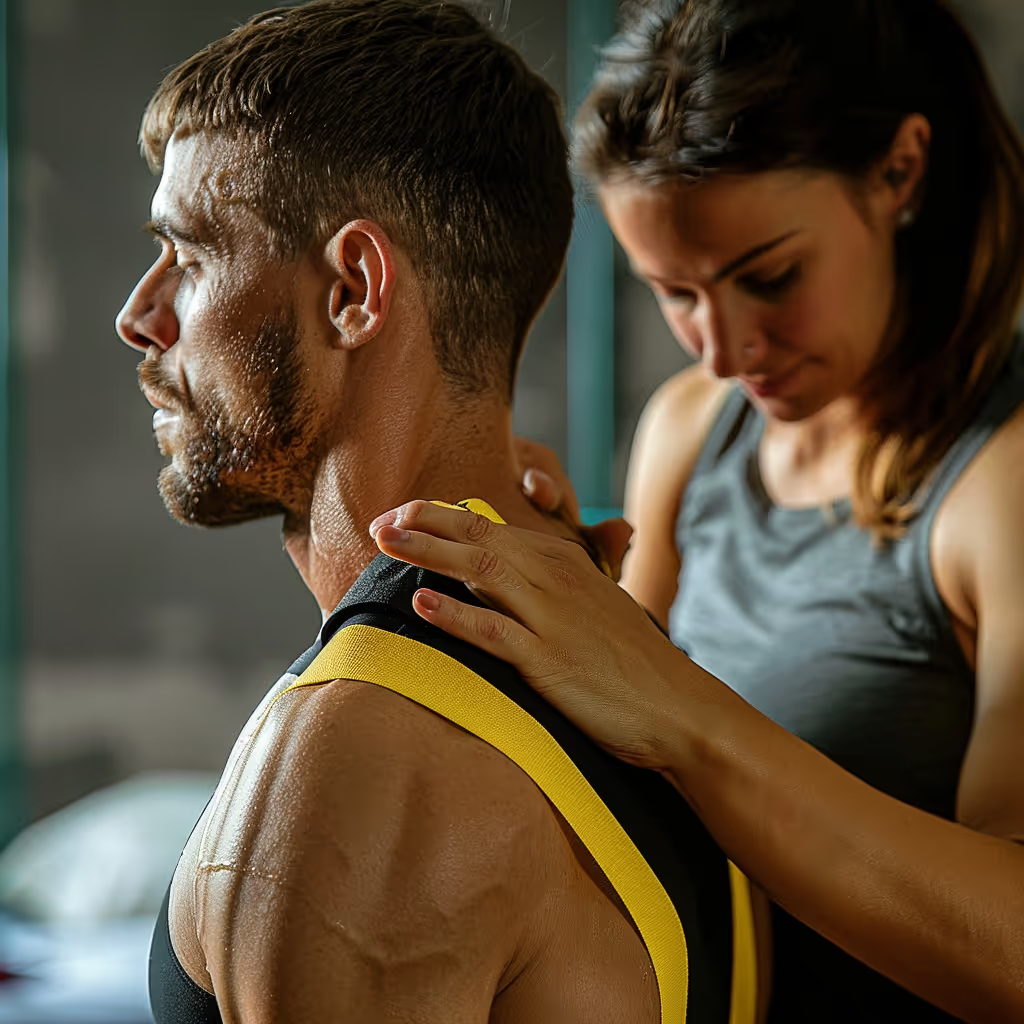
Our physical therapists use joint mobilization as part of their manual therapy—treatments performed by hand. This technique can help restore range of motion and reduce pain. For certain joint and muscle problems, mobilization with movement improves pain and physical function compared to sham treatment or no treatment at all1. The level of certainty varies depending on the condition, and their superiority over other treatments has not been clearly established. We incorporate these techniques into a treatment plan tailored to your specific condition.
What is joint mobilization?
Joint mobilization involves movements guided by a physical therapist to help a joint move and become less painful. In passive mobilization, the therapist moves your joint while you remain relaxed. In active mobilization, you also move while the therapist guides the joint. Range of motion refers to the distance or angle your joint can move.
The physical therapist applies force with his or her hands to move the joint. The joint capsule is the membrane that surrounds the joint; ligaments are bands of strong tissue that connect the bones. A reduction in stiffness may follow certain mobilization techniques, but an improvement does not prove that these tissues have been stretched or that the joint has been “put back in place.”2. After an injury, surgery, or joint disease, the choice of movement depends on your condition and the necessary precautions.
A joint that doesn't move as well may be accompanied by stiffness, and sometimes pain, and can interfere with your daily activities. Treatment aims to improve these movements, such as raising your arm or bending your knee.
10 Quick Tips to Understand Your Pain
One tip a day for 10 days to help you better understand your pain. About a 2-minute read.
Key features:
- Passive movements guided by the physical therapist, or performed in conjunction with your active movements
- Intensity and scope of the movement are adjusted according to levels known as "grades"
- Respect for your pain tolerance
- Repetitive and rhythmic movements
- Targets limited joint movement
How does joint mobilization work?
Joint mobilization applies force to a joint and may temporarily alter pain or ease of movement. Responses from the nerves, spinal cord, and brain may contribute to these effects3. The spinal cord is the nerve cord within the spine that transmits messages between the brain and the body. Changes in pain sensitivity and muscle function are observed, but the exact contribution of each mechanism remains unclear2.
What exercises does the physical therapist use?
A physical therapist can guide a sliding or rotating motion between the surfaces of a joint. These small movements accompany more noticeable actions, such as raising an arm. The study of these movements is called arthrokinematics. The shoulder, the knee, and the small joints between the vertebrae—the bones of the spine—have a lining that contains a fluid that facilitates movement. These are called synovial joints.
Mobilization aims to improve range of motion. In a review of spinal mobilization techniques, three out of four studies that measured spinal stiffness found a decrease. However, the methods varied widely2. These results support a possible mechanical effect, without establishing that the articular surfaces are repositioned. Bialosky’s model also proposes responses from the nervous system3.
How might the nervous system be involved?
Movements of the spine can temporarily alter certain responses of the nervous system. Studies have observed the following effects, among others:
- A decrease in pain sensitivity, known as hypoalgesia
- Changes in certain muscle responses
- A Possible Improvement in Muscle Function
The neural pathways responsible for these responses remain unclear. Studies do not directly demonstrate that mobilizations reduce automatic muscle contraction around the joint2.
These treatments may provide some relief, even if joint mobility remains limited. They do not allow us to predict how long the relief will last for a particular person.
Bialosky's model links the applied force to a series of responses from the nervous system3. It helps in formulating hypotheses, but does not allow all the effects of mobilization to be attributed to a single response.
What do the ranks in Maitland correspond to?
Maitland’s grades describe the range of motion and its position relative to the joint’s resistance. Resistance refers to the force the practitioner feels when approaching a limit of motion. Australian physical therapist Geoffrey Maitland developed this classification. The first four grades pertain to mobilizations; the fifth refers to a rapid manipulation.
- Grade I: a slight movement near the start of the range of motion, before resistance is felt
- Grade II: a wider range of motion within the available range, before resistance is encountered
- Grade III: a wider movement that encounters resistance
- Grade IV: a small, repeated movement within the resistance zone
- Grade V: a quick, brief manipulation that requires certification in physical therapy in Quebec
Grades I and II are primarily aimed at reducing pain. Grades III and IV are aimed at improving range of motion, within your tolerance limits. The choice of grade does not guarantee a specific outcome. In Quebec, manipulations require certification from the Ordre professionnel de la physiothérapie du Québec. This specific requirement does not apply to mobilizations.
Frozen shoulder, or adhesive capsulitis, causes the shoulder to become very stiff and often painful. A study of 77 people compared a gentle approach to intensive stretching and passive mobilization. After two years, 89% of the group that remained within their pain tolerance limits had normal or nearly normal function, compared with 63% of the intensive group4. This result supports the principle of respecting pain thresholds in this population; pushing harder did not yield better results.
What conditions are treated with joint mobilization?
Joint mobilization may help some people with frozen shoulder, knee osteoarthritis, or persistent pain in the back, neck, or elbow. Osteoarthritis is a condition that affects the entire joint. The benefits depend on the specific problem, the technique used, and the other treatment options being considered. Stiffness following an injury or surgery also requires an evaluation before deciding on specific movements.
Shoulder
For certain types of shoulder pain, mobilization techniques involving movement can reduce pain during the activity and improve the ability to raise the arm to the side. This movement is called abduction. A review reports these short-term benefits—lasting up to six weeks—compared to sham mobilization5. The following situations may lead a physical therapist to assess for shoulder stiffness:
- Adhesive Capsulitis (Frozen Shoulder)
- Pain beneath the top of the shoulder, sometimes called subacromial impingement
- Stiffness after surgery on the rotator cuff, the group of muscles and tendons that help move and stabilize the shoulder. Tendons connect muscles to bones.
- Limited range of motion following a shoulder dislocation, when the joint has moved out of its normal position
In the same journal, adding mobilization exercises to standard care also improves pain at rest, certain movements, and physical function in the short term5. The magnitude of the results varies widely across studies. These averages therefore do not predict your individual outcome. After surgery or a dislocation, movements must be performed in a way that protects the affected tissues and follows the healthcare team’s instructions.
Capsulitis may improve over a long period of time, but it does not necessarily follow predictable phases. A review does not confirm complete recovery in everyone; limitations may persist after one to four years6.
For some cases of capsulitis, a doctor may also recommend a nerve block—an injection near a nerve to reduce pain. In a trial involving 54 people, all participants received a shoulder injection and physical therapy. The addition of a suprascapular nerve block—a nerve in the shoulder—shortened the average time to symptom resolution to 5.4 months, compared with 11.2 months with a sham injection. Pain, range of motion, and function also improved more significantly7. These timeframes reflect the results of this trial and do not constitute an individual guarantee.
Knee
Limited knee movement can be assessed in several situations:
- Stiffness following reconstruction of the anterior cruciate ligament, which stabilizes the knee, or following a meniscectomy, which removes part or all of a meniscus. The menisci are two cushions located between the bones of the knee.
- Knee osteoarthritis, a condition that affects the entire joint and causes limited movement
- Patellofemoral syndrome: pain around or behind the kneecap when this small bone at the front of the knee doesn't move as well as it should
- Patellar tendinitis, pain in the tendon beneath the kneecap, if joint stiffness accompanies the problem
After surgery, guided exercises and movements are designed, in particular, to restore the ability to bend and straighten the knee. Recommendations following anterior cruciate ligament reconstruction and meniscus surgery tailor the progression of rehabilitation to the specific surgical procedure and protective guidelines. Manual mobilization should be incorporated into this progression; it does not replace the exercises.
For patellofemoral syndrome, a trial consisting of six sessions over six weeks combined exercises, patellar mobilization, and a support band. This program was more effective at reducing pain and activity limitations than a sham treatment. The result pertains to the program as a whole, without isolating the contribution of the mobilization techniques.
When pain in the patellar tendon is accompanied by stiffness, treatment may focus on addressing this limited range of motion. This does not mean that mobilization repairs the tendon or replaces the need for gradual reintegration of weight-bearing through exercise.
In knee osteoarthritis, a review of 15 trials reports improvements in pain, range of motion, and physical function with mobilization techniques that involve movement8. Exercises and mobilization techniques can therefore be part of the same treatment plan. The choice should be reassessed based on what helps you walk, climb stairs, or perform your other activities.
Back and Spine
For persistent lower back pain, a review of studies reports a slight reduction in pain with mobilization compared to other active treatments. The additional improvement in functional limitations has not been clearly established9. Results for the neck also vary depending on the techniques and comparisons10. Mobilization techniques may target different regions when assessing back pain:
- The joints between the vertebrae, the bones that make up the spine
- The rib joints, for certain types of pain around the chest
- The sacroiliac joints, which connect the lower spine to the pelvis
For cervical pain—that is, neck pain—a 2025 review included 16 trials involving 1,157 participants. It found small improvements in pain and function with mobilization, with no clinically significant difference compared to the control treatments. The certainty of the evidence is very low, and the results vary widely11. This applies to the mobilization techniques studied, not to a comprehensive physical therapy program.
Other Conditions
- Herniated disc: A portion of a disc—the cushion between two vertebrae—protrudes. Guided exercises may be considered after an evaluation, depending on the symptoms and necessary precautions. Our article on cervical herniated discs describes this condition in the neck.
- Lateral epicondylitis: pain on the outer side of the elbow. Movement-based mobilization exercises can reduce pain and improve the strength needed to grip an object12. The effects on other abilities are more variable.
- Restrictions after a fracture: Permitted movements depend on the stability of the bone and its healing, that is, its repair. The professional follows medical instructions.
- Rheumatoid arthritis, an inflammatory joint disease: certain movements are designed to maintain mobility. A joint that is severely inflamed or unstable requires special precautions. Joint mobilization techniques for the neck may be contraindicated.
- Paralysis, a partial or complete loss of voluntary movement: passive movements are used, in particular, to limit contractures—permanent losses of mobility. A review of two trials involving people with neurological disorders found a small improvement in ankle mobility in a trial of 20 participants. The certainty of the evidence is very low, and the prevention of contractures remains uncertain13.
What happens during a joint mobilization session?
A joint mobilization session includes an assessment, tailored movements, and a check on your response. The physical therapist explains the treatment to you and takes your consent and tolerance into account.
Initial Assessment
Your physical therapist begins with an evaluation, during which they assess what you can do on your own and what they can move passively. They evaluate:
- Active range of motion (what you can do on your own)
- Passive range of motion (the range of motion the therapist can achieve by moving you)
- The quality of movement and the presence of restrictions
- Your pain level at different points along the range of motion
- Small movements of the joint guided by the professional
This assessment helps you choose an appropriate initial movement and level of force. The movement you tolerate best depends on your specific issue; it isn't always the same type of glide.
Application of Mobilizations
The physical therapist then performs the mobilization techniques, selecting the appropriate level based on your goals.
- Grades I–II if the primary goal is to reduce pain
- Grades III–IV if the goal is to increase range of motion
These exercises can be repeated in sets, with breaks in between. Their duration varies depending on the technique and your response. For example, a study of female athletes with unstable ankles compared exercise durations of 30, 60, or 120 seconds. These durations are not a universal rule for all joints. If pain increases, the physical therapist may reduce the intensity or change the movement.
You may ask to stop the treatment at any time. Please let the practitioner know if you feel any discomfort or pain so they can adjust or stop the movement. A slow mobilization can be stopped during the procedure; a rapid manipulation, however, must be discussed and agreed upon before it is performed.
Revaluation and Adjustments
After the mobilization exercises, your physical therapist will reassess your range of motion, pain, and quality of movement.
This reassessment helps determine whether the exercise is right for you and whether it needs to be adjusted. It’s helpful to observe any immediate changes, but they don’t guarantee lasting benefits.
Total duration
The duration of a session varies depending on the number of joints to be treated and the complexity of the case. For a comprehensive initial evaluation, the session may take longer.
Recommended frequency
The frequency of sessions depends on your fitness level, your progress, and your goals:
- For a recent or painful condition, sessions scheduled close together may be offered based on your needs.
- For a persistent problem, the interval is reassessed based on your progress and the activities you can do on your own.
- After surgery, the instructions may include daily exercises. The frequency of these exercises does not necessarily correspond to the frequency of physical therapy appointments.
What are some frequently asked questions about joint mobilization?
Frequently asked questions about joint mobilization include pain during treatment, how it differs from manipulation, the number of sessions, precautions, exercises, progress, and side effects.
Does joint mobilization hurt?
A mobilization may cause a sensation of pressure, stretching, or some discomfort. You do not have to endure pain that you consider excessive. Let your physical therapist know how you’re feeling so they can adjust the intensity or change the technique. More intense pain does not mean the treatment is working better.
10 Quick Tips to Understand Your Pain
One tip a day for 10 days to help you better understand your pain. About a 2-minute read.
Forcing a stretch is not a guaranteed solution for joint contractures. A Cochrane review of stretching exercises lasting up to seven months found no gain in range of motion significant enough to be clinically useful in the prevention or treatment of contractures14. This finding applies to the programs studied, in individuals with or without neurological disorders. It does not allow us to draw conclusions about what happens beyond this time frame.
What is the difference between mobilization and manipulation?
Mobilization and manipulation are two distinct categories of manual techniques:
Mobilization:
- Slow, controlled, and repetitive movements
- You remain in control and can request that it be stopped
- Repeated treatments, with the duration adjusted based on the technique and your response
- May temporarily alter certain responses of the muscles and the nervous system
- May be considered if you are experiencing pain, following an evaluation and depending on your tolerance
Handling:
- A quick, brief movement of small amplitude
- Executed in a fraction of a second
- The number of steps depends on the assessment; a procedure is not a required step
- It may also alter nervous and muscular responses; their exact role remains to be determined
- Selected based on the problem, the necessary precautions, the professional's expertise, and your consent
Studies on mobilization have observed a temporary decrease in pain sensitivity and changes in muscle function2. The difference in speed between mobilization and manipulation therefore does not prove that their effects are based on entirely separate mechanisms.
Manual therapy may be chosen at the start of treatment. If it does not help, the physical therapist will reassess the problem and the options; manipulation is not automatically the next step. Manual techniques are part of a treatment plan that may include exercises. Before performing a manipulation, the professional must obtain your consent. In Quebec, this consent must be in writing for neck manipulations, according to the rules of the Quebec Professional Order of Physical Therapy.
How many sessions are needed?
The number of sessions varies depending on:
- The condition being treated
- The long-standing nature of the problem
- Your age and employment history
- Your previous injuries
Key points depending on the problem:
- A limitation that has recently come to light: follow-up depends on the cause and your response to treatment.
- Stiffness after surgery: Follow-up care adheres to the recovery stages and the surgeon's instructions.
- Capsulitis: Recovery can take several months. Follow-up appointments are scheduled based on pain levels, range of motion, and treatment options.
- Osteoarthritis with limited mobility: These sessions can help you make progress, with a strong emphasis on exercises you can do on your own.
A research protocol provides a concrete guideline, not your specific number of appointments. The study on patellar pain mentioned above used six weekly sessions. Your physical therapist may suggest an initial number of sessions and then adjust it with you. Age, previous activity level, and injuries are all part of the assessment, but they alone cannot predict how long your treatment will take.
When should joint mobilization be avoided?
Certain situations require postponing mobilization or avoiding a particular technique. The physical therapist assesses the risks and medical instructions before treatment.
Situations in which the region should not be mobilized without appropriate medical care:
- A recent fracture that is not stable enough or has not healed sufficiently for the planned movement
- Active joint infections
- Bone tumors in the treatment area
- Significant instability: the ligaments do not provide sufficient support for the joint
Other situations that may require avoiding certain techniques or adapting them:
- A joint with severe inflammation, such as one that is very swollen or warm to the touch
- Severe osteoporosis, which weakens the bones
- Generalized hypermobility: several joints move beyond their normal range of motion
- A herniated disc accompanied by neurological symptoms, such as weakness or loss of sensation
- Taking anticoagulants, which are medications that reduce blood clot formation and increase the risk of bleeding
Precautions differ, in particular, between slow mobilization and rapid manipulation. Nerve damage or neck instability may require medical evaluation. The summary from the American Academy of Physical Medicine and Rehabilitation describes these distinctions between techniques.
Does physical activity replace exercise?
Joint mobilization complements exercise; it does not replace it. For neck pain with no specific identified cause, the combination further improves pain and function compared to exercise alone, with low certainty. It is not clearly superior to manual therapy alone15. For persistent low back pain, a 2026 review found no significant additional benefit for short-term pain relief from adding manual therapy to exercise. However, it reported an additional improvement in activity limitations in both the short and long term, with low to moderate certainty16.
How the two approaches can complement each other:
- The mobilization is intended to facilitate movement guided by the professional
- The exercises allow you to practice the movement on your own
- Strength-training exercises build the strength you need for your activities
- Home exercises allow you to continue this work between sessions
Before exercising, a mobilization exercise can be used to work on a restricted movement. It does not guarantee the prevention of injury and is not a substitute for gradual preparation for your activity.
How can I track my progress?
Your physical therapist uses several indicators:
- Measuring the angle of motion with an instrument called a goniometer
- Tests of specific movements, such as raising an arm or climbing a flight of stairs
- Pain scales (0–10)
- Standardized questionnaires about your difficulties with daily activities
You can also notice changes in your daily life:
- Regained ability to perform daily activities
- Reduction in morning stiffness
- Reduction in pain during specific movements
- Improved sleep quality
What are the possible side effects?
The side effects reported in trials of neck mobilization and manipulation are mostly temporary and mild. However, more than half of the trials included in a Cochrane review did not report these effects. Their actual frequency therefore remains uncertain10. You may experience, for example:
- A slight, temporary increase in pain or muscle soreness
- Local sensitivity in the treated area
- Muscle fatigue
These reactions do not indicate that the tissues are healing or that the treatment has been successful. If they persist for several days or worsen, contact your physical therapist to reassess the treatment.
Changes that need to be reported promptly:
- Pain that gradually increases after the session
- Significant swelling of the joint
- Loss of range of motion compared to before the mobilization
- Numbness, tingling, or weakness
Seek urgent medical attention if a painful joint becomes hot and swollen, or if the pain is accompanied by general malaise, fever, or chills. Go to the emergency room if you can no longer walk or put weight on the joint, if a joint is deformed, or if severe pain follows a fall or injury. After an injury, tingling or loss of sensation around the joint also requires evaluation in the emergency room. These warning signs involving the joints should be evaluated immediately, without waiting for your next physical therapy appointment.
How does joint mobilization work at Physioactif?
At Physioactif, joint mobilization is part of a personalized treatment plan that combines appropriate manual techniques with progressive exercises. Your physical therapist selects the movements based on your evaluation and then reassesses their effectiveness with you. The Maitland grades are among the benchmarks described in this article.
Our articles on knee anatomy and shoulder anatomy explain the structures and movements that your physical therapist may discuss with you.
Need professional advice?
Our physical therapists can assess your condition and provide you with a personalized treatment plan.
Make an appointmentSources
Links open in a new tab.
- Westad K, Tjoestolvsen F, Hebron C. The effectiveness of Mulligan’s mobilization with movement (MWM) on peripheral joints in musculoskeletal (MSK) conditions: A systematic review. Musculoskelet Sci Pract. 2019;39:157-163. (Back to section: 1)
- Lascurain-Aguirrebeña I, Newham D, Critchley DJ. Mechanism of Action of Spinal Mobilizations: A Systematic Review. Spine (Phila Pa 1976). 2016;41(2):159-72. (Back to sections: 1, 2, 3, 4, 5)
- Bialosky JE, Bishop MD, Price DD, Robinson ME, George SZ. The mechanisms of manual therapy in the treatment of musculoskeletal pain: a comprehensive model. Man Ther. 2009;14(5):531-8. (Back to sections: 1, 2, 3)
- Diercks RL, Stevens M. Gentle thawing of the frozen shoulder: a prospective study comparing supervised neglect with intensive physical therapy in 77 patients with frozen shoulder syndrome followed up for two years. J Shoulder Elbow Surg. 2004;13(5):499-502. (Back to section: 1)
- Dias D, Neto MG, Sales SDSR, Cavalcante BDS, Torrierri P, Roever L, et al. Effect of Mobilization with Movement on Pain, Disability, and Range of Motion in Patients with Shoulder Pain and Movement Impairment: A Systematic Review and Meta-Analysis. J Clin Med. 2023;12(23). (Back to sections: 1, 2)
- Wong CK, Levine WN, Deo K, Kesting RS, Mercer EA, Schram GA, et al. Natural history of frozen shoulder: fact or fiction? A systematic review. Physiotherapy. 2017;103(1):40-47. (Back to section: 1)
- Shanahan EM, Gill TK, Briggs E, Hill CL, Bain G, Morris T. Suprascapular nerve block for the treatment of adhesive capsulitis: a randomized, double-blind, placebo-controlled trial. RMD Open. 2022;8(2). (Back to section: 1)
- Weleslassie GG, Temesgen MH, Alamer A, Tsegay GS, Hailemariam TT, Melese H. Effectiveness of Mobilization with Movement in the Management of Knee Osteoarthritis: A Systematic Review of Randomized Controlled Trials. Pain Res Manag. 2021;2021:8815682. (Back to section: 1)
- Coulter ID, Crawford C, Hurwitz EL, Vernon H, Khorsan R, Suttorp Booth M, et al. Manipulation and mobilization for treating chronic low back pain: a systematic review and meta-analysis. Spine J. 2018;18(5):866-879. (Back to section: 1)
- Manipulation and Mobilization for Neck Disorders | Cochrane. (Back to sections: 1, 2)
- Benetton A, Battista S, Bertoni G, Rossettini G, Maistrello LF. Effectiveness of Manual Joint Mobilization Techniques in the Treatment of Nonspecific Neck Pain: Systematic Review With Meta-Analysis and Meta-Regression of Randomized Controlled Trials. J Orthop Sports Phys Ther. 2025;55(3):1-20. (Back to section: 1)
- Lucado AM, Dale RB, Vincent J, Day JM. Do joint mobilizations help with recovery from lateral elbow tendinopathy? A systematic review and meta-analysis. J Hand Ther. 2019;32(2):262-276.e1. (Back to section: 1)
- Prabhu RK, Swaminathan N, Harvey LA. Passive movements for the treatment and prevention of contractures. Cochrane Database of Systematic Reviews. 2013;2013(12):CD009331. (Back to section: 1)
- Harvey LA, Katalinic OM, Herbert RD, Moseley AM, Lannin NA, Schurr K. Stretch for the treatment and prevention of contractures. Cochrane Database Syst Rev. 2017;1(1):CD007455. (Back to section: 1)
- Wilhelm M, Cleland J, Carroll A, Marinch M, Imhoff M, Severini N, et al. The combined effects of manual therapy and exercise on pain and related disability in individuals with nonspecific neck pain: A systematic review with meta-analysis. J Man Manip Ther. 2023;31(6):393-407. (Back to section: 1)
- Dos Santos ECS, Dos Santos AT, da Silva NA, Carneiro SR, Rampazo ÉP, Magalhães MO. Effectiveness of adding manual therapy to exercise for pain and disability in chronic nonspecific low back pain: A systematic review and meta-analysis. Musculoskelet Sci Pract. 2026;82:103508. (Back to section: 1)
- Physiopedia. Maitland's Mobilizations.
- Anggiat L, Altavas AJ, Budhyanti W. Joint Mobilization: Theory and Evidence Review. International Journal of Sport, Exercise, and Health Research. 2020;4(2):86-90.
- Tragord BS, Gill NW, Silvernail JL, Teyhen DS, Allison SC. Joint mobilization forces and therapist reliability in patients with knee osteoarthritis. J Man Manip Ther. 2013;21(4):196-206.
- Company Name: Mobilization vs. Manipulation | Izaak Lavarenne, Physical Therapist.
Videos in this category
Other conditions

Hip osteoarthritis is the normal wear and tear of the hip joint. It is often said that osteoarthritis is the wear and tear of the cartilage between our bones. That is true, but it involves more than just the cartilage. Cartilage is a tissue that acts as a cushion between the surfaces of our bones and allows our joints to glide smoothly and move fluidly.
This is normal wear and tear of the knee joint. It’s often said that osteoarthritis is the wearing down of the cartilage between our bones. That’s true, but it’s more than just the cartilage. Cartilage is a tissue that acts as a cushion between the surfaces of our bones and allows our joints to glide smoothly and move fluidly.
It is an inflammation of the subacromial bursa in the shoulder joint.
A bursa is a small, thin sac filled with fluid that is found in many of the body's joints. This small sac acts as a cushion within the joint and lubricates the structures that are subject to increased friction.
It is a tissue that surrounds the shoulder and helps keep the shoulder bone in place within the joint. The capsule helps keep the joint stable.
Neck pain is a general term used to describe pain in the neck that has no specific cause, such as an accident or a sudden awkward movement. Neck pain is therefore synonymous with “my neck hurts, and nothing in particular happened.”
In both types of injury, pain is felt in the neck and then radiates into the arm, or vice versa.
Make an appointment now
We offer a three-pronged quality assurance approach: optimized treatment time, a second opinion from a physical therapist, and ongoing expertise to ensure effective care tailored to your needs.

Customer satisfaction is our top priority
At Physioactif, excellence guides everything we do, but our patients are the best ones to tell you about it. Take a look at their verified reviews to get a real sense of their experience.









Discover our physical therapy clinics
We have locations in several areas to better serve you.
Blainville
190 Bas-de-Sainte-Thérèse Road, Suite 110,
Blainville, Quebec
J7B 1A7
Located in Blainville, near Rosemère, the Physioactif clinic is easily accessible to residents of the area and the surrounding communities
Boucherville
690 Rue de Montbrun, Suite S,
Boucherville, Quebec
J4B 8H2
Located in Boucherville, the Physioactif clinic is easily accessible to people in the area
Laval
3224 Jean-Béraud Ave., Suite 220, Laval,
QC H7T 2S4
Located in Chomedey, in the heart of Laval, the Physioactif clinic is easily accessible to people in the area
Montreal
8801 Lajeunesse Street,
Montreal,
QC H2M 1R8
Located in Ahuntsic, near Villeray, the Physioactif clinic is easily accessible to residents of both neighborhoods
Saint-Eustache
180 25th Avenue, Suite
201 Saint-Eustache
QC J7P 2V2
Located in Saint-Eustache, the Physioactif clinic is easily accessible to residents of the area and the surrounding communities
Vaudreuil
21 Cité-des-Jeunes Boulevard, Suite 240,
Vaudreuil-Dorion, Quebec
J7V 0N3
Located in Vaudreuil-Dorion, the Physioactif clinic is easily accessible to people in the area
Make an appointment now