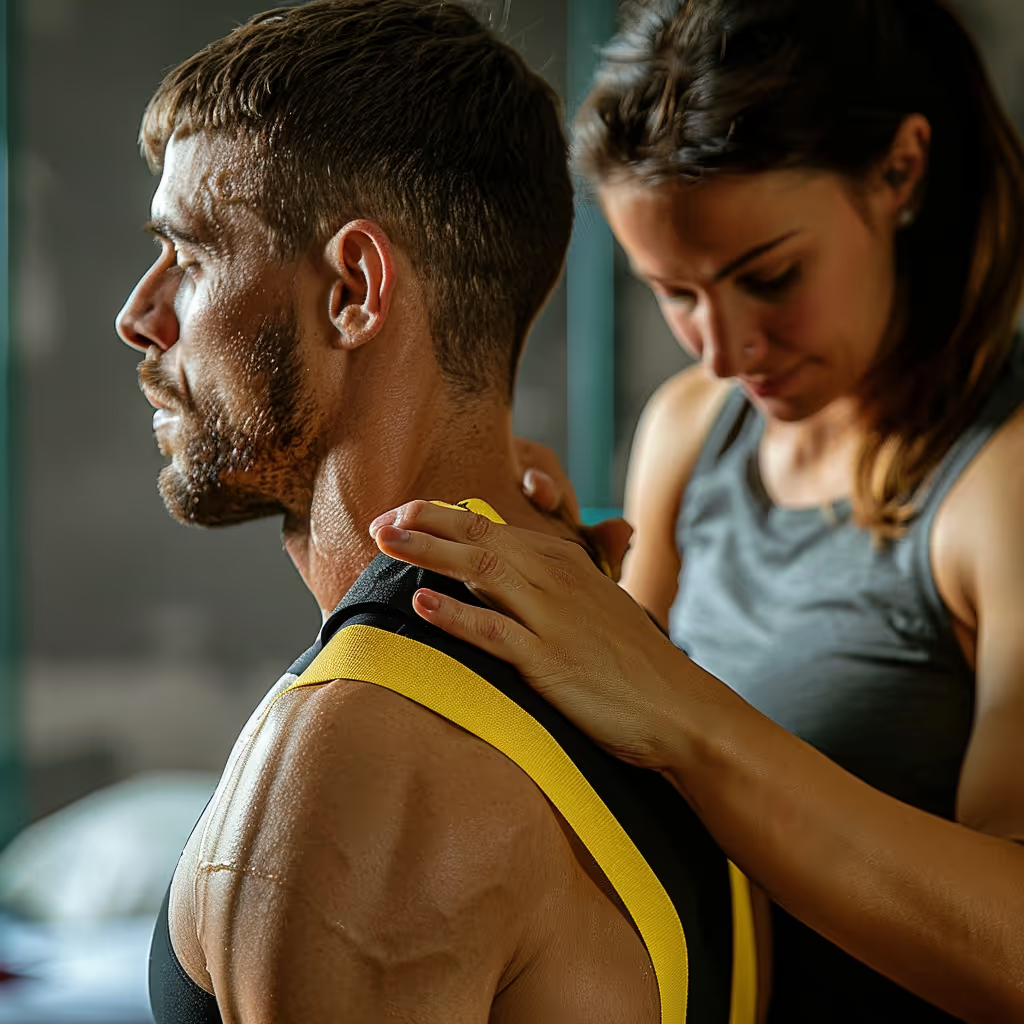


How can geriatric physical therapy help older adults?
Geriatric physical therapy helps older adults maintain their independence, reduce the risk of falls, and preserve their quality of life. Treatment takes into account the conditions and challenges that can accompany aging. The aging of the global population requires specialized geriatric physical therapy services to addressage-related needs .¹, ² As physical therapists with extensive experience working with older adults, we approach this area of practice by taking into account your daily activities, your health, and your living environment.
The assessment examines your joints, muscles, balance, and response to physical exertion. Your physical therapist connects these observations to what matters to you: walking outdoors, climbing stairs, or standing up without assistance. This assessment guides a treatment plan tailored to your abilities.
What is geriatric physical therapy?
Geriatric physical therapy is a field of practice dedicated to promoting mobility and independence among older adults. It takes into account the changes associated with aging and chronic conditions that persist over time. It also examines the impact of pain, fear of falling, and isolation on daily activities. The individual’s needs guide the care provided, regardless of age.
Physical therapists who work with older adults develop their skills through training and clinical experience. Training pathways vary by country, as shown by a survey of physical therapy organizations in 67 countries1. The assessment focuses in particular on joints and muscles, movement and balance, and the heart’s and lungs’ tolerance to exercise. Your physical therapist will select the tests that are most relevant to your situation.
10 Quick Tips to Understand Your Pain
One tip a day for 10 days to help you better understand your pain. About a 2-minute read.
Physical therapy contributes to the comprehensive geriatric assessment, a team-based evaluation of anolder adult’s medical, social, and physical needs.³, ⁴ Frailty can manifest as unintentional weight loss, decreased strength, slow walking speed, fatigue, and low physical activity5. The assessment helps the team coordinate care. The presence of multiple conditions and frailty may overlap, but they do not refer to exactly the same thing.
Therapy for older adults may address respiratory disorders and recovery from a stroke—a brain injury caused by a blocked blood vessel or bleeding. It may also support patients with Parkinson’s disease, which can slow movement, or Alzheimer’s disease, which primarily affects memory. Interventions are then tailored to the patient’s physical abilities, their ability to understand instructions, and the support available6.
What age-related problems does geriatric physical therapy address?
Geriatric physical therapy addresses mobility issues related to osteoarthritis,osteoporosis, and balance disorders. Osteoarthritis is a joint condition that can cause pain and stiffness. Osteoporosis weakens the bones. The treatment plan takes these issues into account to improve mobility and reduce the risk of falls.
Osteoarthritis and Osteoporosis
Osteoarthritis is the most common joint disease among older adults. Its prevalence increases with age.7, 8 Physical therapy for hip or knee osteoarthritis aims to reduce pain, improve mobility, and strengthen the muscles around the joint.
The GLA:D program combines information about osteoarthritis withsupervised exercises.⁹, ¹⁰ The format described by GLA:D Canada includes two educational sessions and twelve exercise sessions, spread over six weeks11. You can consult their directory of locations offering the program to find out about access near you. Exercise does not cure osteoarthritis, but it can reduce pain and improve physical function. A 2015 review on knee osteoarthritis reports these benefits following treatment, followed by more modest effects two to six months after treatment ends12.
Exercise may also help delay the need for hip replacement in some people. A trial followed 109 people with hip osteoarthritis and mild to moderate symptoms. They were not candidates for surgery at the start of the study. Adding 12 weeks of exercise to education was associated with fewer hip replacements during the follow-up period, which lasted up to six years. This result does not guarantee that surgery can be avoided in all cases, particularly when symptoms are severe13.
Osteoporosis weakens bones and increases the risk of fractures14. The Bone Fit program, developed by Osteoporosis Canada, trains professionals to tailor physical activity to people with osteoporosis15. Exercises may include weight-bearing activities, such as walking, and muscle-strengthening exercises. Exercise selection takes into account the risk of vertebral fractures—fractures of the bones in the spine—and anyprevious fractures16, 17.
In cases of osteoporosis, movements that involve bending or twisting the back may require modification. The 2023 Canadian guidelines focus primarily on movements that are rapid, repetitive, held for a long time, performed with a load, or pushed through at the end of the movement—especially if the risk of fracture is high. They do not recommend avoiding all bending or rotating of the back. Your physical therapist can help you choose the right movements, their difficulty level, and how to progress16.
Among 50 women aged 65 or older with osteoporosis, eight weeks of balance exercises combined with strength training or stretching improved certain measures of postural control—the ability to remain stable. The balance-and-strength group performed better than the balance-and-stretching group in terms of the strength required to extend the knee and control the direction of body movements18. Since the majority of hip fractures result from a fall, reducing falls helps protect the bones19.
Balance Disorders and Fall Risk
Balance disorders can originate in the vestibular system, which connects sensors in the inner ear to the brain to help stabilize vision and body movement. They can also be related to vision, muscle weakness, or nerve damage in the limbs. The latter, in particular, can reduce sensitivity in the feet. Certain medications and low blood pressure can also contribute to falls20. A fall can cause an injury and lead to a loss of confidence, physical fitness, or independence.
Physical therapy helps assess the risk of falls and select appropriate care toreduce that risk.²¹, ²²
How does physical therapy reduce the risk of falls among older adults?
Physical therapy reduces the risk of falls through balance exercises, activities of daily living, and muscle-strengthening exercises tailored to each individual. The program may include getting up from a chair, stepping over an obstacle, or maintaining a stable posture. Systematic reviews confirm that these exercises can reduce falls amongolder adults23, 22.
Balance exercises and everyday movements reduce falls among older adults living in the community. Programs that incorporate strength training into these exercises are also effective. The 2019 Cochrane review distinguishes between these approaches, without establishing that any single combination is best for everyone22. Balance training helps control body stability18. Strength training involves working muscles against resistance, such as a weight or an elastic band. It can improve strength and walking speed in people with sarcopenia—a loss ofmuscle strength and mass— 24, 25. To prevent falls, it is best combined with balance training21.
Frequency and duration of exercises: Exercise should be regular and challenging enough to improve balance. The 2025 American Physical Therapy Guidelines recommend a program of at least 150 minutes to three hours per week, over six to twelve months, for people aged 65 or older living in the community21. Your physical therapist will adjust the duration of sessions, breaks, and the pace of progression based on your health status. If you require significant assistance with movement or understanding instructions, special accommodations will be needed. The programs studied vary: no single format stands out as the best for everyone26. When training stops, some gains may begin to decline as early as four weeks. Others persist longer, particularly after a program focused on balance27.
Training with controlled imbalances is designed to improve the reactions that allow you to regain your balance. It takes place in a safe environment, under the supervision of a professional28. This approach can complement other balance exercises. The 2025 guidelines consider its results regarding falls to be still variable and give it a weaker recommendation than that for progressive balance training21.
A study published in 2025 followed 124 people aged 80 or older—who were independent or nearly independent—for one year. One group performed strength and balance exercises at home using videos and remote monitoring; the other continued its usual activities. The first group performed better on certain balance measures, and fewer participants experienced at least one fall. The difference in the total number of falls relative to the follow-up period remained unclear29.
How does physiotherapy maintain independence and quality of life?
Physical therapy helps maintain independence and quality of life by improving mobility, strength, balance, and pain management. Functional mobility refers to the ability to move in order to perform daily activities. Treatment can therefore help you get up from a chair, walk safely, or climb stairs.
These treatments focus on specific goals that matter to you: being able to go grocery shopping on your own, playing with your grandchildren, or continuing your favorite social activities. Physical therapy helps restore mobility in cases of osteoarthritis, osteoporosis, or hip or knee replacements—where the joint is replaced with artificial parts—as well as balance issues6.
Chronic Pain Management: Physical therapy combines progressive therapeutic exercises, explanations about pain, and strategies for managing symptoms on a daily basis. Manual therapy—which involves movements or pressure applied by hand—can complement this care depending on your tolerance. Active interventions are designed to give you greater independence. Better pain management may lead to a reassessment of your medication needs with your doctor or pharmacist. This reassessment is important when you are taking multiple medications at the same time. Any changes to your medication should be discussed with one of these professionals.
Improved Physical Fitness: Aging can be accompanied by a loss of strength and muscle mass. Inactivity can also reduce the ability to sustain exertion and move. This loss of ability is called deconditioning; the ability to sustain exertion is known as endurance. Physical therapy exercises aim to limit these losses. They may combine strength training, endurance exercises, and movements to maintain flexibility, depending on your abilities. The goal is to better perform everyday tasks and to have more strength and endurance when an illness or other physical demand increases your needs25.
Preventing Complications: Geriatric physical therapy takes a holistic approach to prevent a cascade of complications. For example, a hip fracture can quickly lead to a loss of strength and endurance, making it harder to do the activities you enjoy30. Regaining mobility is part of the recovery process. The healthcare team will specify when you can start moving again and how much weight you can put on your leg, depending on the fracture and its treatment. Physical therapy also includes advice on pacing yourself, adapting your environment, and using a cane or walker as needed.
What assessment tools are used in geriatric physiotherapy?
Geriatric physical therapy uses tools such as the Berg Scale, the Timed Up and Go Test, the Tinetti Test, and the BESTest to assess balance and mobility. These tools follow a specific procedure. Their results help in selecting exercises and tracking progress, in addition to the patient’s history of falls and overall health assessment.
Berg Balance Scale: This test assesses balance during everyday activities31. It consists of 14 tasks, for a total of 56 points: standing on one leg, reaching forward, or picking up an object from the floor, for example32. The score alone is not sufficient to predict a fall33. A small increase does not always indicate a definite change. In a review of studies, the change required to exceed measurement variation ranged from 2.8 to 6.6 points, depending on the groups studied. Your physical therapist therefore interprets the score in light of your progress in daily activities32.
Timed Up and Go (TUG) test: You stand up from a chair, walk 3 meters at your usual pace, turn around, walk back, and sit back down. The healthcare professional times this test and observes your gait, balance, and use of a walking aid, if applicable34. The time recorded should be interpreted in conjunction with the other observations. The TUG alone is a poor predictor of who will fall among older adults living in the community35.
Tinetti Test: This test evaluates balance and gait. It is also referred to as the Tinetti Performance-Oriented Mobility Assessment in the literature36.
BESTest, an assessment of the components of balance: This test examines several aspects of stability, including compensatory responses, the use of information provided by vision, the inner ear, and proprioception, as well as stability while walking. It helps identify areas that need improvement. Its English name is Balance Evaluation Systems Test37.
APTA Geriatrics, a U.S. organization of physical therapists who work with older adults,36 has published a toolkit for assessing balance and falls, guiding physical therapists in selecting the appropriate tools.
10 Quick Tips to Understand Your Pain
One tip a day for 10 days to help you better understand your pain. About a 2-minute read.
When should you consult for geriatric physiotherapy?
A geriatric physical therapy consultation is helpful when pain, a fall, fear of falling, or loss of mobility make it difficult for you to carry out your daily activities. It can also help you plan exercises following a diagnosis of osteoarthritis or osteoporosis, a hospital stay, or surgery. However, an injury or illness resulting from a fall may first require medical attention.
- After a fall or if a person is afraid of falling: The assessment identifies factors that may have contributed to the fall, such as balance, strength, medications, or the environment. Fear of falling can also limit a person’s activities.
- Diagnosis of osteoarthritis or osteoporosis: The physical therapist tailors the exercises to help you maintain your activities while taking into account the health of your joints and bones. In some cases of hip osteoarthritis, exercises can also help delay the need for joint replacement13.
- Reduced Mobility: An assessment can identify difficulties that need to be addressed when your daily activities become more challenging or you need more help.
- After a hospital stay or surgery: Physical therapy helps restore strength and mobility after a hospital stay or surgery, in accordance with the healthcare team’s instructions.
- Balance Problems or Dizziness: Dizziness—the sensation that you or your surroundings are spinning—and balance problems may have treatable causes. An evaluation can help determine the cause.
- Chronic Pain : Physical therapy can help manage persistent pain and its impact on your daily activities. Pain warrants an evaluation, regardless of your age.
After a fall: Call 911 if you are unable to get up or if you may have injured your head, back, neck, or hip. Pain, a possible injury, or feeling unwell after a fall also warrants prompt medical attention20.
In Quebec, you can see a physical therapist directly at a private clinic. However, your insurance or the access requirements of a public facility may require a doctor’s referral38. At Physioactif, our physical therapists specialize in caring for older adults and tailor treatment plans to your unique needs. We offer programs for fall prevention, osteoarthritis and osteoporosis management, as well as plans to restore mobility and physical function after surgery.
What are your questions about geriatric physiotherapy?
Questions about geriatric physical therapy focus on fall prevention, care for people over 80, safety concerns related to osteoporosis, and the duration and cost of treatments. They also address the unique aspects of this field and situations that require additional care.
Can physiotherapy truly prevent falls?
Yes. Exercise programs reduce falls among older adults living in the community22. Balance exercises and activities of daily living are important; strength training can complement them. Controlled balance challenges can also be used to train recovery responses, provided there is supervision andprotective measuresin place24, 28. Your physical therapist will select exercises based on your abilities and your risk of falling.
Is it too late to start at 80 or older?
No. Appropriate exercise can still be beneficial after age 80. In the 2025 trial described above, people aged 80 or older improved on certain measures of balance, and fewer of them experienced at least one fall while following a home-based exercise program. The participants were independent or nearly independent; the results do not reflect all highly frail older adults29. Baseline fitness levels and supervision needs must be assessed on an individual basis.
Can I do physiotherapy with severe osteoporosis?
Yes. Physical therapy can help you choose exercises that are appropriate for severe osteoporosis. Strength training can help maintain bone density—the amount of mineral matter in the bones—especially in postmenopausal women, as discussed in a review39. Balance exercises and everyday movements help reduce falls22. Exercise complements medical treatment; it does not replace it. After a recent fracture or if the risk of fracture is high, a professional trained in osteoporosis—for example, through the Bone Fit program—can adjust the movements andloads17, 15. The 2023 guidelines recommend adapting, as needed, any back movements that are rapid, repetitive, sustained, weighted, or involve pushing at the end of the movement. It does not require stopping all activity16.
How long do treatments last?
The duration varies depending on your goals. Recovery from a fracture—such as a hip fracture—can take several months and require a rehabilitation program, which involves treatment and exercises to regain function. A fall prevention program is a long-term commitment: it must be continued on a regular basis to maintain its benefits. Managing osteoarthritis may include periodic checkups, supervised exercises, and self-care strategies to manage symptoms. Your physical therapist will develop a plan with a timeline that can be adjusted based on your progress.
After an initial rehabilitation period following a hip fracture, home exercises can still be helpful. A study involving 232 people reported a modest improvement in physical abilities after six months of exercises focused on everyday activities. The researchers note that the significance of this improvement for daily life remains to be determined40.
How is this different from regular physiotherapy?
Geriatric physical therapy applies the principles of physical therapy, adapting them to the needs of older adults. It pays particular attention to multiple coexisting conditions, medications, balance, fatigue, and available support. The physical therapist adjusts the difficulty of the exercises, as well as the explanations and supervision, to match your tolerance and understanding. The assessment may examine the muscles, joints, nervous system, and heart and lungs. The Berg, TUG, and Tinetti tests complement this assessment.
How much does geriatric physiotherapy cost?
The cost of a session varies depending on the clinic and the type of appointment. Ask about the fees for the initial evaluation and follow-up sessions before you begin. At private clinics, reimbursement depends on your insurance; check the terms of your policy. Care provided at public facilities is covered, but the criteria for access vary38. Your local community service center, or CLSC, can also refer you to resources in your area. Community programs such as Viactive or the Integrated Dynamic Balance Program (PIED) offer activities for seniors based on criteria and availability specific to each program41.
What conditions does Physioactif not treat?
Physioactif refers patients to the appropriate resources when their needs exceed the care available at the clinic. An acute illness—whether it has recently developed or is rapidly worsening—or a condition of frailty requiring intensive medical care may necessitate hospitalization or geriatric care. Physical therapy may be part of this care, as part of the medical team. The level of care required guides the referral.
Need professional advice?
Our physical therapists can assess your issues and develop a personalized treatment plan for you.
Make an appointmentReferences
Links open in a new tab.
- Onyeso OK, Alumona CJ, Okoh AC, Ibekaku M, Shirazi S, Kalu ME. Geriatric and gerontological physical therapy in focus: a cross-sectional survey of education, clinical practice, and service availability across World Physical Therapy member nations. BMC Med Educ. 2025;25(1):471. (Back to sections: 1, 2)
- Christensen K, Doblhammer G, Rau R, Vaupel JW. Aging populations: the challenges ahead. Lancet. 2009;374(9696):1196-208. (Back to section: 1)
- Physiopedia. Physical Therapy and Older Adults. (Back to section: 1)
- Parker SG, McCue P, Phelps K, McCleod A, Arora S, Nockels K, et al. What Is Comprehensive Geriatric Assessment (CGA)? An umbrella review. Age Ageing. 2018;47(1):149-155. (Back to section: 1)
- Fried LP, Tangen CM, Walston J, Newman AB, Hirsch C, Gottdiener J, et al. Frailty in older adults: evidence for a phenotype. J Gerontol A Biol Sci Med Sci. 2001;56(3):M146-56. (Back to section: 1)
- Choose PT. Resource | What Is Geriatric Physical Therapy? 2024. (Back to sections: 1, 2)
- Health Canada. Seniors and Aging - Osteoarthritis. (Back to section 1)
- Hunter DJ, Bierma-Zeinstra S. Osteoarthritis. Lancet. 2019;393(10182):1745-1759. (Back to section: 1)
- Physio Arthritis Plus. Physio Arthritis Plus│Home. (Back to section: 1)
- Zywiel M, Ellis K, Veillette CJH, Skou ST, McGlasson R. Implementation of the Good Life with Osteoarthritis in Denmark (GLA:D) Program Across Canada for the Management of Hip and Knee Osteoarthritis. Healthc Q. 2021;24(1):54-59. (Back to section: 1)
- GLA:D Canada. Education and exercise. (Back to section: 1)
- Fransen M, McConnell S, Harmer AR, Van der Esch M, Simic M, Bennell KL. Exercise for osteoarthritis of the knee. Cochrane Database Syst Rev. 2015;1(1):CD004376. (Back to section: 1)
- Svege I, Nordsletten L, Fernandes L, Risberg MA. Exercise therapy may delay total hip replacement surgery in patients with hip osteoarthritis: a long-term follow-up of a randomized trial. Ann Rheum Dis. 2015;74(1):164-9. (Back to sections: 1, 2)
- Bouvard B, Annweiler C, Legrand E. Osteoporosis in older adults. Joint Bone Spine. 2021;88(3):105135. (Back to section: 1)
- Bone Fit™. What is Bone Fit™? (Back to sections: 1, 2)
- Morin SN, Feldman S, Funnell L, Giangregorio L, Kim S, McDonald-Blumer H, et al. Clinical practice guideline for the management of osteoporosis and fracture prevention in Canada: 2023 update. CMAJ. 2023;195(39):E1333-E1348. (Back to sections: 1, 2, 3)
- Osteoporosis Canada | Clinical Practice Guideline | Osteoporosis Canada. 2023. (Back to sections: 1, 2)
- Burke TN, França FJ, Meneses SR, Pereira RM, Marques AP. Postural control in elderly women with osteoporosis: a comparison of balance, strengthening, and stretching exercises. A randomized controlled trial. Clin Rehabil. 2012;26(11):1021-31. (Back to sections: 1, 2)
- Lim SK, Choi K, Heo NH, Kim Y, Lim JY. Characteristics of falls associated with fragility hip fractures in older adults: A systematic review. J Nutr Health Aging. 2024;28(10):100357. (Back to section: 1)
- nhs.uk. Falls. 2018. (Back to sections: 1, 2)
- Ovid. Physical Therapy Management of Fall Risk in Community-Dwelling Older Adults: An Evidence-Based Clinical Practice Guideline From the American Physical Therapy Association – Geriatrics. (Back to sections: 1, 2, 3, 4)
- Sherrington C, Fairhall NJ, Wallbank GK, Tiedemann A, Michaleff ZA, Howard K, et al. Exercise for preventing falls in older people living in the community. Cochrane Database Syst Rev. 2019;1(1):CD012424. (Back to sections: 1, 2, 3, 4, 5)
- Sadaqa M, Németh Z, Makai A, Prémusz V, Hock M. Effectiveness of exercise interventions for fall prevention in ambulatory, community-dwelling older adults: a systematic review with narrative synthesis. Front Public Health. 2023;11:1209319. (Back to section: 1)
- Zhong YJ, Meng Q, Su CH. Mechanism-Driven Strategies for Reducing Fall Risk in the Elderly: A Multidisciplinary Review of Exercise Interventions. Healthcare (Basel). 2024;12(23). (Back to sections: 1, 2)
- Lu L, Mao L, Feng Y, Ainsworth BE, Liu Y, Chen N. Effects of different exercise training modes on muscle strength and physical performance in older adults with sarcopenia: a systematic review and meta-analysis. BMC Geriatr. 2021;21(1):708. (Back to sections: 1, 2)
- Guirguis-Blake JM, Perdue LA, Coppola EL, Bean SI. Interventions to Prevent Falls in Older Adults: Updated Evidence Report and Systematic Review for the U.S. Preventive Services Task Force. JAMA. 2024;332(1):58-69. (Back to section: 1)
- Modaberi S, Saemi E, Federolf PA, van Andel S. A Systematic Review on Detraining Effects after Balance and Fall Prevention Interventions. J Clin Med. 2021;10(20). (Back to section: 1)
- Gerards MHG, McCrum C, Mansfield A, Meijer K. Perturbation-based balance training for fall prevention among older adults: Current evidence and implications for clinical practice. Geriatr Gerontol Int. 2017;17(12):2294-2303. (Back to sections: 1, 2)
- Zhou J, Liu B, Xu JF, Wang FB, Ye H, Duan JP, et al. Home-based strength and balance exercises for fall prevention among older adults: a randomized controlled single-blind study. Ann Med. 2025;57(1):2459818. (Back to sections: 1, 2)
- Dyer SM, Crotty M, Fairhall N, Magaziner J, Beaupre LA, Cameron ID, et al. A critical review of long-term disability outcomes following hip fracture. BMC Geriatr. 2016;16(1):158. (Back to section: 1)
- Physiopedia. Berg Balance Scale. (Back to section: 1)
- Downs S, Marquez J, Chiarelli P. The Berg Balance Scale has high intra- and inter-rater reliability, but absolute reliability varies across the scale: a systematic review. J Physiother. 2013;59(2):93-9. (Back to sections: 1, 2)
- Lima CA, Ricci NA, Nogueira EC, Perracini MR. The Berg Balance Scale as a clinical screening tool to predict fall risk in older adults: a systematic review. Physiotherapy. 2018;104(4):383-394. (Back to section: 1)
- Timed Up & Go (TUG) Test. (Back to section 1)
- Barry E, Galvin R, Keogh C, Horgan F, Fahey T. Is the Timed Up and Go test a useful predictor of the risk of falls in community-dwelling older adults: a systematic review and meta-analysis. BMC Geriatr. 2014;14:14. (Back to section: 1)
- APTA Geriatrics. Outcome Measure Toolkit for Geriatric Fall/Balance Assessment. 2021. (Back to sections: 1, 2)
- Horak, F. BESTest: Balance Evaluation Systems Test. 2008. (Back to section: 1)
- OPPQ. How does it work? (Back to sections: 1, 2)
- Zehnacker CH, Bemis-Dougherty A. Effect of weighted exercises on bone mineral density in postmenopausal women. A systematic review. J Geriatr Phys Ther. 2007;30(2):79-88. (Back to section: 1)
- Latham NK, Harris BA, Bean JF, Heeren T, Goodyear C, Zawacki S, et al. Effect of a home-based exercise program on functional recovery following rehabilitation after a hip fracture: a randomized clinical trial. JAMA. 2014;311(7):700-8. (Back to section: 1)
- Government of Quebec. Physical Activity for Older Adults | Viactive and PIED. (Back to section: 1)
- Bonner FJ, Sinaki M, Grabois M, Shipp KM, Lane JM, Lindsay R, et al. A health professional's guide to the rehabilitation of patients with osteoporosis. Osteoporos Int. 2003;14 Suppl 2:S1-22.
Customer satisfaction is our top priority
At Physioactif, excellence guides everything we do, but our patients are the best ones to tell you about it. Take a look at their verified reviews to get a real sense of their experience.









Discover our physical therapy clinics
We have locations in several areas to better serve you.
Blainville
190 Bas-de-Sainte-Thérèse Road, Suite 110,
Blainville, Quebec
J7B 1A7
Located in Blainville, near Rosemère, the Physioactif clinic is easily accessible to residents of the area and the surrounding communities
Boucherville
690 Rue de Montbrun, Suite S,
Boucherville, Quebec
J4B 8H2
Located in Boucherville, the Physioactif clinic is easily accessible to people in the area
Laval
3224 Jean-Béraud Ave., Suite 220, Laval,
QC H7T 2S4
Located in Chomedey, in the heart of Laval, the Physioactif clinic is easily accessible to people in the area
Montreal
8801 Lajeunesse Street,
Montreal,
QC H2M 1R8
Located in Ahuntsic, near Villeray, the Physioactif clinic is easily accessible to residents of both neighborhoods
Saint-Eustache
180 25th Avenue, Suite
201 Saint-Eustache
QC J7P 2V2
Located in Saint-Eustache, the Physioactif clinic is easily accessible to residents of the area and the surrounding communities
Vaudreuil
21 Cité-des-Jeunes Boulevard, Suite 240,
Vaudreuil-Dorion, Quebec
J7V 0N3
Located in Vaudreuil-Dorion, the Physioactif clinic is easily accessible to people in the area
Make an appointment now