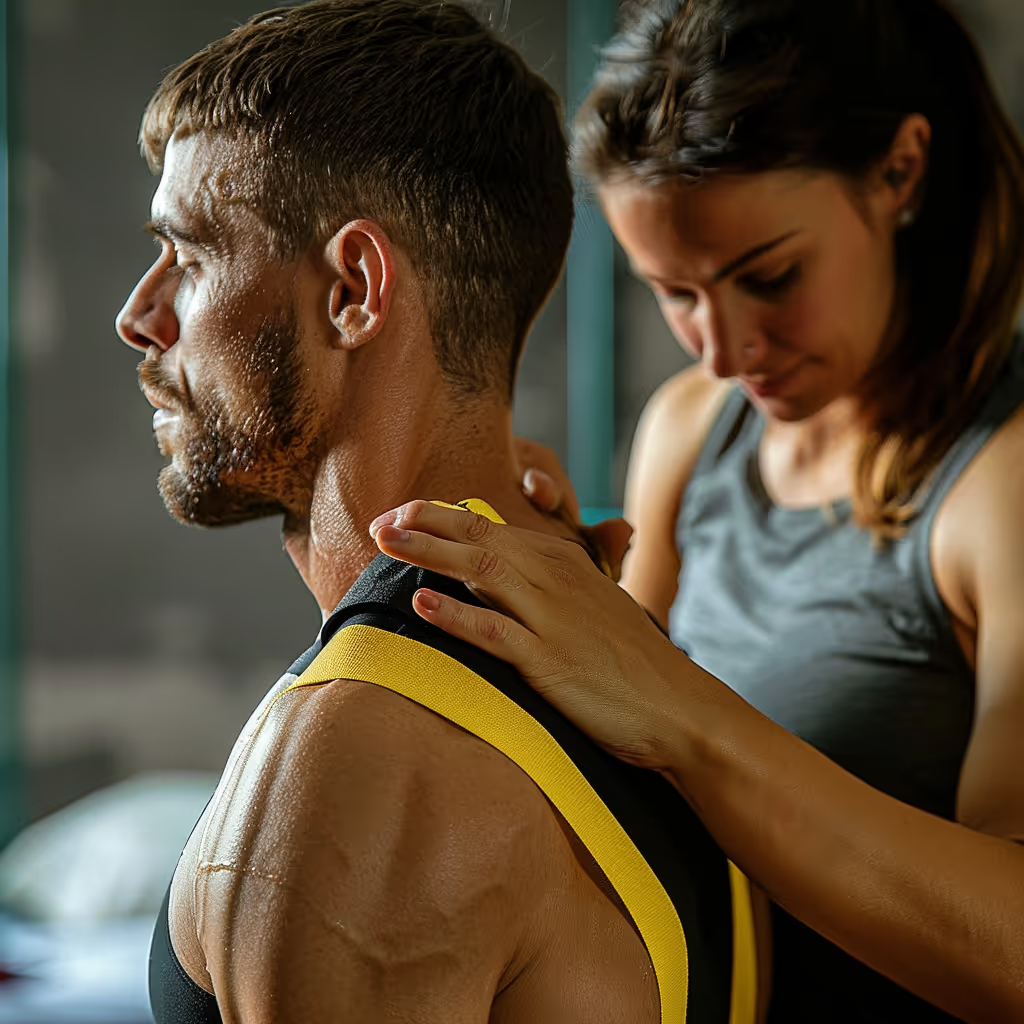
Osteoporosis/Osteopenia
Osteoporosis is a progressive decrease in bone density, which makes the bones more fragile. In the lumbar region, osteoporosis is the gradual deterioration of the vertebrae in the lower back.
.png)
.png)
.png)



Does lumbar osteoporosis always cause pain?
Lumbar osteoporosis does not usually cause pain until a fracture occurs. This condition weakens the bones in the lower back. It also affects other parts of the skeleton and primarily affects women after menopause, the period when menstruation ceases.1 However, pain can occur alongside osteoporosis. In such cases, a fracture, joint problem, or other cause should be investigated. Physical therapy can help improve mobility, strength, and certain types of pain, with treatments tailored to the fragility of the bones. It complements medical care aimed at preventing fractures.
What is lumbar osteoporosis?
Lumbar osteoporosis is a condition that weakens the vertebrae—the bones stacked in the lower back. The amount of bone mass decreases and the internal structure of the bone deteriorates, increasing the risk of fracture.2 Aging contributes to bone loss, but osteoporosis is not an inevitable consequence of aging. Hormonal factors, certain diseases, medications, and lifestyle habits can also play a role.
Osteopenia refers to bone density that is lower than normal but does not reach the threshold used to define osteoporosis. Bone density is the amount of minerals measured in the bone.3, 1 Osteopenia does not necessarily lead to osteoporosis. Follow-up takes into account age, previous fractures, and other risk factors. Physical activity, diet, and appropriate treatments can help protect bone health.
10 Quick Tips to Understand Your Pain
One tip a day for 10 days to help you better understand your pain. About a 2-minute read.
A person can live with osteoporosis without experiencing pain or significant limitations. Back pain, therefore, does not distinguish between the two types of osteoporosis—painful and painless. Treatment should focus on identifying the cause of the pain and preventing fractures. Strength, balance, and a return to normal activities can improve, even though bone fragility requires long-term monitoring.
What are the symptoms of lumbar osteoporosis?
Lumbar osteoporosis often goes unnoticed until a vertebral fracture occurs. Such a fracture can cause back pain, a loss of height, or a more hunched back. Some fractures also go unnoticed, as noted in the British guide on fracture prevention. Osteoporosis may be detected during a bone density test or after a fracture resulting from a fall from a low height.
Progressive pain or stiffness in the lower back can have several causes; it does not necessarily mean that bone loss is causing pain. The NIAMS, the U.S. institute that studies bone diseases, among other conditions, describes osteoporosis as a disease that is usually asymptomatic until a fracture occurs. New pain, especially after a fall or even mild exertion, warrants an evaluation to check for a fracture. Morning stiffness or difficulty moving should also be reported to a healthcare professional.
After ruling out a fracture or any other condition requiring specific treatment, your physical therapist may assess which movements increase or decrease associated lower back pain. The examples below describe possible reactions of the back. They do not constitute categories of osteoporosis and are not a substitute for a diagnosis.
Back pain worsens when the back rounds
For some people, positions that round the lower back can increase associated pain. Sitting for long periods, driving, or bending over to put on stockings, pants, or shoes can become uncomfortable. Describe these situations during the evaluation. Pain triggered by coughing or sneezing also warrants medical attention, especially if it is new.
Back pain worsens when the back arches
For some people, lower back pain worsens when the lower back arches. Walking or standing for long periods can become uncomfortable—for example, while grocery shopping, cooking, waiting in line, or attending a show. The effect of walking speed varies; it’s best to check with you rather than assume that walking faster will provide relief.
Lying on your stomach or on your back with your legs extended can also affect lower back pain. Reaching a high cabinet can be difficult. These reactions help in choosing comfortable positions, but they alone cannot identify the underlying cause.
The same person may experience pain both when the back rounds and when it arches. Your physical therapist uses these observations—along with your examination and your risk of fracture—to adapt the exercises. A tolerable movement alone does not rule out a fracture.
What are the serious symptoms to watch out for?
Significant weakness in the legs, loss of sensation around the genitals, or a new change in bladder or bowel control require urgent evaluation. Sudden, severe pain—or pain that worsens rapidly—also requires immediate medical attention. In cases of osteoporosis, new back pain following a fall or minor exertion should prompt an evaluation for a fracture.
Go to the emergency room if you experience severe weakness, paralysis, or significant loss of sensation in one or both legs. A recent loss of balance while walking or sudden difficulty coordinating movements should also be evaluated promptly. Back pain, pain, tingling, weakness, or numbness in both legs also require evaluation in the emergency room, according to warnings from the NHS, the British public health service.
Go to the emergency room if back pain is accompanied by new difficulty urinating, involuntary leakage of urine or stool, or a loss of sensation around the genitals or anus. A new change in sensations during sex, erection, or orgasm also warrants this evaluation. Chest pain or back pain following a serious accident is also a warning sign. Call 911 if you need an ambulance.
Not all serious causes of low back pain are equally common. In one review, a primary-care study reported cauda equina syndrome—nerve compression in the lower back—in 0.08% of people seeking care for low back pain. In another review, six primary care studies reported spinal cancer in 0 to 0.66% of people with back pain.4, 5 These figures do not reflect the frequency of all warning signs or the risk of fracture in a person with osteoporosis. They do not justify delaying medical attention for the symptoms described.
Seek prompt medical attention if back pain is accompanied by a sensation of heat or cold, chills, or general malaise. Also seek medical attention for unintentional weight loss, a change in the shape of the back, pain that worsens at night, or pain that limits your activities. Urgent situations must be evaluated before home care advice is provided.
What causes osteoporosis?
Osteoporosis can develop when bone loss exceeds bone formation, particularly with age and certain hormonal changes. The risk also increases due to medical conditions or lifestyle factors.1 After menopause, the decrease in estrogen—a hormone that helps preserve bone—contributes to bone loss.6 Being 50 years old does not automatically mean that a bone density test is necessary. The decision to undergo screening depends on age, previous fractures, and other risk factors, according to the Osteoporosis Canada guidelines.
Physical activity and strength training can help maintain bone density. Strength and balance training also reduce the risk of falls among older adults living at home.7, 8 Low body weight increases the risk of fracture.9, 10 Certain medical conditions, including diabetes, can also affect bone health and the risk of falls. The assessment must take these factors into account.
An insufficient intake of calcium and vitamin D can harm bone health. Calcium is a mineral found in bones; vitamin D helps the body absorb it.11, 10 Smoking, heavy alcohol consumption, and certain medications—such as long-term use of corticosteroids—can also increase the risk.12, 3 Corticosteroids are medications used primarily to treat inflammation. Do not stop taking them without consulting your prescribing healthcare provider.
How is osteoporosis diagnosed?
The doctor assesses osteoporosis based on your previous fractures, your risk factors, and, when necessary, a bone density test. Bone densitometry, also known as DXA, uses a low dose of X-rays to measure the mineral content in bone, often at the hip and lower back. The result helps with the diagnosis, but two people with the same measurement may have different fracture risks.3, 9
The 2023 Osteoporosis Canada guidelines recommend this test starting at age 70 for individuals with no other risk factors, between ages 65 and 69 for those with at least one risk factor, or between ages 50 and 64 for those with a previous fracture or at least two risk factors. A history of fractures following minor trauma, repeated falls, low body weight, and certain medications are among the factors assessed. These guidelines pertain to risk assessment; pain that raises suspicion of a fracture requires an appropriate examination without waiting for routine screening.
Magnetic resonance imaging, or MRI, produces detailed images of tissues. In a study of 555 workers with recent back pain, early MRI without clinical indication was associated with longer work disability and higher costs than no MRI.13 This observational study does not prove that the test alone accounts for the entire difference. It does not justify delaying necessary imaging, particularly if a fracture or other serious cause is suspected.
An abnormality on an image is not necessarily the cause of pain. In a study of people aged 55 to 80, the MRI findings alone were not sufficient to determine whether a narrowing of the spinal canal was responsible for the symptoms.14 The spinal canal is the passageway that houses the nervous structures. This finding regarding stenosis—that is, narrowing—does not rule out the need to check for a fracture.
When should you consult a physiotherapist for lumbar osteoporosis?
You can consult a physical therapist to tailor your exercises, improve your balance, or resume activities despite having osteoporosis. Persistent pain or difficulty moving may also be reasons to seek an evaluation. Physical therapy for lower back pain can be helpful if you’re also experiencing back pain, while taking bone fragility into account. However, the warning signs described above require immediate medical attention, even before this consultation.
In Quebec, you can see a physical therapist directly at a private clinic without a doctor’s prescription, according tothe Quebec Professional Order of Physical Therapy. The physical therapist may refer you to a doctor if the examination reveals another underlying cause or a possible fracture. Medical follow-up for osteoporosis is still necessary to evaluate test results and determine appropriate medications.
What are the physiotherapy treatments for lumbar osteoporosis?
Physical therapy for osteoporosis primarily combines strength-building exercises, balance training, and advice on daily activities. If you’re experiencing pain, the physical therapist will investigate possible causes without assuming that osteoporosis is the source of the pain. The evaluation assesses your movement, strength, history of fractures, and risk of falling. Tests may also be conducted to determine whether nerves are contributing to the symptoms.
The physical therapist observes the positions you use and the movements that are difficult for you, such as standing up or carrying an object. He or she assesses your strength and balance. These observations are used to select exercises and adaptations that are appropriate for your activities, taking into account your comfort and abilities.
Joint mobilization—slow movements performed with the hands—can sometimes complement exercises for back pain. These movements must be tailored to the patient’s condition and bone fragility. Lumbar manipulations involving rapid thrusts should be avoided in cases of osteoporosis, in accordance with the contraindications for this technique. These rapid techniques are distinct from gentle manual maneuvers.
Inthe PROVE study of people with an osteoporosis-related vertebral fracture, a program of slow mobilization and stretching improved certain measures of back endurance and balance at four months, compared with a single session of assessment and counseling. The exercise program also led to improvements on several measures at four months. At twelve months, neither program showed a clear advantage on the two primary outcomes—quality of life and back endurance. Follow-up allows for verification of the benefits achieved and adjustment of care.
Your program may include core exercises, as well as leg and balance exercises. The difficulty level increases gradually based on your ability. Your physical therapist will also help you pace your activities, plan breaks, and adjust your usual postures. The goal is to make everyday movements easier and reduce the risk of falls.
The goal of osteoporosis treatment is to reduce the risk of fractures and maintain bone health. Some medications slow bone loss; others promote bone formation. Exercise, diet, and fall prevention complement this treatment. Associated pain may subside, although ongoing monitoring of bone fragility remains necessary.
What to do at home for lumbar osteoporosis?
At home, you can stay active, do the exercises you’ve chosen with your physical therapist, and adjust any movements that cause pain. First, have any new pain evaluated, as it could indicate a fracture. The following advice applies to a stable situation; it does not replace the care needed if you experience the warning signs described above. Avoid staying immobile or in bed for long periods of time, unless specifically instructed to do so by a healthcare provider.
If you’re not very active, start with short, manageable walks and a suitable strength-training program. If you’re already active, try to continue the activities you enjoy, making any necessary adjustments. Strength and muscle endurance exercises can improve strength and help maintain bone density. A review of studies involving postmenopausal women found that several types of exercise have a beneficial effect on bone density.15 These results do not mean that every exercise produces the same effect or heals a fracture.
If rounding the back increases the associated pain
If sitting for too long increases your pain, alternate positions and get up regularly to walk around a bit, as comfortable as you feel. There’s no need to try to find the perfect position.
When sitting, try using a backrest that supports your back without putting strain on it. A rolled-up towel placed across the lower back can improve comfort for some people. Keep only the adjustments that help you; changing positions is still helpful.
Walk for a comfortable amount of time. Running may still be possible for some people, but it should take into account any previous fractures, balance, and your experience. After a vertebral fracture or multiple fractures resulting from minor trauma, the British consensus on exercise and osteoporosis recommends, as a precaution, limiting impact to brisk walking, unless otherwise advised on an individual basis. When driving, adjust the seat and backrest so you can reach the pedals without stretching, while maintaining a safe driving position.
10 Quick Tips to Understand Your Pain
One tip a day for 10 days to help you better understand your pain. About a 2-minute read.
For recent back pain without a serious underlying cause, advice to stay active offers modest benefits in terms of pain relief and functional ability compared to bed rest.16 This review does not specify guidelines following a vertebral fracture. If a fracture is diagnosed, movement should be resumed according to the plan established with the healthcare team.
To bend over, try bending at the hips and knees while keeping the object close to you. A slow, controlled movement can make this easier. If you have osteoporosis, it’s best to avoid movements that cause your back to round significantly, especially if done repeatedly or while carrying a load. This doesn’t mean that all back movements are dangerous. Your physical therapist can show you a way to bend over that’s appropriate for your activities. To rest, try lying on your back or stomach only if it feels comfortable.
If arching your back increases the associated pain
If standing makes the pain worse, alternate between standing and sitting. You can also place one foot slightly in front of the other and gently shift your weight between your feet. Use a stable support if you’re unsteady on your feet. Only do this if it makes you more comfortable.
While cooking, resting one foot on a small, stable surface can make standing more comfortable. Avoid surfaces that are slippery or too high, and keep the counter within easy reach. When taking a break, try lying on your side with a pillow between your knees. Choose positions that provide relief without straining your back.
Seek medical attention if home care does not improve back pain that has already been evaluated after a few weeks—or sooner if the pain limits your activities or causes you concern. New pain, rapid worsening, or a warning sign should not be ignored for that long. Exercise should be adjusted or stopped if it worsens your symptoms.
How does lumbar osteoporosis progress?
Lumbar osteoporosis requires long-term monitoring to reduce the risk of fracture; the course of associated pain depends on its cause. Improvement in pain or functional ability is still possible with appropriate care. In a review of acute back pain, pain and functional limitations decreased by an average of 58% during the first month, with further improvement continuing for up to about three months.17 This result describes an average decrease in scores, not the proportion of people who were cured. It does not allow for predicting the time it takes for a fracture or pain to improve in people with osteoporosis.
Physical activity, a diet rich in nutrients, and appropriate medical treatments help protect bones. Strength, balance, and home modifications can reduce the risk of falls. These measures remain beneficial after a diagnosis; they do not prevent fractures entirely.
Concerns about pain are also worth discussing. In a study of 406 people whose back pain had persisted for three months, more severe pain, greater functional limitations, and the belief that the pain would continue were associated with a slower recovery.18 This association does not prove that thoughts cause pain. Nor does it allow us to predict the progression of your osteoporosis.
What conditions may be associated with lumbar osteoporosis?
Lumbar osteoporosis may occur alongside back pain, osteoarthritis, or pain in the small joints of the back; it may also lead to a vertebral fracture.Lumbar osteoarthritis is a joint condition that primarily affects the cartilage—the smooth tissue that covers the surfaces of the bones. It is distinct from bone fragility. The changes seen on imaging studies do not always correspond to the pain experienced.19
Lumbar facet syndrome refers to pain attributed to the small joints at the back of the vertebrae. Certain movements, such as arching the back, can increase this pain. This reaction alone does not confirm the diagnosis and is not a specific sign of osteoporosis.
A lumbar vertebral fracture can occur in a weakened bone following a minor fall, physical exertion, or sometimes without any obvious trauma. Medical management of osteoporosis aims to reduce this risk and the risk of another fracture. Physical therapy helps maintain strength, balance, and daily activities, with tailored instructions if a fracture is present.
Low back pain simply refers to pain in the lower back. It can occur alongside osteoporosis without being caused by it. Treatment takes into account the pain, bone fragility, and the possibility of a fracture; therefore, it is not the same in every situation.
Why is exercise important in managing osteoporosis?
Exercise helps maintain bone density, strengthen muscles, and improve balance. In studies of postmenopausal women, exercise programs lasting at least six months improved bone density in the lower back and hips.15, 7 Weight-bearing activities, such as walking, climbing stairs, or hiking, help you stay active. Exercises using weights, resistance bands, or body weight help build strength. The choice of exercises and the progression of your workout should be tailored to your ability and any previous fractures.
Balance training is important because a fall can lead to a fracture when bones are fragile.20 A review of 88 trials found that exercise reduced the frequency of falls by about 21% among older adults living at home, compared with control groups.8 Programs that focus on balance had greater effects. A reduction in falls does not automatically correspond to the same reduction in the number of fractures. You can practice balance near a stable support, following your physical therapist’s instructions.
The McKenzie approach can be used to identify movements that affect associated back pain. The movements are selected following an evaluation and tailored to the patient’s bone fragility. A favorable response to a movement does not prove that osteoporosis is the cause of the pain, nor does it prove that this approach is superior to others for treating bone disease.
In a review of spinal pain, centralization was observed in approximately 40% of the study participants. This means that pain felt farther away from the back—for example, in a leg—shifts closer to the back during repeated movements. This phenomenon was associated with a more favorable outcome for back pain.21 It differs from simply adopting a comfortable position. The review did not demonstrate that this response helped in selecting a more effective treatment, nor did it predict the progression of osteoporosis.
How can I get help for lumbar osteoporosis?
You can schedule an appointment with a physical therapist to tailor your exercises and activities to address lumbar osteoporosis. If you have back pain, the evaluation will identify the factors contributing to your symptoms and the situations that require medical attention. The treatment plan takes into account your goals, your abilities, and your risk of fracture.
You don’t have to wait for the pain to last for months before seeking help. An appointment can help clarify your options, but seeking care early doesn’t guarantee a faster recovery. If you experience any of the warning signs described in this article, seek the necessary medical care without waiting for a physical therapy session.
Need professional advice?
Our physical therapists can assess your condition and provide you with a personalized treatment plan.
Make an appointmentSources
Links open in a new tab.
- Xiao PL, Cui AY, Hsu CJ, Peng R, Jiang N, Xu XH, et al. Global and regional prevalence and risk factors for osteoporosis according to the World Health Organization diagnostic criteria: a systematic review and meta-analysis. Osteoporos Int. 2022;33(10):2137-2153. (Back to sections: 1, 2, 3)
- Bonjour JP, Ammann P, Rizzoli R. The Importance of Preclinical Studies in the Development of Drugs for the Treatment of Osteoporosis: A Review Related to the 1998 WHO Guidelines. Osteoporos Int. 1999;9(5):379-93. (Back to section: 1)
- Kanis JA. Diagnosis of osteoporosis and assessment of fracture risk. Lancet. 2002;359(9321):1929-36. (Back to sections: 1, 2, 3)
- Hoeritzauer I, Wood M, Copley PC, Demetriades AK, Woodfield J. What is the incidence of cauda equina syndrome? A systematic review. J Neurosurg Spine. 2020;32(6):832-841. (Back to section: 1)
- Henschke N, Maher CG, Ostelo RW, de Vet HC, Macaskill P, Irwig L. Red flags to screen for malignancy in patients with low back pain. Cochrane Database Syst Rev. 2013;2013(2):CD008686. (Back to section: 1)
- Fischer V, Haffner-Luntzer M. Interaction between bone and immune cells: Implications for postmenopausal osteoporosis. Semin Cell Dev Biol. 2022;123:14-21. (Back to section: 1)
- Mohebbi R, Shojaa M, Kohl M, von Stengel S, Jakob F, Kerschan-Schindl K, et al. Exercise training and bone mineral density in postmenopausal women: an updated systematic review and meta-analysis of intervention studies with an emphasis on potential moderators. Osteoporos Int. 2023;34(7):1145-1178. (Back to sections: 1, 2)
- Sherrington C, Michaleff ZA, Fairhall N, Paul SS, Tiedemann A, Whitney J, et al. Exercise to prevent falls in older adults: an updated systematic review and meta-analysis. Br J Sports Med. 2017;51(24):1750-1758. (Back to sections: 1, 2)
- Lippuner K, Johansson H, Kanis JA, Rizzoli R. FRAX assessment of the probability of osteoporotic fractures in Switzerland. Osteoporos Int. 2010;21(3):381-9. (Back to sections: 1, 2)
- Body JJ, Bergmann P, Boonen S, Boutsen Y, Bruyere O, Devogelaer JP, et al. Non-pharmacological management of osteoporosis: a consensus of the Belgian Bone Club. Osteoporos Int. 2011;22(11):2769-88. (Back to sections: 1, 2)
- Liu C, Kuang X, Li K, Guo X, Deng Q, Li D. Effects of combined calcium and vitamin D supplementation on osteoporosis in postmenopausal women: a systematic review and meta-analysis of randomized controlled trials. Food Funct. 2020;11(12):10817-10827. (Back to section: 1)
- Tański W, Kosiorowska J, Szymańska-Chabowska A. Osteoporosis—risk factors, pharmaceutical and non-pharmaceutical treatment. Eur Rev Med Pharmacol Sci. 2021;25(9):3557–3566. (Back to section: 1)
- Webster BS, Bauer AZ, Choi Y, Cifuentes M, Pransky GS. Iatrogenic consequences of early magnetic resonance imaging in acute, work-related, disabling low back pain. Spine (Phila Pa 1976). 2013;38(22):1939-46. (Back to section: 1)
- Haig AJ, Tong HC, Yamakawa KS, Quint DJ, Hoff JT, Chiodo A, et al. Spinal stenosis, back pain, or no symptoms at all? A masked study comparing radiologic and electrodiagnostic diagnoses to the clinical impression. Arch Phys Med Rehabil. 2006;87(7):897-903. (Back to section: 1)
- Kemmler W, Shojaa M, Kohl M, von Stengel S. Effects of Different Types of Exercise on Bone Mineral Density in Postmenopausal Women: A Systematic Review and Meta-analysis. Calcif Tissue Int. 2020;107(5):409-439. (Back to sections: 1, 2)
- Hagen KB, Jamtvedt G, Hilde G, Winnem MF. The updated Cochrane review of bed rest for low back pain and sciatica. Spine (Phila, Pa, 1976). 2005;30(5):542-6. (Back to section: 1)
- Pengel LH, Herbert RD, Maher CG, Refshauge KM. Acute low back pain: systematic review of its prognosis. BMJ. 2003;327(7410):323. (Back to section: 1)
- Costa Lda C, Maher CG, McAuley JH, Hancock MJ, Herbert RD, Refshauge KM, et al. Prognosis for patients with chronic low back pain: an inception cohort study. BMJ. 2009;339:b3829. (Back to section: 1)
- Goode AP, Carey TS, Jordan JM. Low back pain and lumbar spine osteoarthritis: How are they related? Curr Rheumatol Rep. 2013;15(2):305. (Back to section: 1)
- Pouresmaeili F, Kamalidehghan B, Kamarehei M, Goh YM. A comprehensive overview of osteoporosis and its risk factors. Ther Clin Risk Manag. 2018;14:2029-2049. (Back to section: 1)
- May S, Runge N, Aina A. Centralization and directional preference: An updated systematic review with a synthesis of previous evidence. Musculoskelet Sci Pract. 2018;38:53-62. (Back to section: 1)
- Alexander CE, Varacallo M. Lumbosacral Radiculopathy. In: StatPearls [Internet]. March 23, 2019. StatPearls Publishing.
- Lindsey T, Dydyk AM. Spinal osteoarthritis. In: StatPearls [Internet]. Jan. 7, 2020. StatPearls Publishing.
Videos in this category
Other conditions

Hip osteoarthritis is the normal wear and tear of the hip joint. It is often said that osteoarthritis is the wear and tear of the cartilage between our bones. That is true, but it involves more than just the cartilage. Cartilage is a tissue that acts as a cushion between the surfaces of our bones and allows our joints to glide smoothly and move fluidly.
This is normal wear and tear of the knee joint. It’s often said that osteoarthritis is the wearing down of the cartilage between our bones. That’s true, but it’s more than just the cartilage. Cartilage is a tissue that acts as a cushion between the surfaces of our bones and allows our joints to glide smoothly and move fluidly.
It is an inflammation of the subacromial bursa in the shoulder joint.
A bursa is a small, thin sac filled with fluid that is found in many of the body's joints. This small sac acts as a cushion within the joint and lubricates the structures that are subject to increased friction.
It is a tissue that surrounds the shoulder and helps keep the shoulder bone in place within the joint. The capsule helps keep the joint stable.
Neck pain is a general term used to describe pain in the neck that has no specific cause, such as an accident or a sudden awkward movement. Neck pain is therefore synonymous with “my neck hurts, and nothing in particular happened.”
In both types of injury, pain is felt in the neck and then radiates into the arm, or vice versa.
Make an appointment now
We offer a three-pronged quality assurance approach: optimized treatment time, a second opinion from a physical therapist, and ongoing expertise to ensure effective care tailored to your needs.
Customer satisfaction is our top priority
At Physioactif, excellence guides everything we do, but our patients are the best ones to tell you about it. Take a look at their verified reviews to get a real sense of their experience.









Discover our physical therapy clinics
We have locations in several areas to better serve you.
Blainville
190 Bas-de-Sainte-Thérèse Road, Suite 110,
Blainville, Quebec
J7B 1A7
Located in Blainville, near Rosemère, the Physioactif clinic is easily accessible to residents of the area and the surrounding communities
Boucherville
690 Rue de Montbrun, Suite S,
Boucherville, Quebec
J4B 8H2
Located in Boucherville, the Physioactif clinic is easily accessible to people in the area
Laval
3224 Jean-Béraud Ave., Suite 220, Laval,
QC H7T 2S4
Located in Chomedey, in the heart of Laval, the Physioactif clinic is easily accessible to people in the area
Montreal
8801 Lajeunesse Street,
Montreal,
QC H2M 1R8
Located in Ahuntsic, near Villeray, the Physioactif clinic is easily accessible to residents of both neighborhoods
Saint-Eustache
180 25th Avenue, Suite
201 Saint-Eustache
QC J7P 2V2
Located in Saint-Eustache, the Physioactif clinic is easily accessible to residents of the area and the surrounding communities
Vaudreuil
21 Cité-des-Jeunes Boulevard, Suite 240,
Vaudreuil-Dorion, Quebec
J7V 0N3
Located in Vaudreuil-Dorion, the Physioactif clinic is easily accessible to people in the area
Make an appointment now