Lower Back Pain (Lombalgia)
Lower back pain is a general term to describe pain in the lumbar region (lower back) that does not have a specific cause, such as an accident, a sudden movement, or an identifiable pathology with imaging tests (a tumor, a herniated disc, a fracture, etc.).
.png)
.png)
.png)



You have lower back pain but don't know exactly why. The pain developed gradually, perhaps after sitting for a long time, or for no apparent reason. You're wondering what's wrong and whether it's serious. In some cases, a vertebral compression fracture may be the cause. It's normal to be concerned. Lower back pain can significantly limit your activities.
Good news: Most cases of low back pain are nonspecific—exams do not reveal a specific condition that explains the pain.1 On average, the pain decreases significantly, but it does not go away for everyone. In a review of studies on primary care, about two out of three people still reported pain one year after the onset of their episode. This result varied depending on the study and the definition of recovery.2, 3
What science tells us about lower back pain:
- When no specific cause is found, the evaluation also serves to identify serious problems. New or worsening symptoms require a new evaluation, even after a reassuring examination.
- Lower back pain is very common: nearly one in four people report experiencing it in a given month. This estimate, taken from an international review, accounts for certain methodological differences among the studies.4
- Prolonged bed rest is not recommended. For recent pain, staying active within your limits is more helpful for pain relief than bed rest.5
- A direction of movement that relieves your pain can guide your choice of exercises. This guideline applies to some people; it does not divide all cases of low back pain into two types.6
This guide helps you understand and effectively manage your lower back pain. For a comprehensive overview of back pain, consult our complete guide to back pain.
10 Quick Tips to Understand Your Pain
One tip a day for 10 days to help you better understand your pain. About a 2-minute read.
What terms are used to describe the different types of low back pain?
Terms associated with low back pain describe its duration, how it responds to movement, or whether there is a specific cause.
- Mechanical low back pain: pain that varies, in particular, with movement or position. This term, on its own, does not refer to a damaged structure.
- Acute low back pain: pain that has been present for less than six weeks. Chronic low back pain lasts longer than twelve weeks. The condition in between is referred to as subacute low back pain.
- Nonspecific low back pain: pain that cannot be explained by a specific disease or cause following evaluation.
- DIM, or minor intervertebral disorder: a term originally proposed by Robert Maigne to describe a supposedly painful condition between two vertebrae, the bones of the spine. This clinical model does not prove that a vertebra is displaced. Maigne’s original publication.
What is lower back pain?
Low back pain is pain in the lower back, between the lower ribs and the buttocks. It may have a specific cause, such as a fracture or certain medical conditions, or it may be nonspecific. The World Health Organization distinguishes between these two situations.
A herniated disc occurs when the contents of a disc—a cushion between two vertebrae—protrude. A herniation may shrink or disappear over time. A meta-analysis of eleven studies that followed individuals who did not undergo surgery estimated a reduction in herniation volume, known as resorption, in about two-thirds of them. This finding remains uncertain and does not mean that all such herniations disappear completely.7
Surprisingly, herniations in which the disc material has protruded significantly—sometimes in the form of a detached fragment—are more likely to regress than simple bulges. The literature also associates a larger herniation volume with a higher probability of regression. However, this does not guarantee either complete resolution or a specific timeframe for any given individual.8, 9
Changes in the discs seen on imaging—such as bulging or loss of height—are common in people without pain. Many of these changes become more common with age. An image must therefore be interpreted in conjunction with symptoms and a physical examination to understand its significance.10
Magnetic resonance imaging, or MRI, produces detailed images using a magnet. Most of its findings do not clearly predict the course of pain. However, some weak associations do exist, particularly for disc degeneration and Modic type 1 changes—bone changes near a disc that are visible on an MRI. A single image does not provide a definitive prognosis, that is, a reliable prediction of your future course.11, 12, 13
The word “lumbago” therefore means “lower back pain.” On its own, it does not explain why you are in pain.
A diagnosis of nonspecific low back pain can be frustrating. The absence of a specific cause does not prevent you from treating the pain and its impact on your daily activities. A reassuring examination allows you to move forward, while remaining alert to any new symptoms.
What are the symptoms of lower back pain?
Low back pain causes pain in the lower back, sometimes accompanied by stiffness or pain in the leg.
- Lower back pain, which may develop gradually or suddenly
- Stiffness or pain that worsens with certain movements of the trunk: bending forward, turning, or leaning backward
Your response to movement helps tailor the advice. A directional preference is a direction that improves your symptoms during repeated movements. The following two examples describe movements that may actually worsen your symptoms; they do not constitute two separate diagnoses.
- Symptoms worsen with lumbar flexion, when the lower back rounds
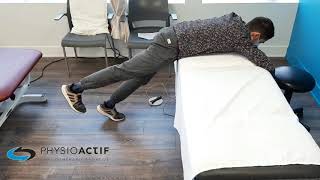
- Symptoms worsen with lumbar extension, when the lower back arches
The following positions and movements may increase pain in some people. Their effect varies depending on your situation.
When a Hunchback Worsens the Pain
The following activities may become uncomfortable:
- Sitting for a long time.
- Driving for a long time.
- Lean over.
- Put on socks, pants, underwear, or shoes.
Sneezing can also make back pain worse, though it does not, on its own, indicate a preferred movement. Talk to a healthcare professional about this.
When a Hollow Back Worsens the Pain
Pain may be exacerbated by one or more of the following:
- Walk for a long time. Some people find walking slowly more uncomfortable than walking quickly; adjust your pace based on how you feel.
- Standing for long periods of time, such as at the grocery store, while cooking, while waiting in line, or during a show.
- Lie on your stomach or on your back with your legs extended.
The same person may experience pain whether their back is rounded or arched. One position may be more uncomfortable than the other. The evaluation focuses on your actual responses to movement.
What symptoms of lower back pain require urgent medical attention?
Lower back pain accompanied by a new onset of bladder incontinence, loss of sensation around the genitals, or certain leg symptoms requires urgent evaluation.
Go to the emergency room immediately if you have any of the following symptoms:
- Severe weakness or paralysis of one or both legs
- Significant or even complete loss of sensation in one or both legs
- Recent loss of balance when walking
- Significant and new difficulty coordinating your movements
- New difficulties urinating or controlling your urine or bowel movements
- Loss of sensation around the genitals or anus, especially when wiping after a bowel movement
- Pain, tingling, weakness, or numbness in both legs.
- New changes in sensations during sexual intercourse, erection, or orgasm.
- Chest pain associated with back pain.
- Back pain that begins after a serious accident.
Also seek urgent medical advice if you feel hot, cold, have chills, or experience general discomfort along with your back pain. Severe pain that starts suddenly, or pain that worsens rapidly, also warrants medical attention. Be sure to check the list of warning signs provided by the NHS, the UK’s public health service.
In a study of 1,172 people seeking primary care for recent low back pain, 0.9% were diagnosed with a serious spinal condition. This figure does not reflect the frequency of warning signs: 80.4% had at least one such sign. A warning sign warrants evaluation but does not, on its own, confirm a serious condition.14 In follow-up studies, pain decreases significantly on average, though it does not always disappear completely. This average trend should not delay seeking medical attention if a warning sign is present.2
What are the causes of lower back pain?
Low back pain may have a specific cause, but an evaluation often fails to identify a single cause that explains the pain.
Changes in activity or habits may accompany its onset. The following examples are meant to help you understand your situation; they do not indicate a lesion:
- An activity that takes longer or is more strenuous than usual: seasonal house cleaning, gardening while bent over for an entire weekend, or a very long car trip.
- Decreased physical activity. Low levels of physical activity are among the factors associated with back pain, though they do not account for all cases.
- A new job, a new sport, or a new activity that works your back in a new way
How is lower back pain diagnosed?
The healthcare professional evaluates lower back pain by reviewing your symptoms and examining your range of motion, strength, and sensation. An X-ray or an MRI is generally not necessary right away. An imaging test may be indicated if a serious condition is suspected, if neurological symptoms are severe or worsening, or if the results could change the course of treatment. Persistent pain alone is not sufficient to warrant an imaging test.15, 1, 16
When to consult a physiotherapist for lower back pain?
A physical therapy appointment for lower back pain can help if the pain limits your activities, persists, or recurs frequently. The urgent symptoms described above require an appropriate medical evaluation first.
In Quebec, you can see a physical therapist directly at a private clinic without first seeing a doctor. However, your insurance provider may require a prescription for reimbursement. The physical therapist will refer you to a doctor if your condition warrants it. The OPPQ specifies the procedures for access.
What are the physiotherapy treatments for lower back pain?
Physical therapy treats lower back pain with tailored exercises, advice on your daily activities, and—depending on your needs—manual techniques to relieve pain and improve mobility.
Your physical therapist will begin by assessing the following:
- The movements of your spine—all the vertebrae and discs in your back
- How your nerves respond to certain movements. Nerves carry messages between the body, the brain, and the spinal cord. This nerve cord, located within the spine, transmits messages between the brain and the body, among other functions.
- Your usual positions during activities
- How you move during activities that are difficult for you
- Your muscle strength and your ability to control the movements of your back
10 Quick Tips to Understand Your Pain
One tip a day for 10 days to help you better understand your pain. About a 2-minute read.
Treatment may include the following:
- Manual techniques. Mobilization involves movements applied to the joints; manipulation involves a brief thrust. For chronic low back pain, these techniques have a similar effect on pain as other recommended treatments and offer a slight benefit in terms of functional ability.17The NICE guidelines recommend them as part of a comprehensive care plan that includes exercises. Nerve mobilizations use body movements to alter nerve glide and tension. In adults with low back pain and nerve-related leg pain, a meta-analysis of 20 trials found a reduction in pain and activity limitations compared to care without these mobilizations. The studies lasted a few weeks. Their results vary widely, and several have methodological issues, which reduce the certainty of the findings. Review of nerve mobilizations.
- These are exercises you can also do at home. Your physical therapist can adjust their difficulty and duration based on how you respond, with a progression tailored to your situation. For chronic low back pain, exercise reduces pain and improves functional ability on average compared to no treatment, standard care, or a sham treatment. In this Cochrane review of clinical trials, the reduction in pain reached the threshold considered clinically significant; the improvement in functional ability was smaller.18
- Adjusting your activities. Your physical therapist will help you choose the duration, frequency, and intensity of your daily activities and leisure pursuits so you can gradually resume them.
- Tips on positions and movements. Your physical therapist will help you vary your positions and find comfortable ways to perform your daily tasks.
What to do at home for lower back pain?
- Will mobilize the joints in your back and your nerves to reduce pain and improve movement - Will provide you with specific exercises to do at home to address the root cause of the problem, following a progression tailored to your condition - Will teach you how to properly balance your daily activities and leisure pursuits to optimize your recovery - Will provide advice on your posture and movement habits Among these at-home exercises, we often teach a psoas stretch exercise when this hip flexor is taut.Home care for lower back pain focuses on continuing activities that don’t cause pain and gradually resuming movements that are difficult. Temporarily cut back on activities that cause too much pain, then gradually try them again. Prolonged inactivity can lead to stiffness. For recent pain, studies show that bed rest results in slightly more pain and a poorer return to activities than advice to stay active.5
For some people, movement in a certain direction provides relief. Exercises selected based on this preference can reduce pain. A recent review found, in particular, that the McKenzie approach is beneficial for people with chronic low back pain who have a directional preference, when care is provided by therapists trained in this method.6, 19
How can I try out more comfortable positions?
The following tips are suggestions that you should adapt to your own response. Stick with the options that provide relief, and stop doing those that make the pain worse or cause it to travel further down your leg. Ask for advice if you're unsure.
If a rounded back makes your symptoms worse, limit long periods of sitting without moving. Get up regularly and try the following options:
- While sitting, try to straighten your lower back slightly. A rolled-up towel can serve as support if this position provides relief.
- Go for walks often, for as long as feels comfortable. Running may also be manageable for some people; adjust the duration based on your symptoms.
- In the car, sit well back in the seat and tilt the backrest slightly backward. Move the seat slightly closer to the steering wheel.
- Try shifting your hips back slightly as you lean forward, if that feels more comfortable.
- Try lying on your stomach or back for a few minutes with your legs extended. Stay in this position only if it relieves your symptoms.
If the hollow back makes your symptoms worse, try the following options:
- Limit the amount of time you spend standing still; sit down from time to time until the pain subsides.
- If you're standing still, put one foot in front of the other and gently shift your weight back and forth.
- When cooking, try placing one foot on a small, stable surface, such as the bottom of the cabinet in front of you.
- Try lying on your side for a few minutes with a pillow between your knees. Stay in this position if it helps relieve your symptoms.
If you don't see any improvement after a few weeks, see a physical therapist. Don't wait that long if you notice any warning signs.
If you run, check out our article on getting back into running to tailor your training plan.
How does lower back pain progress?
Lower back pain tends to improve, on average, especially during the first few weeks, but its progression varies from person to person.
- Whether the pain is recent or persistent, it tends to decrease the most, on average, during the first six weeks of follow-up. Improvement is slower after that; some people continue to experience pain for months. There is no set timeline for recovery.2
- In a recent review of 15 studies on low back pain, pain decreased by an average of about 58% during the first month. The improvement continued for up to about three months. Other data also show an improvement in persistent low back pain, with more residual pain on average.20, 2
Where can I learn more about lower back pain?
The “Parle-moi de santé” podcast and our comprehensive guide to back pain explain lower back pain and ways to manage it.
Alexis Gougeon hosts the podcast “Tell Me About Health”. In Episode 7, released in October 2020, he interviews physical therapist Marc-André Sarrazin to discuss lower back pain.
Episode 7: Lower Back Pain
Watch the episode on YouTube.
You can also listen to the episode on its podcast page.
Need professional advice?
Our physical therapists can assess your condition and provide you with a personalized treatment plan.
Make an appointmentSources
Links open in a new tab.
- Oliveira CB, Maher CG, Pinto RZ, Traeger AC, Lin CC, Chenot JF, et al. Clinical practice guidelines for the management of nonspecific low back pain in primary care: an updated overview. Eur Spine J. 2018;27(11):2791-2803. (Back to sections: 1, 2)
- da C Menezes Costa L, Maher CG, Hancock MJ, McAuley JH, Herbert RD, Costa LO. The prognosis of acute and persistent low back pain: a meta-analysis. CMAJ. 2012;184(11):E613-24. (Back to sections: 1, 2, 3, 4)
- Itz CJ, Geurts JW, van Kleef M, Nelemans P. Clinical course of nonspecific low back pain: a systematic review of prospective cohort studies conducted in primary care. Eur J Pain. 2013;17(1):5-15. (Back to section: 1)
- Hoy D, Bain C, Williams G, March L, Brooks P, Blyth F, et al. A systematic review of the global prevalence of low back pain. Arthritis & Rheumatism. 2012;64(6):2028-2037. (Back to section: 1)
- Hagen KB, Hilde G, Jamtvedt G, Winnem M. Bed rest for acute low back pain and sciatica. Cochrane Database of Systematic Reviews. 2004. (Back to sections: 1, 2)
- Hennemann V, Ziegelmann PK, Marcolino MAZ, Duncan BB. The McKenzie Method delivered by credentialed therapists for chronic low back pain with directional preference: a systematic review with meta-analysis. Journal of Manual & Manipulative Therapy. 2024;33(2):96-111. (Back to sections: 1, 2)
- Zhong M, Liu JT, Jiang H, Mo W, Yu PF, Li XC, et al. Incidence of Spontaneous Resorption of Lumbar Disc Herniation: A Meta-Analysis. Pain Physician. 2017;20(1):E45-E52. (Back to section: 1)
- Rashed S, Vassiliou A, Starup-Hansen J, Tsang K. Systematic review and meta-analysis of predictive factors for spontaneous regression in lumbar disc herniation. Journal of Neurosurgery: Spine. 2023;39(4):471-478. (Back to section: 1)
- Chiu CC, Chuang TY, Chang KH, Wu CH, Lin PW, Hsu WY. The probability of spontaneous regression of lumbar herniated discs: a systematic review. Clin Rehabil. 2015;29(2):184-95. (Back to section 1)
- Brinjikji W, Luetmer PH, Comstock B, Bresnahan BW, Chen LE, Deyo RA, et al. Systematic literature review of imaging features of spinal degeneration in asymptomatic populations. AJNR Am J Neuroradiol. 2015;36(4):811-6. (Back to section: 1)
- Han CS, Maher CG, Steffens D, Diwan A, Magnussen J, Hancock EC, et al. Some magnetic resonance imaging findings may predict future low back pain and disability: a systematic review. Journal of Physiotherapy. 2023;69(2):79-92. (Back to section: 1)
- Steffens D, Hancock MJ, Maher CG, Williams C, Jensen TS, Latimer J. Does magnetic resonance imaging predict future low back pain? A systematic review. European Journal of Pain. 2013;18(6):755-765. (Back to section: 1)
- Kasch R, Truthmann J, Hancock MJ, Maher CG, Otto M, Nell C, et al. Association of Lumbar MRI Findings with Current and Future Back Pain in a Population-Based Cohort Study. Spine (Phila Pa 1976). 2022;47(3):201-211. (Back to section: 1)
- Henschke N, Maher CG, Refshauge KM, Herbert RD, Cumming RG, Bleasel J, et al. Prevalence of and screening for serious spinal pathology in patients presenting to primary care settings with acute low back pain. Arthritis & Rheumatism. 2009;60(10):3072-3080. (Back to section: 1)
- Chou R, Fu R, Carrino JA, Deyo RA. Imaging strategies for low-back pain: systematic review and meta-analysis. Lancet. 2009;373(9662):463-72. (Back to section: 1)
- Chou R, Qaseem A, Snow V, Casey D, Cross JT, Shekelle P, et al. Diagnosis and treatment of low back pain: a joint clinical practice guideline from the American College of Physicians and the American Pain Society. Ann Intern Med. 2007;147(7):478-91. (Back to section: 1)
- Rubinstein SM, de Zoete A, van Middelkoop M, Assendelft WJJ, de Boer MR, van Tulder MW. Benefits and harms of spinal manipulative therapy for the treatment of chronic low back pain: systematic review and meta-analysis of randomized controlled trials. BMJ. 2019;364:l689. (Back to section: 1)
- Hayden JA, Ellis J, Ogilvie R, Malmivaara A, van Tulder MW. Exercise therapy for chronic low back pain. Cochrane Database Syst Rev. 2021;9(9):CD009790. (Back to section: 1)
- Long A, Donelson R, Fung T. Does it matter which exercise? A randomized controlled trial of exercise for low back pain. Spine (Phila Pa 1976). 2004;29(23):2593-602. (Back to section: 1)
- Pengel LH, Herbert RD, Maher CG, Refshauge KM. Acute low back pain: systematic review of its prognosis. BMJ. 2003;327(7410):323. (Back to section: 1)
- Alexander CE, Weisbrod LJ, Varacallo MA. Lumbosacral Radiculopathy. [Updated February 27, 2024]. In: StatPearls [Internet]. Treasure Island (FL): StatPearls Publishing; 2026.
- Lin LH, Lin TY, Chang KV, Wu WT, Özçakar L. Neural Mobilization for Reducing Pain and Disability in Patients with Lumbar Radiculopathy: A Systematic Review and Meta-Analysis. Life (Basel). 2023;13(12).
- Low back pain.
- nhs.uk. Back Pain. 2017.
- NICE. Recommendations | Low Back Pain and Sciatica in People Over 16: Assessment and Management | Guidance | NICE.
- OPPQ. How does it work?
- Maigne, R. Clinical Semiology of Minor Intervertebral Disorders. Annals of Physical Medicine. 1972;15:275-92.
Other conditions

Hip osteoarthritis is the normal wear and tear of the hip joint. It is often said that osteoarthritis is the wear and tear of the cartilage between our bones. That is true, but it involves more than just the cartilage. Cartilage is a tissue that acts as a cushion between the surfaces of our bones and allows our joints to glide smoothly and move fluidly.
This is normal wear and tear of the knee joint. It’s often said that osteoarthritis is the wearing down of the cartilage between our bones. That’s true, but it’s more than just the cartilage. Cartilage is a tissue that acts as a cushion between the surfaces of our bones and allows our joints to glide smoothly and move fluidly.
It is an inflammation of the subacromial bursa in the shoulder joint.
A bursa is a small, thin sac filled with fluid that is found in many of the body's joints. This small sac acts as a cushion within the joint and lubricates the structures that are subject to increased friction.
It is a tissue that surrounds the shoulder and helps keep the shoulder bone in place within the joint. The capsule helps keep the joint stable.
Neck pain is a general term used to describe pain in the neck that has no specific cause, such as an accident or a sudden awkward movement. Neck pain is therefore synonymous with “my neck hurts, and nothing in particular happened.”
In both types of injury, pain is felt in the neck and then radiates into the arm, or vice versa.
Make an appointment now
We offer a three-pronged quality assurance approach: optimized treatment time, a second opinion from a physical therapist, and ongoing expertise to ensure effective care tailored to your needs.

Customer satisfaction is our top priority
At Physioactif, excellence guides everything we do, but our patients are the best ones to tell you about it. Take a look at their verified reviews to get a real sense of their experience.






Discover our physical therapy clinics
We have locations in several areas to better serve you.
Blainville
190 Bas-de-Sainte-Thérèse Road, Suite 110,
Blainville, Quebec
J7B 1A7
Located in Blainville, near Rosemère, the Physioactif clinic is easily accessible to residents of the area and the surrounding communities
Boucherville
690 Rue de Montbrun, Suite S,
Boucherville, Quebec
J4B 8H2
Located in Boucherville, the Physioactif clinic is easily accessible to people in the area
Laval
3224 Jean-Béraud Ave., Suite 220, Laval,
QC H7T 2S4
Located in Chomedey, in the heart of Laval, the Physioactif clinic is easily accessible to people in the area
Montreal
8801 Lajeunesse Street,
Montreal,
QC H2M 1R8
Located in Ahuntsic, near Villeray, the Physioactif clinic is easily accessible to residents of both neighborhoods
Saint-Eustache
180 25th Avenue, Suite
201 Saint-Eustache
QC J7P 2V2
Located in Saint-Eustache, the Physioactif clinic is easily accessible to residents of the area and the surrounding communities
Vaudreuil
21 Cité-des-Jeunes Boulevard, Suite 240,
Vaudreuil-Dorion, Quebec
J7V 0N3
Located in Vaudreuil-Dorion, the Physioactif clinic is easily accessible to people in the area
Make an appointment now