
Quels sont les types de physiothérapie?
Les types de physiothérapie comprennent notamment la physiothérapie musculosquelettique, la physiothérapie sportive, la physiothérapie en santé des femmes et la physiothérapie neurologique.
La physiothérapie neurologique
La physiothérapie neurologique s'occupe des conditions qui touchent le système nerveux, c'est-à-dire le cerveau, la moelle épinière et les nerfs qui font l'aller-retour entre le corps et le cerveau: ceux qui commandent les muscles et ceux qui rapportent les sensations, comme la position d'un pied ou le contact du sol. On y suit des personnes qui récupèrent d'un accident vasculaire cérébral, c'est-à-dire une interruption de la circulation du sang dans une partie du cerveau, des personnes qui vivent avec la maladie de Parkinson ou la sclérose en plaques, et des personnes qui ont subi une lésion de la moelle épinière. Les objectifs sont très concrets: remarcher, monter une marche, tendre le bras pour attraper un objet, garder l'équilibre en tournant la tête.
Une étude qui rassemble et compare tous les essais publiés sur une même question, ce qu'on appelle une revue systématique avec méta-analyse, s'est penchée sur la physiothérapie après un accident vasculaire cérébral. Elle conclut qu'il existe des preuves solides en faveur d'un entraînement intensif, très répété et orienté vers des tâches concrètes, et cela à toutes les phases de la récupération. Elle ajoute une nuance qui change la façon de travailler: les gains se limitent surtout aux fonctions et aux activités réellement entraînées1. Ce qui s'exerce progresse le plus. Le reste peut s'améliorer aussi, mais on ne peut pas compter dessus, alors on choisit avec la personne les gestes qui valent la peine d'être travaillés: tenir une tasse, se retourner dans le lit, marcher jusqu'à la boîte aux lettres.
10 mini-trucs pour comprendre votre douleur
Un conseil par jour pendant 10 jours pour mieux comprendre votre douleur. Environ 2 minutes de lecture.
Concrètement, le suivi fait donc une grande place à ce que la personne pratique elle-même, avec des répétitions et une progression, et ce travail se poursuit entre les rendez-vous. D'autres gestes gardent leur place dans le plan, comme l'installation d'un bras affaibli, mais ils accompagnent la pratique au lieu de la remplacer. Personne n'a à se ranger seul dans cette catégorie. C'est l'évaluation qui détermine quelles fonctions sont atteintes, lesquelles s'entraînent en premier et à quelle intensité, et qui vérifie en cours de route si le plan donne ce qu'on espérait. Pour en savoir plus, consultez notre page sur la physiothérapie neurologique.
La physiothérapie vestibulaire
La physiothérapie vestibulaire s'occupe des vertiges, des étourdissements et des pertes d'équilibre qui viennent du système vestibulaire, l'ensemble des petites structures de l'oreille interne qui renseignent le cerveau sur la position et les mouvements de la tête. Un des motifs qu'on y voit est le vertige positionnel paroxystique bénin, décrit dans un guide de pratique américain comme un trouble de l'oreille interne marqué par des épisodes répétés de vertige déclenchés par un changement de position, par exemple quand vous vous couchez ou que vous vous relevez2. Une atteinte d'un seul côté du système vestibulaire, quelle qu'en soit la cause, amène elle aussi des vertiges et un déséquilibre, et c'est la situation sur laquelle porte la revue Cochrane citée ci-dessous.
Une revue Cochrane, c'est-à-dire une synthèse indépendante qui rassemble et pèse les essais publiés sur une question, a examiné la rééducation vestibulaire quand un seul côté est atteint. Elle conclut à des preuves modérées à solides que cette rééducation est sûre et efficace, et à des preuves modérées qu'elle fait disparaître les symptômes et améliore le fonctionnement à moyen terme. Elle ajoute deux précisions. Pour le vertige positionnel paroxystique bénin en particulier, les manœuvres de repositionnement, c'est-à-dire une suite de positions de la tête et du corps que le clinicien vous fait prendre dans un ordre précis, guérissent mieux à court terme que les exercices seuls, et la combinaison des deux est efficace pour la récupération fonctionnelle à plus long terme. Et il n'y a pas assez de données pour départager les différentes formes de rééducation entre elles3.
Le vertige n'est donc pas une seule chose, et le guide de pratique recommande justement de distinguer le vertige positionnel paroxystique bénin des autres causes de déséquilibre, d'étourdissement et de vertige. Il recommande fortement de reconnaître la forme qui touche le canal postérieur quand une manœuvre précise, où l'on couche la personne avec la tête tournée, déclenche à la fois le vertige et un mouvement caractéristique des yeux. Le canal postérieur est un des petits tubes en demi-cercle de l'oreille interne qui détectent les mouvements de la tête. L’évaluation aide donc à choisir les soins selon la cause des vertiges. Notre page sur la physiothérapie vestibulaire détaille la démarche.
La physiothérapie du plancher pelvien et la santé des femmes
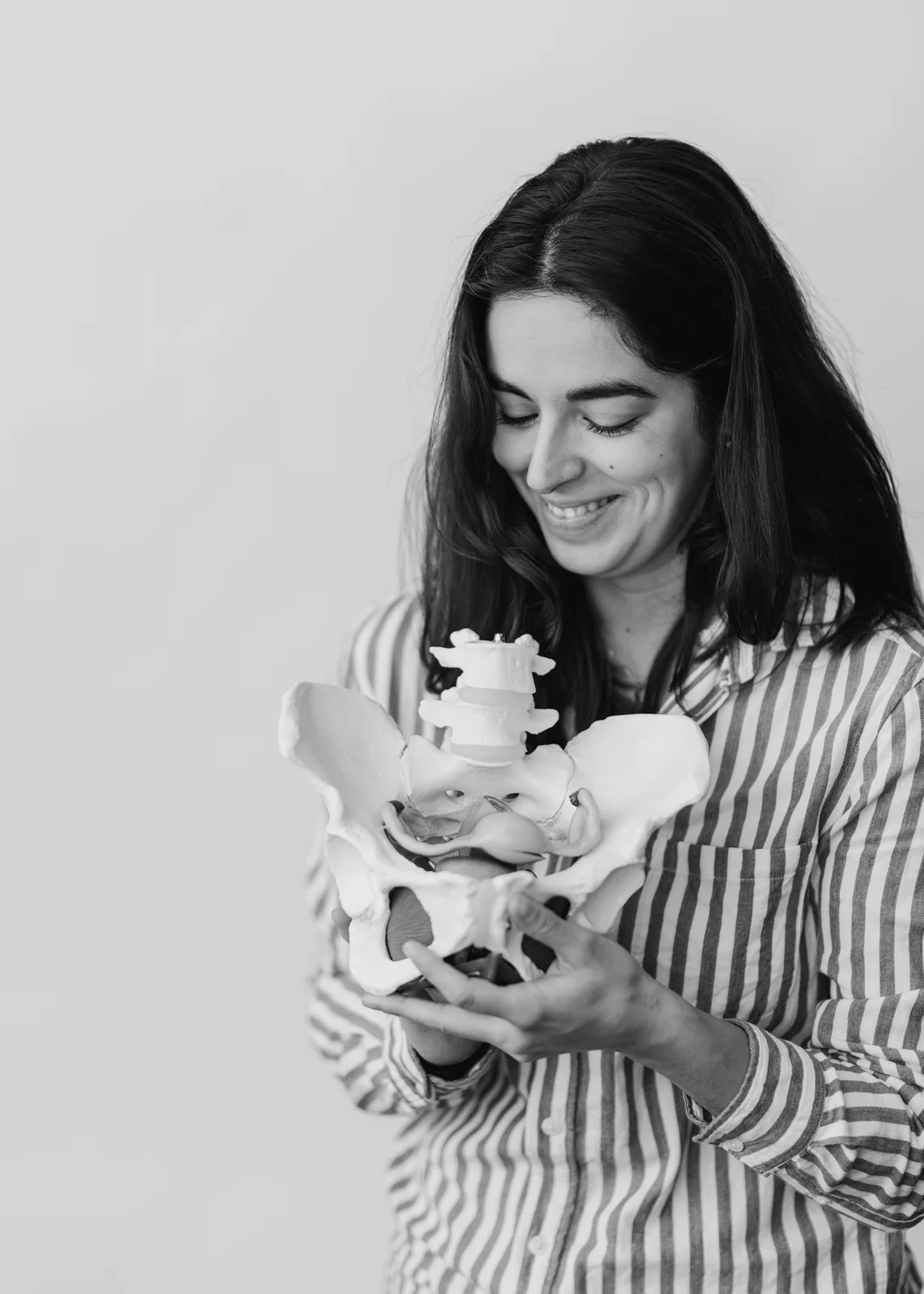
La physiothérapie du plancher pelvien traite notamment les fuites urinaires, les douleurs pelviennes et les descentes d’organes, et elle peut accompagner la grossesse et la période après l’accouchement. Le plancher pelvien est le groupe de muscles tendu au fond du bassin, comme un hamac, qui soutient la vessie, l’utérus et le rectum et qui participe à la continence, c’est-à-dire à la capacité de retenir l’urine et les selles. Parmi les motifs de consultation se trouve l’incontinence urinaire d’effort, ces fuites qui surviennent en toussant, en riant, en éternuant ou en sautant. L’incontinence d’effort peut survenir pendant les gestes du quotidien et les activités sportives.
Une revue Cochrane, c'est-à-dire une synthèse indépendante qui rassemble et pèse les essais publiés sur une question, s'est penchée sur l'entraînement des muscles du plancher pelvien chez les femmes qui ont des fuites urinaires. Ses auteurs écrivent qu'on peut être confiant que cet entraînement peut guérir ou améliorer les symptômes de l'incontinence d'effort et des autres formes d'incontinence, qu'il peut réduire le nombre d'épisodes de fuite et la quantité de perte mesurée en clinique, et que les effets indésirables rapportés ont été rares et mineurs. Ils précisent aussi les limites: la plupart des résultats ont été jugés de qualité modérée pour des raisons de méthode, et l'efficacité à long terme demande encore des travaux4. C'est un traitement actif: il repose sur des contractions apprises, corrigées, puis répétées à la maison, un peu comme n'importe quel programme de renforcement, sauf que les muscles en cause ne se voient pas et qu'il faut donc apprendre à les sentir.
Une fuite en toussant, une lourdeur dans le bassin et une douleur pendant les relations ne se traitent pas de la même façon, et elles peuvent aussi aller ensemble chez la même personne. C'est l'évaluation qui démêle ce qui se passe, avant de commencer quoi que ce soit, et personne n'a à trancher seul avant d'appeler. Trois pages détaillent ces suivis: la physiothérapie du plancher pelvien, la physiothérapie prénatale et la physiothérapie postnatale.
La physiothérapie gériatrique
La physiothérapie gériatrique s'adresse aux personnes âgées et vise à garder l'autonomie: se lever d'une chaise sans aide, marcher dehors l'hiver, monter l'escalier, porter une épicerie. Elle intervient après une fracture de la hanche, autour de l'arthrose, quand la force et l'équilibre déclinent, et pour prévenir les chutes. Sur ce dernier point, la revue Cochrane citée plus bas rappelle dans sa mise en contexte qu'au moins une personne sur trois de plus de 65 ans vivant à domicile chute chaque année5.
C'est un des domaines où la recherche est la plus claire. Cette revue Cochrane, c'est-à-dire une synthèse indépendante qui rassemble et pèse les essais publiés sur une question, conclut avec un niveau de certitude élevé que les programmes d'exercice réduisent la fréquence des chutes et le nombre de personnes qui chutent, chez les aînés qui vivent à domicile. Elle précise lesquels. Les programmes qui réduisent les chutes reposent d'abord sur des exercices d'équilibre et de fonction, c'est-à-dire des exercices où l'on travaille à tenir son équilibre et à refaire les gestes du quotidien, se lever, se pencher, marcher en changeant de direction. Ceux qui combinent ce travail et du renforcement réduisent probablement la fréquence des chutes d'environ 34 pour cent, avec un niveau de certitude modéré. La même revue dit aussi ce qu'elle ne sait pas: l'effet du renforcement seul, sans travail d'équilibre, de la danse ou de la marche sur la fréquence des chutes reste incertain.
Cette précision compte, parce que marcher plus est l'idée qui vient spontanément, et ce n'est pas ce que la revue soutient. Quel exercice, à quelle difficulté, avec quelle progression: cela se décide à partir d'une évaluation de la force, de l'équilibre et de la marche, pas à partir d'une catégorie choisie d'avance. Voyez notre page sur la physiothérapie gériatrique.
La physiothérapie pédiatrique
La physiothérapie pédiatrique suit les bébés et les enfants dont le développement du mouvement ne suit pas le cours attendu. On y voit un nourrisson qui garde toujours la tête tournée du même côté, un bébé qui tarde à s'asseoir ou à ramper, un enfant qui marche sur la pointe des pieds, et des enfants qui vivent avec la paralysie cérébrale. Ce dernier terme désigne un trouble durable du mouvement et de la posture lié à une atteinte du cerveau en développement; sa définition et son classement de référence ont été établis par un groupe international en 20066.
Ce que la recherche montre ici porte surtout sur le moment où l'on agit. Une revue publiée dans JAMA Pediatrics fait le point sur le diagnostic de la paralysie cérébrale et rapporte qu'avant l'âge de cinq mois corrigés, c'est-à-dire l'âge compté à partir de la date d'accouchement prévue chez un bébé né avant terme, certains examens standardisés repèrent le risque avec une sensibilité élevée. La sensibilité est la proportion des enfants qui ont une paralysie cérébrale que le test repère correctement. Dans les études portant surtout sur des nourrissons à risque élevé, elle atteint 98 pour cent pour l’évaluation des mouvements généraux, qui repose sur l’observation filmée des mouvements spontanés du bébé. Ce résultat ne correspond pas à la probabilité qu’un enfant ait cette condition après un test positif. Le diagnostic combine l’histoire de l’enfant, l’examen clinique et d’autres examens. Les auteurs concluent que les cliniciens devraient comprendre l'importance d'orienter rapidement l'enfant vers une intervention précoce adaptée au diagnostic, afin de profiter de la plasticité du cerveau, sa capacité à se réorganiser et à créer de nouvelles connexions, de prévenir les complications qui s'ajoutent avec le temps et de soutenir le bien-être des proches7.
Un parent n'a pas à trancher lui-même si un retard est passager ou non, et c'est une bonne nouvelle: l'évaluation existe pour ça, et elle est le point de départ. Le suivi fait ensuite une grande place au jeu et aux mouvements que l'enfant produit lui-même, et il comprend aussi, selon la condition, des étirements et un travail fait avec les mains du thérapeute. Notre page sur la physiothérapie pédiatrique décrit ce suivi.
La physiothérapie cardiovasculaire
La physiothérapie cardiovasculaire accompagne les personnes qui ont un problème de cœur ou de circulation: après un infarctus, c'est-à-dire une crise cardiaque, après un pontage, une opération qui permet au sang de contourner une artère du cœur bloquée, ou après la pose d’un petit tube qui garde une artère ouverte, avec de l'insuffisance cardiaque, c'est-à-dire un cœur qui n'arrive plus à pomper assez de sang pour les besoins du corps, ou avec une maladie des artères des jambes. Le travail consiste à réentraîner l'effort de façon graduelle et encadrée, en surveillant les réactions du cœur, pour que monter un escalier ou reprendre le travail redevienne possible sans crainte.
Une revue Cochrane, c'est-à-dire une synthèse indépendante qui rassemble et pèse les essais publiés sur une question, a évalué la réadaptation cardiaque basée sur l'exercice chez des personnes atteintes de maladie coronarienne, c'est-à-dire une maladie des artères qui nourrissent le cœur lui-même. La version de 2016 concluait déjà à un bénéfice8, et sa mise à jour de 2021 est plus précise: elle rapporte une réduction du risque d'infarctus, une probable petite réduction de la mortalité toutes causes confondues, une forte réduction des hospitalisations toutes causes confondues, et une meilleure qualité de vie liée à la santé jusqu'à douze mois. Sur un suivi plus long, les bénéfices pourraient inclure une baisse de la mortalité d'origine cardiovasculaire et des infarctus9. Les auteurs restent explicites sur ce qui manque: il faut encore des essais bien conduits, plus proches de la pratique courante, avec un suivi plus long.
10 mini-trucs pour comprendre votre douleur
Un conseil par jour pendant 10 jours pour mieux comprendre votre douleur. Environ 2 minutes de lecture.
Ce type de suivi se fait en lien avec le médecin traitant, et il commence par une évaluation qui établit le niveau d'effort sécuritaire pour vous. Ce n'est pas au patient de décider seul qu'il relève de ce champ, et ce n'est pas non plus une question de volonté. Chez Physioactif, on tient à ce que ce réentraînement soit encadré, parce que c'est ainsi qu'on peut ajuster l'effort et réagir si le cœur répond mal. Notre page sur la physiothérapie cardiovasculaire explique le déroulement.
La physiothérapie respiratoire
La physiothérapie respiratoire s'adresse aux personnes dont le souffle limite la vie de tous les jours. La condition la plus étudiée est la maladie pulmonaire obstructive chronique, aussi appelée MPOC. Cette maladie durable des poumons gêne le passage de l’air et rend l’expiration difficile. On voit aussi de l'asthme mal contrôlé, la fibrose kystique, et les suites d'une chirurgie ou d'une pneumonie. Le suivi combine un réentraînement à l'effort, un travail sur la respiration et sur le dégagement des sécrétions, et l'apprentissage de façons de doser ses activités.
Le volet le plus étudié est l'entraînement à l'effort encadré. Dans la revue ci-dessous, les programmes de réadaptation pulmonaire étudiés comprenaient au moins quatre semaines d’entraînement à l’effort, avec ou sans volet éducatif ou psychologique. Le dégagement des sécrétions est un traitement à part, utile surtout quand les sécrétions sont abondantes. Cette revue Cochrane, c'est-à-dire une synthèse indépendante qui rassemble et pèse les essais publiés sur une question, a examiné cette réadaptation pulmonaire dans la MPOC. Ses auteurs concluent qu'elle soulage l'essoufflement et la fatigue, améliore le fonctionnement émotionnel et renforce le sentiment de contrôle sur sa maladie, et que ces améliorations sont d'ampleur moyenne à grande et cliniquement significatives. Du côté de la capacité à l'effort, les personnes qui suivent le programme marchent en moyenne environ 44 mètres de plus au test de marche de six minutes que celles qui reçoivent les soins habituels, un écart qui dépasse le seuil considéré comme significatif pour le patient10. Les auteurs vont jusqu'à écrire qu'à leur avis, d'autres essais comparant la réadaptation pulmonaire aux soins habituels ne sont plus nécessaires.
Le cœur de ce suivi est donc l'exercice encadré, pas une technique appliquée sur une personne immobile. Et un essoufflement n'a pas toujours la même explication: c'est l'évaluation, faite en lien avec le médecin quand la situation le demande, qui sert à voir laquelle, plutôt qu'un classement fait à l'avance par la personne elle-même. Notre page sur la physiothérapie respiratoire donne les détails.
La physiothérapie musculosquelettique et sportive
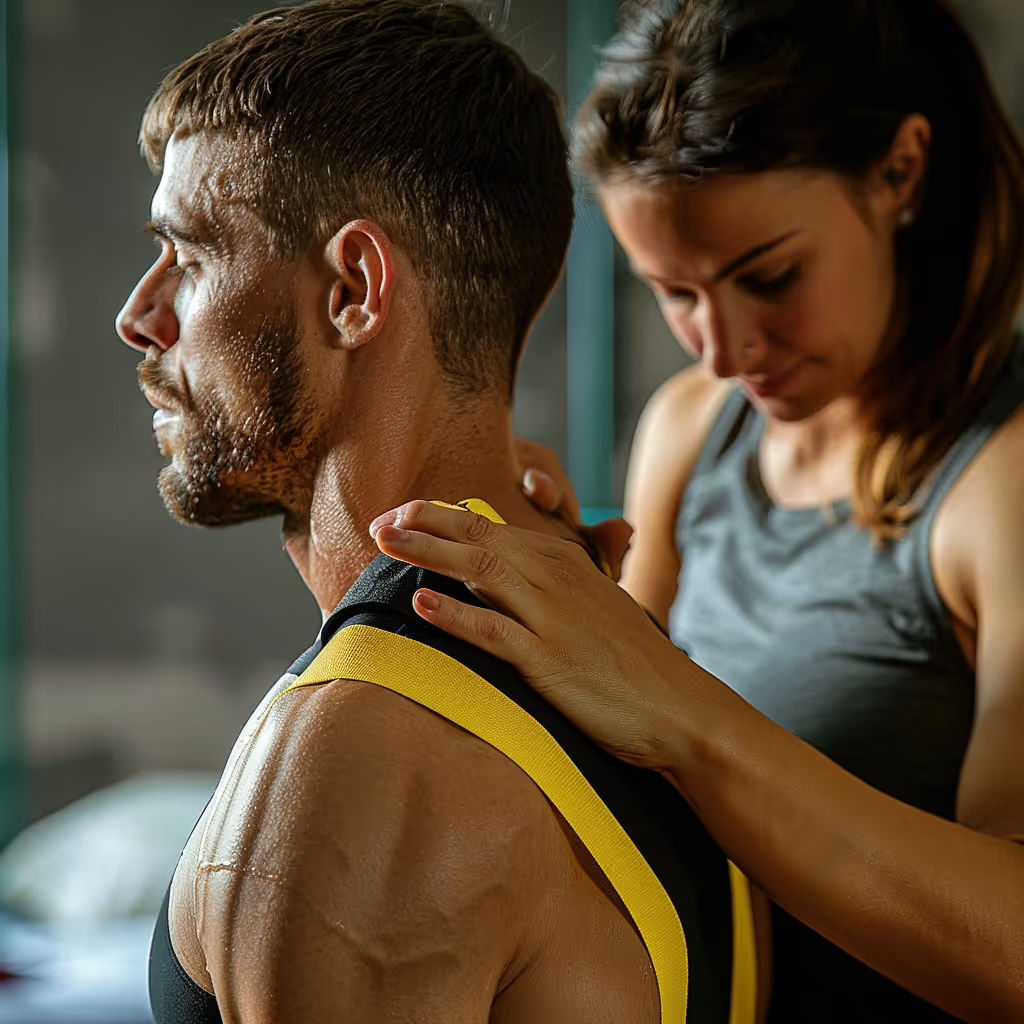
La physiothérapie musculosquelettique traite les problèmes des muscles, des articulations, des tendons et des ligaments, tandis que la physiothérapie sportive adapte ces soins aux exigences du sport. Elle couvre les maux de dos et de cou, les tendinopathies, c'est-à-dire les problèmes de tendon qui font mal et qui limitent l'effort, les entorses, l'arthrose, ainsi que la récupération après une fracture ou une chirurgie. La physiothérapie sportive en est la voisine immédiate: mêmes tissus, mais avec la contrainte de ramener une personne à un geste précis et à une intensité précise, et de la préparer à reprendre sans se blesser de nouveau.
La prise en charge de ce champ est suffisamment documentée pour être encadrée par des guides de pratique. Pour la prothèse totale du genou, c'est-à-dire le remplacement de l'articulation par un implant, l'American Physical Therapy Association a produit un guide de pratique clinique bâti à partir de revues systématiques de la documentation scientifique et clinique, élaboré par un groupe réunissant des physiothérapeutes, un chirurgien orthopédiste, une infirmière et un représentant des patients11. Ce guide porte sur le genou opéré, et non sur l'ensemble des régions du corps: il montre à quoi ressemble une prise en charge appuyée sur les données pour une situation précise, pas une règle valable partout.
Chez Physioactif, l'exercice tient le premier rôle dans ce champ, avec une charge qu'on augmente par étapes, un peu plus chaque semaine, à la mesure de ce que la personne tolère. Les techniques que le thérapeute applique avec ses mains, comme les mobilisations, c'est-à-dire des mouvements qu'il fait faire à l'articulation à votre place, servent à rendre cet exercice possible plutôt qu'à le remplacer.
À l'examen d'une épaule douloureuse, on cherche plusieurs pistes: un tendon sensible à la mise en charge, une capsule raide, c'est-à-dire l'enveloppe qui entoure l'articulation, ou une sensibilité qui se réveille quand on bouge le cou. Ces trouvailles orientent le plan, mais aucune ne prouve à elle seule d'où vient la douleur, et il arrive qu'il y en ait plusieurs à la fois. L’évaluation aide donc à choisir les soins selon les difficultés observées. Notre page sur la physiothérapie sportive détaille le volet sportif de ce champ.
Comment commencer avec Physioactif pour vos besoins en physiothérapie?
Pour commencer avec Physioactif, réservez une évaluation initiale afin que notre équipe évalue vos besoins et propose un suivi adapté.
Chaque domaine de la physiothérapie adapte les soins aux besoins de la personne. Les domaines présentés dans cet article comprennent notamment la physiothérapie musculosquelettique, qui s'occupe des muscles, des articulations, des tendons et des ligaments, la physiothérapie sportive, la physiothérapie en santé des femmes et la physiothérapie neurologique, qui s'occupe des conditions touchant le cerveau, la moelle et les nerfs. Le choix des soins dépend de votre condition, de vos symptômes et de vos objectifs.
Chez Physioactif, notre équipe évalue vos difficultés, vos symptômes et vos objectifs pour proposer un suivi adapté. Au besoin, nous vous orientons vers un collègue de l’équipe ou vers un professionnel externe. Elle offre aussi une physiothérapie adaptée à chaque population, du nourrisson à l’aîné.
Vous hésitez sur les soins qui pourraient vous aider? Commencez par une évaluation. Notre équipe vous guidera vers les soins appropriés. Contactez Physioactif pour réserver votre évaluation.
Selon la condition et l’évaluation, la physiothérapie peut offrir un suivi adapté ou vous orienter vers un autre professionnel.
Besoin d'un avis professionnel?
Nos physiothérapeutes peuvent évaluer votre condition et vous proposer un plan de traitement personnalisé.
Prendre rendez-vousRéférences
Les références de cet article regroupent les revues, les guides et les études qui appuient les renseignements présentés.
Les références s’ouvrent dans un nouvel onglet.
- Veerbeek JM, van Wegen E, van Peppen R, van der Wees PJ, Hendriks E, Rietberg M, et al. What Is the Evidence for Physical Therapy Poststroke? A Systematic Review and Meta-Analysis. PLoS ONE. 2014;9(2):e87987. (Retour au passage : 1)
- Bhattacharyya N, Gubbels SP, Schwartz SR, Edlow JA, El-Kashlan H, Fife T, et al. Clinical Practice Guideline: Benign Paroxysmal Positional Vertigo (Update). Otolaryngol Head Neck Surg. 2017;156(3_suppl):S1-S47. (Retour au passage : 1)
- McDonnell MN, Hillier SL. Vestibular rehabilitation for unilateral peripheral vestibular dysfunction. Cochrane Database Syst Rev. 2015;1(1):CD005397. (Retour au passage : 1)
- Dumoulin C, Cacciari LP, Hay-Smith EJC. Pelvic floor muscle training versus no treatment, or inactive control treatments, for urinary incontinence in women. Cochrane Database Syst Rev. 2018;10(10):CD005654. (Retour au passage : 1)
- Sherrington C, Fairhall NJ, Wallbank GK, Tiedemann A, Michaleff ZA, Howard K, et al. Exercise for preventing falls in older people living in the community. Cochrane Database Syst Rev. 2019;1(1):CD012424. (Retour au passage : 1)
- Rosenbaum P, Paneth N, Leviton A, Goldstein M, Bax M, Damiano D, et al. A report: the definition and classification of cerebral palsy April 2006. Dev Med Child Neurol Suppl. 2007;109:8-14. (Retour au passage : 1)
- Novak I, Morgan C, Adde L, Blackman J, Boyd RN, Brunstrom-Hernandez J, et al. Early, Accurate Diagnosis and Early Intervention in Cerebral Palsy: Advances in Diagnosis and Treatment. JAMA Pediatr. 2017;171(9):897-907. (Retour au passage : 1)
- Anderson L, Thompson DR, Oldridge N, Zwisler AD, Rees K, Martin N, et al. Exercise-based cardiac rehabilitation for coronary heart disease. Cochrane Database Syst Rev. 2016;2016(1):CD001800. (Retour au passage : 1)
- Dibben G, Faulkner J, Oldridge N, Rees K, Thompson DR, Zwisler AD, et al. Exercise-based cardiac rehabilitation for coronary heart disease. Cochrane Database Syst Rev. 2021;11(11):CD001800. (Retour au passage : 1)
- McCarthy B, Casey D, Devane D, Murphy K, Murphy E, Lacasse Y. Pulmonary rehabilitation for chronic obstructive pulmonary disease. Cochrane Database Syst Rev. 2015;2015(2):CD003793. (Retour au passage : 1)
- Jette DU, Hunter SJ, Burkett L, Langham B, Logerstedt DS, Piuzzi NS, et al. Physical Therapist Management of Total Knee Arthroplasty. Physical Therapy. 2020;100(9):1603-1631. (Retour au passage : 1)
- Canadian Physiotherapy Association. Divisions & Assemblies - Canadian Physiotherapy Association.
- Higgs, J., et al. (2008). Clinical Reasoning in the Health Professions (3rd ed.). Elsevier Health Sciences.
- APTA Specialist Certification - Governed by ABPTS. Minimum Requirements for All Specialties.
- Boissonnault, W. G., & Badke, M. B. (2005). Collecting health history information: The accuracy of a patient self-administered questionnaire in an orthopedic outpatient setting. Physical Therapy, 85(6), 531-543.
- CAMPT. FAQ - CAMPT.
- Petty, N. J., & Barnard, K. (2017). Principles of Musculoskeletal Treatment and Management: A Handbook for Therapists (3rd ed.). Churchill Livingstone.
- Desmeules F, Roy JS, MacDermid JC, Champagne F, Hinse O, Woodhouse LJ. Advanced practice physiotherapy in patients with musculoskeletal disorders: a systematic review. BMC Musculoskeletal Disorders. 2012;13(1):107.
- Kisner, C., Colby, L. A., & Borstad, J. (2018). Therapeutic Exercise: Foundations and Techniques (7th ed.). F.A. Davis Company.
- OPPQ. Devenir membre.
La satisfaction de nos clients est notre priorité
À Physioactif, l’excellence guide chaque intervention, mais ce sont nos patients qui en parlent le mieux. Consultez plutôt leurs avis vérifiés pour vous faire une idée concrète de leur expérience.









Découvrez nos cliniques de physiothérapie
Nous sommes présents dans plusieurs emplacements pour mieux vous servir.
Blainville
190 Chem. du Bas-de-Sainte-Thérèse Bureau 110,
Blainville, Quebec
J7B 1A7
Située à Blainville, à proximité de Rosemère, la clinique Physioactif est facilement accessible pour les résidents du secteur et des alentours
Boucherville
690 rue de Montbrun, Local S,
Boucherville, Quebec
J4B 8H2
Établie à Boucherville, la clinique Physioactif est facilement accessible pour les gens du secteur
Laval
3224 Av. Jean-Béraud Bureau 220 Laval,
QC H7T 2S4
Située à Chomedey, au cœur de Laval, la clinique Physioactif est facilement accessible pour les personnes à proximité
Montréal
8801 Rue Lajeunesse,
Montréal,
QC H2M 1R8
Située à Ahuntsic, à proximité de Villeray, la clinique Physioactif est facilement accessible pour les résidents des deux quartiers
Saint-Eustache
180 25e Avenue Bureau
201 Saint-Eustache
QC J7P 2V2
Située à Saint-Eustache, la clinique Physioactif est facilement accessible pour les résidents du secteur et des environs
Vaudreuil
21 Bd de la Cité-des-Jeunes Bureau 240,
Vaudreuil-Dorion, Quebec
J7V 0N3
Établie à Vaudreuil-Dorion, la clinique Physioactif est facilement accessible pour les gens du secteur
Prenez rendez-vous dès maintenant