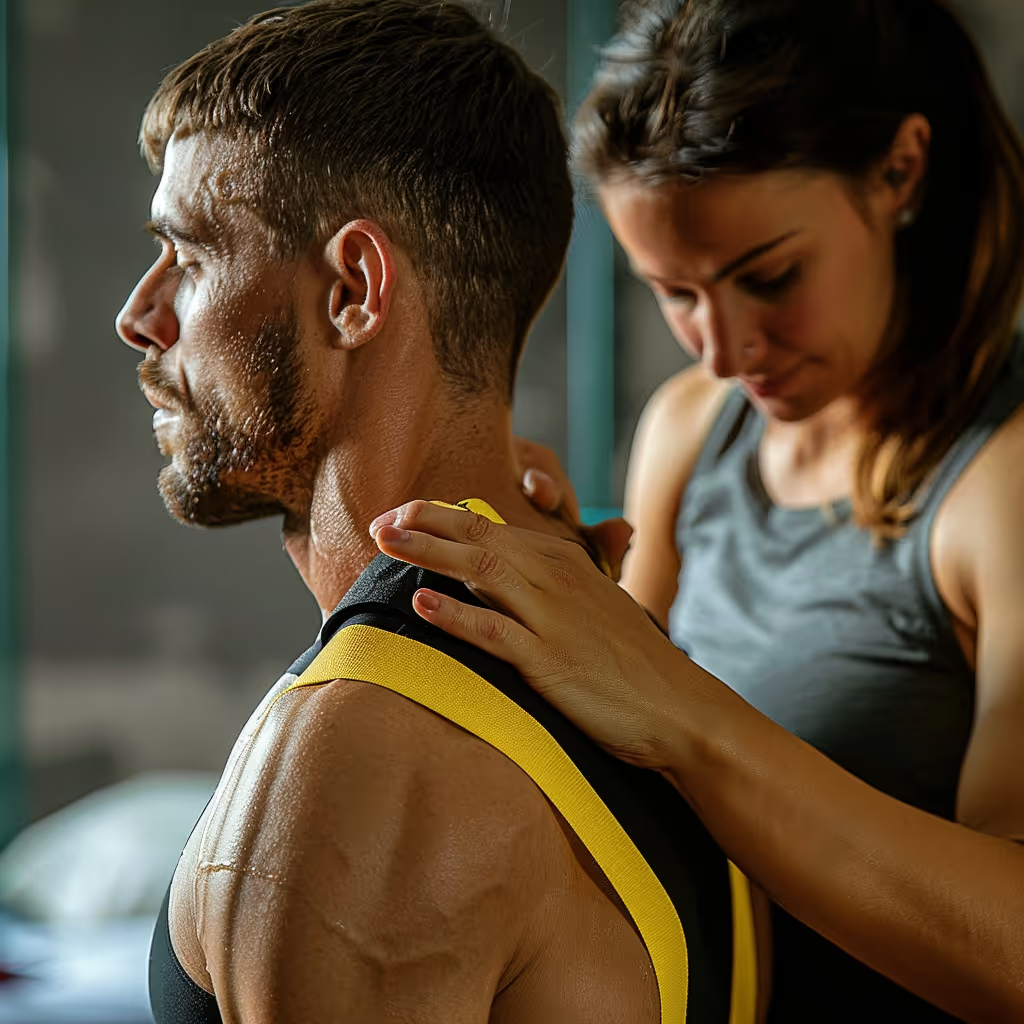
Joint Mobilization: Techniques and Applications in Physiotherapy
.png)
.png)
.png)



As physical therapists specializing in manual therapy, we use joint mobilization to help our patients regain mobility and reduce pain. This passive technique, applied with precision according to established protocols, is an integral part of our treatment plans for various musculoskeletal conditions.
What is joint mobilization?
Joint mobilization is a series of passive movements applied to the joints to improve their flexibility and range of motion. Unlike active exercises, where you move your body yourself, mobilization is performed entirely by your physical therapist while you remain relaxed.
This manual technique aims to restore normal gliding between the articular surfaces and improve the flexibility of the joint capsule and ligaments. It is particularly useful when joint mobility is limited due to trauma, surgery, or a degenerative condition.
Joint mobilization is based on the principle that joints need specific movement to stay healthy. When a joint loses its normal range of motion, it can cause pain and stiffness and affect your daily functioning.
Key Features:
- Passive movements (the physical therapist does all the work)
- Controlled and gradual application based on a grading system
- Tailored to your pain tolerance
- Repetitive and rhythmic movements
- Specifically targets joint restrictions
How does joint mobilization work?
Joint mobilization works through two main mechanisms: a biomechanical effect on joint structures and a neurological effect on pain perception.
Biomechanical effect
Mobilization techniques improve gliding between joint surfaces, a phenomenon known as "arthrokinematics." Every synovial joint (such as the shoulder, knee, or vertebrae) has subtle gliding and rotational movements that enable normal motion. When these micro-movements are lost, the overall range of motion decreases.
Mobilization gradually corrects these misalignments, allowing the joint to regain its full range of motion. It also stretches the joint capsule and ligaments, which may have stiffened during a period of immobility or due to inflammation.
Neurological effect
By manipulating joints and soft tissues, mobilization stimulates specific nerve receptors located in the joint capsule and ligaments. This stimulation sends signals to the nervous system that can:
- Reduce the perception of pain (analgesic effect)
- Decrease reflex muscle tension around the joint
- Improve muscle function
These neurological effects explain why mobilization can relieve pain even before joint range of motion is fully restored.
The Maitland Grading System
Australian physical therapist Geoffrey Maitland developed a five-grade classification system to guide the application of mobilization:
- Grade I: Limited range of motion at the start of the full range of motion (to reduce pain)
- Grade II: Full range of motion in the middle of the available range (to reduce pain)
- Grade III: Full range of motion that involves resistance or muscle spasm (to stretch the capsule)
- Grade IV: Small range of motion that causes stretching against resistance or a spasm (to stretch the capsule)
- Grade V: High-speed handling (requires additional training)
Grades I and II are used primarily to reduce pain and stiffness, while grades III and IV aim to increase range of motion by stretching tight tissues.
What conditions are treated with joint mobilization?
Joint mobilization is particularly effective for treating restricted range of motion caused by a loss of gliding between joint surfaces or a loss of capsular or ligamentous elasticity.
Shoulder
Chronic shoulder pain is one of the most common conditions treated with mobilization. Shoulder pain responds well to specific mobilizations, particularly:
- Adhesive capsulitis (frozen shoulder)
- Subacromial impingement
- Post-rotator cuff surgery stiffness
- Limitations following shoulder dislocation
Studies show that passive mobilization based on the Maitland method, combined with electrotherapy, produces significant improvements: +7° in flexion, +16° in abduction, and +11° in internal rotation.
Knee
Knee mobilization is beneficial in several situations:
- Postoperative stiffness (ACL reconstruction, meniscectomy)
- Knee osteoarthritis with limited range of motion
- Patellofemoral syndrome with restricted patellar mobility
- Patellar tendinitis with stiffness
Emerging research suggests that the use of mobilization techniques combined with exercise as part of an orthopedic manual therapy approach may improve pain, stiffness, and function while reducing the need for medication and surgery in patients with knee osteoarthritis.
Back and Spine
Chronic lower back pain and neck pain respond well to specific mobilization techniques. Back pain can be treated with:
- Mobilization of the vertebral joints
- Rib mobilization for chest pain
- Sacroiliac joint mobilization for pelvic pain
For nonspecific neck pain, studies provide evidence of very low certainty supporting the effectiveness of mobilization in reducing pain and improving disability.
Other Conditions
- Herniated disc: Gentle exercises during recovery (with precautions)
- Lateral epicondylitis (tennis elbow): compelling evidence that mobilization techniques have a positive effect on pain and functional scores
- Restrictions following a fracture: once bone healing has been confirmed
- Rheumatoid arthritis: maintaining joint mobility
- Paralysis: Preventing Joint Stiffness
10 Quick Tips for Understanding Your Pain
The ones that have made the biggest difference in my patients' lives. 1 a day, 2 minutes.
What happens during a joint mobilization session?
A joint mobilization session follows a structured protocol that ensures your safety and maximizes therapeutic results.
Initial assessment (5–10 minutes)
Your physical therapist will begin by assessing:
- Active range of motion (what you can do on your own)
- Passive range of motion (what the therapist can achieve by moving you)
- The quality of movement and the presence of restrictions
- Your level of pain at different points within the range of motion
- Specific accessory movements of the joint
This assessment helps identify the least painful movements (usually the accessory movements), which will be treated first.
Mobilization exercises (15–20 minutes)
The physical therapist will select the appropriate grade based on your goals:
- Grades I–II if the primary goal is to reduce pain
- Grades III–IV if the goal is to increase range of motion
Mobilization techniques are performed in repeated sets (30–60 seconds each) with breaks between sets. The physical therapist continuously adjusts the technique based on your response: if pain increases during mobilization, they may reduce the intensity or change the movement.
You remain in control throughout the session. If you express discomfort or pain, the practitioner will immediately adjust the movement. This is a key difference from manipulation: mobilization is a slow, controlled movement during which the patient can intervene at any time.
Review and adjustments (5 minutes)
After the exercises, your physical therapist will reassess:
- The range of motion gained
- The level of pain
- The quality of movement
This immediate reassessment confirms that the technique used was appropriate and guides future sessions.
Total duration
A mobilization session typically lasts 15 to 30 minutes, depending on the number of joints to be treated and the complexity of the case. For comprehensive initial evaluations, the session may last up to 45 minutes.
Recommended frequency
For optimal results, mobilization is generally performed:
- 2 to 3 times a week for acute or painful conditions
- 1 to 2 times a week for chronic conditions or maintenance phases
- More frequently (daily) in certain post-surgical cases
Research suggests that exercising 3 to 4 times a week yields significantly better results than one intensive session per week.
FAQ on Joint Mobilization
Does joint mobilization hurt?
The mobilization should not be painful. You may feel a stretching or pressing sensation, but it should remain tolerable. If the pain exceeds a 3 out of 10 on the pain scale, the physical therapist will immediately adjust the intensity or change the technique. Contrary to popular belief, "no pain, no gain" does not apply to joint mobilization.
What is the difference between mobilization and manipulation?
Mobilization and manipulation are two distinct categories of manual techniques:
Mobilization:
- Slow, controlled, and repetitive movements
- You remain in control and can stop the exercise at any time
- Multiple applications (30–60 seconds per set)
- Targets the muscular response
- Can be performed even in the presence of moderate pain
Manipulation (thrust):
- A quick, brief movement with a small range of motion
- Performed rapidly to "surprise" the muscle
- A single application per area
- Aims to bypass the muscle's response
- Used when mobilization has reached a plateau or in the presence of a joint lock
In practice, mobilization is often the preferred approach in the initial phase. If the joint does not improve with mobilization alone, manipulation may be considered. Manipulation is never used as a standalone technique; it is always part of a comprehensive treatment plan that includes mobilization and exercises.
How many sessions are needed?
The number of sessions varies depending on:
- The condition being treated
- How long you've had the problem
- Your age and activity history
- Your previous injuries
Typical treatment durations:
- Acute joint stiffness: 2–4 sessions
- Post-surgical stiffness: 6–12 sessions
- Adhesive capsulitis (frozen shoulder): 12–24 sessions
- Osteoarthritis with limited range of motion: regular maintenance treatment
It is impossible to specify a precise timeframe without an individual assessment. A 60-year-old who has been inactive for 40 years will take longer than a 30-year-old who has only been sedentary for 10 years.
When should joint mobilization be avoided?
It is essential to follow the contraindications:
Absolute contraindications:
- Recent unhealed fractures
- Active joint infections
- Bone tumors in the treatment area
- Severe uncontrolled ligament instability
Relative contraindications (requiring adjustment):
- Severe acute joint inflammation
- Severe osteoporosis
- Generalized hypermobility
- Certain disc herniations with neurological symptoms
- Anticoagulant therapy (risk of bleeding)
Your physical therapist systematically assesses these factors before performing any mobilization.
Does physical activity replace exercise?
No, joint mobilization complements therapeutic exercises but does not replace them. Research shows that the best results are achieved by combining mobilization with active exercises.
Why this approach is essential:
- Mobilization restores passive range of motion
- Exercises develop active control over this new range of motion
- Exercises strengthen the muscles to maintain the gains achieved
- Home exercises help maintain the benefits between sessions
As a preventive measure, joint mobilization performed before exercise also helps prevent strains that could interfere with function or athletic performance.
How can I track my progress?
Your physical therapist uses several indicators:
- Objective range-of-motion measurements (goniometry)
- Specific functional tests (raising the arm, climbing stairs)
- Pain scales (0–10)
- Validated functional disability questionnaires
You’ll see the progress for yourself:
- Regained ability to perform daily activities
- Reduced morning stiffness
- Less pain during specific movements
- Improved sleep quality
What are the possible side effects?
The side effects of joint mobilization are generally minor and temporary:
- Mild increase in pain for 24–48 hours (soreness)
- Local tenderness in the treated area
- Muscle fatigue
These reactions are normal and indicate that the tissues are responding to treatment. If symptoms persist for more than 48 hours or worsen, contact your physical therapist to adjust the treatment.
Warning signs (contact your physical therapist immediately):
- Pain that gradually increases after the session
- Significant swelling of the joint
- Loss of range of motion compared to before the mobilization
- Onset of neurological symptoms (numbness, tingling)
Need professional advice?
Our physical therapists can assess your condition and provide you with a personalized treatment plan.
Make an appointmentJoint Mobilization at Physioactif
Our physical therapists are trained in joint mobilization techniques, including the Maitland method and other approaches to orthopedic manual therapy. We incorporate mobilization into personalized treatment plans that combine manual therapy and progressive exercises.
Understanding the anatomy of the knee and the anatomy of the shoulder allows for an even more precise and effective application of our mobilization techniques.
Sources:
- Maitland's Mobilizations - Physiopedia
- Joint Mobilization: Theory and Evidence Review - Sports Science Research
- Effectiveness of Manual Joint Mobilization Techniques in the Treatment of Nonspecific Neck Pain - JOSPT
- Joint Mobilization Techniques and Therapist Reliability in Patients with Knee Osteoarthritis - PMC
- Mobilization vs. Manipulation - Altermed Clinic
Videos in this category
Other conditions

Hip osteoarthritis is the normal wear and tear of the hip joint. It is often said that osteoarthritis is the wear and tear of the cartilage between our bones. That is true, but it involves more than just the cartilage. Cartilage is a tissue that acts as a cushion between the surfaces of our bones and allows our joints to glide smoothly and move fluidly.
This is normal wear and tear of the knee joint. It’s often said that osteoarthritis is the wearing down of the cartilage between our bones. That’s true, but it’s more than just the cartilage. Cartilage is a tissue that acts as a cushion between the surfaces of our bones and allows our joints to glide smoothly and move fluidly.
It is an inflammation of the subacromial bursa in the shoulder joint.
A bursa is a small, thin sac filled with fluid that is found in many of the body's joints. This small sac acts as a cushion within the joint and lubricates the structures that are subject to increased friction.
It is a tissue that surrounds the shoulder and helps keep the shoulder bone in place within the joint. The capsule helps keep the joint stable.
Neck pain is a general term used to describe pain in the neck that has no specific cause, such as an accident or a sudden awkward movement. Neck pain is therefore synonymous with “my neck hurts, and nothing in particular happened.”
In both types of injury, pain is felt in the neck and then radiates into the arm, or vice versa.
It is a severe strain or tear of the muscle fibers in the groin or inner thigh.
Make an appointment now
We offer a three-pronged quality assurance approach: optimized treatment time, a second opinion from a physical therapist, and ongoing expertise to ensure effective care tailored to your needs.

Customer satisfaction is our top priority
At Physioactif, excellence guides everything we do, but our patients are the best ones to tell you about it. Take a look at their verified reviews to get a real sense of their experience.












Discover our physical therapy clinics
We have locations in several areas to better serve you.
Blainville
190 Bas-de-Sainte-Thérèse Road, Suite 110,
Blainville, Quebec
J7B 1A7
Located in Blainville, near Rosemère, the Physioactif clinic is easily accessible to residents of the area and the surrounding communities
Laval
3224 Jean-Béraud Ave., Suite 220, Laval,
QC H7T 2S4
Located in Chomedey, in the heart of Laval, the Physioactif clinic is easily accessible to people in the area
Montreal
8801 Lajeunesse Street,
Montreal,
QC H2M 1R8
Located in Ahuntsic, near Villeray, the Physioactif clinic is easily accessible to residents of both neighborhoods
Saint-Eustache
180 25th Avenue, Suite
201 Saint-Eustache
QC J7P 2V2
Located in Saint-Eustache, the Physioactif clinic is easily accessible to residents of the area and the surrounding communities
Vaudreuil
21 Cité-des-Jeunes Boulevard, Suite 240,
Vaudreuil-Dorion, Quebec
J7V 0N3
Located in Vaudreuil-Dorion, the Physioactif clinic is easily accessible to people in the area
Make an appointment now