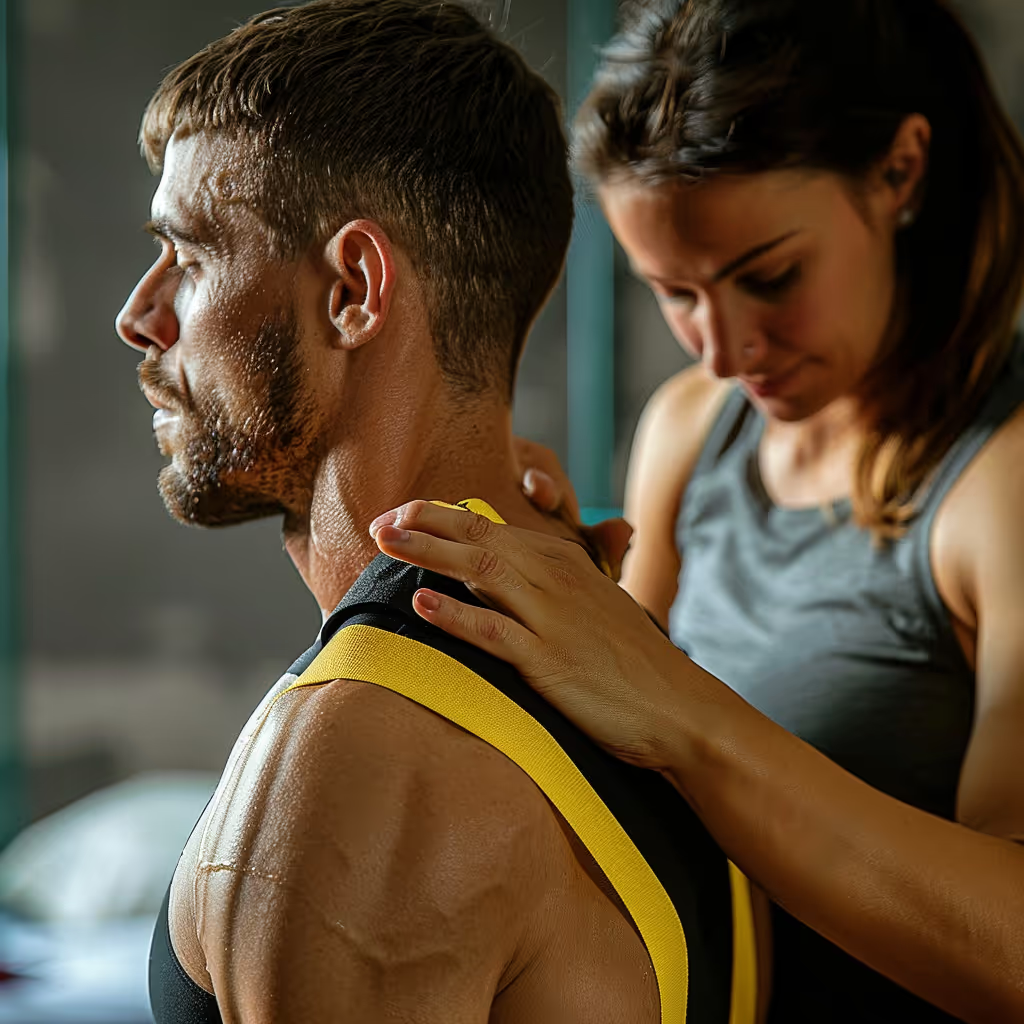
Neuralgia of the arm
It's an irritation of one of the nerves in the arm.
.png)
.png)
.png)



Term associated with arm neuralgia
- Brachialgia: pain in the arm, which may be caused by a nerve or another structure.
What is arm nerve pain?
Arm neuralgia is pain felt in the distribution of one or more nerves in the arm. This term describes the location of the pain according to the definition of the International Association for the Study of Pain. Pain is considered neuropathic when it is caused by a lesion or disease of the system that transmits sensations from the body1. A lesion is damage to tissue. The pain may be accompanied by a burning sensation, electric shocks, tingling, or numbness2. These sensations alone do not prove a nerve injury.
What is a nerve?
A nerve transmits messages between the body and the brain or spinal cord. The spinal cord is a cord of nervous tissue that runs through the spine and relays these messages. The messages travel in the form of electrical signals resulting from the movement of small charged particles across the cell membrane3. A nerve contains fibers, which are the elongated parts of nerve cells. Sensory fibers transmit sensations from the skin, among other things. Motor fibers transmit commands that cause muscles to contract and limbs to move4.
10 Quick Tips to Understand Your Pain
One tip a day for 10 days to help you better understand your pain. About a 2-minute read.
What are the nerves in the arm?
The main nerves of the arm are the median, ulnar, radial, musculocutaneous, and axillary nerves. These five main nerves originate from a network of nerves located between the neck and the armpit. They have different functions:
- The median nerve is involved in the movements of the wrist and fingers, as well as in the sensation in the thumb, index finger, middle finger, and part of the ring finger, especially on the palm side.
- The ulnar nerve controls several small muscles in the hand and transmits sensations from the little finger and part of the ring finger.
- The radial nerve helps extend the elbow, wrist, and fingers. It also transmits sensations to the back of the hand, on the thumb side.
- The musculocutaneous nerve helps bend the elbow and transmits sensations to the outer side of the forearm.
- The axillary nerve helps you raise your arm and transmits sensations from the side of the shoulder.
Compressive neuropathy is nerve damage caused by pressure on a nerve. In the wrist, compression of the median nerve results in carpal tunnel syndrome. In the elbow, compression of the ulnar nerve can occur in the cubital tunnel, a passageway inside the elbow5. In Finnish specialized care, carpal tunnel syndrome was the most common of these diagnoses, followed by ulnar nerve compression and then radial nerve compression6. This classification does not account for all causes of arm pain.
What are the causes of arm nerve pain?
Arm neuralgia may be caused by nerve compression, severe stretching, or nerve injury. The problem may be located in the arm or near the neck7. Following a nerve injury, an inflammatory response may contribute to further changes in the nerve8. Inflammation is a tissue response to injury; it does not automatically lead to neuropathic pain.
Nerves also adapt to normal movements. A posture or movement alters the forces of stretching, shearing, and compression around the nerve9. This does not mean that every unusual position damages the nerve. The evaluation looks for what is causing your symptoms and for signs of nerve damage.
Cervicobrachialgia refers to pain in the neck and arm. This term alone does not confirm nerve damage. Cervical radiculopathy is damage to a nerve root—the part of the nerve near the cervical spine—and can affect strength, sensation, or reflexes.
What situations can contribute to the problem?
- Excessive stretching of the nerve
- Prolonged compression of the nerve
- An inflammatory reaction or swelling that increases pressure around a nerve, depending on the affected area
- Movements or positions that worsen symptoms, without necessarily damaging the nerve
What is the connection to diabetes?
Diabetes is associated with a higher incidence of carpal tunnel syndrome. A review of studies reports an odds ratio of 1.69 after adjusting for other factors10. This calculation compares the ratio of the probability of having the syndrome to the probability of not having it among people with and without diabetes. It does not mean that 69% of people with diabetes will develop this condition.
In a study of 122 people with type 1 diabetes, 26 had carpal tunnel syndrome. A calculation based on these data estimated an 85% probability of developing the syndrome after 54 years of diabetes11. This percentage was a projection, not an outcome observed in all individuals over a 54-year period. A review also cites a lifetime risk of approximately 10% in the general population5. These figures, derived from different populations and using different methods, do not represent your personal probability.
What actions or events can cause sensations in the arm?
- Falling asleep with your head resting on your arm and waking up with a tingling sensation may be caused by temporary pressure on a nerve. Numbness is not always painful and is not sufficient on its own to diagnose neuralgia.
- Keeping your elbow bent at a sharp angle—for example, while on a call—can affect the speed at which the ulnar nerve transmits signals. A study examined this position in 114 people, some of whom were already experiencing symptoms12. Another study compared 50 people who had undergone surgery for ulnar nerve damage with 50 controls. The position of a deeply bent elbow was more common in the affected group, but the difference in total duration of phone use was not clear13. These studies do not prove that cell phone use alone causes the symptoms. Adjusting prolonged postures may be helpful if they trigger numbness in the hand.
- A direct blow to the ulnar nerve at the elbow can cause a sensation of a jolt and tingling in the fingers. The nerve runs close to the skin in this area, as described by the American Society for Surgery of the Hand, a surgical society specializing in hand surgery. An injury can also cause nerve damage that requires evaluation14. People with neuropathic pain sometimes describe sensations of electric shocks, tingling, or numbness2.
- After an elbow sprain—an injury to the ligaments that stabilize the joint—swelling can sometimes increase pressure near a nerve. Nervous system symptoms following an injury require evaluation; they should not be automatically attributed to inflammation.
What are the symptoms of arm nerve pain?
Arm neuralgia can cause a burning sensation or electric shocks and may be accompanied by tingling, pins-and-needles, or numbness2. Describing your sensations helps with the evaluation, but is not enough to determine their cause. You can use your own words, for example:
- Burning
- Tightness, heaviness, constriction
- A sensation of stretching, a tight cord, or an overstretched elastic band
- Wave sensation
- Sensation of swelling
- Hot or cold sensation
- Sensation of water running
Describe where you feel numbness, tingling, a prickling sensation, or electric shocks, and what triggers or relieves these symptoms. Symptoms can sometimes extend beyond the usual distribution of a nerve.
Nerve damage can also affect strength or sensation. Be sure to report the following:
- Feeling of loss of strength
- Feeling of a heavy or dead arm
- Change in sensation when touching the arm
How is arm neuralgia diagnosed?
A healthcare professional evaluates arm neuralgia by asking you about your symptoms and examining your strength, sensation, and reflexes—the automatic responses of your muscles. They look for signs of nerve-related pain and other possible causes. The location of the pain, when it began, how it has changed over time, and the actions that affect the pain guide the examination.
Additional tests may be helpful depending on the situation. Nerve conduction studies measure the transmission of signals along the nerves. An electromyogram measures the electrical activity of the muscles. An ultrasound or magnetic resonance imaging (MRI) produces images of the tissues. These tests are not always necessary, and a normal test result does not rule out all types of nerve damage. The diagnostic process relies on a combination of findings rather than a single test.
What symptoms require urgent medical attention?
Sudden arm pain accompanied by chest tightness, sudden weakness, or severe pain with difficulty moving the arm requires urgent evaluation.
- Call 911 if you experience sudden arm pain accompanied by pressure, heaviness, or tightness in your chest.
- Call 911 if you experience sudden weakness in one arm, facial drooping, or sudden difficulty speaking—even if the symptom goes away. These are possible signs of a stroke, a problem with blood flow to the brain.
- Seek medical attention right away if your arm hurts during physical activity but stops hurting when you rest, or if your arm is swollen and you have a very high fever or feel hot, cold, or have chills.
- Go to the emergency room if you have severe pain and difficulty moving your arm, or if you’ve suffered an injury accompanied by a cracking sound or deformity. Tingling or numbness in the arm also requires urgent medical attention, according to the guidelines on arm pain.
Carpal tunnel syndrome that has already been diagnosed can cause intermittent tingling, often at night. If your symptoms worsen or persist, you should seek a second medical opinion, as explained in the fact sheet on carpal tunnel syndrome. Do not assume on your own that a new symptom is related to this diagnosis.
When should you consult a physiotherapist for arm neuralgia?
It is a good idea to see a physical therapist if your arm pain limits your activities, persists, or recurs—after you have ruled out the urgent symptoms listed above. The physical therapist can assess your condition, recommend appropriate treatment, and refer you to a doctor if necessary.
In Quebec, you can see a physical therapist in a private clinic without a doctor's referral, according tothe Quebec Professional Order of Physical Therapy. This direct access does not replace an urgent consultation when symptoms warrant it.
How does physical therapy treat arm neuralgia?
Physical therapy helps manage nerve pain in the arm through tailored exercises, manual therapy, and activity recommendations. The approach depends on which nerve is affected, the severity of the symptoms, and your goals. Nerve treatment may include gradual arm movements to adjust the stresses around a nerve5.
The studies focus primarily on carpal tunnel syndrome. A 2012 review concluded that the evidence regarding exercises and mobilization was highly uncertain15. However, a 2024 synthesis reported improved nerve conduction velocity following mobilization. The confidence in the results was moderate for motor signals—which control the muscles—and very low for sensory signals. Other measures of nerve conduction did not differ significantly between the groups16. These results primarily concern carpal tunnel syndrome and do not prove the repair of every painful nerve.
Your physical therapist will conduct an evaluation to understand the possible causes and effects of your pain. The evaluation may include:
- Your ability to move your neck, shoulder, elbow, and wrist
- How your symptoms respond to movements that put pressure on the nerves
- Movements and positions that make your activities easier or more difficult
- Your strength and your ability to control your arm movements
What types of care are available?
- Certain manual therapy techniques —movements performed with the therapist’s hands— can reduce pain and improve hand function in carpal tunnel syndrome. A review of six trials reports benefits following treatment, particularly for movements that gradually stimulate the nerves, compared with a sham intervention or no treatment17. The techniques varied, and the long-term sustainability of the benefits remained to be verified.
- Specific exercises can gradually stimulate a nerve through coordinated arm movements. A review of 25 articles found less pain and fewer functional difficulties compared to when no treatment was provided. However, the evidence was of low or very low quality, and the authors did not conclude that there was an established clinical benefit for mild to moderate carpal tunnel syndrome18. Your program should therefore be adjusted based on your symptoms and the actual progress you make.
- Your physical therapist can help you adjust the duration, intensity, and breaks in your daily activities and leisure pursuits, and then gradually increase what you can handle.
- Your physical therapist may suggest changes in posture or movement to reduce what triggers your symptoms, without trying to find a perfect position to maintain all day long.
For mild to moderate carpal tunnel syndrome, non-surgical treatment may include a combination of advice, a splint, manual therapy, andexercises⁵, ¹⁹, ¹⁵. A splint is a device that holds the wrist in a specific position. The benefits and limitations of each option should be discussed based on your specific situation.
Wearing a splint at night can help keep the wrist straight and reduce carpal tunnel syndrome symptoms5. Your healthcare provider will determine the proper fit and how long you should wear it.
For carpal tunnel syndrome, non-surgical treatment is often recommended first. Severe symptoms that worsen or persist despite treatment may warrant a surgical evaluation5. A 2024 review indicates that surgery is more likely to result in overall improvement than wearing a splint after more than three months. However, the average differences in symptoms and hand function were small20. The decision takes into account the severity of the condition, previous outcomes, risks, and your preferences. A lack of progress warrants a reevaluation of the diagnosis and treatment options.
What to do at home for arm neuralgia?
Home care is designed to minimize activities that worsen your symptoms and to maintain those you can tolerate. Follow these tips after checking for any signs of a medical emergency. Temporarily limit any movement that is very painful, then gradually resume it as tolerated.
How can you make these positions more comfortable?
- Try supporting your arm with a pillow or an armrest if that provides relief. A small pillow near your armpit or your hand in a pocket may be comfortable for some people. Change your position if it makes your symptoms worse.
- If you experience pain at night or stiffness when you wake up, make sure your neck is comfortably supported by your pillow. Adjust the height of the pillow to avoid a position that worsens your symptoms.
- When sleeping, try keeping your arm alongside your body or resting it on a pillow. If placing your arm behind your head or under the pillow triggers symptoms, adjust your position. None of these positions is off-limits to everyone.
Need professional advice?
Our physical therapists can assess your condition and provide you with a personalized treatment plan.
Make an appointmentAdditional Reference
Links open in a new tab.
- Finnerup NB, Haroutounian S, Kamerman P, Baron R, Bennett DLH, Bouhassira D, et al. Neuropathic pain: an updated grading system for research and clinical practice. Pain. 2016;157(8):1599-1606. (Back to section 1)
- Crawford B, Bouhassira D, Wong A, Dukes E. Conceptual adequacy of the Neuropathic Pain Symptom Inventory in six countries. Health Qual Life Outcomes. 2008;6:62. (Back to sections: 1, 2, 3)
- Goodwin G, McMahon SB. The physiological function of different voltage-gated sodium channels in pain. Nat Rev Neurosci. 2021;22(5):263-274. (Back to section: 1)
- Rekling JC, Funk GD, Bayliss DA, Dong XW, Feldman JL. Synaptic control of motor neuron excitability. Physiol Rev. 2000;80(2):767-852. (Back to section: 1)
- Schmid AB, Fundaun J, Tampin B. Entrapment neuropathies: a contemporary approach to pathophysiology, clinical assessment, and management. Pain Rep. 2020;5(4):e829. (Back to sections: 1, 2, 3, 4, 5, 6)
- Hulkkonen S, Lampainen K, Auvinen J, Miettunen J, Karppinen J, Ryhänen J. Incidence and surgical treatment of median, ulnar, and radial entrapment neuropathies in Finland: a nationwide registry study. J Hand Surg Eur Vol. 2020;45(3):226-230. (Back to section: 1)
- Malik T, Malik A, Abd-Elsayed A. Pathophysiology of Work-Related Neuropathies. Biomedicines. 2023;11(6). (Back to section: 1)
- Estebe JP, Atchabahian A. The nerve: A fragile balance between physiology and pathophysiology. Eur J Anaesthesiol. 2017;34(3):118-126. (Back to section: 1)
- Topp KS, Boyd BS. Structure and biomechanics of peripheral nerves: nerve responses to physical stresses and implications for physical therapy practice. Phys Ther. 2006;86(1):92-109. (Back to section: 1)
- Pourmemari MH, Shiri R. Diabetes as a risk factor for carpal tunnel syndrome: a systematic review and meta-analysis. Diabet Med. 2016;33(1):10-6. (Back to section: 1)
- Singh R, Gamble G, Cundy T. Lifetime risk of symptomatic carpal tunnel syndrome in Type 1 diabetes. Diabet Med. 2005;22(5):625-30. (Back to section: 1)
- Padua L, Coraci D, Erra C, Doneddu PE, Granata G, Rossini PM. Prolonged phone-call posture causes changes in ulnar motor nerve conduction across the elbow. Clin Neurophysiol. 2016;127(8):2728-2732. (Back to section: 1)
- Vavalle G, Barbieri C, Messina D, Pietramala S, Rocchi L, Fulchignoni C. The Correlation Between Smartphone Use and Compressive Ulnar Neuropathy at the Elbow: A Retrospective Study. J Clin Med. 2026;15(5). (Back to section: 1)
- Dy CJ, Mackinnon SE. Ulnar neuropathy: evaluation and management. Curr Rev Musculoskelet Med. 2016;9(2):178-84. (Back to section: 1)
- Page MJ, O'Connor D, Pitt V, Massy-Westropp N. Exercise and mobilization interventions for carpal tunnel syndrome. Cochrane Database of Systematic Reviews. 2012;2012(6). (Back to sections: 1, 2)
- Bittencourt JV, Corrêa LA, Pagnez MAM, do Rio JPM, Telles GF, Mathieson S, et al. Effects of neural mobilization on nerve function and nerve structure in patients with peripheral neuropathic pain: A systematic review with meta-analysis. PLoS One. 2024;19(11):e0313025. (Back to section: 1)
- Jiménez-Del-Barrio S, Cadellans-Arróniz A, Ceballos-Laita L, Estébanez-de-Miguel E, López-de-Celis C, Bueno-Gracia E, et al. The effectiveness of manual therapy on pain, physical function, and nerve conduction studies in patients with carpal tunnel syndrome: a systematic review and meta-analysis. Int Orthop. 2022;46(2):301-312. (Back to section: 1)
- Paraskevopoulos E, Karanasios S, Gioftsos G, Tatsios P, Koumantakis G, Papandreou M. The effectiveness of neuromobilization exercises in carpal tunnel syndrome: Systematic review and meta-analysis. Physiother Theory Pract. 2023;39(10):2037-2076. (Back to section: 1)
- Jiménez Del Barrio S, Bueno Gracia E, Hidalgo García C, Estébanez de Miguel E, Tricás Moreno JM, Rodríguez Marco S, et al. Conservative treatment in patients with mild to moderate carpal tunnel syndrome: A systematic review. Neurologia (Engl Ed). 2018;33(9):590-601. (Back to section: 1)
- Lusa V, Karjalainen TV, Pääkkönen M, Rajamäki TJ, Jaatinen K. Surgical versus non-surgical treatment for carpal tunnel syndrome. Cochrane Database Syst Rev. 2024;1(1):CD001552. (Back to section: 1)
- Schmid AB, Tampin B, Baron R, Finnerup NB, Hansson P, Hietaharju A, et al. Recommendations for terminology and the identification of neuropathic pain in people with spine-related leg pain. Findings from the NeuPSIG working group. Pain. 2023;164(8):1693-1704.
Videos in this category
Other conditions

Hip osteoarthritis is the normal wear and tear of the hip joint. It is often said that osteoarthritis is the wear and tear of the cartilage between our bones. That is true, but it involves more than just the cartilage. Cartilage is a tissue that acts as a cushion between the surfaces of our bones and allows our joints to glide smoothly and move fluidly.
This is normal wear and tear of the knee joint. It’s often said that osteoarthritis is the wearing down of the cartilage between our bones. That’s true, but it’s more than just the cartilage. Cartilage is a tissue that acts as a cushion between the surfaces of our bones and allows our joints to glide smoothly and move fluidly.
It is an inflammation of the subacromial bursa in the shoulder joint.
A bursa is a small, thin sac filled with fluid that is found in many of the body's joints. This small sac acts as a cushion within the joint and lubricates the structures that are subject to increased friction.
It is a tissue that surrounds the shoulder and helps keep the shoulder bone in place within the joint. The capsule helps keep the joint stable.
Neck pain is a general term used to describe pain in the neck that has no specific cause, such as an accident or a sudden awkward movement. Neck pain is therefore synonymous with “my neck hurts, and nothing in particular happened.”
In both types of injury, pain is felt in the neck and then radiates into the arm, or vice versa.
Make an appointment now
We offer a three-pronged quality assurance approach: optimized treatment time, a second opinion from a physical therapist, and ongoing expertise to ensure effective care tailored to your needs.
Customer satisfaction is our top priority
At Physioactif, excellence guides everything we do, but our patients are the best ones to tell you about it. Take a look at their verified reviews to get a real sense of their experience.






Discover our physical therapy clinics
We have locations in several areas to better serve you.
Blainville
190 Bas-de-Sainte-Thérèse Road, Suite 110,
Blainville, Quebec
J7B 1A7
Located in Blainville, near Rosemère, the Physioactif clinic is easily accessible to residents of the area and the surrounding communities
Boucherville
690 Rue de Montbrun, Suite S,
Boucherville, Quebec
J4B 8H2
Located in Boucherville, the Physioactif clinic is easily accessible to people in the area
Laval
3224 Jean-Béraud Ave., Suite 220, Laval,
QC H7T 2S4
Located in Chomedey, in the heart of Laval, the Physioactif clinic is easily accessible to people in the area
Montreal
8801 Lajeunesse Street,
Montreal,
QC H2M 1R8
Located in Ahuntsic, near Villeray, the Physioactif clinic is easily accessible to residents of both neighborhoods
Saint-Eustache
180 25th Avenue, Suite
201 Saint-Eustache
QC J7P 2V2
Located in Saint-Eustache, the Physioactif clinic is easily accessible to residents of the area and the surrounding communities
Vaudreuil
21 Cité-des-Jeunes Boulevard, Suite 240,
Vaudreuil-Dorion, Quebec
J7V 0N3
Located in Vaudreuil-Dorion, the Physioactif clinic is easily accessible to people in the area
Make an appointment now