Leg neuralgia
It is an irritation of one of the nerves in the leg.
.png)
.png)
.png)




Experiencing burning, tingling, or electric shock sensations in your leg can be unsettling. These strange feelings might make you question what's happening in your body. As physiotherapists specializing in neuromuscular rehabilitation, we regularly see patients concerned by these unusual symptoms. You're not alone: nerve pain in the leg affects approximately 2% to 5% of the population.
The good news is that in the vast majority of cases, leg nerve pain responds well to conservative physiotherapy treatment. Nerves have a remarkable ability to heal and become less sensitive with the right interventions.
What clinical research demonstrates:
- Nerve pain does not mean permanent damage. Nerves can repair themselves and return to normal function.
- Specialized neurodynamic physiotherapy is the first-line treatment for most cases of leg nerve pain.
- Nerve gliding exercises improve nerve mobility and reduce its sensitivity.
- Recovery follows predictable phases when the diagnosis is accurate.
This guide explores the causes, symptoms, diagnosis, and treatment of leg nerve pain. To better understand how physiotherapy can help you, consult our complete guide to physiotherapy.
What is Leg Nerve Pain?
Leg nerve pain is discomfort caused by irritation of a nerve in the leg. This irritation can happen anywhere along the nerve's path, from the spine down to the foot. Symptoms include burning, tingling, numbness, or electric shock sensations.
Nerves are the structures responsible for transmitting information throughout our nervous system. This information travels along the nerve as electrical signals. Nerves allow us to feel our skin when touched, and they also send commands to our muscles, making them contract and move our limbs.
When a nerve is irritated, it sends abnormal signals. This is why you experience sensations you're not used to. While these feelings might seem strange or concerning, they simply indicate that the nerve is sensitive or compressed.
What are the Main Nerves in the Leg?
The leg contains several nerves, but three are most commonly responsible for pain. Understanding their path can help explain where your symptoms originate.
| Nerve | Path | Symptom Area |
|---|---|---|
| Tibial nerve | Back of the leg, passes behind the inner ankle | Sole of the foot, heel, toes |
| Fibular (Peroneal) Nerve | Outer side of the knee, descends towards the foot | Top of the foot, outer side of the leg |
| Saphenous nerve | Inner side of the thigh, descends towards the inner ankle | Inner side of the knee, leg, and ankle |
The sciatic nerve, the largest nerve in the body, divides into the tibial nerve and fibular nerve at the knee. If the irritation originates higher up (in the back or buttock), it is typically referred to as sciatica or radiculopathy.
What are the causes of leg neuralgia?
Leg nerve pain happens when a nerve in the leg itself or in the back becomes irritated. This irritation can be caused by overstretching, prolonged pressure, or local inflammation. Sometimes, these factors can occur together.
Mechanical Causes
Excessive nerve stretching:- Sudden movements that overstretch the nerve.
- Holding a position for too long (like crossing your legs or prolonged stretching).
- A knee or ankle sprain that puts tension on the nerve.
- Sitting for too long, which can compress the fibular nerve at the knee.
- Wearing boots or shoes that are too tight.
- A cyst or growth pressing on the nerve.
- A bruise (hematoma) or swelling after an injury.
Inflammatory Causes
Inflammation around a nerve can make it very sensitive. Here are some examples:
- An ankle sprain with a lot of swelling.
- Recent knee or ankle surgery.
- Inflammatory arthritis in a joint close to the nerve.
Causes Originating from the Back
If the nerve is irritated in the lower back (lumbar spine) and there is also back pain, this is referred to as:
- Lumbosciatica: irritation of the sciatic nerve due to a herniated disc or spinal narrowing (stenosis).
- Radiculopathy: compression of a nerve root.
- Lumbocruralgia: irritation of the crural (femoral) nerve, causing pain in the front of the thigh.
These conditions require a thorough evaluation of both the back and the leg.
10 Quick Tips for Understanding Your Pain
The ones that have made the biggest difference in my patients' lives. 1 a day, 2 minutes.
What are the symptoms of leg nerve pain?
Symptoms of leg nerve pain are often described using unusual words. This is normal. Nerve pain feels different from muscle or joint pain. It can create sensations you may have never experienced before.
Typical Nerve Pain Sensations
- Burning or hot feeling.
- Tingling or numbness
- Electric shocks or shooting pains.
- Feeling like a tight rope or an overstretched elastic band.
- Feeling of tightness or constriction.
- Feeling like water is running on the skin
- Feeling swollen even if the leg isn't actually swollen
Other common symptoms
- Numbness in a specific area
- Feeling of a heavy or "dead" leg
- Feeling of weakness
- Change in sensation when you touch the skin
- Hypersensitivity to touch (even clothing causes pain)
Symptom distribution
The location of your symptoms depends on the affected nerve. If your symptoms follow a specific path (for example, a line down the side of your leg), it's a strong indication that a nerve is involved.
| Irritated nerve | Typical symptom location |
|---|---|
| Tibial nerve | Sole of the foot, heel, toes (especially 1 to 3) |
| Fibular nerve | Top of the foot, space between big toe and 2nd toe |
| Saphenous nerve | Inner side of the knee and leg down to the ankle |
How is leg nerve pain diagnosed?
Diagnosis primarily relies on your symptom history and a physical examination. The physiotherapist uses specific tests to identify which nerve is irritated and where the irritation is occurring.
Clinical evaluation
The physiotherapist will assess:
- The path of your symptoms: Does it match the path of a specific nerve?
- Aggravating factors: Which positions or movements increase your symptoms?
- Injury history: Was there a triggering event?
Neurological tests
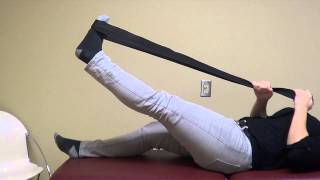
Neural tension tests:These tests gently stretch the nerve to see if they reproduce your symptoms. For example, lifting a straight leg (Lasègue's test) puts the sciatic nerve under tension.
Sensitivity assessment:The physiotherapist tests whether you can feel light touch, pinprick, and vibration normally in different areas.
Strength assessment:Certain muscles are specifically supplied by each nerve. Weakness in a particular muscle can help identify the nerve involved.
Imaging
Imaging tests (X-rays, MRI, ultrasound) are not always necessary. They are useful when:
- A structural compression is suspected (hernia, cyst, tumor)
- Symptoms do not improve with treatment
- Significant neurological signs are present (marked weakness, loss of reflexes)
When to consult a physiotherapist for leg nerve pain?
You should consult a physiotherapist if you have symptoms like those described above. You do not need to see a doctor before consulting a physiotherapist. If your condition requires seeing a doctor, your physiotherapist will be able to tell you.
Reasons to consult promptly
- Symptoms lasting more than 2 weeks
- Symptoms that progressively worsen
- Constant numbness or tingling
- Noticeable muscle weakness
- Symptoms that disrupt your sleep
Signs requiring urgent medical consultation
Consult a doctor immediately or go to the emergency room if you have:
- Loss of Bladder or Bowel Control
- Numbness in the genital or perineal area
- Rapid and progressive weakness in both legs
- Fever accompanying your neurological symptoms
These signs, though rare, can indicate severe nerve compression requiring prompt intervention.
Need professional advice?
Our physical therapists can assess your condition and provide you with a personalized treatment plan.
Make an appointmentHow does physiotherapy treat leg neuralgia?
Physiotherapy is the first-line treatment for most leg neuralgia. The treatment aims to reduce nerve irritation, improve its mobility, and correct the factors contributing to the problem.
Initial Assessment
Your physiotherapist will perform a complete assessment to:
- Determine which nerve is irritated
- Identify where the irritation is occurring (back, hip, knee, ankle)
- Evaluate the factors contributing to the problem
The elements evaluated include:
- Your joint mobility
- The gliding of your nerves
- The quality of your movements
- Your strength and stability
Treatment Techniques
Neurodynamic techniques:The physiotherapist gently mobilizes the nerve with specific movements. These techniques improve the nerve's gliding within surrounding tissues and reduce its sensitivity.
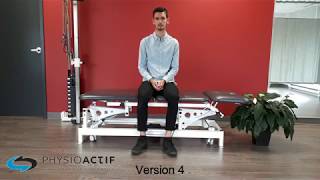
Nerve gliding exercises:Precise movements that allow the nerve to "slide" without excessive tension. For instance, alternately pointing and flexing your foot helps the tibial nerve slide.
Progressive desensitization:Gradually expose the nerve to movements or positions it finds difficult to tolerate. This helps to "recalibrate" its sensitivity.
Muscle strengthening:Rebuild leg strength and stability to protect the nerve and prevent recurrence.
Typical Treatment Plan
| Phase | Period | Goals |
|---|---|---|
| Phase 1 | 1-2 weeks | Reduce irritation, avoid aggravators |
| Phase 2 | 2-4 weeks | Improve nerve mobility, desensitization |
| Phase 3 | 4-8 weeks | Strengthening, return to normal activities |
How long does recovery from leg nerve pain take?
Recovery depends on the cause and severity of the nerve irritation. Generally, improvements begin within the first 2 to 4 weeks of treatment. Most cases of leg nerve pain resolve within 6 to 12 weeks.
Factors that influence recovery time
Speed up healing:- Early diagnosis and prompt treatment
- Consistently doing home exercises
- Identifying and correcting aggravating factors
- No severe structural compression
- Long-standing irritation before treatment
- Significant mechanical compression (hernia, cyst)
- Central sensitization (nerves have become hypersensitive)
- Associated medical conditions (diabetes, neuropathy)
What to do at home for leg neuralgia?
You can start to relieve your symptoms at home while waiting for your appointment or as a complement to your physiotherapy treatment.
Practical Tips
Temporarily avoid aggravating positions:If crossing your legs worsens your symptoms, avoid this position. Gradually resume once your sensitivity decreases.
Sleeping positions:- Avoid sleeping with your leg fully stretched out
- Place a pillow between your knees if you sleep on your side
- Make sure your back isn't too arched or rounded
- Move regularly instead of staying still for long periods
- Do pumping movements with your foot (pointing/flexing) to promote circulation
Ill-fitting compression stockings or shoes that are too tight can compress the nerves.
When to seek help
If you don't see any improvement after 10 to 14 days despite following these tips, you should consult a physiotherapist. A professional assessment can help identify the exact cause and create a treatment plan tailored to your specific situation.
.jpg)
Other conditions

Hip osteoarthritis is the normal wear and tear of the hip joint. It is often said that osteoarthritis is the wear and tear of the cartilage between our bones. That is true, but it involves more than just the cartilage. Cartilage is a tissue that acts as a cushion between the surfaces of our bones and allows our joints to glide smoothly and move fluidly.
This is normal wear and tear of the knee joint. It’s often said that osteoarthritis is the wearing down of the cartilage between our bones. That’s true, but it’s more than just the cartilage. Cartilage is a tissue that acts as a cushion between the surfaces of our bones and allows our joints to glide smoothly and move fluidly.
It is an inflammation of the subacromial bursa in the shoulder joint.
A bursa is a small, thin sac filled with fluid that is found in many of the body's joints. This small sac acts as a cushion within the joint and lubricates the structures that are subject to increased friction.
It is a tissue that surrounds the shoulder and helps keep the shoulder bone in place within the joint. The capsule helps keep the joint stable.
Neck pain is a general term used to describe pain in the neck that has no specific cause, such as an accident or a sudden awkward movement. Neck pain is therefore synonymous with “my neck hurts, and nothing in particular happened.”
In both types of injury, pain is felt in the neck and then radiates into the arm, or vice versa.
Make an appointment now
We offer a three-pronged quality assurance approach: optimized treatment time, a second opinion from a physical therapist, and ongoing expertise to ensure effective care tailored to your needs.

Customer satisfaction is our top priority
At Physioactif, excellence guides everything we do, but our patients are the best ones to tell you about it. Take a look at their verified reviews to get a real sense of their experience.









Discover our physical therapy clinics
We have locations in several areas to better serve you.
Blainville
190 Bas-de-Sainte-Thérèse Road, Suite 110,
Blainville, Quebec
J7B 1A7
Located in Blainville, near Rosemère, the Physioactif clinic is easily accessible to residents of the area and the surrounding communities
Laval
3224 Jean-Béraud Ave., Suite 220, Laval,
QC H7T 2S4
Located in Chomedey, in the heart of Laval, the Physioactif clinic is easily accessible to people in the area
Montreal
8801 Lajeunesse Street,
Montreal,
QC H2M 1R8
Located in Ahuntsic, near Villeray, the Physioactif clinic is easily accessible to residents of both neighborhoods
Saint-Eustache
180 25th Avenue, Suite
201 Saint-Eustache
QC J7P 2V2
Located in Saint-Eustache, the Physioactif clinic is easily accessible to residents of the area and the surrounding communities
Vaudreuil
21 Cité-des-Jeunes Boulevard, Suite 240,
Vaudreuil-Dorion, Quebec
J7V 0N3
Located in Vaudreuil-Dorion, the Physioactif clinic is easily accessible to people in the area
Make an appointment now