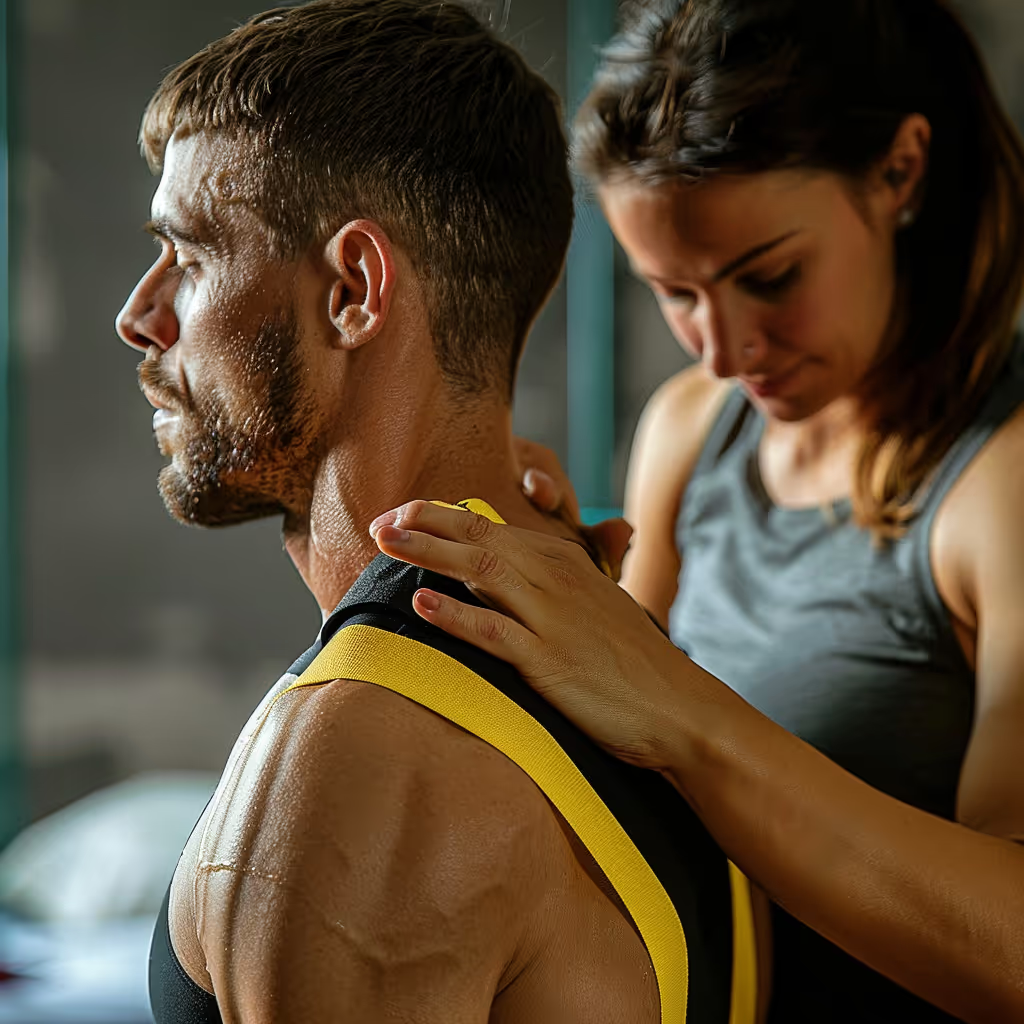
Migraine
This is a chronic condition that causes episodes of headaches, often very intense.
.png)
.png)
.png)




What is a migraine?
Migraine is a brain disorder that occurs in episodes, often accompanied by severe headaches. Physical therapy for headaches can complement migraine treatment.1
What are the causes of migraines?
Migraines involve changes in brain function, influenced by both genetics and the environment. The networks of nerve cells that process sensory information function differently throughout the migraine cycle.2, 3 Migraines were long thought to be primarily caused by blood vessels in the head. Research now suggests instead that there is an interaction between the brain, nerves, and blood vessels.1, 4 Fluctuations in estrogen, a hormone involved in the menstrual cycle, can also trigger attacks in some people.5
The exact mechanisms underlying migraines remain partly unknown. The factors associated with migraine attacks vary from person to person.3, 6 Research distinguishes between symptoms associated with migraine attacks, possible triggers, and factors that make a person more susceptible to migraines:
- Neck pain is often part of a migraine attack. Painful jaw disorders are also more common among people with migraines. These association studies do not allow us to determine whether these pains triggermigraine attacks.⁷, ⁸
- Stress and changes in sleep patterns are often reported as triggers, but this data is based primarily on the participants’ perceptions6
- Certain foods or beverages may be associated with seizures, but the overall quality of the evidence regarding diet is low9
- Fluctuations in estrogen levels—particularly the drop around the time of menstruation—are associated with seizures in some people5
- Traits inherited from parents can increase the likelihood of experiencing migraines. This hereditary influence is not the same as a one-time trigger10
10 Quick Tips to Understand Your Pain
One tip a day for 10 days to help you better understand your pain. About a 2-minute read.
What are the symptoms of a migraine?
A migraine usually causes a moderate to severe headache, often on one side, accompanied by nausea or sensitivity to light and noise. The pain may be throbbing, meaning it feels like a pulsing sensation in the head.
The main symptoms are:
- A headache lasting 4 to 72 hours in adults without effective treatment. In people under 18, the duration can range from 2 to 72 hours. These durations are part of the criteria for the International Classification of Headache Disorders, known as ICHD-311
- The headache is often:
- Of moderate to severe intensity
- On one side only
- Pulsating, with a sensation of throbbing in the head
- Headaches can worsen with everyday activities, such as walking or climbing stairs, and may force you to stop what you're doing
- Presence of:
- Nausea or vomiting
- Sensitivity to light and noise
So it’s not just the severity of the headache that determines whether it’s a migraine. You can have a very severe headache without it being amigraine11 ( see our guide to headaches and cephalalgias).
What is a migraine with aura?
A migraine with aura involves temporary changes in vision, sensation, or speech. The aura then goes away. Some people with migraines experience it, while others never do.
Aura symptoms often begin before the headache, but they can also occur during the headache or without a headache. A typical aura symptom usually lasts 5 to 60 minutes. Several symptoms may occur in succession, which extends the total duration.11 Vision loss, weakness, or difficulty speaking may also indicate a medical emergency. Do not assume on your own that these are signs of an aura; the signs that require urgent care are described below.
Here are some examples of aura symptoms that people may experience:
- Seeing black spots, flashes of light, stars, or even temporarily losing your vision
- Numbness in the face or elsewhere in the body
- Difficulty speaking or finding the right words
Migraine with typical aura is often treated the same way as migraine without aura, due to a lack of sufficient data on a different response. However, the choice of treatment must take into account the type of aura, the associated risks, and the limited data on treatments specific to aura.12
How is a migraine diagnosed?
A healthcare professional can diagnose a migraine by asking you about your symptoms and examining you. Brain imaging can be helpful in certain situations.
An MRI, or magnetic resonance imaging, and a CT scan produce images of the brain. These tests do not directly show a migraine. They are usually not necessary if the symptoms are consistent with a migraine, the neurological examination is normal, and there are no unusual or concerning signs. However, they can help rule out other causes when symptoms change or when certain signs warrant further investigation.13
How can physiotherapy help with migraines?
Physical therapy can help manage migraines and associated neck pain through exercises, advice, and, as needed, manual therapy. It can also help with headaches that originate in the neck, known as cervicogenic headaches. This condition is distinct from migraine.14
People with migraines often have areas of the neck and head that are more sensitive to pressure. This phenomenon is also seen with tension headaches.15, 16 (See our guide to headaches and cephalalgia.)
Applying pressure to certain sensitive points in the neck muscles can reproduce pain felt in the head. This is known as referred pain: the pain is felt somewhere other than where the finger is applying pressure.17 These observations do not allow us to determine the extent to which the neck contributes to a person’s migraines. The exact role of these tender points remains unclear.16
What are the results of the interventions studied for migraine?
The interventions studied may reduce the duration, frequency, or intensity of migraines, but these benefits remain uncertain and vary depending on the treatment.
A trial involving 104 participants compared three groups. The first group received a specific chiropractic manipulation of the spine—a brief, rapid movement applied to a joint. The second group received a sham treatment. The third group continued taking their usual medications alone. The sham treatment replicated manual contact without the specific manipulation being studied. The manipulation did not reduce the number of migraine days any more than the sham treatment. However, secondary outcomes—including attack duration and a composite score combining the number of days, duration, and intensity of pain—were more favorable than in the standard medication group toward the end of the follow-up period. These benefits were not demonstrated compared with the sham treatment.18 This trial does not evaluate all manual approaches used in physical therapy.
In a review of studies on migraine, treatments were primarily based on endurance activities that increase breathing rate or on therapies combining physical and psychological approaches. The review reported a reduction in the duration of migraines. The results regarding migraine intensity and frequency became more clearly favorable after excluding the trials with the highest risk of error. The treatments and study populations varied widely, and overall confidence in the results remained low. Studies on cervicogenic headaches—which originate in the neck—focused primarily on neck mobilization and therapist-guided movements, and also reported benefits. These results pertain to a different diagnosis and do not demonstrate the same effect on migraines.14
How does an examination of the neck help determine the cause of a headache?
Examining the neck also helps distinguish between different types of headaches. One study found differences in movement, manual joint examination findings, and muscle control, particularly in people with cervicogenic headaches.19
In certain situations, a specialist may perform a diagnostic nerve block—an injection that temporarily numbs a nerve. The specialist compares the responses to the injections according to a specific protocol and uses imaging to guide the needle. This procedure can confirm whether a headache originates from a structure in the neck.20 Relief following a standard injection is not, by itself, sufficient proof of this cause. This specialized test is not necessary for every migraine.
When to consult a physiotherapist for a migraine?
Physical therapy is an option when your migraines occur frequently, limit your activities, or are accompanied by neck pain. A doctor can help clarify the diagnosis and treatment options for your attacks, especially if the pain is severe, is getting worse, or is becoming difficult to manage.
You can schedule an appointment directly with a physical therapist. The physical therapist will refer you to a doctor if the evaluation warrants it. However, the emergency signs listed below require immediate medical attention—do not wait for a physical therapy appointment.
When does a headache require urgent care?
A sudden, extremely severe headache—or one accompanied by certain symptoms affecting vision, speech, or movement—requires urgent medical attention.
Call 911 or go to the emergency room if you experience any of the following symptoms:
- A headache that starts suddenly and becomes extremely intense.
- Difficulty speaking or remembering things, loss of vision, blurred or double vision.
- Drowsiness, confusion, or a seizure, with involuntary movements or a loss of consciousness.
- Weakness or paralysis on one side of the face or body.
- A very high fever with possible signs of meningitis—an infection of the membranes surrounding the brain—such as a stiff neck.
- A rash that doesn't fade under pressure, even without a fever.
- A headache following a recent head injury.
If you suspect meningitis, seek immediate medical attention. Don't wait until all the symptoms appear before calling 911 or going to the emergency room.
Seek urgent medical attention if a migraine attack lasts longer than 72 hours, if an aura symptom lasts longer than one hour at a time, or if you have an attack during pregnancy or shortly after giving birth. Do not wait that long if any of the above emergency signs are present. Do not drive yourself to the emergency room. These guidelines are from the British National Health Service (NHS). Visit their pages on migraines and meningitis.
What are the physiotherapy treatments for a migraine?
Physical therapy treatments include exercises, advice on activities, and, if necessary, manual techniques for the neck. The choice depends on your symptoms and the assessment of your neck. The physical therapist will examine, among other things:
- Possible movements of the joints in your neck
- Depending on your symptoms, how your nerves respond to movements of your neck and arms
- Your Postural Habits
- The quality of your movements
- Your strength and your ability to control your movements
What types of treatment can a physical therapist provide?
- Manual manipulation of the neck joints and muscles, or exercises that stimulate the nerves—if warranted by the evaluation—to help reduce pain and improve range of motion.
- Home exercises to relieve symptoms and improve functional abilities identified as limited during the evaluation.
- Tips for adjusting the duration, frequency, and intensity of your daily activities and leisure pursuits.
- Tips on your posture and movements to help you feel more comfortable.
- Ways to manage headaches during an attack, in addition to the medical treatment plan.
What to do at home for a migraine?
At home, the treatment plan includes recommended medications, appropriate physical activity, and ways to relieve symptoms. Take your migraine medications as directed by your doctor and pharmacist.
Regular physical activity can help reduce seizures, although study results vary.21
In a trial involving 91 adults, a 40-minute exercise program three times a week for 12 weeks was associated with an average reduction of 0.93 seizures per month. The reduction was 0.83 with relaxation therapy and 0.97 with the preventive medication topiramate. These changes compare the last month of treatment to the initial month. The study did not show a clear difference between the groups for this outcome, which does not prove their equivalence in all situations. The medication reduced the average pain intensity more during the treatment period. People who were already regularly active were excluded from the trial. A progressive exercise program can therefore be tailored to your situation, especially if physical exertion triggers your symptoms. See the study by Varkey and colleagues.
What measures can improve your comfort?
Cold can provide relief for some people. A trial involving 55 participants who completed the protocol found that pain was reduced more with a cold wrap applied to the front of the neck than with the same wrap at room temperature. The participants knew whether the wrap was cold, and the immediate follow-up lasted one hour. The finding pertains to this cold wrap and to short-term relief. Read the study on neck cooling.
The posture and movement tips below are primarily intended to promote neck comfort and are not intended to correct the cause of migraines:
- Try applying cold to the upper part of your neck if it provides relief, for short periods of time, with a towel between the ice and your skin. Stop if the cold increases the pain or irritates your skin.
- Gently move your neck in directions that feel comfortable.
- Support the shoulders and shoulder blades—the flat bones at the back of the shoulders:
- With a cushion under the armpits
- With the armrests of a chair or sofa
- By putting your hand in your pants pocket
- Limit the amount of time you spend in the same position while using a computer, watching TV, or reading a book. Get up regularly to move your neck and shoulders.
- Support the small of your neck with a comfortable pillow while you sleep. Avoid sleeping on your stomach if this position causes stiffness or pain during the night or upon waking.
- Loosen a hat or glasses that are too tight on your head. Prolonged pressure can cause a headache and sometimes trigger a migraine in people who are prone to them22. A compression headache usually subsides when the source of the pressure is removed.
If your symptoms do not improve, see a physical therapist or the healthcare professional who treats your migraines. Seek immediate medical attention if you experience any of the emergency signs described above.
Who gets migraines?
Migraines affect both children and adults, and women more often than men.23
Where can I learn more about migraines?
The podcast *Parle-moi de santé*, hosted by physical therapist Alexis Gougeon, discusses migraines and headaches in Episode 12 with Sylvain St-Amour.
Episode #12 of Parle-moi de santé (headaches)
Find the episode on YouTube :
The following buttons open the podcast on Spotify and Episode 12 on Apple Podcasts:

(4).png)
Need professional advice?
Our physical therapists can assess your condition and provide you with a personalized treatment plan.
Make an appointmentSources
Links open in a new tab.
- Ferrari MD, Goadsby PJ, Burstein R, Kurth T, Ayata C, Charles A, et al. Migraine. Nat Rev Dis Primers. 2022;8(1):2. (Back to sections: 1, 2)
- Goadsby PJ, Holland PR, Martins-Oliveira M, Hoffmann J, Schankin C, Akerman S. Pathophysiology of Migraine: A Disorder of Sensory Processing. Physiol Rev. 2017;97(2):553-622. (Back to section: 1)
- Recober A. Pathophysiology of Migraine. Continuum (Minneapolis, Minn.). 2021;27(3):586-596. (Back to sections: 1, 2)
- Hoffmann J, Baca SM, Akerman S. Neurovascular mechanisms of migraine and cluster headache. J Cereb Blood Flow Metab. 2019;39(4):573-594. (Back to section: 1)
- Reddy N, Desai MN, Schoenbrunner A, Schneeberger S, Janis JE. The complex relationship between estrogen and migraines: a scoping review. Syst Rev. 2021;10(1):72. (Back to sections: 1, 2)
- Pellegrino ABW, Davis-Martin RE, Houle TT, Turner DP, Smitherman TA. Perceived triggers of primary headache disorders: A meta-analysis. Cephalalgia. 2018;38(6):1188-1198. (Back to sections: 1, 2)
- Lampl C, Rudolph M, Deligianni CI, Mitsikostas DD. Neck pain in episodic migraine: a warning sign or part of the attack? J Headache Pain. 2015;16:566. (Back to section 1)
- Réus JC, Polmann H, Souza BDM, Flores-Mir C, Gonçalves DAG, de Queiroz LP, et al. Association between primary headaches and temporomandibular disorders: A systematic review and meta-analysis. J Am Dent Assoc. 2022;153(2):120-131.e6. (Back to section: 1)
- Hindiyeh NA, Zhang N, Farrar M, Banerjee P, Lombard L, Aurora SK. The Role of Diet and Nutrition in Migraine Triggers and Treatment: A Systematic Literature Review. Headache. 2020;60(7):1300-1316. (Back to section: 1)
- Olofsson IA. Migraine heritability and beyond: A scoping review of twin studies. Headache. 2024;64(8):1049-1058. (Back to section: 1)
- Headache Classification Committee of the International Headache Society (IHS). The International Classification of Headache Disorders, 3rd edition. Cephalalgia. 2018;38(1):1-211. (Back to sections: 1, 2, 3)
- Vgontzas A, Burch R. Episodic Migraine With and Without Aura: Key Differences and Implications for Pathophysiology, Management, and Risk Assessment. Curr Pain Headache Rep. 2018;22(12):78. (Back to section: 1)
- Evans RW, Burch RC, Frishberg BM, Marmura MJ, Mechtler LL, Silberstein SD, et al. Neuroimaging for Migraine: The American Headache Society Systematic Review and Evidence-Based Guideline. Headache. 2020;60(2):318-336. (Back to section: 1)
- Luedtke K, Allers A, Schulte LH, May A. Efficacy of interventions used by physical therapists for patients with headache and migraine—systematic review and meta-analysis. Cephalalgia. 2016;36(5):474-92. (Back to sections: 1, 2)
- Castien R, Duineveld M, Maaskant J, De Hertogh W, Scholten-Peeters G. Pericranial Total Tenderness Score in Patients with Tension-Type Headache and Migraine. A Systematic Review and Meta-analysis. Pain Physician. 2021;24(8):E1177-E1189. (Back to section: 1)
- Do TP, Heldarskard GF, Kolding LT, Hvedstrup J, Schytz HW. Myofascial trigger points in migraine and tension-type headache. J Headache Pain. 2018;19(1):84. (Back to sections: 1, 2)
- Fernández-de-Las-Peñas C, Simons D, Cuadrado ML, Pareja J. The role of myofascial trigger points in musculoskeletal pain syndromes of the head and neck. Curr Pain Headache Rep. 2007;11(5):365-72. (Back to section 1)
- Chaibi A, Benth JŠ, Tuchin PJ, Russell MB. Chiropractic spinal manipulative therapy for migraine: a three-armed, single-blind, placebo-controlled, randomized controlled trial. Eur J Neurol. 2017;24(1):143-153. (Back to section: 1)
- Jull G, Amiri M, Bullock-Saxton J, Darnell R, Lander C. Cervical musculoskeletal impairment in frequent intermittent headache. Part 1: Subjects with single headaches. Cephalalgia. 2007;27(7):793-802. (Back to section: 1)
- Bogduk N, Govind J. Cervicogenic headache: an assessment of the evidence on clinical diagnosis, invasive tests, and treatment. Lancet Neurol. 2009;8(10):959-68. (Back to section: 1)
- Irby MB, Bond DS, Lipton RB, Nicklas B, Houle TT, Penzien DB. Aerobic Exercise for Reducing the Burden of Migraine: Mechanisms, Markers, and Models of Change Processes. Headache. 2016;56(2):357-69. (Back to section: 1)
- Krymchantowski AV. Headaches due to external compression. Curr Pain Headache Rep. 2010;14(4):321-4. (Back to section: 1)
- Woldeamanuel YW, Cowan RP. Migraine affects 1 in 10 people worldwide, with a recent increase: A systematic review and meta-analysis of community-based studies involving 6 million participants. J Neurol Sci. 2017;372:307-315. (Back to section: 1)
- Goadsby PJ. Pathophysiology of migraine. Ann Indian Acad Neurol. 2012;15(Suppl 1):S15-22.
- Dalkara T, Nozari A, Moskowitz MA. Pathophysiology of migraine with aura: the role of blood vessels and microembolization. Lancet Neurol. 2010;9(3):309-17.
- Burstein R, Noseda R, Borsook D. Migraine: multiple processes, complex pathophysiology. J Neurosci. 2015;35(17):6619-29.
- Weatherall MW. The diagnosis and treatment of chronic migraine. Ther Adv Chronic Dis. 2015;6(3):115-23.
.jpg)
.jpg)
Other conditions

Hip osteoarthritis is the normal wear and tear of the hip joint. It is often said that osteoarthritis is the wear and tear of the cartilage between our bones. That is true, but it involves more than just the cartilage. Cartilage is a tissue that acts as a cushion between the surfaces of our bones and allows our joints to glide smoothly and move fluidly.
This is normal wear and tear of the knee joint. It’s often said that osteoarthritis is the wearing down of the cartilage between our bones. That’s true, but it’s more than just the cartilage. Cartilage is a tissue that acts as a cushion between the surfaces of our bones and allows our joints to glide smoothly and move fluidly.
It is an inflammation of the subacromial bursa in the shoulder joint.
A bursa is a small, thin sac filled with fluid that is found in many of the body's joints. This small sac acts as a cushion within the joint and lubricates the structures that are subject to increased friction.
It is a tissue that surrounds the shoulder and helps keep the shoulder bone in place within the joint. The capsule helps keep the joint stable.
Neck pain is a general term used to describe pain in the neck that has no specific cause, such as an accident or a sudden awkward movement. Neck pain is therefore synonymous with “my neck hurts, and nothing in particular happened.”
In both types of injury, pain is felt in the neck and then radiates into the arm, or vice versa.
Make an appointment now
We offer a three-pronged quality assurance approach: optimized treatment time, a second opinion from a physical therapist, and ongoing expertise to ensure effective care tailored to your needs.
Customer satisfaction is our top priority
At Physioactif, excellence guides everything we do, but our patients are the best ones to tell you about it. Take a look at their verified reviews to get a real sense of their experience.









Discover our physical therapy clinics
We have locations in several areas to better serve you.
Blainville
190 Bas-de-Sainte-Thérèse Road, Suite 110,
Blainville, Quebec
J7B 1A7
Located in Blainville, near Rosemère, the Physioactif clinic is easily accessible to residents of the area and the surrounding communities
Boucherville
690 Rue de Montbrun, Suite S,
Boucherville, Quebec
J4B 8H2
Located in Boucherville, the Physioactif clinic is easily accessible to people in the area
Laval
3224 Jean-Béraud Ave., Suite 220, Laval,
QC H7T 2S4
Located in Chomedey, in the heart of Laval, the Physioactif clinic is easily accessible to people in the area
Montreal
8801 Lajeunesse Street,
Montreal,
QC H2M 1R8
Located in Ahuntsic, near Villeray, the Physioactif clinic is easily accessible to residents of both neighborhoods
Saint-Eustache
180 25th Avenue, Suite
201 Saint-Eustache
QC J7P 2V2
Located in Saint-Eustache, the Physioactif clinic is easily accessible to residents of the area and the surrounding communities
Vaudreuil
21 Cité-des-Jeunes Boulevard, Suite 240,
Vaudreuil-Dorion, Quebec
J7V 0N3
Located in Vaudreuil-Dorion, the Physioactif clinic is easily accessible to people in the area
Make an appointment now