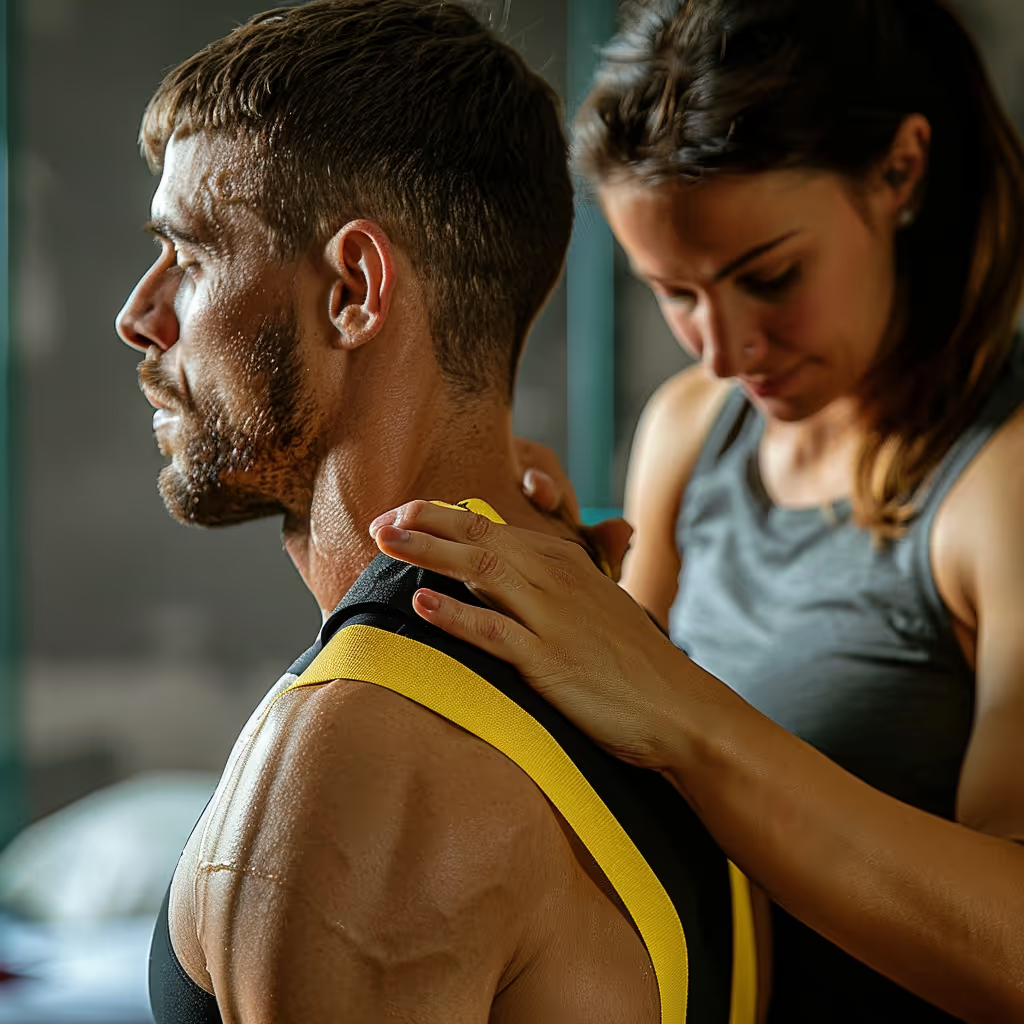
Physiotherapy for Ligament Pain
.png)
.png)
.png)


Your ankle gave out while running. Your knee twisted playing soccer. Your wrist gave way when you fell. Now, every step reminds you of that sprain. You wonder if it will truly heal, if your joint will ever be as strong as before. This concern is legitimate: 25,000 people in North America experience a sprain every day.
Physiotherapy helps most ligament injuries heal completely.¹ You can regain your stability and return to your activities with appropriate active treatment.² Studies show that even severe sprains can often avoid surgery.³
Without comprehensive rehabilitation, a significant number of people develop chronic instability. Their joints continue to give out.⁴ A proprioceptive program reduces your risk of recurrence by 35 to 38%.⁵
Pain often disappears within 2 to 4 weeks. However, your joint is not fully healed. Ligaments continue to strengthen for 8 to 12 weeks or more.⁶ Completing your rehabilitation makes all the difference between truly healing and remaining fragile.
This guide explores how physiotherapy treats ligament injuries: which sprains it treats, how it promotes healing, and how to prevent recurrence. To first understand the causes, consult our complete guide to ligament pain.
What is physiotherapy for ligament injuries?
Physiotherapy for ligament injuries combines clinical assessment, therapeutic exercises, manual therapy, and patient education to optimize sprain healing, restore joint function, and prevent recurrence.
This active approach guides your body through the healing phases. We apply optimal loading: just enough movement to stimulate tissue repair without worsening the injury.
Systematic studies confirm that therapeutic exercise significantly reduces the risk of new injury.¹ Your active participation is essential. You progress based on objective criteria rather than an arbitrary timeline.
In Quebec, you have direct access to physiotherapists without a medical prescription.³ You can consult within the first few days, when early intervention has the most impact.
For a sprain, a supervised exercise program is preferable to passive approaches such as rest alone. Supervised movement helps restore joint stability.
| Approach | Characteristics | Results |
|---|---|---|
| Passive | Prolonged immobilization, complete rest | An ankle sprain is not always a minor injury. Even with treatment and rehabilitation, up to 40% of people develop chronic ankle instability after a sprain. |
| Active (physio) | Progressive loading, exercises, proprioception | 10% recurrence with criteria vs 30% without |
The PEACE & LOVE protocol has replaced the old RICE protocol. Early mobilization promotes better healing than complete rest.⁷
Getting moving early helps the ankle recover. The exercises in the first week already improve function in the short term. The goal is not to push too hard, but to gradually and safely resume bearing weight and moving the ankle under supervision.
For an overview, consult our complete guide to physiotherapy.
What ligament injuries does physiotherapy treat?
Physiotherapy treats ligament injuries in all joints: ankle sprains (25,000 cases per day in North America), knee sprains (ACL, MCL, LCL, PCL), wrist, shoulder, and cervical spine.
Ankle Sprains
The ankle is one of the joints most commonly injured. About 85% of ankle sprains involve the lateral ligaments, especially the anterior talofibular ligament, when the foot rolls inward.
An ankle sprain isn't always a minor injury. About 20% of people experience chronic instability after a sprain, often due to a slowed muscle reflex and reduced strength or control. This is one of the reasons why it's important to complete rehabilitation thoroughly.
Ankle sprains account for 85% of injuries to the anterior talofibular ligament (outer side). Without comprehensive rehabilitation, a significant proportion of people develop chronic instability.⁴ A proprioceptive program reduces your risk of recurrence by 35 to 38%.⁵ Check out our comprehensive guide to ankle sprains.
Knee Sprains
The knee has four main ligaments. ACL injuries occur in pivoting sports. Many patients with a complete rupture achieve equally good results with physiotherapy alone as with surgery.³
Adhere to objective criteria. Your risk of recurrence drops to 10% versus 30% with a timeline-based approach alone.⁸ To learn more, consult our guide on knee pain.
After knee cruciate ligament reconstruction, there is no set date for returning to sports. The goal is for the operated leg to regain at least 90% of the healthy leg’s strength and jumping ability as measured by tests.
Returning to sports before reaching certain strength and jumping thresholds increases the risk of re-injury. That is why the decision to return to sports is based on measured abilities, not on a schedule.
Other Joints
Wrist: Skier's thumb requires complete rehabilitation to regain grip strength. Consult our guide on wrist pain. Shoulder: Acromioclavicular (AC) joint sprains (grades I-II) often avoid surgery.⁹ See our guide on acromioclavicular joint sprains. Cervical Spine: Whiplash damages the ligaments in the neck. Physiotherapy restores mobility and prevents long-term problems.Why choose physiotherapy to treat a ligament injury?
You should choose physiotherapy because it reduces the risk of recurrence by 35 to 40%, accelerates return to activities, and prevents chronic instability.
Meta-analyses confirm that active rehabilitation reduces new injuries.¹ Proprioceptive training reduces your risk of sprains by 35 to 38%.⁵
Without rehabilitation, a significant proportion of people develop chronic instability.⁴ Follow objective criteria: your risk drops to 10%, compared to 30% with a schedule alone.⁸
Prolonged rest can lead to muscle wasting and ongoing issues with your body's sense of position. Active physiotherapy not only helps heal the ligament but also restores all the stabilizing systems: muscles, balance, and confidence.
Many Grade III sprains heal just as effectively with physiotherapy as they do with surgery.³ This allows you to avoid surgical risks, costs, and extended recovery times.
10 Quick Tips for Understanding Your Pain
The ones that have made the biggest difference in my patients' lives. 1 a day, 2 minutes.
What happens during a first physiotherapy session for a sprain?
Your first session typically lasts 45 to 60 minutes. It includes a detailed interview, a complete physical examination (observation, touching, stability tests, and functional tests), a diagnosis, and the creation of a personalized treatment plan.
Preparation
Please wear comfortable clothing. Bring a list of your medications and any relevant medical imaging. Make a note of any previous injuries and prepare any questions you have about your recovery.
Initial consultation
Your physiotherapist understands how your injury occurred. Knowing the mechanism helps us identify which structures are affected. We will discuss your symptoms and how they impact your daily activities.
Your goals guide the entire treatment plan, whether it's returning to volleyball or simply walking without pain. Each goal requires different criteria to measure progress.
Physical examination
Through observation, we note swelling, bruising, or limping. Touching the area helps us pinpoint the exact location of your pain.
Stability tests evaluate if the ligament is effectively holding the joint together. Examples include the anterior drawer test (for the ankle), the Lachman test (for the ACL), and varus/valgus stress tests (for collateral ligaments).⁷
Functional tests demonstrate how you move, such as single-leg balance, walking, and climbing stairs. We measure your range of motion and compare it to your healthy side.
Treatment plan
We establish a diagnosis, including the grade of the sprain, the ligaments involved, and any other associated injured structures.
Short-term goals include managing pain and swelling, restoring range of motion, and achieving normal walking. Long-term goals focus on regaining full strength, improving proprioception (your body's sense of position), and returning to sport or work activities.
At Physioactif, we create a treatment plan based on your specific goals, rather than following a generic protocol.
How does physiotherapy help ligaments heal?
Physiotherapy promotes healing by applying an optimal load that stimulates collagen production, restoring proprioception (your body's sense of position), strengthening stabilizing muscles, and desensitizing the nervous system.
Optimal Loading
The PEACE & LOVE protocols have replaced RICE. Early mobilization promotes better healing compared to complete rest.⁷
Mechanical loading stimulates the production of Type I collagen, which is the strong collagen that provides resistance.⁶ Without this stimulation, your body primarily produces weaker Type III collagen.
Loading also helps align collagen fibers in the direction of stress. Our approach is guided by the biological healing phases: inflammation (days 1-7), proliferation (weeks 1-4), and remodeling (weeks 4-52).⁶
Proprioception
Proprioception is your body's sense of joint position. This sense relies on receptors located in your ligaments. When you suffer a sprain, these receptors can be damaged.
Even after the pain subsides, issues with proprioception (your body's sense of position) can persist. This often leads to functional instability.⁹
Proprioceptive training helps reactivate the sensory-motor pathways. Following a regular program can reduce your risk of sprains by 35% to 38%.⁵
Muscle strengthening
Your joint has two types of stability: passive (provided by ligaments) and dynamic (provided by muscles).
When your ligaments are weakened, your muscles must take over. For example, the peroneal muscles stabilize the ankle, the quadriceps and hamstrings protect the knee, and the rotator cuff protects the shoulder.
Protective co-contraction happens when your muscles contract at the same time to stiffen and support the joint.
What treatment techniques are used for ligament injuries?
Physiotherapists utilize progressive therapeutic exercises, proprioceptive training on both stable and unstable surfaces, joint mobilizations, taping, and other complementary techniques.
Therapeutic Exercises
Exercises progress through different phases. Acute phase (days 1-7): focus on range of motion without putting weight on the area. Proliferation phase (weeks 1-4): strengthening exercises, starting with static holds and then moving to exercises with movement. Remodeling phase (weeks 4-8): functional exercises. Return phase (weeks 8-12+): sport-specific exercises.
We progress based on objective criteria: achieving full range of motion, strength greater than 90%, symmetrical balance, and no pain.
Proprioceptive training
Proprioceptive training reduces your risk of sprains by 35 to 38%.⁵
| Level | Surface | Vision |
|---|---|---|
| 1 | Stable (ground), eyes open | 30 sec single-leg balance |
| 2 | Unstable (balance board), eyes open | 30 sec balance board |
| 3 | Unstable, eyes closed | 20 sec eyes closed |
| 4 | Unstable, perturbations | Ball thrown, unpredictable reactions |
Aim to progress to 60 seconds per exercise. Frequency: at least 2-3 times per week. For specific exercises, consult our ankle sprain guide.
Mobilization and Taping
Joint mobilizations involve gentle movements that help restore full range of motion. We use gradual techniques (grades I-IV) once acute inflammation has subsided.
Rigid taping provides temporary mechanical support and can offer short-term relief after a sprain. Kinesiotaping, on the other hand, is said to provide sensory feedback and promote circulation, but data on its actual effectiveness remain limited and do not show an effect that is clearly superior to a placebo. Some people do find it helpful—we don’t deny that—but it’s not an approach we recommend before you’ve undergone targeted physical therapy based on your evaluation.
Orthoses (braces) provide protection during the acute phase. We gradually wean you off them as your own strengthening takes over.
Need professional advice?
Our physical therapists can assess your condition and provide you with a personalized treatment plan.
Make an appointmentHow does rehabilitation progress according to the healing phase?
Rehabilitation progresses through 4 phases: Phase 1 (days 1-7) focuses on protection, Phase 2 (weeks 1-4) on mobility, Phase 3 (weeks 4-8) on strengthening, and Phase 4 (weeks 8-12+) on returning to activities.
Phase 1: Protection (days 1-7)
During this inflammatory phase, your body cleans up damaged tissues.
The PEACE & LOVE protocol guides this phase: Protection (avoid aggravating movements), Elevation, Avoid anti-inflammatories, Compression, Education.⁷
We begin gentle mobilization within a pain-free range of motion from the very first days. For Grade II-III injuries, crutches with partial weight-bearing are used. For Grade I injuries, cautious walking is advised.
Phase 2: Mobility (weeks 1-4)
During the proliferation phase, your body produces type III collagen.
Goals: achieving full range of motion without pain, light strengthening (starting with static holds and then moving to exercises with movement), and basic proprioception on a stable surface.
Progression criteria: full range of motion, walking without a limp, and minimal swelling.
Phase 3: Strengthening (weeks 4-8)
This is the remodeling phase, where type III collagen is replaced by strong type I collagen.
Goals: progressive strengthening, reaching 80% of the strength of the healthy side, advanced proprioceptive training, and functional exercises.
Progression criteria: strength greater than 80%, maintaining balance for 30 seconds, and no pain.
Phase 4: Return to Activities (weeks 8-12+)
Collagen remodeling continues long after symptoms have disappeared. The scar tissue that replaces a ligament remains different from the original tissue, and this difference persists over time. You can resume your activities well before this remodeling process is complete, provided you meet the criteria.
Goals: passing functional tests (strength greater than 90%, single-leg hops, changes of direction), sport-specific re-training, and maintaining a regular exercise program (2-3 times per week).
You’re making progress when your strength approaches that of your healthy side, not based on a set date. The criteria are abilities, not dates: full range of motion, strength approaching that of your healthy side, stable balance on one leg, absence of pain, restored confidence, and success on tests specific to your sport.
| Phase | Period | Goals |
|---|---|---|
| 1 - Protection | Days 1-7 | Inflammation control, protection |
| 2 - Mobility | Weeks 1-4 | Full range of motion, beginning strengthening |
| 3 - Strengthening | Weeks 4-8 | Strength, advanced proprioception |
| 4 - Return | Weeks 8-12+ | Full function, sport-specific |
How many physiotherapy sessions are needed for a ligament injury?
The number of sessions and the duration of treatment depend on the severity of the sprain and your response to treatment. A more severe sprain requires a longer course of treatment. Your physical therapist will adjust the treatment plan based on your progress, not on a fixed schedule.
At Physioactif, objective criteria determine your progress. Adhering to these criteria reduces the risk of recurrence to 10%. Without these tests, the risk is 30%.⁸
Your at-home exercises are just as much a part of your treatment as your in-clinic sessions. Consistency is key: do them regularly, as prescribed.
Who should see a physiotherapist for a ligament injury?
Anyone who has suffered a sprain should seek consultation. Athletes, individuals with recurring sprains, physical laborers, and patients with Grade II-III injuries particularly benefit from physiotherapy.
Athletes: A safe return to activity requires objective criteria. Without proper testing, the risk of recurrence is 30% instead of 10%.⁸ Recurrent Sprains: Physical therapy breaks the cycle of chronic instability. Without comprehensive rehabilitation, a significant proportion of people remain chronically unstable.⁴ Physical Workers: Prevents prolonged disability and ensures a safe return to work. Seniors: Increased risk of falls if the joint remains unstable. Balance training becomes especially important.Even Grade I injuries benefit from proprioceptive training. A regular program reduces your risk by 35 to 38%.⁵
Consult a doctor first if you suspect a fracture: complete inability to bear weight, intense bone pain, or visible deformity. Once a fracture is ruled out, you can directly consult a physiotherapist in Quebec.
How can you prevent recurrence and chronic instability after a sprain?
Preventing recurrence requires fully completing rehabilitation even after the pain subsides, continuing proprioceptive exercises 2-3 times a week, and managing fatigue during sports activities.
Without comprehensive rehabilitation, a significant proportion of people develop chronic instability.⁴
Rehabilitation isn't just about relieving pain. It aims to restore stability, muscle reflexes, and strength to the muscles that stabilize the ankle. It is this work that helps prevent chronic instability.
An exercise program started early after a sprain has been shown to be effective. These exercises can reduce the risk of a recurrent sprain.
To prevent recurrent ankle sprains, wearing a brace is an effective option.
The first mistake: stopping when the pain goes away. The pain subsides before the tissue has actually healed. The scar tissue that replaces the ligament remains weaker than the original tissue. That is why you must continue rehabilitation even after the pain has gone away.
Second mistake: returning to sports based on a timeline rather than objective criteria. Without proper tests, your risk of re-injury jumps to 30% instead of 10%.⁸
Effective Strategies: Complete the entire rehabilitation process. Follow all phases up to Phase 4, even if you no longer have symptoms. If you don't pass the functional tests, you're not ready. Maintain a balance and coordination program. Do 2-3 sessions per week. For athletes, this is lifelong. For the general population, a minimum of 6-12 months. These exercises reduce your risk by 35 to 38%.⁵ Continuously strengthen your muscles. Maintain strength at least twice a week. These muscles compensate for your now looser ligaments. Manage fatigue. Fatigue is a major risk factor. Are you tired? Your muscles react more slowly. Reduce the intensity. Do a complete warm-up, including exercises to improve balance and coordination.To understand the mechanisms of chronic instability, consult our guide on ligament pain.
What sets Physioactif's approach apart for ligament injuries?
Physioactif stands out with an evidence-based approach: comprehensive assessment, personalized plans, progress based on objective criteria rather than a timeline, rigorous progress tracking, and complementary services.
Comprehensive Assessment: 45-60 minutes for the first session. No pre-printed 15-minute protocols. Personalized Plans: Two people with the same sprain might have very different plans depending on their goals: returning to basketball or simply walking without pain. Criterion-Based Progression: This is our main differentiator. We progress when you have met the criteria: measured strength, timed balance, and successful functional tests. The numbers show: 10% recurrence rate when criteria are met versus 30% without.⁸ Rigorous Follow-up: We conduct regular reassessments using objective measurements. You can see your progress in numbers with each reassessment. The goal: to restore strength to the healthy side. Complementary Services: Access to massage therapy to manage swelling and pain. Synergy between lymphatic drainage and mobility. Patient Education: We take the time to explain why each exercise is important. This understanding helps you stick to your treatment plan.We use modern PEACE & LOVE protocols. We emphasize proprioceptive training, which reduces the risk by 35-38%.⁵
We have 5 clinics in the Montreal area. To learn more about our physiotherapy services or our full range of therapeutic approaches.
How do you book an appointment for an assessment of your ligament injury?
In Quebec, you can book an appointment directly without a medical prescription. Contact one of our 5 clinics in the Montreal area for a comprehensive assessment.
In Quebec, you do not need a medical prescription.³ Direct access means you can call us as early as the day after your sprain, when early intervention has the greatest impact.
Exception: Do you suspect a fracture (complete inability to bear weight, intense bone pain, visible deformity)? Consult a doctor for imaging first. If the X-ray rules out a fracture, you can return directly to physiotherapy.
The first few weeks are crucial. Intervening within the first 7 days optimizes your recovery and reduces the risk of the condition becoming chronic.
Waiting too long to begin rehabilitation after a sprain is not without consequences. Delayed or inadequate rehabilitation after a sprain increases the risk of recurrence and the need for further treatment of the ankle.
Book an appointment online or by phone. We offer quick availability for acute injuries.
Private insurance plans cover physical therapy according to the terms of your policy. The RAMQ does not cover physical therapy, except in specific cases. Check with your insurer to confirm your coverage. Many employers offer reimbursement through their health programs. Work-related injury? The CNESST covers approved treatments. Car accident? The SAAQ covers approved treatments.
Frequently Asked Questions about Physiotherapy for Ligament Injuries
Do I need to see a doctor before consulting a physiotherapist for a sprain?
No, in Quebec, you can consult a physiotherapist directly without a medical prescription.³
Exception: Do you suspect a fracture? Consult a doctor for imaging first. Signs include: complete inability to bear weight, intense bone pain, visible deformity.
A severe sprain may look like a fracture. To determine whether an X-ray is needed, your healthcare provider uses a validated clinical guideline (the Ottawa Rules) that helps rule out a fracture within the first week and avoid unnecessary X-rays.
Can a sprain heal without physiotherapy?
Mild Grade I sprains can heal without formal physiotherapy.
The risk: even if the pain goes away, a significant proportion of people develop chronic instability without comprehensive rehabilitation.⁴ Without rehabilitation, proprioceptive deficits and weakness persist.
Even Grade I sprains benefit from proprioceptive training. A few weeks of exercises reduce your risk of recurrence by 35 to 38%.⁵
How long should I use crutches after a sprain?
The duration depends on the grade and your ability to walk without limping or experiencing pain. Grade I (mild): Crutches are used only if walking is painful. Grade II (moderate): Crutches are used as needed until you can walk without limping. Grade III (severe): A short period of rest is helpful, but it’s better to start moving again early rather than remaining immobile for a long time. Exercises started early on already improve function.
The benchmark for resuming your activities isn't a date—it's your ability to walk without limping or feeling pain.
When can I return to sports after a sprain?
Returning to activity is based on objective criteria, not a timeline. You are ready when you meet all these criteria: strength greater than 90%, symmetrical balance, full range of motion, absence of pain, restored confidence, and successful completion of sport-specific tests.
Typical recovery times: Grade I, 4–6 weeks; Grade II, 8–12 weeks; Grade III, 12–24 weeks. These figures are guidelines, not guarantees.
Returning too quickly? Your risk increases to 30% instead of 10%.⁸
Is surgery necessary for a Grade III sprain?
Not always. Several studies show that many Grade III sprains heal just as well with physical therapy as with surgery.³ We often try a conservative approach first, before considering surgery. Surgery is reserved for cases that do not respond to a comprehensive exercise program. The decision depends on your response to rehabilitation.
Decision factors include: age, activity level, response to initial rehabilitation, and profession. High-level athlete? Severe instability persists? Multiple ligament ruptures? We might consider surgery.
For the majority, even with a Grade III sprain, well-managed rehabilitation can help avoid surgery.
Is proprioceptive training really effective?
Yes. Meta-analyses show that it reduces your risk of ankle sprain by 35 to 38%.⁵ Out of 100 people who would otherwise experience another sprain, 35-38 completely avoid it thanks to balance exercises.
The mechanism: training reactivates the sensorimotor circuits between your joint and your brain. It improves the reaction time of your stabilizing muscles.
The effects persist as long as you maintain the program 2-3 times per week.
What is chronic ankle instability?
Chronic instability occurs when your ankle repeatedly gives way. It’s that feeling of your ankle giving way without warning. Without comprehensive rehabilitation, a significant number of people develop this condition.⁴
Causes include: uncorrected proprioceptive deficits, persistent weakness, stretched ligaments, and fear of movement.
Treatment: Physiotherapy focused on proprioception and strengthening shows equal effectiveness to surgery in many cases.¹⁰
Is physiotherapy covered by insurance?
Yes. Most private insurance plans cover physical therapy, depending on the terms of your plan.
The RAMQ does not cover physical therapy except in specific cases. However, what about a work-related sprain? The CNESST covers approved treatments. What about a car accident? The SAAQ covers approved treatments.
References
- O'Connor SR, Bleakley CM, Tully MA, McDonough SM. Predicting functional recovery after acute ankle sprain. PLOS One. 2022;17(1):e0262023.
- Rosen AB, Ko J, Simpson KJ, Kim SH, Brown CN. Neuromuscular training for chronic ankle instability. Physical Therapy. 2012;92(8):987-991.
- Ordre professionnel de la physiothérapie du Québec (OPPQ). ACL Rupture: Treat and Prevent. OPPQ. 2023.
- PCN Physio. Understanding, Treating, and Preventing Ankle Sprains. 2023.
- Schiftan GS, Ross LA, Hahne AJ. The effectiveness of proprioceptive training in preventing ankle sprains in sporting populations: a systematic review and meta-analysis. J Sci Med Sport. 2015;18(3):238-244.
- Docking SI, Ooi CC, Connell D. Tendinopathy: Is imaging telling us the entire story? J Orthop Sports Phys Ther. 2020;45(11):842-852.
- Massachusetts General Hospital. Physical Therapy Guidelines for Lateral Ankle Sprain. MGH Sports Medicine. 2022.
- Kyritsis P, Bahr R, Landreau P, Miladi R, Witvrouw E. Likelihood of ACL graft rupture: not meeting six clinical discharge criteria before return to sport is associated with a four times greater risk of rupture. Br J Sports Med. 2016;50(15):946-951.
- PhysioExtra. Sprain: What to Do?. PhysioExtra. 2023.
- Physiopedia. Management of Chronic Ankle Instability. Physiopedia. 2024.
- Aman JE, Elangovan N, Yeh IL, Konczak J. The effectiveness of proprioceptive training for improving motor function: a systematic review. Front Hum Neurosci. 2015;8:1075.
Videos in this category
Other conditions

Hip osteoarthritis is the normal wear and tear of the hip joint. It is often said that osteoarthritis is the wear and tear of the cartilage between our bones. That is true, but it involves more than just the cartilage. Cartilage is a tissue that acts as a cushion between the surfaces of our bones and allows our joints to glide smoothly and move fluidly.
This is normal wear and tear of the knee joint. It’s often said that osteoarthritis is the wearing down of the cartilage between our bones. That’s true, but it’s more than just the cartilage. Cartilage is a tissue that acts as a cushion between the surfaces of our bones and allows our joints to glide smoothly and move fluidly.
It is an inflammation of the subacromial bursa in the shoulder joint.
A bursa is a small, thin sac filled with fluid that is found in many of the body's joints. This small sac acts as a cushion within the joint and lubricates the structures that are subject to increased friction.
It is a tissue that surrounds the shoulder and helps keep the shoulder bone in place within the joint. The capsule helps keep the joint stable.
Neck pain is a general term used to describe pain in the neck that has no specific cause, such as an accident or a sudden awkward movement. Neck pain is therefore synonymous with “my neck hurts, and nothing in particular happened.”
In both types of injury, pain is felt in the neck and then radiates into the arm, or vice versa.
Make an appointment now
We offer a three-pronged quality assurance approach: optimized treatment time, a second opinion from a physical therapist, and ongoing expertise to ensure effective care tailored to your needs.
Customer satisfaction is our top priority
At Physioactif, excellence guides everything we do, but our patients are the best ones to tell you about it. Take a look at their verified reviews to get a real sense of their experience.





Discover our physical therapy clinics
We have locations in several areas to better serve you.
Blainville
190 Bas-de-Sainte-Thérèse Road, Suite 110,
Blainville, Quebec
J7B 1A7
Located in Blainville, near Rosemère, the Physioactif clinic is easily accessible to residents of the area and the surrounding communities
Boucherville
690 Rue de Montbrun, Suite S,
Boucherville, Quebec
J4B 8H2
Located in Boucherville, the Physioactif clinic is easily accessible to people in the area
Laval
3224 Jean-Béraud Ave., Suite 220, Laval,
QC H7T 2S4
Located in Chomedey, in the heart of Laval, the Physioactif clinic is easily accessible to people in the area
Montreal
8801 Lajeunesse Street,
Montreal,
QC H2M 1R8
Located in Ahuntsic, near Villeray, the Physioactif clinic is easily accessible to residents of both neighborhoods
Saint-Eustache
180 25th Avenue, Suite
201 Saint-Eustache
QC J7P 2V2
Located in Saint-Eustache, the Physioactif clinic is easily accessible to residents of the area and the surrounding communities
Vaudreuil
21 Cité-des-Jeunes Boulevard, Suite 240,
Vaudreuil-Dorion, Quebec
J7V 0N3
Located in Vaudreuil-Dorion, the Physioactif clinic is easily accessible to people in the area
Make an appointment now