Physiotherapy for Thigh Pain
.png)
.png)
.png)




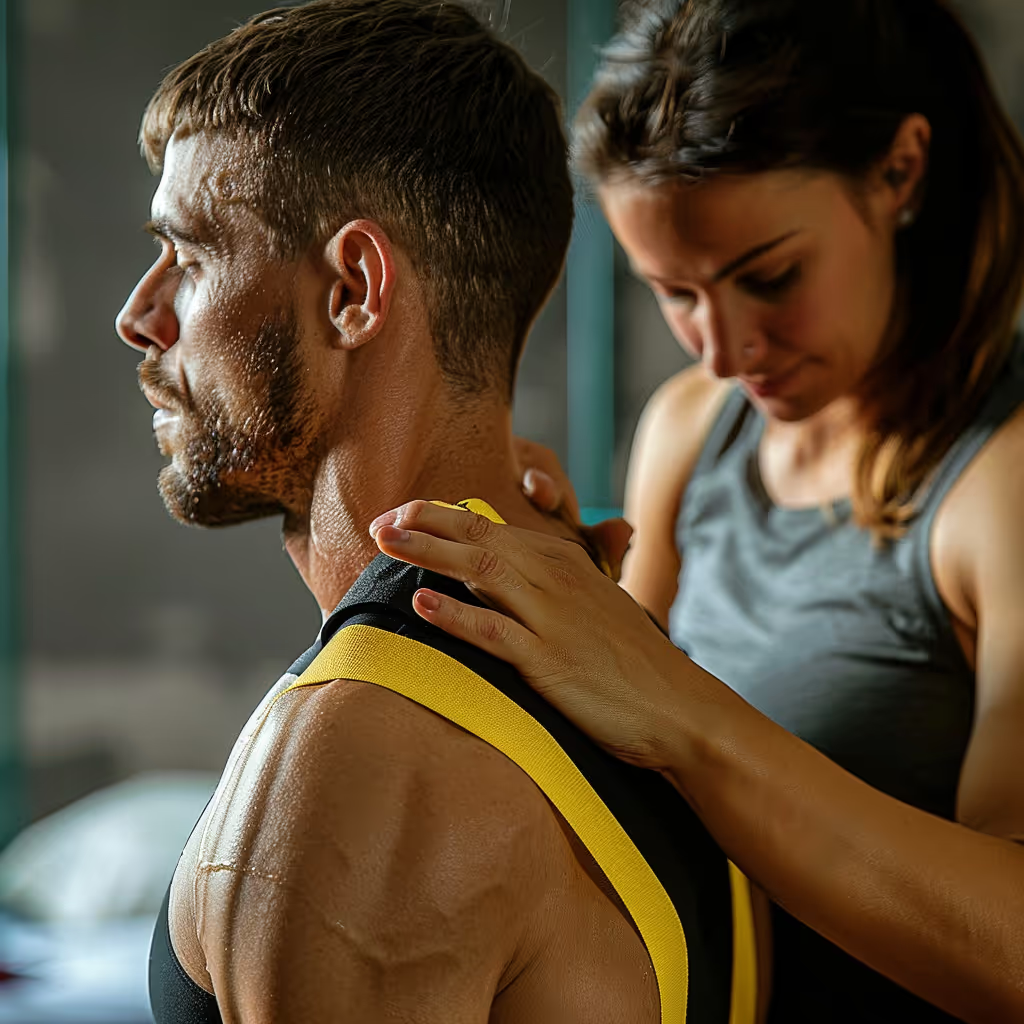
Physical therapy helps restore strength, range of motion, and the ability to perform activities that have been limited by thigh pain. Treatment combines an assessment, tailored exercises, and guidance on resuming your activities. After a muscle strain, a progressive program can facilitate a return to sports and reduce the risk of recurrence, though it does not eliminate all risk.1
This guide explains how physical therapy works for thigh problems. You’ll learn what conditions are treated, what techniques are used, and what to expect during your treatment. If you’d like to first understand the different causes of thigh pain, check out our comprehensive guide to thigh pain.
What is physiotherapy for thigh pain?
Physical therapy for thigh pain includes an evaluation, exercises, and advice to help you regain mobility. The physical therapist will identify the possible causes of your symptoms and work with you to choose the right treatment.
The exercises focus on strength and mobility—that is, the ability to move the hip and knee. The instructions help you adapt your walking, work, and exercise routines. Manual therapy can complement this program when it provides meaningful relief.
10 Quick Tips to Understand Your Pain
One tip a day for 10 days to help you better understand your pain. About a 2-minute read.
Rehabilitation involves regaining the abilities needed for your activities. In a study of 80 athletes with moderate hamstring strains—the muscles at the back of the thigh—a more intensive stretching program shortened the time it took to regain mobility and return to training, compared to a less intensive program. On average, athletes returned to training after 13.3 days rather than 15.1 days.2 This result does not justify forced stretching immediately after injury or the same program for everyone.
Physical therapy may require active participation and communication with your physical therapist. Your participation helps adjust the treatment plan, but it does not, on its own, determine the outcome. The options should remain realistic for you.
Now that you understand the general approach, let's see which thigh problems can be treated.
What thigh problems does physical therapy treat?
Physical therapy treats muscle strains, tendon problems, and certain types of back or hip pain. Treatment also helps with recovery after surgery, in accordance with the surgeon’s instructions. However, severe or unusual pain may first require a medical evaluation.
Muscle Strains
A muscle strain is a tear in muscle fibers. The hamstrings, located at the back of the thigh, bend the knee. The quadriceps, located at the front of the thigh, straighten the knee. The adductors, located on the inner thigh, bring one leg toward the other.3 In one study, 18 sprinters were injured during a sprint, and 15 dancers were injured during a slow stretch. Despite a more severe initial injury, the sprinters returned to their previous athletic level more quickly than the dancers.4 The nature of the injury and the demands of the sport are therefore important factors in the evaluation.
Hamstring strain: This injury often causes sudden pain in the back of the thigh during a fast run or while stretching. It can become painful to bend the knee, and walking may be difficult. Treatment involves gradually building strength, followed by preparation for a return to movement and running. Pain high up near the buttock after an injury may also indicate that a tendon has been torn from its attachment; in such cases, prompt medical evaluation may be necessary.1, 3
Quadriceps strain: This tear affects the muscles at the front of the thigh. It can make climbing stairs, jumping, or straightening the knee painful. Recovery of strength and mobility depends on the severity of the injury. After an injury, an inability to actively straighten the knee requires prompt medical attention, particularly to rule out a tendon rupture.3, 5
Adductor strain: This injury can cause sudden pain on the inner thigh or in the groin—the crease between the abdomen and the thigh. Changes in direction and bringing the legs together can be painful. The program gradually works on these movements and builds adductor strength.6
Tendinopathies
A tendon connects a muscle to a bone. Tendinopathy is a tendon condition characterized by persistent pain and difficulty performing certain activities. The location of the pain and specific tests help diagnose the condition; an abnormal imaging result alone is not sufficient to explain all cases of pain. Treatment involves adjusting activity levels and then gradually increasing them.7, 5
Proximal hamstring tendinopathy: This condition affects the attachment of the tendons near the bone you sit on, beneath the buttocks. “Proximal” here means near the pelvis. Sitting, running, or deep hip flexion—when the thigh moves toward the abdomen—can cause pain. The program addresses these stressors and gradually strengthens the muscles.7
Quadriceps tendinopathy: This tendon attaches the muscles at the front of the thigh to the top of the patella, the bone in front of the knee. Pain in this area that occurs during physical activity may lead the examination to focus on the tendon. Activities involving running and jumping are assessed and then modified through strengthening exercises.5
Adductor tendinopathy: The tendons of the muscles on the inner thigh may become painful near the groin. The physical therapist specifically assesses movements that bring the legs together and athletic activities that trigger the pain. The diagnosis distinguishes this condition from other causes of groin pain.
Muscle tension and stiffness, or a sensation of tight or stiff muscles
Tension refers to a sensation of tightness in a muscle; a cramp is a painful, involuntary contraction. These sensations do not necessarily mean that a muscle contains a knot that needs to be released. The assessment identifies the specific activities and positions involved, and the treatment plan then adjusts the movements and recovery.8
Referred Pain
Referred pain is felt in the thigh even though its source is in another area, such as the hip or back. The physical therapist will examine these areas if the symptoms warrant it. Tingling or weakness may also indicate nerve damage.1
Iliotibial Band Syndrome
The iliotibial band is a strip of fibrous tissue located on the side of the thigh. This syndrome primarily causes pain on the outer side of the knee while running. The exact causes remain a subject of debate. Depending on the severity of the symptoms, a treatment plan may include adjusting running form, strengthening the hips, and trying manual therapy; however, research on these treatments remains limited.9 A trial involving 1,020 military recruits did not reduce overuse injuries to the knee and shin with its general exercise program. The exercise group, however, saw a greater improvement in their 12-minute run distance.10 This prevention trial does not demonstrate the ineffectiveness of individualized treatment for iliotibial band syndrome.
Post-operative Rehabilitation
After surgery, physical therapy helps restore movement, strength, and the ability to walk. The treatment plan follows guidelines regarding weight-bearing, permitted movements, and protecting the repair site. For example, after quadriceps tendon repair, a brace may initially keep the right knee stable; knee flexion and strengthening are then gradually resumed.5
The treatment then combines approaches to relieve symptoms and help you resume your activities.
How does physical therapy help reduce pain and get people back to their activities?
Physical therapy helps reduce pain-related difficulties by adapting activities and gradually restoring strength and range of motion. Progress is measured in terms of specific actions, such as walking, climbing stairs, or running. Progressive exercises are an important part of treatment after a muscle strain.1
Pain relief
The plan aims to make activities more manageable during recovery:
Controlled movement: Gentle hip and knee movements help maintain mobility. Their range of motion—that is, the distance the joint moves—increases according to your tolerance.
Manual techniques: The physical therapist may use their hands to address a difficult movement or a painful area. Any resulting relief is reassessed; this type of treatment complements the exercises rather than guaranteeing muscle recovery.
Education: These explanations help you choose from available activities, recognize when a condition is getting worse, and know when to seek medical attention.
Gradual resumption of movement
You can gradually resume your exercise routine:
- Start by bending and straightening your knee within a comfortable range of motion.
- You then gradually reintroduce everyday activities, such as getting up from a chair or walking a short distance.
- The physical therapist adjusts the intensity based on your response during and after the activity.
The resumption of movement is determined based on the injury, the symptoms, and the observed response.
Strength and exercise tolerance
Strength training prepares the muscles to handle the demands of daily life and sports. After a hamstring strain, exercises in which the muscle lengthens while acting as a brake can shorten the time it takes to return to sports when incorporated into a comprehensive program.1 Assessment and exercises serve several purposes:
- The tests determine the strength required for your activities.
- The exercises strengthen the muscle groups that have been weakened by the injury.
- Resistance increases gradually to prepare for your usual workouts.
- The exercises then mimic the demanding movements involved in sports or work.
Preparing to Resume Activities
Returning to physical activity also prepares the body for acceleration, changes in direction, and core control when required by the sport. After a hamstring strain, incorporating these control and agility exercises into a comprehensive program can reduce the risk of recurrence.1
- The plan takes into account the demands of your activity and your previous injuries.
- Strength tests are a factor in the decision to return.
- You'll work with your physical therapist to develop realistic strategies for continuing your activities.
- The intensity increases based on the demands of the activity and your response.
You're probably wondering what happens during your first visit. Let's look at the evaluation process in detail.
What happens during a physiotherapy assessment?
A physical therapy evaluation includes an interview, an assessment of movement and strength, and a treatment plan tailored to your activities. The physical therapist also checks for signs that may require medical attention.1, 11
The Interview
Your physiotherapist will ask you several questions:
- History of the injury: How and when did the pain start? Was there a specific incident?
- Pain Characteristics: Where is it located? What makes it worse or better?
- Impact on Your Activities: Which activities are limited by your pain?
- Medical History: Have you had similar injuries before? What treatments have you tried?
- Goals: What do you want to be able to do again?
Physical examination
The examination includes several components:
Observation: Your therapist observes your posture, the way you walk, and the appearance of your thigh, including any swelling, bruising, or visible loss of muscle mass.
Palpation: The physical therapist examines the thigh with his or her hands to identify tender areas. The findings are interpreted in light of the circumstances of the injury and the results of other tests.
Range-of-motion tests: We measure how far your hip and knee can move. A restriction may contribute to the assessment when considered along with other findings, but it does not, on its own, identify the source of the problem.
Strength Tests: Tests can assess the strength of the quadriceps, hamstrings, adductors, and hip muscles. Any weakness is interpreted in conjunction with symptoms, function, goals, and other findings.
Additional tests: The physical therapist may compare pain levels during muscle stretching and during muscle contraction. If the back or a nerve appears to be involved, the therapist will adapt the examination to account for this possibility.
Activity Assessment: The physical therapist observes your walking or stair-climbing based on your specific challenges. For athletes, the therapist also assesses jumping, sprinting, or sport-specific movements once your recovery allows for these activities.
The treatment plan
After the evaluation, your physiotherapist will explain:
- The physical therapist explains the possible causes of your symptoms.
- The physical therapist recommends a treatment plan.
- You work together to set short- and long-term goals.
- The physical therapist estimates the number of sessions needed.
- The physical therapist will show you what you can do at home.
You don't have to understand everything right away. That's why we take the time to explain things thoroughly and answer your questions. Now, let's look at the techniques that will be used for your treatment.
What Treatment Techniques Are Used?
Treatment techniques include exercises, instruction, and, as needed, manual therapy. The choice depends on the problem and your response to treatment. The devices that are sometimes recommended are described separately below.
Therapeutic Exercises
Therapeutic exercises are designed to improve the abilities that have been limited by the injury. The physical therapist selects from the following types, among others:
Isometric exercises: The muscle exerts force without any visible movement of the joint.12 For example, you press your heel against the floor without moving your leg. The intensity depends on your stage of recovery and your tolerance.
Isotonic exercises: The muscle moves against a resistance, with theoretically constant tension. It can shorten—in what is known as a concentric contraction—or lengthen while resisting, in what is known as an eccentric contraction.13 For example, the knee bends and then straightens against a resistance.
Eccentric exercises: The muscle exerts force while lengthening.14 These exercises are particularly useful for slowing down a movement. After a hamstring strain, they can be started gradually depending on tolerance; they are not reserved for the very end of the program.1
Flexibility Exercises: These movements and stretches help build the flexibility you need for your activities. They allow you to gradually improve without aggravating a recent injury. Stretching alone is not a substitute for strength training after a muscle strain.1
Exercises for daily activities: You’ll practice useful movements, such as getting up from a chair, climbing a step, or changing direction.
Manual therapy
A manual technique can sometimes be tried for a specific symptom or movement, and then reevaluated:
Massage and manual tissue manipulation: The physical therapist applies pressure or performs movements with their hands on the muscles and surrounding tissues. They assess whether this treatment provides relief or makes movement easier. Its effect on the time it takes to return to sports after a muscle strain remains unclear.1
Joint mobilization: The physical therapist gently moves a joint, such as the hip or knee. This technique may be included in the treatment plan when movement is limited; its appropriateness will be discussed with you.
Myofascial techniques: These techniques involve applying pressure or manual movements to the tissues surrounding the muscles. Fascia is a fibrous tissue that surrounds the muscles, among other structures.15
Trigger points: This term refers to areas that are sensitive to pressure. This sensitivity does not necessarily mean that a muscle is knotted or tight. The physical therapist interprets it in conjunction with other symptoms and test results.
Education
Discussions can cover a variety of topics:
- You'll learn to understand your problem and how it develops.
- You'll learn how to pace yourself based on the duration and intensity of your workouts, as well as your recovery.
- You're temporarily adjusting certain activities to stay active.
- You are discussing the return to normal activities and the uncertainties that remain.
- You will learn to recognize a persistent worsening of symptoms after physical exertion.
Complementary Modalities
Some options are sometimes used to supplement the exercises; others are merely described here. Their use depends on the diagnosis and treatment recommendations.
Ice: Cold can provide temporary relief for a recent injury. Use a barrier between the skin and the ice, and limit each application to 20 minutes. Stop if the skin reacts negatively.16
Heat: Gentle heat can help you relax. Protect your skin and avoid temperatures that cause burns. If you’ve recently pulled a muscle, avoid heat for the first three days.16
Electrotherapy: TENS, or transcutaneous electrical nerve stimulation, delivers low-intensity electrical currents through electrodes placed on the skin.
Therapeutic ultrasound: This device uses sound waves that are inaudible to the human ear. An older review examined its results for various conditions; it does not demonstrate effectiveness for thigh pain.17
Shockwave therapy: This technique applies mechanical pulses to the treated area. A 2021 review on tendinopathy near the buttock reported favorable results compared to a program combining multiple treatments, but with very low certainty.18 A 2025 trial involving 100 adults compared shockwave therapy to individualized physical therapy. Both groups showed improvement over the course of a year, with no demonstrated difference in the primary outcomes of pain, function, and overall improvement.7 This does not prove either that the treatments are exactly equal or that each treatment has a distinct effect compared to no treatment.
You might be wondering what exercises will be prescribed for you. Let's look at the different phases of rehabilitation.
What exercises are prescribed for thigh rehabilitation?
Thigh rehabilitation exercises include muscle contractions, hip and knee movements, and then movements tailored to your activities. The following steps illustrate a possible progression. They may overlap; they are not a substitute for a treatment plan tailored to your injury.1, 19
Phase 1: Protection and Restoration of Movement
Objectives: The first step is to protect the injury, continue with activities you can tolerate, and resume simple movements. After a recent strain, avoid forced stretching and rapid or very intense exertion.19
Typical Exercises:
- Start with gentle isometric contractions that are appropriate for your injury.
- Move your hip or knee on your own within a range of motion that does not cause significant pain.
- The physical therapist decides when to introduce a gentle stretch; a passive stretch uses external assistance to produce the movement.
Example for the hamstrings:
- While lying down, gently push your heel against the floor.
- Gently bend your knee without straining your thigh.
- You can resume taking short walks on flat ground as tolerated; a walking aid may be necessary.
Phase 2: Mobility and Gradual Strengthening
Objectives: This stage improves mobility and begins the strengthening needed for daily activities.
Typical Exercises:
- You move a light weight with your leg.
- You gradually increase the range of motion and the intensity of the stretches you can tolerate.
- You'll work on your balance and pelvic control.
Example for the quadriceps:
- While sitting, straighten your knee against light resistance.
- Bend your knees and hips slightly while holding onto something for support.
- Step up onto a low step, then step back down in a controlled manner.
- Gently stretch the front of your thigh by bringing your heel toward your buttock while standing with support.
Phase 3: Intensive Strength Training
Objectives: This stage builds strength and prepares the body for more demanding movements. Eccentric exercises may have already begun at a lower intensity.
Typical Exercises:
- You slowly slow down a movement against resistance.
- You gradually increase the intensity of the exercises.
- You do some exercises on one leg at a time.
Example for the adductors:
- You are doing a side plank with your top leg supported, known as the Copenhagen exercise. The physical therapist is showing you an adapted version.
- Bend your knees and hips with your feet apart, then stand back up while holding an appropriate weight.
- Take a step to the side and bend that knee, applying appropriate resistance.
- You control the leg as it slides to the side and then returns.
Phase 4: Return to Activities
Objectives: This stage prepares individuals for the demands of sports or work. Tests and real-life assessments help inform the decision regarding a return to activity.19
Typical Exercises:
- You practice jumps that are specific to your sport.
- You practice the specific movements involved in your sport.
- You are once again putting in the intense effort required for your activities.
Example for the hamstrings (returning to running):
- You perform the Nordic exercise on your knees, with your ankles supported. The muscles at the back of your thighs prevent your body from leaning forward. The physical therapist adjusts the range of motion and the level of assistance needed.
- Gradually increase your running speed. You should be able to sprint at full speed without any pain before returning to your normal routine.
- You practice the changes of direction required for your sport.
- You simulate athletic movements in situations that increasingly resemble your usual training.
10 Quick Tips to Understand Your Pain
One tip a day for 10 days to help you better understand your pain. About a 2-minute read.
A Summary of the Phases
These steps range from simple movements to more demanding exercises. An exercise may be started earlier, later, or replaced. For example, the Copenhagen exercise is included in a program studied in male athletes with adductor injuries, but it is not automatically suitable for all types of thigh pain.6 Your response and the demands of the activity guide your progression.
A question we often get asked is: how long will this all take? Let's look at typical rehabilitation timelines.
Why does the duration of rehabilitation vary?
The duration of rehabilitation varies depending on the injury, the abilities to be regained, and the progress observed. In a study that followed 165 track and field athletes with a first-time hamstring injury, researchers compared active knee movement to that of the other leg 48 hours after the injury. The 133 athletes whose difference was less than 20 degrees had resumed full athletic activities within two weeks; the six athletes with a difference greater than 30 degrees needed more than six weeks.20 These group results do not provide a guaranteed recovery time for your injury.
What needs to be assessed before estimating the duration
Muscle strains:
- A mild strain affects only a few muscle fibers; a moderate strain tears more fibers but leaves the muscle intact. The recovery time also depends on the affected area and the activities you plan to resume.
- A complete tear requires medical evaluation. The grade describes the estimated severity of the tear, but is not sufficient to predict how long it will take to heal. Some tears require surgery.
Tendinopathies:
- Persistent tendinopathy often requires follow-up for several months. In the 2025 trial on tendons near the buttocks, improvement in both groups continued during the one-year follow-up period.7
Muscle tension and spasms:
- A sensation of tension is considered in the context of activities, postures, symptoms, and other assessment findings.
Iliotibial band syndrome:
- For side pain related to running, the prognosis depends on the suspected diagnosis, the planned activities, and the course of the condition.
Topics Discussed During Rehabilitation
The estimate and plan can be revised by discussing the following points, among others:
- Injury: The examination identifies the tissues that may be affected and the severity of the injury.
- Current Activities: List the movements you can perform, those that are difficult, and those you avoid.
- General Health: Your other health issues and treatments help determine your care plan.
- Home exercises: The frequency should be adjusted based on your response and your abilities.
- Background: The physical therapist takes your previous injuries and the treatments you've already tried into account.
- Objectives: The plan prepares individuals for the demands of resuming sports, work, or other activities.
Session frequency
The frequency of sessions is determined based on the individual’s needs, goals, progress, and what is realistic for them. It may be adjusted as the process unfolds.
If home exercises are prescribed, their frequency and duration are discussed and then adjusted based on the patient’s response and what is realistic.
What sets Physioactif's approach apart?
Physioactif’s approach combines an assessment of your challenges, a plan tailored to your activities, and monitoring of your progress. The physical therapist discusses your options with you and tailors your care to your goals.
Our Approach
Comprehensive Assessment: The assessment puts your symptoms, function, and activities into context and is then used to discuss hypotheses and the plan.
Personalized Plan: Each treatment plan is tailored to your specific condition, activity level, and goals. A marathon runner doesn't have the same needs as someone who simply wants to walk without pain.
Guided Progression: Progression is discussed in light of several factors, such as symptoms, function, activity requirements, risks, and goals. The timeline may be revised based on progress.
Continuing Education: These explanations are intended to discuss symptoms, concerns, options, and what remains unclear. They are tailored to the person's questions.
Our services
We offer several relevant services for thigh problems:
- We evaluate and treat muscle injuries.
- We support recovery from tendon injuries.
- We tailor exercise programs to your athletic or professional goals.
- We monitor progress toward a return to sports.
- We treat certain types of pain originating in the back or hip.
For more information on our general approach, consult our guide on hip pain and its treatments.
Common Questions about Thigh Physiotherapy
Frequently asked questions about thigh physical therapy include pain during exercises, the number of sessions, home exercises, returning to sports, prevention, and direct access to care.
Is physiotherapy painful?
Discomfort may sometimes occur during exercise, and it is well known that unusual exercises—particularly eccentric exercises—can also cause discomfort that appears later, after the workout.14 If the discomfort increases significantly, persists, or affects your activities, the program is reevaluated. In a study that followed 64 athletes examined after their return to sports, localized discomfort upon palpation was associated with a higher rate of recurrence; this finding does not establish a universal threshold for exercise.21
How many sessions will I need?
The number of sessions depends on your condition; your physical therapist will provide you with a personalized estimate after the initial evaluation.
Can I do my exercises at home independently?
Certain exercises can be done at home after they have been selected and explained. A follow-up appointment can be used to adjust them if symptoms, activities, or goals change. Supervision alone does not determine the outcome. Following anterior cruciate ligament reconstruction—a ligament that stabilizes the knee—a review combining several studies compared home-based and supervised exercise programs. Overall, performance was similar; however, supervision provided a benefit in terms of hamstring strength. These results do not necessarily apply to all causes of thigh pain.22
When can I return to sports?
The decision to return to sports depends on several factors, such as symptoms, function, the demands of the sport, risks, and goals.19 No single criterion applies to everyone, and the decision may be revised as the individual progresses.23
Can physiotherapy prevent future injuries?
Physical therapy can reduce the risk of certain new injuries through a tailored exercise program. A previous review had already reported fewer recurrences in a small trial combining agility and core control.24 In contrast, a general exercise program tested on military recruits did not reduce their overuse injuries.10 For the hamstrings, a 2019 review reported approximately half as many injuries in programs that included Nordic walking.25 A 2021 reanalysis deemed the estimate uncertain by further restricting the included studies.26 The 2022 guidelines nevertheless recommend Nordic walking as part of a comprehensive prevention program.1 Benefits are still possible, though there is no guarantee that injuries will not occur.
Do I need to see a doctor before consulting a physiotherapist?
In Quebec, you can see a physical therapist directly at a private clinic without a doctor’s referral. However, your insurance provider may require a prescription for reimbursement.11 Warning signs that require medical attention before exercising:
- After an injury, seek medical attention promptly if the pain is severe or getting worse, if there is significant swelling or bruising or if it is getting worse, if putting weight on the leg is painful, or if it is very difficult to move the leg. A high fever, a sensation of feeling hot or cold, or chills also warrant prompt medical attention.
- After an injury, go to the emergency room if you heard a cracking sound, if your leg is misshapen, if it feels numb or tingly, or if the skin turns blue, gray, or cold.
- Pain accompanied by swelling in just one leg may indicate a blood clot in a vein. Seek urgent medical attention if you suspect this problem, even if you haven't had an injury.
- Call 911 if signs of a blood clot in your leg are accompanied by shortness of breath or chest pain.
If an injury does not improve with first aid, have it evaluated. These signs do not allow for self-diagnosis, but they indicate when to seek help.16, 8, 27
How to book an appointment?
You can schedule an appointment at Physioactif online or by contacting one of our clinics. The physical therapist will assess your symptoms and discuss the appropriate treatment with you.
To book an appointment:
- Online: You can choose a clinic and schedule an appointment.
- By phone: You can find our contact information on our contact page.
- Recent injury: Contact the clinic to check on availability. The warning signs listed above require medical attention rather than waiting for a physical therapy appointment.
Reimbursement depends on your insurance policy. Check the coverage amounts and whether a prescription is required before your visit.11
What are the key points to remember about physical therapy for thigh pain?
Physical therapy for thigh pain combines an evaluation, progressive exercises, and guidance on resuming your activities. The plan is guided by your diagnosis, progress, and the demands of your daily life.
Key Points:
- Physical therapy addresses your specific challenges. The treatment plan focuses on walking, climbing stairs, work, or sports, depending on your needs.
- Progressive exercises help develop your abilities. The type and frequency of these exercises depend on the injury and how your body responds.
- The plan is tailored to the individual. The options depend on the assessment, the role, the targeted activities, and progress.
- Progression is a matter of discussion. It is determined based on several criteria rather than a fixed schedule.
- Your participation helps shape the plan. The options must remain realistic for you, without attributing the outcome solely to your participation.
- The program can continue after you resume your normal activities. Some exercises reduce the risk of recurrence, though they do not eliminate all risk.
A physical therapy appointment can help if the pain persists or limits your activities. If you notice any warning signs, follow the medical guidelines listed above.
Need professional advice?
Our physical therapists can assess your condition and recommend a personalized treatment plan.
Make an appointmentReferences
Links open in a new tab.
- Martin RL, Cibulka MT, Bolgla LA, Koc TA, Loudon JK, Manske RC, et al. Hamstring Strain Injury in Athletes. J Orthop Sports Phys Ther. 2022;52(3):CPG1-CPG44. (Back to sections: 1, 2, 3, 4, 5, 6, 7, 8, 9, 10, 11, 12)
- Malliaropoulos N, Papalexandris S, Papalada A, Papacostas E. The role of stretching in the rehabilitation of hamstring injuries: a follow-up study of 80 athletes. Med Sci Sports Exerc. 2004;36(5):756-9. (Back to section: 1)
- Thigh Muscle Strains - OrthoInfo - AAOS. (Back to sections: 1, 2, 3)
- Askling C, Saartok T, Thorstensson A. The type of acute hamstring strain affects flexibility, strength, and the time it takes to return to pre-injury levels. Br J Sports Med. 2006;40(1):40-4. (Back to section: 1)
- Quadriceps Tendon Tear - OrthoInfo - AAOS. (Back to sections: 1, 2, 3, 4)
- Serner A, Weir A, Tol JL, Thorborg K, Lanzinger S, Otten R, et al. Return to Sport After Criteria-Based Rehabilitation of Acute Adductor Injuries in Male Athletes: A Prospective Cohort Study. Orthop J Sports Med. 2020;8(1):2325967119897247. (Back to sections: 1, 2)
- Rich A, Ford J, Cook J, Hahne A. Physiotherapy Compared With Shockwave Therapy for the Treatment of Proximal Hamstring Tendinopathy: A Randomized Controlled Trial. Am J Sports Med. 2025;53(14):3396-3407. (Back to sections: 1, 2, 3, 4)
- nhs.uk. Sprains and strains. 2017. (Back to sections: 1, 2)
- van der Worp MP, van der Horst N, de Wijer A, Backx FJ, Nijhuis-van der Sanden MW. Iliotibial band syndrome in runners: a systematic review. Sports Med. 2012;42(11):969-92. (Back to section: 1)
- Brushøj C, Larsen K, Albrecht-Beste E, Nielsen MB, Løye F, Hölmich P. Prevention of overuse injuries through a concurrent exercise program in subjects exposed to an increase in training load: a randomized controlled trial of 1,020 army recruits. Am J Sports Med. 2008;36(4):663-70. (Back to sections: 1, 2)
- OPPQ. How does it work? (Back to sections: 1, 2, 3)
- Faulkner JA. Terminology for muscle contractions during shortening, during isometric contraction, and during lengthening. J Appl Physiol (1985). 2003;95(2):455-9. (Back to section: 1)
- Baffour-Awuah B, Pearson MJ, Dieberg G, Wiles JD, Smart NA. An evidence-based guide to the efficacy and safety of isometric resistance training in hypertension and its clinical implications. Clin Hypertens. 2023;29(1):9. (Back to section: 1)
- Hody S, Croisier JL, Bury T, Rogister B, Leprince P. Eccentric Muscle Contractions: Risks and Benefits. Front Physiol. 2019;10:536. (Back to sections: 1, 2)
- Kondrup F, Gaudreault N, Venne G. The deep fascia and its role in chronic pain and pathological conditions: A review. Clin Anat. 2022;35(5):649-659. (Back to section: 1)
- nhs.uk. Hamstring injury. 2017. (Back to sections: 1, 2, 3)
- Robertson VJ, Baker KG. A review of therapeutic ultrasound: effectiveness studies. Phys Ther. 2001;81(7):1339-50. (Back to section: 1)
- Nasser AM, Vicenzino B, Grimaldi A, Anderson J, Semciw AI. Proximal Hamstring Tendinopathy: A Systematic Review of Interventions. Int J Sports Phys Ther. 2021;16(2):288-305. (Back to section 1)
- Paton BM, Read P, van Dyk N, Wilson MG, Pollock N, Court N, et al. London International Consensus and Delphi Study on Hamstring Injuries, Part 3: Rehabilitation, Running, and Return to Sport. Br J Sports Med. 2023;57(5):278-291. (Back to sections: 1, 2, 3, 4)
- Malliaropoulos N, Papacostas E, Kiritsi O, Papalada A, Gougoulias N, Maffulli N. Posterior thigh muscle injuries in elite track and field athletes. Am J Sports Med. 2010;38(9):1813-9. (Back to section 1)
- De Vos RJ, Reurink G, Goudswaard GJ, Moen MH, Weir A, Tol JL. Clinical findings immediately after returning to play predict hamstring re-injury, but baseline MRI findings do not. Br J Sports Med. 2014;48(18):1377-84. (Back to section: 1)
- Khubzan WD, Alhomayani KM. Comparison between home-based and supervised rehabilitation protocols after anterior cruciate ligament reconstruction: a systematic review and meta-analysis. EFORT Open Rev. 2025;10(9):695-708. (Back to section: 1)
- Hickey JT, Timmins RG, Maniar N, Williams MD, Opar DA. Criteria for Progressing Rehabilitation and Determining Return-to-Play Clearance Following Hamstring Strain Injury: A Systematic Review. Sports Med. 2017;47(7):1375-1387. (Back to section: 1)
- Mason DL, Dickens VA, Vail A. Rehabilitation for hamstring injuries. Cochrane Database of Systematic Reviews. 2012;2012(12). (Back to section: 1)
- van Dyk N, Behan FP, Whiteley R. Including the Nordic hamstring exercise in injury prevention programs halves the rate of hamstring injuries: a systematic review and meta-analysis of 8,459 athletes. Br J Sports Med. 2019;53(21):1362-1370. (Back to section: 1)
- Impellizzeri FM, McCall A, van Smeden M. Why methods matter in a meta-analysis: a reappraisal showed an inconclusive injury-preventive effect of the Nordic hamstring exercise. J Clin Epidemiol. 2021;140:111-124. (Back to section: 1)
- nhs.uk. DVT (deep vein thrombosis). 2018. (Back to section: 1)
Videos in this category
Other conditions

Hip osteoarthritis is the normal wear and tear of the hip joint. It is often said that osteoarthritis is the wear and tear of the cartilage between our bones. That is true, but it involves more than just the cartilage. Cartilage is a tissue that acts as a cushion between the surfaces of our bones and allows our joints to glide smoothly and move fluidly.
This is normal wear and tear of the knee joint. It’s often said that osteoarthritis is the wearing down of the cartilage between our bones. That’s true, but it’s more than just the cartilage. Cartilage is a tissue that acts as a cushion between the surfaces of our bones and allows our joints to glide smoothly and move fluidly.
It is an inflammation of the subacromial bursa in the shoulder joint.
A bursa is a small, thin sac filled with fluid that is found in many of the body's joints. This small sac acts as a cushion within the joint and lubricates the structures that are subject to increased friction.
It is a tissue that surrounds the shoulder and helps keep the shoulder bone in place within the joint. The capsule helps keep the joint stable.
Neck pain is a general term used to describe pain in the neck that has no specific cause, such as an accident or a sudden awkward movement. Neck pain is therefore synonymous with “my neck hurts, and nothing in particular happened.”
In both types of injury, pain is felt in the neck and then radiates into the arm, or vice versa.
Make an appointment now
We offer a three-pronged quality assurance approach: optimized treatment time, a second opinion from a physical therapist, and ongoing expertise to ensure effective care tailored to your needs.

Customer satisfaction is our top priority
At Physioactif, excellence guides everything we do, but our patients are the best ones to tell you about it. Take a look at their verified reviews to get a real sense of their experience.









Discover our physical therapy clinics
We have locations in several areas to better serve you.
Blainville
190 Bas-de-Sainte-Thérèse Road, Suite 110,
Blainville, Quebec
J7B 1A7
Located in Blainville, near Rosemère, the Physioactif clinic is easily accessible to residents of the area and the surrounding communities
Boucherville
690 Rue de Montbrun, Suite S,
Boucherville, Quebec
J4B 8H2
Located in Boucherville, the Physioactif clinic is easily accessible to people in the area
Laval
3224 Jean-Béraud Ave., Suite 220, Laval,
QC H7T 2S4
Located in Chomedey, in the heart of Laval, the Physioactif clinic is easily accessible to people in the area
Montreal
8801 Lajeunesse Street,
Montreal,
QC H2M 1R8
Located in Ahuntsic, near Villeray, the Physioactif clinic is easily accessible to residents of both neighborhoods
Saint-Eustache
180 25th Avenue, Suite
201 Saint-Eustache
QC J7P 2V2
Located in Saint-Eustache, the Physioactif clinic is easily accessible to residents of the area and the surrounding communities
Vaudreuil
21 Cité-des-Jeunes Boulevard, Suite 240,
Vaudreuil-Dorion, Quebec
J7V 0N3
Located in Vaudreuil-Dorion, the Physioactif clinic is easily accessible to people in the area
Make an appointment now